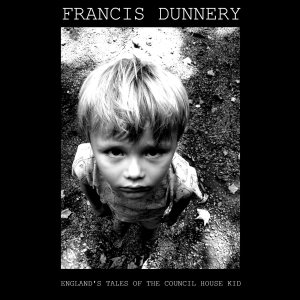
He’s one of the finest guitarists this country has ever produced and, since leaving pop/prog titans It Bites in 1991, somewhat of a moving target: astrologer, solo artist, sessionman (Robert Plant, Ian Brown, Lauryn Hill), giver of house concerts, radio presenter.
Francis Dunnery’s also regularly toured the UK over the last ten years or so, mainly putting bands together to play the music of It Bites.
But now he’s announced a new album and rare solo tour, including a gig at London’s Riverside Studios, featuring just a guitar, a mic and lots of stories. The album and tour are called England’s Tales Of The Council House Kid.
In Francis’s words: ‘This record is deeply personal to me. It’s a collection of songs rooted in where I started—growing up in an England council house—and the journey those rooms eventually led me on. It’s about that grit, that upbringing, and finally bringing these stories to life in the studio.’ The album also features Todd Edwards on piano, Kate Ronconi on fiddle and Paul Brown on bass.
Francis has also just announced a new series on his YouTube channel where he will dish the dirt on all of his past musical projects. The first videos are about working with Robert Plant and auditioning for Genesis. Further clips about It Bites are promised in the future.
Everyone knows a few: those acts that got great reviews, named some of your favourite bands as influences and sold a few records in the process, but there was just something about their music that you couldn’t hack.
Maybe it was their vocals, their outlook, their politics, their songwriting, or a mixture of all four.
Well I know some too. Here’s a totally subjective, wildly judgemental – no offence intended – list of 1980s pop and rock artists who leave me cold, despite most being critical and commercial successes. Believe me, I’ve tried. Like they could care less…
King’s X
My muso mates waxed lyrical about their tricky riffs and tight musicianship but I’ve never got beyond the guy’s not very good singing, their weirdly unmemorable songs and rather naff pomp-rock tendencies.
World Party
Perpetually spoken about in hushed tones of reverence when I was at college but their music singularly failed to grab, despite the Beatles/XTC/Prince influences, possibly due to Karl Wallinger’s rather wimpy voice. See also: Crowded House, REM, Waterboys
The Blow Monkeys
Somehow got filed under the ‘sophistipop’ banner courtesy of their flirtation with ‘slinky’ grooves and soul influences, but for me Dr Robert’s absurd voice and the lack of songwriting imagination never got them past first base. See also: Kane Gang, Simply Red, Johnny Hates Jazz, Black, The Big Dish.
Marillion
Decade-ending Season’s End had some brilliant moments but for me most of the Fish era was a succession of quite badly-played/badly-sung rip-offs of Gabriel-era Genesis. It Bites did it better and added some much-needed pizzazz and groove. See also: IQ, Jadis, Tony Banks/Chris Squire/Mike Rutherford solo albums…
Deacon Blue
I liked the soppier/poppier elements of their debut album Raintown but the game was up when the truly irritating ‘Wages Day’ and ‘Real Gone Kid’ swept the airwaves at the end of the decade. They took Prefab Sprout’s basic concept to the bank whilst shaving off the weird edges.
Paul McCartney
Sheer melodic brilliance time and time again of course, but for me his 1980s work generally flatters to deceive, outside of a few random favourites (‘Pipes Of Peace’, ‘Once Upon A Long Ago’). Yes, even the album he did with Elvis Costello (of whom more below…).
The Style Council
Only a musical moron would deny the power of ‘You’re The Best Thing’ and ‘Walls Come Tumbling Down’ and you have to admire Paul Weller’s songcraft, politics, guitar playing and ability to laugh at himself, but generally it was hard to shake off the naffness. Mick Talbot must take a lot of the blame…
Mick Jagger
He employed some of my favourite producers and musicians (Jeff Beck, Sakamoto, Bill Laswell, Herbie Hancock, Doug Wimbish, Simon Phillips etc. etc.) but failed to produce even one memorable or interesting single or album track during the 1980s. See also: Pete Townshend, Eric Clapton, Nick Heyward, Jerry Harrison
Pages
This yacht rock supergroup had a great singer (Richard Page) and sh*t-hot musicians (Vinnie Colaiuta, Jay Graydon, Jeff Porcaro, Steve Lukather etc.) but the songs weren’t strong or memorable enough. See also: most of Toto, Mr Mister
Elvis Costello
Weirdly his ‘Less Than Zero’ was one of the first singles I loved as a kid, but his desperation to be a serious ’80s ‘artist’ fell on deaf ears despite the fact that he obviously knew a lot of chords and retained some of that new-wave angst (but even I couldn’t resist his fine run of 1990s form, from the superb ‘London’s Brilliant Parade’ to Bacharach). See also: The Cars, The The, Squeeze.
Van Morrison
To my ears his 1980s music is like Joni Mitchell and John Martyn without the melodic/harmonic/lyrical depth, apart from the sublime ‘Rave On John Donne’. People tell me he always uses great bands though, but they often barely register…
Todd Rundgren
I’m more of a fan of his 1980s producing work (Pursuit Of Happiness, XTC etc) than his solo music. Never bought into this whole ‘he’s a genius’ thing, save the wonderful ‘The Verb To Love’ – but that’s from the 1970s, innit…? See also: Lenny Kravitz.
Depeche Mode
Yes they’ve got a few pop hooks, the Mute Records cred and ‘edgy’ image but never been able to shake off an ineffable naffness for me. And despite being ‘synth pioneers’, they didn’t seem to push the sonic envelope much in the 1980s at all. ‘Everything Counts’ was superb though and I got on board later with Ultra. See also: Kraftwerk, New Musik, Visage, Ultravox, New Order, Howard Jones
Pink Floyd
If you want to put me to sleep, put on any of Pink Floyd’s 1980s work. Bring back Syd. See also: Fleetwood Mac, Pink Floyd solo projects, except Nick Mason’s Fictitious Sports, which is brilliant…
Bad Brains
Dub/thrash/funk pioneers and a huge influence on bands I really like such as Living Colour, Fishbone and 24-7 Spyz, but their music seems a little amateurish to me and, again, their singer was not blessed with a great set of pipes (unlike the singers of bands above).
Housemartins
Fondly remembered until you actually hear those singles again – ‘Build’, ‘Happy Hour’, ‘Caravan Of Love’. Annoying, a bit puny, and apparently the more irritating side of the C-86 generation.
The Jesus and Mary Chain
Bowie summed them up well for me: ‘I tried the Jesus and Mary Chain but I just couldn’t believe it. It’s awful! It was so sophomoric – like the Velvets without Lou. I just know that they’re kids from Croydon! I just can’t buy it…’
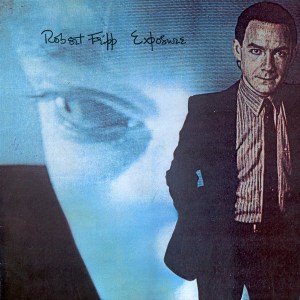
Fripp’s debut solo album, originally recorded at New York’s Hit Factory between January 1978 and January 1979, has endured endless tinkering from the artist including various remixes/reversions.
But his 1985 (or should that be 1983?) remix, carried out at London’s Marcus Studios alongside Brad Davies, is the best.
But calling Fripp completists: is this version of Exposure even available on any format apart from the original cassette? (Thank goodness I still have my copy, signed by Fripp at the Virgin Megastore circa 1988, because I bought the noughties CD version to find that it featured completely different vocal takes, and the current streaming version is just as obtuse…).
The 1985 version of Exposure adds some sonic wallop to the drums, pushes Barry Andrews’ keyboards way back in the mix, comps the best of Daryl Hall and Peter Hammill’s vocals and features arguably Peter Gabriel’s best ever version of ‘Here Comes The Flood’ (with Frippertronics prelude).
It’s also a completely personal album, Fripp’s Face Value, the musings of an uptight Englishman in NYC, a prog/fusion version of ‘Annie Hall’. There are funny vocal interjections/indiscretions from his mother (‘You never remember happy things’), Fripp himself (‘Incredibly dismal, pathetic chord sequence’) and Eno (‘Can I play you some new things that I think could be commercial?’).
Gabriel fluffs the opening of ‘Here Comes The Flood’, Hall layers his vocals in strikingly avant-garde fashion, JG Bennett’s words are often layered in (with permission from his widow), arguments are eavesdropped upon and there are striking ‘audio verite’ sections. And lots of Frippertronics.
Fripp also uses silence to great effect. Don’t play this album too loud. But then there are the gorgeous ballads, ‘North Star’, featuring delightful pedal steel from Sid McGinnis and wonderful Hall vocals, and ‘Mary’, featuring Terre Roche (she also screams away on the cool reversion of Gabriel/Fripp’s title track).
And drummers: you gotta hear this album. Forget Narada Michael Walden’s playing with Weather Report, Jeff Beck, Tommy Bolin and the Mahavishnu Orchestra – this is his most outrageously brilliant drumming on record. Phil Collins plays well too, as do Allan Schwartzberg and Jerry Marotta.
1985 was a good year for Fripp. Alongside this fantastic Exposure remix, he met future wife Toyah, recorded some brilliant stuff with David Sylvian and also set up his ‘study group’ The League Of Crafty Guitarists.
Pop musicians make comebacks all the time – in jazz or jazz/rock, it’s almost unheard of.
Reading King Crimson/Yes/Genesis/Earthworks drum legend Bill Bruford’s fine autobiography, there was no doubt he’d had his fill of the music business when he officially retired from performance on 1 January 2009 (his last headlining gig took place the previous July).
Away from the kit, in recent years he’s achieved a PhD from the University of Surrey, curated an excellent YouTube channel and released the occasional reissue or compilation, the latest of which is The Best of Bill Bruford.
But, as they say in sporting circles, you’re a long time retired. So it’s thrilling to report that Bruford is making tentative steps back to public performance – in a recent interview he described his return to playing as ‘explosive, unexpected, and very sudden’.
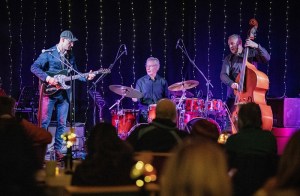
He turned up at the John Wetton tribute gig last year, performing ‘Let’s Stick Together’ alongside Phil Manzanera and Chris Difford, and now he’s joined up with his old drum tech, German ex-pat guitarist Pete Roth, plus bassist (usually on acoustic but here on electric) Mike Pratt, for some low-key trio gigs.
His recent show at the 606 was the busiest your correspondent had seen Chelsea’s treasured jazz club for years. Roth’s website describes his music as ‘jazz without borders’, and it’s a pretty good summary – they generally avoid fusion clichés like the plague, sounding more like John Abercrombie’s organ trio than anything Bruford recorded with Allan Holdsworth.
His kit was a return to his youth – two tom-toms, angled snare, two cymbals. And he still has that prodigious, propulsive technique on the hi-hats and ride cymbal, even if his snare drum no longer particularly has that distinctive ‘clang’.
‘Billie’s Bounce’ featured Bruford’s trademark figures between the tom-toms and snare drum, and Roth’s organ patch and octave pedal were a novel touch. ‘How Insensitive’ developed from a freeform rubato opening into an Abercrombie-esque mood-jazz piece, though Pratt’s strident bass seemed a little out of place.
‘If Summer Had Its Ghosts’, first recorded by Bruford with Eddie Gomez and Ralph Towner, meshed odd-time fun with the blues, Roth’s guitar at its more Scofield-like. ‘Summertime’ came with a tricky vamp which Pratt and Roth rushed somewhat – never a problem for Bruford, while a section from Dvořák’s Symphony No. 9 was a slowburn success. Meanwhile band composition ‘Trio of Five’ (or was it ‘Fun’?) was another attractive if a little harmonically inert, vamp-based piece in their favourite 5/4.
Though there were times when Bruford seems to have lost a little of the fluidity of old, it seems churlish to judge a performance thus when the performer and loyal crowd are having so much fun.
The trio play at the Oxford Spin club later this month, and for some other selected dates next year – don’t miss. What an unexpected pleasure to see Bruford back.
Despite his reputation as a sonic groundbreaker and technological wiz, Peter Gabriel arguably hasn’t done anything much good on record since 1992, even as his live shows gain popularity.
1986’s So was of course the huge pop breakthrough, and that album has been the template for his subsequent, rather predictable solo career – he generally switches between atmospheric ballads a la ‘Mercy Street’ or ‘Don’t Give Up, ‘dark’, vaguely industrial rock tracks, and ‘funky’ one-chord grooves with poppy hooks and emotional lyrics, typified by ‘Sledgehammer’.
i/o is his first album of new material since 2002 and sadly it cannot reverse the trend, despite Gabriel’s always excellent, ageless vocals. It mostly meanders by in a fog of ugly snare drums, dry guitars and keyboards (some by Eno), digital treatments/loops pitched somewhere around 1998, and not much air at all. It seems the multi-layered triumphs of ‘Lead A Normal Life’ and ‘Family Snapshot’ are long gone.
Elsewhere Tony Levin’s bass and stick parts are prominent but they can’t produce anything as immediate and catchy as ‘Sledgehammer’. ‘Four Kinds Of Horses’ sums up the problem – a fairly uninteresting half-time groove underpins a fairly uninteresting vocal melody, while a rather irritating piano loop burbles away in the background. It never should have left the rehearsal room and many other (mostly overlong) tracks replicate that formula.
But Gabriel does deliver a pretty good, harmonically-rich ballad – ‘Playing For Time’ – which some other reviewers have very generously compared to Randy Newman’s best work. It’s this album’s ‘Washing Of The Water’.
In conclusion, the main problem with i/o is that it sounds exactly like you think it will. Maybe Gabriel is working with the wrong people, maybe the wrong software. Maybe he needs to get back to recording ‘as live’, embedded in a really good five-piece band. Paging Bob Ezrin, Larry Fast, Robert Fripp and/or Hugh Padgham…
(postscript: I’ve recently invested in the definitive 2007 CD remaster of Genesis’s Lamb Lies Down On Broadway – it sounds absolutely fantastic and I feel 18 again…)
If any more proof was needed as to how far the UK pop charts have declined since the mid-1990s, look no further than the fact that Genesis’s ‘Mama’ – released 40 years old this week – was their biggest hit, going all the way to #4.
Not bad for a nearly-seven-minute song without a proper chorus about a young man’s troubled relationship with a sex worker.
In my opinion, ‘Mama’ is one of the great singles of the 1980s, epic and menacing, and the last decent showing for post-Gabriel Genesis (I couldn’t/can’t get anywhere with its attendant 1983 self-titled album, nor any of their subsequent projects).
In autumn 1983, I was vaguely aware of Phil Collins, my ears having been piqued by my dad’s frequent playing of Face Value around the house. But when my uncle bought me the ‘Mama’ 12-inch single, I’m pretty sure I’d never heard of Genesis. But Uncle Jim wrote ‘Side A is the good side!’ on the front for guidance, knowing I’d love Phil’s immense drum sound (to these ears, still just as ‘shocking’ as ‘In The Air Tonight’). For me, this is the apex of Phil’s best era – roughly 1976 to 1983.
The author with his first snare drum, his dad the DJ about to put on ‘Mama’, circa autumn 1983
‘Mama’ was recorded at the band’s Farm studio near Chiddingfold, Surrey, and co-produced by Hugh Padgham. Phil set up in the new drum room modelled on the famous Townhouse Studio 2 in Shepherds Bush.
There are still so many pleasures – Phil’s sibilant, Lennon-influenced vocals (including a homage to Melle Mel), making full use of the slapback echo which went straight onto tape rather than being added later. Banks’s ominous synth layering and wacky lead tones. Mike Rutherford’s Linn drum programming, played through a guitar amp.
Also listen out for the way Phil avoids metal completely until the beginning of the fade, when his enormous crash cymbal is a huge release.
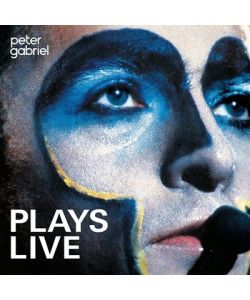
PG’s first live album – released 40 years ago this week – touched down incongruously during 1983’s Summer of Fun, crashing into the UK chart at #9 alongside Let’s Dance and Thriller (but Japan’s posthumous live album Oil On Canvas did even better – it was the week’s highest new entry at #5).
Plays Live was ostensibly recorded during four dates of the American tour in December 1982. Gabriel had taken some choreography lessons and often ventured into the audience for ‘Lay Your Hands On Me’, sometimes ‘falling backwards’ from the stage in the manner of those corporate team-building/trust exercises.
But he was very transparent about there being a lot of ‘cheating’ on this album – many overdubs/vocal corrections were undertaken with the assistance of co-producer Peter Walsh (fresh from Simple Minds’ New Gold Dream) at Gabriel’s Ashcombe House studios near Bath.
Plays Live hangs together very well – it’s immaculately sequenced and you certainly get your money’s worth, clocking in at a shade under 90 minutes. The tracks taken from Peter Gabriel IV AKA Security are a huge improvement on the studio versions. ‘Humdrum’, ‘Not One Of Us’, ‘No Self Control’ and ‘DIY’ are similarly transformed to become radical, vital updates.
There’s even an excellent Melt outtake called ‘I Go Swimming’. And when the band are freed from the sequencers and drum machines, they really sound like a band – check out the ‘floating’ tempos of ‘Humdrum’ and a few other tracks.
Jerry Marotta’s huge drum sound and (quite advanced) used of drum machines were not everyone’s cup of tea – Bill Bruford was still kvetching about it to Modern Drummer magazine during a 1989 interview. Both Marotta and synthesist Larry Fast, a key collaborator, were given the boot by Gabriel at the end of 1983, to much consternation.
My entrée into Plays Live was the (remixed) single release of ‘I Don’t Remember’ courtesy of its video being shown on ‘The Max Headroom Show’ in 1985. Marcello Anciano’s disturbing clip featured nude dancers from the Rational Theatre Company and some figures inspired by the artist/sculptor Malcolm Poynter. It’s hardly surprising that it missed the top 40…
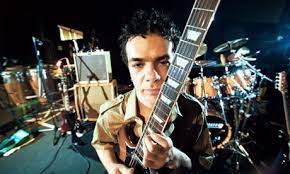
Lewis Taylor has never troubled the BRIT, MOBO or Grammy awards and never had a top 40 single or album but may be the most musically talented British solo artist of the last 30 years.
Over six studio albums – including last year’s unexpected NUMB, his first record for 18 years – Taylor’s work has embraced neo-soul, old-school R’n’B, prog, psych and yacht rock, influenced legions of blue-eyed-soul wannabes and been publicly lauded by David Bowie, Aaliyah, Paul Weller, Amy Winehouse, Leon Ware, Elton John, D’Angelo and Daryl Hall.
His classic self-titled debut album dropped on Island Records in 1996 and stunned the musical cognescenti. Who was this guy from Barnet who sung a bit like Marvin, played guitar like Ernie Isley, bass like James Jamerson and keyboards like Billy Preston, and created his extraordinary angst-ridden compositions in a North London flat on two digital reel-to-reel tape machines?
His second album – 2000’s Lewis II – was possibly even better, but sadly there were various reasons for its lack of commercial success. Lewis parted company with Island and recorded two further studio albums in the 2000s, Stoned Parts 1 and Part 2, and also issued The Lost Album and Limited Edition 2004. But what most fans didn’t know was that Lewis had a ‘secret’ 1980s history as purveyor of weird psychedelic pop/rock under the name Sheriff Jack and also as a touring guitarist in The Edgar Broughton Band.
It all adds up to a truly singular career, and Lewis is one of the most gifted artists working in music today. movingtheriver caught up with him as his new album NUMB was being released to rave reviews.
MTR: I gather you grew up in North London and were somewhat of a piano and guitar prodigy – can you tell me about your early experiences of seeing live music in the capital? Who would have been some artists you saw live/listened to?
LT: Ooh no, I wouldn’t say I was anything near a prodigy. My Dad was a wannabe musician who’d played percussion in a couple of jazz bands – Bongo Bernie they used to call him – so the real interest in music sort of came from being around him and I became obsessed with records. As a result live music has never interested me and it still doesn’t really, it’s all about the records. My dad liked a lot of big-band jazz – Stan Kenton was a fave of his, and he liked Latin stuff like Tito Puente. I also remember an album of Maya Angelou songs he liked as well cos it was sort of dark calypso. That was his thing – he liked anything that had that sort of exotic, syncopated rhythmic thing going on, but he liked some pop of the day too. He loved Mungo Jerry’s ‘In The Summertime’, it used to make him laugh, and I can remember him in the car singing along to the end choruses of TRex’s ‘Hot Love’. He was quite a strange man.
On the keyboards side, would you say you were ‘classically’ trained? I only ask because I hear little bits of ‘classical’ harmony on some of your stuff, like ‘Satisfied’ and ‘The Final Hour’.
I would say I had a bit of classical training. But because the guitar had taken over I’d stopped paying attention to my piano lessons, but some of it must have still seeped through so I do have a good grasp of music theory, but I still can’t read music. I used to cheat in my lessons. I would learn whatever piece I was given to learn by ear and pretend I was reading it. Because I had a precocious taste in rock music as a pre-teen, the fact that the lessons were all based around classical piano music only served to distance me from it even more. So it very quickly started to feel like an extension of school. I did eventually manage to splutter out: ‘Mum, I hate this – I’m only doing it cos you told me to’, and that was the end of it.
Which guitarists/bassists/keys players do you/did you idolise? Re. the former, I hear Ernie Isley, Eddie Hazel, maybe Richie Blackmore, and I detect a John McLaughlin influence too?
One of my biggest bass influences is Chris Squire. I first heard Yessongs in 1975 and all I could hear was this clicky-clang of his bass but he would also be going places melodically where someone like James Jamerson went and the combination was so unusual and inspiring. On guitar, Pete Townshend, just for his rhythmic thing he has going on, I definitely got my strong right-hand attack from listening to him. For soloing, yeah a bit of Blackmore, but when I really started trying to play lead Van Halen had just come out so apart from the finger-tapping aspect which I’m not really into, the way he interpreted the blues scale influenced me a hell of a lot. Michael Schenker was another one. And of course Jimi. I do like players like John McLaughlin and John Scofield, Allan Holdsworth as well, but I’m not lofty enough to go there!
Tell me about joining/touring with the Edgar Broughton Band.
It was a weird coincidental thing, one of the albums I’d borrowed from my cousin was an Edgar Broughton Band album so I’d first heard of them when I was 9 or 10. Ten years later my brother had got a job working at Steve Broughton’s studio. When Steve told him they were going to reform and were looking for a guitarist, he said: ‘Get my brother in, he already knows all your stuff’ so it went from there. I loved it. The dysfunctionality of their music and of the band itself sat very well with my own dysfunction! We toured round Germany, Switzerland and particularly Norway a lot, we played a huge stadium in East Berlin three years before the wall came down. Every tour was an experience of some kind, not always good, but even that was good! The one which really shone for me was an outdoor festival on a Norwegian island called Karlsoy. We played at midnight but it was daylight, really strange daylight. I’ll always remember the walk down to the stage and turning round to see this wonderfully eerie vision of Edgar waking behind me, his Lennon shades on, his long white mane of hair and this really odd, cold light from the midnight sun shining behind him. We played a blazing set that night. Love Edgar, love those guys!
Sheriff Jack – what are you memories of that period?
Steve Burgess was a bit of a character who had a shop in Crouch End called English Weather. He saw himself as a sort of record-shop guru and I suppose he was, to me at least, the imploding 19-year-old I was back then. It coincided with the Paisley Underground thing that was starting at the time so his shop specialised in that along with 60’s garage and psychedelia, and so I quickly became a regular customer there and we became friends. He’d also been involved somehow with The Soft Boys and Robyn Hitchcock and I went through a period of listening to them quite a bit. I probably misread a lot of what Hitchcock was doing as just silly nonsense and tried to do the same thing with the Sheriff Jack stuff. The name came from a track on a Red Krayola album called God Bless The Red Krayola And All Who Sail With It. Again, a very bizarre album to some that seemed to make perfect sense to me. On this song I think they’d deliberately recorded the drums without being able to hear the song so they would go out in and out of time with the rest of the music. I used to play that track over and over on so I thought it was fitting to name myself after that song. I wasn’t serious or ambitious about it and I’m still not quite sure why I did it to be honest, but I did.
When signing with Island, did you have any direct dealings with Chris Blackwell?
No I never met him. I wouldn’t be surprised if he didn’t even know I was signed to his label, let alone who I was!
Is it true that you worked quite a lot on that first Island album at their studios in St Peter’s Square, Hammersmith, with more of a ‘band’ vibe, before recording the album essentially by yourself?
Not really, no. I was still trying to find a direction and hadn’t found it at that point. So there was a lot of early material that was fairly dodgy. I’d gone in there with the multi-tracks to overdub a drummer to get a live feel. But even then everything else had been done at home. I used to have some bad habits – I would sometimes record the effects onto tape as opposed to sending the tracks to effects during the mixing stage, so I would just use a reverb unit, then compress the reverb so it really sort of sucked in, then record it with the dry signal. The album was actually mixed at that studio though, so I’m sure the notorious echo chamber is on there somewhere.
What was it like appearing on ‘The National Lottery’ show? And ‘Later…With Jools’? Did you enjoy that aspect of promotion?
Some of it I did, yeah. I actually was on ‘Later’ three times you know – oh yes. Once as Lewis, once on keys with Finley Quaye, and once as keyboardist with some rappers called Spooks.
Do you ever wonder how different your life would have been if ‘Lucky’ had been a big hit? (and btw, I’m stunned that ‘Whoever’ didn’t even chart – that sounds like a hit to me, even today…).
Oh thanks. I actually have a pretty good idea how I would have turned out had I been more successful – I’ve always had a few loose screws at the best of times but a successful career in music, and particularly the fame aspect of it, would’ve turned me into a complete basket case!
Is it true that it was completely your decision to scrap the second album for Island, before starting over and recording Lewis II? I do recall a comment at the Hanover Grand gig where you alluded to Island being responsible…
Not exactly, I pushed in such an extreme direction the other way with what eventually became The Lost Album, it was a knee-jerk reaction to a perceived ‘trapped in R&B’ feeling I was going through at the time and some people around me were in favour of it and others weren’t. In the end I think I lost confidence in it and did Lewis II instead.
It is mystifying to me why no singles were released from Lewis II. Do you regret that ‘You Make Me Wanna’ wasn’t released as a single? I might have gone for ‘My Aching Heart’ too…
I don’t know. I think things were fairly fragmented by then and really my heart wasn’t in it anymore, but I wasn’t aware of that so I was sort of on autopilot. Also a lot of the people who were at Island when I signed with them had left so a few things definitely sort of contributed to the way things went there.
That Hanover Grand gig around that time felt so positive and it was a thrill seeing an English artist making such patently world-class music, and starting with ‘Track’… Do you feel that that momentum wasn’t maintained? And how much do you lay at Island’s door?
Hmm, not much really, but I did at the time. In hindsight I don’t think I would have been an easy artist to work with, I was a guy who sounded like that but looked like this and I wouldn’t play ‘the game’. I’m surprised that they were as supportive as they were! I do remember it being a pretty good gig though.
Amy Winehouse was quoted as saying she wanted to work with Paul Staveley O’Duffy only because he’d worked with you – did you know Amy? Did she seek you out? She was obviously a big fan. I thought ‘Take The Box’ had more than a bit of your influence.
No, I didn’t know Amy and I wasn’t aware that she was a fan. She was a great singer though. Very sad what happened.
Did you record a whole Trout Mask Replica covers album? I remember hearing ‘Ella Guru’ and being knocked out by it.
Oh cool, I’m glad you liked that! No I didn’t do the whole album, it was a bit of an anal job. You can’t learn those songs that easily cos there isn’t a straight line going through them, well there is but it’s very, very bent. So the only way was to get the instrumental version of each song, record it onto a stereo track cos Beefheart always had two guitars panned hard left and right, then I would just drop in and overdub it phrase by phrase, erase the original then try and sing on it. I gave up after 13 tracks, couldn’t be bothered! LOL…
How do you feel Universal have treated your Island catalogue since you left the company? Do such things bother you?
No, not really. It’s a shame that they didn’t contact me when they did the expanded reissue thing but other than that it’s all cool.
Did you know beforehand that the 2006 Bowery Ballroom gig in NYC was going to be your last for a long while?
No I didn’t as such, but I had started looking at myself from a personal point of view by then and I was trying to figure out where I ended and where the musician began. Unfortunately that process coincided with the involvement of the US guys so I was on a different page to them and it was the wrong page to be doing what I was doing. I didn’t have a clue about that at the time though so my behaviour may have been a bit baffling to them!
Famously you withdrew much of your online presence in 2006 – what has driven you to ‘switch it on’ again? And how do you feel about being a solo artist now with all the social media marketing etc. that goes along with it?
I dunno really, up until about two years ago I still wasn’t bothered, if somebody told me I’d be putting an album out in 2022 I’d have laughed at them. It feels a bit like it came out of nowhere but at the same time it doesn’t feel like one of those ‘I just have to create again and now is the time’ scenarios either. There was always a part of me that was pretty cynical about that way of thinking, and coming back to it now I still think like that, but in less of a cynical way if that makes any sense. The whole social media thing is just another thing – ‘new skin for the old ceremony’ – it has its pros and cons just like everything else that came before it.
You used to make music using a digital reel-to-reel tape machine in your home – is that still the case?
No, it’s all on a Mac now.
What do you think of the streaming revolution and its effect on album listening? Do you miss the physical product (and is NUMB going to appear on vinyl?)
I don’t really miss the physical format, I actually like mp3s, I like the convenience of them. Yes NUMB is definitely getting a vinyl release some time next year. Be With Records are doing it, the guys who did the vinyl of the first album. I’ve heard the test pressing and it sounds great.
B-sides – you created some brilliant music. Personal favourites: ‘Lewis III’, ‘Pie In Electric Sky/If I Lay Down’, ‘Asleep When You Come’. Is there anything more in the vaults? What’s the favourite of your B-sides?
Oh cool, thanks! No I don’t think there is anything left over, each set of B-sides was written and recorded specifically for each ‘single’ release. My favourite has always been’ I Dream The Better Dream’. In my fantasy it’s what early Soft Machine would’ve sounded like if Marvin Gaye was their lead singer.
I enjoyed your collaborations with Deborah Bond and The Vicar’s ‘The Girl With Sunshine’ (please tell me more about that). Did you consider any other duets/collaborations in a similar vein just before your ‘retirement’? Or is there anything in the pipeline for the future?
Both of those things were done at a time when I was starting to back away and shut up shop so it was all done via email. The Deborah Bond thing was a nice little job, cute little song. The Vicar thing was a guy called David Singleton who was somehow attached to Robert Fripp, I’m not sure exactly how. I think he’d heard a tune from The Lost Album which was featured on a compilation that came free with one the mags and so he sent an email asking if I’d like to sing on this funny album he was doing. Why did I do it? Good question. Looking back I think I was probably just flattered that someone was still interested at that stage.
You were involved as a ‘sideman’ capacity with Gnarls Barkley and Finley Quaye – was there ever any possibility of you just becoming an ‘anonymous’ sideman post-2006? Could you have carried on as a session player?
No I don’t think so. I definitely needed a total break from everything. I was approached with a couple more MD jobs after the Gnarls thing but as soon as I started thinking about the possibility of doing them it just felt wrong. I did reconnect with The Edgar Broughton Band though and we did a few more tours over the course of about four years, but that doesn’t count cos they were mates and it was away from Lewis Taylor and the mainstream industry. We toured the same places as they had always done, Norway, Germany and Switzerland. I think a few gigs were recorded but not for a record, although we did do a German Rockpalast show which had a DVD and CD release, and there are a few fan-made clips of some Norway shows on YouTube.
Listening to NUMB, it’s striking how much lower your vocals are in the mix as opposed to say on Lewis II. There’s a ‘horn-like’ feel to your vocals now too. I gather you particularly love Johnny Hodges’ playing?
That’s interesting, it didn’t occur to me that I sounded like that! I do remember saying I liked Johnny Hodges but I love all the classic alto and tenor players. The Hodges reference was probably from when I was listening to a Charlie Parker Jam Session album and Johnny Hodges was one of the many players on it, and compared to everyone else’s blazing solos his playing was so small and sly in a wink-wink kind of way and I remember being very entertained by it at the time. But then I discovered Albert Ayler and everything changed.
Who’s that on backing vocals on ‘Apathy’? And are there are any other guest appearances on the album?
Well that’s Sabina (Smyth) of course! And she is by no means a guest, any female vocals you hear are her! She’s on all the albums. We write, produce and mix all the albums together – it’s all us.
Is that a Syd Barrett interview reference on ‘Feel So Good’? (‘I even think I ought to be’…)
Of course! God bless Syd. I love him.
‘Nearer’ is extremely complex. Any memories of how that tune came about?
It’s strange cos while it does sound complex it was actually one of those tracks the just seemed to write itself.
NUMB is generally downbeat but also uplifting, kind of a modern blues. A key theme seems to be having the courage to be yourself, faults and all, and the problems that go along with that. ‘Braveheart’ says it all.
That is a key theme, yes. Self-awareness and trying to be more authentic than you may have been in the past. All that shite. Yeah, I love ‘Braveheart’.
It’s a beautiful mixing and mastering job on NUMB. It’s really easy on the ear. Do you enjoy that aspect of music-making?
Thanks man. I think I enjoy that and the programming more than anything. Using a program like Logic is so much fun. You’re only limited by yourself. Logic will do anything you want it to and having those tools accessible is a great thing.
I think NUMB is really original (and, for what it’s worth, your best album since Lewis II…), but what music do you listen to for enjoyment now?
Thank you so much and I’m so glad you like it. I listen to a lot of opera these days. Totally away from anything I do as a musician.
How do you feel about people covering your stuff? Anything you particularly like? I’ve heard a few – Taylor Dayne, Peter Cox, Beverley Knight. Jarrod Lawson plays a great live version of ‘Right’. And of course Robbie. Presumably the latter has been absolutely vital for your income stream.
I think it’s cool and I think Robbie did a great job on ‘Lovelight’. I was watching some footage of him the other day and he’s such a powerhouse as a performer.
Do you miss playing live at all? Personally I found the last few years of your live stuff in the mid noughties a little ‘perfect’ with great players but maybe a little too slick… Do you agree? And any chance you might play live behind NUMB?
I actually thought that last band, myself, Ash Soan, Lee Pomeroy and Gary Sanctuary was the best band I ever had. I heard some tapes of us when we were over in NYC and we were so fierce.
Finally, how would you sum up your career in music thus far?
Hmm, probably with a small ‘c’…
Thank you, Lewis…
Further reading: An edited/updated version of this interview appears in the April 2023 issue of Record Collector magazine.
The classic It Bites lineup (Francis Dunnery, John Beck, Richard Nolan, Bob Dalton) produced three excellent studio albums and of course snared one huge UK hit in the shape of ‘Calling All The Heroes’.
Then, after the band split in 1990, there was the middling best-of live collection Thankyou And Goodnight. But now there’s an excellent new limited-edition 2018 boxed set called Live In London.
It collects three complete, unedited London gigs (I was at two of them) over five CDs, including their very last major show in the capital. Whilst these are essentially desk recordings, the sound quality ranges from good to excellent. The set also features nice, previously unseen photos and some good liner notes including a long interview with Dalton, telling of their London history and details of each gig.
The Marquee concert from 21 July 1986 (at less than 40 minutes, presumably a support?) catches the band in their full-on, zingy, poppy/funky early pomp. Everything sounds a little fast and they haven’t quite settled into their groove yet but it’s still a good listen. There’s a shrill early version of ‘Black December’ and a great, rare outing for ‘Whole New World’ with Dunnery playing the horn lines on lead guitar with some aplomb.
Next is the very tangible peak of the band, a Once Around The World tour gig from 13 May 1988 at the much-missed Astoria. The sound is beefy, the tempos locked in, the backing vocals excellent and this really is the dog’s bollocks. There’s so much evidence of craft, with an extra note here and lick there, always slightly modifying the album versions.
‘Plastic Dreamer’ is a revelation, ‘Black December’ is huge, and ‘Old Man & The Angel’ ambitious and exciting. We finally get to hear what Dunnery sings in ‘Hunting The Whale’. The ‘Midnight/Wanna Shout’ medley is a knockout, complete with ‘Purple Haze’ coda, and Once Around The World’s title track is brilliant, complete with excerpt from ‘New York, New York’ which chimes rather cleverly with Dunnery and Beck’s Lamb Lies Down On Broadway fixation.
The third gig is the band’s final London show, from the Hammersmith Odeon on 7 April 1990. The intro sounds like something from Prince’s Lovesexy. The new songs sound great, ‘Let Us All Go’ is superb but Dunnery’s voice is pretty shot throughout, and some of the backing vocals are also showing signs of strain. In truth you can hear the schisms in the band developing, though there are many, many great moments.
Barely two months later Dunnery had left the group. Not long after that, this correspondent would see him skulking around the King’s Head pub in Fulham (he was rehearsing upstairs with Robert Plant, I was gigging there), not looking a particularly well or happy man. Thankfully he’s on a far more even keel now.
Live In London is a really exciting release, a must-have collection for anyone who owns any of the studio albums, and arguably a much better package than Thankyou And Goodnight.
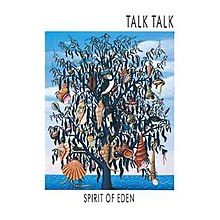
35 years ago today, Mark Hollis (guitar, keyboards, vocals), Tim Friese-Green (keyboards, production), Lee Harris (drums), Paul Webb (bass) and engineer Phill Brown convened at London’s Wessex Studios (don’t look for it – it’s not there any more) to begin work on the Talk Talk album Spirit Of Eden.
During May, June and July 1987, this core unit worked five-day weeks from 11am until midnight, in near darkness apart from an oil projector, a gentle strobe lighting effect and three Anglepoise lamps.
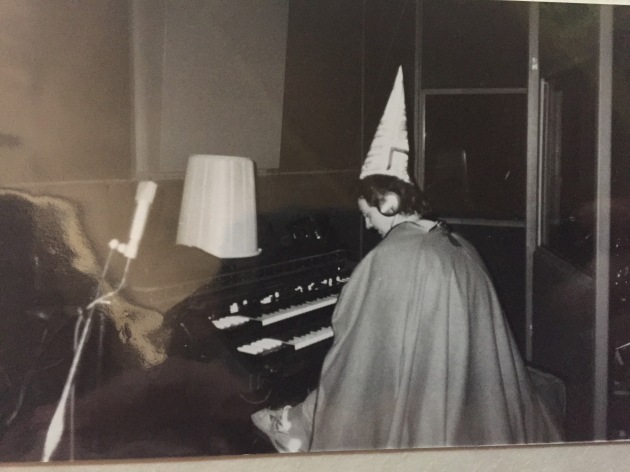
Tim Friese-Green on the Hammond organ, Wessex Studios
Basic tracks laid down, they took a break. On 19 October 1987, work resumed with instrumental overdubs; first woodwinds, then a coterie of world-class musicians including David Rhodes, Bernie Holland and Larry Klein, whose contributions would end up on the cutting-room floor. But those whose performances did make the cut include Nigel Kennedy, Danny Thompson, Robbie McIntosh, Martin Ditcham and Henry Lowther.
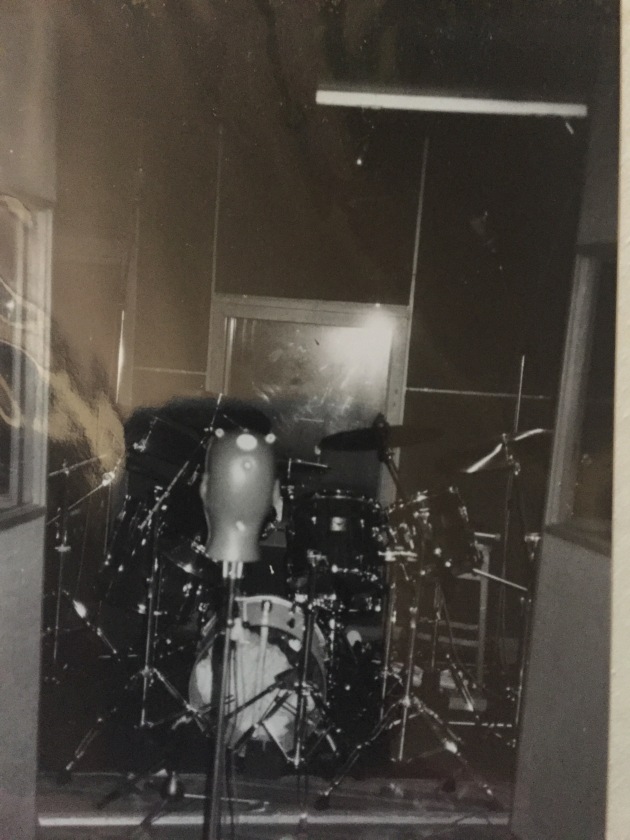
Lee Harris’s drum booth, Wessex Studios
Almost a year in the making, Spirit Of Eden was finally released on 12 September 1988 (after a long delay while EMI panicked – it was actually completed on 11 March 1988) and remains one of the most influential, least-dated ‘rock’ albums of the 1980s.

 He’s one of the finest guitarists this country has ever produced and, since leaving pop/prog titans It Bites in 1991, somewhat of a moving target: astrologer, solo artist, sessionman (Robert Plant, Ian Brown, Lauryn Hill), giver of house concerts, radio presenter.
 Everyone knows a few: those acts that got great reviews, named some of your favourite bands as influences and sold a few records in the process, but there was just something about their music that you couldn’t hack.
 Fripp’s debut solo album, originally recorded at New York’s Hit Factory between January 1978 and January 1979, has endured endless tinkering from the artist including various remixes/reversions.
 Pop musicians make comebacks all the time – in jazz or jazz/rock, it’s almost unheard of.
 If any more proof was needed as to how far the UK pop charts have declined since the mid-1990s, look no further than the fact that Genesis’s ‘Mama’ – released 40 years old this week – was their biggest hit, going all the way to #4.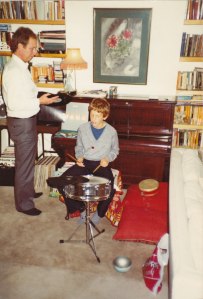
 Lewis Taylor has never troubled the BRIT, MOBO or Grammy awards and never had a top 40 single or album but may be the most musically talented British solo artist of the last 30 years.
 movingtheriver.com