Story Of A Song: Prefab Sprout’s ‘Bearpark’ (1988)

prefabThere’s a quality to demo recordings (rough, early versions designed to demonstrate a composition for a potential multi-track studio recording) that really appeals, especially those with ‘delusions of grandeur’ that try to sound much more expensive than they are.

In the 1980s, a demo would typically be very quickly recorded onto a four-track tape machine and then tarted up with a bit of cheap reverb.

But these artefacts can very often take on a quality all their own. ‘Chasing the demo’ syndrome is common among musicians and producers, where they try in vain to replicate the freshness of the original as compared with an endlessly-tinkered-with studio version which quickly loses its zing.

‘Bearpark’ first appeared on the B side of Prefab’s ‘Nightingales’ 12” single as part of a three-song EP called The Demo Tapes (the other two tracks were ‘Life Of Surprises’ and ‘King Of Rock’n’Roll’).

It never made it onto any album but has nevertheless become one of my favourite ever Paddy McAloon compositions. It was also apparently the first time he had ever used a four-track cassette machine, recorded with a Dr Rhythm drum box, cheap synth and electric guitar.

The chords hang in the air, never quite getting resolved. In fact, playing along to the song on bass, virtually any root notes work under each chord. It’s hard to imagine how ‘Bearpark’ could be improved by a big-budget production, hence possibly why it hasn’t appeared on an official album, though Paddy says he ‘felt like Phil Spector’ when he’d finished it. Its charming musical naivety and sparseness perfectly suit the lyrical theme: home.

Home, sweet home
Sweet home, hard as nails

Bearpark, you were mine
I know, I know, I’ve been away but you’re
Not the type for valentines
Bearpark, I get homesick

Langley you are fine
I know, I know, I’m a gypsy
But Bearpark, Bearpark’s on my mind
There’s nowhere else like you

I’m gonna walk this weary body that’s been nowhere far too long
I’m gonna drag it back where it belongs

Home sweet home, Geordies
Hard as nails, Geordies
Well out of my pram,
Hard as nails, Geordies
We am

Bearpark, what a place
I know that this will sound soft but I
Sometimes think you’ve got a face
Both eyes black and blue

A stranger comes to town
I know, I know, the chances are that
Some bright spark will run him down
No honey on your tongue

I’m gonna take this broken spirit
Gonna heal it for all time
When I see your dear name
Upon a sign

Bearpark, you are mine
Hard as nails, Geordies
Well out of my pram…

Maybe it is time the song got a ‘proper’ recording. As Paddy says in the liner notes on the back of the 12” single, ‘You might think you can do better – be my guest. I like cover versions.’ But he also advises: ‘Don’t spend too long on the demo’…

Toto/Miles Davis: ‘Don’t Stop Me Now’

Toto-FahrenheitI’ve always had a somewhat ‘troubled’ relationship with Toto’s music, to put it mildly…

Toto IV (1982) was obviously a classic of its kind, Hydra (1979) had its moments and there are other classy tracks dotted around, but I’ve generally thought: David Hungate, David Paich, Jeff Porcaro and Steve Lukather are fantastic musicians who have played on some of the greatest albums of all time – so what are they doing in this band, writing these songs?

But I found a solution of sorts when I came across a track buried at the end of their lacklustre Fahrenheit album from 1986. ‘Don’t Stop Me Now’ is a cracking instrumental with nice chord changes, a great melody, gorgeous bridge, slick playing from co-writers Paich and Lukather and a memorable guest spot from Miles Davis.

Of course Miles was no stranger to the world of Toto and the LA session elite in general. He was tight with Quincy Jones, producer of Michael Jackson’s Thriller, an album that heavily featured Jeff Porcaro, Paich and Lukather.

Miles had also covered Thriller‘s ‘Human Nature’ (co-written by Toto keyboardist Steve Porcaro) on his You’re Under Arrest album the previous year. He was also apparently a big fan of Jeff Porcaro’s painting, not to mention his drumming, so a full-scale Miles/Toto collaboration was surely always on the cards.

But the recording of ‘Don’t Stop Me Now’, which took place at Jeff Porcaro’s home studio in early 1986, wasn’t a walk in the park, as Steve Lukather told George Cole in the excellent ‘Last Miles: The Music of Miles Davis, 1980-1991’:

‘We cut the track and left the melody off – we just left open spaces. When Miles got there, we ran it down together with him and he wasn’t really playing the melody. So we figured, we’re not going to tell Miles Davis what to play, so we said, “Miles, we have a take of this, would you mind just giving it a listen and play whatever you want?” He says, “Okay, I’ll play like that. You like that old shit, right?” So he gets out the Harmon mute and he played it – one take. We’re all stood there completely freaked out – it was unbelievable. At the end, the song just kind of fades out, but he just kept playing the blues. I was sitting there with chicken skin on my arms – it was an unbelievable moment. And that’s how we ended the record, with just Miles blowing. Later on, David Sanborn came down to play on a different tune on the record and he’d heard that we had cut a tune with Miles. He said: “I gotta hear it!”, so we played it and he flipped and said, “Please just let me be on the track!” He doubled the melody and played a couple of flurries. So we got Sanborn, Miles and us on one track – that was pretty cool!’

But Steve Porcaro alluded to the wider issue of including a ‘jazz’ track on a ‘heavy rock’ album when he told George Cole: ‘I don’t know how thrilled the record company or our managers were, but for us working with Miles was a major feather in our cap.’

But that kind of political scene didn’t affect Miles: he loved ‘Don’t Stop Me Now’ and quickly integrated it into his own live set. It remained a staple of his concerts from 1986 right up until 1990, the year before his death. It’s a beautiful piece of work. But while we’re at it, has anyone got a lead sheet of the tune? I want the chords…

Talk Talk: April 5th

talk talkIt’s that time of year again.

The birds are swaying, the trees are singing (to quote Dylan Moran) and a young man’s fancy turns to music (to misquote Tennyson).

We all have our favourite spring/summer tracks but in my gaff there isn’t an ’80s tune that does the job better than this gem.

Songwriters Mark Hollis and Tim Friese-Green pinpoint April 5th as the date when spring really kicks in, and this deceptively ramshackle, charmingly off-the-cuff track features elegant piano, Hammond organ, wobbly Variophon, Robbie McIntosh dobro, David Roach soprano sax, subtle percussion programming and a killer chord change.

It was probably the highlight of The Colour Of Spring and forerunner to classic TT post-rock albums Spirit Of Eden and Laughing Stock, highlighting improvisation, lots of space and a much more pastoral sound than before. It floats in like a half-remembered childhood dream and then floats away just as rapidly.

Here she comes
Silent in her sound
Here she comes
Fresh upon the ground

Come gentle spring
Come at winter’s end
Gone is the pallor from a promise that’s nature’s gift

Waiting for the colour of spring
Let me breathe
Let me breathe the colour of spring

Here she comes
Laughter in her kiss
Here she comes
Shame upon her lips

Come wanton spring, come
For birth you live
Youth takes its bow before the summer the seasons bring

Waiting for the colour of spring
Let me breathe you

Jaco Pastorius: Three Views Of ‘Three Views Of A Secret’

Three-Views-to-a-Secret-Lead-Sheet

click to enlarge

First of all, I’ve got to declare an interest: Jaco’s in my all-time top five favourite musicians.

Ever since I started really noticing music in the late ’70s, he was always on my radar – my dad would play Weather Report’s Heavy Weather and Mr Gone around the house, and by the time I knew Jaco’s name I was totally (if subconsciously) immersed in his stuff.

I bought his legendary 1976 debut album from a secondhand vinyl shop in Blandford Forum, Dorset (don’t look for it now, it’s not there any more) sometime in the mid-’80s, and I’ve been a superfan since.

The general critical consensus seems to be that, at his best, when he was healthy and strong between the early ’70s and early ’80s, Jaco’s composing skills were improving at the same rate as his bass-playing skills.

Luckily, in his short, somewhat tragic life, he left us five or six classic compositions (a list that would have to include ‘Havona’, ‘Teen Town’, ‘City Of Angels’, ‘Punk Jazz’, ‘Dania’ and ‘Las OIas’), but perhaps the most enduring of all is ‘Three Views Of A Secret’, a tune that has beguiled me since I first heard it.

He copped the title from a totally unrelated composition by Charlie Brent, the musical director of Wayne Cochran and the CC Riders, a hard-touring funk/R’n’B band Jaco played with in the early ’70s.

‘Three Views’ is essentially a medium jazz waltz built on three sections (A, B and C). The 16-bar A section has a bluesy feel and strong, simple melody.

The B section modulates to D-flat, before returning eventually to E. The third and final C section features repetitions of a four-bar phrase centred again around E, but with added colours to develop the tonality. It is, by any standards, an expertly-crafted piece.

Weather+Report+Night+Passage+505026

The first recording of the tune was arguably the standout track from Weather Report’s 1980 album Night Passage, recorded live at The Complex, Los Angeles, in July 1980.

Joe Zawinul (a very tough critic, apparently calling Jaco’s ‘Liberty City’ “typical high-school big-band bullshit” right to his face a year later) rated it as his finest composition.

‘Three Views’ represented a distinct change of pace for Jaco in terms of his Weather Report career, coming hot on the heels of the frantic ‘Teen Town’, ‘Punk Jazz’ and ‘Havona’.

The closest stylistic reference in jazz to ‘Three Views’ would probably be Charles Mingus, though Jaco himself claimed to be more a Gil Evans man.

Jaco starts the tune with his trademark false harmonics (most famously heard in the head of ‘Birdland’), aided by Zawinul’s shimmering accompaniment.

Then, in the B section, Wayne Shorter deliciously deconstructs the melody in the way only he can. He refers to it, flirts with it, skitters around it, but never fully commits to it, leaving Zawinul’s strong harmony to point the way forward.

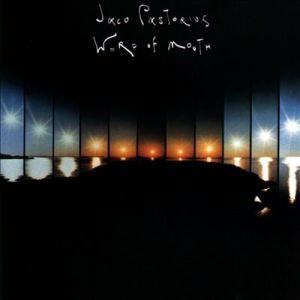
The second version appeared on Jaco’s second solo album Word Of Mouth, released in 1981. A controversial release, it was supposed to be Jaco’s big Warner Bros ‘fusion’ debut but it ended up going way over budget and making him almost persona non grata at the company.

jaco

The basic track was recorded at the Power Station, New York, with Jaco on piano, Toots Thielemans on harmonica and Jack DeJohnette on drums.

Strings, brass, woodwinds, voices and bass were added later in LA, at enormous expense; Jaco hired a 31-piece string section from the LA Philharmonic at a cost of $9,000, but later erased their contribution, not believing they had delivered the performance required.

Seven players from the section were selected by Jaco to come back a few weeks later and try again – they were overdubbed nine times each to create the illusion of a 63-piece string section!

So was it all worth it? Judge for yourself below. I know which version I prefer…

There’s also a lovely 1986 live (bootleg) version featuring Jaco’s short-lived but storming trio with Hiram Bullock on guitar and Kenwood Dennard on drums, but it’s really hard to find.

‘Three Views’ was played by a specially-selected band at Jaco’s funeral mass on 25th September 1987 at St Clement’s Church in Fort Lauderdale, Florida, where he had once served as an altar boy. It rang out as the pallbearers, including Zawinul and Shorter, led the procession of mourners out of the church.

Cover versions have been multiple and generally pretty faithful to the originals: Bob Mintzer, Gil Goldstein and Richard Bona, though there is also this ill-advised smooth jazz/funk abomination by Brian Bromberg. But no matter – it can’t erode the majesty of this classic Jaco composition.

For much more about Jaco, check out the great recent documentary, produced by Metallica’s Rob Trujillo, and Bill Milkowski’s controversial, though very detailed, biography.

Story Of A Song: Everything but the Girl’s ‘Driving’ (1990)

drivingThe 1980s are littered with Brit pop bands going ‘across the pond’ to work with US producers and musicians.
It was almost a rite of passage, or – according to some music critics of the slightly more cynical persuasion – a desperate attempt at credibility.

You could hardly level that accusation at Tracey Thorn and Ben Watt, AKA Everything but the Girl. They were headhunted by legendary producer Tommy LiPuma, who had just put the finishing touches to Miles Davis’s Amandla, and their ‘Driving’ single (released in early 1990 but recorded spring 1989) seems a near-perfect marriage of US and UK sensibilities.

I confess I hardly knew anything about EBTG when my brother first played me ‘Driving’. I just heard something extremely classy, with intriguing chord changes, a great singer and strong jazz flavour.

I didn’t know Tracey and Ben had spent much of the ’80s building up a considerable rep as ‘indie jazz/folk’ darlings of the music press and enjoying not inconsiderable commercial success too, but I was possibly vaguely familiar with Tracey’s gorgeous vocals on The Style Council’s ‘Paris Match’.

Taken from The Language Of Life album, the song was recorded in LA at the famous Ocean Way and Sunset Sound studios with pretty much the finest session players money can buy (Omar Hakim on drums, John Patitucci on bass, Larry Williams on keys/arrangements, Michael Brecker on tenor).

But, according to Tracey’s superb memoir ‘Bedsit Disco Queen’, the American musicians were totally ignorant of the fiercely independent English scene from which Tracey and Ben had emerged.

When Larry Williams found out that EBTG had recently recorded at Abbey Road, he blurted out: ‘Wow! Abbey Road! The home of the Beatles!’ Tracey’s reply: ‘God, I HATE the Beatles.’ There was a pregnant pause. Eventually Williams spluttered out: ‘You h-h-hate the Beatles?’

But such musical differences were all in a day’s work for EBTG.

‘Driving’ obviously sounds more like Anita Baker than, say, The Smiths. It’s sophisticated but still has bite, with rich chords and a glorious Brecker solo (inexplicably with a different, inferior take on my 7” vinyl version).


‘Driving’ became somewhat of an airplay hit in the States (though surprisingly only reached #54 in the UK), and led to several high-profile US gigs which unfortunately seemed to precipitate a crisis of confidence for Tracey.

The EBTG live band, which included future smooth jazz star Kirk Whalum on sax, whipped the crowds into a frenzy night after night, but there wasn’t much space for her subtle, low-key vocals any more.

Cue a few years of soul-searching and a distinct change of direction, exemplified by 1994’s Amplified Heart.

The Pop Group: Where There’s A Will…

pop groupPunk’s tributaries reached far and wide post-1976.
Save country and classical, there was barely a music genre that wasn’t affected by it.

But one of the most singular and unclassifiable collectives to emerge from the punk boom was Bristol’s The Pop Group, who just for a few years fused all their passions – reggae, dub, free jazz, funk, Erik Satie, Beat poetry, Dadaism, Situationism – into a gloriously chaotic unit.

hqdefault

I don’t know a better band for annoying the neighbours. At their best, The Pop Group sound a bit like an avant-garde jazz band trying and somehow failing to play like Chic, run through Adrian Sherwood’s dub effects.

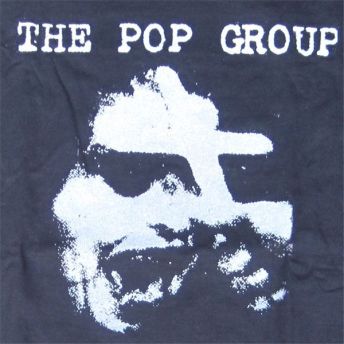
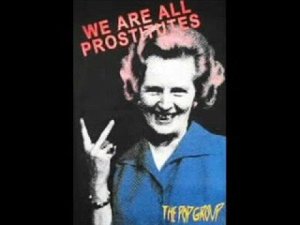
But they are pretty damn exciting in small doses and offer textures that are genuinely surprising. I generally turn to them as an antidote to the Ed Sheerans and Ellie Gouldings of this world. They also came up with some of the best cover artwork of their era.

The Pop Group emerged from a gang of West Country teenage music fans called The Bristol Funk Army who apparently would wear zoot suits and brothel creepers and listen to heavy ’70s funk. Meanwhile, vocalist/lyricist and Last Poets fan Mark Stewart was getting a serious political awakening, hellbent on documenting his research into consumerism, nuclear power and US foreign policy.

The band’s lifespan was pretty brief, limited to two albums (the debut Y was produced by UK reggae legend Dennis Bovell) and three classic singles – ‘She Is Beyond Good And Evil’ (not about Thatcher, according to Stewart), ‘We Are All Prostitutes’ and ‘Where There’s A Will’, which was released as a double A-side with The Slits’ ‘In The Beginning There Was Rhythm’ in March 1980.

R-196296-1403389558-3690.jpeg

They apparently lost thousands of pounds of revenue by mainly playing benefit gigs for Cambodia and Scrap The Sus (stop and search law). It was a very volatile time and they definitely put their money where their mouth was.

Their last gig before an amicable parting of the ways was the Campaign For Nuclear Disarmament benefit in Trafalgar Square on 26 October 1980 in front of 250,000 people.

Mark Stewart spent the rest of the ’80s pursuing a fascinating solo career, while Gareth Sager and Bruce Smith formed Rip Rig & Panic (later featuring Neneh Cherry on vocals), and Smith has also been PiL’s drummer since the mid-’80s.

The Pop Group’s sound has also been massively influential on a host of punk/funk bands over the last 20 years or so including Radio 4, Primal Scream and LCD Soundsystem.

And guess what – they are back among us again. They released a superb comeback album in 2015, Citizen Zombie, and have played live fairly regularly since 2011. It’s a pleasure to report that the rage and weirdness are very much still there.

But back to ‘Where There’s A Will’. This recently unearthed clip has become a favourite (I love the studious Belgian host attempting to make some sense of this insanity), an antidote for anaemic, safe music everywhere. Not even Chris Morris could have come up with anything more grippingly bizarre.

For much more about The Pop Group and early ’80s music, check out Simon Reynolds’ excellent ‘Rip It Up And Start Again‘.

Story Of A Song: Bill Bruford’s ‘Palewell Park’ (1981)

The 1980s were a pretty good time to be a songwriting drummer; Sheila E, Phil Collins and Don Henley all flourished, and probably a few more too.

Not that master Yes/King Crimson sticksman Bill Bruford had any particular desire to match their commercial standing as the decade got underway. He was quite happy gaining harmonic knowledge (with the assistance of keyboardist Dave Stewart), making sizeable contributions to the percussion community and composing incredible pieces of music like ‘Palewell Park’.

In a way, it was the culmination of his work with the Bruford group which had released three studio albums between 1978 and 1980, two featuring the brilliant Allan Holdsworth on guitar.

Palewell Park, East Sheen, London

Palewell Park, East Sheen, London

This track has a special resonance for me as Palewell Park was a childhood hangout, site of many great cricket, tennis and football games as well as a fair few teenage hijinks. Bruford apparently lived nearby during the piece’s recording at Surrey Sound in Leatherhead (also the studio The Police used for their first two albums) and wanted to write an ode to the area.

Someone on YouTube very aptly described ‘Palewell Park’ as ‘a contemporary piece for piano and bass’. It doesn’t fit comfortably into any genre, but it’s a pretty remarkable composition coming from the pen of a ‘drummer’, and one who doesn’t even feature on his own composition (Stewart played the piano).

Jeff Berlin, Jon Clark, Dave Stewart, Bill Bruford in 1980

Jeff Berlin, Jon Clark, Dave Stewart, Bill Bruford in 1980

The 26-year-old Jeff Berlin lays down one of the great pieces of post-Jaco bass playing. With just a touch of chorus pedal, he sticks to the pretty treacherous melody in the first half and then stretches out to play a fantastic solo over the changes, a total lesson in melody construction, with no gimmicks.

Next up for Bill was a reunion with Robert Fripp and one of the great albums of the ’80s, King Crimson’s Discipline.

Mr Big: Addicted To That Rush

Mr_Big_Self-TitledIn the world of late-1980s US rock, guitar virtuosity was the order of the day.

Eddie Van Halen’s massive popularity had ushered in a huge raft of poodle-haired, fleet-fingered plank-spankers such as Zakk Wylde, Marty Friedman and George Lynch.

Though I was very definitely a Van Halen man, and also had a real penchant for Steve Vai and Yngwie Malmsteen, I was always much more into people like Scott Henderson, Jeff Beck and John Scofield than the thousand-notes-per-second boys, brilliant musicians though they undoubtedly were.

But then my friend James Broad played me ‘Addicted To That Rush’ by Mr Big. It had the unmistakable whiff of early Van Halen about it, not least with its double-time groove, similar to ‘Hot For Teacher’ and ‘Satch Boogie’. Guitarist Paul Gilbert was clearly a veritable fire-breather with an incredible facility for high-speed, heavily-chromatic solos, but also had quite an original tone and refreshing sense of humour.

But basically ‘Addicted’ was a flagrant display of muso shock and awe, not just from Gilbert but also ex-Dave Lee Roth bassist Billy Sheehan (how many other HM tracks have had the balls to start with a bass solo?) and drummer Pat Torpey (check out his intricate hi-hat work in the opening section).

The rest of side one from their 1989 debut album was also great. Side two was not so hot though, and I hated their pop breakthrough (‘To Be With You’). But there’ll always be ‘Addicted To That Rush’. We’re rollin’…

Art Pepper: ‘Our Song’

After one of the toughest lives in jazz history, Art Pepper was astonished to still be around in the early ’80s.

He rallied for one last classic; ‘Our Song’ was recorded on 4th September 1980 at Fantasy Studios in Berkeley, California.

It doesn’t feel like an ’80s track at all – it’s more like the closing titles to an early ’70s Robert Altman movie or an alternative theme from Bernard Herrmann’s ‘Taxi Driver’ sessions.

Many commentators think that, on his day, Pepper’s alto sax playing rivalled Charlie Parker’s, and he demonstrates his mastery here with a real tour de force.

As a musical farewell, it’s a potent statement. Pepper believed it was the best thing he had ever done and the culmination of his life’s work.

‘Our Song’ also seems to be a personal goodbye and heartfelt tribute (apology?) to Laurie, this third wife and the last love of his life. She contributed to his jaw-dropping autobiography ‘Straight Life’ and has also recently published her own memoir about her life with Art.

The Sundays: Can’t Be Sure

the sundays

I don’t recall seeing this excellent band on TV or hearing them on the radio back in 1989/1990.

To this day, I don’t really know what they look like and don’t want to know. Though their debut single ‘Can’t Be Sure’ was released in January 1989 and reached just #45 in the singles charts, it ended the year as number one in John Peel’s Festive Fifty. The track also has a weird prog connection – it was (excellently) co-produced by Ray Shulman, a founding member of Gentle Giant.

‘Can’t Be Sure’ and its attendant classic album Reading, Writing And Arithmetic now seem redolent of a far gentler time, an era of hope and innocence, pre-Grunge and Britpop. For that reason, along with the Cocteaus’ Heaven Or Las Vegas, they’re quite hard to listen to now but no less powerful. The Sundays were also arguably a very influential band on many inferior acts (The Cranberries, The Corrs etc etc).

sundays