
 Those wanting to understand the mess in which Britain finds itself may get some answers from ‘Shifty’, Adam Curtis’s new BBC documentary series. It’s also a classic bit of 1980s reportage.
A rather po-faced press release announced the launch of the show on iPlayer (it’s also on YouTube) – Curtis has now been ‘moved on’ from terrestrial TV, and has alluded to the ‘freedom’ that streaming platforms give him.
But the new series certainly delivers, not a surprise given his track record of superb, unsettling docs such as ‘The Century Of The Self’, ‘The Mayfair Set’ and ‘HyperNormalisation’.
Using long- forgotten/lost BBC footage mainly shot during the 1980s, ‘Shifty’ traces the death of Britain’s role as a technological superpower, showing how the decimation/privatisation of national industries ushered in an uncertain era when dark, long-dormant secrets bubbled up to the surface, and the tabloid press ran riot.
We see how Thatcherism (read monetarism) was based on a false belief – that money always acts predictably. Meanwhile the privatisation of state industries (a policy invented by the Nazis) handed fortunes to private capitalists, a system which the Tory government knew would lead to industrial ’empires’ and the creation of huge private fortunes. They were essentially buying the support of the financial elites, and this has been convulsive.
Re-editing the work of those brilliant, groundbreaking (uncredited) TV directors and technicians who plied their trade at the dawn of the 1980s, Curtis uncovers the ‘real’ decade.
There are many striking juxtapositions; the death of a commercial airline pilot after a crash on the Isle of Sheppey uncovers tales of wartime mental distress. We see what the Falklands Islands looked like just before the 1982 invasion, a National Front rally in Brixton, the birth of video dating in London, dub sound systems in Birmingham, a pop lookalike competition of 1981 with hilarious Midge Ure. Freemasonry is debated openly on national terrestrial TV.
We see Thatcher during down time, pottering in the kitchen, schmoozing with Jimmy Savile, discussing her wardrobe, teenagers dancing to Bee Gees in Belfast and Hawkwind’s ‘Silver Machine’ in Kent, sex pests calling mental-health helplines, abject poverty in Bradford, the first known personal surveillance camera in North Kent, Sus operations in West London, Princess Di opening the Broadwater Farm Estate just six months before the deadly riots, Dodi Fayed interviewed about his father and producing movies such as ‘Chariots Of Fire’, Stephen Hawking as an undergraduate at Cambridge University.
All in all, ‘Shifty’ is a fascinating look at a mostly forgotten Britain and a great companion piece to Simon Reynolds’ ‘Rip It Up’ book and Steve McQueen’s ‘Small Axe’ films.
Despite its myriad issues, The Beeb is still doing a few things right but it’s a shame the series wasn’t given a cursory showing on terrestrial TV.
 It’s one of the great mysteries of pop culture, up there with who buys The Wire magazine and who goes to Snow Patrol gigs – why wasn’t comedian/actor John Sessions a bigger star (born John Marshall, he sadly died in 2020)?
 Memorable for all the wrong reasons, the 1989 BRIT awards, broadcast live 35 years ago this month, has long gone down as one of the most shambolic, embarrassing TV shows ever.
 What a treat to see that Freeview channel London Live seems to be re-running Keith Floyd’s classic BBC films of the 1980s.
 This post may not mean much to readers outside the UK but it was a huge deal when Channel 4 – the fourth British terrestrial TV station – launched 40 years ago this week on 2 November 1982.
 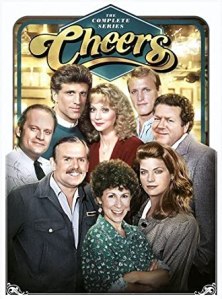 If quality TV was your thing, you were quids-in on Friday nights back in the late 1980s. Channel 4 was supplying the goods: first there was ‘The Tube’, then, later on, it was ‘Cheers’. Happy days.
 The early 1980s was a pretty good period to start out as a musician.
 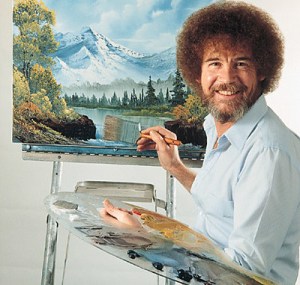 Waking up very early in a stuffy Berlin hotel room a few years ago, I flicked on the TV and came across an amiable-looking guy doing some painting in an extremely quiet, small, uncluttered set, with just an easel and palette for company.

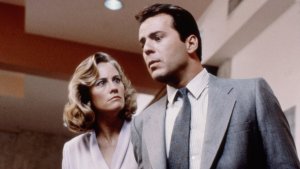
 What a treat to watch a special live edition of ‘The Old Grey Whistle Test’ on BBC Four the other night.
  movingtheriver.com