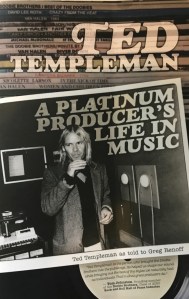
Book Review: A Platinum Producer’s Life In Music by Ted Templeman (as told to Greg Renoff)

You should never judge a person by their name.

movingtheriver assumed Ted Templeman – a favourite producer back in the day courtesy of his work with Van Halen, Little Feat, Doobie Brothers and more – was your typical seasoned/grizzled rock’n’roll journeyman.

But nothing could be further from the truth. Reading his enjoyable memoir (and looking at the cover), he turns out to be a mild-mannered jazz drumming prodigy turned pretty-boy frontman with late-‘60s baroque pop band Harpers Bizarre.

His story takes us from post-war Santa Cruz, California, to the upper echelons of the US music biz during boom time, when Templeman was a house producer for Warner Bros. (alongside Gary Katz, Michael Omartian, Jay Graydon and Lenny Waronker), becoming one of the wealthiest and best respected record execs of his era.

We learn about his youth studying the Cool School jazzers, then his pop band Harpers Bizarre gets signed by Warners and he’s mentored by Waronker, quickly learning what A&R actually means – choosing the right songs for the artist and assessing their commercial strengths and weaknesses. He also witnesses first-hand the weird action around the Doors, Beach Boys and Phil Spector.

But he quickly realises he’s not cut out for fronting a band, and moves on to being Warner Bros’s tape listener, hanging around Frank Sinatra sessions and getting the nod from Waronker to produce his pet project, the Doobie Brothers.

Then there are some fascinating sections on working with Van Morrison – he sees the frustrations of being a co-producer at first hand when they release the ‘wrong’ mix of ‘Tupelo Honey’. But he also sees Morrison’s more humorous side – during the recording of the live album It’s Too Late To Stop Now, Ted, sitting in the mobile studio outside The Rainbow, hears Van frequently saying, ‘Didja get that, Ted?’ into the mic between songs.

Templeman forges a long-term relationship with his engineer Donn Landee and starts working with Little Feat. He sparks a great friendship with their mainman Lowell George and is fascinated to find that he is a model airplane fan. But when pushed, Lowell claims he’s just learning about them so he he can fly in drugs from Mexico. He also learns a lot about drums working in Sunset Sound studio 1 with Richie Hayward.

Then there’s recording Carly Simon on Another Passenger, and her relationship with James Taylor, before Templeman first comes across Van Halen via a concert in Pasadena. They quickly become his second obsession, though he’s deeply unsure about Dave Lee Roth’s vocals and general attitude (the book is full of strikingly honest reflections, and he’s quick to admit when he’s wrong).

The main chunk of the book deals with recording Van Halen, from the classic debut to the painfully laboured 1984. He even confesses to initial scepticism about ‘Jump’, kvetching to Eddie: ‘I signed a heavy metal band’! But he somehow enlists Eddie to guest on rollerskating freak Nicolette Sheridan’s ‘Can’t Get Away From You’.

Templeman eventually becomes a great fan of Lee Roth, though advises him not to leave Van Halen and try to be a movie star (though still ends up producing Crazy From The Heat). He also worries about getting Sammy Hagar into VH, suggesting they change their name to Van Hagar, and refuses to produce 5150.

There’s an amusing meeting with Prince at Sunset Sound and the Purple One’s reaction to Templeman’s suggestion that Quincy Jones produce Purple Rain. And then there’s Allan Holdsworth, a Warner Bros. signing coming via Eddie Van Halen’s recommendation. Eddie and Templeman are contracted to co-produce Road Games, but Holdsworth refuses to allow them in the studio together while he’s recording! A baffled Eddie bows out, and then Holdsworth demands that a few tracks feature vocals against Templeman’s best advice (of course Allan has his own take on the Road Games debacle…).

The mild-mannered Michael McDonald is a regular character in the book, uncharacteristically going ballistic for not getting co-writing credit for Van Halen’s ‘I’ll Wait’. We learn about Aerosmith drummer Joey Kramer’s opinion of Templeman’s work on their comeback album Done With Mirrors, and Eric Clapton’s reaction to being told that his guitar tone sucks.

The last section of the book regards Templeman’s work on the ‘Wayne’s World’ soundtrack and then losing his job at Warners, leading to depression and alcoholism.

It’s one of those rare music books that takes you right into the process of trying to get quality, commercial performances from some of the biggest stars in the music business, and it’s full of good advice about producing/arranging and interesting musical/technical observations.

Sadly though, its message may fall on deaf ears these days when Pro Tools and bedroom recordings are all the rage, musicianship less so, but still it’s a fun, informative look at the peak of the studio scene. Highly recommended.

Van Halen @ Monsters Of Rock, Donington Park: 40 Years On

40 years ago this month, Van Halen were the penultimate act at Monsters Of Rock, Castle Donington, part of what is generally considered the greatest ever bill at the illustrious rock festival.
And now some sizzling side-of-stage footage from Saturday 18 August 1984 has emerged (but sadly has been removed from YouTube as of March 2025…), shot by Ross Halfin, showing the first iteration of the band at their commercial peak (they would break up in acrimony shortly after, and this was their last ever British concert).

The sound is not brilliant and some fans have complained about the setlist and length of both the Van Halen brothers’ solos, but it’s instructive and exciting to see exactly what goes down backstage/onstage.

Lee Roth is a superb master of ceremonies, singing well, dancing his tail off and firing off some amusing bits of banter: ‘Don’t stick your tongue out at me unless you’re gonna use it… If you wanna throw something at me, I’m gonna come down there and f*ck your girlfriend!’ etc. etc.

Though the footage starts off with Lee Roth and Alex Van Halen sharing a laugh (in a recent Classic Rock piece about the gig, Halfin claims the former was ‘stoned’ throughout), tensions among the band were high and nobody present was very surprised when they went their separate ways shortly after.

But it’s quite a thrill to get such a close-up view of such a legendary gig. The tempos are brisk but everything has VH’s inimitable swing and swagger.

MTV @ 40: The Videos That Made MTV

By summer 1984, Frank Zappa was already decrying the MTV clichés in his ‘Be In My Video’ single (‘Pretend to be Chinese/I’ll make you wear red shoes’!).

But, away from the familiar tropes, there were trailblazing videos that set MTV on its way during the formative years. Either technically or thematically, these clips laid the groundwork right up until the end of the 1980s.

Of course they are kind of familiar, but watching them all the way through brought some interesting surprises, and even an unexpected lump in the throat area during the opening of ‘Borderline’ and denouement of ‘Take On Me’…

9. Musical Youth: ‘Pass The Dutchie’ (Dir. Don Letts, released September 1982)

The first ever video shown on MTV by a Black artist. This was a huge bone of contention in MTV’s early days, not helped by their regular, disingenuous rebuttal: ‘We only play rock’n’roll’. Don Letts’ joyful film put a spanner in the works, placing the lads in front of the Houses Of Parliament, the supposed ‘postcard’ vision of London, a tribute to the influence of Black culture in the UK and a stark message to the powers that be. Letts also created a huge hit in the process, reaching #1 in the UK and #10 in the USA.

8. The Police: ‘Every Breath You Take’ (Dirs. Kevin Godley & Lol Creme, released 20 May 1983)

Strongly influenced by Gjon Mili’s 1944 short ‘Jammin’ The Blues’, this was the video that catapulted Synchronicity‘s album sales into the stratosphere and gave the band a UK and US #1. Apparently directors Godley and Creme were pretty blitzed throughout most of the filming – according to the latter, ‘The first thing we’d do when we arrived on set was roll a reefer.’ Sting was reportedly no shrinking violet either, pointing to himself and telling the directors, ‘Keep the camera on the money’!

7. ZZ Top: ‘Gimme All Your Lovin’ (Dir. Tim Newman, released August 1983)

Randy Newman’s cousin Tim helmed all of ZZ’s key videos (and Randy’s excellent ‘I Love LA’) and he masterminded this much-imitated, endlessly-rewatchable classic, giving the band a new lease of life and a lasting image as kind of ‘mythical rockers’ (apparently influenced by his reading of Joseph Campbell). But it was ZZ manager Bill Ham who laid down the law to Newman, offering two directives: ‘Use the car (Billy Gibbons’ 1933 Ford coupe) and put some girls in it.’

6. Cyndi Lauper: ‘Girls Just Want To Have Fun’ (Dir. Edd Griles, released 6 September 1983)

Cyndi’s thing was inclusivity, and she delighted in showing a woman of every race in the video. It has echoes of John Waters’ aesthetic and the early Devo and B-52s videos, but this had a whole different vibe, apparently inspired by Lauper’s love of Jacques Tati’s 1958 film ‘Mon Oncle’.

5. Michael Jackson: ‘Thriller’ (Dir. John Landis, premiered December 1983)

‘Billie Jean’ opened the door for so many Black artists but this was pure box office and a delicious comedy/horror. Famously Michael headhunted director John Landis after watching ‘An American Werewolf In London’, giving him just one brief: ‘Can I turn into a monster?’ Landis was not interested in music videos but did like the idea of making a theatrical short. The video changed the game completely, and it’s arguable whether the dance routines have ever been bettered. It premiered on MTV on 2 December 1983 and reportedly doubled Thriller’s album sales within a few weeks of its first showing. It’s still absolutely thrilling.

4. Van Halen: ‘Jump’ (Dir. Pete Angelus, released December 1983)

Of course Metal acts were starting to make waves before this, with impactful videos by Twister Sister and Def Leppard, but ‘Jump’ laid down all the future ‘live on stage’ clichés, with balls on. Hair Metal became huge after this, and MTV adored the likes of Warrant, Winger and Bon Jovi, but none could ever match this song or Diamond Dave’s natural showmanship.

3. Madonna: ‘Borderline’ (Dir. Mary Lambert, released February 1984)

Lambert had only directed one video (Tom Tom Club’s ‘As Above So Below’) before getting her dream job on this breakout Madonna single. Madonna and Lambert discussed the video’s plot for two days in the former’s minimalist bolthole on the Upper East Side with Madonna insisting there be a Hispanic influence, necessitating moving the shoot to downtown Los Angeles. This is reportedly the first video to use black-and-white footage combined with colour; Madonna’s manager Freddy DeMann supposedly went ballistic on viewing the final cut but of course it became a video cliché, gave Lambert a successful career and Madonna her breakthrough song.

2. Lionel Richie: ‘Hello’ (Dir. Bob Giraldi, released February 1984)

Apparently director/scenarist Bob Giraldi was driven half mad by Lionel’s terminal lateness onto the set. For his part, Lionel was very sceptical about the bust. Apparently he finally plucked up the courage to approach Giraldi about it: ‘Bob, that bust does not look like me.’ There was a pregnant pause. Finally, Bob said, ‘Lionel… She’s blind.’

1. A-ha: ‘Take On Me’ (Dir. Steve Barron, released September 1985)

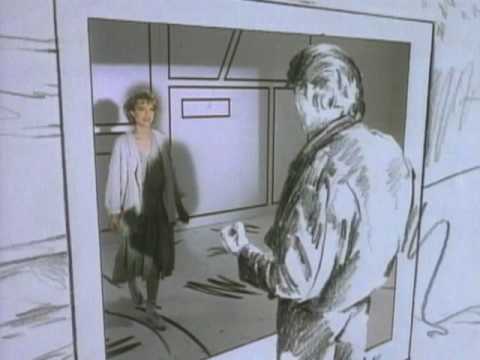
The song had completely flopped on its original release, so WEA gave Steve Barron a blank cheque to make a memorable video and get a hit. Working alongside rotoscope animator Michael Patterson, who did 1,800 drawings for the shoot, Barron was heavily influenced by Ken Russell’s 1981 movie ‘Altered States’. Barron knew he could make it work when the image of an animated hand reaching out of a comic book popped into his head whilst he was bored shooting a Toto video. Apparently singer Morten Harket and lead actress Bunty Bailey fell in love during filming, becoming almost inseparable. ‘By take four, they would carry on holding hands even when we’d cut,’ remembered Barron. Aided by the video, ‘Take On Me’ became the band’s only US #1.

Further reading: ‘I Want My MTV’ by Rob Tannenbaum and Craig Marks

Van Halen: Quantized

Harry’s Records, right next to the bus stop on my way home from sixth-form college, was a real institution in the late 1980s (I’ve recently discovered that it was actually a UK-wide chain of music stores).

Many a trip home was enlivened by inspecting the covers of Jeff Beck’s Guitar Shop, It Bites’ Eat Me In St Louis, Steve Vai’s Flex-Able or Anderson Bruford Wakeman Howe.

And Van Halen, the superb 1978 debut album. From the opening backwards car horns and Michael Anthony’s fuzzy bass to the manic closer ‘On Fire’, it was a stunner, with some of the most amazing guitar playing ever captured on record.

It’s a brilliant mix of Cream, Led Zep, The Sex Pistols, Kinks and Who, featuring a talented vocals/guitar/bass/drums lineup with a striking audio imprint (producer Ted Templeman’s mastery of the famous Sunset Sound echo chamber, with Eddie’s guitar flying across the stereo spectrum: Rick Beato and Warren Huart have put together superb musical analyses of the album).

The band ‘breathed’ and grooved, and it sounded like they played live in the studio (they did, pretty much). It certainly wasn’t ‘perfect’. Perfection is an interesting concept for rock, one of the legacies of the post-Nirvana 1990s. Everyone recorded with a click track, and everyone seemingly looked for ‘perfection’.

The 1970s were different. So it’s a great jolt to hear VH’s ‘Running With The Devil’ quantized and placed on ‘the grid’ by this wacky music surgeon below. Judge for yourself if you prefer the ‘perfect’ version or original, ‘wrong’ version – it’s a fascinating, sometimes amusing project:

P.S. Check out this amazing soundboard recording of VH’s Hammersmith Odeon support show with Black Sabbath in June 1978.

Catching Up With Eddie Van Halen

225px-Eddie_Van_Halen_(1993)When I think of ’80s Eddie Van Halen, the image in my mind’s eye is probably not a lot different to any other fan – he’s grinning from ear to ear, cavorting around the stage, playing some of the greatest rock guitar of all time with one of the sweetest tones.
So it’s interesting to see him recently – sober, reflective, brutally honest, fiercely independent – talking about his life and craft onstage at the Smithsonian Museum of American History in Washington DC.

‘Jump’ had always been a favourite of mine and was at the back of my mind when I came across Van Halen’s superb debut album at Harry’s Records in Twickenham (another one that’s bitten the dust), during my first week of sixth-form college in 1989.

I just loved the devil-may-care feel of Eddie’s playing. He was fearless, unconcerned about making mistakes (his dad gave him some advice: if you make a mistake, do it again – with a smile), the same attitude that spurred on Parker, Ornette, Hendrix and Jaco.

I later got heavily into the VH albums Women And Children First, Fair Warning, Diver Down, 1984 and OU812, but the band have been completely off my radar since the early ’90s, when I loved the ‘Poundcake’ single.

Having said that, not living in the States, I’ve completely missed the recent new album and TV appearances featuring David Lee Roth back on vocals. Maybe I need to check in again because I dug this:

Anyway, back to the interview. It’s fascinating hearing Eddie chatting about his life and career, away from all the controversy that has dogged the band over the last few decades.

He talks about building his first guitar, the last album he bought (clue: it was back in 1986 and by an English singer who was once in a very famous progressive rock band…), demonstrates some techniques and talks candidly about his sometimes difficult early life as an immigrant in the USA.

G’wan – give yourself an hour off and enjoy some words from a master.

No Brown M&Ms: Great Backstage Riders Of The ’80s

brown-milk-chocolate-m-m-1-poundYou know you’ve made it in the music biz when your gig rider raises eyebrows.

The rider: a contract drawn up by the promoter stipulating a band’s concert requirements including ‘dressing room extras’ – food, drink and drugs to you and me. And, if the general tenor of the 1980s was extravagance and exuberance, many artists’ backstage demands were no different. Here are five corkers:

5. Howard Jones
He had barely registered a hit and was only undertaking a modest college tour of the UK during summer 1983, but his backstage demands included ‘eight pounds of brown rice, six large aubergines, three pounds of courgettes, three green peppers, one head of garlic, three pounds of fresh tomatoes, twelve mixed yogurts and twelve bananas.’ He also requested that security not have ‘guns or dogs’, that the dressing room possess a ‘sweet-smelling ambience’ and that he must have ‘physical contact with the audience’. And you thought he was just a slightly vapid though ultimately harmless pop guy…

4. Van Halen
They famously often requested ‘large bowls of M&Ms with the brown ones taken out’ but their legendary 1984 Monsters Of Rock show at Castle Donington also required ‘eight litre bottles of Jack Daniels, eight litre bottles of brandy, eight litre bottles of vodka, 16 cases of domestic beer and a worldwide selection of cheeses’. Those boys knew how to partay. And were also rather fond of continental cheeses.

3. Iggy Pop
Late great musician/writer Ian Carr once described seeing Miles Davis come offstage and collapse into the arms of two specially-placed roadies as soon as he was out of the audience’s sight, but that’s nothing compared to The Iggster’s post-show routine. His rider for a 1983 UK tour stipulated ‘it is absolutely essential at the end of the show that there is a nurse in attendance with two cylinders of oxygen and masks’. Presumably Iggy wanted the ‘nurse’ for a bit more than ‘oxygen’…

2. David Thomas
The portly Pere Ubu frontman demanded meticulous sandwich preparation for a University of London show in the early ’80s: ‘A sandwich is defined as three pieces each of meat and/or cheese, one-inch thickness of lettuce, a half-inch thickness of onion, mayonnaise, two slices of three-quarters of an inch of tomato, all between two thick slices of wholemeal bread. NO BUTTER. AND I WILL REPEAT: NO BUTTER OR MARGARINE. PERIOD.’ It’s as if punk never happened…

1. Aerosmith
The Bad Boys From Boston didn’t leave anything drug-related to chance when putting together their backstage rider for a particularly blitzed tour in the early ’80s. The stand-out clause read: ‘No snow, no show’! Well, at least they were honest.

A tip of the hat to Simon Garfield’s excellent book ‘Expensive Habits’.