Then Jerico: Now That’s What I Call…Not Bad

Of course it was just teenage aggro/jealousy, but my schoolmates and I were always a bit suspicious of those late-‘80s pop acts who were much fancied by our female friends: Morten Harket, Richard Marx, Jason Donovan, the Goss brothers, Marti Pellow, Nathan out of Brother Beyond, those blokes from Big Fun.

But Mark Shaw of Then Jerico was probably their favourite, instantly putting his band’s music into the dumper, even though we probably all had a soft spot for their 1987 hit ‘The Motive’.

Listening back now on a good system, it’s a superb-sounding single – impactful, clean and shiny, with great instrument separation. It typified late-1980s British pop/rock helmed by excellent producers who had learnt their trade in the golden age of commercial recording studios, people like Tim Palmer, Rhett Davies, Peter Henderson, Andy Richards, Jon Kelly, Rick Nowels, Mike Shipley, Bruce Lampcov, Peter Collins, Julian Mendelsohn, Gary Langan et al.

Of course Trevor Horn was an overarching influence, representing the gold standard. It Bites’ Francis Dunnery mocked ‘Big Area’ (see below) producer Langan (collaborator with Horn on Yes’s 90215, Malcolm McLaren’s Duck Rock and FGTH) in a 2021 interview for PROG magazine: ‘Everyone who had ever walked past Horn was given a record to produce. I think Trevor’s milkman produced Then Jerico and had a hit!’

Yes, there was a fair amount of turd-polishing but these producers inspired the late-1980s rock comeback, generating hits for Breathe, Fuzzbox, Cutting Crew, Paul Young, Love & Money, Deacon Blue, Killing Joke, All About Eve, The Mission.

And Then Jerico. Maybe they were actually pretty good. Their best songs – ‘Sugar Box’, ‘The Motive’, ‘Big Area’ – marry a sort of U2/Simple Minds/Tears For Fears ‘thing’ with Shaw’s tremulous vocals to strirring effect, something akin to the sound of falling in love. When any of them come onto ‘Forgotten 80s’, it’s impossible to turn off. Though one is still slightly reticent about checking out a whole album in one sitting.

And guess what – Shaw has reformed the band, and they’re touring extensively this year. And he has rather a juicy/chequered recent past to tell of too.


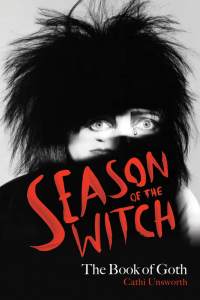
Book Review: Season Of The Witch (The Book Of Goth) by Cathi Unsworth

Goth is back. Siouxsie Sioux is reforming The Banshees and appearing on the cover of MOJO. An old-school Tim Burton TV series is imminent.

The tabloid image of the 1980s is one of glamour, fun and money, but Goth was just as much of a phenomenon during the decade, the dark underbelly of late-20th century pop culture, music and fashion.

And now novelist and esteemed music journalist Cathi Unsworth has put together a fulsome tribute, following Goth from its roots in the novels of Charlotte Bronte and Bram Stoker to the bands and artists who created a hugely popular music genre in its own right.

A labour of love, ‘Season Of The Witch’ features vivid depictions of growing up in late-1970s arable Norfolk with Sid and Nancy, hunger strikes, Thatcher’s rise (Unsworth is convinced she’s the antichrist!), National Front/anti-Nazi marches and the Yorkshire Ripper on the telly, and local ghost stories providing the village gossip.

It’s hardly surprising that she, along with legions of other young people, looked to the dark side and specifically those harbingers of doom, Dennis Wheatley, Nico, Juliette Greco, Jim Morrison, Alesteir Crowley, The Stooges, Black Sabbath, Robert Smith, Siouxsie, Howard Devoto, Nick Cave and the three Ians of Goth: Curtis, McCulloch and Astbury.

What emerges is essentially a timeline of Goth, with particular emphasis on the key music acts and outliers. Unsworth posits some remarkable theories – for example, aligning Killing Joke’s debut album with disenfranchised London Black youth of the early 1980s – but somehow pulls them off, and there’s also a great section on Psychobilly’s birth in a sweaty Victorian pub in Hammersmith.

The musical analysis is sound (though arguably a book like Simon Reynolds’ ‘Rip It Up’ covered similar territory and with a lot more brevity/impact) and there are the occasional revelatory factoids about a recording session or songwriting inspiration.

But ‘Season Of The Witch’ is at its best when filtering the music through the prism of current affairs, whether the miners strike, Falklands War, Brighton Tory Conference bombing or Rupert Murdoch’s rise and rise. Prescient and enjoyable as it is, I wanted much more personal stuff – there was the opportunity for this to be the Goth version of Sylvia Patterson’s ‘I’m Not With The Band’.

The enjoyable, pithy ‘Season Of The Witch’ ends with key depictions of Goths in literature and movies – a glaring omission from the latter is Katrin Cartlidge’s remarkable performance as Sophie in Mike Leigh’s 1993 film ‘Naked’, surely the ultimate Goth of British cinema.

Unsworth talks about the book in this recent WORD podcast.

XTC: Mummer 40 Years On

There can’t be many more pleasurable summer activities than reclining in an English garden.

But XTC’s chief songwriter/vocalist Andy Partridge cut somewhat of a sad figure during May and June 1982 as he sat hunched over his acoustic guitar, working on new compositions, detoxing from Valium addiction and contemplating the end of his concert career.

Still, those songs were some of his best ever. But they appeared on an extremely inconsistent album called Mummer, named for the silent actors (keeping ‘mum’) who travelled around 18th century Britain and Ireland, released 40 years ago this week and very nearly titled Fruits Fallen From God’s Garden.

Japan (Tin Drum) producer Steve Nye was summoned for the project, recorded at Martin Rushent’s Genetic Studios and The Manor – a strange choice. He is good with the close-mic’d, dry-sounding, beautifully recorded acoustic-based tracks but not the heavier ones which were later remixed by Phil Thornalley, while the legendary Alex Sadkin redid ‘Wonderland’.

But Nye had his work cut out – the album is schizophrenic to say the least. The best songs sound like a decent band playing pretty much live in the studio – ‘Love On A Farmboy’s Wages’ (has there been a better English pop song about poverty?), ‘Great Fire’, ‘Ladybird’ (Andy discusses his jazzier influences in this great video), ‘Me And The Wind’. All wonderful. Dave Gregory is coming into his own with superb contributions on guitar and keyboards.

But the worst songs are rhythmically plodding – it’s understandable that Andy was trying to get away from 4/4 rock drums but ended up with too many cyclical grooves (putting pay to Terry Chambers’ tenure on the kit) – and melodically extremely challenging. Colin Moulding is not in great writing form either, ‘Wonderland’ excepted, though that too might have benefitted from a simpler treatment.

Mummer was initially rejected by Virgin A&R agent Jeremy Lascelles, who demanded another single. The excellent ‘Great Fire’ was Andy’s last-minute response, produced by Haircut 100 helmer Bob Sargeant, but it disappeared without trace – Radio 1 reportedly played it only once!

Along with The Big Express, Mummer was XTC’s worst selling album, reaching a barely believable #51 in the UK album charts and doing little business elsewhere, just over a year after ‘Senses Working Overtime’. It has to be said it was also not served well by its awful cover. But it features plenty of great music.

Further reading: ‘XTC Song Stories’ by Neville Farmer

Genesis: ‘Mama’ @ 40

If any more proof was needed as to how far the UK pop charts have declined since the mid-1990s, look no further than the fact that Genesis’s ‘Mama’ – released 40 years old this week – was their biggest hit, going all the way to #4.

Not bad for a nearly-seven-minute song without a proper chorus about a young man’s troubled relationship with a sex worker.

In my opinion, ‘Mama’ is one of the great singles of the 1980s, epic and menacing, and the last decent showing for post-Gabriel Genesis (I couldn’t/can’t get anywhere with its attendant 1983 self-titled album, nor any of their subsequent projects).

In autumn 1983, I was vaguely aware of Phil Collins, my ears having been piqued by my dad’s frequent playing of Face Value around the house. But when my uncle bought me the ‘Mama’ 12-inch single, I’m pretty sure I’d never heard of Genesis. But Uncle Jim wrote ‘Side A is the good side!’ on the front for guidance, knowing I’d love Phil’s immense drum sound (to these ears, still just as ‘shocking’ as ‘In The Air Tonight’). For me, this is the apex of Phil’s best era – roughly 1976 to 1983.

The author with his first snare drum, his dad the DJ about to put on ‘Mama’, circa autumn 1983

‘Mama’ was recorded at the band’s Farm studio near Chiddingfold, Surrey, and co-produced by Hugh Padgham. Phil set up in the new drum room modelled on the famous Townhouse Studio 2 in Shepherds Bush.

There are still so many pleasures – Phil’s sibilant, Lennon-influenced vocals (including a homage to Melle Mel), making full use of the slapback echo which went straight onto tape rather than being added later. Banks’s ominous synth layering and wacky lead tones. Mike Rutherford’s Linn drum programming, played through a guitar amp.

Also listen out for the way Phil avoids metal completely until the beginning of the fade, when his enormous crash cymbal is a huge release.


The Cult Movie Club: Being There (1979)

It’s hard to think of a movie that better captures an end-of-the-1970s/beginning-of-the-1980s vibe than ‘Being There’.

Directed by Hal Ashby (‘Shampoo’, ‘Harold & Maude’, ‘Coming Home’) and starring Peter Sellers, it was released on the same day as Steven Spielberg’s ‘1941’ just before Christmas 1979 and became one of the first critical and commercial successes of the ’80s.

Based on Jerzy Kosinski’s book (the Polish author became somewhat of a celebrity in the States before he committed suicide in 1991), ‘Being There’ is a political satire, the story of a simpleton who moves effortlessly to within spitting distance of the very highest echelons of American power.

Still, despite featuring one of the most famous final shots in cinema history, some classic catchphrases and Sellers’ penultimate screen performance as Chance the gardener (for which he was Oscar-nominated), ‘Being There’ inexplicably now seems somewhat forgotten.

Not round these parts. A recent re-watching was a revelation – it’s far better than I remembered it. It’s also surely another one for the relatively small ‘the film’s better than the book’ file. Here’s what I wrote in my notebook:

Shirley MacLaine
She barely gets a mention in all the literature I’ve read about ‘Being There’. A shame, because she delivers a fine comedy performance. Yes, the ‘I like to watch’ sequence is embarrassing and often subject to critical scrutiny, but it’s Sellers who is really the focus of that scene. You’ll certainly never think of Fred Rogers in the same way.

Stanley Kubrick
With its beautiful widescreen compositions, deep, rich colours, iconoclastic/irreverent humour and a brilliant central performance from Sellers, it’s surely a film of which Mr K would approve (and visitors to ‘Being There’ during Christmas 1979 would also have seen a teaser trailer for Kubrick’s ‘The Shining’). This guy’s interesting video finds a link between ‘Being There’ and ‘2001: A Space Odyssey’. Also, close viewing reveals that there’s a shot in ‘Being There’ of a TV – being watched by Chance – which doesn’t have a plugged-in cable, just like the similar shot in ‘The Shining’. Coincidence?

The Oscars
Sellers apparently channelled Stan Laurel for his blanked-out, mid-Atlantic accent, and worked diligently on line readings in the mirror. He was nominated for a Best Actor Oscar, but lost out to Dustin Hoffman for ‘Kramer vs. Kramer’. Sellers looks unwell, pale and drawn (he died just six months after the film’s release), but apparently surprises both himself and the actors around him with his wonderful comic creation.

Modern Culture
The film has a lot to say about where popular culture was headed. It’s no coincidence that Chance has been ‘brought up’ on television. When he appears on a chat show, Chance is told by the producer: ‘You’ll be seen by more people tonight than have been to the theatre in the last 40 years’. The movie relentlessly emphasises the more inane elements of TV throughout its duration.

Tom Cruise
Promoting the new ‘Mission Impossible’ film in a recent Sunday Times interview, Cruise recently said he would hitherto only make movies that audiences immediately understood – no puzzles, fables or anything demanding too much thought. No more ‘Eyes Wide Shut’s. Or ‘Being There’s. There’s not an iceberg’s chance in hell that this film would get made today.

Chance
How does Chance the gardener get so far up the totem pole so quickly? The film emphasises that you can get a very long way by ‘looking the part’ and having friends in high places. And of course there’s luck. But there are still one or two anomalies – why does he unquestioningly leave the house in which he has lived all his life just because the lawyers tell him he’s going to be evicted? Would he really have a clue what an eviction was? It seems more likely that he would stay put for as long as possible.

Washington DC
As Chance leaves his house, there’s a famous, striking montage of his sojourn through DC soundtracked by Deodato’s ‘Also Sprach Zarathustra’. We are initially shocked to realise that, despite his natty threads and luxurious pad, he’s been living in the poor part of town. We see a graffito which reads: ‘America ain’t shit cos the white man’s got a God complex’, later referenced by Public Enemy (the film in general has a lot to say about racial issues in America, superbly summarised by this video). Then there’s the famous shot of Chance walking down Pennsylvania Avenue, the moment we realise this is going to be rather a special movie.

Minor Characters
‘Being There’ is full of memorable secondary characters, each with a very specific role, from the lawyers to newspaper/magazine editors, TV producers, elevator orderlies and doctors. And fans of John Carpenter’s ‘The Thing’ will relish seeing Richard Dysart and David Clennon playing key roles.

The President
The President isn’t a sympathetic character – in fact he is a boorish, somewhat weak buffoon who doesn’t seem to have much power. But still, there’s plenty of evidence that he’s onto Chance from the beginning. The film ends with an internal cabal about to oust the president and move the government much further to the Right, possibly a portent of the upcoming Reagan years. The film also spends an inordinate amount of time on the more ‘fascistic’ elements of the US – the all-white, thrusting security detail and Secret Service operatives, the ridiculous vehicle cavalcades, the huge government properties in the countryside that look eerily like Nazi strongholds. Also watch out for the Eye of Providence on Ben Rand’s burial pyramid. A YouTube comment: ‘This movie tells us how the world really works’.

Vinnie Colaiuta
The drummer/composer released a great ‘tribute’ to Chance (or Chauncey, as he is mistakenly named by Eve Rand in the film) on his 1994 solo album, featuring Sting on bass.

Book Launch: John McLaughlin (From Miles and Mahavishnu to The 4th Dimension)

Matt’s new book ‘John McLaughlin: From Miles and Mahavishnu to The 4th Dimension’ is available now and can be ordered via the links below.

‘A must-have in every aspiring musician’s personal library.’ Billy Cobham, Mahavishnu Orchestra drummer

‘A wonderful insight into a true innovator and colossus of the guitar.’ Mark King, Level 42 bassist/vocalist

‘Scrupulously researched… A fluent career overview.’ **** MOJO, December 2023

‘The most comprehensive overview of McLaughlin’s career to make it into print thus far.’ **** Shindig!, January 2024

‘Comprehensive and thoroughly researched, Phillips’ book is a revelation. A must-read for guitar aficionados and McLaughlin devotees.’ Bill Milkowski, author of ‘Jaco’ and ‘Michael Brecker’

‘Riveting… Meticulous storytelling… The book is not just a narrative, it’s a visual feast.’ Jazz In Europe

‘Paints the fullest picture yet of the guitarist’s life.’ Jazzed

‘Thorough and impassioned… The first book to fully illuminate the least-appreciated, least-documented periods in the extraordinary career of this wondrously free-spirited, prolific, perpetually questing artist.’ Booklist

UK orders:

UK Bookshops

Rowman & Littlefield (Enter discount code RLFANDF30 to save 30% off the list price)

World Of Books

Hive

Blackwell’s

Waterstones

Foyles

WHSmith

USA orders:

Rowman & Littlefield (Enter discount code RLFANDF30 to save 30% off the list price)

Barnes & Noble

BooksaMillion

It’s an exhaustive look at John’s catalogue, live career and spiritual life, with an introductory note by Robert Fripp, testimonials from Mark King, Billy Cobham and Bill Milkowski, interviews with key collaborators and lots of exclusive photographs. I cover John’s early sessions with David Bowie and Donovan, his remarkable sideman work with Tony Williams and Miles Davis, the fabled solo career fronting The Mahavishnu Orchestra and Shakti and various projects alongside the likes of Sting, Jeff Beck, Herbie Hancock and Carlos Santana.

If you’ve enjoyed this website in any capacity, please consider buying this book and getting it to the toppermost of the poppermost… Thank you!

Frank Zappa: London Symphony Orchestra @ 40

In the last ten years of his life, Frank Zappa released a series of orchestral albums, now mainly forgotten by all but his most ardent fans. But they are vital constituents of his work, and may surprise listeners who only know him as a ‘rock’ musician.

A key artefact is the self-financed London Symphony Orchestra, the first volume of which was released 40 years ago (the second followed in 1987, before both were rereleased on CD and streaming platforms in 2012) and my pick of Frank’s ‘classical’ works.

It was recorded between 12-14 January 1983 at Twickenham Film Studios in South West London, on the banks of the Thames. The night before, on 11 January, the orchestra (plus Ed Mann and Chad Wackerman from Frank’s ‘rock’ band) performed the repertoire at the Barbican. Check out how the BBC reported that here.

Zappa has spoken candidly about the difficulties he had rehearsing and recording this music (percussionist Mann reports that the orchestra had a whole week of rehearsal – almost unheard of – at the Hammersmith Odeon and that he had been given his parts a month before rehearsals so that he could practice at home), and the myriad editing and studio tricks that had to be utilised before he was happy. ‘The Big Note’ tells the fascinating full story.

The music was split into premiere works and older material. The standout is probably ‘Bogus Pomp’, which reworks much of the orchestral stuff from ‘200 Motels’ to stunning effect. ‘Envelopes’ will be familiar to fans of the previous year’s Ship Arriving Too Late album.

It’s a blast of challenging, exciting music, even if you’re not a fan of ‘classical’ music. Excited by Varese, Boulez, Messiaen, Ives, Bartok and Stravinsky, amongst others, Zappa dealt in timbre and ‘blocks’ of sound, featuring big chords and big percussion sounds, bypassing cliché and having no truck with the notion that it was ‘difficult’ music. If you liked it, bitchin’. If you didn’t, there was a lot of other stuff out there.

Another bit of good news is that these two albums sound absolutely superb in their current incarnation on streaming services and CD, leaving the following year’s Perfect Stranger in the dust. All of those post-production tricks paid off. Thanks to Frank.

Rewind & Play: Thelonious Monk

It’s a great era for jazz documentaries. The latest exhibit is Alain Gomis’s ‘Rewind & Play: Thelonious Monk’, based around some long-lost footage of the jazz piano giant filming a French TV special at the end of his 1969 European tour.

Some of the edited footage was shown on French TV as ‘Jazz Portraits: Thelonious Monk’ in 1970 (and used in Charlotte Zwerin’s classic 1989 Monk doc ‘Straight No Chaser’), but this film reinstates many outtakes.

We see a broadly-smiling Monk touching down at the airport, travelling by car to the TV studio with wife Nellie and tour manager Jules Colomby, nervously drinking in a hotel bar, petting a dog, eating a boiled egg.

Then Monk is interviewed in the studio by Henri Renaud, a section that is awkward, embarrassing, occasionally a little offensive. Monk answers the questions willingly, honestly and with no little humour. But, as endless retakes are suggested, he becomes frustrated, visibly tiring when no answer is deemed good enough without any explanation given.

(Robin D.G. Kelley has a far more sympathetic take on these proceedings in his peerless Monk biography, though he may well have not seen the outtakes we are privy too here.)

But the sections that really elevate ‘Rewind & Play: Thelonious Monk’ to classic status are the solo piano performances. There are superb renditions of ‘Reflections’, ‘Light Blue’, ‘Nice Work If You Can Get It’, ‘Blue Monk’, ‘Crepescule With Nellie’ and ‘Played Twice’.

Seen on the big screen, we get an oft-forgotten impression of the sheer weight of Monk’s playing, sweat pouring down his face. It’s moving, exciting, essential viewing if you are a fan or just a fan of great piano playing, and telling too: a few months later, he informed his wife that he was ‘really very ill’ and was never quite the same again.

Gig Review: John McLaughlin/Shakti @ Hammersmith Odeon, 28 June 2023

Late July 1976: if you were a British jazz/rock fan, all roads led to the legendary Hammersmith Odeon in West London.

The Billy Cobham/George Duke Band opened three nights of music, followed by John McLaughlin’s Shakti and then the headliners Weather Report. The encores often featured members of all three fusion supergroups.

So how apt that a reformed Shakti should appear at the same venue almost exactly 47 years on. And what a relief that they chose the Hammersmith Odeon (it’ll always be the Odeon to me, I can’t call it the ‘Apollo’…) to kick off this hugely anticipated 50th anniversary tour rather than the predictable Barbican or Royal Festival Hall. Accordingly, this was not your usual ‘jazz’ crowd after a little ‘culture’ – it was a vocal, refreshingly multicultural audience.

An attempt to marry ‘Western’/blues-influenced timbres with both North/South Indian rhythmic/melodic approaches, Shakti released three albums between 1976 and 1978, then reformed as Remember Shakti in 1998 for three more tours and subsequent live albums.

For this iteration, promoting brand new album This Moment, 81-year-old guitar master McLaughlin was joined by regular collaborators Zakir Hussain on tabla, Shankar Mahadevan on vocals and Selvaganesh Vinayakram on sundry percussion, plus youthful new recruit Ganesh Rajagopalan on violin.

There was combustive interplay on the opener ‘5 In The Morning, 6 In The Afternoon’, McLaughlin going back to his youth with some potent blues licks, bringing to mind his playing on Miles’s ‘Right Off’. Is he using an amp again, after years of firing his guitar straight through the PA?

An exquisite ‘Zakir’ came with heartfelt words from John to his friend. ‘Anna’, described as a ‘golden goldie’ by Hussain, featured flawlessly-played classical Indian lines and a brilliantly fluid solo from Rajagopalan.

John’s guitar gained a little more distortion in time for the violinist’s composition ‘Mohanam’, and by the middle of the gig he was in his element, dropping in references to ‘Lila’s Dance’ and Lee Morgan’s ‘The Sidewinder’. New track ‘Bending The Rules’ even saw John inject a lick from his 1980s classic ‘Florianapolis’. ‘Sakhi’ and ‘Lotus Feet’ were very touching, and some incendiary konnakol percussion duels closed the show on ‘Finding The Way’.

There was light and shade, fury and meditation at this excellent gig – the only downside was the incessant filming with mobile phones. Is there no privacy/immediacy at these larger concerts? The Shakti story continues. Who would have predicted that five years ago? Their tour continues through Europe and into the US during August. Don’t miss.

Book Review: Formation (Building A Personal Canon Part 1) by Brad Mehldau

There’s a history of controversial jazz autobiographies that would have to include Mezz Mezzrow’s ‘Really The Blues’, Charles Mingus’s ‘Beneath The Underdog’, Sidney Bechet’s ‘Treat It Gentle’, Billie Holiday’s ‘Lady Sings The Blues’, Dizzy Gillespie’s ‘Dizzy’ and Art Pepper’s ‘Straight Life’.

It may be somewhat of a surprise to report that the apparently mild-mannered, urbane Mehldau – modern master jazz pianist and probably best known for his majestic Radiohead and Beatles covers – joins that list with ‘Formation’, charting his musical and personal rites of passage from the mid-’70s to late 1990s.

The general fan may have heard Mehldau make vague references to his previous junkie life – here we get the full story, and it’s both revelatory and somewhat disturbing. Also, unlike some of the books listed above, ‘Formation’ is certainly not ghostwritten, hardly a surprise when one considers some of the extensive liner essays Mehldau has penned, particularly 2000’s Places.

Growing up in mid-‘70s New Hampshire, Mehldau’s young life is all very Judy Blume, soundtracked by Billy Joel, Beethoven, Fleetwood Mac, the Eagles, Steve Miller and Supertramp, with the twin undercurrents of organised religion and the Cold War.

At the turn of the new decade, piano lessons become increasingly important and he becomes a major prog fan, Pink Floyd and Rush becoming key touchstones, though he also relates the loneliness in his own life to the music of Miles, Billie Holiday and Brahms.

A move to Hartford, Connecticut, precipitates the first major instances of bullying, outlined in shocking detail, a theme that will echo throughout his time in formal education. It’s hardly surprising that alcohol and drug use become regular companions during his late-teenage life, as do doubts about his sexuality.

In the age of Reagan, Stallone and Schwarzenegger, Mehldau becomes a true ‘outsider artist’, finding solace in the works of Thomas Mann, the Beats, German philosophers and Bob Dylan. Meanwhile high school hastens the flowering of his jazz piano talent.

From there, it’s a short ride to Mehldau’s relocation to New York in the late 1980s, and his jazz piano initiation at great lost venues such as Augie’s and the Village Gate. It’s hard to think of another book which better explores that fabled NYC jazz scene of the late 1980s to mid 1990s, nor one that better explores the thought processes and doubts of a nascent jazz pianist.

There are touching tributes to his piano teachers and also contemporary ivory-ticklers such as Larry Goldings, Bill Charlap and Kevin Hays. The book closes with lengthy accounts of his time playing with Joshua Redman, David Sanchez and Pat Metheny, undertaken in the shadow of heroin addiction, though the book ends with hope and a sense of rebirth.

Though always engaging, Mehldau’s writing style is wildly unpredictable – sometimes intimate and conversational, sometimes dry and analytical, often shockingly fly, with scant consideration for political correctness. But his intelligence flies off the page, hardly a surprise to anyone who’s heard him weave magic at the piano.

He’s honest about his own faults as well as the faults of others, and there’s no getting away from it – he paints a mostly harsh, violent picture of America in the 1980s, certainly no country for old men or those of a sensitive disposition. ‘Formation’ is also graced with the author’s own sizeable photo collection.

A fine if sometimes shocking addition to the pantheon of great jazz autobiographies, we eagerly await part two of ‘Formation’. Meanwhile Brad’s playing career goes from strength to strength – I’m looking forward to the Wigmore Hall solo gig in September.