John Giblin (1952-2023): Seven Of The Best

Phil Collins and John, circa 1980

The period roughly between 1978 and 1985 was a golden age if you were a British or American session musician.

The mission: to sprinkle your unique brand of fairy dust over a song or album. You lived on your wits and gambled on your talent but your employers were more often than not creative artists at the top of their game.

As far as UK bassists go, Glasgow-born John Giblin, who has died at the age of 72, was always near the top of the list. He was famed for his melodic fretless bass style (though later pretty much disowned it, moving to five-string fretted and stand-up acoustic basses), starting his career with ex-Yes guitarist Pete Banks. He then hooked up with Brand X and Phil Collins and the rest is history.

After prestigious work with Kate Bush, John Martyn and Peter Gabriel, Giblin joined Simple Minds as full-time member in summer 1985 but left three years later after a falling out with producer Trevor Horn during the recording of Street Fighting Years. He also ran a much-loved rehearsal studio called Barwell Court near Chessington, Surrey.

Of course he was influenced by Jaco Pastorius but didn’t really sound like him. (Anyway, he traced that particular line from Eberhard Weber, who apparently claims Jaco ripped HIM off!) Giblin played memorable bass on tens of key tracks but here are seven that particularly registered with your correspondent, in chronological order.

7. John Martyn: ‘Some People Are Crazy’
movingtheriver’s introduction to Giblin’s work, he delivers a brilliant fretless commentary here, though I’m not even sure I realised it was a ‘bass’ circa 1985 – just superb music. It’s funky, flowing and also features those famed sliding harmonics, nicked from Ron Carter and Percy Jones. Giblin is also a talking head in the great Martyn documentary ‘Johnny Too Bad’.

6. Peter Gabriel: ‘Family Snapshot’
The whole of Gabriel III is of course a bass masterclass but Giblin and Gabriel fill in the backstory of the troubled political assassin to great effect in the moving final minute of this.

5. Kate Bush: ‘Breathing’
Just business as usual for Giblin on this classic Bush anti-nuclear ballad, weaving arch, memorable lines around her vocals. Also listen out for his closing, sepulchral E-flat.

4. Phil Collins: ‘Tomorrow Never Knows’
The much-ripped off (hello Pearl Jam) line that propelled one of the better Beatles cover versions.

3. Simple Minds: ‘Let It All Come Down’
Giblin didn’t get many composer credits but this co-write was always your correspondent’s favourite track on Street Fighting Years (Jim Kerr apparently wrote the words).

2. Kate Bush: ‘Love And Anger’
Kate again, and this time Giblin lets fly with some brilliant slap bass in the final few minutes alongside David Gilmour’s tasty guitar solo.

1. Scott Walker: ‘Tilt’
Demonstrating his post-’80s five-string style, Giblin enlivens Walker’s classic title track with some strikingly ‘out’ notes and a great sense of space.

The Cult Movie Club: Handgun (1983)

British writer/producer/director/actor Tony Garnett – who died in 2020 – was probably best known for his work with Ken Loach on groundbreaking projects like ‘Cathy Come Home’, ‘Kes’ and ‘Up The Junction’.
But his move to America in the early 1980s – after his debut, Birmingham-set feature ‘Prostitute’ – produced a quintessential ‘forbidden’ cult film, barely seen, not clipped on YouTube, poorly received/marketed and just squeaking out once on Channel 4 in the UK during the mid 1980s (the chances of it showing up on that terrestrial channel these days are precisely nil…).

But ‘Handgun’ – released 40 years ago this week – is also a fascinating, disturbing, gripping film, well worth reappraisal despite its notorious reputation. Garnett embarked on the movie after a period researching gun laws in Texas. He settled on the story of an open-hearted, homesick young teacher named Kathleen who has moved from the East Coast to Dallas. She meets a local guy – a lawyer – who rapes her at gunpoint (an attack that we don’t see). What follows is controversial but also somewhat unexpected.

The film features strikingly naturalistic performances in classic Garnett style, actors (including excellent leads Karen Young, later to turn up in ‘9 1/2 Weeks’, and Clayton Day) mingling with non-actors to disarming effect. Accordingly, Garnett mixes ‘classic’ filmmaking with near documentary footage. Meanwhile, Mike Post’s austere music adds grandeur. He’d just finished work on ‘The A Team’, ‘Magnum PI’ and ‘Hill Street Blues’!

Garnett intends to provoke. ‘Handgun’ very pointedly begins on Dealey Plaza, and the film looks at the role of the gun at the centre of American culture and its implied role in the subjugation of women and Native Americans. Note also the photo of John Lennon above Kathleen’s bed.

Some reviewers including ‘Time Out’ described ‘Handgun’ as exploitative. It’s actually a resolutely untitillating, moral movie which has resonance today in both the personal and political realms. But it certainly seems to have been let down with its marketing, including the dodgy poster above which takes it more into ‘I Spit On Your Grave’/’Ms. 45’ territory (but when did you last hear a woman’s voiceover on a movie trailer?)

‘Handgun’ got a paltry release in the UK and then crawled out a year later in the US with a strange new title ‘Deep In The Heart’, Warner Bros. focused on their other ‘rape revenge’ film, Clint Eastwood’s wretched ‘Sudden Impact’. But it lives on courtesy of a very good DVD print, one to look out for. Garnett moved back to Blighty at the end of the 1980s and went on to helm other brilliant TV shows such as ‘This Life’ and ‘The Cops’.

Further reading: ‘The Day The Music Died’ by Tony Garnett.

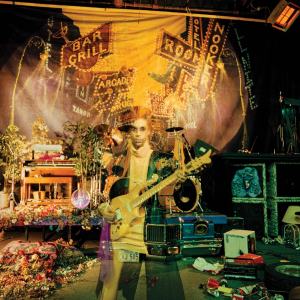
Prince: Sign “O” The Times Revisited

It’s possible that ‘Sign “O” The Times’ (the single) had the same effect on one generation of music lovers as ‘Waterloo Sunset’, ‘Arnold Layne’, ‘Purple Haze’ or ‘Penny Lane/Strawberry Fields’ (all released between March and May 1967) did on another.

Released on 13 March 1987, it’s hard to think of another top 10 single of the 1980s with as much as space in it (and uncharacteristically deep reverb on Prince’s vocals, presumably utilising the famous Sunset Sound echo chamber). Apart from his guitar and voice, it was all performed on a Fairlight synth/sampler.

Adorned with a back cover featuring Cat Glover, the single drew lyrical inspiration from various news items read in The LA Times during the week of Monday 14 July 1986: Reagan’s ‘Star Wars’ program, the AIDS crisis, the investigation into January’s space shuttle disaster and the inner-city drug wars.

Lisa Coleman reports that she heard Prince’s amazing programmed drum groove blasting out of the venue speakers during a soundcheck in Denver in early July 1986.

Famously barred from releasing a three-album set by Warner Bros. – a process outlined in detail in Duane Tudahl’s wonderful recent book – Prince regrouped, quickly creating new material and then making the title track his new double album’s centrepiece.

Sign became the sound of summer 1987 in my corner of west London. Prince had been on my radar before – Parade was a definite sleeper – but this was it. And yet it still seems one of those ‘classic’ albums that gets talked about more than listened to.

So I listened to it. In one sitting. Probably for the first time in about five years. It’s probably even better than I remembered it. Has anyone ever captured a ‘party in the studio’ vibe better than Prince on ‘Housequake’ and ‘Play In The Sunshine’? And usually he only had Susannah Melvoin and engineer Susan Rogers for company. Of course this was in a sense a throwback to classic Little Richard and Chuck Berry, as well as James Brown tracks such as ‘Get Up Offa That Thing’.

He begins each side with groundbreaking tracks for him that took a while to record. We’ve discussed ‘Sign’. Then there was ‘It’, actually his first song exclusively using the Fairlight (apart from his guitar and vocals). Then ‘U Got The Look’, which was drastically sped up at the eleventh hour, ratcheted up a few semitones. Then ‘The Cross’, written and recorded the day after the infamous Los Angeles earthquake of 12 July 1986. Prince’s drums on this track speed up a lot – Rogers reportedly noticed but decided not to point it out.

Rogers also reports that she occasionally badgered Prince about the seemingly ‘lo-fi’ nature of these recordings, but he didn’t budge, and the album benefits from that ‘unfinished’ quality, even if it features a lot less bass than most modern music.

Sign features probably Prince’s greatest music, but we could all debate which tracks could have been left off. I could do without ‘It’, ‘Forever In My Life’, ‘Slow Love’, ‘The Cross’, ‘Adore’ (and would have preferred ‘Power Fantastic’, ‘Dream Factory’, ‘Crucial’, ‘Sexual Suicide’ and ‘Good Love’, but Prince had long jettisoned them by early 1987…).

Also why does the superb album design get short shrift? It’s a key part of the package. Hail photographer Jeff Katz and graphic designer Laura (niece of Tommy) LiPuma.

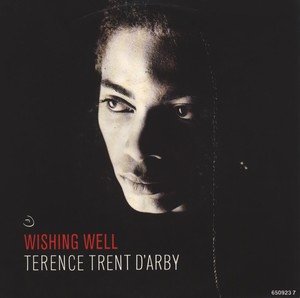
Terence Trent D’Arby: ‘Wishing Well’ Hits #1 35 Years Ago Today

Of the four hits from Terence Trent D’Arby’s superb debut album Introducing The Hardline According To…, it comes as somewhat of a surprise to report that only ‘Wishing Well’ got to #1 on the US singles chart.

Co-written by Terence and former Rip Rig + Panic bassist Sean Oliver, it reached the top spot 35 years ago today after a remarkable 17-week climb (only Eurythmics’ ‘Sweet Dreams’ endured a longer run to US #1 during the 1980s).

Not bad for a song without a proper chorus. But it hardly matters – it’s such an infectious groove with a fine vocal performance.

The album, all but one track co-produced by Terence and Heaven 17’s Martyn Ware, also reached its peak US position of #4 on this date in 1988. It’s still one of the most consistent, exciting debut collections of the decade, well worth revisiting.

Equally impressively, Terence also won a Best Male R&B Vocal Grammy award at the 1988 ceremony, beating off some very heavy company (though he lost out in the Best New Artist category to Jody Watley).

The Most Bafflingly Popular Live Acts Who Came Of Age During The 1980s

We’ve all done it – surveyed an ad for an upcoming gig and said of a band: ‘Whoa – they’re playing not one but THREE nights at Wembley/wherever?!’.

Some acts who thrived in the 1980s have effortlessly sidestepped the nostalgia circuit to maintain a huge live following, able to tour under their own steam every four or five years and sell out arena gigs. They might lose a founder member here or gain a strange recruit (Reeves Gabrels in The Cure?!) there but basically seem to go from strength to strength.

How do they do it? Who exactly are their fans? After 40-plus years of service, who forks out 70 quid every three or four years to see their favourite band at the nearest enormo-dome? Here, in no particular order, we round up the usual suspects. We’re obviously not talking about those plucky little cult acts of the 1980s. There’s a crucial missing bit in the musical brain of yours truly which would help me understand the enduring popularity of these headliners.

Variously, we will find acts who once upon a time were self-confessed haters of live performance; those who are like the Rolling Stones of 1980s pop, pedalling their tried-and-tested formula despite not writing anything decent for 30 years; those who have lost a vital frontperson, but carried on anyway. And the acts who – inexplicably – are massive in the USA despite doing middling business in the place of their birth.

Who’s who? You decide… Other suggestions are very welcome.

16. Pet Shop Boys

15. Genesis/Mike & The Mechanics

14. ELO

13. Tears For Fears

12. Depeche Mode

11. Simply Red

10. The Cure

9. Metallica

8. Iron Maiden

7. Def Leppard

6. Bon Jovi

5. Motley Crue

4. Duran Duran

3. U2

2. Queen

1. New Order

The Cult Movie Club: About Last Night… (1986)

It’s well documented that none of the so-called Brat Pack enjoyed a particularly easy ride – both professionally and personally – after their imperial 1983-1985 period (though many have made fascinating recent late-career comebacks, but that’s a whole ‘nother article…).
Demi Moore and Rob Lowe were less than a year on from the enormo-hit ‘St. Elmo’s Fire’ when they co-starred in ‘About Last Night…’, one of the least well-known but best films of their entire careers and a movie your correspondent returns to every three or four years and always enjoys.

Based on David Mamet’s 1974 play ‘Sexual Perversion In Chicago’ and directed by future ‘thirtysomething’ TV show co-creator Edward Zwick, it concerns the social lives of four young, fresh-out-of-college twentysomethings (erroneously described as ‘yuppies’ in some reviews of the film), struggling to commit to relationships while navigating AIDS and post-adolescence loneliness.

Lowe plays Dan, enjoying a relatively carefree existence of one-night stands, drinking games and weekend softball, spurred on by his constant, crass companion Bernie, excellently played by James Belushi (a part his brother John was originally pencilled in to play back in 1981, alongside Dan Aykroyd). That’s until Dan meets Debbie, nicely portrayed by Moore – he’s instantly smitten, totally tongue-tied.

The problem is they’re totally mismatched. The result is funny and sad, a kind of down-at-heel ‘When Harry Met Sally’ or freewheeling/comic ‘Nine Half Weeks’. The Chicago setting roots the movie in an agreeably specific milieu. Lowe acts his little socks off in surely the best performance of his career. Elizabeth Perkins, in her screen debut a few years before her big breakthrough with Tom Hanks in ‘Big’, is an absolute hoot as Debbie’s best friend.

Much of Mamet’s original dialogue is retained (though the role of Bernie is drastically reduced) resulting in several classic scenes and some coruscating one-liners. Sadly the movie doesn’t quite have courage of its convictions though – it occasionally cops-out with a few MTV-style montages and superfluous, ‘shocking’ nudity.

But ‘About Last Night…’ is extremely subtle in its depiction of a relationship that never really had a chance (or did it? Watch right through to the end…) and bears repeated viewings. The film was a success in the box office too, grossing nearly $40 million against a budget of $9 million, and earning glowing reviews from Roger Ebert and Pauline Kael.

Oh, and it was remade in 2014…

Gig Review: Hue and Cry @ Pizza Express Holborn, 31 March 2023

Hue and Cry: brothers Pat and Greg Kane. Photo by Phil Guest.

Some artists in the 1980s pop firmament (Paul Weller, Everything but the Girl, Simply Red) got away with marrying ‘aspirational’ music with supposed ‘socialist’ principles.

But Hue and Cry (brothers Pat and Tom Hanks-lookalike Greg Kane) had a tougher time. After their first two years of hits (‘Labour Of Love’, ‘Looking For Linda’, ‘Violently’), somehow their marriage of Sinatra-meets-Steely music and ‘political’ lyrics started to seriously wind people up in the age of grunge and Britpop.

Their 1988 album Remote (featuring an astonishing lineup of guest players including Michael Brecker, Tito Puente, Roy Ayers and Ron Carter) is certainly a desert-island disc but, by their third collection, 1991’s low-key Stars Crash Down, the momentum had been lost, typified by a famous hatchet job in Q magazine’s 100th edition begging them to split up (‘Britain’s Most Hated Band’!) – though it’s oft forgotten that the Melody Maker, NME, Sounds and Smash Hits quite liked them during their pop peak.

Since then, Radio 1’s loss has been Radio 2’s gain. The brothers Kane have ploughed on, recording the occasional album, generally eschewing the 1980s ‘nostalgia’ tours in favour of regular, relatively low-key live work. The duo format seems to be suit them very well – see 1989’s excellent Bitter Suite – and it’s been their preferred modus operandi over the last 20 years or so.

This Pizza Express gig was your correspondent’s first time seeing them live for 35 years, and anticipation was quite high, though I don’t exactly have happy memories of their 4 December 1989 gig at Hammersmith Odeon complete with ‘wacky’ horn section and less-than-stellar musicianship.

It’s not enough for 1980s acts to just play live now – the audience wants stories, and these boys have some good ones. But first Pat – in excellent voice throughout – laid down the gig’s house rules: 1. Things will only progress at a stately pace. 2. If you DON’T film our best songs and post them on twitter, you’re out.

Pat revealed that two of their early singles were written as a result of ‘being educated by a triumvirate of feminists at Glasgow University from 1981 to 1984’: indeed ‘I Refuse’ and ‘Violently’ were revelatory here. ‘Looking For Linda’, meanwhile, concerning a ‘Northern powerhouse’ who has never revealed herself to the Kane brothers since the song’s success, was a winner but missed a few neat chord changes/modulations from the original.

Their penchant for winding people up – gleefully acknowledged by Pat – emerged with new song ‘Everybody Deserves To Be Loved’ which sounded like The Blue Nile doing EDM, and there were less than essential covers of ‘Black And Gold’ and ‘Take Me To Church’.

But their best songs were harmonically-interesting, subtle explorations of adult relationships. Comparisons with Bacharach and David’s work wouldn’t be out of order. ‘Long Term Lovers Of Pain’, the ‘comeback’ single from Stars Crash Down, might just have been a Deacon Blue-style hit, but their luck had run out by then.

‘Just Say You Love Me’ and ‘Pocketful of Stones’ sounded every inch like modern standards, while excellent new song ‘Heading For A Fall’ borrowed verses from ‘The Message’ and ‘Inner City Blues’ – ‘three for one!’ trumpeted Pat.

The Kane brothers ended with a medley of ‘Shipbuilding’ and ‘The Man With The Child In His Eyes’, showcasing Pat’s rich, expressive voice to great effect. While Hue and Cry’s catalogue is unlikely to reach the critical heights of those songs’ classic status, this enjoyable gig shone a light on some underrated gems well worth discovering/rediscovering. There’s life in the duo yet.

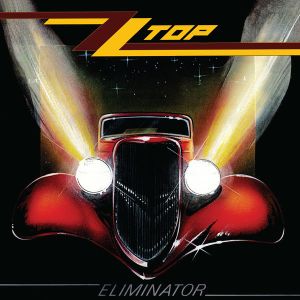
ZZ Top: Eliminator @ 40

So here we are. ZZ Top’s breakthrough album, 20 million sales and counting. Not bad for a lil’ ole blues’n’boogie trio from Texas.

But Eliminator, released 40 years ago this week, also carries some controversy around with it. As they say: where there’s a hit, there’s a writ.

Along with Sgt. Pepper’s, Roxy’s Flesh & Blood and a few others, it was one of the first albums your correspondent remembers enjoying all the way through. And, if you were a burgeoning drummer, ‘Gimme All Your Lovin’’ was the one all your schoolmates wanted you to play.

It’s a lesser known bit of 1980s muso gossip that ZZ guitarist/chief vocalist Billy Gibbons was one of the first major figures to get hold of a Fairlight synth/sampler. He experimented with it on the band’s 1981 album El Loco, but that was a stiff, selling half as many copies as 1979’s Deguello.

It was time for a rethink. First port of call – the beats. It wasn’t easy to dance to ZZ. Gibbons asked chief engineer Terry Manning to research new grooves, so he hit the discos. Inspired by OMD, Devo, Human League, Depeche Mode et al, Manning bought an Oberheim DMX drum machine and the band started working up new material in their Memphis bolthole.

Moving to drummer Frank Beard’s home studio in Houston, a chap called Lindon Hudson helped a lot with the new technology and songwriting (uncredited on Eliminator, he later won substantial damages after a lawsuit). He also claimed 124 beats-per-minute was the sweetspot.

A move to Memphis’s Ardent Studios saw Gibbons hit the city’s after-hours joints. ‘TV Dinners’ was apparently inspired when a woman entered a club wearing a white jumpsuit with those words emblazoned on the back. He also claimed that ‘I Got The Six’ was inspired by a visit to peak-punk London in 1977.

All in all, Eliminator took about a year to make. It still has many pleasures, Gibbons’ blues soloing and frequent surreal vocal interjections/lyrics chief amongst them. Gibbons and Dusty Hill also play in some strange, unguitar-friendly keys, possibly because some of the material was written on keyboards. Try playing along.

Gibbons’ 1933 Ford coupe on the cover was a tax write-off and helped to make Tim Newman’s vids for ‘Legs’, ‘Sharp Dressed Man’ and ‘Gimme’ bona fide 1980s classics. The band’s nine-month world tour kicked off in May 1983, aided by Manning’s beefy sound mix courtesy of the album’s four-track masters.

It’s fair to say that Eliminator massively influenced Prince, the Stones, Van Halen and Def Leppard, and arguably changed the way rock artists used technology forever.

Happy 40th birthday to a 1980s classic. But hey, don’t forget to credit Manning and Hudson…

Wayne Shorter (1933-2023): Don’t Forget The 1980s

The sad death of soprano/tenor sax titan Wayne Shorter has inspired many column inches but, reading most of the obituaries, you might be forgiven for thinking that he was completely dormant during the 1980s.

Nothing could be further from the truth, even if he took more of a backseat in his ‘day job’ co-leading Weather Report (though still contributed brilliant compositions, of which more later).

Your correspondent has to declare a large interest. Wayne’s music was part of my DNA from early doors, probably courtesy of the memorable tunes ‘Harlequin’ and ‘Palladium’ on WR’s Heavy Weather and beguiling ‘The Elders’ and ‘Pinocchio’ on Mr Gone which my dad played throughout my childhood.

By 1985, I was all-in. Wayne was my E.T. and my Monk, Virgo Rising, delivering nuggets of brilliance straight into my burgeoning musical brain. WR’s Sportin’ Life made a huge impression, featuring his majestic composition ‘Face On The Barroom Floor’.

Then Wayne’s contributions to Joni Mitchell’s music started to register – there were many highlights throughout the 1980s, from ‘Be Cool’ and ‘Love’ on Wild Things Run Fast to ‘A Bird That Whistles’ on Chalk Mark In A Rainstorm.

Then Wayne’s solo album Atlantis hit. Strange to report though, apart from the opening ‘sweetener’ ‘Endangered Species’, I failed to really ‘understand’ this dense, intricately arranged record of acoustic chamber fusion for about 20 years. The penny finally dropped and I’m bloody glad I persevered.

Phantom Navigator came hot on its heels. Like his friends and bandmates Miles and Herbie Hancock (and inspired by his commitment to Human Revolution), Wayne was tired of improvising over ‘jazz’ rhythms and standard songforms, branching out into symphonic/through-composed material utilising synthesizer and sampling technology.

But of course it sounded completely unlike anyone else. ‘Condition Red’ was an immediate brain-blower, and again this most misunderstood/underestimated album has proved a sleeper classic.

Ditto 1988’s Joy Ryder, with the extraordinary ‘Someplace Called Where’ featuring Dianne Reeves, brilliant ‘Over Shadow Hill Way’ and some fantastic Hancock/Geri Allen/Darryl Jones/Nathan East/Terri Lyne Carrington interplay throughout.

The 1980s Columbia albums get fairly short shrift in critical circles these days but Wayne played several compositions from that era – ‘Atlantis’, ‘Over Shadow Hill Way’, ‘Joy Ryder’, ‘Endangered Species’, ‘The Three Marias’ – right through to the 2010s.

Then there were the intriguing 1980s guest spots and side projects: he acted memorably in ‘Round Midnight’ and contributed to gorgeous ‘The Peacocks’ and brilliant ‘Une Noche con Francis’ (duelling with Dexter Gordon) on the Oscar-winning soundtrack album.

There was a moving guest performance on Toninho Horta’s ‘Ballad For Zawinul’ from the guitarist’s Diamond Land album (still not available on streaming platforms at time of writing) and the memorable team-up with pianist Michel Petrucciani and guitarist Jim Hall on Power Of Three.

Wayne also contributed a fine solo to Stanley Clarke’s ‘Goodbye Pork Pie Hat’ and played beautifully throughout Buster Williams’ 1988 album Somethin’ Else. (Chime in below if I have missed any other great Wayne 1980s guest performances.)

Wayne ended a fruitful decade recording The Manhattan Project’s excellent self-titled live Blue Note album at Chelsea Studios, NYC, in December 1989 alongside Clarke, Petrucciani and Lenny White (c’mon Universal, get this on streaming platforms). He plays some marvellous stuff throughout, particularly on Jaco Pastorius’s ‘Dania’, new composition ‘Virgo Rising’ and a reversioned ‘Nefertiti’.

Then there was the live work. Wayne toured the UK regularly between 1985 and 1988. I think I saw him four times during the decade, and each concert was fascinating.

There was a Weather Report gig at the Dominion Theatre in summer 1984, a poorly-attended solo gig at the Logan Hall on 25 October 1985 (‘lack of promotion ’, someone said to my dad) and a really weird all-nighter at the Town & Country Club on 4 April 1987 when Wayne’s sci-fi fusion stopped the jazz dancers in their tracks,

Then there was a gig with Carlos Santana at the Royal Festival Hall on 13 July 1988 of which I can’t remember much apart from a few hippies in the front row loudly saluting every note Carlos played, and Ndugu Chancler’s absurdly-high cymbal setup. (There was also apparently a solo Wayne gig at The Astoria in April 1988 which for some reason I missed.)

I would study him and his sidemen (and, notably, sidewomen: his 1980s bands featured no less than five women, Marilyn Mazur, Geri Allen, Tracy Wormworth, Renee Rosnes and Carrington), fascinated and enthralled by the originality of his music and playing.

Farewell to a master, a talisman, an enlightened being. Nam myoho renge kyo.

Further listening: check out my Wayne playlist which outlines some key tracks of his career.

What Is ‘1980s Music’?

It’s a question that has been obsessing your correspondent over the last few days – which music epitomises the 1980s?

If, in 500 years, someone demanded to hear a song that represented the decade, which piece would best encapsulate it? And is ‘1980s Music’ a genre?

A website called movingtheriver.com should be able to pin down what makes a quintessentially 1980s track, but it’s not easy. So let’s begin with a process of elimination.

A lot of 1980s music was influenced by previous genres – Motown, punk, glam, psych, prog, metal, disco, jazz/funk, singer/songwriter, folk, reggae, ’70s electronica, minimalism, funk, blues. So we need tracks that jettison those tropes.

Many bands used synths in a way that was influenced by 1970s pioneers Kraftwerk, Tangerine Dream and Giorgio Moroder (Japan, OMD, Pet Shop Boys, The Art Of Noise etc.), so wouldn’t qualify as uniquely 1980s. We’re after artists that used sequencers and synths in a more ‘progressive’/melodic way, mainly to aid songwriting.

Huge 1980s acts like Wham!, ABC, Madonna, Simply Red and Culture Club obviously tapped into Motown, R’n’B and Chic-style disco/funk. Eurythmics were inspired by everything from the Stones to Kraftwerk. So they won’t do.

Tina Turner, MJ, Genesis, Peter Gabriel, Bruce, Prince and Hall & Oates all blossomed in the 1970s, while Cyndi Lauper’s songs and style had elements of that decade too, as did many Goth acts. Production styles came and went, and of course there were common tropes like the gated snare drum and synth bass, but again they don’t particularly define the decade.

The sweet spot seems to be around 1984/1985. Musicians and songwriters were leaving behind post-punk, classic soul, blues and ‘rock’ (though of course all would return with a vengeance by the end of the decade) and forging a quintessentially 1980s sound.

I’d put forward the following as completely 1980s, born and bred in that decade, with no apparent antecedents from any well-worn styles (‘bluesy’ chord progressions, ‘folky’ singing) or particular era, with the possible exceptions of Sting and Associates (and of course one could have chosen some other tracks by these artists). In short, for better or worse, it’s pretty hard to work out their influences:

18. Bros: ‘I Owe You Nothing’

17. Rick Astley: ‘Whenever You Need Somebody’

16. Go West: ‘We Close Our Eyes’

15. The System: ‘You Are In My System’

14. Dollar: ‘Videotheque’

13. Tears For Fears: ‘Shout’

12. Propaganda: ‘Duel’

11. Frankie Goes To Hollywood: ‘Two Tribes’

10. Colonel Abrams: ‘Trapped’

9. Erasure: ‘Sometimes’

8. Alison Moyet: ‘Ordinary Girl’

7. Scritti Politti : ‘All That We Are’

6. Prefab Sprout: ‘Don’t Sing’

5. The Smiths: ‘Heaven Knows I’m Miserable Now’

4. Sting: ‘Fortress Around Your Heart’

3. Associates: ‘Party Fears Two’

2. Wang Chung: ‘Dance Hall Days’

1. Nik Kershaw: ‘The Riddle’