At this late stage of the game, it’s very rare to hear a piece of music that has you gripped from bar one.
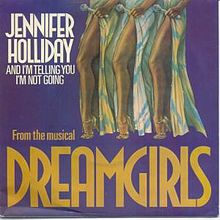
But that happened recently when Jennifer Holliday’s ‘And I’m Telling You I’m Not Going’ turned up on Forgotten 80s.
The song was vaguely familiar. Then the penny dropped – I was a big fan of ‘The Larry Sanders Show’ and always loved Jim Carrey’s performance on the final episode (see below) in 1998, but didn’t have a clue at the time that it was a cover version.
But back to Jennifer Holliday. She first performed ’And I’m Telling You I’m Not Going’ at the age of just 20 when she took on the role of Effie Wright in the musical ‘Dreamgirls’, which opened on 21 December 1981 at the Imperial Theatre on Broadway. Written by Tom Eyen and Henry Krieger, the song ends Act One with a dramatic flourish.
Released as a David Foster-produced single in 1982, it got to #22 on the Billboard Hot 100 and won a Best Female R’n’B Vocal Performance Grammy for Holliday. It’s an electrifying vocal performance, fusing soul and gospel and injecting a touch of humour to boot.
Holliday was subsequently one of the first signings to the Geffen label, her first solo album Feel My Soul produced and co-written by Earth, Wind & Fire mainman Maurice White – it reached #31 on the Billboard pop chart and was Grammy-nominated. She also got a Grammy nomination for Best New Artist.
Holliday was then featured vocalist and arranger of The New Jersey Mass Choir on Foreigner’s #1 single ‘I Want To Know What Love Is’, a performance which reportedly reduced the song’s co-writer/guitarist Mick Jones to tears when recorded at New York’s Right Track Studios during summer 1984
Less successful was a second album for Geffen, 1987’s Get Close To My Love, but Holliday has continued to perform to this day in both secular and non-secular formats. More power to her elbow, and bravo for an absolutely spellbinding vocal performance (Jim’s not bad either, sounding occasionally a bit like Mike Patton).
In the immediate aftermath of Bowie’s fabled appearance in the Broadway production of ‘The Elephant Man’, and despite the commercial success of the Scary Monsters album, at least in the UK, his thoughts were far from music in early 1981.
The sorts of modern nightmares he had sung about on ‘It’s No Game’ were becoming all too real. He was particularly shaken by the death of his friend John Lennon in December 1980.
It was time for a reassessment and reboot. First to go was a proposed world tour, originally pencilled in for summer 1981. Instead, Switzerland seemed as good a place as any to hide out, at least initially.
In July, Bowie was at Montreux’s Mountain Studios, recording his vocals for the ‘Cat People’ movie theme song with co-producer/co-writer Giorgio Moroder.
Queen were in an adjacent room recording the Hot Space album, and, when Bowie popped in to say hello to their drummer Roger Taylor, a long-overdue collaboration was on the cards (Bowie was also keen to bend Freddie Mercury’s ear about Queen’s label EMI, as he was pretty desperate to get off RCA).
It was apparently no walk in the park for either party though: guitarist Brian May recalled that ‘to have his ego mixed with ours made for a very volatile mixture’ while Taylor also confirmed that ‘certain egos were slightly bruised along the way’.
But the blend of personalities and approaches paid off; in a feverish, booze-fuelled few hours, described by engineer/co-producer David Richards as ‘a complete jam session and madness in the studio’, something started happening.
With Bowie running between piano and 12-string guitar (his D-based chordal concept is not dissimilar to David Gilmour’s work on Pink Floyd’s contemporaneous ‘Run Like Hell’), a groove, melody and basic song structure emerged.
Bowie encouraged Mercury to improvise on the microphone – apparently the latter’s wordless ad-libs were only meant as placeholders, to be replaced with real lyrics, but they were left in when no-one could think of anything better.
Bowie reportedly then ‘comped’ both vocal improvisations to give them something to build upon, and then lyrics were considered. The nascent song was initially titled ‘People On Streets’, but Bowie’s push to call it ‘Under Pressure’ led to the emergence of a more focused composition.
It’s a fascinating snapshot of Bowie and Mercury’s vocal styles. Bowie struggles with Queen’s natural tendency to break out the pomp-rock but he reins it back in with the moving, double-tracked ‘This is our last dance’ section.
It’s also instructive to hear his vocal mastery during the section; close listening reveals that he takes short, deep breaths at exactly the same points throughout, demonstrating that the part was meticulously worked out in advance.
It’s also impressive that neither Mercury nor Bowie ever ‘pop’ the microphone in their delivery of the word ‘Pressure’ – no mean feat.
Still, it’s quite a bold song lyrically. There aren’t many #1 singles with lines like ‘It’s the terror of knowing what this world is about/Watching some good friends scream let me out’.
It’s not surprising Bowie’s mind was on the healing nature of love in 1981. It’s possible the song was a reaction to the street uprisings going on throughout the UK during spring and summer. The result is a kind of ‘Heroes’ for the early 1980s. Also it’s possibly a prelude to his involvement with Band Aid/Live Aid later in the decade.
It’s also worth noting that Bowie’s infamous Lord’s Prayer at the 1992 Freddie tribute concert at Wembley Stadium took place soon after his performance of ‘Under Pressure’ in duet with Annie Lennox.
The track was mixed in New York by Queen alone without any input from Bowie, a decision that apparently divided opinion; Taylor considered it ‘one of the best things Queen have ever done’ while Bowie surmised that ‘it was done so quickly that some of it makes me cringe a bit.’ It’s certainly far from a hi-fidelity recording.
EMI were understandably convinced ‘Under Pressure’ was a hit, Bowie and Queen less so. But it entered the UK charts at #8 40 years ago this week, and then summarily knocked The Police’s ‘Every Little Thing She Does Is Magic’ off the top spot on 15 November, staying at #1 for two weeks.
In the US, it reached #29, not particularly impressive but nonetheless Bowie’s best chart placing since ‘Golden Years’ almost six years before.
David Mallet’s clever video used stock/public domain footage to interesting effect, though it was banned by the BBC (though I definitely remember seeing it on telly at the time) for including a few seconds of footage from an IRA bomb in Belfast.
As for Bowie, he quickly moved on to the filming of Alan Clarke’s excellent TV play ‘Baal’ in August 1981, rounding off an interesting year for him.
On a personal level, I recall that November 1981 was exactly the time when the pop music bug really got me. I can remember where I was when I first heard ‘Under Pressure’, and many tracks from that month’s chart hold a special place in my heart to this day.
A babysitting uncle (later reprimanded by my mum!) showed my brother and I John Carpenter’s classic 1978 film ‘Halloween’, recorded from TV after its first (edited) UK showing, sometime in 1982 or early 1983.
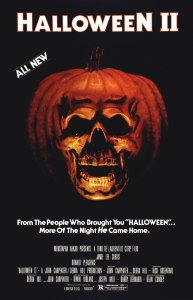
I loved it but it scared the bejesus out of me. Well, I guess everyone’s entitled to one good scare on Halloween. But Rick Rosenthal’s 1981 sequel, released 40 years ago this weekend, was a definite no-no. My parents wouldn’t let my brother and I watch it, though I distinctly remember us creeping along the upstairs corridor and spying on them watching the rented video with friends.
‘Halloween’ has of course been through numerous/confusing sequels and reboots. The new ‘Halloween Kills’ is supposedly a ‘proper’ sequel to the rebooted ‘original’ of 2018 (which I tried to watch recently, but didn’t last beyond the first five minutes…).
But back to John Carpenter’s original 1978 classic. It was a huge hit. Once the money started rolling in, a sequel was on the cards, one that Carpenter was unable to veto due to his original contract (he also allegedly missed out on a huge amount of royalties too).
So he reluctantly hooked up again with Debra Hill to write the screenplay and co-produce. The result was one of the last big ‘slasher’ hits, outside of the endless ‘Friday The 13th’ sequels, earning around $25 million worldwide against a $2.5 million budget. And this was in the days when sequels were not commonplace.
But how does ‘Halloween II’ stand up today? First, the good stuff:
The camerawork
Director of photography Dean Cundey was lured back from the original, passing up the opportunity to work on Spielberg’s ‘Poltergeist’, and his original angles and Panaglide compositions elevate the film way beyond the standard slasher fare.
The hospital setting
It’s a great idea to set the film in a suburban hospital, and gives a claustrophobic sense of isolation, of course a descendant of Carpenter’s ‘Assault On Precinct 13′ (via, originally, Howard Hawks’ ‘Rio Bravo’ and George Romero’s ‘Night Of The Living Dead’).
Continuity
It’s a neat concept to start the film right where the original ‘Halloween’ ended.
Donald Pleasence
Once again he fully embraces the role of Dr Sam Loomis. He takes it seriously and does a stand-up job, complete with a few memorable line readings.
The Chordettes’ ‘Mr Sandman’ intro and end credits
A very creepy choice, possibly influenced by the use of music in ‘The Shining’.
But then there’s the bad stuff:
Lack of Jamie Lee Curtis
She spends most of the movie either in a hospital bed or limping/crawling around (wearing a very odd wig). As good a performance as she gives, the film suffers from her inertia.
Too much dialogue/exposition
There are way too many slow, boring plot/dialogue longeurs.
Lack of engaging/likable characters
As workmanlike as the mostly young cast are, they can’t replicate the natural rapport that existed between Jamie Lee, Nancy Loomis, PJ Soles etc. in the original film.
Dick Warlock as The Shape
The original film mostly used Nick Castle as The Shape, but experienced Hollywood stuntman Warlock got the role here, and he moves way too slowly and stiffly (and the William Shatner mask doesn’t quite fit…). And the closing fire stunt may have won him some brownie points in the industry but looks absurd now.
Gratuitous gore
Carpenter took a look at the first assembly of ‘Halloween II’ and decided it was too long and not scary enough. He shot a few additional scenes, adding some gore and spikes. Sadly this resulted in too many nods to standard slasher movies, and resulted in a lot of dodgy reviews. Carpenter was also fairly disgusted with himself for ‘messing’ with another director’s work – ‘I did something I don’t believe in. I did something I would hate for anybody to do with me. It was an evil thing to do and I didn’t enjoy any of it,’ he told biographer Gilles Boulenger.
Music
Alan Howarth overdubbed onto Carpenter’s original 16-track tapes, adding copious synths and and drum machines – there’s a lot of bluster but unfortunately Howarth adds little to the original soundtrack.
In conclusion: I’d argue it’s a decent-enough sequel, despite the obvious problems. The last 15 minutes offer creeps, shocks and thrills, and the hospital setting works excellently.
The Associates gave good title: ‘Tell Me It’s Easter On Friday’, ‘Kitchen Person’, ‘White Car In Germany’, ‘Q Quarters’, ‘No’, ‘Those First Impressions’, ’18 Carat Love Affair’, ‘Nude Spoons’, ‘Party Fears Two’ etc. etc.
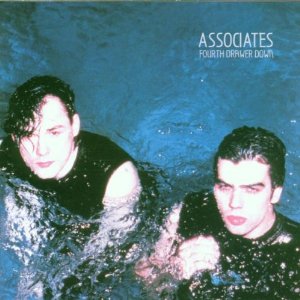
The first four of those tracks appeared on Fourth Drawer Down, released 40 years ago this weekend.
Mostly co-produced by 19-year-old Flood (Depeche Mode, U2), it was a collection of the increasingly bizarre singles released by the ‘band’ during 1981, all of which featured strongly on the Independent charts.
The Associates were yet another impressive 1980s pop duo, at least in their early incarnation. Billy Mackenzie was arguably the greatest singer of the post-punk era, while Alan Rankine was a key guitarist (and talented multi-instrumentalist) alongside John McGeoch, Charlie Burchill, Will Sergeant et al.
They were also arch music-biz pranksters, years before The KLF, good-looking, talented lads milking the record companies for all they were worth. Newly departed from Fiction Records, with ex-Cure bassist Michael Dempsey in tow, the three spent 1981 holed up in their St John’s Wood flat by day and Willesden’s Morgan (later Battery) Studios by night.
If taken in an amount just over their recommended dose, Quiet Life (also an ‘influence’ on David Sylvian/Japan?) health tablets would give a nice buzz, found in the ‘fourth drawer down’ of their bedroom cabinet.
It was a hedonistic, musically expansive period. Experimentation was king. It wasn’t unusual to see Billy singing down a vacuum tube or through tracing paper, while Rankine occasionally applied a water-filled balloon to his guitar strings.
Vintage synths were layered with dulcimer, xylophone, early drum machines, ‘funky’ bass and mad fuzz-toned guitar. It was a brittle, lo-fi sound, influenced by Bowie, Roxy, Sparks, Ennio Morricone and John Barry, quite insane in places.
The scary, majestic ‘White Car In Germany’ was the logical conclusion to all of that icy, post-Heroes Euro-grandeur, but is it a pastiche? ‘Lisp your way through Zurich/Walk on eggs in Munich’, croons Billy. It’s impossible to say, but that’s part of the fun.
The brilliant ‘Q Quarters’ is strongly reminiscent of Scott Walker’s ‘70s/’80s soundworld, and comes complete with Billy’s coughing solo. Superbly chaotic ‘The Associate’ is invaded by a screaming fit and what sounds like a major vacuum-cleaner malfunction.
Some of it may remind one of early Cocteau Twins (particularly Mackenzie’s strident vocals and oblique lyrics), early Suede and the work of Frankie Goes To Hollywood and Propaganda from later in the decade (Trevor Horn apparently almost produced a solo Mackenzie album around 1987, sadly yet another what-if in this gifted artist’s short life).
Less than a year later, aided by some more streamlined material, Warners money and the excellent producer Mike Hedges (who also worked on ‘White Car In Germany’ and ‘The Associate’), they spent nine months as bona fide pop stars in the UK.
But nothing ever sounded as singular as Fourth Drawer Down. And don’t miss out on the wacky B-sides, newly added to the remastered 2-CD version. Also worth checking out is their extraordinary Peel Session from April 1981.
After ‘82’s critically acclaimed New Gold Dream, the logical step for Simple Minds would seem to have been to go even further away from their art-rock roots and rush headlong towards some funky ‘sophisti-pop’.
After all, head honcho Jim Kerr is on record as saying that his favourites from the era were Grace Jones’ Nightclubbing, Donna Summer’s two classic 1982 singles and Carly Simon’s ‘Why’.
To that end, Nightclubbing co-helmer Alex Sadkin was eagerly approached to produce Sparkle In The Rain, but he declined, busy with Duran Duran and Thompson Twins work.
Instead, inspired by premiering the pile-driving, Pink Floyd-meets-Doors ‘Waterfront’ at Dublin’s Phoenix Park gig (supporting U2) on 14 August 1983, they turned to producer Steve Lillywhite, chief architect of the Return to Rock that was eclipsing New Pop during summer 1983, courtesy of his work with Big Country and U2.
Lillywhite hastily took them into Shepherds Bush’s legendary Townhouse Studios 2, with Howard Gray engineering. Guitarist Charlie Burchill wrote ‘Herzog’ on the back of Lillywhite’s chair, inspired by his and Kerr’s newfound love of the German director’s ‘Fitzcarraldo’ and its theme of dreams moving mountains. A photo of Nastassja Kinski took pride of place on the control-room wall.
There were regular games of table tennis, Kerr using them to psych himself up for the very adrenalized vocal takes, especially on the hysterial ‘Kick Inside Of Me’.
After previous drummer problems to match Spinal Tap, the excellent Mel Gaynor was a real find for the band. Though quiet in the studio, he was a monster on the kit and also apparently contributed effective keyboard and guitar ideas.
Bassist Derek Forbes was more in the background, spending a lot of time drawing his ‘Dan Yer Man’ cartoons. Burchill allegedly gave him a bollocking about his lack of ‘commitment’; the writing was on the wall for the talented player. He’d soon join fellow ex-Mind Brian McGee in a superb iteration of Propaganda’s touring band.
Tellingly, Sparkle’s songwriting royalties are split five ways, except for a truncated cover of Lou Reed’s ‘Street Hassle’ which jettisons some of the more ‘unsavoury’ statements of the original (shades of Bowie’s ‘Tonight’, recorded a few months later?).
But it’s Gaynor, Kerr and McNeil’s album. The latter provides epic textures, very high in the mix. Kirsty MacColl provides a very welcome ‘girl’s voice’. ‘Shake Off The Ghosts’ was certainly noted by U2. ‘Waterfront’ is brilliant. How many other hits use guitar harmonics for their main riff? (only The Hooters’ ‘Satellite’ comes to mind).
Alongside Empires And Dance, Sparkle remains my favourite Minds album. Yes it’s a sonic ‘experiment’ and most tracks go on for a minute too long, but it’s rooted in strong band playing and delicious ambient textures. And it’s bloody loud.
Released on 6 February 1984, it became their first of four straight UK #1 albums. But they weren’t delivering on the singles front: ‘Waterfront’ only got to #13, ‘Speed Your Love’ #20 and ‘Up On The Catwalk’ #27. With hindsight, their reluctant November 1984 recording of Keith Forsey/Steve Schiff’s ‘Don’t You (Forget About Me)’ was a vital career move.
Minds hit the gig circuit for a very busy summer 1984 tour including a record-breaking (at the time) eight nights at Hammersmith Odeon. This was a very different group to a year earlier. It’s fascinating to compare two ‘Oxford Road Show’ gigs from early 1983 and early 1984.
Gone was the skinny, neurotic Euro art-funk. Kerr was a far more wholesome, energised, welcoming character than before, screaming ‘Charlie Burchill!’ before the regular guitar breaks. He even started the Hammersmith gigs up a pole, Julian Cope-style!
But Kerr quickly disowned this period, citing exhaustion on the part of the band. Stateside success seemed so near yet so far. But then came ‘Don’t You’, Kerr’s marriage to Chrissie Hynde, ‘The Breakfast Club’ and Live Aid. The world was theirs.
Adolescence: a period of chaos and confusion. There was little rhyme or reason to one’s heightened sensibilities, and it didn’t help that 1980s pop songs had such bloody weird lyrics.
Initially, maybe it was a crap hi-fi/radio signal that sent you down the wrong track, or maybe some jackass got in your ear. And, quite often, albums didn’t come with lyric sheets.
Either way, the words were often lost in translation, the meaning – such that it was – got skewed and from that moment on you couldn’t hear a track without factoring in your messed-up version. And it didn’t matter if you loved it or hated it.
Sad to report, to this day, when I hear these songs/lines, I get the lyrics ‘wrong’. And yes, it has to be said, you don’t have to be Dr Freud to see that sex was usually the driver. That’s adolescence for you…
Blondie: ‘Island Of Lost Souls’
Misheard line: ‘I’m f*ckin’ near/Can you help me put my truck in gear’
(Correct line: ‘Oh buccaneer/Can you help me put my truck in gear’)
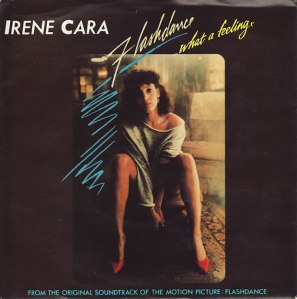
Irene Cara: ‘Flashdance (What A Feeling)’
Misheard line #1: ‘Take your pants down/And make it happen’
(Correct line: ‘Take your passion/And make it happen’)
Misheard line #2: ‘I can have it off/Now I’m dancing for my life’
(Correct line: ‘I can have it all/Now I’m dancing for my life’)
Michael Jackson: ‘Thriller’
Misheard line: ‘And though you f*ck to stay alive/Your body starts to quiver’
(Correct line: ‘And though you fight to stay alive/Your body starts to quiver’)
Prince: ‘Strange Relationship’
Misheard line: ‘But I’ve seen you get a kick out of doing coke’
(Correct line: ‘But I seem to get a kick out of doing you cold’)
Roxy Music: ‘To Turn You On’
Misheard line: ‘With an open book aside/Like Iranian screw’
Correct line: ‘With an open book aside/Like you read in school’)
Level 42: ‘Last Chance’
Misheard line: ‘Driven on by the memory of your fish/Shining for me’
Correct line: ‘Driven on by the memory of your face/Shining for me’
China Crisis: ‘African And White’
Misheard line: ‘Life is a fever in which we ate’
(Correct line: ‘Life is a fever in Israel’)
Fine Young Cannibals: ‘Johnny Come Home’
Misheard line: ‘Waters run in my life/That I must get drunk every night’
Correct line: ‘What is wrong in my life/That I must get drunk every night’)
UB40: ‘Food For Thought’
Misheard line: ‘I’m a prima donna’
(Correct line: ‘Ivory madonna’)
Bryan Adams: ‘Heaven’
Misheard line: ‘Love is all that I need/And I found it there in your shirt’
(Correct line: ‘Love is all that I need/And I found it there in your heart’)
Billy Joel: ‘An Innocent Man’
Misheard line: ‘Some people live with the fear of a touch/And the anger of having dinner poo’
(Correct line: ‘Some people live with the fear of a touch/And the anger of having been a fool’)
Donald Fagen: ‘Ruby Baby’
Misheard line: ‘From the sunny day I met you/Made a bed where I will get you’
(Correct lilne: ‘From the sunny day I met you/Made a bet that I would get you’)
The Blue Nile: ‘The Downtown Lights’
Misheard line: ‘I’m tired of crying on the city’
(Correct line: ‘I’m tired of crying on the stairs’)
Lionel Richie: ‘All Night Long’
Misheard line: ‘Everybody’s seen everybody dance’
(Correct line: ‘Everybody sing/Everybody dance’)
Steely Dan: ‘Glamour Profession’
Misheard line: ‘When it’s all over/We’ll make some colds from my cough’
(Correct line: ‘When it’s all over/We’ll make some calls from my car’)
Boomtown Rats: ‘Banana Republic’
Misheard line: ‘Banana republic/Set to climb’ (To be honest, I didn’t have the faintest idea what Sir Bob was singing… Ed.)
(Correct line: ‘Banana republic/Septic isle’)
It Bites: ‘Calling All The Heroes’
Misheard line: ‘High on a mountain the men looked below/Cucumber pineapple something and Poe’
(Correct line: ‘High on a mountain the men looked below/Cooked up a plan that would outwit their foe’)
The Police: ‘So Lonely’
Misheard line: ‘Simone/Simone’ (There was an Italian bloke at school called Simone…)
(Correct line: ‘So lonely/So lonely’)
Joni Mitchell: ‘Chinese Cafe (Unchained Melody)’
Misheard line: ‘Gone so fast/Like the turn of a peach’
(Correct line: ‘Gone so fast/Like the turn of a page’)
Sylvian’s modus operandi for the studio sessions that made up his classic 1984 debut album perfectly reflected its ‘anti-rock’ stance.
Steve Jansen’s drums and/or percussion were generally recorded first, usually followed by David’s rough keyboards/guitars and a guide vocal. After that he worked closely with guest musicians on a one-to-one basis.
And the latter aspect is the main focus of some fascinating, newly-released footage of the Hansa Studio sessions in Berlin, documented by Sylvian’s then-partner Yuka Fujii.
It’s an absolute treat for Brilliant Trees fans and a great chance to see what actually happened in most recording studios during the 1980s. In common with making movies, there’s a lot of waiting around, a fair bit of chewing the fat and then some pretty intense bursts of performance/concentration.
It’s fascinating watching Sylvian collaborating with his good friends Ryuichi Sakamoto and Holger Czukay. Sakamoto is a model of quiet concentration, quickly learning the chords to album outtake ‘Blue Of Noon’. Czukay is full of smiles and fun while tinkering with his Dictaphone and laying down a guitar solo on ‘Red Guitar’ which didn’t make the cut.
Elsewhere we finally get to hear what ball-of-energy guitarist Ronny Drayton actually plays on ‘Pulling Punches’, and Jon Hassell is every inch the NYC avant-garde auteur (in his excellent book ‘Cries And Whispers’, Anthony Reynolds reports that he did just one five-hour session for Brilliant Trees, asking for and getting $5,000 upfront plus co-writing credits for the two tracks he played on).
But who knew he recorded his solos sitting on the floor in the corner of a tiny studio, Sylvian at his elbow? For his part, Sylvo is generally smiley, quiet, engaged, charming, extremely professional and seems to have a good rapport with co-producer Steve Nye.
Sadly the short bit of footage that emerged recently (then rapidly disappeared) of bassist Wayne Braithwaite recording ‘Red Guitar’ is not reinstated here.
The clip is a vital addition to one’s enjoyment of Brilliant Trees – check it out (and I’ve included Sylvian’s own notes on the footage below) before it gets taken down.
This raw footage, shot on what’s now seen as a primitive camera but which was a top of the line consumer product at the time, a massive, unwieldy object, was documented by Yuka Fujii. I’ve put the material together in the order it was recorded to give a very general idea of the process of development. It’s been my practice to work closely with each individual musician since my earliest days with the band in an attempt to get the best results. I’ve always maintained the band prepared me for working with others, gave me the confidence to work with my peers, the ‘newcomers’ in the room all being older than myself (25). At this point in time Ryuichi’s English was very rudimentary (this was to change radically within the next ten years or so) so we had to communicate as economically as possible, or rather, 95% of the exchange was purely musical. Yuka and Peter Barakan would step in when greater explication was needed. Holger’s English remained consistent throughout the years i knew him. Again, subtleties could be lost so the dialogue was relatively basic. These sessions in Berlin were my first step in creating what would become ‘Brilliant Trees’ and my initial move away from the structure of the band. It was one of the happiest recording experiences I can recall while signed with a major label. Because of the success of having everyone meet in Berlin, a city native to no one involved, it felt like an adventure. People arrived with a spirit of openness and receptivity. I went on to repeat this process with albums such as ‘Secrets of the Beehive’, ‘Rain Tree Crow’, and ‘The First Day’ among others.
I’ve left a lot of Jon’s conversation in as it’s of interest. In one section he’s explaining the nature of raga and how he came to it by working with renowned Indian singer/teacher Pandit Pran Nath. He was also intimating that, as ‘Brilliant Trees’ asked that he play in the western tradition, ‘steps’ as he describers it, he didn’t see how his performance could be incorporated into the title track. I persevered. He returned to his hotel room that evening to work on it and, overnight, came up with something so beautiful and complimentary to the piece, that moved away from raga (outside of the coda), and gave us one of the rare, if not unique recordings, of Jon playing in the western tradition.
Besides the limited nature of my vocabulary, the paired down nature of our exchanges for the reasons given above, my only regret is that I didn’t use Holger’s guitar solo on ‘Red Guitar’. At the time I felt it a little lightweight compared to the mix Steve Nye was prepping. I would now mix it quite differently pushing the drums way back (from the mid 70s through the 80s, drums were often foregrounded, a trend I wasn’t fond of. I fought for a change of approach on ‘Beehive’ and that’s about the time when things began to resemble how I’d initially imagined the material. There are always exceptions of course, ‘Weathered Wall’, ‘Before the Bullfight’ are just two examples). I loved Holger dearly and wish I’d imortalised his solo in some capacity. If it still exists on multitrack, all is not lost.
I came away from Berlin with an incomplete album and preceded to write a few remaining pieces to complement the best of what I had. “The Ink in the Well’, ‘Nostalgia’ and ‘Backwaters’ were added, ‘Blue of Noon’, an alternate version of ‘Forbidden Colours’, and a new track composed with Ryuichi were, with the exception of the latter, to find a home elsewhere. ‘Blue of Noon’ was originally a vocal piece but I felt this version didn’t hold together and, in any case, was out of place in the context of the album. Virgin released a working rough mix of the track as the B-side of a single.
I hope the mutual respect and good humour of everyone involved comes across along with their seriousness and committed nature to the material. Rarely has this proved otherwise for me. In this respect I feel very fortunate. From this session I made lifelong friends, a trend that was to continue for many years to come.
Jazz books written by ‘jazz widows’ are pretty rare. Only a few come to mind: Laurie Pepper’s ‘Art: Why I Stuck With A Junkie Jazzman’, Sue Mingus’s ‘Tonight At Noon’ and Jo Gelbart’s ‘Miles And Jo: Love Story In Blue’.
But, as Val Wilmer’s ‘As Serious As Your Life’ demonstrated some 50 years ago, behind a great jazzman is often a great jazzwoman, and usually one equally worthy of a tome.
And so it proves with Maxine Gordon’s excellent ‘Sophisticated Giant’. She was the wife and tour manager of Dexter Gordon – bebop pioneer, Blue Note saxophone great and Oscar-nominated actor – in the years leading up to his death in 1990.
The book serves as a gripping biography and much more besides. It came about as a direct result of Dexter’s unfulfilled ambition to publish his autobiography. He wrote periodically throughout his life, and many illuminating excerpts are included here.
The early pages portray an oft-neglected, Los Angeles-centred survey of how the swing scene developed into the bebop revolution; we get an inside story of Dexter’s work with the Louis Armstrong Orchestra and famous Billy Eckstine Band, hothouse for future stars Art Blakey, Gene Ammons and Sonny Stitt.
We move onto Dexter’s productive spell with fellow bebop pioneer and close friend Dizzy Gillespie, and then his famous Savoy and Dial sessions (though there are sobering details of the contracts he signed throughout his life).
We get the story of Dexter’s dark years from 1955 to 1960, when he had frequent struggles with addiction and crime. He considered them ‘un’ years and planned to leave them out of his autobiography completely.
But things very much look up with his signing for Blue Note Records on 7 November 1960. This is the most gripping section of the book and the one that will hook most jazz fans. We learn about the recording of classic albums Our Man In Jazz and Go, and read many touching letters that Dexter sent label owners Alfred Lion and Francis Wolff while on tour.
We learn about Dexter’s move to Paris and subsequent settlement in Copenhagen, Denmark, where he was resident for 12 years and became a much-loved local face, frequently visible riding his bicycle around the city.
Maxine then explores Dexter’s triumphant return to New York in 1977, when he was welcomed back like a hero with a shiny new Columbia record deal and a host of memorable albums and gigs.
Finally there’s a long, arresting section on the making of classic 1987 jazz film ‘Round Midnight’, which almost gave Dexter a Best Actor Oscar and earned him plaudits from none other than Marlon Brando.
‘Sophisticated Giant’ slots right into the canon of great jazz books, a must for the general fan and anyone who loves Dexter’s Blue Note sides or performance in ‘Round Midnight’. It’s also notable for featuring some previously unseen photos, including a beautiful shot of Dexter, Alfred Lion and Francis Wolff, taken by Rudy Van Gelder.
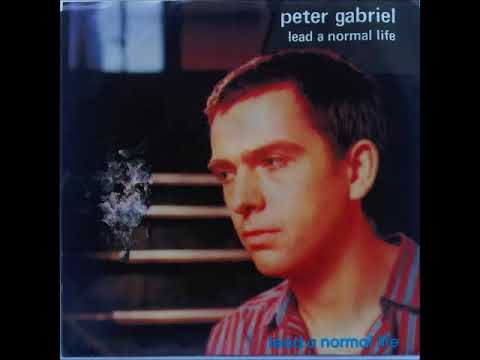
Peter Gabriel’s brilliant 1980 self-titled album is probably best known for its much-discussed ‘gated reverb’ drum sound, the ‘no cymbals’ rule and the tracks ‘Games Without Frontiers’ and ‘Biko’.
The record portrayed various characters on the fringes of society, whether due to war, intolerance, mental illness, crime or racism.
But its penultimate track, the somewhat forgotten ‘Lead A Normal Life, is a chilling, minimalist classic whose power grows with each passing year. It’s set in an unnamed, uncharacterised institution – a borstal, high-security prison, crisis centre or mental asylum? The latter seems most likely.
It’s fair to say mental illness was a taboo in late-1970s Britain, even while the borstals were subject to Thatcher’s ‘short, sharp shock’ doctrine (in the era of Alan Clarke’s devastating film ‘Scum’), unemployment and institutional racism were rife, crime was on the increase, the Yorkshire Ripper rampant and The Troubles in Northern Ireland very much on the agenda.
In short, it sometimes felt like this song WAS normal life in 1979. And many aspects of life in 2021 may lead one to a similar conclusion.
Legendary Atlantic A&R man Ahmet Ertegun, upon hearing Peter Gabriel III, reportedly asked if Peter had recently spent any time in an asylum. This may have hit closer to home than is often reported.
Gabriel elaborated a little on ‘Lead A Normal Life’ in September 2013’s MOJO magazine: ‘I think the assumption was that you couldn’t write about something like that unless you had experience of it. I later discovered I had depression around the time of my marriage breaking up (in early 1987). But maybe there was something more there.’
The lyric is very brief, but its power comes from colloquial, off-hand phrases, as if spoken by a (somewhat blithe) visitor of an inmate (or an ‘official’ visitor – ‘A Clockwork Orange’ came to mind while listening again recently). Despite the calming view of the trees, surely the institution is anything but ‘nice’.
Musically, the track is built around Morris Pert’s minimalist marimba (and slung mugs or child’s xylophone?), Peter’s haunting Yamaha CP-70 piano figure/ominous chords and Fritched, primal-scream vocals (with treatments courtesy of Larry Fast), Jerry Marotta’s tribal toms, David Rhodes’ guitar loop (or feedback?) and Dick Morrissey’s brief, stacked tenor saxes.
Producer Steve Lillywhite expertly uses muting/fading-in and deep reverb to create big black holes in the track, crafting a cogent arrangement in the process which easily holds the attention for four-plus minutes. It’s an object lesson in how to use silence to enhance a mix.
‘Lead A Normal Life’ is a masterpiece on a subject rarely touched in ‘rock’, evoking loneliness and disturbance in equal measure, shot through with Peter’s trademark compassion. He’s even played it live a few times, to chilling effect.
By summer 1984, Frank Zappa was already decrying the MTV clichés in his ‘Be In My Video’ single (‘Pretend to be Chinese/I’ll make you wear red shoes’!).
But, away from the familiar tropes, there were trailblazing videos that set MTV on its way during the formative years. Either technically or thematically, these clips laid the groundwork right up until the end of the 1980s.
Of course they are kind of familiar, but watching them all the way through brought some interesting surprises, and even an unexpected lump in the throat area during the opening of ‘Borderline’ and denouement of ‘Take On Me’…
9. Musical Youth: ‘Pass The Dutchie’ (Dir. Don Letts, released September 1982)
The first ever video shown on MTV by a Black artist. This was a huge bone of contention in MTV’s early days, not helped by their regular, disingenuous rebuttal: ‘We only play rock’n’roll’. Don Letts’ joyful film put a spanner in the works, placing the lads in front of the Houses Of Parliament, the supposed ‘postcard’ vision of London, a tribute to the influence of Black culture in the UK and a stark message to the powers that be. Letts also created a huge hit in the process, reaching #1 in the UK and #10 in the USA.
8. The Police: ‘Every Breath You Take’ (Dirs. Kevin Godley & Lol Creme, released 20 May 1983)
Strongly influenced by Gjon Mili’s 1944 short ‘Jammin’ The Blues’, this was the video that catapulted Synchronicity‘s album sales into the stratosphere and gave the band a UK and US #1. Apparently directors Godley and Creme were pretty blitzed throughout most of the filming – according to the latter, ‘The first thing we’d do when we arrived on set was roll a reefer.’ Sting was reportedly no shrinking violet either, pointing to himself and telling the directors, ‘Keep the camera on the money’!
7. ZZ Top: ‘Gimme All Your Lovin’ (Dir. Tim Newman, released August 1983)
Randy Newman’s cousin Tim helmed all of ZZ’s key videos (and Randy’s excellent ‘I Love LA’) and he masterminded this much-imitated, endlessly-rewatchable classic, giving the band a new lease of life and a lasting image as kind of ‘mythical rockers’ (apparently influenced by his reading of Joseph Campbell). But it was ZZ manager Bill Ham who laid down the law to Newman, offering two directives: ‘Use the car (Billy Gibbons’ 1933 Ford coupe) and put some girls in it.’
6. Cyndi Lauper: ‘Girls Just Want To Have Fun’ (Dir.Edd Griles, released 6 September 1983)
Cyndi’s thing was inclusivity, and she delighted in showing a woman of every race in the video. It has echoes of John Waters’ aesthetic and the early Devo and B-52s videos, but this had a whole different vibe, apparently inspired by Lauper’s love of Jacques Tati’s 1958 film ‘Mon Oncle’.
5. Michael Jackson: ‘Thriller’ (Dir. John Landis, premiered December 1983)
‘Billie Jean’ opened the door for so many Black artists but this was pure box office and a delicious comedy/horror. Famously Michael headhunted director John Landis after watching ‘An American Werewolf In London’, giving him just one brief: ‘Can I turn into a monster?’ Landis was not interested in music videos but did like the idea of making a theatrical short. The video changed the game completely, and it’s arguable whether the dance routines have ever been bettered. It premiered on MTV on 2 December 1983 and reportedly doubled Thriller’s album sales within a few weeks of its first showing. It’s still absolutely thrilling.
4. Van Halen: ‘Jump’ (Dir. Pete Angelus, released December 1983)
Of course Metal acts were starting to make waves before this, with impactful videos by Twister Sister and Def Leppard, but ‘Jump’ laid down all the future ‘live on stage’ clichés, with balls on. Hair Metal became huge after this, and MTV adored the likes of Warrant, Winger and Bon Jovi, but none could ever match this song or Diamond Dave’s natural showmanship.
3. Madonna: ‘Borderline’ (Dir. Mary Lambert, released February 1984)
Lambert had only directed one video (Tom Tom Club’s ‘As Above So Below’) before getting her dream job on this breakout Madonna single. Madonna and Lambert discussed the video’s plot for two days in the former’s minimalist bolthole on the Upper East Side with Madonna insisting there be a Hispanic influence, necessitating moving the shoot to downtown Los Angeles. This is reportedly the first video to use black-and-white footage combined with colour; Madonna’s manager Freddy DeMann supposedly went ballistic on viewing the final cut but of course it became a video cliché, gave Lambert a successful career and Madonna her breakthrough song.
2. Lionel Richie: ‘Hello’ (Dir. Bob Giraldi, released February 1984)
Apparently director/scenarist Bob Giraldi was driven half mad by Lionel’s terminal lateness onto the set. For his part, Lionel was very sceptical about the bust. Apparently he finally plucked up the courage to approach Giraldi about it: ‘Bob, that bust does not look like me.’ There was a pregnant pause. Finally, Bob said, ‘Lionel… She’s blind.’
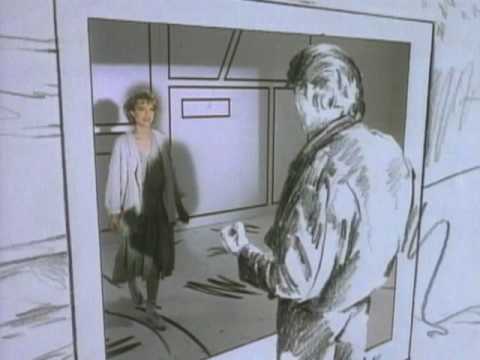
1. A-ha: ‘Take On Me’ (Dir. Steve Barron, released September 1985)
The song had completely flopped on its original release, so WEA gave Steve Barron a blank cheque to make a memorable video and get a hit. Working alongside rotoscope animator Michael Patterson, who did 1,800 drawings for the shoot, Barron was heavily influenced by Ken Russell’s 1981 movie ‘Altered States’. Barron knew he could make it work when the image of an animated hand reaching out of a comic book popped into his head whilst he was bored shooting a Toto video. Apparently singer Morten Harket and lead actress Bunty Bailey fell in love during filming, becoming almost inseparable. ‘By take four, they would carry on holding hands even when we’d cut,’ remembered Barron. Aided by the video, ‘Take On Me’ became the band’s only US #1.
Further reading: ‘I Want My MTV’ by Rob Tannenbaum and Craig Marks

 At this late stage of the game, it’s very rare to hear a piece of music that has you gripped from bar one.
  In the immediate aftermath of Bowie’s fabled appearance in the Broadway production of ‘The Elephant Man’, and despite the commercial success of the Scary Monsters album, at least in the UK, his thoughts were far from music in early 1981.
 A babysitting uncle (later reprimanded by my mum!) showed my brother and I John Carpenter’s classic 1978 film ‘Halloween’, recorded from TV after its first (edited) UK showing, sometime in 1982 or early 1983.
 The Associates gave good title: ‘Tell Me It’s Easter On Friday’, ‘Kitchen Person’, ‘White Car In Germany’, ‘Q Quarters’, ‘No’, ‘Those First Impressions’, ’18 Carat Love Affair’, ‘Nude Spoons’, ‘Party Fears Two’ etc. etc.
 Adolescence: a period of chaos and confusion. There was little rhyme or reason to one’s heightened sensibilities, and it didn’t help that 1980s pop songs had such bloody weird lyrics.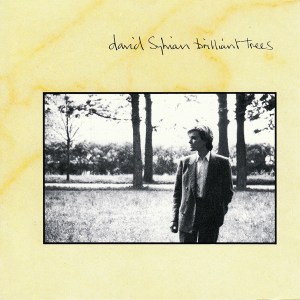
 Elsewhere we finally get to hear what ball-of-energy guitarist Ronny Drayton actually plays on ‘Pulling Punches’, and Jon Hassell is every inch the NYC avant-garde auteur (in his excellent book ‘Cries And Whispers’, Anthony Reynolds reports that he did just one five-hour session for Brilliant Trees, asking for and getting $5,000 upfront plus co-writing credits for the two tracks he played on).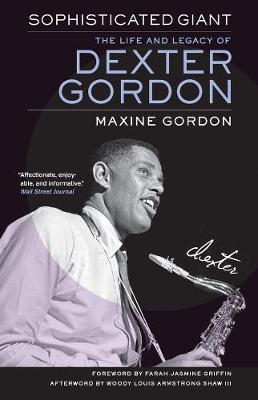
 movingtheriver.com