If you’re looking for a good stocking-filler for the 1980s music fan in your life, you could do a lot worse than Justin Lewis’s ‘Into The Groove’.
He’s an experienced rock writer who’s come up with a deceptively simple book idea – take each day (or at least most of them) of the 1980s and document a key music event, reporting them in chronological order.
And it’s mostly fascinating stuff; he’s unearthed some really tasty morsels of 1980s music trivia. Who knew that ‘Stars On 45’ (the Dutch novelty act specialising in disco medleys) led to ‘answer’ tracks from Orange Juice, Squeeze and The Portsmouth Sinfonia? Or that Annie Lennox had to show MTV her birth certificate to prove she was not a ‘decadent transvestite’ before they permitted Eurythmics’ ‘Sweet Dreams’ video to be shown on the channel?
Or that Wham!’s biggest early influence was Level 42? (Apparently they loved Level’s combination of funk and ‘unfunky’ lyrics – presumably it was tracks like ‘Almost There’ and ‘Starchild’ that floated their boat…)
Who knew that the full-length version of George Michael’s ‘Faith’ begins with a church organ playing Wham!’s ‘Freedom’, that Adrian Edmondson was a prolific video director in the ‘80s, or that a UK top 5 from October 1986 was the first time that every song was performed by a female vocalist?
The book also serves as a good compendium of ‘making-of’ song stories. For example, we get the full background of Paul Hardcastle’s ‘19’, including all the copyright issues and the fact that Mike Oldfield, of all people, is now the recipient of a writing credit(!).
You’ll need YouTube at the ready too for fascinating curios, like Tom Waits’ disastrous appearance on live British TV in 1983 alongside Ian Hislop and Peter York. ‘Into The Groove’ also gets credit for expanding its purview beyond rock and pop – there’s interesting info about African, country and blues music too, but very little jazz.
There are some downsides – there’s no index or list of references, and Lewis tries hard to be impartial but his ‘rock snob’ credentials inevitably creep out, Costello, XTC and McCartney etc. getting the rare plaudits.
But no matter – this is a gripping read, amusing and informative, full of tasty trivia treats, a surprise on every page. Highly recommended.
1980s jazz/rock generally gets the side-eye these days.
But it wasn’t all the Chick Corea Elektric Band prancing around the stage in tracksuits or pitiful WAVE-style smooth jazz.
The 1970s jazz/rock pioneers were mostly going strong and if some were too tempted by synths and drum machines, the best music was made by sticking pretty rigorously to the tried-and-tested real drums/bass/guitar/keys lineup favoured by Miles, Weather Report, Return To Forever et al.
So here’s a selection of 1980s jazz/rock albums that have consistently gripped movingtheriver, most of which he queued up to buy at the HMV or Virgin Megastore, or found in an Our Price bargain bin. (These are not proggy or funky. So no Herbie, Brecker Brothers, David Sanborn or David Torn, but there are elements of R’n’B/Latin/soul/whatever mixed in with the jazz).
Bireli Lagrene: Foreign Affairs (1988)
Just 21 years old when he recorded it with producer Steve Khan, the French guitarist’s second Blue Note album is a cohesive gem and massive improvement on the debut, with terrific contributions from keyboardist Koono and drummer Dennis Chambers.
Ornette Coleman: Virgin Beauty (1988)
One of the most ‘accessible’ albums of the master’s career, with memorable melodies, a brilliantly expressive bassist (Al McDowell) and some decidedly odd guest appearances from Jerry Garcia.
Tribal Tech (Scott Henderson/Gary Willis): Nomad(1988)
Recorded in April 1988 but not released until early 1990, guitarists were rightly wowed by Henderson’s brilliance, a mixture of Michael Brecker, Allan Holdsworth and Stevie Ray Vaughan, while the rhythm section is groovy and propulsive and both Henderson and Willis’s compositions are excellent. And ‘Tunnel Vision’ may feature the perfect guitar solo…
John McLaughlin: Mahavishnu (1984)
OK there are some question marks in the keyboard and sax departments, and a few mediocre tracks, but Billy Cobham has rarely sounded better and John contributes three or four classic compositions and a few brilliant solos to this reunion album of sorts.
Marc Johnson’s Bass Desires: Second Sight (1987)
Wonderful interplay between guitarists John Scofield and Bill Frisell, plus some classic compositions including Scofield’s surf-rock-meets-jazz ‘Twister’, Frisell’s Monk-like ‘1951’ and Johnson’s moving ‘Hymn For Her’.
Larry Carlton: Last Nite (1987)
Guitarists of all stripes were blown away by Carlton’s playing in the 1980s, and here’s the best evidence, captured live at LA’s Baked Potato club with Alex Acuna, Abe Laboriel and JR Robinson.
Human Chain: Cashin’ In (1988)
This Brit jazz/rock classic, released on EG Records, had elements of the Canterbury sound, West Coast cool jazz, English folk music and 1980s Weather Report, featuring Django Bates’ fantastic keys and French horn and some weirdly impressive guitar and fretless bass from Stuart Hall (who he?). Also injects a healthy dose of much-needed humour to the ’80s jazz world.
Hiram Bullock: Give It What U Got (1988)
All the fun of the fair from this gifted but troubled guitarist: raunchy funk/rock, instrumental Steely Dan, Brecker Brothers horns, classic fusion and an Al Jarreau guest appearance on a Sam Cooke tune, but all shot through with jazz chords and Hiram’s lyrical playing.
Ronald Shannon Jackson: Mandance (1982)
Ornette-style harmolodics and Mingus-like ensemble work meet NYC punk-jazz on the drummer’s intriguing and powerful album, recorded live in the studio, featuring future Living Colour axeman Vernon Reid.
Weather Report: Sportin’ Life(1985)
It was a toss-up between this and Night Passage, both classics, but this gets the nod courtesy of the newly-minted rhythm section of Omar Hakim and Victor Bailey, plus a few classic Wayne Shorter tunes including ‘Face On The Barroom Floor’ which reportedly Joni Mitchell was particularly smitten by.
Wayne Shorter: Atlantis (1985)
Wayne again, fronting this fascinating, complex song-cycle featuring Alex Acuna on drums and Joni’s husband Larry Klein on bass. Takes some time to digest, but like a good wine gets better every year.
Allan Holdsworth: Secrets(1989)
A toss-up between this and Metal Fatigue, this gets in because of his delicious guitar tone and the inspired contributions of drummer Vinnie Colaiuta – ‘City Nights’, ‘Spokes’, ‘Peril Premonition’ and ‘Joshua’ are musical landmarks. Fiery, exciting, unmissable.
Steps Ahead: Modern Times (1984)
Messrs Brecker, Erskine, Mainieri, Gomez and Bernhardt were embracing some new technology but they never let it overshadow the mostly excellent compositions with telling solos, particularly from Brecker.
John Scofield: Still Warm (1985)
Take your pick between this, Blue Matter and Loud Jazz, all fantastic pieces of work, but Still Warm gets the nod courtesy of its dynamite rhythm section (Darryl Jones and Omar Hakim) and arguably John’s best writing of the ’80s.
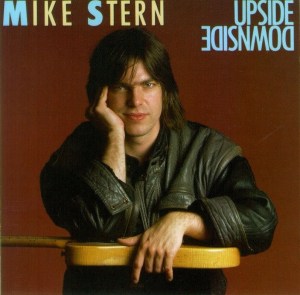
Mike Stern: Upside Downside (1986)
Produced by Hiram Bullock and featuring a crack band including Dave Weckl on drums, it showcases Stern’s finest/fieriest playing on record to date and also one of Jaco Pastorius’s last notable appearances. Still the best Stern solo album and quite extreme in its own way.
(If you’re new to any of these albums and they float your boat, please consider buying physical copies to best support the artists and their families.)
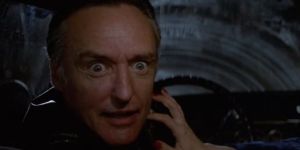
Whilst 1980s cinema was seemingly dominated by action heroes and comic actors (Bill Murray, Chevy Chase, Eddie Murphy, Steve Martin et al) who generally tended to transform projects by dint of their improvisatory skills, there were enough gifted writers around (Woody Allen, Oliver Stone, Bruce Robinson, John Carpenter, John Hughes, the Coen brothers etc.) to generate memorable, crafted lines too.
And the proliferation of comedies, horror movies and smart teen movies made for good zingers. But what makes a memorable movie quote? We present for your dubious pleasure a selection of 1980s lines and mini soliloquies that seem to hold up; some have become part of modern culture, some always provide a laugh or chill however many times one has seen the films, some are just plain weird and wonderful, and a few were probably improvised.
‘It’s not the despair, Laura. I can take the despair. It’s the hope I can’t stand.’ Clockwise (1985)
‘Heineken? F*ck that sh*t! Pabst Blue Ribbon!’ Blue Velvet (1986)
‘Let’s f*ck! I’ll f*ck anything that moves!’ Blue Velvet
‘Why are there people like Frank? Why is there so much trouble in this world?’ Blue Velvet
‘Better to be king for a night than schmuck for a lifetime.’ The King Of Comedy (1982)
‘I bet you’re the kind of guy that would f*ck a person in the ass and not even have the goddamn common courtesy to give him a reach-around.’ Full Metal Jacket (1987)
‘I have come here to chew bubblegum and kick ass, and I’m all out of bubblegum.’ They Live (1988)
‘Can I get ya anything? Coffee? Tea? Me?’ Working Girl (1988)
‘I have a head for business and a bod for sin.’ Working Girl
‘I am serious, and don’t call me Shirley.’ Airplane (1980)
‘What a pisser.’ Airplane (1980)
‘Into the mud, scum queen!’ The Man With Two Brains (1983)
‘You touch me, he dies. If you’re not in the air in thirty seconds, he dies. You come back in, he dies.’ Escape From New York (1981)
‘Beware the moon, lads.’ American Werewolf In London (1981)
‘We’re living in a shop. The world is one magnificent f*cking shop. And if it hasn’t got a price tag, it isn’t worth having.’ How To Get Ahead In Advertising (1989)
‘I tried to stand up and fly straight, but it wasn’t easy with that sumbitch Reagan in the White House. I dunno. They say he’s a decent man, so maybe his advisors are confused.’ Raising Arizona (1987)
‘Be the ball.’ Caddyshack (1980)
‘I’m a veg, Danny…’ Caddyshack
‘This is a cross of Kentucky Bluegrass, Featherbed Bent and Northern California Sensemilia. The amazing stuff about this is, you can play 36 holes on it in the afternoon, take it home and just get stoned to the bejeezus-belt that night.’ Caddyshack
‘The last time I was inside a woman was when I visited the Statue Of Liberty.’ Crimes And Misdemeanours (1989)
‘Showbusiness is not so much dog-eat-dog, it’s more dog doesn’t return dog’s calls.’ Crimes And Misdemeanours
‘For all my education, accomplishments, and so-called wisdom, I can’t fathom my own heart.’ Hannah And Her Sisters (1986)
‘How the hell do I know why they were Nazis? I don’t know how the can-opener works.’ Hannah And Her Sisters
‘If you build it, he will come.’ Field Of Dreams (1989)
‘It’s the best joke of all – a joke on the children…’ Halloween III (1983)
‘Get out…now!’ Halloween II (1981)
‘Listen, lady. If you don’t give Big Ed some air, he’s gonna piss…all over your half of my body.’ All Of Me (1983)
‘You can start by wiping that f*cking dumb-ass smile off your rosy f*cking cheeks. Then you can give me a f*cking automobile. A f*cking Datsun. A f*cking Toyota. A f*cking Mustang. A f*cking Buick! Four f*cking wheels and a seat.’ Planes Trains And Automobiles (1987)
‘I mean to have you even if it must be burglary.’ Withnail & I (1987)
‘My thumbs have gone weird.’ Withnail & I
‘We want the finest wines available to humanity, we want them here and we want them now!’ Withnail & I (1987)
‘Monty, you terrible c**t!’ Withnail & I
‘Flash, I love you, but we only have 14 hours to save the Earth!’ Flash Gordon (1980)
‘Get ready for greatness.’ Say Anything (1989)
‘She’s a brain trapped in the body of a game-show hostess.’ Say Anything
‘I’m incarcerated, Lloyd!’ Say Anything
‘I gave her my heart. She gave me a pen.’ Say Anything
‘Can I borrow your towel for a sec? My car just hit a water buffalo.’ Fletch (1985)
‘When you grow up, your heart dies.’ The Breakfast Club (1985)
‘I wanna be just like you. I figure all I need’s a lobotomy and some tights.’ The Breakfast Club
‘You’re a parent’s wet dream – neo-maxi-zoom-dweebie…’ The Breakfast Club
‘May I admire you again later today?’ Pretty In Pink (1986)
‘She thinks you’re sh*t, and deep down you know she’s right.’ Pretty In Pink
‘This is an incredibly romantic moment and you’re ruining it for me.’ Pretty In Pink
‘I did not achieve this position in life by having some snot-nosed punk leave my cheese out in the wind.’ Ferris Bueller’s Day Off (1986)
‘I’m obsessed, thank you very much.’ St Elmo’s Fire (1985)
‘No Springsteen is leaving this house!’ St Elmo’s Fire
‘How much more black can it be? The answer is…none.’ This Is Spinal Tap (1984)
‘What’s wrong with being sexy?’ This Is Spinal Tap
‘Hope you like our new direction.’ This Is Spinal Tap
‘I’m not gonna be ignored, Dan.’ Fatal Attraction (1987)
‘I love my dead gay son.’ Heathers (1989)
‘Be afraid. Be very afraid.’ The Fly (1986)
‘I’ll have what she’s having.’ When Harry Met Sally (1989)
‘It’s a good scream…’ Blow Out (1981)
‘Where we’re going, we don’t need roads…’ Back To The Future (1985)
‘Seize the day. Make your lives extraordinary.’ Dead Poets Society (1989)
‘They’re here.’ Poltergeist (1982)
‘Listen, and understand! That Terminator is out there! It can’t be bargained with. It can’t be reasoned with. It doesn’t feel pity, or remorse, or fear. And it absolutely will not stop… ever! Until you are dead!’ The Terminator (1984)
‘Gentlemen! Let’s broaden our minds. Lawrence?’ Batman (1989)
‘I’m of a mind to make some mookie.’ Batman
‘I…corrected them, sir.’ The Shining (1980)
‘Little pigs! Little pigs! Let me come in!’ The Shining
‘Why don’t we just… wait here for a little while. See what happens.’ The Thing (1981)
‘There’s no fog bank out there… There’s no fog bank out there… Hey, there’s a fog bank out there.’ The Fog (1980)
‘Get inside and lock your doors. Close your windows. There’s something in the fog!’ The Fog
Anthony during the recording session for Steve Khan’s ‘Eyewitness’ in 1981. Photo by David Tan
The brilliant Anthony Jackson, who has died aged 73, was a vital part of the early-1970s electric bass revolution, but arguably never got the same attention as contemporaries Stanley Clarke, Jaco Pastorius, Bootsy Collins, Louis Johnson and Alphonso Johnson (Chuck Rainey, Steve Swallow and Larry Graham are a bit older).
In a music world beset by fly-by-night chancers and one-trick ponies, he was a player of principle, something like the Allan Holdsworth of bass.
It was Anthony’s playing on Steve Khan’s ‘Guy Lafleur’ that first completely hooked movingtheriver – I remember thinking: who the hell is THAT?!
In two major ways, he changed the instrument as much as Jaco (though, in later years, pointedly called himself a ‘guitarist who plays a variation called the contrabass guitar’).
First there was his stretching of the instrument’s range below the standard low E (inspired by his love of Jimmy Smith’s Hammond organ playing) and above the standard top G, via his pioneering use of six-string basses, which he started playing exclusively in 1982 (Steve Khan thinks his superb ‘Casa Loco’ may have featured the debut of Anthony’s six-string).
Before that, Jackson had regularly detuned the low E string on his trusty Fender Precision, producing strikingly rich, deep timbres on work with Grover Washington Jr., Quincy Jones, Steely Dan, Chaka Khan and Earl Klugh, amongst hundreds of others (he prided himself on playing all kinds of music, working with everyone from Judy Collins and Peter, Paul & Mary to George Benson and Will Downing).
Then there was his use of effects, particularly the trademark flanger, often accompanied by the use of a pick, best heard on The O’Jays’ ‘For The Love Of Money’ and ‘Give The People What They Want’, and on his work with Al Di Meola. Oh, and then there’s a third factor – he ALWAYS sat down whilst playing, claiming that sitting down and wearing no strap was the way to go for bassists.
Jackson started playing music after seeing The Beatles on The Ed Sullivan Show in 1964, then became obsessed with other Brit invasion bands, Motown (via James Jamerson) and Jefferson Airplane’s Jack Casady, plus classical composers Olivier Messiaen and Paul Hindemith.
Regarding the latter two, their influence on Anthony’s playing is particularly noticeable on the live version of Khan’s ‘The Suitcase’, from 1994. Steve described this brilliant performance on his website.
One of Jackson’s first major gigs was in 1973, playing for a year in Buddy Rich’s sextet. He later called the drummer the only bona fide genius with which he had played. But then Anthony loved drummers. He enjoyed brilliant hook-ups with Steve Gadd, Buddy Williams, Steve Jordan, Harvey Mason, Simon Phillips, Steve Ferrone, Yogi Horton, Earl Young and many others.
But he lost work by refusing to ‘slap’ his bass during the disco era, and also very rarely solo’d unless he had something specific to say (to Steve Khan’s great annoyance!). Some of these concepts were laid down in his famously stern columns for Bass Player magazine.
But even Jackson wasn’t immune to some of the ‘proclivities’ of other great artists – for example, his performance was wiped from the title track of Steely Dan’s Gaucho! (Chuck Rainey’s pass got the nod instead.) But he played epochal stuff on ‘Glamour Profession’ and ‘My Rival’ from the same album, and excelled on Donald Fagen’s ‘IGY’ and ‘Ruby Baby’.
He was also fiercely loyal to artists he respected, enjoying long associations with Hiromi, Michel Camilo, Al Di Meola, Sadao Watanabe, Lee Ritenour, Grover Washington, Chick Corea, Khan and Michel Petrucciani.
In one of his rare interviews, he expressed a wish to play with Phil Collins, Ringo and Charlie Watts. Sadly it seems he didn’t achieve those ambitions. Farewell to a true pioneer and personal musical hero. Check out this playlist which brings together movingtheriver’s favourite Anthony performances.
Anthony Claiborne Jackson (23 June 1952 – 19 October 2025)
Speedily recorded 40 years ago this autumn at Newcastle’s Lynx Studios, Protest Songs was intended to be the no-frills, lo-fi, rush-released, ‘answer’ album to Prefab’s Steve McQueen.
Fans who attended the Two Wheels Good UK tour of October and November 1985 were given leaflets advertising its release on 2 December for one week only.
But then ‘When Love Breaks Down’ reached #25 at the third attempt, earning the band spots on ‘Top Of The Pops’ and ‘Wogan’, and the album was shelved (though apparently a few hundred white labels ‘escaped’ from CBS and are out there somewhere…)
Protest Songs was eventually held back until June 1989, but proved well worth the wait and reached a respectable #18 on the UK chart. This writer would put it right up there with Steve, From Langley Park To Memphis and Jordan, maybe even above them…
The album was produced by the band and – apart from the last-minute addition ‘Life Of Surprises’ – mixed by Richard Digby Smith, once a staff engineer at Island Records who served his apprenticeship under the likes of Arif Mardin, Phil Spector, Muff Winwood and Chris Blackwell.
Protest also showed that Patrick Joseph McAloon was turning into a really decent keyboard player (he later claimed that every song on Langley Park was written on keyboards) and that – massively helped by drummer Neil Conti – Prefab were becoming a really good live band.
But most importantly Protest is a moving, razor-sharp suite of songs. Paddy was operating at the absolute top of his game, with some of the anger which had initially been so attractive to Thomas Dolby (also detectable in this recently discovered interview).
The only thing tongue-in-cheek about it is its title. These were not protests against nuclear power or war, but rather against deprivation and, just six months on from the miners’ strike, the general media condescension about provincial English life (particularly in the McAloon brothers’ native North East) under Thatcher.
‘Til The Cows Come Home’ may be the killer track. If you’re in the mood, it can be a real heartbreaker. The superb lyrics deftly change perspective mid-thought and allude to how unemployment affects generations:
Aren’t you a skinny kid? Just like his poppa Where’s he workin’? He’s not workin’…
Why’re you laughin’? You call that laughin’? Wearing your death head grin Even the fishes are thin…
He can’t have his coffee with cream
Meanwhile ‘Diana’ was revamped from the ‘When Love Breaks Down’ B-side (Deacon Blue definitely listened to THAT), slowed down and with a few new chords added. Conti expertly marshals proceedings with his tasty Richie Hayward-style half-time groove.
‘Dublin’ showcases Paddy’s lovely sense of chord movement, with a little influence from bossa nova (here’s Paddy playing a different studio take). ‘Life Of Surprises’ and ‘The World Awake’ are shiny, synth-laden, mid-period 4/4 Prefab but with stings in their tails:
Never say you’re bitter, Jack Bitter makes the worst things come back
You don’t have to pretend you’re not cryin’ When it’s even in the way that you’re walkin’…
The hilarious ‘Horsechimes’ investigates school-day piss-taking, with a large dollop of Salingeresque satire. Meanwhile it’s hard to think of a more perfect marriage of words and melody than ‘Talking Scarlet’ (also drastically slowed down from the early demo), while ‘Pearly Gates’ closes out the album in moving style, like a dimly-remembered hymn from school days, a rare 1980s ‘death disc’.
The only partial misfire is the jaunty ‘Tiffany’s’, with its comically poor guitar solos, but its inclusion was totally understandable. Happy birthday to a classic.
England, 1979: punk is out, sus laws and Thatcher are in. Nightclubs are closing down and youth violence and political unrest are on the rise (as are movements like Rock Against Racism).
But, in a curious echo of punk five years before, something is stirring in the London suburbs. Young Roxy, Bowie and Kraftwerk fans from Bromley, Burnt Oak and Basildon are dressing up in style (Zoot and toy-soldier suits, cummerbunds, bolero hats, geometric haircuts) and flocking to clubs like Covent Garden’s famous Blitz, now the subject of an engaging exhibition running until 29 March 2026 at the Design Museum
It was the apex of a scene which encompassed fashion, graphic design, journalism, electronic dance music, squatting and a New Pop sensibility which would soon sweep the charts. In short, it’s arguably the best of the 1980s, and this fascinating exhibition neatly incorporates most of it.
Blitz Kids including Midge Ure, Steve Strange, Billy Currie and Rusty Egan
We see the original flyers and posters which wittily and stylishly trailed the Blitz club nights, and there are many items of vintage clothing. The rarely-seen photos are worth the price of admission alone, many contributed by original scenesters like Boy George, Siobahn Fahey, Robert Elms and Marilyn, including a priceless shot of David Bowie with Toni Basil (we also get the full story of Bowie’s recruitment of Strange et al for the ‘Ashes To Ashes’ video).
But the jewel in the exhibition’s crown is probably the recreation of the Blitz itself, with an AI Rusty Egan on the decks and Spandau Ballet performing ‘To Cut A Long Story Short’ on the ‘live stage’ (elsewhere Elms has donated his embarrassing handwritten poem which he used to announce their debut gig at the club).
Rusty Egan, Gary Kemp, Fiona Dealey and Robert Elms in the exhibition’s recreated Blitz. Photo by PA Media
The exhibition widens out to encompass other fascinating early 1980s artefacts, like the posters advertising Sade’s pre-fame Ronnie Scott’s gigs – well over a year before Diamond Life was released – and evidence of the media’s generally condescending attitude towards The Cult With No Name/New Romantics/Blitz Kids.
Then there are the textiles, hats and magazines galore (the exhibition dovetails slightly with the Portrait Gallery’s recent Face exhibition), and even the first all-electronic drum set, a Simmons SDS-V, as used by Kajagoogoo, Flock Of Seagulls, Ultravox etc.
This is an engaging, fun exhibition curated by people who were there and/or obviously care about this stuff. And there’s just enough social/political context for it to be educational too – it was good to see so many youngsters enjoying it with their parents. Highly recommended.
Mel Gaynor spent almost 30 years playing superb drums with Simple Minds in studios, stadiums and sports halls across the globe.
But it’s also oft-forgotten that he was also one of the key British session drummers of the 1980s, working with Joan Armatrading, Elton John, Heaven 17, Pretenders, Kirsty MacColl and others (and, in a 1992 Sunday Times poll, was named the world’s best rock drummer by Stewart Copeland, no less).
So it’s always interesting seeing such behemoths of the drums in tiny venues, often un-mic’d and playing small kits. And they don’t come much more intimate or friendlier than the 606 – though the club always has excellent acoustics.
Gaynor’s latest live project eschews the heavy rock of last year’s Come With Mealbum and returns him to the fusion and jazz/funk of his youth (he started his career playing with Britfunk legends Central Line), alongside pianist John Watson, who has also worked with Sister Sledge, Imagination and Mica Paris, and impressive young bassist Issy Brown. On this gig, they were also joined by MOBO and Mercury-winning saxophonist Denys Baptiste – a real coup.
A fit, healthy and happy-looking Gaynor settled behind the kit with no fuss and counted off ‘Got The Message’, a Crusaders-style, medium-tempo slow-burner, with Baptiste outlining a pretty melody and Brown digging in with excellent tone and judicious use of his low B string. Gaynor was the epitome of taste and groove here, but still found time for one explosive ‘Alive And Kicking’-style snare fill towards the end.
Denys Baptiste, Issy Brown and Mel Gaynor @ the 606
‘Beyond The Stars’, touchingly dedicated by Gaynor to his late father, started with an African-tinged 6/4 drum loop, before settling into another pretty, gentle tune with a touch of Jason Rebello’s writing about it.
‘Preludio’, written by Watson, chugged along with a nice Morrissey-Mullen-style samba groove, and became a feature for Baptiste’s tenor, wittily quoting Dennis Edwards’ ‘Don’t Look Any Further’, with which it shared a chord sequence.
Baptiste also elevated ‘Zeta’ – apparently Gaynor’s manager’s favourite tune. The saxophonist can do it all, from Grover Washington Jr. soul to sixteenth-note meltdown, Michael Brecker-style. It was nice to hear Watson lay out for a while too, then return to trade spicy fours with Baptiste. Gaynor also raised the volume level by about 25%, suddenly shifting into fifth gear with some terrific Tony Williams-style fills around the toms.
This was not an evening of cutting-edge jazz/rock, with not a broken beat nor drum-and-bass groove in sight, nor was it volatile fusion in the Mahavishnu or Lifetime mold. But if Mel’s music leans more towards the softer style of the late 1970s/early 1980s, from Average White Band to The Crusaders via Incognito and Morrissey-Mullen, it’s no worse for that.
And the set showed Gaynor to be an excellent ‘pocket’ drummer, with much power in reserve. But then you already knew that from his work with Simple Minds.
The question is not so much why they’re back for a big-screen sequel, but why it’s taken so long.
But, after various copyright problems, the wait is over. ‘Tap II’ is here. And it’s worth the wait.
One of the many good portents for ‘Tap 2’ was the fact that Rob Reiner was returning to direct and co-star as Marty DiBergi. You know you’re in the hands of a master. Then there’s the fact that all surviving original cast members are present and correct, and that their improvisational modus operandi is basically intact.
Your correspondent is not going to reveal any of the many pleasant surprises from the movie, such as the return of various secondary characters from the first film (and appearances from four or five big rock stars), but suffice it to say that the plot is a little like ‘Anvil! The Story Of Anvil’.
A contract clause dictated by band manager Ian Faith before his death states that Tap must do one final comeback concert. The only problem is that the three surviving members of Tap (Nigel Tufnel, David St Hubbins, Derek Smalls) are at loggerheads and haven’t seen each other for years.
We find Nigel selling cheese and guitars in Berwick-upon-Tweed (just the sight of him wearing shopkeeper’s hat and overall is worth the price of admission alone), David making ‘on-hold’ music and Derek running a glue museum.
Various scenes from the first film are mirrored here, and they even use the same font for the onscreen graphics. Thank goodness too they mostly stay away from ‘dark’ comedy. There are few concessions to identity politics, and the humour is basically quite sweet (but agreeably foul-mouthed). These are some seriously old dudes trying to rock out again.
The casting once again nods to a richly-observed Anglophilia with Chris Addison hilarious as the hapless/humourless marketing man, a mixture of Simon Cowell and Simon Fuller, and Kerry Godilman doing fine as Ian Faith’s Sharon Osbourne-like daughter.
Once again they’ve got the music spot-on too, showing the detail you’d expect from real music fans and good musicians – you won’t find any poorly-sync’d snare hits from the drummer here. It looks like they played and sung everything live with multiple cameras running.
One small gripe? The actual band reunion scene is a bit flat and looks like it may have been the victim of some rather severe editing. But that’s nitpicking, isn’t it?
So Tap fans – there’s nothing to fear here. Go to ‘The End Continues’ with confidence. At 80 minutes, it’s a perfect length and sticks in the head afterwards. There’s little ‘learning’, just laughs. This writer chuckled approximately every 20 seconds. Looking forward to the DVD extras, there must be hours of extra improvisations.
Anthony Braxton has one of the largest discographies in music history, encompassing a huge variety of styles and formats: operas, pieces for two pianos, orchestras, solo saxophone, 100 tubas, jazz quartets, ‘found’ objects and many more.
The saxophonist/composer/teacher turned 80 in June, and has also just been inducted into the illustrious DownBeat Hall of Fame.
This writer has long championed ‘Forces In Motion’, Graham Lock’s excellent book about Braxton’s November 1985 tour of England, and a large portion of that tour can now be heard on a thrilling digital box set Quartet (England) 1985, for which Lock has provided new liner notes (he also recorded all the material on a portable cassette player).
The quartet, which comprised Braxton on various reed instruments, Marilyn Crispell on piano, Mark Dresser on double bass and Gerry Hemingway on percussion, was one of Braxton’s most active bands in the ’80s, but didn’t record in the studio until 1991.
Quartet (England) 1985 presents four complete concerts from Sheffield, Leicester, Bristol and Southampton (the London concert was officially recorded and broadcast by BBC radio). The original mono cassette recordings, captured by Lock as references for his book, have been restored by engineer Christopher Trent.
The package also features bonus recordings of the quartet playing John Coltrane’s ‘After the Rain’ and Miles Davis’s ‘Four’, plus soundcheck recordings of ‘All The Things You Are’ and ‘On Green Dolphin Street’. There are also previously unseen photos taken during the tour and a full list of the compositions played (the set was different every night).
Braxton (in borrowed coat), Dresser, Crispell and Hemingway at Stonehenge, 22 November 1985. Photo by Nick White
There’s no getting away from the fact that these are wild and woolly mono recordings, but pleased to report that Trent has done a superb job of cleaning up the tapes and the audio quality doesn’t hamper the listening experience one bit.
The music varies between good and excellent. ‘Free jazz’ barely covers it – the material is actually generally meticulously composed and arranged (featuring memorable, catchy melodies), though there are improvised sections which mainly serve as connecting interludes.
If you want to hear a collision between Sonic Youth, Ornette Coleman and Gyorgy Ligeti, enlist here. It’s a no-cliché zone, guaranteed to annoy the neighbours, and a valuable detox from the mainly safe, secure sounds of today. Quartet (England) 1985 is highly recommended and a fine 40th anniversary celebration of the 1985 tour.
(Postscript: for an impassioned defence of ‘spontaneous improvisation’, check out Stewart Lee’s appearance on the BBC’s ‘Great Lives’ discussing guitarist Derek Bailey.)
We’ve looked before at the celebrated 1980s rock and pop acts whose output somehow leaves this writer cold.
But how about the decade’s jazz, soul and fusion artists who always seem to get the props but inexplicably fail to float movingtheriver’s boat?
Rick James
Frequently mentioned in dispatches as a funk pioneer and influence on Prince etc. (and also mentor of Teena Marie?) but for this listener his music is generally coarse and one-dimensional, and his voice nothing to write home about.
Bill Connors
The guitarist made some excellent music for ECM Records in the 1970s both as solo artist and sideman (Jan Garbarek/Stanley Clarke/Return To Forever/Julian Priester etc.) but his 1980s work disappoints. He apparently developed a fixation on Allan Holdsworth’s sound/technique which hampered his progress. Somewhat regrouped in the 1990s and new millennium though.
Kazumi Watanabe
The guitarist employed some fantastic musicians (Jeff Berlin, Steve Jordan, Marcus Miller, Bill Bruford) in the 1980s but, outside of one or two half-decent riffs, seemingly failed to generate much memorable music.
Stanley Jordan
Bassist Anthony Jackson called him a ‘genius’, and he should know, but technical feats notwithstanding (he famously played the guitar exclusively by ‘tapping’ the strings with the fingers of both hands), he seemingly failed to develop his music beyond smoochy smooth jazz during the 1980s.
Chick Corea
Obviously a genius-level musical brain and maker of some memorable material in the 1970s but generally his ‘80s music and stage presentation was a bit embarrassing (though I have a penchant for the Light Years and Eye Of The Beholderalbums). A great mentor though (Dave Weckl, John Patitucci, Frank Gambale, Scott Henderson etc.).
Al Di Meola
See above.
Howard Hewett
Owner of some fantastic pipes and a stellar career co-fronting Shalamar, but for this writer his solo career generally seems like over-produced, underwhelming mush, and he doesn’t seem much of a songwriter. (He did an unforgettable take on Marvin Gaye in the 1990s though.)
Narada Michael Walden
One of the great drummers (Jeff Beck, Weather Report, McLaughlin etc.) and producers (Whitney, Aretha etc.) ended the 1980s with a half-decent album (Divine Emotions) but, to these ears, the rest of the decade’s solo career was unmemorable disco/funk…
Brand X
Often touted as a kind of British Weather Report – fugedaboudit. Their musicianship was competent at best and their compositions somehow didn’t stick in the brain, despite the occasional drumming contributions of a Mr P Collins. Bill Bruford did it much better with a far superior bunch of players (Jeff Berlin, Allan Holdsworth, Jon Clark, Dave Stewart). See also: Pierre Moerlen’s Gong.
Pat Metheny
This writer dug his stereo-chorus sound and musical approach at the dawn of the decade (80/81, American Garage, Travels) but, as the 1980s went on, he seemed to embrace a mushy new-age sensibility and indistinct jazz guitar sound that generally underwhelmed. And his stage presentation is one of the least savoury in music history… (Gary Giddins: ‘intoning plush melodies with excessive sobriety, as though the notes were transmitted directly from God…’). Liked his collaborations with Ornette Coleman and Bowie though.
Jean-Luc Ponty
Valued sideman for ’70s behemoths (Zappa, McLaughlin) but his solo career has generally disappointed this writer (but generally not other jazz/rock fans, who inexplicably seem to love his stuff…), outside of the fact that he doesn’t seem to possess a particularly pleasant violin tone with an annoying penchant for the phaser pedal. He employed some superb players in the ‘80s (Scott Henderson, Rayford Griffin, Baron Browne etc.) but never convinced that he’s much of a composer. Always quite liked this though…

 If you’re looking for a good stocking-filler for the 1980s music fan in your life, you could do a lot worse than Justin Lewis’s ‘Into The Groove’.
 1980s jazz/rock generally gets the side-eye these days.
  Whilst 1980s cinema was seemingly dominated by action heroes and comic actors (Bill Murray, Chevy Chase, Eddie Murphy, Steve Martin et al) who generally tended to transform projects by dint of their improvisatory skills, there were enough gifted writers around (Woody Allen, Oliver Stone, Bruce Robinson, John Carpenter, John Hughes, the Coen brothers etc.) to generate memorable, crafted lines too.


 England, 1979: punk is out, sus laws and Thatcher are in. Nightclubs are closing down and youth violence and political unrest are on the rise (as are movements like Rock Against Racism).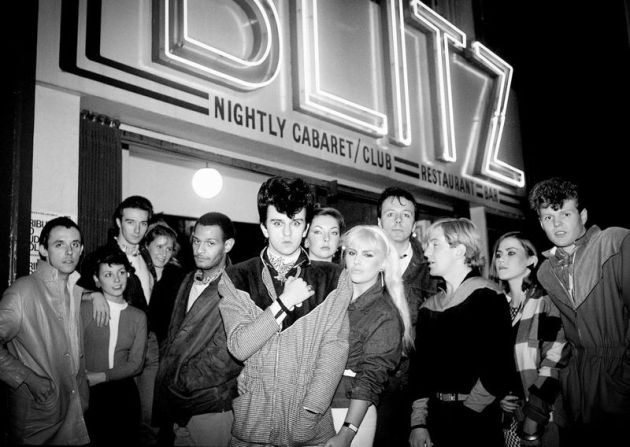

 Mel Gaynor spent almost 30 years playing superb drums with Simple Minds in studios, stadiums and sports halls across the globe.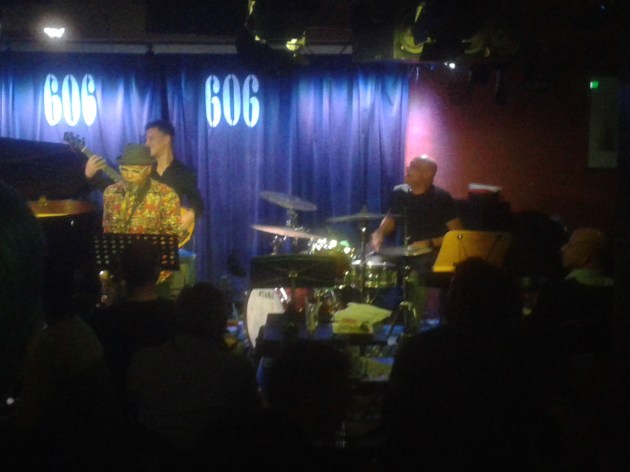
 The question is not so much why they’re back for a big-screen sequel, but why it’s taken so long.


 movingtheriver.com