Bill Laswell: Baselines Revisited

Bill Laswell has carved out one of the most critic-proof careers in music.

He’s probably best known as the producer of distinctive pop hits (Herbie Hancock’s ‘Rockit’, PiL’s ‘Rise’, Sly & Robbie’s ‘Boops’) and rock/jazz legends in need of a makeover (Mick Jagger’s She’s The Boss, Iggy Pop’s Instinct, Sonny Sharrock’s Ask The Ages, Ronald Shannon Jackson’s Red Warrior).

He was the Miles Davis Estate’s go-to man for reimagining the trumpeter’s 1970s catalogue (Panthalassa) and also hugely important for bringing the P-funk sound into the ’80s and ’90s.

But Laswell is also a highly-original bassist in his own right and was a key figure of the late-’70s/early-’80s Downtown New York scene, featuring in bands like Massacre, Last Exit and Material (though he was pretty disparaging about the ‘scene’, once telling writer Bill Milkowski: ‘There never really was a Downtown community. All that means is that people don’t have enough money to get a better place to live…’).

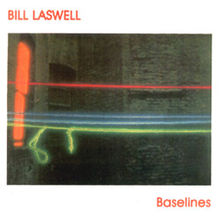
His solo career has been interesting too, latterly showcasing a fusion of ambient, world and dub styles. But it’s his debut album Baselines (released 14 June 1983 on Elektra/Asylum) that really floats my boat. He plays a lot more bass than usual, fusing the soundworlds of Bootsy and Ornette Coleman and doing cool things like sticking objects under the strings or digging out the old Mu-Tron pedal for some memorably funky lines.

To these ears, Baselines is also the project that gave him the perfect vehicle for all his interests – My Life In The Bush Of Ghosts-style found sounds, paranoid funk a la Talking Heads/King Crimson, Afrobeat, early hip-hop, avant-fusion, authentic jazz soloing and even post-punk white noise courtesy of future Chili Peppers/Soundgarden producer Michael Beinhorn.

I wasn’t in New York in 1983 but this album would seem to be a perfect amalgam of all the hippest sh*t that was going down at the time. It’s Laswell’s show, leading from the front on four/six/eight-string fretted and fretless basses and generally keeping the tracks short and sweet. Baselines is also beautifully recorded and produced – it’s easy on the ear despite some abrasive textures.

Shannon Jackson has never sounded better, supplying hilariously scattergun grooves and crunching fills. ‘Upright Man’ still inspires a kind of giggly menace, nearly 40 years on. Who supplies the scary spoken-word part? Whosampled doesn’t reveal, but the smart money’s on Fred Frith (who also plays some amusing violin on country-tinged curio ‘Lowlands’).

Baselines was certainly influential from a bass point of view too – you can bet Jah Wobble, Mick Karn, Stump and Human Chain had well-thumbed copies in their collections. But, to the best of my knowledge, Laswell has never returned to such a bass-led solo project since. A shame. He might have a future there…

Gonna Party Like It’s 1989

So farewell then, 1989.

I mean 2019, of course… But enough about 2019.

Here’s Nick Hornby’s diary entry for 22 August 1989, taken from his classic book ‘Fever Pitch’:

‘I have stopped buying NME and the Face, and, inexplicably, have started keeping copies of Q magazine under a shelf in my living room; I have bought a CD player; I have registered with an accountant; I have noticed that certain types of music – hip-hop, indie guitar pop, thrash, metal – all sound the same and have no tune; I have come to prefer restaurants to clubs; and dinners with friends to parties…’

Stump bassist Kev Hopper also had an interesting take on the era:

Organised raves were happening up and down the country and and the UK was awash with mockney DJs. You were made to feel like some sort of soulless, asexual blob if you didn’t like/want to move to their incredibly unfunky, over-quantised, four-to-the-floor marching music. Most of it had about as much rhythmic interest as a dripping tap. Remix DJs and “keyboard wizards” were calling all the shots, idolized by huge crowds of spazzed-out zombie youth. One thing was for sure: rock bands were out…’

And yet 1989 was one of the best music years of the ’80s, and one of the most contradictory. Happy Mondays and Stone Roses had famously gatecrashed a November edition of ‘Top Of The Pops’, but hadn’t upset the status quo quite yet (and guitars wouldn’t properly make a comeback until the Blur/Oasis era of the mid-’90s, at least in the UK).

The ‘yuppie’ consumer still had a stronghold on the charts, driven by the CD boom and a renewed focus on the home and car (which of course became convulsive).

But there was also the sinking feeling that pop music was no longer ruling mainstream culture. Stock, Aitken & Waterman (via Brother Beyond, Big Fun, Sonia, Sinitta, Jason Donovan and Kylie) and the bizarre Jive Bunny were ever-present in the charts, with TV tie-ins and ’40s/’50s nostalgia particularly prevalent, evidenced by this list of UK number one singles during 1989:

Kylie/Jason: ‘Especially For You’

Marc Almond/Gene Pitney: ‘Something’s Gotten Hold Of My Heart’

Simple Minds: ‘Belfast Child’

Jason Donovan: ‘Too Many Broken Hearts’

Madonna: ‘Like A Prayer’

The Bangles: ‘Eternal Flame’

Kylie Minogue: ‘Hand On Your Heart’

Gerry Marsden/Paul McCartney/Holly Johnson/The Christians: ‘Ferry Across The Mersey’

Jason Donovan: ‘Sealed With A Kiss’

Soul II Soul ft. Caron Wheeler: ‘Back To Life’

Sonia: ‘You’ll Never Stop Me Loving You’

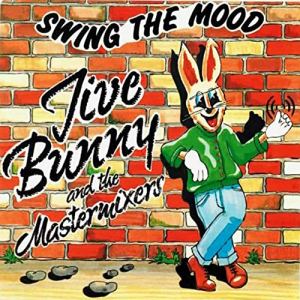
Jive Bunny: ‘Swing The Mood’

Black Box: ‘Ride On Time’

Jive Bunny: ‘That’s What I Like’

Lisa Stansfield: ‘All Around The World’

New Kids On The Block: ‘You’ve Got The Right Stuff’

Jive Bunny: ‘Let’s Party’

Band Aid II: ‘Do They Know It’s Christmas’

And the fact is that era-defining albums by De La Soul, Pixies, Beastie Boys, Soul II Soul, Neneh Cherry and NWA were crushed in sales terms by the Bunny, Tina Turner, Gloria Estefan, Kylie, Jason, Sonia, Simply Red, Bros, Phil Collins and Chris Rea.

And though Tiffany and Debbie Gibson had pretty much been snuffed out, crap teen pop was making a comeback in the shape of New Kids On The Block.

But there was still much to celebrate.  The second ’80s pop boom was well underway. ‘Smash Hits’ mag was selling a million copies a week. Prog-pop was alive and well courtesy of Marillion, It Bites, Anderson Bruford Wakeman Howe and Trevor Rabin.

There was a serious CD ‘sophisti-pop’ thing going on via Tanita Tikaram, Blue Nile, Black, Julia Fordham, Prefab, Deacon Blue, Toni Childs etc. ‘Going Live’ was a must-watch on Saturday mornings.

Hip-hop was commercial and vital, highlighted by great albums from De La Soul, Young MC, Schoolly D, Tone Loc, NWA and Beastie Boys. The ’60s generation were in fine fettle, evidenced by era-defining rock albums from Bob Dylan, Neil Young, Jeff Beck and Lou Reed. Jazz and fusion were in good nick.

And don’t forget the post-aceeeed dance scene via Bomb The Bass, S’Express, Yazz, Beatmasters, Betty Boo, Neneh Cherry, Soul II Soul, the Mondays and Roses.

Here’s just a smattering of 1989 album releases. Looks like a pretty damn good year, whether you were into pop, dance, hip-hop, indie, goth, soul, metal or jazz.

Neneh Cherry: Raw Like Sushi

Danny Wilson: Bebop Moptop

China Crisis: Diary Of A Hollow Horse

Lil Louis: From The Mind Of Lil Louis

XTC: Oranges & Lemons

Tone Loc: Loc’ed After Dark

Joe Satriani: Flying In A Blue Dream

Nik Kershaw: The Works

Fine Young Cannibals: The Raw & The Cooked

Madonna: Like A Prayer

Red Hot Chili Peppers: Mother’s Milk

Allan Holdsworth: Secrets

John Lee Hooker: The Healer

Anderson Bruford Wakeman Howe

Lou Reed: New York

Tin Machine

Lenny Kravitz: Let Love Rule

Pixies: Doolittle

Beastie Boys: Paul’s Boutique

Soul II Soul: Club Classics Vol 1

Young MC: Stone Cold Rhymin’

Mike Stern: Jigsaw

John Patitucci: On The Corner

Miles Davis: Aura

All About Eve: Scarlet And Other Stories

Marillion: Seasons End

Kate Bush: The Sensual World

Janet Jackson: Rhythm Nation 1814

Julia Fordham: Porcelain

Neville Brothers: Yellow Moon

Bob Dylan: Oh Mercy

Miles Davis: Amandla

Schoolly D: Am I Black Enough For You

Neil Young: Freedom

Blue Nile: Hats

Curiosity Killed The Cat: Getahead

The Beautiful South: Welcome To The Beautiful South

Trevor Rabin: Can’t Look Away

24-7 Spyz: Harder Than You

Jane Siberry: Bound By The Beauty

Rickie Lee Jones: Flying Cowboys

The Stone Roses

It Bites: Eat Me In St Louis

David Murray: I Want To Talk About You

Jeff Beck’s Guitar Shop

NWA: Straight Outta Compton

Young MC: Stone Cold Rhymin’

De La Soul: Three Feet High & Rising

The Sugarcubes: Here Today, Tomorrow, Next Week

Regina Belle: Stay With Me

Kirsty MacColl: Kite

David Byrne: Rei Momo 

Belinda Carlisle: Runaway Horses

Terry Hall: Ultra Modern Nursery Rhymes

Prefab Sprout: Protest Songs

Neville Brothers: Yellow Moon

Prince: Batman

Wendy & Lisa: Fruit At The Bottom

Paul McCartney: Flowers In The Dirt

The Cult Movie Club: Diner (1982)

I knew it was good, but, revisiting it again last week, I’d forgotten quite how good ‘Diner’ was.
Barry Levinson’s directorial debut was the very definition of a sleeper movie when it first came out in March 1982. MGM virtually buried it on its initial release (and their appalling trailer didn’t help – see below), disappointed that it scrimped on the ‘Porky’s’/’Animal House’-style hijinks.

It took a private screening set up by Levinson and executive producer Mark Johnson and subsequent rave review from one attendee – legendary film critic and movingtheriver.com favourite Pauline Kael – to secure it an audience.

Some have made bold claims that ‘Diner’ is the most influential film of the 1980s, pointing forward to ‘This Is Spinal Tap’, Tarantino, ‘Seinfeld’, ‘The Sopranos’, Judd Apatow and beyond.

Set in Baltimore during December 1959 (it definitely counts as a Christmas movie), it focuses on a group of friends in their early 20s, trying to negotiate relationships and get through their working lives, but always finishing off the night at the Fells Point Diner (based on the real Hilltop Diner in northwest Baltimore) for a chin-wag about Sinatra and a fill of French fries with gravy (or a roast beef sandwich, fought over in one of the film’s most famous scenes).

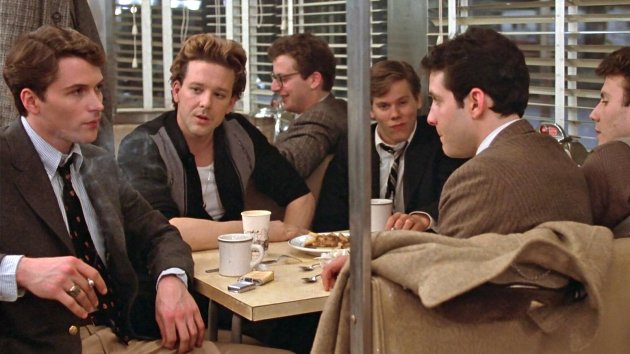
Daly, Rourke, Stern, Bacon, Guttenberg and Reiser in ‘Diner’

Though there are shades of ‘American Graffiti’, ‘Animal House’ and even ‘Porky’s’ (Kael rather evoked Fellini’s ‘I Vittelloni’), the protagonists in ‘Diner’ seem older than in those movies, though you wouldn’t always know it – they seem totally at ease with themselves but struggle with members of the opposite ‘camp’. In fact, sadly, the sexual politics in ‘Diner’ ensure that it would probably struggle to get a green light these days.

The movie features almost of a who’s-who of ’80s talent: Mickey Rourke, Steve Guttenberg, Daniel Stern, Paul Reiser, Kevin Bacon, Timothy Daly, Ellen Barkin, all acting as if their lives depended on it. Arguably, none have done better work than ‘Diner’.

One wonders how much rehearsal and/or ‘team-building’ Levinson was able to secure for them (quite a lot according to this excellent documentary), because they’re absolutely at ease with each other. And, though almost entirely scripted (Levinson’s screenplay was nominated for an Oscar), the movie has a loose, dreamy feel. These guys feel just like your – my – mates, from that golden era when everyone was rooted in the same spot and going through the same stuff.

Levinson packs the action with memorable secondary characters – the local screwball obsessed with ‘Sweet Smell Of Success’, Carol Heathrow (who unfortunately locates Rourke’s ‘pecker’ in her popcorn), the kindly pool-hall owner, Big Earl (who eats the whole left side of the menu), the picky TV-store customer, Bagel, Kevin Bacon’s smarmy brother, and many more.

He also creates a totally believable environment on a budget, replete with classic cars and almost-deserted suburban streets, and an impressive opening one-take shot introducing us to the main characters. He also brings in interesting period details like the glimpse of Kind Of Blue in Shrevie’s sacred vinyl collection, and the soundtrack is also brilliant, from R’n’B to doo-wop (though the only bum note is the very ’80s-sounding ‘live’ track played in the go-go bar towards the end of the movie).

‘Diner’ also has an almost ‘Withnail’esque finale, looking uncertainly into the next decade with its famous freeze-frame ending. And, like all the best coming-of-age movies, it has you wondering what the hell happened to these characters.

Did Boogie make a go of it in the home improvement trade, and stay with Jane Chisholm? Did Modell ever get himself a car? How did Shrevie and Beth’s marriage turn out, not to mention Eddie’s? Barry – any chance of a sequel?

(Postscript: A musical version of ‘Diner’ made a brief appearance a few years ago. Sheryl Crow wrote the songs. The less said the better…)

Happy 5th Birthday To Me

Can it really be five years ago today that a piece on Prefab Sprout’s Swoon kicked off this whole damn movingtheriver.com experiment?

Yes it ruddy well can, and it’s been a fun ride.

Even though there are some weeks when it seems the well has truly run dry, ’80s music and movies (to mix metaphors) turn out to be the gifts that keep on giving – there are always old sounds that continue to surprise and new avenues to explore.

So thanks for checking in and contributing now and then. You’ve made an old man very happy. My friend Spike Jones probably says it best:

John McLaughlin Trio: Live At The Royal Festival Hall 30 Years On

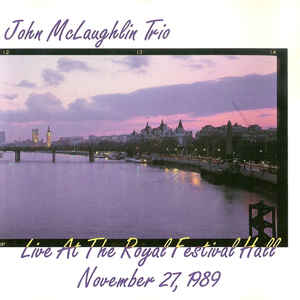
Recorded 30 years ago, Live At The Royal Festival was the beginning of John’s live career in concert halls rather than ‘rock’ venues, at least as far as the UK goes.

I’m not sure why I wasn’t at this gig, but, in those days, even major shows could easily go under the radar. If it wasn’t listed in Time Out or The Wire, you could easily miss it. Or maybe I was just turned off by the lack of ‘stars’ appearing with John.

Which was a big mistake, because this album introduced two monster players, both hitherto unknown to UK audiences. Bassist Kai Eckhardt was yet another miraculous bass find for McLaughlin, apparently fresh out of the Berklee School of Music.

Trilok Gurtu brought the best aspects of American jazz and fusion playing but also rhythmic concepts and sounds from his native Mumbai (including a water bucket and tablas). In short, he was a perfect fit for McLaughlin.

It had been a weird few years for the guitarist, closing down Mahavishnu for good, duetting with bassist Jonas Hellborg and guitarist Paco De Lucia but also recording the fabulous Mediterranean Concerto which was finally released in 1990.

So his return to the acoustic guitar had thus far been a partial success, but Live At The Royal Festival Hall was the beginning of an acclaimed trio that lasted nearly three years (though weirdly it doesn’t appear to have made it to streaming platforms yet).

The album starts slowly but gets better and better; a gentle take on Miles/Bill Evans’ ‘Blue In Green’ is nothing special but demonstrates John’s rich, Gil Evans-inspired chord concept.

Adventures In Radioland tracks ‘Florianapolis’ and ‘Jozy’ are quite superb, beautifully rearranged for the trio. When Gurtu lays into the half-time shuffle on the latter, it’s one of the great bits of modern fusion drumming.

His ‘Pasha’s Love’ is an intricately-arranged version of a track on an impossible-to-find Nana Vasconcelos live album. But the album’s centrepiece is ‘Mother Tongues’, the debut of a tune which is a mainstay of John’s live sets to this day. The only disappointment is the over-extended ‘Blues For LW’, almost derailed by some dodgy group vocals, Gurtu beatboxing and throwaway references to ‘Are You The One?’ and ‘Miles Beyond’.

Eckhardt didn’t stick around for long after this gig, for undisclosed reasons – Dominique Di Piazza came in, yet another Jaco-influenced chops monster. But Trilok stayed on for the decent 1992 studio album Que Alegria. Then it was time for another change – John’s forte.

Paul Barrere (1948-2019)

Little Feat provided some of my happiest musical memories of the late ’80s.

Paul Barrere, who has died at the age of 71, was a big part of that. His stinging leads, tasty rhythms, decent vocals and excellent songwriting were a massive part of Little Feat’s middle and later periods – the eras that really grabbed me – and he toured with the band right up until near his death.

Barrere joined Little Feat in time for the release of ’73’s classic Dixie Chicken. As Lowell George’s influence waned in the band’s middle years (and critics mainly derided the band’s embracing of prog, jazz and fusion alongside the blues, country and rock’n’roll), he contributed more and more.

As a teenager, Little Feat’s music fascinated me. There’s an oft-quoted maxim, attributed to Joe Zawinul, about Weather Report’s modus operandi: ‘We always solo and we never solo’. It could also be applied to Little Feat. Nothing was quite as it seemed. Barrere and George’s ensemble guitars meshed with Bill Payne’s keys to make a beguiling brew, sitting atop the brilliant rhythm section of Kenny Gradney (bass), Richie Hayward (drums) and Sam Clayton (congas).

Barrere was born on 3 July, 1948, in Burbank, California, the son of Hollywood actors Paul and Claudia Bryar. He wrote or co-wrote many Feat classics, including ‘Skin It Back’ from Feats Don’t Fail Me Now, ‘All That You Dream’ from The Last Record Album, ‘High Roller’, ‘Keepin’ Up With The Joneses’, ‘Old Folks Boogie’ and ‘Time Loves A Hero’.

Sadly it’s often a great musician’s death that leads one to explore the nooks and crannies of their recorded legacy, and Barrere is no different: he worked with Bob Dylan and unbeknownst to me also recorded three solo albums in the early ’80s.

Paul Barrere (3 July 1948 – 26 October 2019)

Story Of A Song: Adrian Belew/David Bowie’s ‘Pretty Pink Rose’ (1990)

One can get caught up revisiting the ‘lost’ periods of the truly great artists of the last 50 years – Miles, Neil Young, Bowie, Dylan, Zappa, whoever.

At the moment, it’s Bowie’s late-’80s and early-’90s that particularly intrigue, roughly the period from ‘Intruders At The Palace’ to Tin Machine II.

There was a lot more to the era than Tin Machine. ‘Pretty Pink Rose’, a song Bowie had originally demo’d in early 1988 with members of Bryan Adams’ band (and one later rejected by TM, though one can hear echoes of it in their cover of Roxy Music’s ‘If There Is Something’), generally gets a bum rap but features some classic Bowie moves, like the descending, superbly-sung bridge and ‘secret’ chord also heard in ‘Absolute Beginners’ and ‘Loving The Alien’.

Bowie rang Belew on 4 August 1989 asking him to play guitar and take the role of musical director on the ‘Sound + Vision’ greatest hits tour. But Belew owed Atlantic Records a solo album, the one that eventually became 1990’s Young Lions. Bowie offered to pitch in with ‘Pretty Pink Rose’. Apparently Belew was initially less than enamoured, but grew to love it.

Belew recorded the backing tracks on 11th November 1989 at Royal Recorders near Lake Geneva in Wisconsin, playing all instruments. He achieves a great garage-rock sound with sprightly bass, Leslie-toned rhythm guitars and some mad lead playing courtesy of a Fender Strat wired with a Kahler tremolo arm that he found could be ‘tapped’ on the neck instead of using his finger tips.

Bowie and Belew recorded their duet vocals (at the same mic – apparently Belew was unexpectedly starstruck) on 15 January 1990 at Right Track in NYC (Bowie recorded his spontaneous vocals for ‘Gunman’ on the same day). Apparently a spoken-word intro was later excised, which featured Bowie intoning: ‘She had tits like melons… It was love in the rain’!

‘Pretty Pink Rose’ was released a single in May 1990 but inexplicably missed the top 40 in both the US and UK, despite regular MTV screenings of the Tim Pope-directed video featuring Bowie and Belew hamming it up with ‘Life And Loves Of A She-Devil’ star Julie T Wallace.

Bowie and Belew also played it every night on the ‘Sound + Vision’ tour, augmented by some great chord additions by keyboardist Rick Fox. It’s a cracking song and a lost Bowie classic.

Tin Machine: 1989

This week marks 30 years since Tin Machine wrapped up their first year of activity with a low-key gig at Moby Dick’s in Sydney, Australia on 4 November 1989.

In the previous 12 months, they’d recorded and released their first album, written and recorded most of the second album, and toured extensively.

Any true Bowie fan must surely like elements of Tin Machine, or at least appreciate the career-reviving value of the band. After all, he was reportedly seriously considering giving up music at the beginning of 1988.

My muso college mates and I had an instant kinship with Tin Machine, particularly picking up on the Jeff Beck and Hendrix influences. Never Let Me Down had completely passed me by, but this felt instinctively like the natural followup to Scary Monsters.

Bowie first hooked up with guitarist Reeves Gabrels, whose wife Sarah had been a press officer on the US leg of his ‘Glass Spider’ tour. But who should join them on bass and drums?

There were mentions of Percy Jones and Terry Bozzio, but they settled on the street-tough Sales brothers, of course previously known to Bowie as the rhythm section on Iggy’s Lust For Life.

Bowie realised what he had signed up for when drummer Hunt apparently strode into the first rehearsal wearing a ‘F*ck You I’m From Texas’ T-shirt.

One of the first things the assembled unit apparently did was make a list of the artists that would inform and influence the band’s sound: Neil Young, The Pixies, Cream, John Coltrane, Sonic Youth, Glenn Branca, Bo Diddley, Sex Pistols, John Lee Hooker, John Lennon.

The debut album was recorded quickly (producer Tim Palmer was apparently barely able to get a decent sound before he realised they were in the middle of a take) and released on 22 May 1989.

How does it sound these days? Pretty damn good. Bowie’s singing is as committed as at any time in his career, and the material is sometimes electrifying.

The Mission/Cult helmer Palmer brings cavernous drums and great guitar layering, finding a most willing participant in Gabrels; ‘Pretty Thing’ in particular delivers a huge wall of sound. Palmer discusses the making of the album in this excellent interview.

Hunt Sales: a rock drummer who swings. He goes double-time if he feels like it.  He slows down, he speeds up. You can’t teach this stuff. The music breathes. Gabrels plays brilliantly, consistently coming on like a cross between Adrian Belew and Robert Fripp, but with more of a blues attitude.

Back in 1989, it was also absolutely fascinating watching Bowie sublimate himself into a band situation, albeit very ‘artfully’ (one of Gabrels’ proposals for a band name was The Emperor’s New Clothes).

He was instructed by the Sales brothers not to over-think his lyrics, but rather to lean on his first instincts. Consequently a few tracks aren’t going to win any #MeToo awards but they’re an honest, unfettered portrayal of middle-aged male lust. And why not?

But those tracks are balanced by the tender ‘Amazing’ and politically-charged ‘Crack City’, ‘Video Crimes’ and ‘Under The God’. It’s invigorating hearing David eschewing irony and nihilism in favour of passionate commitment, though he dusts off the old ennui for the brilliant ‘I Can’t Read’.

The album is 20 minutes too long. If it had been shorn of the dire ‘Working Class Hero’, deafening ‘Baby Can Dance’, dreary ‘Bus Stop’, turgid ‘Run’ and silly ‘Sacrifice Yourself’, I’d put Tin Machine up there with Scary Monsters as Bowie’s last great rock album.

It’s also largely forgotten that it was a critical and commercial success, reaching #3 in the UK, selling a million copies and making many writers’ albums of the year. Hilariously, it also made the Melody Maker’s Worst Ever Albums top 20 list in 1998.

Weirdly, Bowie bounced straight into announcing his own solo ‘greatest hits’ tour in December 1989, ostensibly to promote the excellent series of Rykodisc CD reissues which had kicked off with the Sound + Vision box set.

Quite what his TM bandmates thought of this state of affairs isn’t documented, though Gabrels declined to play guitar on the ‘Sound + Vision’ tour (Belew accepted). Gabrels went off to guest on The Mission’s Carved In Sand instead.

David Hasselhoff @ The Berlin Wall: 30 Years Ago Today

It wasn’t a dream.

The ‘Knight Rider’ star really did precipitate the demolition of the Berlin Wall on 9 November 1989 by singing his #1 hit ‘Looking For Freedom’, wearing a piano scarf/twinkling jacket, clapping on the ‘one’ and ‘three’ and looking/sounding like he may have ‘artificially enhanced’ his performance somewhat…

Don’t believe me? Here’s the evidence! Everybody sing: ‘I been looking for freedom...’


Scott Henderson/Tribal Tech: Nomad 30 Years On

Who are the most self-critical instrumentalists? Surely guitarists.

And in this age of social media, fans have never had a better insight into musicians’ views of their own work.

Steve Khan, Francis Dunnery, Andy Partridge and James Grant often take a pretty dim view of their own stuff. Allan Holdsworth was virtually unable to listen to his own guitar playing on record.

But brilliant guitarist Scott Henderson may trump them all. He emerged as a poster boy of jazz/rock guitar in the mid-to-late ’80s, when, along with Holdsworth and Frank Gambale, he would often appear alongside metal players du jour in the pages of Guitar World or Guitar Player.

A remarkably fluid improviser with a ‘rock’ sound but ‘jazz’ attitude, Henderson’s technical ability was always tempered by a strong blues feeling (distinguishing him from Holdsworth and Gambale).

In 1985, he formed Tribal Tech with ex-Wayne Shorter bassist Gary Willis whilst pursuing a sideman career with Jean-Luc Ponty and Chick Corea (and, later, Weather Report’s Joe Zawinul).

I first heard Scott in my late teens when a very shrewd guitar-playing college acquaintance played me his third album Nomad, recorded in 1988 but not released until early 1990.

I was instantly smitten, picking up on the strong ‘Weather Report with guitar’ vibe – mainly due to Willis’s fretless bass – but quickly realising they had their own thing going on.

Also, like Weather Report, Tribal Tech were also fortunate to have not one but two fine composers in their ranks. Willis’s ‘Tunnel Vision’ may be Nomad‘s standout, but Henderson was extremely modest about his superb, much-transcribed solo, telling his website:

The opening eight bars is good because it’s not me – it’s a melody written by Willis. I start playing after the first eight bars and things get considerably worse… We had a good laugh when a critic who reviewed the album commented on how great the beginning of my solo was. Then the tune was put into one of the new Real Books and that eight-bar melody was mis-labelled as my solo. Willis said to me: ‘Wow, I’m really making you look good…’

The excellent opener ‘Renegade’ was another embarrassment for Henderson:

On every Tribal Tech album, there are amazingly bad playing and production flaws, because we thought we were capable of producing the albums ourselves, and we clearly weren’t. We had little to no experience in the studio and were learning as we went. An experienced producer would have made those records much better, but we couldn’t afford one anyway, so they are what they are. The funniest solo is mine on ‘Renegade’ – I didn’t have any vocabulary for that 6/4 feel, so I’m clearly playing lines meant for 4/4 and they don’t fit the groove at all. It’s one of my most embarrassing solos…

Then there’s Henderson’s superb album-closer ‘Rituals’, showingcasing a heavy Wayne Shorter influence:

The last time I listened to the Tribal Tech version, I thought I’d throw up. I played the melody in a horribly stiff way, with the thinnest tone ever, and the arrangement sounds like we’re trying to be Journey – very dated and funny. Then there’s the pan flute synth sound… Holy sh*t, talk about corny. It’s one of my favorites but it didn’t get the production it needed. The drum sound is pathetic and the keyboards aren’t loud and clear enough. Those are some badass voicings and sometimes they’re buried. It’s not a tune I could play trio because there’s too much going on, but I’d like to re-record it and make it sound like it should…

Whatever. Nomad is a great album, with excellent compositions and playing from everyone involved, including drummer Steve Houghton, percussionist Brad Dutz and keyboard player David Goldblatt.