‘Wendy & Lisa’: 30 Years Old Today

Los Angeles, October 1986, just after the Japanese leg of the ‘Parade’ tour: Prince invites his bandmates Wendy Melvoin and Lisa Coleman to dinner (Lisa will later report in her excellent liner notes for the Wendy & Lisa 2013 reissue that she ‘knew something was up’ as soon as they arrived).

To cut a long story short, he gives them the boot – in the nicest possible way. The Revolution is no more.

Lisa: ‘We were like Fleetwood Mac and Sly & The Family Stone rolled into one… I thought we were going to make records together for the rest of our lives.’ But Prince wants to take back his freedom and sex up his act again. Struggling for the right words, apparently he says to Wendy and Lisa: ‘I can’t ask you to wear crotchless panties or nippleless bras…’

After a period of introspection, the ladies get together with other former Revolution member Bobby Z to write a few songs. At this stage, they have no intention of releasing the new material as ‘Wendy & Lisa’. But once they agree to front the band, a record company bidding war ensues. Huge advances are mentioned. They settle on a ‘big but sensible deal’ with Virgin.

Predictably, the suits are less than turned on by the more musicianly moments on the album, but the ladies are unapologetic, saying that they ‘wanted to show off all the colours in our crayon box’.

So much for the history. How does Wendy & Lisa stack up these days? Apart from some fairly unsavoury drum sounds, pretty well. The singles ‘Sideshow’ and ‘Waterfall’ are probably the weakest tracks, though the latter has a cracking chorus and was apparently deemed a surefire hit by the record company and musician friends. But it didn’t do the business, not helped by its rather humdrum video. As Lisa says in the liner notes: ‘I had paid my showbiz dues with The Revolution.’

But the album works brilliantly when it sticks to the ‘cool chord changes over good beats’ remit, when they genuinely do sound like a mashup of ’80s Joni Mitchell and Prince. ‘Honeymoon Express’ exemplifies this approach, nicking Sly Dunbar’s ‘My Jamaican Guy’ beat and adding a sumptuous melody. The vocal harmony in the chorus is just sublime.

‘Light’, ‘Everything But You’ and ‘Chance To Grow’ also succeed in a similar vein. Wendy’s multi-instrumental skills (vocals, guitar, bass, sometimes drums) and Lisa’s impressionistic synth parts mesh perfectly. ‘Song About’ sounds eerily like The Carpenters. Ballads ‘The Life’ and ‘Stay’ have become fan favourites, the former also turning up in an improved Trevor Horn-produced reworking on the soundtrack of Michelle Pfeiffer movie ‘Dangerous Minds’.

The instrumental ‘White’, featuring Tom Scott on soprano and a killer bit of drum machine programming by Wendy, is possibly the standout. Test your speakers out with this one, kids.

Wendy & Lisa – perhaps surprisingly – was not a hit. Lacking a breakout single, it didn’t dent the US top 100 and only scraped to #84 in the UK. Better Wendy & Lisa albums would follow, but this is an ambitious, arresting debut. All the colours in the crayon box indeed.

Jaco (1951-1987)

Jaco Pastorius died 30 years ago today: 21 September 1987.
He was beaten up outside the Midnight Bottle nightclub in Wilton Manors, Florida.

British Jaco fans had particularly meagre pickings in the late 1980s. You gleaned whatever info you could from Bass Player and The Wire magazine or swapped gossip with muso pals.

I’m not even sure I knew he had passed away when I got my hands on import albums like Stuttgart Aria and Live In Italy, both recorded with the brilliant French guitarist Bireli Lagrene, or heard his guest spot on Mike Stern’s Upside Downside.

Then my dad came home from work one day around 1989, excitedly talking about a Jaco concert movie for which he had secured the rights, eventually broadcast on Channel Four as part of the ‘Sounds Of Surprise’ series of jazz films.

Sure enough, the 1982 Montreal Jazz Festival show was a whole new insight into this master musician, shot at a time when he was firing on all cylinders and one of the biggest ‘jazz’ stars on the planet. He was ostensibly touring his Word Of Mouth album at the time, but didn’t play one tune from it.

Starting with his old ‘sweetener’, Pee Wee Ellis’s ‘The Chicken’, Jaco led his superb band (Peter Erskine on drums, Bob Mintzer on reeds, Randy Brecker on trumpet, Othello Molineaux on steel pans, Don Alias on percussion) through a tasty combo of jazz, R’n’B, blues and Caribbean influences.

Particularly notable are a breezy ‘Donna Lee’ and brilliant version of Mintzer’s ‘Mr Fone Bone’, starting at 27:40. Jaco’s soloing throughout the gig is beautiful – emotional, nuanced, dramatic. On the closer ‘Fannie Mae’, he plays the blues with as much feeling as Alberts King or Collins.

So here it is in all its glory. July 1982, Montreal, Canada. RIP Jaco.

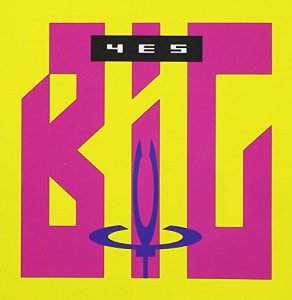
Yes: Big Generator 30 Years On

In the pantheon of rock rhythm sections, bassist Chris Squire would surely have to feature not once but twice – he forged striking partnerships with both Bill Bruford and the underrated Alan White.

Big Generator, released 30 years ago this week, is a brilliant distillation of the Squire/White hook-up.

There are loads of other pleasures too, even though it’s usually mentioned as an inferior, mostly pointless, sequel to 90215.

But for my money it’s the better album – more cohesive, less top-heavy. Big Generator was apparently far from a walk in the park to make though, with band tensions, endless rewrites and remixes. And of course there was pressure to follow up such a huge hit.

Trevor Horn started work on the album in 1985 but left towards the end of recording, leaving guitarist/vocalist/co-writer Trevor Rabin and producer Paul DeVilliers to finish the job.

But you can hear the craft (and money) that went into Big Generator, although it still basically sounds like a band playing live in the studio. This is barmy rock music, full of surprises, made by musicians with unique styles and a wish to take chances. But no matter how complicated the arrangements get, there’s always a logic to them.

Take the title track for example. An excerpt from the ‘Leave It’ 90125 vocal sessions kicks things off. Then Rabin piles into a gargantuan riff (achieved by tuning his low E string down to an A, echoing Squire’s 5-string bass tuning).

White’s snare is tighter than a gnat’s arse and his phrasing is always novel – he’ll often hit the crash cymbal on a ‘one-and’ or ‘three-and’ rather than the standard ‘one’. Then there’s the ridiculous speeding-up snare roll accompanied by manic Rabin shredding and a chorus that sounds a bit like Def Leppard. It’s all in a day’s work for this amazing unit.

‘Rhythm Of Love’, ‘Almost Like Love’ and ‘Love Will Find A Way’ are serviceable, weirdly-funky slices of AOR. The very ’80s-Floyd-style ‘Shoot High Aim Low’ maintains its doomy mood impeccably and features a brilliant Di Meola-esque acoustic guitar solo from Rabin.

The standout for me though is the stunning, ridiculous ‘I’m Running’. Just when you thought they couldn’t crowbar any more into its seven minutes, it chucks in a descanting vocal outro which sounds like something out of Gilbert and Sullivan.

Only a few bits of Jon Anderson whimsy on side two threaten to derail proceedings. But in general Rabin keeps him in check, though presumably to the detriment of their relationship.

Big Generator was nominated for a Grammy and sold well over a million worldwide, making the top 20 in both the US and UK. It’s definitely due a critical reappraisal. So here it is…

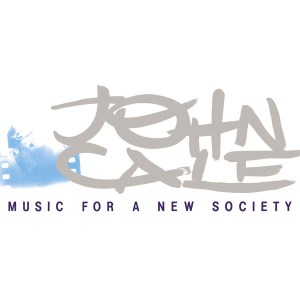
John Cale: Music For A New Society 35 Years On

Whatever happened to the psychologically-complex, ‘difficult’ male solo artist?

In the ’70s and ’80s, you couldn’t move for them – Peter Gabriel, Peter Hammill, Lou Reed, David Bowie, John Cale et al.

Reed and Cale particularly seemed to dwell in the murky corners of the male psyche, chronicling alcoholism, jealousy, sexual deviance, anger, loneliness, death.

The latter’s Music For A New Society, released 35 years ago this month, was a case in point. An interesting companion piece to Reed’s own 1982 The Blue Mask, it sometimes seems too personal for public consumption. Cale was clearly in a pretty bad emotional state during recording.

The album’s certainly not for everyone – a lot of it’s not for me – but a few tracks still sound like modern classics. Recorded at New York’s Skyline Studios, it features a novel production style; Cale apparently tracked most of the songs with a full band (including Chris Spedding on guitar), then strategically stripped back the instrumentation, ‘playing’ the faders a bit like a dub producer. The result is a sparse, claustrophobic listen.

‘Thoughtless Kind’ and the superb ‘I Keep A Close Watch’ benefit greatly from this approach. The latter of course featured a very ornate production on Cale’s album Helen Of Troy, but this time sticks to grand piano, Hammond organ, fake harpsichord, snare drum, bagpipes and a few found sounds.

On ‘If You Were Still Around’ (featuring lyrics by Sam Shepard), ‘Damn Life’ and various other tracks, Cale sounds almost beyond help. But the standout for me is the poignant tearjerker ‘Taking Your Life In Your Hands’.

Online theories abound as to the song’s subject matter, but it’s hard to shake the feeling that it concerns a school massacre and the sacrifices made by the teachers and ‘gentlemen in blue’ who saved lives. A dark masterpiece by a sometimes superb chronicler of human nature’s murkier aspects.

Jerry Lewis (1926-2017)

Jerry’s recent death seems to have been rather passed over by the media.

He was a massive comedy hero of this writer in the late 1980s. In those days, you could turn on terrestrial TV of an afternoon and stumble across one of his movies.

My dad first introduced me to ‘The Disorderly Orderly’, his Frank Tashlin-directed 1964 hit, and I was a fan from then on (though even my teenage self quickly twigged that the quality of his ‘solo’ films trailed off pretty rapidly after that).

I loved the improvisatory schtick, lack of ‘character’ guff (though sentimentality was never far away), his verbal tics and physical manifestations. I also spotted some connections to other favourites of mine in the ’80s: the early films of Woody Allen, Chevy Chase, Martin Short, Tom Hanks, Steve Martin and, a bit later, Jim Carrey.

So here are a few routines – mostly music-related – from those movies watched in the ’80s that have stuck in my head, by way of tribute.

‘Cinderfella’ (1960)

‘The Errand Boy’ (1961)

‘Who’s Minding The Store’ (1963)

‘The Nutty Professor’ (1963)

‘The Disorderly Orderly’ (1964)

‘The Family Jewels’ (1965)

‘The King Of Comedy’ (1982)

Walter Becker (1950-2017)

A statement from Donald Fagen:

‘Walter Becker was my friend, my writing partner and my bandmate since we met as students at Bard College in 1967. We started writing nutty little tunes on an upright piano in a small sitting room in the lobby of Ward Manor, a mouldering old mansion on the Hudson River that the college used as a dorm.

We liked a lot of the same things: jazz (from the twenties through the mid-sixties), W.C. Fields, the Marx Brothers, science fiction, Nabokov, Kurt Vonnegut, Thomas Berger, and Robert Altman films come to mind. Also soul music and Chicago blues.

Walter had a very rough childhood — I’ll spare you the details. Luckily, he was smart as a whip, an excellent guitarist and a great songwriter. He was cynical about human nature, including his own, and hysterically funny. Like a lot of kids from fractured families, he had the knack of creative mimicry, reading people’s hidden psychology and transforming what he saw into bubbly, incisive art. He used to write letters (never meant to be sent) in my wife Libby’s singular voice that made the three of us collapse with laughter.

His habits got the best of him by the end of the seventies, and we lost touch for a while. In the eighties, when I was putting together the NY Rock and Soul Review with Libby, we hooked up again, revived the Steely Dan concept and developed another terrific band.

I intend to keep the music we created together alive as long as I can with the Steely Dan band.

Donald Fagen

September 3 2017′

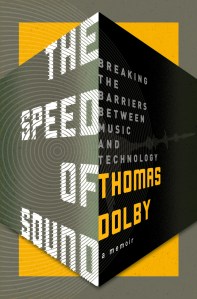
Book Review: The Speed Of Sound by Thomas Dolby

A cursory survey of Dolby’s musical career reveals that he’s a pivotal figure by any standards, collaborating with Prefab Sprout, Stevie Wonder, Eddie Van Halen, Jerry Garcia, George Clinton, Herbie Hancock, Trevor Horn, David Bowie, Def Leppard, Joni Mitchell…

And that’s not even factoring in the excellent solo albums and technological innovations (he created the software for the first popular mobile ringtones).

So if it’s pithy, musicianly anecdotes and the bittersweet memories of an Englishman (mostly) abroad you’re after, his enjoyable autobiography ‘The Speed Of Sound’ certainly does the business. But, as we’ll see, it’s very much a book of two halves.

A music-and-technology-mad teenager, Thomas Morgan Robertson first builds up his performing chops during a lengthy period of busking in Paris, finding out quickly that playing ‘Stairway To Heaven’ is the only way to make any money.

Returning to London, he’s in the right place at exactly the right time and on the verge of launching his solo career when summoned across the pond to work on Foreigner 4.

Christened ‘Booker T Boofin’ by the AOR legends for his considerable efforts, it nonetheless turns out to be a not entirely edifying entrée into the world of mega-bucks recording.

Then there’s solo-artist fame in the US, tempered by difficult video shoots, stage fright and the occasional debilitating panic attack. He’s summoned by Michael Jackson to come up with a few new post-Thriller tunes. It doesn’t end well.

His tours are well-attended but lose money and his second major single release ‘Hyperactive’ and attendant solo album The Flat Earth flatline partly due to dodgy record company ‘accounting’.

It’s a chastening experience; he focuses more on production work in the mid-’80s and any fans of Prefab’s Steve McQueen and Joni Mitchell’s Dog Eat Dog will find loads to enjoy here.

But Dolby inadvertently locks horns with Joni and finds himself sending in keyboard parts and arrangement ideas from Jenny Agutter’s spare room. Only in LA…

We get the inside story of his appearance with David Bowie’s at Live Aid (with only three short rehearsals), hear about a hilarious fishing trip with George Clinton and a memorable serenading by Stevie Wonder in a studio broom cupboard.

Then there’s an enjoyable detour into the world of movie soundtracks, ‘hanging out’ with George Lucas and meeting the love of his life in LA. By the early ’90s, we’re deep in ‘Spinal Tap’ territory when Dolby has amusingly mystifying dealings Eddie Van Halen and Jerry Garcia.

So far so good. But the second half of ‘Speed Of Sound’ focuses on Dolby’s lengthy sojourn in Silicon Valley. Depending on your taste, this will either be a trial or treat. I skipped large chunks of it.

I wanted a lot more music and a lot less tech, and you sometimes get the feeling Dolby did too throughout that period (he frequently laments the fact that his more ‘personal’ music on Aliens Ate My Buick and Astronauts & Heretics failed to find an audience).

The other issue – hardly Dolby’s fault of course – is that everyone seems to be writing a memoir these days and it only emphasises the dearth of decent recent music. And slightly lessens the mystique of the best ’80s material. I’d trade one more decent Dolby solo album for any number of ‘Speed Of Sound’s… But it’s still a very enjoyable read.

‘The Speed Of Sound’ is published now by Icon Books.

Dolby discusses the book here.

Sounds Like Steely Dan?

They are of course the pop/jazz masters whose harmonic and lyrical sophistication have had the critics purring since 1972.

They’ve also often been described as ‘influential’. But is that true? Does any other music sound remotely like Steely Dan?

In the 1980s, the term ‘Steely Dan-influenced’ was bandied about particularly in relation to British bands of the ‘sophisti-pop’ variety: The Big Dish, Style Council, Everything But The Girl, Curiosity Killed The Cat, Hue & Cry, Sade, Swing Out Sister, even Prefab Sprout and Deacon Blue.

More recently, it’s The High Llamas, Athlete, Mark Ronson, Toy Matinee, The Norwegian Fords, Mayer Hawthorne, State Cows and even Pharrell.

None really sound like Steely. Sure, they show off some slick grooves, jazzy solos and nice chord changes. But they also generally scrimp on the hooks, harmonic sophistication, production values and soulful, distinctive vocals which characterise Becker and Fagen’s oeuvre.

However, there are random tracks over the years – by artists one wouldn’t necessarily have predicted – that have seemingly ‘cracked the code’. Here’s a smattering, not all necessarily from the ’80s. More suggestions welcome if you can think of any.

10. Billy Joel: ‘Zanzibar’
Lush production (Phil Ramone), cool chords, great arrangements, biting Fagenesque vocals, quirky lyrics and nice guitar from Steely regular Steve Khan. Also featuring two kick-ass solos by trumpet/flugelhorn legend Freddie Hubbard.

9. The Stepkids: ‘The Lottery’
Underrated American psych-soulsters deliver jazzy weirdness, a nice groove, oblique lyrics, cool chords, memorable hooks and a distinctly Fagen-like croon from vocalist Tim Walsh.

8. The Tubes: ‘Attack Of The 50ft Woman’
The bridge and backing vocals always remind me of Steely, and I’m sure the boys would also appreciate the ‘50s B-movie lyric concept and ‘easy listening’ middle eight.

7. Danny Wilson: ‘Lorraine Parade’
The Dundonians’ superb debut is full of Dan-ish moments but this (sorry about the sound quality) could almost be an outtake from Katy Lied. See also the B-side ‘Monkey’s Shiny Day’.

6. Frank Gambale: ‘Faster Than An Arrow’
The Aussie guitar master swapped the chops-based fusion for this slick, lushly-chorded, Steely-style shuffle. Gambale sings, plays piano and guitar and also wrote the excellent horn chart.

5. Maxus: ‘Nobody’s Business’
The AOR supergroup came up with this standout in 1981. Jay Gruska’s vocals and Robbie Buchanan’s keys particularly stand out as Steely-like.

4. Cliff Richard: ‘Carrie’
More than a hint of ‘Don’t Take Me Alive’ in the chorus, lovely production and Cliff does a neat Fagen impression throughout. And hey, isn’t that ‘Mike’ McDonald on backup? (No. Ed.) Apparently co-songwriter Terry Britten was a huge Steely fan (as Cliff told this writer during a live radio interview circa 2008).

3. Boz Scaggs: ‘We’re Waiting’
Steely regulars Michael Omartian, Victor Feldman, Jeff Porcaro and Chuck Findley contribute to this enigmatic cracker which could almost be an Aja outtake. The oblique lyrics possibly relate to Hollywood in some way. See also Boz’s ‘Gimme The Goods’ which sounds suspiciously like ‘Kid Charlemagne’.

2. Tina Turner: ‘Private Dancer’
This Mark Knopfler-written gem pulls off the Steely tricks of simple melody/elaborate harmony and a risqué lyrical theme. There’s also more than a touch of ‘FM’ in the intro riff. Knopfler was always a big Dan fan and of course guested on ‘Time Out Of Mind’. See also Dire Straits’ ‘Private Investigations’ whose outro bears more than a passing resemblance to ‘The Royal Scam’.

1. Christopher Cross: ‘I Really Don’t Know Anymore’
From one of the biggest-selling debut albums in US chart history, this features the production/piano skills of Omartian, backing vocals from McDonald and a majestic guitar solo by Dan legend Larry Carlton. See also ‘Minstrel Gigolo’ from the same album.

The Cult Movie Club: Southern Comfort (1981)

After the extended prologue, when Ry Cooder’s swampy blues riff slides in over a glorious widescreen shot of the Louisiana bayou, you know you’re watching a classic of its kind.

To this day, co-writer/director Walter Hill claims that the superb ‘Southern Comfort’ doesn’t directly allude to the Vietnam War, but it’s hard to conclude otherwise.

Set in 1973, his film concerns a motley group of weekend National Guardsmen whose sojourn into Cajun country (with the promise of prostitutes at the end of the road) turns into a desperate fight for survival when a foolish prank leaves them at the mercy of some particularly vengeful locals.

Hill prefers to call it a ‘displaced Western’, a film about escalating moral dilemmas in unfamiliar surroundings. That rings true too, but watching it again after ten years or so, I couldn’t help comparing it to John Carpenter’s ‘The Thing’, another all-male classic about creeping, self-defeating paranoia, fudged leadership and dodgy group-think.

‘Southern Comfort’ might also be described as ‘The Warriors’ meets ‘Deliverance’. It’s that good. This is a pre-irony, pre-CGI action movie, where men are men (the sort of men who might get a ‘phone call in a pub….on a landline’), decisions have consequences and vengeance is swift and fairly brutal.

The action sequences are gripping, though never tawdry, and look extremely punishing for the cast – there’s a particularly realistic dog attack and a memorable quicksand incident. Apparently the shoot was long, cold and difficult, with camera tripods frequently sinking into the bayou.

The dialogue is fast and loose – the brain has to be in gear to pick up all the political/ethical nuances that fly by – and the acting styles deceptively ‘naturalistic’. Keith Carradine and Powers Boothe are superb as the reluctant heroes who must overcome their basically apolitical stances to become men of action and moral choice.

Carradine in particular makes for a fascinating action-man (according to Hill, his character is a ‘Southern aristocrat’). The secondary cast of mainly unknowns (the ever-excellent Peter Coyote aside) is also superb. But ‘Southern Comfort’ was a commercial dud on its 1981 release. Maybe, like ‘The Thing’, it’s far too stark a vision. But it certainly it spawned some new movie clichés and looks like an influence on many ’80s movies from ‘Aliens’ to ‘Predator’.

It’s also a fascinating watch these days considering the state of the US – the film’s message seems to be that peace is impossible while there remain so many internal divisions and prejudices.

John McLaughlin: Music Spoken Here 35 Years On

All great artists with any kind of career longevity have very distinct periods, and John McLaughlin is no exception.

Apart from his mid-’60s output, the early 1980s (let’s face it – the whole of the 1980s… Ed.) is probably his least understood/appreciated era.

McLaughlin had moved to France and formed a new band occasionally known as The Translators featuring a top-class American drummer (Tommy Campbell) and otherwise French unit including his new paramour, the outrageously talented keyboardist Katia Labèque.

His music too had turned away from electric jazz/rock and moved towards a gentler fusion of jazz, classical, blues, flamenco and Latin music, centred around the acoustic nylon-string guitar.

I was a major John completist in the late ’80s/early ’90s but didn’t have a clue Music Spoken Here even existed until chancing upon a vinyl copy in the Shepherds Bush Music & Video Exchange. You’d be hard pushed to find it in any jazz reference book these days; it’s virtually been written out of his discography. Some would say with good reason, but to these ears it’s one of the nuttiest, most piquant albums of John’s career.

At times you can feel him edging again towards the Mahavishnu reunion which happened a few years later in ’84, reaching for the Les Paul on a few cuts and pushing the drums and synths higher in the mix. But in its own way, and considering what else was going on in the jazz world at the time (Wynton, Branford and the Young Lions traditionalists) Music Spoken Here is as shocking an album as The Inner Mounting Flame.

‘Blues For LW’ is the album’s centrepiece, a thrilling, richly-chorded tribute to the Polish activist Lech Welesa with a neat quote from Miles Ahead and completely insane Chick Corea-meets-Rachmaninoff synth solo. ‘Honky Tonk Haven’ is brilliant too, a cacophony of early hip-hop beats, modal keyboards and a killer guitar/synth melody line borrowed from the Shakti track ‘Get Down And Shruti’. You’ve gotta think that Miles would have dug it.

The cover of Egberto Gismonti’s ‘Loro’ may be taken a tad too fast but the arrangement kicks ass. Elsewhere, the album is full of sunny, fresh, cosmopolitan grooves, with frequently outrageous guitar and keyboard playing – the latter way too high in the mix though.

Music Spoken Here was another two fingers up to the purists of the music world, and another artistic success. It reached #24 on the US jazz album chart, a reasonable return but not exactly a big hit for an artist of his magnitude. It’s crying out for a remaster though, one of the muddiest-sounding records of McLaughlin’s career.

Next stop for John was a tour with The Translators, an excellent studio album with Al Di Meola and Paco De Lucia, and then the aforementioned return to Mahavishnu, reuniting with Billy Cobham. Needless to say, that would be another hard sell for the critics…