‘Walter Becker was my friend, my writing partner and my bandmate since we met as students at Bard College in 1967. We started writing nutty little tunes on an upright piano in a small sitting room in the lobby of Ward Manor, a mouldering old mansion on the Hudson River that the college used as a dorm.
We liked a lot of the same things: jazz (from the twenties through the mid-sixties), W.C. Fields, the Marx Brothers, science fiction, Nabokov, Kurt Vonnegut, Thomas Berger, and Robert Altman films come to mind. Also soul music and Chicago blues.
Walter had a very rough childhood — I’ll spare you the details. Luckily, he was smart as a whip, an excellent guitarist and a great songwriter. He was cynical about human nature, including his own, and hysterically funny. Like a lot of kids from fractured families, he had the knack of creative mimicry, reading people’s hidden psychology and transforming what he saw into bubbly, incisive art. He used to write letters (never meant to be sent) in my wife Libby’s singular voice that made the three of us collapse with laughter.
His habits got the best of him by the end of the seventies, and we lost touch for a while. In the eighties, when I was putting together the NY Rock and Soul Review with Libby, we hooked up again, revived the Steely Dan concept and developed another terrific band.
I intend to keep the music we created together alive as long as I can with the Steely Dan band.
A cursory survey of Dolby’s musical career reveals that he’s a pivotal figure by any standards, collaborating with Prefab Sprout, Stevie Wonder, Eddie Van Halen, Jerry Garcia, George Clinton, Herbie Hancock, Trevor Horn, David Bowie, Def Leppard, Joni Mitchell…
And that’s not even factoring in the excellent solo albums and technological innovations (he created the software for the first popular mobile ringtones).
So if it’s pithy, musicianly anecdotes and the bittersweet memories of an Englishman (mostly) abroad you’re after, his enjoyable autobiography ‘The Speed Of Sound’ certainly does the business. But, as we’ll see, it’s very much a book of two halves.
A music-and-technology-mad teenager, Thomas Morgan Robertson first builds up his performing chops during a lengthy period of busking in Paris, finding out quickly that playing ‘Stairway To Heaven’ is the only way to make any money.
Returning to London, he’s in the right place at exactly the right time and on the verge of launching his solo career when summoned across the pond to work on Foreigner 4.
Christened ‘Booker T Boofin’ by the AOR legends for his considerable efforts, it nonetheless turns out to be a not entirely edifying entrée into the world of mega-bucks recording.
Then there’s solo-artist fame in the US, tempered by difficult video shoots, stage fright and the occasional debilitating panic attack. He’s summoned by Michael Jackson to come up with a few new post-Thriller tunes. It doesn’t end well.
His tours are well-attended but lose money and his second major single release ‘Hyperactive’ and attendant solo album The Flat Earth flatline partly due to dodgy record company ‘accounting’.
It’s a chastening experience; he focuses more on production work in the mid-’80s and any fans of Prefab’s Steve McQueen and Joni Mitchell’s Dog Eat Dog will find loads to enjoy here.
But Dolby inadvertently locks horns with Joni and finds himself sending in keyboard parts and arrangement ideas from Jenny Agutter’s spare room. Only in LA…
We get the inside story of his appearance with David Bowie’s at Live Aid (with only three short rehearsals), hear about a hilarious fishing trip with George Clinton and a memorable serenading by Stevie Wonder in a studio broom cupboard.
Then there’s an enjoyable detour into the world of movie soundtracks, ‘hanging out’ with George Lucas and meeting the love of his life in LA. By the early ’90s, we’re deep in ‘Spinal Tap’ territory when Dolby has amusingly mystifying dealings Eddie Van Halen and Jerry Garcia.
So far so good. But the second half of ‘Speed Of Sound’ focuses on Dolby’s lengthy sojourn in Silicon Valley. Depending on your taste, this will either be a trial or treat. I skipped large chunks of it.
I wanted a lot more music and a lot less tech, and you sometimes get the feeling Dolby did too throughout that period (he frequently laments the fact that his more ‘personal’ music on Aliens Ate My Buick and Astronauts & Heretics failed to find an audience).
The other issue – hardly Dolby’s fault of course – is that everyone seems to be writing a memoir these days and it only emphasises the dearth of decent recent music. And slightly lessens the mystique of the best ’80s material. I’d trade one more decent Dolby solo album for any number of ‘Speed Of Sound’s… But it’s still a very enjoyable read.
‘The Speed Of Sound’ is published now by Icon Books.
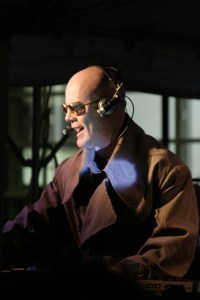
They are of course the pop/jazz masters whose harmonic and lyrical sophistication have had the critics purring since 1972.
They’ve also often been described as ‘influential’. But is that true? Does any other music sound remotely like Steely Dan?
In the 1980s, the term ‘Steely Dan-influenced’ was bandied about particularly in relation to British bands of the ‘sophisti-pop’ variety: The Big Dish, Style Council, Everything But The Girl, Curiosity Killed The Cat, Hue & Cry, Sade, Swing Out Sister, even Prefab Sprout and Deacon Blue.
More recently, it’s The High Llamas, Athlete, Mark Ronson, Toy Matinee, The Norwegian Fords, Mayer Hawthorne, State Cows and even Pharrell.
None really sound like Steely. Sure, they show off some slick grooves, jazzy solos and nice chord changes. But they also generally scrimp on the hooks, harmonic sophistication, production values and soulful, distinctive vocals which characterise Becker and Fagen’s oeuvre.
However, there are random tracks over the years – by artists one wouldn’t necessarily have predicted – that have seemingly ‘cracked the code’. Here’s a smattering, not all necessarily from the ’80s. More suggestions welcome if you can think of any.
10. Billy Joel: ‘Zanzibar’
Lush production (Phil Ramone), cool chords, great arrangements, biting Fagenesque vocals, quirky lyrics and nice guitar from Steely regular Steve Khan. Also featuring two kick-ass solos by trumpet/flugelhorn legend Freddie Hubbard.
9.The Stepkids: ‘The Lottery’
Underrated American psych-soulsters deliver jazzy weirdness, a nice groove, oblique lyrics, cool chords, memorable hooks and a distinctly Fagen-like croon from vocalist Tim Walsh.
8.The Tubes: ‘Attack Of The 50ft Woman’
The bridge and backing vocals always remind me of Steely, and I’m sure the boys would also appreciate the ‘50s B-movie lyric concept and ‘easy listening’ middle eight.
7.Danny Wilson: ‘Lorraine Parade’
The Dundonians’ superb debut is full of Dan-ish moments but this (sorry about the sound quality) could almost be an outtake from Katy Lied. See also the B-side ‘Monkey’s Shiny Day’.
6. Frank Gambale: ‘Faster Than An Arrow’
The Aussie guitar master swapped the chops-based fusion for this slick, lushly-chorded, Steely-style shuffle. Gambale sings, plays piano and guitar and also wrote the excellent horn chart.
5.Maxus: ‘Nobody’s Business’
The AOR supergroup came up with this standout in 1981. Jay Gruska’s vocals and Robbie Buchanan’s keys particularly stand out as Steely-like.
4. Cliff Richard: ‘Carrie’
More than a hint of ‘Don’t Take Me Alive’ in the chorus, lovely production and Cliff does a neat Fagen impression throughout. And hey, isn’t that ‘Mike’ McDonald on backup? (No. Ed.) Apparently co-songwriter Terry Britten was a huge Steely fan (as Cliff told this writer during a live radio interview circa 2008).
3.Boz Scaggs: ‘We’re Waiting’
Steely regulars Michael Omartian, Victor Feldman, Jeff Porcaro and Chuck Findley contribute to this enigmatic cracker which could almost be an Aja outtake. The oblique lyrics possibly relate to Hollywood in some way. See also Boz’s ‘Gimme The Goods’ which sounds suspiciously like ‘Kid Charlemagne’.
2. Tina Turner: ‘Private Dancer’
This Mark Knopfler-written gem pulls off the Steely tricks of simple melody/elaborate harmony and a risqué lyrical theme. There’s also more than a touch of ‘FM’ in the intro riff. Knopfler was always a big Dan fan and of course guested on ‘Time Out Of Mind’. See also Dire Straits’ ‘Private Investigations’ whose outro bears more than a passing resemblance to ‘The Royal Scam’.
1.Christopher Cross: ‘I Really Don’t Know Anymore’
From one of the biggest-selling debut albums in US chart history, this features the production/piano skills of Omartian, backing vocals from McDonald and a majestic guitar solo by Dan legend Larry Carlton. See also ‘Minstrel Gigolo’ from the same album.
After the extended prologue, when Ry Cooder’s swampy blues riff slides in over a glorious widescreen shot of the Louisiana bayou, you know you’re watching a classic of its kind.
To this day, co-writer/director Walter Hill claims that the superb ‘Southern Comfort’ doesn’t directly allude to the Vietnam War, but it’s hard to conclude otherwise.
Set in 1973, his film concerns a motley group of weekend National Guardsmen whose sojourn into Cajun country (with the promise of prostitutes at the end of the road) turns into a desperate fight for survival when a foolish prank leaves them at the mercy of some particularly vengeful locals.
Hill prefers to call it a ‘displaced Western’, a film about escalating moral dilemmas in unfamiliar surroundings. That rings true too, but watching it again after ten years or so, it’s hard not to compare it to John Carpenter’s ‘The Thing’, another all-male classic about creeping, self-defeating paranoia, fudged leadership and dodgy group-think.
‘Southern Comfort’ might also be described as ‘The Warriors’ meets ‘Deliverance’. It’s that good. This is a pre-irony, pre-CGI action movie, where men are men, decisions have consequences and vengeance is swift and fairly brutal.
The action sequences are gripping, though never tawdry, and look extremely punishing for the cast – there’s a particularly realistic dog attack and a memorable quicksand incident. Apparently the shoot was long, cold and difficult, with camera tripods frequently sinking into the bayou.
The dialogue is fast and loose – the brain has to be in gear to pick up all the political/ethical nuances that fly by – and the acting styles deceptively ‘naturalistic’.
Keith Carradine and Powers Boothe are superb as the reluctant heroes who must overcome their basically apolitical stances to become men of action and moral choice.
Carradine in particular makes for a fascinating action-man (according to Hill, his character is a ‘Southern aristocrat’). The secondary cast of mainly unknowns (the ever-excellent Peter Coyote aside) is also superb.
But ‘Southern Comfort’ was a commercial dud on its 1981 release. Maybe, like ‘The Thing’, it’s far too stark a vision. But it certainly it spawned some new movie clichés and looks like an influence on many ’80s movies from ‘Aliens’ to ‘Predator’.
It’s also a fascinating watch these days considering the state of the US – the film’s message seems to be that peace is impossible while there remain so many internal divisions and prejudices.
All great artists with any kind of career longevity have very distinct periods, and John McLaughlin is no exception.
Apart from his mid-’60s output, the early 1980s (let’s face it – the whole of the 1980s… Ed.) is probably his least understood/appreciated era.
McLaughlin had moved to France and formed a new band occasionally known as The Translators featuring a top-class American drummer (Tommy Campbell) and otherwise French unit including his new paramour, the outrageously talented keyboardist Katia Labèque.
His music too had turned away from electric jazz/rock and moved towards a gentler fusion of jazz, classical, blues, flamenco and Latin music, centred around the acoustic nylon-string guitar.
I was a major John completist in the late ’80s/early ’90s but didn’t have a clue Music Spoken Here even existed until chancing upon a vinyl copy in the Shepherds Bush Music & Video Exchange. You’d be hard pushed to find it in any jazz reference book these days; it’s virtually been written out of his discography. Some would say with good reason, but to these ears it’s one of the nuttiest, most piquant albums of John’s career.
At times you can feel him edging again towards the Mahavishnu reunion which happened a few years later in ’84, reaching for the Les Paul on a few cuts and pushing the drums and synths higher in the mix. But in its own way, and considering what else was going on in the jazz world at the time (Wynton, Branford and the Young Lions traditionalists) Music Spoken Here is as shocking an album as TheInner Mounting Flame.
‘Blues For LW’ is the album’s centrepiece, a thrilling, richly-chorded tribute to the Polish activist Lech Welesa with a neat quote from Miles Ahead and completely insane Chick Corea-meets-Rachmaninoff synth solo. ‘Honky Tonk Haven’ is brilliant too, a cacophony of early hip-hop beats, modal keyboards and a killer guitar/synth melody line borrowed from the Shakti track ‘Get Down And Shruti’. You’ve gotta think that Miles would have dug it.
The cover of Egberto Gismonti’s ‘Loro’ may be taken a tad too fast but the arrangement kicks ass. Elsewhere, the album is full of sunny, fresh, cosmopolitan grooves, with frequently outrageous guitar and keyboard playing – the latter way too high in the mix though.
Music Spoken Here was another two fingers up to the purists of the music world, and another artistic success. It reached #24 on the US jazz album chart, a reasonable return but not exactly a big hit for an artist of his magnitude. It’s crying out for a remaster though, one of the muddiest-sounding records of McLaughlin’s career.
Next stop for John was a tour with The Translators, an excellent studio album with Al Di Meola and Paco De Lucia, and then the aforementioned return to Mahavishnu, reuniting with Billy Cobham. Needless to say, that would be another hard sell for the critics…
I recently got hold of Jimmy Cauty and Bill Drummond’s ‘The Manual: How To Have A Number One The Easy Way’ for a quid in my local Amnesty bookshop.
Cheap at the price: written in 1988, the book purports to be a foolproof guide to creating a hit single.
But then you never can tell. It might not be wise to take it too seriously because Cauty and Drummond are very naughty boys.
The former was once in ’80s pop agitators Brilliant and Zodiac Mindwarp while the latter is of course an industry veteran, a member of Liverpool proto-punks Big In Japan (also featuring Holly Johnson, Budgie and Ian Broudie) and later the manager of Echo & The Bunnymen and The Teardrop Explodes.
The two pop pranksters got together and made some serious money from their genre-busting (read: nicking bits of other records and stitching them together), giant hits as The KLF, The Timelords and The Justified Ancients Of Mu-Mu, before announcing their retirement very publicly onstage at the 1992 BRIT awards in a hilariously inappropriate send-off.
Two years later, they burnt a million quid on an island off the west coast of Scotland to make a point about…something. Even they didn’t seem too sure, as evidenced by this interview with Gay Byrne on Irish television:
All bluster aside, these days ‘The Manual’ makes for fascinating and weirdly relevant reading. When it comes to the pop biz, it seems the more things change, the more they stay the same. Cauty and Drummond correctly predicted how chart music would turn out…forever. The following was written when the UK record industry was thriving and studios had never been more popular:
‘It’s obvious that in a very short space of time the Japanese will have delivered the technology and then brought the price of it down so that you can do the whole thing at home. Then you will be able to sod off all that crap about going into studios. A kid with a box of records, two Technics turntables, a sampler and drum machine can have a number one.’
Another aspect that jumps out is the section on ‘trademarking grooves’, especially in the light of the recent Pharrell Williams/Marvin Gaye ‘Got To Give It Up’ lawsuit controversy.
Cauty and Drummond claim that ‘copywright law…has been developed by whites of European descent – 50 percent for the lyrics, 50 percent for the top-line melody. Groove doesn’t get a look in. If copyright law had been in the hands of blacks of African descent, at least 80 percent would have gone to creators of the groove.’
Controversial and prescient stuff. But where are the lads now? They’re probably doing OK, although Drummond already looked pretty ‘ancient’ in 1994…
The lead-off track and third single (UK #19 in May 1985, not released in the US) from 1984’s Tonight album, ‘Loving The Alien’ was arguably Bowie’s most committed piece of writing since Scary Monsters‘ ‘Teenage Wildlife’ four years earlier.
Recorded at Quebec’s Le Studio in May 1984, the song was musically rich with a striking set of lyrics and a superb, soaring vocal performance. Like a good Kubrick movie, it distills down weeks of research to just the crucial components.
Bowie was apparently doing a lot of reading about Christianity and the Catholic Church, influenced particularly by Donovan Joyce’s notorious book ‘The Jesus Scroll’ which posited that Jesus died in Masada at the age of 80 and wrote a scroll currently in Russian hands. The wider implications of this led Bowie into further thoughts on organised religion in general and Christianity in particular. He told writer Charles Shaar Murray:
‘It was always more of a power tool than anything else, which was not very apparent to the majority of us. My father encouraged me to become interested in other religions. It’s extraordinary considering all the mistranslations in the Bible that our lives are being navigated by this misinformation, and that so many people have died because of it. That’s how the song started out: for some reason, I was very angry…’
Using the bloodshed of The Crusades as its central image, the lyric uses various effective ploys, one of which is an almost Pinteresque juxtaposition of the banal and portentous. While Bowie blithely stated ‘It’s just a song of images’ in the above interview, each line is ripe for analysis.
Watching them come and go The Templars and the Saracens They’re travelling the holy land Opening telegrams
Torture comes and torture goes Knights who’d give you anything They bear the cross of Coeur de Leon Salvation for the mirror-blind
But if you pray All your sins are hooked upon the sky Pray and the heathen lie will disappear
Prayers, they hide the saddest view (Believing the strangest things, loving the alien)
And your prayers they break the sky in two
And you’ll believe you’re loving the alien
Thinking of a different time Palestine a modern problem Bounty and your wealth in land Terror in a best-laid plan
Watching them come and go Tomorrows and the yesterdays Christians and the unbelievers Hanging by the cross and nail
Bananarama it ain’t. Both lyrically and musically, the song stands out a mile on Tonight. But despite Bowie’s fantastic vocal, it’s let down by an immense production with huge, gated drums (Omar Hakim’s entrée into rock drumming that arguably got him the gigs with Dire Straits and Sting), muddy bass, overwrought Arif Mardin string arrangement and a ponderous Carlos Alomar guitar solo.
More successful are Guy St Onge’s marimba and the sampled Bowie vocals at the top (apparently more influenced by Philip Glass’s ‘Einstein On The Beach’ than Laurie Anderson’s ‘O Superman’ – the kind of detail that was very important to Bowie!). Regular collaborator David Mallet directed the video, storyboarded – as usual – by Bowie. Though seemingly a fairly disparate series of arresting images, the clip was fairly successful as a surreal assault on religion’s materialistic symbols and commodification of women.
It also makes a fascinating companion piece to his ‘Blackstar’ video. Bowie’s cheery grin that accompanies the ‘Opening telegrams/Whoa-oh’ line is a thrillingly weird moment. Bowie performed ‘Loving The Alien’ throughout the ‘Glass Spider’ tour. Then, in 2002, DJ Scumfrog remixed the track to create a single called ‘The Scumfrog vs Bowie’, a top 10 hit in the UK Dance Chart.
A year later Bowie himself resurrected the song, cooking up a stripped-down version in duet with guitarist Gerry Leonard. They dropped the key from E-minor down to C-minor and dispensed with many of the original’s passing chords, arguably dissolving some of its power, but it’s certainly a unique reading.
According to Bowie, the best version of ‘Loving The Alien’ is his original home demo of the song, yet to see the light of day. Let’s hope we get to hear it sometime.
Singles released: ‘Welcome To The Jungle’ (US #7, UK #24) ‘Sweet Child O’ Mine’ (US #1, UK #6) ‘Paradise City’ (US #5, UK #6) ‘Nightrain’ (US #93, UK #17)
W. Axl Rose (vocals/co-writer): ‘This record’s gonna sound like a showcase. I sing in five or six different voices, so not one song’s quite like another, even if they’re all hard rock. Sometimes six lines (of lyrics) take two years. It just has to say exactly what I mean…’
Slash (guitar/co-writer): ‘We can sound like AC/DC, the Mahavishnu Orchestra, Aerosmith. We can sound like what’s-his-name, that f***in’ idiot that plays guitar real fast… Al Di Meola…’
1987 was the year rock and metal made a comeback big-time. But Appetite doesn’t really sound like an ’80s album at all. It’s totally different to what Whitesnake, Motley Crue, Poison, Skid Row, Iron Maiden, AC/DC and Def Leppard offered in the same era, but not so different from Aerosmith, early Van Halen, Led Zeppelin, Sex Pistols or The Stones. It’s funky hard-rock rather than metal, with the occasional punky moment, and still sounds superb today.
W. Axl Rose (born William Bailey) was and is one of the all-time great rock frontmen. His vocals stand out: he unleashes the growling, banshee-screeching and brooding baritone, sometimes all in the space of one song.
Then there are the stage moves: the serpentine shuffle, ‘revolving stomp’, the pogo-ing, and the androgynous looks and gift for winding audiences up didn’t hurt either.
Guns were surely the ultimate ’80s Hollywood street band, seriously dangerous both to themselves and others. Signed to Geffen Records in March 1986, there was subsequently a lot of discontent at the label when it dawned on them just what they’d taken on.
One A&R man said: ‘They were having sex with porn stars, openly using hard drugs. Once they arrived at the Geffen office, late for a meeting, with a naked girl wrapped in a shower curtain. There was a real belief at the label that Axl was simply not going to make it out alive. I remember someone at Geffen saying, “We must record everything they do – rehearsals, soundchecks, concerts – because this band is going to be incredibly popular and incredibly short-lived. One of them is going to OD before it’s all over…”’.
Appetite producer Mike Clink (installed after aborted sessions with Paul Stanley of KISS and Sex Pistols engineer Bill Price) was nicknamed ‘That Was It!’ Clink: he preferred first takes if possible, with the band mostly playing live in the studio.
He captures the ferocity of the band, mostly keeping to a fairly basic format: Izzy Stradlin’s guitar panned hard left, Slash panned hard right, Steven Adler’s snare drum of doom (though Geffen apparently wanted to use a session player for the album) and Duff McKagan’s bass in the middle. Appetite was also pretty much the last major rock album mastered for vinyl.
They had built a formidable live following on the West Coast but Guns’ London Marquee shows of the 18, 22 and 28 June 1987 were their European debuts. They had to work. The pressure was on. The first show mostly sucked, with plastic beer glasses and snot raining down on the band, but the second and third gigs were apparently much better.
After Appetite‘s release on 21 July, nothing much happened in the States. Radio pretty much ignored it. MTV didn’t have a video to show. The New York writers thought they were just another hair-metal band from Hollywood.
There was a better reception in England. Kerrang! magazine loved it: ‘Rock is being thrust back into the hands of the real raunch rebels’. (Within a few years, Axl would be berating Kerrang! onstage…)
‘Sweet Child O’ Mine’ (based on Slash’s famous opening riff that was apparently just a ‘joke’ warm-up guitar pattern) pushed the album up to #64 in November 1987. Incredibly, Appetite didn’t hit the #1 spot in the US album chart until 23 July 1988 when Guns were on tour supporting Aerosmith – almost a year to the day after its release.
On 2 August 1988, Axl played live shows in his hometown of Lafayette, Indiana. He was a mega-star, the album was a smash, but he had mixed emotions about returning to the belly of the beast.
‘Don’t look up to him’, one of Bill Bailey’s old Jefferson High School teachers apparently said to some kids watching ‘Sweet Child’ on MTV. ‘He didn’t do well here…’
A warm Seattle evening, just steps away from the iconic Pike Place Market. One of the definitive bands of the ’80s are getting ready to take the stage.
But one member, the lead vocalist, is famously and notably absent. How can they pay tribute without becoming a tribute act?
The Revolution are close to the end of their 29-date North American tour. Reformed with the original line-up, they provided backup for Prince throughout his creative zenith (1980-86).
It’s hard to think of a band who funked as hard in that era. And tonight, that’s what shines through.
The Revolution, 2017: From left, Brown Mark, Dr Fink, Bobby Z, Lisa Coleman, Wendy Melvoin and guest Dez Dickerson
Gone are the ’80s fashions, the side partings, ruffs and glitter (though keyboard player Dr Fink maintains his scrubs and stethoscope). This is not a celebration of the past but rather a testament to how relevant Prince’s music remains today.
In the diverse, 1,100 capacity Showbox crowd, there is no hint of irony or throwback-chic. These people, many of them tattooed with Prince’s ‘symbol’ motif, came to party. And from the opening bars of ‘Computer Blue’, party is what they do.
What follows is a two-hour set of peerless pop classics. There are no overwrought solos, no extended jams. Nothing outstays its welcome or is embellished. Wendy takes lead guitar but keeps true to her original riffs instead of trying to mimic Prince’s soloing.
It’s a joy to hear a band this tight and disciplined. Their use of vintage keyboards and drum machines, at chest- splitting volume, has a transportive effect.
Joined by guest vocalist Stokley Williams, The Revolution power through ‘Uptown’ and ‘DMSR’ until noticeably dropping the energy level (and losing the crowd) with two tracks from Prince’s vault of unreleased songs.
Then it’s back to the dancefloor, tearing through ‘Erotic City’, ‘Let’s Work’ and ‘1999’, until their next break in pace: Wendy and Lisa’s quiet, melancholic and clearly deeply personal tribute to their missing bandleader, ‘Sometimes It Snows In April’.
It’s at this point that you hear the tears from fans who continue to be touched by the passing of their innovative, imaginative hero. For many, this is a moment of quiet reflection, surrounded by like-minded people – a cathartic release for all, including a visibly upset Wendy.
As the show goes on, climaxing with ‘Purple Rain’, the band are overwhelmed by the ecstatic energy of the crowd. It’s not hard to understand how The Revolution, all now in their mid-50s, can keep up with touring such a high-energy show.
The passion of the music, camaraderie of the players and discipline of their act transform the audience into just what they lack: their missing frontman.
Geffen/Warner Bros. Records, released 19 July 1982
6/10
It’s understandable that Summer was reluctant to take on Billy Strayhorn’s song ‘Lush Life’.
A morning-after portrait of a failed romance, it’s a remarkable composition for a 16-year-old to write, with elliptical lyrics, few repeat sections and a challenging, endlessly-modulating melody line.
Nat ‘King’ Cole, Sarah Vaughan, John Coltrane/Johnny Hartman and Billy Eckstine all performed notable versions (Strayhorn himself apparently loved the latter).
But, coached through by producer Quincy Jones and keyboardists Greg Phillinganes, Herbie Hancock and Dave Grusin, Summer’s vocals are a knockout. Though the track sounds a bit rushed (Phillinganes would surely like another pass at his synth bass part), her work certainly paid off.
‘Lush Life’ closes Donna Summer, released 35 years old today. Classic singles begin the album and end side one: Grammy-nominated ‘Love Is In Control (Finger On The Trigger)’ and an inspired cover of Jon & Vangelis’s ‘State Of Independence’, the latter featuring an amazing array of guest vocalists.
The problem with Donna Summer is that it’s three classics and a lot of filler. Formula-wise, Quincy seems to be preparing for Thriller – there are many songwriters and a variety of styles.
Springsteen contributes the slightly underwhelming ‘Protection’ and elsewhere there’s a bit too much LM-1 drum machine and a few less-than-memorable choruses.
The album didn’t quite deliver the big hit to propel Summer into the ’80s but reached #20 in the US album charts and #13 in the UK.

 A statement from Donald Fagen: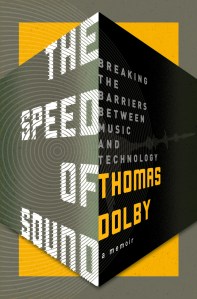
 They are of course the pop/jazz masters whose harmonic and lyrical sophistication have had the critics purring since 1972.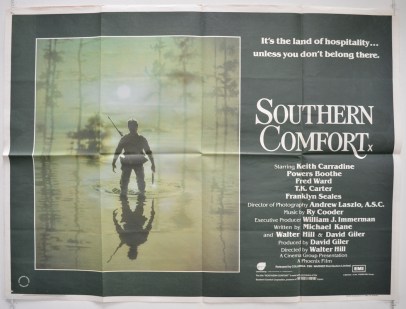

 I recently got hold of Jimmy Cauty and Bill Drummond’s ‘The Manual: How To Have A Number One The Easy Way’ for a quid in my local Amnesty bookshop.
 The lead-off track and third single (UK #19 in May 1985, not released in the US) from 1984’s Tonight album, ‘Loving The Alien’ was arguably Bowie’s most committed piece of writing since Scary Monsters‘ ‘Teenage Wildlife’ four years earlier.
  Geffen Records, released 21 July 1987
 Our guest writer in Seattle: Sebastian Wright.


 movingtheriver.com