Introducing The Hardline According To Terence Trent D’Arby: 30 Years Old Today

Yeau! The headline of Q Magazine’s September 1987 cover feature said it all.

Perrier-quaffing Terence was correctly predicting a phenomenal critical and commercial reaction to his debut album and ready to dish the dirt.

He had done it all on his terms; wrongfooted his record company (who had wanted a slick, current, ‘upwardly-mobile’ soul album) and played the press at their own game. But at what cost?

D’Arby had lived quite a life before becoming a ‘pop star’: he was born in the States, the son of a preacher father and gospel-singing mother, studied journalism in New York, became a half-decent boxer in his late teens, joined the army and was based in Germany throughout most of the ’80s during which time he worked on his music and acquired a manager (a strategy not dissimilar to another ex-army musical maverick, Jimi Hendrix).

Decamping to London in 1985, D’Arby worked on demos with Heaven 17’s Martyn Ware and, after being turned down by several major labels, finally got the nod from CBS.

They pulled off a pre-release masterstroke when D’Arby was block-booked for four weeks running on ‘The Tube’ after a knockout debut live TV performance. To say that there was a buzz about him would be an understatement. The general consensus was: ‘Who the hell is this guy?!’

Hardline still sounds like one of the better debut album of the ’80s or any other decade. From the opening bars of ‘If You All Get To Heaven’, it’s clear that something pretty special and pretty different is going on, though the album inadvertently tapped into the ‘retro-soul’ revival that had built up in the UK over 1986 and 1987 – Ben E King and Percy Sledge had both had number ones in the months before Hardline‘s release, and The Pasadenas, The Christians and various others would bring forth similar grooves in the months to come.

Hardline also reminded critics and audiences alike of some of the great soul vocalists of the ’60s, ’70s and early ’80s – Al Green, Otis Redding, Stevie, Prince, Michael Jackson, James Brown and especially Sam Cooke. All went into the mix but finally D’Arby sounded just like himself.

He peppered ‘Dance Little Sister’ – a track that Prince would have killed for – with some outrageously over-the-top vocals. But, refreshingly, his singing throughout the album ain’t perfect – he’s much more into getting the emotion across and bringing a party vibe to the studio.

‘Sign Your Name’, ‘If You Let Me Stay’ and ‘Wishing Well’ are funky yet accessible (if the latter doesn’t make you move, you’re probably dead), but the a cappella, African-themed ‘As Yet Untitled’ is totally original.

He even takes on Smokey Robinson and emerges unscathed on the closing ‘Who’s Loving You’. He plays a lot of instruments himself and only gets in occasional help when absolutely necessary (including future Skunk Anansie bassist Cass Lewis and Pop Group/PiL drummer Bruce Smith). As such it’s a remarkably cohesive album.

Hardline was a big hit, reaching #1 in the UK, #4 in the US and selling over eight million copies worldwide. D’Arby got the rep of being a ‘difficult’ artist when his follow-up album Neither Fish Nor Flesh missed deadlines and went over budget. Things would probably never be the same again. But we’d always have Hardline.

Mike Leigh’s Meantime (1983): An Interview With Producer Graham Benson

There definitely seems to be something in the London air this summer.

The Grenfell Tower tragedy and various other events have brought some deeply unpleasant issues to light (again).

Revisiting Mike Leigh’s 1983 TV film ‘Meantime’ recently, it seemed eerily relevant. A withering portrait of Thatcher’s Britain featuring a brilliant cast, it’s still a striking piece of work, at times difficult to watch but finally offering cause for hope.

Its essential Englishness also echoes through the work of Suede and Blur; an alternative soundtrack might include ‘My Insatiable One’ or ‘Bank Holiday’.

Mainly set and shot in Haggerston, East London, ‘Meantime’ focuses on two generations of the Pollock family: parents Frank (Jeffrey Robert) and Mavis (Pam Ferris); their sons Colin (Tim Roth) and Mark (Phil Daniels); Mavis’s sister Barbara (Marion Bailey) and her husband John (Alfred Molina).

Frank, Mavis, Colin and Mark live in a rundown council high-rise (Bryant Court in Whiston Road, where a two-bedroom flat now goes for £330,000) while Barbara and John have escaped to middle-class respectability in Chigwell, Essex.

From Uncle John’s condescending opening line – ‘Barbara, the boys can take their shoes off and leave them in the kitchen, all right?’ (note that he doesn’t tell Colin and Mark himself) – we know we’re deep in Leighland. The performances are uniformly superb, with Roth, Daniels and Bailey possibly never better.

Oldman delivers a remarkable turn as the skinhead Coxy, smashed on the Special Brew, looking for trouble but also deeply vulnerable, while Peter Wight is excellent as the insouciant, blithely idealistic estate manager.

Gary Oldman as Coxy

Mark, Colin, Coxy and Frank are stuck in a grim, sometimes demeaning cycle of unemployment, but there seems to be glimmer of hope when Auntie Barbara offers Colin a painting job in her home. Mark has other ideas. Anyone growing up in London during the early 1980s knew kids like Colin, Mark and Coxy. The latter two are quick-witted and sharp but totally wasted, with no structure in place for them to thrive.

Andrew Dickson’s soundtrack – a duet for tack piano and soprano sax – is unforgettable. And, for a director known more for his characters and situations than a visual sense, Leigh comes up with many striking images: Mark and Coxy dodging the falling detritus from a freshly-bulldozed block of flats; Colin wandering uncertainly in front of the Winston Churchill statue at Woodford Green; Coxy rolling around a giant, hollow metal canister, attacking its insides impotently with a stick.

I asked legendary TV producer Graham Benson about his memories of working on ‘Meantime’ (which you can watch in HD below, at least until it’s taken down…).

MP: How did you come to the project and what was its genesis? I gather it was your first (and only) experience working with Mike Leigh.

GB: Yes, it was my one and only time working with Mike and a very enjoyable, rewarding time. The producer’s job is very much one of support, encouragement and of being there when needed in various aspects of the films progress. We initially wanted to make a feature film when I was running Robert Stigwood’s European film and TV company. We nearly got a deal with Warner Bros but the lack of script (Leigh famously develops his scripts through intensive improvisations in collaboration with the actors – Ed) scared the moguls. Eventually a combination of Channel 4 and David Rose together with Central Productions and Margaret Matheson delivered the commitment and budget. I am pleased and proud to have been a part of Mike’s journey and have to say that producing a Mike Leigh film was an example in my career of working with a supremely professional, responsible, collegiate and multi-talented film-maker, and a good-humoured, decent bloke to boot!

‘Meantime’ was made for Channel 4. It’s hard to imagine such a hard-hitting feature-length film getting shown on a terrestrial station today. Do you see that period as a golden age for British TV?

Well, Channel 4 were Mike Leigh enthusiasts as they remain now. He’s always had them and the BBC. I don’t see why it couldn’t be made now really. These days he has other places in Europe to go and get additional monies – for now, anyway…

The film showcases an incredible array of Brit acting talent: Marion Bailey, Gary Oldman, Tim Roth, Peter Wight, Pam Ferris, Alfred Molina, etc etc. Did you have any casting input?

We discussed the casting as we went along. It was a stunning cast but they were all much less well-known then. Like so many others, they were cutting their teeth on hard-hitting UK dramas.

Though often a difficult watch, the ending arguably shows chinks of light – Barbara finally stands up to John and the two brothers seem to come to a new understanding. Is that how you see it?

Yes. Though it’s a bleak and critical view of Thatcher’s Britain, it is a hopeful film. The human spririt will win through. But we must be watchful, as we see today.

What do you think is the legacy of the film, if there is one?  

Oh, it proved Mike could handle a wider canvas and could deal with a slightly bigger budget. It solidified his method of working as a successful one and a genre all of its own. Soon afterwards he’d get his opportunity on the bigger screen.

Whitney Houston: Can I Be Me?

Whitney is seldom mentioned in the list of ’80s biggies (Prince, Bruce, Bon Jovi, Madonna, Jacko, Hall & Oates etc.) – strange considering her 1985 debut album sold 22 million copies, her second 25 million and she’s still the only artist in history to have seven consecutive US number one singles (one more than The Beatles).
Her death in 2012 at the age of just 48 followed decades of worldwide success but also attendant tabloid speculation and a multitude of legal problems (her father John sued her for $100 million in 2002).

Her marriage to R’n’B ‘badboy’ Bobby Brown was endlessly analysed, as was her close friendship with Robyn Sampson. Nick Broomfield’s ‘Can I Be Me?’ (Rudi Dolezal gets a co-director credit for the inclusion of his scintillating 1999 concert/backstage footage) is the first Whitney doc out of the blocks – another ‘authorised’ film is apparently on the way shortly – and it’s a significant change of style for Broomfield.

He dials down the quirkiness, resists on-screen cameos and cranks up the gravitas, seeming far more affected by Whitney’s demise than he was by the deaths of Biggie, Tupac, Kurt Cobain or Aileen Wuornos. There are no obvious laughs in this one and it’s by far his most commercial film, possibly reflecting the influence of Asif Kapadia’s similarly-themed ‘Amy’.

But other things haven’t changed – Broomfield’s impressive range of interviewees (including Whitney’s brothers, friends, bodyguard, hair stylist, drug counselor, musical director and backing singers) are shown in unflattering close-up, but all speak with sometimes breathtaking candour.

The only notable no-shows are Bobby Brown and best friend Robyn Crawford, for reasons which become abundantly clear. We get a strong sense of Whitney’s childhood in Newark, New Jersey – ‘the hood’ – when ‘Nippy’ was a lovable, caring, somewhat mischievous kid brought up singing gospel in church and mucking around with her brothers.

Inheriting a formidable set of pipes from her mum Cissy Houston, legendary impressario Clive Davis signed Nippy as a charming, cheeky 20-year-old and demanded a debut album that would appeal to White America; as an Arista A&R man says on camera, ‘He DIDN’T want George Clinton music.’

Broomfield analyses this as the crux of the problem, in the sense that Whitney achieved her huge early success without ever referencing the sort of music she was passionate about. The title of the film comes from her catchphrase developed when touring in the late ’90s when she would insist on bringing in elements of gospel, jazz and R’n’B (presumably against the wishes of her record company).

Broomfield doesn’t fudge the drug issue, and finds plenty of self-criticism from Whitney as well as corroboration from various sources. Bobby Brown comes across as somewhat of a loose cannon but essentially harmless. Despite his posturing, the intimate backstage footage demonstrates that he certainly loved Whitney and vice versa. Their Ike and Tina ‘abuse’ skits are amusing, though may offend some.

More troubling was Brown’s relationship with Robyn Crawford, who allegedly was having an affair with Whitney throughout much of her career. Broomfield hasn’t been able to secure the rights to any of Houston’s recorded catalogue, so the film arguably relies too much on Nick Laird-Clowes’ mournful, somewhat clichéd original score.

But Rudi Dolezal’s concert footage is evocative and moving. Love or hate ‘I Will Always Love You’, it’s hard not to be affected by Houston’s mesmerising live performance during a 1999 gig in Germany, one of many great musical moments in the film. Michael Baker’s yin/yang bass-drum skin from that 1999 tour says it all – ‘Whitney: Can I Be Me’ is finally another very sad music-biz story. But it’s well worth catching even if it (understandably) lacks the anarchic zeal of Broomfield’s best work.

One interviewee who might have been worth tracking down is Bill Laswell, who to the best of my knowledge was the first producer to tap into Whitney’s potential when he helmed this early gem, recorded when she was just 19 years old.

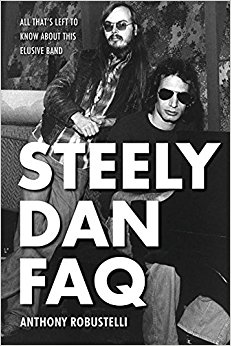
Book Review: Steely Dan FAQ by Anthony Robustelli

The general consensus seems to be that there’s relatively little published analysis of Steely’s work. But is that accurate?

Brian Sweet’s ‘Reelin’ In The Years’ was uncritical but biographically exhaustive; Don Breithaupt’s Aja book was excellent on The Dan’s musical methods; while ‘Revolution In The Head’ author Ian MacDonald wrote briefly but evocatively about Gaucho, included in his gripping ‘The People’s Music’ collection.

And then of course there are the intriguing, sometimes amusing ‘geek’ websites Fever Dreams and The Steely Dan Dictionary.

So it seems there’s actually quite a lot out there, but all the same I was intrigued when ‘Steely Dan FAQ (All That’s Left To Know About This Elusive Band)’ appeared recently. Is there anything left to ‘know’?

The first thing to say about the book is that it’s hard to know exactly which ‘frequently asked questions’ it’s answering – it’s structured more in the style of Omnibus Press’s old ‘Complete Guides’ series, with chapters on individual albums containing summaries of each song.

Then there are some extra sections dealing with Steely’s early days, their concert history, session players and solo projects. But, despite its rigid structure and a lack of any input from the two protagonists, ‘Steely FAQ’ comes up with some nice surprises.

Robustelli is particularly good on Dylan and The Beatles’ influence on Becker and Fagen’s songs. There’s the odd musical detail which hits the spot (during ‘Show Biz Kids’, I’d never noticed that guitarist Rick Derringer references Elliott Randall’s famous ‘Reelin’ In The Years’ solo after the ‘They got the Steely Dan t-shirts’ line) and there are some excellent, rare photos throughout.

Steely in all their scuzzy glory circa 1973. From left: Jim Hodder, Walter Becker, Denny Dias, Jeff ‘Skunk’ Baxter, Donald Fagen

The book is good too on the recent history of the Dan (though musically it’s an era I generally struggle with), with everything you’d ever need to know about the albums and tours since the 1990s.

There’s also a great chapter on cover versions, many of which I’d never heard (including Earl Klugh, The Pointer Sisters, Howard Jones, Dave Valentin, Grover Washington Jr. – approach them at your peril…).

On the minus side, musical/lyrical analysis is often scant and/or inaccurate – Michael Omartian’s solo piano outro on ‘Throw Back The Little Ones’ is described as ‘discordant’; the song ‘Pretzel Logic’ is summarised as ‘their first shuffle’ (what about ‘Reelin’ and ‘Bodhisattva’?) and the tutti line that kicks off ‘Parker’s Band’ is falsely characterised as a ‘dissonant chord’.

It’s weird too that Robustelli doesn’t mention the websites listed above and pretty much ignores their (sometimes) excellent lyrical analysis in his song summaries.

But, in the end, the success of such a book is measured by whether it takes you back to the music with a fresh ear; ‘Steely Dan FAQ’ certainly does that, despite its shortcomings and rather matter-of-fact style. It’s well worth chucking into your holiday bag this summer.

‘Steely Dan FAQ’ is published by Backbeat Books.


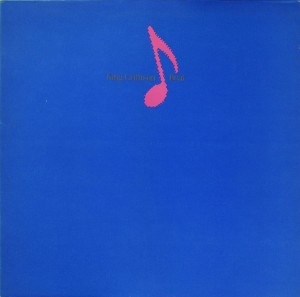
King Crimson: Beat 35 Years Old Today

EG Records, released 18 June 1982

UK Album Chart position: #39

9/10

If you were to ask fans of 1980s King Crimson why they love the band, lyrics probably wouldn’t be a priority.

But, pushed hard by Robert Fripp and possibly influenced by the 25th anniversary of Jack Kerouac’s ‘On The Road’, Adrian Belew came up with some choice words on Beat, the excellent second album from this remarkable quartet.

References to the Beat writers abound; ‘Neal and Jack and Me’ concerns Kerouac and his best friend Neal Cassady and mentions several significant Kerouac works; ‘Heartbeat’ is the name of a book written by Cassady’s wife Carolyn about her experiences with the Beats; ‘Sartori In Tangier’ references the Moroccan city where a number of Beats resided; ‘Neurotica’ shares its title with a very influential Beat-era magazine, and presumably ‘The Howler’ refers to Allen Ginsberg’s ‘Howl’.

As the saying goes, you take inspiration where you find it, and Belew had come up with a very handy concept on which to hang the new band improvisations. Musically, Beat is a brilliant development of the Discipline sound. ‘Neurotica’ and ‘The Howler’ feature some remarkable, unhinged ensemble playing, teetering on total chaos.

On the latter, Bill Bruford delivers intricate patterns on his acoustic/electric kit (with shades of Steve Reich, acknowledged with Bruford’s credit for ‘Drumming’) while Belew’s white-noise guitar outburst is a killer (he repeats the trick on ‘Waiting Man’ and ‘Neal’, extending his palette of sounds from Discipline and sometimes tuning his high E string down to a C).

‘Sartori’ is a superb vehicle for Fripp while ‘Waiting Man’ demonstrates the amazing rhythm dexterity of the band, a development of the ‘Village Music’ concept with Bruford and Tony Levin sharing a tricky 3/4 figure (joined by Belew on drums when they played it live) underneath an expressive vocal performance.

There’s even a noble, painless attempt at a pop hit with ‘Heartbeat’. The only track that outstays its welcome is ‘Requiem’, a fairly dreary investigation of A-minor.

In short, the musical intelligence of this unit was pretty damn scary. But they never neglected a crucial factor: melody. Lesser bands might have built their entire careers on any Beat song.

Not surprisingly, tensions were high during the London recording sessions. Echoing the situation with The Police around the same time, they sought out a producer who might act as peacemaker.

Fripp told writer Anthony DeCurtis in 1984: ‘We tried to get someone from the outside to organise it: Rhett Davies. I think if failed. I would rather have the wrong judgement of a member of the band than the right judgement of someone outside the band.’

Also, Belew was now very much the centre of attention and under pressure to produce melodies and lyrics to order. According to Bruford’s autobiography, Belew told Fripp to leave the studio after one too many barbs from the bespectacled Wimbornian, who ‘went straight back to Dorset and was silent for three days’. Only some desperate calls from Bruford and manager Paddy Spinks rescued the situation.

In the same 1984 interview as above, Fripp said of ’80s Crimson: ‘I feel I’ve created a field in which other people can discover themselves’. On the evidence of Beat, he did a fine job.

Larry Carlton: Last Nite 30 Years On

In a previous piece about Robert Cray, I talked about ‘touch’ guitarists, those whose sounds are almost entirely in their fingers and not dependent on pedals or amps.

Larry Carlton is certainly one of them. He played some of the great guitar of the 1970s with Steely Dan, The Crusaders, Michael Jackson and Joni Mitchell, his sound characterised by a deceptively ‘sweet’ take on the blues, alongside elements of jazz and rock. In the early ’80s, he put out some fine studio albums including Sleepwalk and Friends, but ’87’s Last Nite was his first official live release.


And what an album. In 1987, I was a big fan of his playing with Steely Dan but had never heard any of his solo stuff. A glowing review of Last Nite in Q Magazine sent me scuttling off to my local Our Price. Recorded on 17th February 1986 at the Baked Potato club in North Hollywood, the album is Larry uncut, blowing on a mixture of originals and jazz standards, with no thought of commercial or airplay potential.

It’s hard to think of another guitarist who could cover such a stylistic range so effortlessly. He kills on the slow blues, tears up the fast Texas-style shuffle, delivers deliciously ‘out’ fusion on the title track and swings his ass off on ‘All Blues and ‘So What’, though with a pleasingly piercing tone as opposed to the warm sound favoured by most ‘jazz’ players.

He’s also endlessly melodic, producing memorable phrase after memorable phrase. But don’t be fooled by the beatific expression and cream jacket – he isn’t afraid of throwing in some pretty wacky modal curveballs too.

Another key aspect of Last Nite is Carlton’s band. He uses the cream of the LA studio scene – John ‘JR’ Robinson on drums, Abe Laboriel on bass, Alex Acuna on percussion – and brings them right out of their comfort zone. Apparently they didn’t know ‘So What’ and ‘All Blues’ were on the setlist until Larry called them.

JR in particular is a revelation, sounding like he’s been cooped up in the studio for far too long. And who knew he could swing like he does on the jazz cuts. Keyboard player Terry Trotter also impresses with his rich voicings and empathetic accompaniment.

Sadly, Last Nite turns out to be a bit of an anomaly in Larry’s discography, marking the beginning of an era when he was veering more and more towards a much smoother studio sound. But he’s always ripped it up in the live arena and has spent a lot more time on the road in his later years.

Happy birthday to a true guitar classic.

Book Review: Backtrack by Tessa Niles

Excellent recent documentary ’20 Feet From Stardom’ busted the myth once and for all that backing singers aren’t ‘good’ enough to be solo artists.

In fact, the contrary is often true: they make the artist sound and look better, and there are often a myriad of reasons both professional and personal why they haven’t become headliners in their own right.

Tessa Niles is probably the UK’s most celebrated backing vocalist of the last 35 years, and her excellent new memoir lifts the lid on a distinguished career singing with David Bowie, George Harrison, Elton John, Kylie, Eric Clapton, Steve Winwood, Tina Turner, Pet Shop Boys, Annie Lennox, Gary Numan, The Police, Duran Duran, ABC, Tears For Fears and Robbie Williams.

It’s a real page-turner and ’80s guilty pleasure, a voyage through all the pop fads of the decade (and decades since) and a search for a fruitful work/life balance in the face of demanding touring schedules and family commitments.

We follow Niles’ career from her early days as factory worker, cabaret entertainer and ‘Benny Hill Show’-auditioner to the late-’70s/early-’80s London live music scene, where good, young female singers could make a decent living at the city’s many nightclubs.

She is excellent at painting a picture of this somewhat dodgy state of affairs, when a pre-New Romantic London was anything but swinging and ‘Page 3’ culture was at its peak.

But a shrewd volte face leads Tessa into the burgeoning jazz/funk scene and decent, reliable gigs with Morrissey Mullen and Incognito, plus a chance meeting with US ex-pat arranger and producer Richard Niles.

Though their subsequent marriage gives Tessa her professional surname, it also leads to some conflicts of interest when he helms her commercially-unsuccessful solo debut.

But then Trevor Horn is on the blower and she is whisked into the studio to work on ABC’s ephocal Lexicon Of Love album, the beginning of a long and successful professional relationship with the uber-producer. ‘Date Stamp’ in particular shows Niles’ voice off to great effect.

From here on in, her career goes from strength to strength, but it’s not without its pitfalls: The Police’s long ‘Synchronicity’ world tour plays havoc with her vocal cords due to Sting’s insistence that she (and cohorts Dolette McDonald and Michelle Cobbs) sing in ‘full voice’ throughout, without any vibrato.

There’s also a funny anecdote about what exactly constitutes an audition for Sting.

Then of course there’s Niles’ memorable, electrifying turn alongside David Bowie at Live Aid – it’s amazing that they only had two days’ rehearsal for the ‘little gig’, as Bowie called it.

Elsewhere, there’s lots of good technical stuff about what actually constitutes a decent studio vocal performance – and also what artists and producers demand from a backing vocalist – with wicked anecdotes concerning Tina Turner’s ‘What’s Love Got To Do With It’, Steve Winwood’s ‘Roll With It’, Duran’s ‘Notorious’ and Tears For Fears’ ‘Swords And Knives’. Niles also doesn’t shy away from personal reflections about her family relationships and romances.

There’s far too much Clapton and Robbie Williams for my liking and a decent proofreader wouldn’t have gone amiss, but I devoured ‘Backtrack’ almost in one sitting. A really enjoyable, gossipy read.

‘Backtrack’ is out now on Panoma Press.

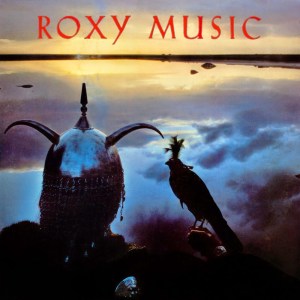
Roxy Music: Avalon 35 Years Old Today

How do you like your classic album: consistent in tone/texture or mercurial and unpredictable like Sgt. Pepper’s (released on this day 50 years ago)?

Avalon definitely belongs in the former camp. Beautifully performed, recorded, mixed and mastered, it maintains its mood throughout.

Through a variety of working methods – some originated on previous albums Manifesto and Flesh & Blood – Messrs Ferry, Manzanera and Mackay arrived at Roxy’s perfect studio swansong and, for many, the peak of ’80s sophisti-pop.

Today, Avalon sounds completely different to almost anything else released in 1982. It’s always a shock seeing reruns of Ferry on ‘Top Of The Pops’ miming something from the album – the whole package seems way too refined and luxurious for the worldly environs of a TV studio.

Crucial to Avalon‘s success was the reinstatement of the crack Flesh & Blood ‘backroom’ team: producer Rhett Davies and legendary mix engineer Bob Clearmountain. Also key was the choice of studios: Compass Point in Nassau and Power Station in New York, whose staircase was put to good use, as Davies told ‘Sound On Sound’ magazine: ‘The main thing at the Power Station was the stairwell. It had an unbelievable sound. You’d put anything through it and you’d just go “Yeah, we’ve got to have that.”’

Davies also brought with him another recording technique developed from working with Brian Eno on Taking Tiger Mountain and Another Green World. ‘Eno had opened me up to the way of working where you walk in with a blank sheet, stick some white noise down, count one to 100 and then fill in the spaces, and it was great working that way. When I started working with Roxy, Bryan had only known the “Let’s cut the track with the band in the studio” approach. I said, “Well, there is another way of working. We can put down our groove exactly as you want it synthetically, using a rhythm box, and the musicians can then play to that groove.” The musicians came in and responded to the atmosphere that was already on tape.’ (Eno of course also utilised a similar approach on Bowie’s Low and Heroes.)

Accordingly, drummer Andy Newmark was very often the last musician to overdub – most tracks were first laid down with a Linn drum machine backing. ‘The Main Thing’, ‘India’ (which sounds like Ferry was checking out Miles Davis’s On The Corner) and ‘The Space Between’ are the most obvious results of this approach, essentially jam sessions built on one-chord vamps. This painterly, piecemeal style of recording was also meat and drink to Ferry who was struggling with writer’s block at the time.

The title track was apparently a delightful accident, rescued at the eleventh hour after the song had almost been shelved: Davies: ‘We were mixing the album, and the version of the song that we’d done just wasn’t working out, so as we were mixing we recut the entire song with a completely different groove. We finished it off the last weekend we were mixing. In the quiet studio time they used to let local bands come in to do demos, Bryan and I popped out for a coffee and we heard a girl singing in the studio next door. It was a Haitian band that had come in to do some demos, and Bryan and I just looked at each other and went “What a fantastic voice!” That turned out to be Yanick Etienne who sang all the high stuff on ‘Avalon’. She didn’t speak a word of English. Her boyfriend, who was the band’s manager, came in and translated.’

Some have claimed that Avalon‘s beautiful closing track ‘Tara’ demonstrates a rare example of Ferry’s humour, ‘ta-ra’ of course being Northern English slang for ‘goodbye’ (the track was co-written with Mackay).

Lyrically, Avalon shows Ferry becoming a superb, somewhat surrealist chronicler of intense love affairs, often painting himself as the windswept loner weighed down by desire. Musically, the album is a marvel of ensemble playing – solid but expressive bass (Neil Jason and Alan Spenner) and drums (Newmark – superb), Ferry’s impressionistic piano and synths, colourful percussion from Jimmy Maelen, and spare, tasteful guitar licks placed around the stereo spectrum from Phil Manzanera and Neil Hubbard (who also plays a great solo on ‘To Turn You On’).

And finally there’s extra spice from Andy Mackay on various saxes and Fonzi Thornton on vocals, whose uncanny alto compliments Ferry so well.

Avalon was a hit, reaching #1 in the UK (though, surprisingly, only #53 in the US) and producing three UK hit singles. Sonically and lyrically, it also set the template for all of Ferry’s subsequent solo projects. Happy birthday to a true ’80s classic, oft imitated but never surpassed.

Run DMC & Beastie Boys @ Brixton Academy: 30 Years Ago Today

1987 was the year hip-hop went mainstream in the UK. Or at least it felt like that at my school.

A few of the ‘cool’ kids were nicking the VW signs popularised by Mike D of the Beastie Boys (a major tabloid cause célèbre) and friends’ parents were even playing Licensed To Ill at parties.

Public Enemy, Run DMC, LL Cool J, Eric B & Rakim and Salt-N-Pepa were the dog’s b****cks, graffiti culture was getting big and DJ Tim Westwood was fast becoming a household name, thanks to his progression from Kiss FM to Capital.

This excellent, recently-unearthed BBC documentary handily incorporates all of the above:

Two legendary gigs seem to epitomise London’s love affair with classic hip-hop in ’87: Run DMC & Beastie Boys’ notorious double-header at the Brixton Academy – the first night of which happened 30 years ago today – and also the Def Jam package tour which checked into the Hammersmith Odeon later in the year.

As the late great Shaw Taylor used to say on ‘Police 5’, were you there? If you were (I wasn’t), let me know your memories of these seminal London gigs.