9 Embarrassing (But Great) Moments From ’80s Music TV

grace There’s no escape these days.

Maybe your band were given a rollocking live on children’s TV or you turned up for a late-night interview slightly the worse for wear and made a bit of an arse of yourself thinking no one would be watching anyway.

Alas. It’s all retained for posterity on YouTube, and some smart aleck was poised with his finger on the VCR record button, primed for just such an indiscretion.

Some of these clips (parental discretion advised) I remember watching live, others have shown up occasionally on ‘TV Hell’-type compilation shows over the years, but they all make for great – if sometimes uncomfortable – viewing.

9. Five Star on ‘Going Live’, 1989
No, the Essex Jacksons were never the critics’ favourites, but this rhetorical question from a young caller may well have had more of a detrimental effect on their career than any NME scribe ever could.

8. Jools Holland interviews Andy Summers, 1981
Jools turned up in Monserrat while The Police were recording the Ghost In The Machine album, and he managed to ridicule their erstwhile guitarist’s demonstration of funk guitar (at 5:30). You must admit, Julian had a point…

7. Matt Bianco on ‘Saturday Superstore’, 1984
Yep, another nightmare phone-in situation, a subgenre full of guilty pleasures (from 1:00 below).

6. All About Eve on ‘Top Of The Pops’, 1988
The infamous appearance during which singer Julianne Regan and guitarist Tim Bricheno were blissfully unaware of the song’s playback in the studio. Cue lots of schoolyard sniggering, but the Eve had the last laugh – their single rose UP the charts the following week.

5. BA Robertson interviews Annabella Lwin, 1982
The singer/presenter comes seriously unstuck when broaching the gender issue with Bow Wow Wow’s superbly-spikey frontwoman (I say ‘woman’ – she was only 16 at the time…).

4. Grace Jones attacks Russell Harty, 1980
An intractable Grace is seriously miffed by Russell’s back-turning.

3. Shakin’ Stevens attacks Richard Madeley, 1980
Humour is clearly the animus here, but the sight of a lagered-up Shakey throttling the grannies’ favourite is still quite something.

2. Dexys Midnight Runners on ‘Top Of The Pops’, 1982
Did someone at the BBC really think the song was an ode to Scottish darts player John ‘Jocky’ Wilson rather than soul legend Jackie? Or was it a pisstake? (It was a pisstake and apparently Kevin Rowland’s idea… Ed.) I love the juxtaposition of Kevin’s intensity and Jocky’s grinning mush.

1. Wayne Hussey on ‘The James Whale Show’, March 1990
Just into the 1990s, but what the hell. The Mission mainman seems to have wandered into the studio after a long night on the razzle, but he met his match with the confrontational Mr Whale.

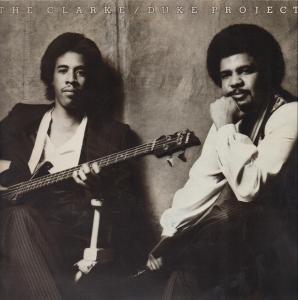
The Clarke/Duke Project

stanley_clarke__george_duke-the_clarke__duke_project(epic)This one really divides people. The Clarke/Duke Project probably could and should have been a lot better given the talent involved and their stellar track record.

But the album shouldn’t be judged by jazz standards – by the early ’80s, these two protagonists of ‘fusion’ realised that jazz/rock had hit a massive dead end.

A fresh approach was called for. Earth, Wind & Fire’s effortless blending of funk, soul, disco, jazz, Latin and rock offered a new direction to all kinds of musicians, including Clarke and Duke.

So, leaving any kind of jazz credibility at the door, our heroes embraced their inner George Clintons, Frank Zappas and Stephen Bishops to make a really weird but occasionally enjoyable album of funk, disco, AOR and cheesy soul balladry (it’s surely up there in the ‘least classifiable albums of the ’80s’ list). In short, this was Stanley and George’s Tin Machine – you were either for or against.

My schoolfriend Seb and I were huge Stanley fans, but even we eyed this with some trepidation when we came across it around 1989. It had a pretty dodgy reputation even by ’80s Stanley standards. It’s certainly neither artists’ best work, but it’s worth a listen.

So, straight in at the deep end. It’s fair to say that most John Coltrane and Dexter Gordon fans will struggle with the ‘Louie Louie’ cover… But Clarke and Duke deliver great solos and the vocal jiving is good value.

Clarke’s ‘I Just Want To Love You’ is a minor disco/soul classic with a great bassline (later appropriated for Kylie’s ‘Spinning Around’). ‘Touch And Go’ is very pretty in a post-‘Sailing’ kind of way while the vapid ‘Sweet Baby’ miraculously delivered a big US hit (#19). The closing ‘Finding My Way’ is effective and quite unique in its way, a kind of pomp-funk/rock epic with a cool descending bridge and interesting structure.

stanley-clarke-george-duke-the-clarke-duke-project-02

JR Robinson’s ultra-solid, ultra-dry drums are very high in the mix and sometimes feel like they need a bit of air. Clarke impresses with a huge range of basses, guitars, sitars and cellos (and some very Santana-ish Piccolo lead bass playing) while Duke sticks mostly to squelchy synth basslines, acoustic piano and an occasional bit of trademark Mini Moog.

The album sounds very stripped back to modern ears and has a slightly ‘demo’ feel to it, but it was a hit. Two further collaborations followed, lasting into the early ’90s.

One thing’s for sure – Stanley and George were great friends until the latter’s death in 2013, and you can really hear it in the music they made together.

Story Of A Song: Bill Bruford’s ‘Palewell Park’ (1981)

The 1980s were a pretty good time to be a songwriting drummer; Sheila E, Phil Collins and Don Henley all flourished, and probably a few more too.

Not that master Yes/King Crimson sticksman Bill Bruford had any particular desire to match their commercial standing as the decade got underway. He was quite happy gaining harmonic knowledge (with the assistance of keyboardist Dave Stewart), making sizeable contributions to the percussion community and composing incredible pieces of music like ‘Palewell Park’.

In a way, it was the culmination of his work with the Bruford group which had released three studio albums between 1978 and 1980, two featuring the brilliant Allan Holdsworth on guitar.

Palewell Park, East Sheen, London

Palewell Park, East Sheen, London

This track has a special resonance for me as Palewell Park was a childhood hangout, site of many great cricket, tennis and football games as well as a fair few teenage hijinks. Bruford apparently lived nearby during the piece’s recording at Surrey Sound in Leatherhead (also the studio The Police used for their first two albums) and wanted to write an ode to the area.

Someone on YouTube very aptly described ‘Palewell Park’ as ‘a contemporary piece for piano and bass’. It doesn’t fit comfortably into any genre, but it’s a pretty remarkable composition coming from the pen of a ‘drummer’, and one who doesn’t even feature on his own composition (Stewart played the piano).

Jeff Berlin, Jon Clark, Dave Stewart, Bill Bruford in 1980

Jeff Berlin, Jon Clark, Dave Stewart, Bill Bruford in 1980

The 26-year-old Jeff Berlin lays down one of the great pieces of post-Jaco bass playing. With just a touch of chorus pedal, he sticks to the pretty treacherous melody in the first half and then stretches out to play a fantastic solo over the changes, a total lesson in melody construction, with no gimmicks.

Next up for Bill was a reunion with Robert Fripp and one of the great albums of the ’80s, King Crimson’s Discipline.

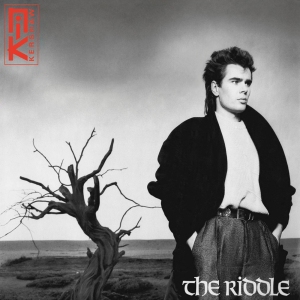
Nik Kershaw: The Riddle

the-riddle-54d854ab5fe83After several years playing guitar in cover bands and fronting East Anglia blue-eyed-soulsters Fusion, Nik Kershaw wrote a few poppy-sounding tracks and suddenly found himself thrust into the solo spotlight.

But he didn’t fool anyone with the snood, fingerless gloves and mullet – it was obvious from the get-go that Nik was a superb musician and songwriter. He had a voice a bit like Stevie Wonder (though my dad rightly identified something Numanoid too), played guitar a bit like Allan Holdsworth and wrote clever, catchy pop songs with prog, metal and funk undercurrents.

He also had some very famous fans in the US including Miles Davis and Herbie Hancock. But his image, dreamed up by some wags in MCA’s marketing department, probably didn’t do him any favours – Smash Hits summed it up perfectly, calling him ‘the thinking man’s Limahl’!

The Riddle is probably his best album. It was recorded pretty quickly to cash in on the unexpected success of his debut Human Racing, though featured a fair amount of post-production courtesy of the excellent Peter Collins who later produced Rush’s Power Windows and had previously worked on Musical Youth’s ‘Pass The Duchie’.

It features a very solid but expressive rhythm section (Elton John sticksman Charlie Morgan and ex-Secret Affair bassist Dennis Smith plus a great guest appearance from Level 42’s Mark King on ‘Easy’). Kershaw’s use of synths was kind of revolutionary, with intriguing sequencer patterns and subtle, almost subliminal pads. He also had invaluable input and some ZTT flash from keyboardist Andy ‘Relax’/’Two Tribes’ Richards throughout the album.

Yes, The Riddle screams the mid-1980s, but every song on it is memorable and has a very distinct flavour. On a songwriting level, Kershaw always knows how to keep things interesting for the listener. ‘Know How’ is a case in point – initially coming across somewhere between Level 42 and Talking Heads, it veers into prog territory with its superb pair of instrumental breakdowns.

Miles apparently recorded a cover of the very pretty ‘Wild Horses’ which has never seen the light of day. Hollywood-baiting ‘City Of Angels’ and eco-themed ‘Roses’ have more than a hint of Steely Dan about them, partly due to the use of the famous Purdie Shuffle, nicely reformatted by Morgan.

‘Wide Boy’ and ‘Don Quixote’ have lots of interesting melodic modulations under their pop sheen. ‘Easy’ is a brilliant band performance and crafty composition with a nutty middle eight, while the closing ballad ‘Save The Whale’ is also musically rich. And though the title track divides opinion, to say the least, check out its two-chords-per-bar middle-eight for a great example of Kershaw’s craft.

The cover photo was taken at Chesil Beach in Dorset. The Riddle peaked at #8 in the UK and went multi-platinum. The lead single was the title track which reached #3 in the UK. ‘Wide Boy’ peaked at #9, ‘Don Quixote’ #10. Three top 10 hits from a sophomore album – pretty damn good.

Nik was massive for approximately 18 months. He played Live Aid in July 1985 but then waited until autumn 1986 to follow up The Riddle – probably a mistake. The screaming girls were growing up fast or moving on to a-ha. He was developing as a musician and songwriter but gaining a much more ‘selective’ appeal, in the words of Spinal Tap’s manager Ian Faith.

Gig Review: Scritti Politti @ The Roundhouse, 5th February 2016

all photos: John Williams Photography

all photos: John Williams Photography

Stage fright is the elephant in the room for some musicians. For every Jimi Hendrix or Madonna there’s an Andy Partridge or Green Gartside, gifted songwriters for whom live performance never felt like their true calling.

And during the opening moments of this hugely enjoyable – even revelatory – Scritti gig, it all threatened to go a bit Pete Tong before a triumphant turnaround.

Despite his extraordinary, instantly recognisable vocals, Gartside has always been somewhat of a reluctant frontman. He started out almost as the default vocalist in a kind of post-punk collective before an extreme onstage panic attack meant that he didn’t play live at all between 1980 and 2006.

But during that enforced exile, he built up one of the most sophisticated, revered and interesting songbooks in British pop. As with Partridge, the break from live performing brought out the best in him and produced classic albums Songs To Remember, Cupid & Psyche ’85 and Provision.

This relatively rare Scritti gig at the legendary Chalk Farm venue was a celebration of a fascinating career, and Gartside was also committed to explaining (almost) all the whys and wherefores of his craft in often hilariously candid fashion.

Scritti Politti 2

You could forgive a remarkably youthful-looking Green his nerves – The Roundhouse was jam-packed, bathed in subtle lighting and beautifully decked out as an all-seater venue in the round. Just entering the auditorium almost led this writer to give out an audible expletive.

But in a way he should have felt right at home – Scritti’s original late-’70s HQ was just around the corner on Carol Street, and Green also revealed that the Young Communist League and men’s group (‘where we would berate ourselves for being men’!) had also been very near the venue.

But back to the stage fright. Before even a note had been played, Green had major guitar strap issues, finding himself unable to get the damn instrument on as the crowd applauded sympathetically. ‘Oh, sh*t… This is why I didn’t play live for 20 years’, he sighed, looking genuinely troubled.

‘The Sweetest Girl’ finally got things underway, the delicious 1981 single described by Gartside as being his attempt to fuse Kraftwerk and Gregory Isaacs.

He revealed that he had even approached those two to collaborate on the song; when he didn’t hear back from the German techno innovators, he subsequently bumped into their co-founder Florian at a Tito Puente gig (of all things), only to be told by the titular German: ‘I hate reggae’!

Gartside indulged in some spirited rapping during ‘Die Alone’ while ‘The Word Girl’ sounded simply fantastic, causing outbreaks of groovy dancing from the very diverse crowd.

Green revealed that the original vocal may have been influenced by looking out of the studio window and seeing a sheep up to its neck in snow during the song’s recording in 1984.

Scritti Politti 3

A spine-tingling ‘Boom Boom Bap’ was described as an ode to ‘beer and hip-hop’, while the delicious ‘Brushed With Oil, Dusted With Powder’ pushed its claim as the greatest ever Green composition, apparently written on one of Joni Mitchell’s guitars given to him by legendary manager Peter Asher. Green also described how the song was ‘started in an LA hotel and finished in a flat above a dentist in Newport, Gwent’.

The raw, spiky ‘Skank Bloc Bologna’ and ’28/8/78′ (with spoken-word additions from Radio 4’s Harriet Cass) sounded like they could have been recorded yesterday, while the live premiere of ‘Asylums In Jerusalem’ was perfect.

A delicious ‘Oh Patti’ also got its live premiere, and ‘Jacques Derrida’ reiterated how similar Scritti and Prefab Sprout’s soundworlds were in the early ’80s, though Green ended it with a passionate rendition of Jeru The Damaja’s ‘Come Clean’. The closing duo of ‘Wood Beez’ and ‘Absolute’ prompted a further outbreak of dancing in the aisles, perfect slices of digital funk with fine keyboards from Rhodri Marsden.

Minor quibbles: onstage sound issues gave Gartside some serious pitching problems, though typically he was completely candid about this, describing his performance as ‘artfully inept’.

But there was never any doubt about how seriously he took his craft: announcing that the band was about to play a medley of unfinished new songs, a man in the front row let out a giggle, prompting Green to pointedly remark: ‘This is very f***ing serious, sir.’

At times, the band sounded brittle (though they would remain anonymous, there being no onstage introduction from Green), even though roughly 30 percent of the output seemed to be coming from backing tapes. But it really didn’t matter – you couldn’t take your eyes off the stage.

There’s simply no one else like Green Gartside in British music: a 60-year-old man fusing hip-hop, reggae, bubblegum pop, low-fi post-punk and superior synth-funk, and pulling it all together with great aplomb. This superbly shambolic gig very much whets the appetite for an upcoming album on Rough Trade.

Spitting Image: We’re Scared Of Bob

In the ’80s, there was no shortage of pop coverage to inspire conversation in the playground, whether it was Boy George’s first appearance on ‘Top Of The Pops’, Michael Jackson’s ‘Thriller’ video or Matt Bianco being verbally abused live on children’s TV.

Of course it really helped that there were only four terrestrial channels to choose from, breeding a feeling of community and sense of occasion.

But one TV show absolutely guaranteed to get the creative juices flowing and rescue many a depressing Sunday evening was ‘Spitting Image’.

Just a cursory look at a show from its mid-’80s peak leaves one stunned at the craftsmanship and production values on offer, especially as they only had a few days to write, build and shoot each episode. There were some good musical spoofs too, composed by Philip Pope, fresh from UK comedy classic ‘Not The Nine O’Clock News’ and his parody band The Hee Bee Gee Bees, who even managed a few hits in the early ’80s.

‘Spitting Image’ also featured some memorable Phil Collins, ZZ Top and Madonna skits, and they even managed to rope Sting in to re-sing this. But ‘We’re Scared Of Bob’ is full of surprises and surely the best spoof. Its sheer potency is still a shock to the system. You also suspect that Sir Gandalf was watching, so unmissable was the programme in the mid-’80s.

Why isn’t there anything like this around now? Oh, lack of money and talent, probably. A show like ‘Spitting Image’ also highlights the paucity of genuinely interesting musical (and public) figures these days.

Mr Big: Addicted To That Rush

Mr_Big_Self-TitledIn the world of late-1980s US rock, guitar virtuosity was the order of the day.

Eddie Van Halen’s massive popularity had ushered in a huge raft of poodle-haired, fleet-fingered plank-spankers such as Zakk Wylde, Marty Friedman and George Lynch.

Though I was very definitely a Van Halen man, and also had a real penchant for Steve Vai and Yngwie Malmsteen, I was always much more into people like Scott Henderson, Jeff Beck and John Scofield than the thousand-notes-per-second boys, brilliant musicians though they undoubtedly were.

But then my friend James Broad played me ‘Addicted To That Rush’ by Mr Big. It had the unmistakable whiff of early Van Halen about it, not least with its double-time groove, similar to ‘Hot For Teacher’ and ‘Satch Boogie’. Guitarist Paul Gilbert was clearly a veritable fire-breather with an incredible facility for high-speed, heavily-chromatic solos, but also had quite an original tone and refreshing sense of humour.

But basically ‘Addicted’ was a flagrant display of muso shock and awe, not just from Gilbert but also ex-Dave Lee Roth bassist Billy Sheehan (how many other HM tracks have had the balls to start with a bass solo?) and drummer Pat Torpey (check out his intricate hi-hat work in the opening section).

The rest of side one from their 1989 debut album was also great. Side two was not so hot though, and I hated their pop breakthrough (‘To Be With You’). But there’ll always be ‘Addicted To That Rush’. We’re rollin’…

Tom Hibbert: ’80s Agent Provocateur

Maggie and Tom, 1987

Maggie and Tom, 1987

The PR boom that had swept the music business in the 1970s really hit its stride in the 1980s.

MTV launched on 1 August 1981 and ensured that artists’ images were just as important as the musical package. In fact, a good image and strong video could sell an artist all over the world without any need to play live.

At the same time, the tabloid press had cottoned on to the power of music biz celebrity; columns like Bizarre and The 3am Girls, both of which featured in The Sun newspaper, were huge successes and reiterated that the public’s appetite for showbiz stories knew no bounds. PR and tabloid journalism were in their heyday, and they could make or break a career.

So thank goodness there was a writer like Tom Hibbert around. He cut through the PR schtick and exposed the chancers, pretenders and prima donnas of the ’80s for what they were, and in the process wrote some of the most pithy and hilarious music articles of all time.

With his shoulder-length hair, ever-present fag/pint, disarmingly faux-naif style and penchant for obscure psych bands, he was always going to be more comfortable in the late-’60s than the preening mid-’80s (apparently he only really rated Iggy Pop, Jerry Garcia, Syd Barrett and Ray Davies from the ‘pop’ world).

Q Magazine, Issue One, October 1986

The first issue of Q, October 1986

Later, with his work on Smash Hits and particularly Q Magazine, he invented a whole new, much-imitated lexicon of music journalism. He would begin pieces with expressions like: ‘Phew, rock’n’roll, eh, readers?’

David Bowie was rechristened as The Dame, Cliff as Sir Clifford Of Richard, Paul McCartney as Fab Macca Wacky Thumbs Aloft and Freddie Mercury as Lord Frederick Lucan Of Mercury.

The gentle p*ss-taking was quite a change from the reverential Melody Maker/Sounds era. When commissioned to write a biography of Billy Joel, Hibbert apparently wrote most of it about Joel’s almost totally unknown psych band, The Hassles, and dismissed the rest of his career in the final chapter!*

Tom hit his stride writing the notorious ‘Who The Hell Do They Think They Are’ articles in Q which generally exposed and belittled the more gullible, self-important celebs of the ’80s, usually from the world of music. He was given a right bollocking by Jerry Lee Lewis after one too many questions about The Killer’s rivalry with Elvis:

‘Don’t nit-pick me, boy! You mention Elvis to me again, you keep digging me about that and I’m gonna kill you, so help me God!’

Ringo_Starr_(2007)

He pulled off a similar trick with Ringo, ignoring instructions from the PR and asking repeated questions about The Beatles. Mr Starkey could contain himself no longer, bawling:

‘You’re talking sh*t!’

Tom also elicited some seriously weird recollections from Chuck Berry and Yoko, and managed to nail topless-model-turned-pop-star Samantha Fox, Bananarama, Bros and Gary Glitter with his disarming, give-’em-enough-rope-to-hang-themselves style.

He flew to Brazil and tracked down notorious train robber/friend of the Sex Pistols Ronnie Biggs, and – perhaps predictably – got along quite well with him.

At the height of Q’s popularity in 1987, Tom was given the dream gig: an audience with Thatcher. She obviously thought this would be a golden chance to woo the nation’s ‘youth’ but came nicely unstuck when she gleefully revealed that her favourite singer was Cliff and favourite song ‘(How Much Is) That Doggie In The Window’. You can read the interview here.

41+96bAhW-L._BO1,204,203,200_

Tom also interviewed actor Rupert Everett in 1987, at a time when the thespian was trying to reposition himself as a credible pop singer. Hibbert’s preamble to the interview ran thus:

He wears the soiled leather jacket and the shades (on this drab and rainy day) of the rock star, but his attempt at the street-damaged look is foiled somewhat by the poise and delivery of the effete and English ac-tor. Close your eyes as he talks and you might imagine him to be dressed in a velveteen smoking jacket, and that it were a delicate ebony cigarette holder he was chewing on rather than a lettuce and tomato sandwich…

Later interviews with Status Quo, Boy George, Roger Waters, Television and Jonathan Richman make me chuckle to this day, and some of them are in this collection.

Son of esteemed historian Christopher Hibbert, Tom was born and brought up in Henley-on-Thames in Oxfordshire. His early career involved writing for home-improvement periodicals and playing guitar in a few unheralded bands.

Sadly, Tom died in September 2011 at the age of just 59, his rather unhealthy lifestyle finally catching up with him. But as John Lydon told Tom during a Q interview in 1995, ‘You’re rather squalid, but I enjoy that. Ha-ha-ha-ha!’

*I need to verify that…

Art Pepper: ‘Our Song’

After one of the toughest lives in jazz history, Art Pepper was astonished to still be around in the early ’80s.

He rallied for one last classic; ‘Our Song’ was recorded on 4th September 1980 at Fantasy Studios in Berkeley, California.

It doesn’t feel like an ’80s track at all – it’s more like the closing titles to an early ’70s Robert Altman movie or an alternative theme from Bernard Herrmann’s ‘Taxi Driver’ sessions.

Many commentators think that, on his day, Pepper’s alto sax playing rivalled Charlie Parker’s, and he demonstrates his mastery here with a real tour de force.

As a musical farewell, it’s a potent statement. Pepper believed it was the best thing he had ever done and the culmination of his life’s work.

‘Our Song’ also seems to be a personal goodbye and heartfelt tribute (apology?) to Laurie, this third wife and the last love of his life. She contributed to his jaw-dropping autobiography ‘Straight Life’ and has also recently published her own memoir about her life with Art.