Greatest Music Quotes Of The 1980s #3: Bob Geldof Special

It’s fair to say that Bob Geldof’s efforts to kickstart Band Aid (‘Do They Know It’s Christmas’), USA For Africa (‘We Are The World’) and Live Aid were full of tension, drama and bruised egos.

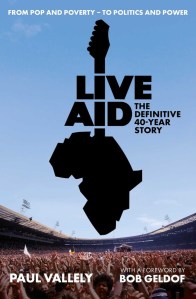
And as each year goes by, more stories are coming out about that 1984/1985 era (many feature in the superb recent doc ‘The Greatest Night In Pop’ and Paul Vallely’s book ‘Live Aid: The Definitive 40-Year Story’), and more and more it seems like it was a watershed time for 1980s pop.

There are sundry tales of managers trying to get their artists higher up the bill at Live Aid (and trying in vain to get soundchecks…), egos running wild (especially in the USA), but also gratifying tales of altruism and friendship.

So a lot of people had a lot of entertaining things to say. Here are some choice quotes from the era, with a cast of characters including Geldof, David Bowie, Freddie Mercury, Bob Dylan, Michael Jackson, Ray Charles, Diana Ross and Paul Simon.

‘It sounds like f*cking “Z Cars”.’
Bob Geldof upon first hearing Midge Ure’s ‘Christmas’ synth melody in the middle of ‘Do They Know It’s Christmas’

‘You’re a f*cking millionaire and you want free food? There’s a f*cking chip shop on the corner. Go and buy your own lunch.’
Bob Geldof’s response to a star asking if there would be catering during the recording at Sarm West in Notting Hill

‘A huge voice erupted out of this little guy. I was standing next to Bono and I jumped. It felt as if I was standing next to an opera singer. He had the same massive power.’
Midge Ure on hearing Bono’s ‘Well, tonight thank God it’s them instead of you!’ line

‘I can’t go until I see Phil Collins play.’
Culture Club’s Jon Moss explaining why he was hanging around for so long in the studio

‘It’s pathetic but the price of a life this year is a piece of plastic with a hole in the middle.’
Bob Geldof tells Radio 1 DJ Simon Bates why people should buy the single

‘It’s really great what you’re doing. We want to do that over here. Will you come over?’
Michael Jackson rings Geldof from LA

‘It was a slap in the face. I know she felt bad. They didn’t think she could sing. It broke her heart.’ Nile Rodgers on Madonna not getting an invite for ‘We Are The World’

‘That’s like the Statue Of Liberty walking in.’
Billy Joel watches Ray Charles entering A&M Studios

‘Daryl, I’m your biggest fan. Would you sign my music for me?’
Diana Ross to Daryl Hall during the recording

‘Say what?! It’s three o’clock in the goddamn mornin’ – I can’t even sing in English no mo’! Ring the bell, Quincy, ring the bell!’
Ray Charles loses patience with Stevie Wonder’s attempts to teach the assembled vocalists a Swahili chant

‘That wasn’t any good.’
Bob Dylan after the vocal take that producer Quincy Jones deemed the keeper

‘Nice, Dylan.’
Bruce Springsteen to Bob after the aforementioned take

‘If it all goes well, no one will ever hear about you. If it’s a disaster, you’ll be famous.’
Harvey Goldsmith’s final words to Live Aid band organiser Pete Smith at the end of his interview

‘Oh Bobsy, I’m not so sure. I just don’t think it’s the right thing for us.’
Freddie Mercury’s initial response to Geldof about Queen playing at Live Aid

‘Is Geldof involved? I’m only doing the Geldof thing.’
David Bowie to his PR Bernard Doherty after getting TWO invitations to do charity work in 1985

‘You’ll never get Keith to agree. Cos Keith don’t give a f*ck.’
Bill Wyman to Geldof on his chances of getting the Stones together for Live Aid

‘Bob picked the wrong year, the wrong decade actually, to ask the Rolling Stones to do anything.’
Bernard Doherty on getting the Stones to appear

‘I took the idea from the television programme “Sunday Night At The London Palladium” which had a revolving stage at the end with all the performers of that week saying goodbye.’
Bob Geldof on the Live Aid revolving stage

‘I’ll do it. But Roger (Daltrey) will only do it if Kenney (Jones) doesn’t play. And John (Entwistle) will only do it if Kenney DOES play.’
Pete Townshend to Geldof on getting The Who back together for Live Aid – Kenney Jones had been their drummer since the death of Keith Moon

‘If The Who appear, we know we will get an additional million pounds of revenue. Every pound we make will save a life. Please, Roger, do the f*cking show.’
Bob Geldof pleads with Daltrey to do Live Aid – he did, and Kenney did appear on drums

‘Well, pull out, dude. You announce it, though.’
Bob Geldof to Bryan Ferry who was angry that he had been announced for Live Aid without even agreeing to participate

‘Oh f*ck. I didn’t think you could actually fix that!’
Phil Collins’ manager Tony Smith on being told by Geldof that Phil would play in both London and Philadelphia (he would also drum with Led Zeppelin at the latter gig)

‘We had this unbelievable discussion with Michael Jackson’s people. We were saying this is to help people in Africa and he just wasn’t interested.’
Harvey Goldsmith on trying to get Jackson to play Live Aid

‘They couldn’t give a f*ck, Bob.’
Quincy Jones whispers to Geldof his summation of why Diana Ross, Michael Jackson, Prince and Stevie Wonder failed to appear at Live Aid

‘Call NASA, Harvey!’
Bob Geldof to Harvey Goldsmith, getting excited about sending Mick Jagger up in a space shuttle to duet with Bowie at Wembley

‘Sorry, sir. It takes six months for us to plan to do something like that.’
The man from NASA – he say no…

‘The Beatles can’t be reformed. John is dead.’
Bob Geldof kiboshes rumours that he’s been trying to reform The Beatles for Live Aid

‘I don’t care how many songs you want me to do, but I’m giving up one to introduce this on stage or I’m not doing the show.’
David Bowie on the CBC video which married harrowing images of starving Ethiopians with The Cars’ ‘Drive’

‘I thought: either I’ve done something really clever or really stupid…’
CBC’s Colin Dean on his edit of the above-mentioned video

‘I’m not going to have someone like Bill Graham talk to me in the way he’s talking to me. I won’t work with this guy. I’m sorry.’
Paul Simon tells Geldof why he’s pulling out of Live Aid

‘I’ve been on tour forever. We’ve just got married and if I don’t give her a honeymoon, then it’ll be a divorce!’
Bruce Springsteen tells Geldof why he won’t play Live Aid

‘Well, f*cking pull out. No one’s getting a soundcheck. I’m going back to bed.’
Bob Geldof to U2 manager Paul McGuinness on the eve of Live Aid – the latter had threatened to withdraw U2 if they didn’t get a soundcheck

‘I don’t think I can do this. It’s been six years since I’ve done anything.’
Paul McCartney has a crisis in the car on the way to Live Aid – his wife’s response was: ‘Shut up. You’re doing it.’

‘She asked me whether I could get her on. I told her to just turn up.’
Phil Collins remembers meeting Cher on the Concorde during his flight from London to Philadelphia

‘I have terrible memories of it all going wrong. Poor David (Gilmour), his guitar wasn’t working for the first couple of songs. With his first hit, the drummer put his stick through the drum skin. Then my mic wasn’t working, which for a singer is a bit of a handicap. A roadie ran on with another mic, so then I was holding two mics taped together and I wasn’t really sure which one to sing into.’
Bryan Ferry looks back on his Live Aid performance

‘Looking back, I think we were all a bit overexcited and I remember coming off and thinking it was very scrappy.’
Brian May on Queen’s performance

‘Queen were absolutely the best band of the day.’
Bob Geldof

‘I walked in and just stood there, and we looked at each other and he burst into tears. I’ve never seen him do that, before or since.’
Bernard Doherty on David Bowie after his Live Aid performance

‘He wouldn’t let go of my hand. He said, “You’re that lovely boy from Boomtown Rats, aren’t you?” I said, “No, I’m the lovely boy from Ultravox…”’
Midge Ure on Freddie Mercury at Live Aid

‘I ain’t taking shit off today. You might hold it against me ten years from now…’
Madonna to the Philadelphia crowd – pre-fame topless photos had just been published in the newspapers

‘No, it doesn’t go like that!’
Jimmy Page to Phil Collins backstage at Philadelphia before performing with Led Zeppelin – he had requested that Collins play air drums through ‘Stairway To Heaven’ to prove that he knew the song

‘The whole thing was a disaster, really. Robert wasn’t match-fit with his voice and Jimmy was out of it, dribbling. If I could have walked off, I would have.’
Phil Collins on playing with Led Zeppelin

‘She came out and literally blew the console apart!’
Philadelphia monitor man Dave Skaff on Patti Labelle’s performance at Live Aid

‘This is your Woodstock, and it’s long overdue…’
Joan Baez to the Philadelphia crowd
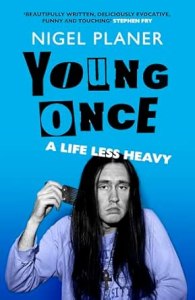
Book Review: Young Once (A Life Less Heavy) by Nigel Planer

With perfect timing, towards the end of his excellent memoir, Nigel Planer reminds us that he once played Peter Mandelson in the 2011 ‘Comic Strip Presents…’ film ‘The Hunt For Tony Blair’.

The casting makes perfect sense but a key takeaway from his book is that Planer is hardly the mendacious or Machiavellian sort – by his own admission, ‘haphazard’ and ‘oversensitive’ would probably cover it.

Ben Elton nicknamed him ‘Niggle Complainer’ and he confesses that Neil –  his famous ‘Young Ones’ character – was mainly based upon himself.

But ‘Young Once’ generally refreshes the parts other actor autobiographies can’t reach not just because it’s so well written – he’s a playwright, novelist, poet and songwriter too – but due to its unflinching honesty and sheer variety of ideas.

Planer details his somewhat bohemian upbringing in southwest London, early life as a slightly naive university dropout and long-term patient at the Hospital of Tropical Diseases, before finding his mojo at drama school, developing the Neil character and hooking up with comedy ace faces Alexei Sayle, Rik Mayall, Peter Richardson and Ade Edmondson during the punk era.

The book really gathers momentum at this point, when music and comedy were dovetailing and a political conscience was de rigueur.

He’s completely honest about his sometimes tricky relationship with Richardson, and expresses regret about not doing more work with him, Ade and Rik, outside of the two superb ‘Four Men’ Comic Strip films.

There’s some touching stuff about Mayall’s tragic deterioration and the effect it had on his friends, and lots about the filming of other classic Comic Strip movies. Meanwhile Neil and ‘The Young Ones’ make Planer famous, a fame that hits him hard.

He’s amazed that his TV appearance in ‘Shine On Harvey Moon’ gets three times as many viewers as ‘The Young Ones’ but no one ever comments on the former.

Around the same time he completely fails to recognise David Bowie during the Mexican shoot of ‘Yellowbeard’, describing a ‘lithe man with blond hair’ by the hotel pool whose movements are ‘deliberate and poised’.

And then there’s the revelation that Bowie got Graham Chapman injured during the shoot thanks to an ill-advised, late-night Jeep ride.

But readers of this site will probably particularly enjoy the long section on music. Planer’s pressganged by Bob Geldof into attending the Band Aid recording as Neil, and we get the juicy muso details of recording ‘Hole In My Shoe’ – ably abetted by National Health/Bill Bruford/’It’s My Party’ hitmaker Dave Stewart – and subsequent ‘Top Of The Pops’ appearances.

There’s funny stuff about Planer and Richardson finding their comedy/rock double act supporting Dexys Midnight Runners, AC/DC and Motorhead, amazed to find the latter reading books backstage, and introducing a nascent Curiosity Killed The Cat in a tiny Chelsea club (Crazy Larry’s) wearing only pyjamas and dressing gown. We also get the full story of Bad News’s superb performance at Castle Donington in 1986…

It’s oft forgotten that Planer has enjoyed a formidable stage career too, and he discusses work on ‘Chicago’, ‘We Will Rock You’ and ‘Evita’, plus how he invented his comic alter ago Nicholas Craig, the ultimate luvvie.

‘Young Once’ is a must for anyone who’s interested in alternative comedy and ‘The Young Ones’ era, plus anyone who’s enjoyed Nigel’s work as a ‘serious’ actor (though surprisingly there’s nothing about working with Dennis Potter), writer or musician.

It’s a great London book too – Planer’s adventures take him from Richmond and Twickenham to Notting Hill (where he has a memorable dinner with John Cleese) and a drug-addled Chelsea Harbour.

There are also some quite profound life lessons – it’s ‘an object lesson in why you should never give up’, as the blurb puts it. An enjoyable, intelligent read, ‘Young Once’ is highly recommended.

USA For Africa: We Are The World @ 40

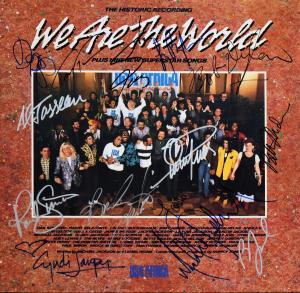
Released 40 years ago this month and officially the fastest-selling single in American music history, USA For Africa’s ‘We Are The World’ shifted over 20 million copies and raised a huge amount of money for African famine relief.
Co-written by Michael Jackson and Lionel Richie during a few sessions at the former’s house in Encino, the song divides opinion but only the hardest heart could fail to be moved by its recording (even if one can definitely feel the vibe of some major agent/star power – no arriving in the manager’s battered old car for this lot…).

It brought together a fairly astonishing cast list of the great and good. And, inadvertently, it also arguably represented a last gasp for classic 1980s R’n’B and yacht rock.

The basic track was recorded at Kenny Rogers’ Lion Share Studios on 22 January 1985 with king-of-the-cross-stick John ‘JR’ Robinson on drums, bassist Louis Johnson and pianist Greg Phillinganes, closely monitored by a huge press corps, co-producers Quincy Jones and Michael Omartian and engineer Humberto Gatica. According to Robinson, all the musicians were sight-reading a chart and a click track was used, and they didn’t do more than two takes.

A few days later, Lionel sat down with Quincy and vocal arranger Tom Bahler to prep who would sing which lines (the decision was also made to mainly record vocals live and ‘in the round’ with no or at least very few ‘punch-ins’, unlike ‘Do They Know It’s Christmas’). All the major vocalists were then sent a copy of the basic track featuring Jackson’s guide vocal and with an enclosed letter from Lionel.

The featured singers then assembled at A&M Studios at around 9pm on Monday 28 January, most arriving after the American Music Awards (which Richie hosted). Notable absentees: Madonna (who was apparently bumped in favour of Cyndi Lauper), Prince (check out Duane Tudahl’s superb book for the details), George Benson, Dolly Parton, Donna Summer, Michael McDonald, Pat Benatar, Rod Temperton, Stevie Nicks, Joni Mitchell, Billy Idol? And is it odd that Smokey Robinson didn’t sing a solo line?

The complete footage of the recording session is still fascinating. We see how some of the biggest names in music history found different ways of preparing. Steve Perry waits for his line with eyes shut, looking down, listening intently. Diana Ross does just the opposite.

Bob Geldof gives a stirring pep talk and Stevie Wonder brings in two Ethiopian women to address the singers, moving many to tears. It’s hard not to be touched by Stevie, Kenny Rogers, Dionne Warwick, Diana, Steve Perry, Ray Charles and Cyndi Lauper’s vocals. But Harry Belafonte, Ray Charles, Bob Dylan and Bruce Springsteen seem to get the most respect from the assembled stars.

Other observations: Brucie – who had finished the latest leg of the Born In The USA tour the night before – looking like Judd Nelson in ‘The Breakfast Club’. Al Jarreau struggling throughout. Lionel the team player. Stevie giggling like a naughty schoolkid when Quincy gets annoyed. James Ingram hiding behind Kenny Rogers after a boo-boo.

Paul Simon twice saying to Rogers: ‘Can I help?’ Lauper sharing vocal tips with Kim Carnes. MJ holding hands with Diana and Stevie. Quincy and Stevie rehearsing with Bob Dylan. Stevie and Ray Charles using their braille machine. Quincy reading the score as he conducts the soloists, and his witty asides: ‘Who you gonna call?’ etc.

It looks like they recorded the first half of the song first (up to and including Daryl Hall) and then spent some time on the middle eight with Huey Lewis, Lauper and Carnes.

How does it sound now? Phillinganes’ piano playing is a pleasure to hear, typically tasty and gospel-inflected. But the track is inundated with synths – no less than four players are credited, including David Paich and Steve Porcaro from Toto – and probably why it reminded many of a Pepsi ad.

And it’s odd that the song features no guitar, though Prince offered to play a solo – Quincy reportedly told Prince’s manager Bob Cavallo: ‘I don’t need him to play guitar, we got f*ckin’ guitars’!

Book Review: Adventures In Modern Recording by Trevor Horn

It was surely only a matter of time before arguably the most important producer of the last 50 years put pen to paper, but Trevor Horn’s memoir ‘Adventures In Modern Recording’ was still one of the nicest surprises of 2022.

The opening section outlines his upbringing in the tough, industrial North East of England, and then each chapter is centred around one key track that made his name as a producer, from The Buggles’ ‘Video Killed The Radio Star’ to Seal’s ‘Crazy’.

We trace Horn’s early days as a Beatles and Dylan fanatic, self-taught guitarist (his musician father buys him a knackered old four-string which gets broken and is never replaced) and upright bass player in the school orchestra.

There’s the constant fear of going down the mines, a fate that had befallen most of his relatives. Young Trevor eventually has to move in with his grandparents (sharing a bed with Uncle John), though they are supportive of his musical talent.

Horn moves to Leicester and starts playing double bass with big bands whose repertoire includes pop covers and light jazz. By this time, he has become an ace sight-reader, something that he values throughout his career.

He relocates to Blackpool to take up a residency with the band, his dad dropping him off with the words: ‘Well, you’re on your own now, son. You just watch it.’ Horn then hits London to play with a band called Canterbury Tales and pick up various function gigs.

As disco takes hold, Horn finds himself on the studio scene, getting a regular gig with Tina Charles and ‘fixing’ a lot of duff songs, including Leicester City’s ‘This Is The Season For Us’. The penny drops – he suddenly realises he’s a record producer.

This becomes his driving force as he moves away from the bass and meets Jill Sinclair, studio manager of SARM West (formerly Island’s Basing Street studio) and soon to be both his manager and wife. We get the fascinating story of Buggles’ ‘Video Killed The Radio Star’, Horn literally having to construct a hit out of various disparate elements.

We learn that Horn sacks ABC’s bass player Mark Lickley just before the recording of Lexicon Of Love (Horn reports that U2 later got wind of this and refused to work with him!) – he is fairly ruthless as a young producer, always with Jill in his corner, but is now repentant.

There’s a very funny chapter on working with Malcolm McLaren and The Supreme Team on Duck Rock and a toe-curling account of cooking up Yes’s US #1 single ‘Owner Of A Lonely Heart’.

We get the inside story on making Frankie’s ‘Relax’ and Holly Johnson’s court case plus Horn’s involvement with the 12” version of ‘Do They Know It’s Christmas’. Horn reports that when he first meets Bob Geldof, the Boomtown Rats frontman immediately tells him he preferred Bruce Woolley’s version of ‘Video Killed The Radio Star’ to the Buggles’. Horn reacts thus: ‘What a twat. After filing him under “Rude Fucker”, I moved on…’ (They later made up.)

There are tales of painstakingly piecing together ‘Slave To The Rhythm’, Seal turning up for his 2004 Wembley charity gig (see below) at the last minute, and a trained Special Branch dog making an immediate bee-line for his bag in the dressing room. You can read the book for the funny punchline.

‘Adventures In Modern Recording’ is the very definition of the muso page-turner. Full of interesting titbits and amusing gossip, you need it if you have even the slightest interest in 1980s and 1990s pop.

Spitting Image: We’re Scared Of Bob

In the ’80s, there was no shortage of pop coverage to inspire conversation in the playground, whether it was Boy George’s first appearance on ‘Top Of The Pops’, Michael Jackson’s ‘Thriller’ video or Matt Bianco being verbally abused live on children’s TV.

Of course it really helped that there were only four terrestrial channels to choose from, breeding a feeling of community and sense of occasion.

But one TV show absolutely guaranteed to get the creative juices flowing and rescue many a depressing Sunday evening was ‘Spitting Image’.

Just a cursory look at a show from its mid-’80s peak leaves one stunned at the craftsmanship and production values on offer, especially as they only had a few days to write, build and shoot each episode. There were some good musical spoofs too, composed by Philip Pope, fresh from UK comedy classic ‘Not The Nine O’Clock News’ and his parody band The Hee Bee Gee Bees, who even managed a few hits in the early ’80s.

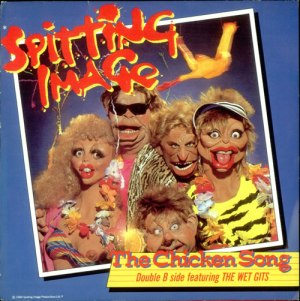
‘Spitting Image’ also featured some memorable Phil Collins, ZZ Top and Madonna skits, and they even managed to rope Sting in to re-sing this. But ‘We’re Scared Of Bob’ is full of surprises and surely the best spoof. Its sheer potency is still a shock to the system. You also suspect that Sir Gandalf was watching, so unmissable was the programme in the mid-’80s.

Why isn’t there anything like this around now? Oh, lack of money and talent, probably. A show like ‘Spitting Image’ also highlights the paucity of genuinely interesting musical (and public) figures these days.