
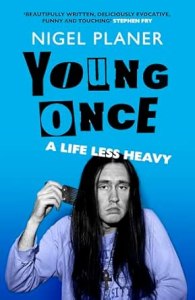
 With perfect timing, towards the end of his excellent memoir, Nigel Planer reminds us that he once played Peter Mandelson in the 2011 ‘Comic Strip Presents…’ film ‘The Hunt For Tony Blair’.
The casting makes perfect sense but a key takeaway from his book is that Planer is hardly the mendacious or Machiavellian sort – by his own admission, ‘haphazard’ and ‘oversensitive’ would probably cover it.
Ben Elton nicknamed him ‘Niggle Complainer’ and he confesses that Neil – his famous ‘Young Ones’ character – was mainly based upon himself.
But ‘Young Once’ generally refreshes the parts other actor autobiographies can’t reach not just because it’s so well written – he’s a playwright, novelist, poet and songwriter too – but due to its unflinching honesty and sheer variety of ideas.
Planer details his somewhat bohemian upbringing in southwest London, early life as a slightly naive university dropout and long-term patient at the Hospital of Tropical Diseases, before finding his mojo at drama school, developing the Neil character and hooking up with comedy ace faces Alexei Sayle, Rik Mayall, Peter Richardson and Ade Edmondson during the punk era.
The book really gathers momentum at this point, when music and comedy were dovetailing and a political conscience was de rigueur.
He’s completely honest about his sometimes tricky relationship with Richardson, and expresses regret about not doing more work with him, Ade and Rik, outside of the two superb ‘Four Men’ Comic Strip films.
There’s some touching stuff about Mayall’s tragic deterioration and the effect it had on his friends, and lots about the filming of other classic Comic Strip movies. Meanwhile Neil and ‘The Young Ones’ make Planer famous, a fame that hits him hard.
He’s amazed that his TV appearance in ‘Shine On Harvey Moon’ gets three times as many viewers as ‘The Young Ones’ but no one ever comments on the former.
Around the same time he completely fails to recognise David Bowie during the Mexican shoot of ‘Yellowbeard’, describing a ‘lithe man with blond hair’ by the hotel pool whose movements are ‘deliberate and poised’.
And then there’s the revelation that Bowie got Graham Chapman injured during the shoot thanks to an ill-advised, late-night Jeep ride.
But readers of this site will probably particularly enjoy the long section on music. Planer’s pressganged by Bob Geldof into attending the Band Aid recording as Neil, and we get the juicy muso details of recording ‘Hole In My Shoe’ – ably abetted by National Health/Bill Bruford/’It’s My Party’ hitmaker Dave Stewart – and subsequent ‘Top Of The Pops’ appearances.
There’s funny stuff about Planer and Richardson finding their comedy/rock double act supporting Dexys Midnight Runners, AC/DC and Motorhead, amazed to find the latter reading books backstage, and introducing a nascent Curiosity Killed The Cat in a tiny Chelsea club (Crazy Larry’s) wearing only pyjamas and dressing gown. We also get the full story of Bad News’s superb performance at Castle Donington in 1986…
It’s oft forgotten that Planer has enjoyed a formidable stage career too, and he discusses work on ‘Chicago’, ‘We Will Rock You’ and ‘Evita’, plus how he invented his comic alter ago Nicholas Craig, the ultimate luvvie.
‘Young Once’ is a must for anyone who’s interested in alternative comedy and ‘The Young Ones’ era, plus anyone who’s enjoyed Nigel’s work as a ‘serious’ actor (though surprisingly there’s nothing about working with Dennis Potter), writer or musician.
It’s a great London book too – Planer’s adventures take him from Richmond and Twickenham to Notting Hill (where he has a memorable dinner with John Cleese) and a drug-addled Chelsea Harbour.
There are also some quite profound life lessons – it’s ‘an object lesson in why you should never give up’, as the blurb puts it. An enjoyable, intelligent read, ‘Young Once’ is highly recommended.
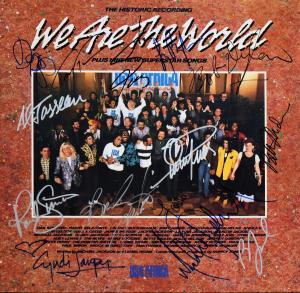 Released 40 years ago this month and officially the fastest-selling single in American music history, USA For Africa’s ‘We Are The World’ shifted over 20 million copies and raised a huge amount of money for African famine relief.
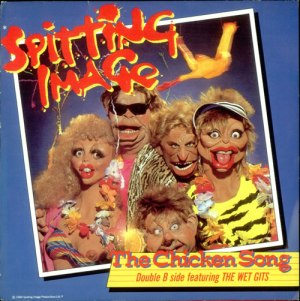 In the ’80s, there was no shortage of pop coverage to inspire conversation in the playground, whether it was Boy George’s first appearance on ‘Top Of The Pops’, Michael Jackson’s ‘Thriller’ video or Matt Bianco being verbally abused live on children’s TV.
  movingtheriver.com