The Second British Invasion hit its imperial phase 40 years ago today, a week after Newsweek had put Annie Lennox and Boy George on its cover.
Off the back of Eurythmics’ ‘Sweet Dreams’ hitting #1 in the US during September 1983, ‘Here Comes The Rain Again’ peaked at #4 at the beginning of February 1984.
In the same week, Culture Club’s ‘Karma Chameleon’ hit #1, their only American chart-topper to date. The band then won Best New Artist at the 1984 Grammy Awards on 28 February, Boy George giving one of the most famous music-award thank-yous of all time:
Regarding the Newsweek photoshoot, George later reported in his autobiography ‘Take It Like A Man’: ‘I heard Annie telling the make-up artist Lynne Easton not to make her look like Boy George. Annie was my female counterpart, the tomboy to my tomgirl. I enjoyed the irony of my being photographed with her; I was the fan made good, even if she didn’t want Boy George eyebrows.’
Both Culture Club and Eurythmics then toured the US during April 1984, the latter enjoying a famous residency at The Ritz in New York City. Did you see either of them live in ’84? Let us know your memories below.
Like most good ideas, it was a deceptively simple one: music radio, but on TV.
When the Warner Bros./American Express-bankrolled MTV (Music Television) launched 40 years ago this month, kicking off with The Buggles’ ‘Video Killed The Radio Star’, the music business was in a post-Saturday Night Fever slump.
But global record sales doubled between 1981 and 1990. Like it or hate it, MTV had a huge role to play. Its story also has fascinating echoes of the music business in the 2020s. But how did it revolutionise the industry so quickly?
In the early ’80s, video-making was a veritable Wild West, an almost-anything-goes environment. There were undoubtedly some shenanigans which wouldn’t win any #woke awards these days but, interestingly, it was predominantly women who ran video shoots, as producers and production designers.
Though their offices were based in New York, MTV was only initially available in the Midwest and suburban areas, as these were the places that had cable laid (leading to a veritable industrial revolution after the iconic ‘I Want My MTV!’ promo spots). Sonically, it was also important that MTV insisted on stereo audio from day one.
The localisation of MTV led to a big grassroots following for bands, particularly British ones, almost overnight. It also led to record companies getting very granular with sales; they paid closer attention, watching with interest if a band took off in one area. Labels started to take MTV very seriously indeed.
Then there was the Second British Invasion: a whole legion of young British acts (ABC, Flock Of Seagulls, Eurythmics, Culture Club, Cure, Billy Idol, Bananarama etc.) emerged in the early 1980s who took to videos like a duck to water.
They wowed Middle America, helped enormously by gifted Brit directors such as David Mallet (whose groundbreaking work on ‘The Kenny Everett Video Show’ from 1978 to 1980 ushered in many music-video tropes), Julien Temple, Steve Barron, Godley & Creme, Nigel Dick, Don Letts and Tim Pope.
But, in a curious echo of the current streaming craze, it seems the major labels were not prepared for the video revolution. They didn’t understand it and were suspicious of giving their content away for free. So they did what they usually do: shafted the artists. Video budgets became recoupable fees that came straight out of the artists’ profits. Artists were to all intents and purposes paying for their own videos.
The rise of MTV also meant that now the emphasis was on killer tracks rather than albums. It was a big problem for some acts, and the 1980s became synonomous with one-hit wonders. Rolling Stone and the trade magazines regularly trashed MTV in its first few years, and David Bowie questioned the lack of Black artists amidst frequent charges of racism.
But, by 1984, everything had changed. In the bumper year for Michael Jackson, Bruce Springsteen, Prince, Lionel Richie, Cyndi Lauper, Tina Turner and Madonna, it was clear that MTV was the tail wagging the dog. The naïve, experimental era was over. Post-‘Thriller’, more and more money was being thrown at videos and every director wanted to put their stamp on the material.
Also, by 1984, thanks to advertising revenue, MTV’s margins were huge. They were dictating to record companies, not the other way round. MTV didn’t have to pay royalties to artists or labels for showing videos. There was no ‘playlist’ per se, so they could pick and choose what they played.
It couldn’t last. The big major labels demanded a royalty to play their videos in 1984, threatening withdrawal of their products, and they eventually got it.
The first few hours of MTV’s launch day is a fascinating watch, showing how rooted in the 1970s it was when it started out, featuring REO Speedwagon, Stevie Nicks, Carly Simon, Gerry Rafferty, Todd Rundgren, The Buggles, Lynyrd Skynyrd (and TWO videos each of Pat Benatar, Split Enz and Rod Stewart!) and showing the dearth of decent contemporary videos.
The gauntlet had been laid down and it didn’t take long for some very creative people to pick it up. Next time: the videos that made MTV during its first five years on the air.
Further reading: ‘The Speed Of Sound’ by Thomas Dolby
Noel Coward famously noted the strange potency of ‘cheap’ music.
There was certainly a lot of cheap, potent music around in the 1980s.
But as the nostalgia industry has grown, so has the dossier of seemingly ‘untouchable’ ’80s pop songs, tracks that are staples of daytime radio but, to many ears, lack distinctive grooves, beguiling melodies or interesting hooks.
If you were being cruel, you might say it’s music for people who don’t really like music. And, weirdly, it mostly comes from established, experienced campaigners who have a lot of other strings to their bow. But we only ever seem to hear one or two of their songs.
Here are those overplayed tracks that always have me reaching for the ‘off’ switch but have retained a weird grip on radio programmers for over 30 years. We consign them to Room 101, here and now, never to be heard again…
Dire Straits: ‘Walk Of Life’/’Money For Nothing’
Yazz: ‘The Only Way Is Up’
King: ‘Love And Pride’
Whitney Houston: ‘I Wanna Dance With Somebody’
Tina Turner: ‘Simply The Best’
The Beautiful South: ‘Song For Whoever’
Spandau Ballet: ‘Through The Barricades’
Dream Academy: Life In A Northern Town
Anything by The Proclaimers
Anything by Texas
Chris Rea: ‘The Road To Hell’
Sade: ‘Your Love Is King’/’Smooth Operator’
Steve Winwood: ‘Higher Love’
Mike And The Mechanics: ‘The Living Years’
Anything by Fleetwood Mac
The Cars: ‘Drive’
Mental As Anything: ‘Live It Up’
Soul 2 Soul: ‘Back To Life’
Anything by U2 apart from ‘Pride (In The Name Of Love’)’ or ‘The Unforgettable Fire’
Cyndi Lauper: ‘Time After Time’
Depeche Mode: ‘Personal Jesus’
Talking Heads: ‘Road To Nowhere’
Tracy Chapman: ‘Fast Car’
Anything by Tom Petty
Simply Red: ‘Holding Back The Years’
Prince: ‘When Doves Cry’
Womack & Womack: ‘Teardrops’
Anything by Duran Duran except ‘Notorious’ or ‘Skin Trade’
Studio technology was blossoming fast and there was constant temptation (and pressure?) to come up with new sounds. Fairlights, Emulators, Synclaviers, gated snare drums: there had never been more ways to skin a cat.
But woe betide the ’80s popster who neglected the basic tenets of songcraft; the trick was coming up with memorable bits that fitted seamlessly into a track and bore repeated listening.
Thankfully, for every what-does-this-button-do novelty, there was a genuinely innovative, memorable pop moment, and some great instrumental solos to boot. So here’s a compendium of good bits from the 1980s, details that mark the decade out as a unique musical era. The rules: one artist per slot and every song has to have made the UK or US top 40 singles chart, or both…
41. Ian Dury’s ‘…and!’ during his monologue/introduction at the start of ‘I Wanna Be Straight’
40. Helen Terry’s backing vocals on Culture Club’s 1984 hit ‘It’s A Miracle’.
39. The spoken word bit in SOS Band’s ‘Weekend Girl’.
38. Nigel Kennedy’s violin solo on Paul McCartney’s ‘Once Upon A Long Ago’.
37. Greg Phillinganes’ synth bass on Donna Summer’s ‘Love Is In Control (Finger On The Trigger)’, especially the ‘squelch’ at 2:53 below:
36. Lee Thompson’s sax in the second verse of Madness’s ‘My Girl’
35. Marc Almond’s spoken-word line in Soft Cell’s ‘Say Hello Wave Goodbye’
34. Mel Gaynor’s volcanic snare-drum fill after the breakdown in Simple Minds’ ‘Alive And Kicking’
There’s a similar eruption in ‘Don’t You Forget About Me’, but this one wins out for sheer audacity. I wonder what ‘anti-muso’ co-producer Jimmy Iovine had to say about it…
33. The fade of The Police’s ‘Every Little Thing She Does Is Magic’
32. The Middle Eastern synth riff in Blancmange’s ‘Living On The Ceiling’
31. Steve Jansen’s marimba solo on Japan’s ‘Ghosts’
30. Mark Knopfler’s lead guitar at the tail end of Dire Straits’ ‘Romeo And Juliet’
29. Martin Drover’s trumpet riff on Adam Ant’s ‘Goody Two Shoes’
28. The bassline enters at 0:20 of The Cure’s ‘Love Cats’
Phil Thornalley is a veritable Zelig figure in ’80s pop, but even he couldn’t have imagined that his superbly simple-yet-complex bassline (try playing along) could have had such an impact on this stand-alone UK top 5 single.
27. Martin Fry’s hysterical ‘You think you’re smart/That’s stupid/Right from the start/When you knew we would part!‘ at the tail end of ABC’s ‘Poison Ivy’
Pointing the way forward for similar outbursts from Jarvis Cocker et al.
26. The weird coda of Stephen Tin Tin Duffy’s ‘Kiss Me’
Just when you thought this slightly-annoying-but-effective UK top 10 single was all done and dusted, there’s that menacing little DX7 kiss-off…
25. Melle Mel’s laugh-rap on Grandmaster Flash’s ‘The Message’
24. The guitar riff on The Pretenders’ ‘Back On The Chain Gang’
The jury seems to be out on whether Billy Bremner or Robbie McIntosh played this (answers on a postcard please).
23. Pino Palladino’s opening bass salvo at 0:04 of Paul Young’s ‘I’m Gonna Tear Your Playhouse Down’
22. David Williams’ guitar break on Michael Jackson’s ‘Wanna Be Startin’ Somethin”
21. The jangling piano motif of Associates’ ‘Party Fears Two’
Who came up with this weird brilliance? For a generation of listeners, it’ll always be the theme to BBC radio’s ‘Week Ending’.
20. The post-chorus drum fills on It Bites’ ‘Calling All The Heroes’
Deceptively simple (leading with the left hand is not easy for a right-handed drummer), tasty fills from Bob Dalton, the Cumbrian four-piece’s sticksman.
19. The backing vocals at 1:45 of Quincy Jones’ ‘Razzamatazz’
Patti Austin’s kaleidoscopic overdubs on the Rod Temperton-penned single which reached #11 in the UK chart.
18. ‘Heeeere’s Grace!‘ on ‘Slave To The Rhythm’
17. ‘Science!’
Dr Magnus Pyke’s outburst on Thomas Dolby’s ‘She Blinded Me With Science’ still raises a titter, but apparently he quickly came to regret his contribution to this US #5 single.
16. The Emulator string stabs which close Paul Hardcastle’s ’19’
15. The spoken-word bits in Frankie Goes To Hollywood’s songs
Take your pick from: ‘Well ‘ard!’, ‘Are you flipping me off?’, ‘In Xanadu did Kublai Khan/Pleasuredome erect!’ or my favourite: ‘In the common age of automation, where people might eventually work ten or twenty hours a week, man for the first time will be forced to confront himself with the true spiritual problems of livin”!
14. Neneh Cherry’s cockney accent on ‘Buffalo Stance’
13. The Sweetbreaths’ backing vocals at 1:36 on Tom Tom Club’s ‘Wordy Rappinghood’
Tina Weymouth’s sisters Lani and Laura bring the silliness, interpreted by Google thus: ‘Ram sam sam, a ram sam sam/Guli guli guli guli guli ram sam sam/Haykayay yipi yaykayé/Ahou ahou a nikichi’.
12. Bill Wyman’s French accent in the chorus of ‘(Si Si) Je Suis Un Rock Star’
11. Stevie Wonder’s harmonica solo on Eurythmics’ ‘There Must Be An Angel’
Is there any musician in pop music history who has better communicated pure joy?
10. The ‘Hey!’ sample on Art Of Noise’s ‘Close (To The Edit)’
Not the Noise’s Anne Dudley apparently, but Camilla Pilkington-Smyth (Who she? Ed.). A song of good bits.
9. The ‘Oh yeah!’ sample in Yello’s…’Oh Yeah’
8. Eric B’s ‘Pump up the volume!’ on ‘Paid In Full’
7. That Phil Collins drum fill on ‘In The Air Tonight’
It’s always a bit louder than you think it’s going to be…
6. Roy Bittan’s flanged piano on David Bowie’s ‘Ashes To Ashes’
5. The banshee-wailing on The Specials’ ‘Ghost Town’
It’s a close call between that and the haunting air-raid sirens at the end.
4. The whistling on XTC’s ‘Generals And Majors’
Real whistling or a synth? Who cares? Colin Moulding’s song has more great pop hooks than you can shake a stick at.
3. Abby Kimber’s cod nursery rhyme at the end of Bucks Fizz’s ‘Land Of Make Believe’
2. The synth riff of Human League’s ‘Love Action (I Believe In Love)’
1. Ryuichi Sakamoto’s funky piano on David Sylvian’s ‘Red Guitar’
I’ve always had a penchant for good swearing in music. And long before those Parental Advisory stickers, there were some real humdingers.
Ian Dury’s oeuvre was of course an early landmark – his ‘Plaistow Patricia’ became a kind of forbidden, blasphemous classic as did Marianne Faithful’s coruscating ‘Why D’Ya Do It’. They both sounded like they really meant it.
David Bowie’s ‘It’s No Game (Part 2)’ would also have us in stitches. His rather random four-letter word, sung in Iggyish baritone, enlivened many a dull afternoon.
Even Prefab Sprout’s ‘Horsechimes’ somehow shocked with Paddy McAloon’s rather pristine vocals uttering the word ‘piss’.
But then my uncle (it’s always uncles) passed me the following curio (the Up Yaws video currently deleted/age-restricted by YouTube…) and the world of muso swearing was never quite the same again. Initially coming on like a first-rate pastiche of early-’80s UK jazz/funk as played by the likes of Shakatak, its gradual insertion of four-letter words and random insults never fails to provoke a titter.
It’s puerile, silly and childish, and I absolutely defend it as a piece of music. Rumours abound as to who’s responsible, some mentioning Adrian Edmondson, some The Damned… (If anyone knows for sure, please leave a message at the bottom of this post.)
Then there’s the whole subgenre of bands getting it wrong in the studio and swearing-alot. The Troggs Tapes is of course the industry standard, but a Culture Club outtake from 1983 recently came to light on a career-spanning box set (also recently removed from YouTube, sadly…).
It features our four heroes (plus poor pianist Phil Pickett) trying to record ‘Victims’ with the underlying pressures of expensive studio costs, an out-of-tune fretless bass and Boy George/Jon Moss’s corrosive love affair.
Suffice it to say, things don’t go too well. But imagine trying to ‘produce’ this lot. Come to think of it, producer Steve Levine is possibly the one voice we don’t hear. Had he given up the ghost or was he all-too-aware of not getting involved and spoiling an audio-verite ‘classic’?

 The Second British Invasion hit its imperial phase 40 years ago today, a week after Newsweek had put Annie Lennox and Boy George on its cover.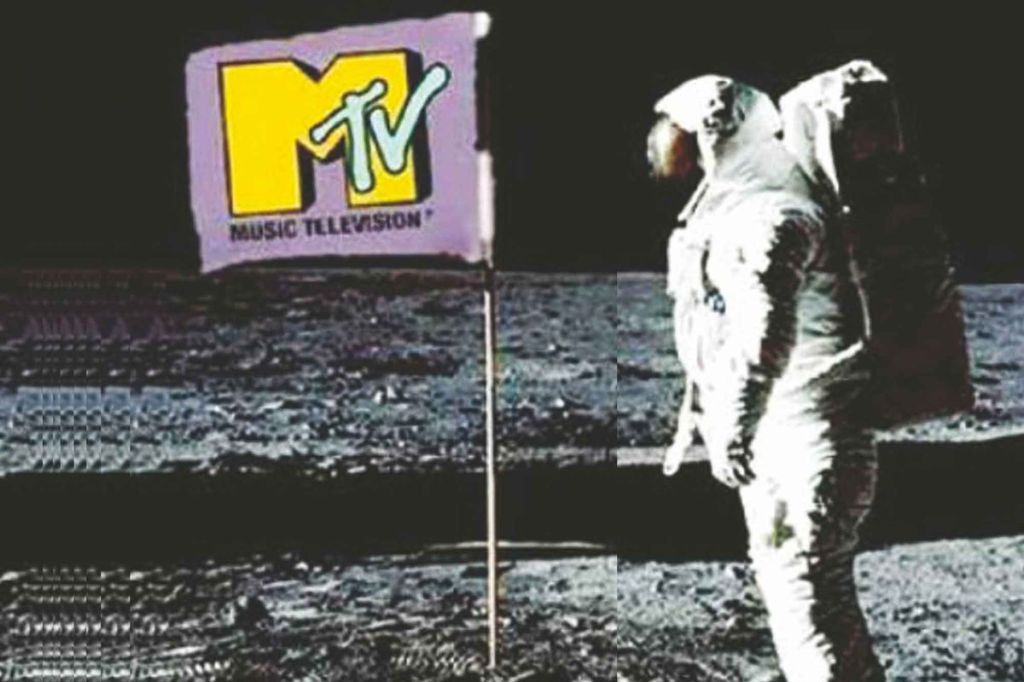
 Noel Coward famously noted the strange potency of ‘cheap’ music.
  Earworms: 1980s pop was chock-a-block with ’em.
  I’ve always had a penchant for good swearing in music. And long before those Parental Advisory stickers, there were some real humdingers.
 movingtheriver.com