The John Scofield Interview: Sco in the ’80s, from Miles to Blue Matter

You could put forward a pretty good case that John Scofield was THE guitarist of the 1980s.

Probably best known for his incendiary playing in Miles Davis’s band between 1982 and 1985, he also enjoyed a distinguished solo career.

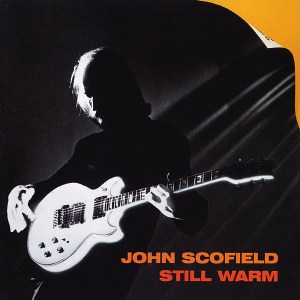
Whilst focusing on straightahead jazz during the early part of the decade, his stellar ‘fusion’ period between 1984 and 1988 – encompassing classic albums Electric Outlet, Still Warm, Blue Matter, Pick Hits Live and Loud Jazz – featured excellent original compositions and formidable players such as David Sanborn, Don Grolnick, Omar Hakim, Darryl Jones, Dennis Chambers, Hiram Bullock and George Duke.

In the meantime Sco was much in demand as a sideman, playing with everyone from Terri Lyne Carrington to Tommy Smith (this playlist gathers some of his greatest music of the 1980s) whilst also teaming up with fellow guitarist Bill Frisell, drummer Peter Erskine and bassist Marc Johnson in the latter’s Bass Desires project that produced two classic albums on ECM Records: Bass Desires and Second Sight.

Immediately recognisable with his chorus/overdrive sound and molten, legato style – always informed by the blues – Scofield’s solo career has since gone from strength, and we now find him ensconced in a highly productive spell on ECM, his latest album being Uncle John’s Band.

movingtheriver caught up with John to talk about his wonderful 1980s as he prepared for a European tour with keyboardist John Medeski – he’s ever the road warrior and seems full of energy and good humour.

MTR: I’d love to know a little about how/when you signed with Gramavision Records, and did you consider other options for your mid-‘80s solo career such as ECM?

JS: I signed with Gramavision shortly before I recorded Electric Outlet. They were very interested and made us a good deal when no one else had contacted me. After I met (ECM founder/producer) Manfred Eicher at the Bass Desires recording session he expressed interest but I had already signed a multi-record contract with Gramavision. After that I stayed with other New York-based companies (Blue Note and Verve) because I met those people here at home and they were major international labels. I’m quite happy now that I’ve found a home at ECM that is aligned with my current musical direction.

Drummer Steve Jordan plays some wonderful stuff on Electric Outlet – was he overdubbed at the end after you’d tracked everything with a drum machine?

Yes, exactly. I had bought a Roland drum machine and used it to make a four-track demo at home with me playing guitars and bass. I recreated that in the studio and had Steve overdub on all the tunes. He was incredible and nailed them so quickly. We’d played together a bit before – he was on my Who’s Who album in 1978.

I’m fascinated by the work you did with saxophonist George Adams during the 1980s, especially More Sightings (1984) – can you tell me how that came about?

I had played with George in New York on gigs with the Gil Evans Orchestra and then did a tour and album as a guest with the George Adams/Don Pullen band. Then George wanted to do the tour with Hannibal Marvin Peterson. They invited me and we ended up recording a live show in Zürich. I loved George’s playing and we were friendly. I even got him to come in to record with Miles for Columbia in 1983, but it seems that that recording session was lost somehow. I believe it was at The Hit Factory on Broadway. When they were putting together some CBS tapes for reissue, I was told by Michael Cuscuna that they didn’t find anything from that session… That’s all I know. It was Miles‘s band but with George on saxophone. (Adams is understood to have guested with Miles’s band in the studio on 16 June 1983 and also in concert at the Avery Fisher Hall in NYC on 26 June 1983, and was also part of the big band which played with Miles at Montreux in 1991 – Ed.)

Is it true that Kenny Kirkland was supposed to play keyboards on Still Warm but didn’t show at the last minute? And please tell me how the fabulous Omar Hakim came to play on the album.

Yes, Kenny was a friend and I was lucky enough to get to play with him a bunch, but somehow he didn’t show up at rehearsal so I asked Don Grolnick. I think Kenny just had his dates mixed up maybe? I’m not sure. It was a real loss that he died so young. Omar and Darryl Jones were playing with Sting at that time and I knew Omar although I had never played with him but I thought that he and Darryl could really lock it in. They sounded fantastic together.

So was Still Warm recorded just after you left Miles?

I think it was before the last tour. The last stuff I did with Miles was later in the summer in Europe and then Japan.

How much rehearsal time did you get with the bands in general for Still/Blue/Loud? Or did you give the band demos to learn in advance? Because a few of these compositions are treacherous, I’m thinking of stuff like ‘Trim’ and ‘Loud Jazz’ – how did Dennis learn them (he famously doesn’t read music – Ed.)?

For Still Warm, I think we probably had one rehearsal, then one in the studio. I think I made demos of the tunes to give everybody, but I can’t remember. By Blue Matter and Loud Jazz we were a working band. I had been playing some of the Blue Matter songs with a different keyboardist and drummer along with Gary Grainger. Gary recommended Dennis and I guess he learned the songs at rehearsal. Maybe I made demos… I just remember Dennis trying a go-go beat on ‘Blue Matter’ which I hadn’t tried before. I think I wrote that song just before the session and had never played it live. Then we played a week at Fat Tuesday before going into the studio with Dennis and Mitch Forman. For Loud Jazz, we rehearsed but also played the tunes live on tour before the recording.

Regarding producer Steve Swallow’s role, did he select material? The albums have stood the test of time so well because they’re generally free of 1980s production clichés.

Steve has been a friend and mentor to me since the ‘70s. He was interested in production and multi-track recording and I knew he would be great at it. Although he didn’t select the material, he probably helped me with selecting my own tunes. He was really involved in mixing and had suggestions for the arrangements. Because Gramavision had their own studios, we were allowed to mix for many hours and treated mixing more like we would for a pop record. We were really lucky to have the great engineer Joe Ferla, to whom we deferred for many of the mix ideas. Along with Steve, he was responsible for the sound.

Can you tell me a bit more about the tune ‘Gil B643’ – presumably it’s a tribute to Gil Evans? And was the title at all influenced by the movie ‘THX 1138’?

B643 was Gil‘s apartment number! We lived at the same building in Manhattan.

I’d love to know a bit more about ‘Picks And Pans’ and its 6/8 feel, it strikes me that it’s a very influential tune in ‘fusion’ but was it influenced by Joe Zawinul’s ‘The Juggler’ (from Weather Report’s Heavy Weather)?

I liked Joe’s tune but I don’t think I got the beat especially from that…but there were other examples of that kind of beat. Probably lots of them. Maybe it first came from Afro-Cuban music like Mongo Santamaria’s ‘Afro Blue’. Or you can take a jazz waltz and just put a backbeat in there!

Which is your favourite of the two terrific Bass Desires albums and why?

I can’t say that I really have a favourite, but I just remember the chemistry for the first record was really exciting and it was great when we realized we could play together and that the group had a different sound, largely because of Bill Frisell and his unique approach. Also the sound with the two of our styles working together. That’s not to take anything from Marc and Peter, who really contributed so much and brought in material and if it weren’t for Marc having the idea of putting us all together, it would never have happened. I remember we played some gigs together before we went in the studio as well as rehearsing. I think we played a strange cabaret club in New York City. I can’t remember the name of the place and we probably also played a gig in Boston as well before we went into the studio with Manfred Eicher.

How did Dennis Chambers and Gary Grainger come onboard for the Blue Matter band – did you headhunt them, did they audition, or a bit of both?

I was looking for an electric bass player and my friend, the keyboard player Marc Copland, recommended Gary who he had played with in Washington DC. He said Gary could play anything on electric bass and it turned out he was absolutely correct. I then played with Gary in another configuration and he recommended Dennis. Gary and Dennis grew up together in Baltimore and were old friends. I had heard about Dennis with The P-Funk All Stars and was so surprised to learn that he was looking to play more jazz/fusion. Actually, Darryl Jones had played me a great board tape and said, ‘Isn’t this drummer fantastic?’ But we didn’t know who it was. I found out later that it was Dennis so I was a fan already even though I didn’t know it!

Hiram Bullock is an inspired rhythm-guitar choice on Blue Matter – was he a Steve Swallow recommendation?

No, I knew Hiram was great. I knew him from the New York scene and we were friends. I wanted rhythm guitar on that one track and I thought he would do a better job than I did – I think he did.

Was ‘Blue Matter’ influenced by Miles’s ‘Tutu’ (composed by Marcus Miller)?

I just had a generic triplet-ish backbeat in mind. It had no relation to ‘Tutu’ – not at all. ‘Tutu’ sounds a bit like (Burt Bacharach tune) ‘The Look Of Love’, right?!

How did you achieve the final minute of ‘Time Marches On’ where you solo over that ‘drone’ – was it a slowed down tape loop?

No, we just did it in real time.

I’d love to know your favourite guitarists of the 1980s, any genre…

Mainly I liked the jazz guys Wes Montgomery, Jim Hall, George Benson, Pat Martino. But I always loved the blues guys starting with Hendrix and Clapton back in the ’60s, plus Otis Rush, Albert King and BB King. I always admired my contemporaries Metheny, Stern, Frisell, Abercrombie, Mick Goodrick… I went in the fusion direction because of my experience with Miles. If it wasn’t for him, I probably would’ve been just playing bebop and giving guitar lessons!

The only time I saw the Blue Matter band in London was a really weird but brilliant gig in the East End in summer 1987 I think, maybe it was called the Mile End Theatre? Do you remember that? And in general do you have good memories of touring the UK and Europe?

Was that the Half Moon Theatre? I’ll never forget the gig. The late John Cumming brought us to London and I played many gigs subsequently for him. Maybe it was my first one in London as a leader? Not sure? That band was so strong. We really had some success in UK/Europe in those days.

Did Miles ever give you feedback on your 1980s solo career, or did you ever seek it out?!

I know he liked my tunes because I wrote ‘You’re Under Arrest’ for him and gave him a demo of a bunch of other stuff, some of which ended up on my records. He said he was gonna record everything but then when I quit the band in order to go out on tour with Blue Matter, I didn’t get a chance to do any of that with Miles. He had moved on to Tutu. I remember I played him some of Blue Matter for him once and he was really blown away by Dennis’s playing…

Finally, how do you look back on your 1980s career in general? Was it a great era for guitar-based music?

It was an incredible time. It was great because of getting to play with Miles and all the exposure it got me, and then starting my own career, playing funk/jazz with those guys. I was so influenced by Miles and his direction in the ‘80s. But, for me, Weather Report and Herbie’s Head Hunters were the greatest. I think it was a really good era for guitar when you think of Holdsworth, Stern, Metheny, Robben Ford and so many more. And of course the classic rockers like Clapton and Beck were around. Pop music in general had some pretty hot-shot guitar stuff in there, and funk was really everywhere. Thanks to Sly…

Thanks John and good luck on the European tour…

John Scofield at the Cape Town Jazz Festival, 2003. Photo by William Ellis

Special thanks to William Ellis, George Cole and Jan Lohmann for their help with this piece.

Bryan Ferry: Boys And Girls @ 40

Bryan Ferry’s one and only UK #1 album to date (and biggest-selling record in the US) was released 40 years ago this month.
The Antony Price/Simon Puxley cover is seductive, the Bob Clearmountain mix is delicious, the grooves are pleasant, there’s an array of great players, and this writer can’t resist playing his vinyl copy every year or so.

So why is Boys And Girls always a strangely underwhelming listen?

Despite its big sales and Ferry’s watertight reputation, it has also failed to garner any posh anniversary write-ups in the monthly music mags and didn’t even make Classic Pop mag’s 2015 readers poll of the 100 best 1980s albums. Maybe it could/should have been Ferry’s Let’s Dance (and one wonders why he didn’t enlist Nile Rodgers to produce?).

Ferry completed the album just as he was mourning the death of his father (reflected in the lyrics to ‘The Chosen One’?) but started work back in summer 1983 with producer/engineer Rhett Davies, veteran of Roxy’s Avalon as well as the classic King Crimson double of Discipline and Beat (Davies left the music business for 20 years soon after working on Boys And Girls…). They devised drum-machine beats and laid down keyboard beds while Ferry outlined vague lyric/melody ideas.

Work mostly took place at The White House on London’s King’s Road (meanwhile, less than a mile away in Stanhope Gardens, David Sylvian was devising his own mid-1980s triptych, arguably a far more successful fusion of pop, white funk, ambient and jazz…), a demo studio owned by Ferry’s manager Mark Fenwick. Musicians were then brought in to overdub onto those eight-track demos – seven studios and 30 musicians/singers are credited!

The songs have various nods to the Avalon era. ‘Windswept’ (named by Ferry in a 2003 interview as one of his six favourite songs, the others being ‘Do The Strand’, ‘Avalon’, ‘In Every Dream Home A Heartache’ and ‘Mother Of Pearl’) seems inspired by B-side ‘Always Unknowing’, ‘Slave To Love’ obviously nods to ‘Avalon’ while ‘Sensation’ is built around a melodic motif embedded in ‘Take A Chance With Me’.

The piecemeal recording process affects the material though – Boys And Girls desperately misses the quirkier aspects of Avalon, with those vital contributions of messrs Manzanera and Mackay (not to mention bassist Alan Spenner).

David Gilmour, Mark Knopfler, David Sanborn, Nile, Marcus Miller and Andy Newmark are vaguely familiar now and then, but other big players are anonymous. Ferry’s patented piano work is almost entirely absent.

‘Slave’ is a case in point (though does feature some of that Ferry piano). Built around one of the hoariest old chord progressions in commercial music (incidentally very similar to the verses of ‘Dance Away’ but without that song’s interesting key change or atmosphere…), Ferry doesn’t bother with a bridge (or what Americans call the ‘pre-chorus’) or interesting chorus, just repeats the verse chords again and adds the chanted vocals.

He generally eschews bridges and modulations on Boys And Girls, sticking mainly to two-chord vamps (Avalon, in contrast, featured several ONE-chord songs, apparently influenced by Miles’s On The Corner and James Brown, but they really worked…).

The title track drearily cycles E-min/B-min, while ‘Stone Woman’ sticks rigidly to a very dull D-min/B-flat. Both songs are mercifully/abruptly cut short, Ferry unable to elevate the material with strong melodies.

Still, the music is beguiling and beautifully-appointed (though side A seems much too long, my stylus really struggling to get through ‘Windswept’) and yes, this time next year movingtheriver will probably be reaching for the vinyl, saying ‘Maybe this time’…

In Memoriam: movingtheriver salutes the fallen of 2024

Marlena Shaw

Dean Brown (guitarist with Billy Cobham, David Sanborn, Brecker Bros etc.)

Gena Rowlands

Larry Willis (pianist)

Frank Auerbach (painter)

Martial Solal (jazz pianist)

Annie Nightingale

Keith LeBlanc

Aston ‘Family Man’ Barrett (Wailers bassist)

Jim Beard (keyboard player with Mike Stern, Wayne Shorter, John McLaughlin)

Gary Grant (‘Seawind’ horn section trumpeter)

Palle Danielsson (bassist with Keith Jarrett, Jan Garbarek)

TM Stevens (bassist with James Brown, Pretenders, John McLaughlin, Miles Davis)

Sergio Mendes

Michael Jayston (actor)

Michael Cuscuna (jazz record executive/writer)

Charles Cyphers (‘Assault On Precinct’/’Halloween’/’The Fog’ actor)

Casey Benjamin (Robert Glasper Experiment multi-instrumentalist)

David Sanborn

Teri Garr

Richard Lewis

John Kelman (jazz writer)

Angela Bofill

Albert ‘Tootie’ Heath

Ed Mann (Frank Zappa percussionist)

Tom Fowler (Zappa bassist)

Dame Maggie Smith

Martin Mull

Herbie Flowers (Spiders/Sky/Lou Reed bassist)

Will Jennings (‘Higher Love’/’Street Life’/’One Day I’ll Fly Away’/’Didn’t We Almost Have It All’ lyricist)

M Emmet Walsh

Benny Golson

Kris Kristofferson

Libby Titus (singer/songwriter and wife of Donald Fagen)

Martin France (drummer with Kenny Wheeler, Loose Tubes, Human Chain etc.)

Nadia Cattouse (singer/songwriter and mother of Level 42’s Mike Lindup)

Quincy Jones

Paul Auster

Tyka Nelson (singer/songwriter and sister of Prince)

Cat Glover (‘Cat’ on Prince’s Sign ‘O’ The Times/Lovesexy tours/albums)

Cindy Morgan (‘Caddyshack’/’Tron’ actress)

Susan Backlinie (‘Jaws’ actress/gymnast)

Lou Donaldson

Roy Haynes

Roger Corman

Shelley Duvall

Peter Sinfield (King Crimson lyricist)

Diva Gray (vocalist with Chic, Steely Dan, David Sanborn, George Benson)

Bernard Hill

Zakir Hussain

Dan Morgenstern (jazz writer)

Jim Abrahams (‘Kentucky Fried Movie’/’Airplane’/’Police Squad’/’The Naked Gun’ writer/director)

Graham Thorpe (cricketer)

Robert Towne (‘Chinatown’/’The Last Detail’ screenwriter)

Alfa Anderson (vocalist with Chic, Diana Ross, Odyssey, Bryan Ferry)

Donald Sutherland

Eleanor Coppola (writer of the brilliant ‘Notes: The Making of “Apocalypse Now”’ and ex-wife of Francis)

Derek Underwood (cricketer)

Terry Griffiths (snooker player)

Ray Reardon (snooker player)

Wishing all of my readers a happy, healthy 2025, with loads of cash.

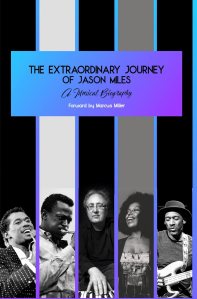
Book Review: The Extraordinary Journey Of Jason Miles (A Musical Biography)

Surprisingly few musical memoirs take the reader right into the recording studios of the 1980s and 1990s, documenting what actually went down during the making of some classic albums.

In his enjoyable new book, Jason Miles – synth player/programmer for Miles Davis, Whitney Houston, Luther Vandross, Roberta Flack, David Sanborn, Diana Ross, George Benson, Will Downing, Marcus Miller, Chaka Khan, Scritti Politti and The Brecker Brothers – does just that, in the process outlining the joys and sorrows of the American music business in its money-drenched pomp.

‘The Extraordinary Journey Of Jason Miles’ traces the author’s young life as a teenage Brooklyn jazz fanatic to becoming a first-call studio sessionman for some of the biggest artists on the planet. The book is also notable for outlining the considerable pressures – and potential threats to one’s mental health – of coming up with the goods and harnessing the ever-evolving music technology when time is money.

There’s a memorably tense episode when things go very wrong on a Vandross session and an unsparingly honest view of putting together his Miles Davis-celebrating Kind Of New project with trumpeter Ingrid Jensen. Jason also outlines his struggles bringing award-winning tributes to the music of Grover Washington Jr., Ivan Lins, Weather Report and Marvin Gaye to life.

Printing problems bring about a few curious errors/typos but the book is an absolutely key text for Miles Davis fans, a fast-paced, brave, uncompromising read also featuring some superb photographs. There are also intriguing, fond portraits of musicians such as Bernie Worrell, Lenny White, Marcus Miller and Joe Sample.

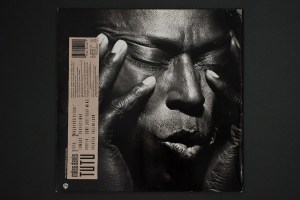
Also it strikes movingtheriver that we don’t have much first-person documentation of great 1980s and 1990s Black music – ‘The Extraordinary Journey Of Jason Miles’ corrects that, and sheds more light on who actually played what on Tutu and Amandla, though sadly my favourite ‘80s Davis (and Miller) album Siesta barely gets a mention (Jason tells movingtheriver he will write about it in his second book, coming soon).

(Postscript – One of Jason’s gripes is the lack of credit he has received through his career – sure enough, my remastered CD copy of Davis’s Amandla only gives him a sole credit, on the classic track ‘Mr Pastorius’… But Jason assures movingtheriver that Warners has made corrections to more recent versions of the album).


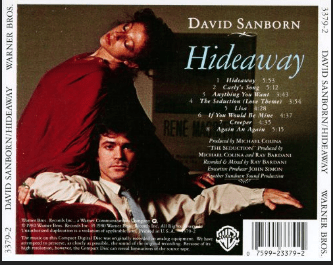
David Sanborn: Hideaway

It’s no coincidence that alto saxist/composer David Sanborn’s purple patch (1980-1982) came about just when genres (yacht rock, soul, funk, jazz, R’n’B) were breaking down to create one of the most egalitarian musical eras.

Hideaway, his fifth studio album, was the breakthrough, and I love it. Released in February 1980, it made #2 on the Jazz chart, hung around in the Urban Contemporary charts for over a year and was nominated for a Best R&B Instrumental Performance Grammy.

For some, Sanborn’s solo material will always be ‘smooth jazz’, but I’d point to four aspects of his music that elevate it above similar material, particularly on Hideaway – his tone and his note choices, both born of the ‘50s and ‘60s St. Louis jazz and R’n’B scenes; his writing; and also the playing of top-notch guests. On Hideaway, the stars are drummer Steve Gadd (Gadd fans, this is the album for you), bassist Neil Jason and keyboard player Don Grolnick.

The title track remains a classic. Sanborn lays down rich Fender Rhodes soul chords while Gadd constructs a perfectly judged post-disco drum part heavily involving cross-stick and floor tom, laying just behind the beat, with an unexpected, explosive fill just before the fade. Jason is given free rein and comes up with an outrageous bass performance.

Hideaway also benefits from Steely/Doobies man Michael McDonald co-writing two tracks. Sanborn doesn’t have anything much catchier than ‘Anything You Want’ and ‘Again An Again’ in his repertoire. ‘Carly’s Song’ and ‘Lisa’ are memorable ballads with beguiling harmony, while Gadd provides another brilliant commentary on ‘If You Would Be Mine’.

Rick Marotta appears to expertly marshal ‘Creeper’ through its slow half-time groove – guitarist and frequent Sanborn collaborator Hiram Bullock was so taken with it he later wrote a sequel called ‘Son Of Creeper’.

Hideaway’s packaging helps too – its minimalist cover is a winner, as is the photo featuring Dave reclining in his apartment with a Magritte over his left shoulder and paramour draped over his right. Warner Bros. were just realising he wasn’t the worst looking guy in the world.

The only downside: in a classic bit of Warners penny-pinching, they add the very dull (and certifiably smooth-jazz) ‘The Seduction’ from the ‘American Gigolo’ soundtrack to the streaming and CD versions but in the process edit down ‘Anything You Want’ and the title track to ‘single’ length. Best try to find Hideaway on vinyl.

Who Writes The Songs That Make Those Old Blokes Cry: 1980s Tearjerkers

It’s all radio presenter Nick Abbot’s fault. On a recent podcast, he mentioned finding himself with a tear in the eye when listening to David Gilmour’s second guitar solo on Pink Floyd’s ‘Comfortably Numb’ in his car.

But it’s a subject almost totally ignored in print outside of scientific works: music’s effect on the body and mind. If you love it, surely it’s supposed to create a molecular change. The last few years may also have precipitated a more emotional relationship to music than usual, despite the current industry obsession with data and algorithms.

So, hide the onions and pass the sick bag: here are a few tracks from the 1980s that may have occasionally been known to put a lump in this correspondent’s throat, driven by nostalgia, musical excellence, loss of innocence and who knows what else.

21. Captain Sensible: ‘We’re Glad It’s All Over’

20. Bronski Beat: ‘Smalltown Boy’

19. Tina Turner: ‘Private Dancer’
She wants a husband and some kids but somehow the music tells you that the protagonist is never going to get out from under…

18. Johnny Gill: ‘Half Crazy’

17. Keith Jarrett: ‘Spirits 2’

16. The Kids From Fame: ‘Starmaker’

15. Peter Gabriel: ‘Lead A Normal Life’
Hard to think of a piece of music that better expresses loneliness, but there’s compassion too.

14. Christopher Cross: ‘Sailing’

13. Blondie: ‘Atomic’

12. The Pretenders: ‘Hymn To Her’

11. Art Pepper: ‘Our Song’
Gratuitous sax and violins. Recorded 18 months before his death, inspired by meeting his widow Laurie, Pepper seeks redemption for a largely selfish, itinerant life – does he find it? He tries bloody hard.

10. Jaco Pastorius: ‘John & Mary’

9. Pino Donaggio: ‘Blow Out (closing titles)’
The melody maestro’s beautiful theme from Brian De Plasma’s 1981 film starring John Travolta and the director’s then-wife Nancy Allen. A critic once said that her character’s death in the movie is the first one De Palma seems to care about – Donaggio’s music is the reason.

8. Madonna: ‘Oh Father’

7. David Bowie: ‘Absolute Beginners’
It’s the hope, not the despair. Maybe THIS time it’s all going to work out, ‘just like in the films’…

6. David Sanborn: ‘Imogene’

5. Dexter Gordon/Herbie Hancock: ‘Still Time’ 
The double meaning of Herbie’s title says it all – Dexter’s beautiful soprano playing is fragile yet also somehow ageless.

4. Prefab Sprout: ‘Moving The River’

3. Janet Jackson: ‘Livin’ In A World (They Didn’t Make)’
Just for the sheer beauty of Jam and Lewis’s composition. Janet’s words augment that.

2. Scritti Politti: ‘Oh Patti (Don’t Feel Sorry For Loverboy)’

1. The Police: ‘Driven To Tears’ (only joking – that’s enough tearjerkers… Ed.)

If you’ve got the stomach for it, chime in with your tearjerkers below.

Ben Sidran: Talking Jazz (An Oral History)

They say that if you want to understand why an instrumentalist plays the way he or she plays, listen to them speak.

That makes total sense when hearing Wayne Shorter or Ornette Coleman being interviewed. And now, courtesy of Ben Sidran, there’s never been a better chance to hear other examples of this.

Sidran is a renowned pianist/composer and author of three excellent music books: ‘Black Talk’, ‘The Ballad Of Tommy LiPuma’ and ‘Talking Jazz’. The latter was based on a series of interviews broadcast on USA’s National Public Radio between 1984 and 1990. And now we can hear them in their entirety.

What a fascinating collection it is. Many interviewees go against type: those with a reputation for being somewhat ‘taciturn’ (Paul Motian, Donald Fagen, Tony Williams, Miles) are open, light-hearted and often giggly.

Some have their axes with them – we hear modern masters Chick Corea, McCoy Tyner, John Scofield, John Patitucci, David Sanborn and Steve Khan demonstrate their harmonic hallmarks. I asked the latter for his recollections of the ‘Talking Jazz’ interview:

It was done on 23 October 1984 at Roxy Recording, located at 648 Broadway, NYC – which was downtown, near Soho. It was conducted from 1-3pm! How about THAT?!

Elsewhere, Art Blakey talks touchingly about his appeal to a young, eager London crowd, Carla Bley is amusingly honest and Kevin Eubanks sounds 30 years ahead of his time, discussing global warming and environmental disasters.

It’s also fascinating to hear lost masters’ voices on tape, speaking with such candour: Gil Evans, Johnny Griffin, Chick Corea, Dizzy Gillespie, Freddie Hubbard, and many more. Sidran is a great host/interviewer, friendly and hip to the artists’ work but not scared to ask the tough questions.

Don’t miss. Listen to the interviews on Bandcamp.

Hal Willner (1956-2020)

Duke Ellington famously said that there are only two types of music: good and ‘the other kind’.

Hal Willner spent most of his professional life living that maxim. The producer, curator and soundtrack composer, who died aged 64 on 7th April 2020, was way ahead of the game.

His never-boring albums were like cross-genre playlists, 30 years before Spotify.

In his world, it was totally natural to pair Todd Rundgren with Thelonious Monk, Lou Reed with Kurt Weill, The Replacements with Walt Disney, Chuck D with Charles Mingus.

Inspired by his mentor Joel Dorn, Orson Welles’ radio productions and albums like A Love Supreme, Sketches Of Spain, The White Album, Satanic Majesties, Yusef Lateef’s Part Of The Search and Rahsaan Roland Kirk’s Case Of The 3-Sided Stereo Dream, he became fascinated by telling stories with sound.

During the 1980s, Willner was somewhat of a ‘Zelig’ figure on the New York scene. In 1981, he became the long-time musical director of ‘Saturday Night Live’ (while driving a cab during the day) and put together tribute albums to Fellini’s favourite composer (Amacord Nino Rota) and Kurt Weill (Lost In The Stars), the latter beginning a long, fruitful association with Lou Reed.

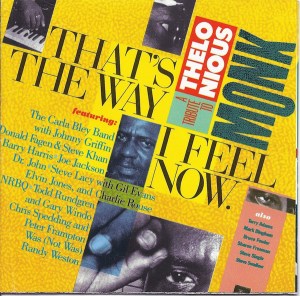
Then there was That’s The Way I Feel Now (still missing from streaming services… I’m working on it…) from 1984, inspired by Willner’s trip to a Thelonious Monk tribute concert at Carnegie Hall, as he related to writer Howard Mandel: ‘The jazz people playing Monk’s music were making it boring. Monk’s music was never boring. When Oscar Peterson came on, that was it – he had even put Monk down.’

Hal fought back with a brilliant Monk tribute album featuring Was (Not Was), Donald Fagen, Dr John, Todd Rundgren, Elvin Jones, Joe Jackson, Bobby McFerrin and Carla Bley. (Fact fans: Elton John chose the below track as one of his ‘Desert Island Discs’ in 1986, singling out Kenny Kirkland’s superlative piano solo.)

1988’s Stay Awake repeated the trick, a positively psychedelic voyage through the music of Walt Disney’s movies and TV shows.

The stand-outs were legion but included James Taylor, Branford Marsalis and The Roches’ ‘Second Star To The Right’, Sun Ra’s ‘Pink Elephants On Parade’, The Replacements’ ‘Cruella de Vil’, Harry Nilsson’s ‘Zip-A-Dee-Doo-Dah’ and Ringo’s ‘When You Wish Upon A Star’.

Willner was at it again with ‘Night Music’, the much-missed, short-lived TV show fronted by David Sanborn which brought esteemed musical guests in to jam with a crackerjack house band (usually Omar Hakim, Marcus Miller, Hiram Bullock and Don Alias).

It’s quite moving to see often-overlooked greats of American music (Van Dyke Parks, Pharoah Sanders, Elliott Sharp, Sonny Rollins, Slim Gaillard) getting their due and sharing the stage with the likes of Leonard Cohen, Randy Newman, Mark Knopfler, Richard Thompson and John Cale.

So Willner did a superb job, but if only Jools Holland’s invitation to co-host had got lost in the mail…

In the 1990s, Hal worked on Robert Altman’s movie masterpieces ‘Short Cuts’ and ‘Kansas City’, and then came possibly this writer’s favourite album of the decade, Weird Nightmare: Meditations On Mingus, a sprawling, kaleidoscopic audio journey through the jazz great’s work featuring Robbie Robertson, Bill Frisell, Keith Richards, Julius Hemphill, Henry Rollins, Vernon Reid and Elvis Costello. The Kinks’ Ray Davies also directed a superb documentary about the making of the album:

Willner also helmed Marianne Faithfull’s well-received 1987 comeback album Strange Weather. More recently, he curated many special ‘theme’ concerts, including a memorable gig at the Royal Festival Hall in 2012 dedicated to the Freedom Riders of the civil rights movement, featuring Antony Hegarty, Nona Hendryx, Tim Robbins and Eric Mingus. Hal was also instrumental in bringing Reed’s ‘Berlin’ multimedia show to the stage for the first time.

Farewell to a real one-off. Music needs a lot more like him.

Hal Willner (6 April 1956 – 7 April 2020)

Chick Corea Elektric Band: Light Years (1987)

Jazz/fusion of the late-’80s variety is sure to give any John Peel acolyte nightmares: visions of guys in tracksuit bottoms, trainers and vests, looking like extras from ‘Thirtysomething’, playing absurdly gymnastic jazz/rock based on corny ‘funk’ or Latin vamps, grinning at each other and the audience, using the cheesiest modern gizmos (Simmons electric drums, EWI wind instruments, guitar synths).

The Chick Corea Elektric Band (Corea: keyboards, Frank Gambale: guitar, John Patitucci: bass, Dave Weckl: drums) probably best epitomised this style. But guess what – revisiting their 1987 album Light Years recently, it emerges as one of the best and least ridiculous projects of Chick’s career.

He reins in the chops and gothic longeurs to produce a collection of really good themes and tight, attractive arrangements (though the three ‘extra’ tracks on the CD/streaming versions are disaster areas). The album is also musical catnip for me, bringing back memories of when I was first getting into jazz and fusion.

The thing is that Chick seems to actually relish including some pentatonic/blues-based harmony on Light Years. Some of his playing wouldn’t seem out of place in the music of Will Downing or Lonnie Liston Smith. There are even a few II-V-I chord changes. ‘Starlight’ and the title track are as catchy and immediate as David Sanborn’s ‘Run For Cover’ or ‘Hideaway’, though Marienthal’s alto tone is a bit too close to Dave’s for comfort. Weckl delivers lesson after lesson in Latin-flavoured funk and rock drumming. Gambale and Patitucci barely break sweat, or rather don’t get any room to show off, but still make a few telling contributions.

‘Time Track’ and ‘View From The Outside’ demonstrate everything that’s good about Light Years – catchy melodies, cool grooves and meticulous, gradually-escalating arrangements. The ridiculously technical last four bars of the former demonstrate some of the killer musical chops that are kept pretty much in the locker throughout the album, only to be brought out when strictly necessary.

I saw them live a couple of times around this time and of course the musicianship was incredible, even if the relentlessly ‘up’ stage presentation now looks pretty embarrassing.

Light Years is obviously good. It’s brutally, clinically good. It’s almost critic-proof. The Elektric Band were the Level 42 of high-octane fusion and this album is their World Machine. Of course it’ll always sound a bit like muzak to some, but that’s quite cool too. The CD’s inlay card features a really weird poem by Chick, kind of an ode to Scientology. It’s worth reading. And actually the album cover is pretty strange too…

Memorable Gigs Of The 1980s (Part Two)

Check out the first selection of memorable gigs here.

9. David Sanborn Band/Al Jarreau @ Wembley Arena, November 1984
We were sitting high up behind the stage with a great view of two of the great modern American drummers: Steve Gadd (with Sanborn) and Ricky Lawson (with Jarreau). To be honest, my parents and I left in the middle of Al’s set but Sanborn was fantastic with Marcus Miller and Hiram Bullock running amok on the huge Arena stage. The saxophonist was at his commercial peak here and probably could have headlined the show.

8. Marc Almond @ The London Palladium, 12 October 1986
I have no idea why I was at this gig but it was a genuine eye-opener. Almond was long past his pop fame and seemed to be acting out his own private, Berlin-inspired drama. Looking at the footage today, I’m still not sure if it’s brilliant or total sh*te.

7. Miles Davis @ Hammersmith Odeon, 21 April 1982
I remember someone shouting ‘Turn the guitar down!’ Poor Mike Stern wasn’t the critics’ flavour of the month and Miles was obviously exceptionally ill, but the gig was unforgettable. One of my first and very best. I saw Miles three or four times during the ’80s but this was the bomb for sheer atmosphere and occasion.

6. Robert Palmer @ Hammersmith Odeon, 25 September 1988
There really isn’t anyone around these days like the much-missed Robert with his gravelly voice, weirdly cosmopolitan compositions and ever-present smirk. He had a highly-drilled, sh*t-hot band with him at the Hammie Odeon too featuring Frank Blair on bass and Eddie Martinez on guitar. The gig started with a five-minute Dony Wynn drum solo which fair blew the minds of my brother and I.

5. Yes/No People @ Limelight, 9 September 1986
I think this gig was part of what was then known as the Soho Jazz Festival. There was a lively crowd of ‘jazz revival’ hipsters and rare-groove fans – this was my first taste of an underground scene that was quickly building momentum. DJ Baz Fe Jazz kicked off with some Blue Note post-bop (yes, people actually danced to that stuff) and then Yes/No People featured Steve Williamson on sax and the cracking Mondesir brothers (Mark and Mike) rhythm section. The band only lasted a year or so but nearly dented the charts with their ‘Mr Johnson’ single.

4. John McLaughlin/Mahavishnu Orchestra @ Hammersmith Odeon, 12 July 1984
The sign on the door said ‘Billy Cobham will not be appearing’ – heartbreaking to me at the time (McLaughlin apparently dumped Billy just a week before the tour). But Danny Gottlieb sat in with some style and John rattled off some outstanding licks in black shirt and black headband. It was bloody loud too. It was the first time many British fans had seen him since Mahavishnu Mark 1 days and as such there was a big hippie turnout.

3. Bill Withers @ Hammersmith Odeon, 18 September 1988
From memory, Bill spent most of the gig sitting at the front of the stage, talking about his life and career while Pieces Of A Dream accompanied with gentle jazz/funk. Bill wore a sweater and golfing slacks and seemed incredibly old, more Val Doonican than Sly Stone.

2. Weather Report @ Dominion Theatre, 26 June 1984
The duels between keys man Zawinul and drummer Omar Hakim were spellbinding. This was clearly the dog’s b*ll*cks. Well, it was better than Duran Duran anyway. Omar’s huge shades, trash-can cymbal and big grin linger in the memory.

1. Level 42 @ Wembley Arena, 12 January 1989
Level again, but this time for all the wrong reasons. We were in the back row of the dreaded Arena, and the band were flogging their substandard Staring At The Sun album. The audience reaction to the ‘new stuff’ was distinctly subdued. After a contractually-obliged encore of ‘The Chinese Way’, Mark King returned to the stage alone. ‘You ‘ad a good night?’ he bawled. The audience erupted. ‘Well, you can all go and f**k off home then’, deadpanned the thunder-thumbed one. Reply – and further encore – came there none…

Bubbling under:

Mike Stern/Bob Berg Band @ Town & Country Club, November 1989

Will Downing @ Hammersmith Odeon, 20 November 1988

Coltrane Legacy (Alice/Ravi Coltrane, Reggie Workman, Rashid Ali) @ Logan Hall, 10 July 1987

Ry Cooder @ Hammersmith Odeon, 27 May 1982

Bill Frisell @ Town & Country Club, 24 April 1989

Ornette Coleman/Prime Time @ Town & Country Club, 28 August 1988

Were you at any of these concerts? Let us know your memories.