Anthony Jackson (1952-2025)

Anthony during the recording session for Steve Khan’s ‘Eyewitness’ in 1981. Photo by David Tan

The brilliant Anthony Jackson, who has died aged 73, was a vital part of the early-1970s electric bass revolution, but arguably never got the same attention as contemporaries Stanley Clarke, Jaco Pastorius, Bootsy Collins, Louis Johnson and Alphonso Johnson (Chuck Rainey, Steve Swallow and Larry Graham are a bit older).

In a music world beset by fly-by-night chancers and one-trick ponies, he was a player of principle, something like the Allan Holdsworth of bass.

It was Anthony’s playing on Steve Khan’s ‘Guy Lafleur’ that first completely hooked movingtheriver – I remember thinking: who the hell is THAT?!

In two major ways, he changed the instrument as much as Jaco (though, in later years, pointedly called himself a ‘guitarist who plays a variation called the contrabass guitar’).

First there was his stretching of the instrument’s range below the standard low E (inspired by his love of Jimmy Smith’s Hammond organ playing) and above the standard top G, via his pioneering use of six-string basses, which he started playing exclusively in 1982 (Steve Khan thinks his superb ‘Casa Loco’ may have featured the debut of Anthony’s six-string).

Before that, Jackson had regularly detuned the low E string on his trusty Fender Precision, producing strikingly rich, deep timbres on work with Grover Washington Jr., Quincy Jones, Steely Dan, Chaka Khan and Earl Klugh, amongst hundreds of others (he prided himself on playing all kinds of music, working with everyone from Judy Collins and Peter, Paul & Mary to George Benson and Will Downing).

Then there was his use of effects, particularly the trademark flanger, often accompanied by the use of a pick, best heard on The O’Jays’ ‘For The Love Of Money’ and ‘Give The People What They Want’, and on his work with Al Di Meola. Oh, and then there’s a third factor – he ALWAYS sat down whilst playing, claiming that sitting down and wearing no strap was the way to go for bassists.

Jackson started playing music after seeing The Beatles on The Ed Sullivan Show in 1964, then became obsessed with other Brit invasion bands, Motown (via James Jamerson) and Jefferson Airplane’s Jack Casady, plus classical composers Olivier Messiaen and Paul Hindemith.

Regarding the latter two, their influence on Anthony’s playing is particularly noticeable on the live version of Khan’s ‘The Suitcase’, from 1994. Steve described this brilliant performance on his website.

One of Jackson’s first major gigs was in 1973, playing for a year in Buddy Rich’s sextet. He later called the drummer the only bona fide genius with which he had played. But then Anthony loved drummers. He enjoyed brilliant hook-ups with Steve Gadd, Buddy Williams, Steve Jordan, Harvey Mason, Simon Phillips, Steve Ferrone, Yogi Horton, Earl Young and many others.

But he lost work by refusing to ‘slap’ his bass during the disco era, and also very rarely solo’d unless he had something specific to say (to Steve Khan’s great annoyance!). Some of these concepts were laid down in his famously stern columns for Bass Player magazine.

But even Jackson wasn’t immune to some of the ‘proclivities’ of other great artists – for example, his performance was wiped from the title track of Steely Dan’s Gaucho! (Chuck Rainey’s pass got the nod instead.) But he played epochal stuff on ‘Glamour Profession’ and ‘My Rival’ from the same album, and excelled on Donald Fagen’s ‘IGY’ and ‘Ruby Baby’.

He was also fiercely loyal to artists he respected, enjoying long associations with Hiromi, Michel Camilo, Al Di Meola, Sadao Watanabe, Lee Ritenour, Grover Washington, Chick Corea, Khan and Michel Petrucciani.

In one of his rare interviews, he expressed a wish to play with Phil Collins, Ringo and Charlie Watts. Sadly it seems he didn’t achieve those ambitions. Farewell to a true pioneer and personal musical hero. Check out this playlist which brings together movingtheriver’s favourite Anthony performances.

Anthony Claiborne Jackson (23 June 1952 – 19 October 2025)

Book Review: Steely Dan (Every Album, Every Song) by Jez Rowden

The Steely Dan bibliography is relatively small – ‘Quantum Criminals’, Donald Fagen’s fine ‘Eminent Hipsters’ memoir, Don Breithaupt’s excellent study of Aja and ‘Steely Dan FAQ’ loom large, plus of course the rather good Expanding Dan site on Substack.

But Jez Rowden’s ‘Steely Dan: Every Album, Every Song’ is a worthy addition, and completely different to those titles. Rowden was (he died tragically and unexpectedly in March) best known for his writing on the Progressive Aspect website and as such his take on the Dan is more rooted in rock and pop than jazz or swing, a highly personal track-by-track analysis from a fan’s – rather than a muso’s – perspective.

And yet he nails their essence better than many scribes, as per this excerpt from the book’s Foreword: ‘The songs sparkled and fizzed, but with their penchant for jazz, R’n’B, soul and doo-wop, the pop songs they wrote were always going to be different: pop songs played by a rock band underpinned with jazz. The Groove was always where it was at for them.’

As befitting many other titles in Sonicbond’s ‘on track’ book series, Rowden eschews musician interviews in favour of quite emotional, personal writing, and his analysis of Steely’s notoriously obtuse lyrics is sometimes revelatory, illuminating the meaning of many songs (without recourse to the wackier theories on the fascinating Fever Dreams site) this writer has heard thousands of times. His moving portrait of the two protagonists in ‘Charlie Freak’ is a case in point.

But if completism is your thing, Rowden also goes to great lengths to cover all of Becker and Fagen’s output, from the earliest Brill Building demos to the solo work and various compilations, outtakes and live albums that have emerged. ‘Steely Dan: Every Album, Every Song’ is highly recommended and a fine testament for a good writer and a nice guy.

Misheard Lyrics Of The 1980s

Adolescence: a period of chaos and confusion. There was little rhyme or reason to one’s heightened sensibilities, and it didn’t help that 1980s pop songs had such bloody weird lyrics.

Initially, maybe it was a crap hi-fi/radio signal that sent you down the wrong track, or maybe some jackass got in your ear. And, quite often, albums didn’t come with lyric sheets.

Either way, the words were often lost in translation, the meaning – such that it was – got skewed and from that moment on you couldn’t hear a track without factoring in your messed-up version. And it didn’t matter if you loved it or hated it.

Sad to report, to this day, when I hear these songs/lines, I get the lyrics ‘wrong’. And yes, it has to be said, you don’t have to be Dr Freud to see that sex was usually the driver. That’s adolescence for you…

Blondie: ‘Island Of Lost Souls’
Misheard line: ‘I’m f*ckin’ near/Can you help me put my truck in gear’
(Correct line: ‘Oh buccaneer/Can you help me put my truck in gear’)

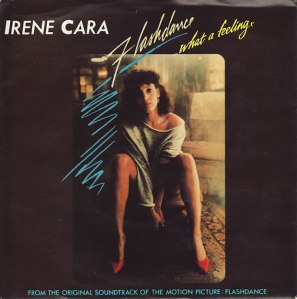
Irene Cara: ‘Flashdance (What A Feeling)’
Misheard line #1: ‘Take your pants down/And make it happen’
(Correct line: ‘Take your passion/And make it happen’)

Misheard line #2: ‘I can have it off/Now I’m dancing for my life’
(Correct line: ‘I can have it all/Now I’m dancing for my life’)

Michael Jackson: ‘Thriller’
Misheard line: ‘And though you f*ck to stay alive/Your body starts to quiver’
(Correct line: ‘And though you fight to stay alive/Your body starts to quiver’)

Prince: ‘Strange Relationship’
Misheard line: ‘But I’ve seen you get a kick out of doing coke’
(Correct line: ‘But I seem to get a kick out of doing you cold’)

Roxy Music: ‘To Turn You On’
Misheard line: ‘With an open book aside/Like Iranian screw’
Correct line: ‘With an open book aside/Like you read in school’)

Level 42: ‘Last Chance’
Misheard line: ‘Driven on by the memory of your fish/Shining for me’
Correct line: ‘Driven on by the memory of your face/Shining for me’

China Crisis: ‘African And White’
Misheard line: ‘Life is a fever in which we ate’
(Correct line: ‘Life is a fever in Israel’)

Fine Young Cannibals: ‘Johnny Come Home’
Misheard line: ‘Waters run in my life/That I must get drunk every night’
Correct line: ‘What is wrong in my life/That I must get drunk every night’)

UB40: ‘Food For Thought’
Misheard line: ‘I’m a prima donna’
(Correct line: ‘Ivory madonna’)

Bryan Adams: ‘Heaven’
Misheard line: ‘Love is all that I need/And I found it there in your shirt’
(Correct line: ‘Love is all that I need/And I found it there in your heart’)

Billy Joel: ‘An Innocent Man’
Misheard line: ‘Some people live with the fear of a touch/And the anger of having dinner poo’
(Correct line: ‘Some people live with the fear of a touch/And the anger of having been a fool’)

Donald Fagen: ‘Ruby Baby’
Misheard line: ‘From the sunny day I met you/Made a bed where I will get you’
(Correct lilne: ‘From the sunny day I met you/Made a bet that I would get you’)

The Blue Nile: ‘The Downtown Lights’
Misheard line: ‘I’m tired of crying on the city’
(Correct line: ‘I’m tired of crying on the stairs’)

Lionel Richie: ‘All Night Long’
Misheard line: ‘Everybody’s seen everybody dance’
(Correct line: ‘Everybody sing/Everybody dance’)

Steely Dan: ‘Glamour Profession’
Misheard line: ‘When it’s all over/We’ll make some colds from my cough’
(Correct line: ‘When it’s all over/We’ll make some calls from my car’)

Boomtown Rats: ‘Banana Republic’
Misheard line: ‘Banana republic/Set to climb’ (To be honest, I didn’t have the faintest idea what Sir Bob was singing… Ed.)
(Correct line: ‘Banana republic/Septic isle’)

It Bites: ‘Calling All The Heroes’
Misheard line: ‘High on a mountain the men looked below/Cucumber pineapple something and Poe’
(Correct line: ‘High on a mountain the men looked below/Cooked up a plan that would outwit their foe’)

The Police: ‘So Lonely’
Misheard line: ‘Simone/Simone’ (There was an Italian bloke at school called Simone…)
(Correct line: ‘So lonely/So lonely’)

Joni Mitchell: ‘Chinese Cafe (Unchained Melody)’
Misheard line: ‘Gone so fast/Like the turn of a peach’
(Correct line: ‘Gone so fast/Like the turn of a page’)

The Beatles: ‘The End’
Misheard line: ‘Matthew/Matthew’
(Correct line: ‘Love you/Love you’)
(That’s enough misheard lyrics, Ed…)

Ben Sidran: Talking Jazz (An Oral History)

They say that if you want to understand why an instrumentalist plays the way he or she plays, listen to them speak.

That makes total sense when hearing Wayne Shorter or Ornette Coleman being interviewed. And now, courtesy of Ben Sidran, there’s never been a better chance to hear other examples of this.

Sidran is a renowned pianist/composer and author of three excellent music books: ‘Black Talk’, ‘The Ballad Of Tommy LiPuma’ and ‘Talking Jazz’. The latter was based on a series of interviews broadcast on USA’s National Public Radio between 1984 and 1990. And now we can hear them in their entirety.

What a fascinating collection it is. Many interviewees go against type: those with a reputation for being somewhat ‘taciturn’ (Paul Motian, Donald Fagen, Tony Williams, Miles) are open, light-hearted and often giggly.

Some have their axes with them – we hear modern masters Chick Corea, McCoy Tyner, John Scofield, John Patitucci, David Sanborn and Steve Khan demonstrate their harmonic hallmarks. I asked the latter for his recollections of the ‘Talking Jazz’ interview:

It was done on 23 October 1984 at Roxy Recording, located at 648 Broadway, NYC – which was downtown, near Soho. It was conducted from 1-3pm! How about THAT?!

Elsewhere, Art Blakey talks touchingly about his appeal to a young, eager London crowd, Carla Bley is amusingly honest and Kevin Eubanks sounds 30 years ahead of his time, discussing global warming and environmental disasters.

It’s also fascinating to hear lost masters’ voices on tape, speaking with such candour: Gil Evans, Johnny Griffin, Chick Corea, Dizzy Gillespie, Freddie Hubbard, and many more. Sidran is a great host/interviewer, friendly and hip to the artists’ work but not scared to ask the tough questions.

Don’t miss. Listen to the interviews on Bandcamp.

33 Great Cover Versions Of The 1980s

We’ve briefly looked at crap cover versions before (though doubtless there’ll be more to come), but how about good ones from the 1980s?
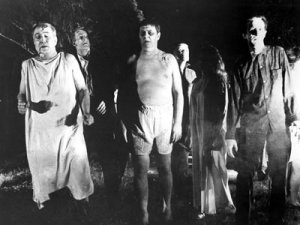
It was quite easy coming up with a fairly long list. I guess the ultimate test is that at the time most people (including me) didn’t know – or didn’t care – that they were cover versions.

There wasn’t a great deal of looking back in this golden period for pop.

But it did seem as if a lot of ’80s acts had the magic touch, or at least a total lack of fear, making almost everything sound like their own. Punk probably had quite a lot to do with that.

Some of the following choices get in for sheer weirdness but most are genuine artistic achievements. Recurring themes? The Beatles, Motown, Otis Redding. Probably not too much of a surprise there. And 1981 seems a particularly good year for covers.

Anyway, enough of my yakkin’. Let the countdown commence…

33. Bow Wow Wow: ‘I Want Candy’ (1982)

32. David Bowie: ‘Criminal World’ (1983)

31. Ry Cooder: ’13 Question Method’ (1987)
Ry’s brilliant solo take on Chuck Berry from the Get Rhythm album.

30. Propaganda: ‘Sorry For Laughing’ (1985)
The Dusseldorf pop mavericks take on Josef K’s post-punk curio (apparently at Paul Morley’s urging) to produce a sweeping, majestic synth-pop classic.

29. Joan Jett & The Blackhearts: ‘Little Drummer Boy’ (1981)

28. Living Colour: ‘Memories Can’t Wait’ (1988)

27. Sting: ‘Little Wing’ (1987)

26. Randy Crawford/Yellowjackets: ‘Imagine’ (1981)
Who knew this would work? Sensitive and imaginative reading of the Lennon classic, with a classic Robben Ford guitar solo.

25. Lee Ritenour: ‘(You Caught Me) Smilin” (1981)
Gorgeous West-Coast version of Sly Stone’s pop/funk opus. Surely one of the most unlikely covers of the decade, but it works a treat.

24. Luther Vandross: ‘A House Is Not A Home’ (1982)

23. John Martyn: ‘Johnny Too Bad’ (1980)
Originally a reggae track by The Slickers and first released on ‘The Harder They Come’ soundtrack in 1972, Martyn and drummer Phil Collins rearranged it and added some lyrics. It featured on John’s fantastic Grace And Danger album.

22. Soft Cell: ‘Tainted Love’ (1981)
Cracking version of Gloria Jones’ ’60s Northern Soul classic (written by Ed Cobb). A hit all over the world, with pleasingly remedial synth arrangement, instantly recognisable soundworld and classic intro.

21. Grace Jones: ‘Use Me’ (1981)
The Nightclubbing album featured a veritable smorgasbord of good cover versions, but this take on Bill Withers scores particularly highly for originality.

20. The Flying Lizards: ‘Sex Machine’ (1981)

19. The Replacements: ‘Cruela De Vil’ (1988)
From the brilliant Hal Willner-helmed Disney tribute album Stay Awake, you’d have been a brave punter to bet a dime on this one working, but work it does.

18. Quincy Jones: ‘Ai No Corrida’ (1981)

17. Donald Fagen: ‘Ruby Baby’ (1982)

16. Stanley Clarke: ‘Born In The USA’ (1985)
Who knows, maybe this could have provided Stanley with a novelty hit if CBS had been quicker off the mark. He references John Coltrane’s ‘A Love Supreme’ in the intro while Rayford Griffin lays down seismic grooves and a funny old-school rap.

15. The Power Station: ‘Get It On’ (1985)
‘If cocaine was a sound…’, as a YouTube wag described it. This near-hysterical rave-up is mainly the sound of a fun late-night jam (Tony Thompson’s drumming being particularly notable). Also check out guitarist Andy Taylor’s little ode to Talking Heads’ ‘Burning Down The House’ throughout.

14. Deborah And The Puerto Ricans: ‘Respect’ (1981)
A one-off solo single from The Flying Lizards’ singer, this Dennis Bovell-produced curio missed the charts but remains a fascinating post-punk artefact.

13. Roxy Music: ‘In The Midnight Hour’ (1980)
Roxy’s first cover version presumably raised some eyebrows but the lads pull it off with some aplomb, aided by Allan Schwartzberg’s tough NYC drum groove – and the fact that Bryan Ferry can’t resist adding some typical weirdness in the first 20 seconds.

12. Ringo Starr & Herb Alpert: ‘When You Wish Upon A Star’ (1988)
Another once-heard-never-forgotten cracker from the aforementioned Stay Awake collection, the album version is preceded by a very menacing Ken Nordine spoken-word intro.

11. Japan: ‘Ain’t That Peculiar’ (1980)
David Sylvian probably hates this but no matter. It’s hard to think of another band pulling it off. Ominous synthscapes from Richard Barbieri, a nice recorder solo by Mick Karn and brilliant ‘where’s-one?’ beat from Steve Jansen.

10. Everything But The Girl: ‘I Don’t Want To Talk About It’ (1988)
It definitely divides opinion, but certainly fits the ‘sounds like they wrote it’ criterion.

9. Bananarama & Fun Boy Three: ‘Really Saying Something’ (1982)
Penned by Motown songsmiths Norman Whitfield, Micky Stevenson and Edward Holland Jr and first performed by The Velvelettes in 1964, it’s hard not to smile when this comes on the radio. I love the way the ladies pronounce ‘strutting’.

8. David Bowie: ‘Kingdom Come’ (1980)
The Dame’s magnificent take on a little-known track from Tom Verlaine’s 1978 debut album.

7. UB40: ‘Red Red Wine’ (1983)
No apologies for including this Neil Diamond-penned perennial. Great bassline, nice groove, lovely Ali Campbell vocal performance.

6. Phil Collins: ‘Tomorrow Never Knows’ (1981)
Phil closed his Face Value album with this oft-forgotten corker, featuring a classic John Giblin bassline (later cribbed by Pearl Jam for the opening of their ‘Once’) and cool Shankar violin.

5. Robert Palmer: ‘Not A Second Time’ (1980)
Robert adds some New Wave grit to this Lennon-penned rocker, and his singing has rarely been better.

4. Siouxsie And The Banshees: ‘Dear Prudence’ (1983)

3. Joan Jett & The Blackhearts: ‘I Love Rock And Roll’ (1982)
First recorded by The Arrows in 1975, this is simply one of the great singles of the 1980s and a huge hit to boot.

2. Hue & Cry: ‘The Man With The Child In His Eyes’ (1988)
It shouldn’t work but it does, courtesy of singer Pat Kane’s excellent tone and phrasing. His trademark ‘na-na-na-na’s help too. I wonder what Kate thought of it.

1. Blondie: ‘The Tide Is High’ (1980)
Written by reggae legend John Holt and first performed by The Paragons in 1966, this was an inspired – if somewhat cheesy – choice for the band. It’s mainly included here for Debbie Harry’s delightfully off-the-cuff vocal, sounding like her first crack at the song.

The Walkman Legacy (AKA The Rise Of The Zombies)

Yesterday, when for the fifth time I was forced to avoid a rapidly approaching, earphone-wearing, phone-fixated zombie, it occurred to me that something had gone pretty wrong.
I remember the first time I was really blown away by my Walkman. It was Thomas Dolby’s samples on Joni Mitchell’s song ‘The Three Great Stimulants’.

Then there were a few other striking sonic details only revealed by close Walkman listening, including Donald Fagen’s stereo-traversing reverb vocals on Steely Dan’s ‘The Caves Of Altamira’.

The Walkman was the beginning of the truly solipsistic musical experience. But back then headphone listening definitely seemed a musical experience, designed for quiet contemplation rather than moving around the bustling big city (despite Cliff’s sojourn through Milton Keynes in the superbly naff ‘Wired For Sound’ video).

I took it to be an aural not psychological phenomenon – for wading into the music, not blocking out the world. (Actually a lot of ’80s music seems made for headphone listening. Talking Heads’ Speaking In Tongues and Dolby’s The Flat Earth spring to mind. Is that true of music now? Isn’t it just loud then quiet, or quiet then loud? Does this matter?)

Spotify’s MD Daniel Ek sums things up very well: ‘We are in the moment space, not the music space’. In other words, every important life ‘moment’, every emotion, should be accompanied by music. Or there’s probably something wrong with you.

This might be something to celebrate for musicians – it is, to a degree, but only a tiny percentage of artists are making money from streaming services. Taken to its extreme, it’s another weapon in the war on reality, another mode of desensitization. We are sleepwalking into trouble. We must be mindful. As JG Ballard said, there are danger signs ahead.

A fear of robots? Maybe we are the robots. As we walk around in a zombified state, we are losing touch with each other. Street banter is disappearing.  Philosopher Michael Sandel recently wrote in his book ‘What Money Can’t Buy’: ‘Altruism, generosity, solidarity and civic spirit are like muscles that develop and grow stronger with exercise. One of the defects of the market-driven society is it lets these virtues vanish.’

Remember when you rushed to the shops to buy an album? We might do well to keep that excitement about music. It’s not wallpaper or the soundtrack to the mundanities of life. To paraphrase Bill Shankly, it’s far more important than that.

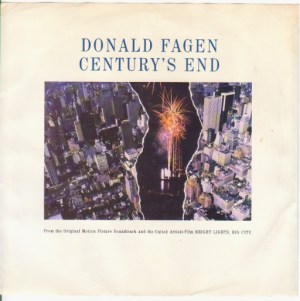
Donald Fagen: Century’s End 30 Years On

Almost 30 years ago to the day, my brother arrived home from a Richmond shopping spree bearing strange cargo – a new Donald Fagen 12” single.

To say that this was a surprise would be an understatement. After all, it was six years since The Nightfly and the late ’80s were generally a Steely Dan wasteland apart from occasional guest spots (China Crisis, Rosie Vela, Love And Money, Yellowjackets).

‘I think we felt that a lot of the energy was missing so we kind of sat out the ’80s,’ Fagen once said.

But, in his book ‘Eminent Hipsters’, he went further, talking about ‘falling apart like a cheap suit’ towards the end of the decade, with panic attacks, antidepressants and shrinks abundant.

But at least he didn’t need the money – ‘What supported me was that when CDs came out at the beginning of the ’80s, people had to buy the albums again.’

Fagen’s movie-producing cousin Mark Rosenberg headhunted him to come up with some music for the film version of Jay McInerney’s celebrated yuppie-in-peril book ‘Bright Lights Big City’. Fagen was typically reluctant but apparently swayed by the quality of McInerney’s writing.

There was also something distinctly Steely-esque about this tale of a disillusioned twentysomething’s descent into a drug-addled, paranoid New York hell. So Fagen fashioned his version of the movie, co-writing the lyric with Timothy Meher.

There are touches of ‘Bonfire Of The Vanities’ and ‘Wall Street’ in there. AIDS too, and ‘American Psycho’ was of course just around the corner.

The opening scene finds our hungover hero lamenting the roar of the Monday-morning garbage trucks. Cut to the floor of the NY Stock Exchange, where our yuppie daydreams about a conquest of the female variety: ‘We cut to this blonde/Dancing on a mirror/There’s no disbelief to suspend….

The image brilliantly conjures up Marilyn Monroe on the subway grate. Madonna should also probably come to mind. ‘She’s the concept, more or less, of love in the city at century’s end…

Nothing and nobody is real – it’s all pose and high-concept. There’s no hope for redemption either: ‘Nobody’s holding out for heaven‘. Greed is good. But then the mystery blonde is using her ‘pirate radar’ to find a likely escort or – even better – a minor celebrity to latch onto.

But no-one materialises, so you’ll do, although you know you’re only the second choice. But still: ‘Let’s get to the love scene, my friend‘…

Musically, ‘Century’s End’ is yet another brilliant Fagen concoction, initially based around a typical minor vamp and groovy half-time shuffle groove shepherded by Yellowjackets’ ‘Jim’ Haslip on bass and drummer Leroy Clouden (submerged in one or two different bits of rhythm programming).

Michael Brecker and Lew Soloff lead the horn section, and the raft of uncredited backing vocalists sounds like it might include Patti Austin. Gary Katz co-produced the song at Chelsea Sound.

Fagen’s vocals have rarely been better – check out his phrasing in the chorus. The 12” and CD also came with ‘Shanghai Confidential’, a neat little fuzak instrumental starring Marcus Miller on bass and Steve Khan on guitar.

The movie, starring Michael J Fox, stiffed. The casting didn’t help. But ‘Century’s End’ seems to be a bit of a guilty secret in Fagen’s discography, ripe for rediscovery…

Thelonious Monk: That’s The Way I Feel Now

Most jazz players don’t really seem to ‘get’ the music of Thelonious Monk.

Decent cover versions are hard to come by, of course with some notable exceptions (Steve Khan, Kenny Kirkland, Lynne Arriale, Paul Motian and probably a few more).

During the centenary of the genius’s birth, it seems as good a time as any to revisit a classic 1980s Thelonious tribute album which puts his miraculous compositions front and centre (plus the fact that I’ve just acquired a brilliant new cassette player* which is bringing it to life again after years stuck in the proverbial drawer).


That’s The Way I Feel Now was masterminded by producer/curator Hal Willner and inspired by bad Monk cover versions. Willner told writer Howard Mandel:

‘I was sitting at Carnegie Hall at some jazz memorial to Monk, getting freaked out that all these other people who really had a love of Monk weren’t performing. Monk’s music was never boring.’

So, at New York’s Mediasound Studios in early 1984, he set about assembling an extraordinary cast of fans including Todd Rundgren, Donald Fagen, Joe Jackson, Carla Bley, Peter Frampton, John Zorn, Was (Not Was), Dr John, Gil Evans, Bobby McFerrin, John Scofield and Elvin Jones to celebrate Monk.

(Willner has gathered similarly eclectic casts for albums celebrating Mingus, Nino Rota, Kurt Weill and the music of Walt Disney films, as well as producing records by Lou Reed and Marianne Faithful and movie soundtracks including ‘Short Cuts’.)

Listened to in one sitting, That’s The Way I Feel Now still makes for a gloriously psychedelic celebration of Monk’s ouevre. Over 22 tracks, I can only make out three duds. It’s also a triumph of sequencing, holding the attention with ease.

First, the ‘rock’: Rundgren’s take on ‘Four In One’ is a gloriously anarchic, Gary Windo’s sax blaring out over a cacophony of samples, cheap drum machines and amateurish keyboards. Was (Not Was)’s take on ‘Ba-Lue-Bolivar-Ba-Lues-Are’ features a knockout multi-tracked guest spot from vocalist Sheila Jordan, while Donald Fagen and Steve Khan mesh perfectly on beautiful ballad ‘Reflections’.

NRBQ’s take on ‘Little Rootie Tootie’ comes near to perfection, as does Chris Spedding/Peter Frampton’s surf-rock-tinged ‘Work’ featuring a classic Marcus Miller bass performance. Only Joe Jackson didn’t get the memo, delivering an overly-lush – though obviously heartfelt – ‘Round Midnight’.

Then there’s the ‘jazz’: John Zorn lays down an outrageous ‘Shuffle Boil’ featuring babbling vocals, bubble-blowing, chainsaw guitar, Bontempi organ and hilariously remedial drumming; Elvin Jones and Steve Lacy deliver a memorable ‘Evidence’; Randy Weston, Dr John and Barry Harris’s contributions are solo piano masterworks; John Scofield and Mark Bingham smash ‘Brilliant Corners’ out of the park, as do vocalists Bobby McFerrin and Bob Dorough on ‘Friday The 13th’.

Finally, Carla Bley’s ‘Misterioso’ is possibly the album standout, an affecting symphony for Monk featuring electrifying performances from Kenny Kirkland on piano, Johnny Griffin on tenor and Hiram Bullock on guitar.

The Rundgren tune aside, to my ears That’s The Way I Feel Now could have been recorded yesterday. The only problem is that it’s almost impossible to buy these days. So I’m bloody glad I held onto my ancient cassette version. Here’s hoping for a CD/download re-release soon.

*a Denon DRR 6.5, if you’re interested…

Walter Becker (1950-2017)

A statement from Donald Fagen:

‘Walter Becker was my friend, my writing partner and my bandmate since we met as students at Bard College in 1967. We started writing nutty little tunes on an upright piano in a small sitting room in the lobby of Ward Manor, a mouldering old mansion on the Hudson River that the college used as a dorm.

We liked a lot of the same things: jazz (from the twenties through the mid-sixties), W.C. Fields, the Marx Brothers, science fiction, Nabokov, Kurt Vonnegut, Thomas Berger, and Robert Altman films come to mind. Also soul music and Chicago blues.

Walter had a very rough childhood — I’ll spare you the details. Luckily, he was smart as a whip, an excellent guitarist and a great songwriter. He was cynical about human nature, including his own, and hysterically funny. Like a lot of kids from fractured families, he had the knack of creative mimicry, reading people’s hidden psychology and transforming what he saw into bubbly, incisive art. He used to write letters (never meant to be sent) in my wife Libby’s singular voice that made the three of us collapse with laughter.

His habits got the best of him by the end of the seventies, and we lost touch for a while. In the eighties, when I was putting together the NY Rock and Soul Review with Libby, we hooked up again, revived the Steely Dan concept and developed another terrific band.

I intend to keep the music we created together alive as long as I can with the Steely Dan band.

Donald Fagen

September 3 2017′