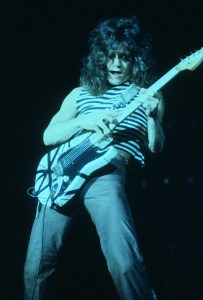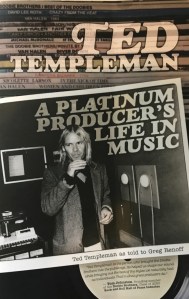
Book Review: A Platinum Producer’s Life In Music by Ted Templeman (as told to Greg Renoff)

You should never judge a person by their name.

movingtheriver assumed Ted Templeman – a favourite producer back in the day courtesy of his work with Van Halen, Little Feat, Doobie Brothers and more – was your typical seasoned/grizzled rock’n’roll journeyman.

But nothing could be further from the truth. Reading his enjoyable memoir (and looking at the cover), he turns out to be a mild-mannered jazz drumming prodigy turned pretty-boy frontman with late-‘60s baroque pop band Harpers Bizarre.

His story takes us from post-war Santa Cruz, California, to the upper echelons of the US music biz during boom time, when Templeman was a house producer for Warner Bros. (alongside Gary Katz, Michael Omartian, Jay Graydon and Lenny Waronker), becoming one of the wealthiest and best respected record execs of his era.

We learn about his youth studying the Cool School jazzers, then his pop band Harpers Bizarre gets signed by Warners and he’s mentored by Waronker, quickly learning what A&R actually means – choosing the right songs for the artist and assessing their commercial strengths and weaknesses. He also witnesses first-hand the weird action around the Doors, Beach Boys and Phil Spector.

But he quickly realises he’s not cut out for fronting a band, and moves on to being Warner Bros’s tape listener, hanging around Frank Sinatra sessions and getting the nod from Waronker to produce his pet project, the Doobie Brothers.

Then there are some fascinating sections on working with Van Morrison – he sees the frustrations of being a co-producer at first hand when they release the ‘wrong’ mix of ‘Tupelo Honey’. But he also sees Morrison’s more humorous side – during the recording of the live album It’s Too Late To Stop Now, Ted, sitting in the mobile studio outside The Rainbow, hears Van frequently saying, ‘Didja get that, Ted?’ into the mic between songs.

Templeman forges a long-term relationship with his engineer Donn Landee and starts working with Little Feat. He sparks a great friendship with their mainman Lowell George and is fascinated to find that he is a model airplane fan. But when pushed, Lowell claims he’s just learning about them so he he can fly in drugs from Mexico. He also learns a lot about drums working in Sunset Sound studio 1 with Richie Hayward.

Then there’s recording Carly Simon on Another Passenger, and her relationship with James Taylor, before Templeman first comes across Van Halen via a concert in Pasadena. They quickly become his second obsession, though he’s deeply unsure about Dave Lee Roth’s vocals and general attitude (the book is full of strikingly honest reflections, and he’s quick to admit when he’s wrong).

The main chunk of the book deals with recording Van Halen, from the classic debut to the painfully laboured 1984. He even confesses to initial scepticism about ‘Jump’, kvetching to Eddie: ‘I signed a heavy metal band’! But he somehow enlists Eddie to guest on rollerskating freak Nicolette Sheridan’s ‘Can’t Get Away From You’.

Templeman eventually becomes a great fan of Lee Roth, though advises him not to leave Van Halen and try to be a movie star (though still ends up producing Crazy From The Heat). He also worries about getting Sammy Hagar into VH, suggesting they change their name to Van Hagar, and refuses to produce 5150.

There’s an amusing meeting with Prince at Sunset Sound and the Purple One’s reaction to Templeman’s suggestion that Quincy Jones produce Purple Rain. And then there’s Allan Holdsworth, a Warner Bros. signing coming via Eddie Van Halen’s recommendation. Eddie and Templeman are contracted to co-produce Road Games, but Holdsworth refuses to allow them in the studio together while he’s recording! A baffled Eddie bows out, and then Holdsworth demands that a few tracks feature vocals against Templeman’s best advice (of course Allan has his own take on the Road Games debacle…).

The mild-mannered Michael McDonald is a regular character in the book, uncharacteristically going ballistic for not getting co-writing credit for Van Halen’s ‘I’ll Wait’. We learn about Aerosmith drummer Joey Kramer’s opinion of Templeman’s work on their comeback album Done With Mirrors, and Eric Clapton’s reaction to being told that his guitar tone sucks.

The last section of the book regards Templeman’s work on the ‘Wayne’s World’ soundtrack and then losing his job at Warners, leading to depression and alcoholism.

It’s one of those rare music books that takes you right into the process of trying to get quality, commercial performances from some of the biggest stars in the music business, and it’s full of good advice about producing/arranging and interesting musical/technical observations.

Sadly though, its message may fall on deaf ears these days when Pro Tools and bedroom recordings are all the rage, musicianship less so, but still it’s a fun, informative look at the peak of the studio scene. Highly recommended.

Van Halen @ Monsters Of Rock, Donington Park: 40 Years On

40 years ago this month, Van Halen were the penultimate act at Monsters Of Rock, Castle Donington, part of what is generally considered the greatest ever bill at the illustrious rock festival.
And now some sizzling side-of-stage footage from Saturday 18 August 1984 has emerged (but sadly has been removed from YouTube as of March 2025…), shot by Ross Halfin, showing the first iteration of the band at their commercial peak (they would break up in acrimony shortly after, and this was their last ever British concert).

The sound is not brilliant and some fans have complained about the setlist and length of both the Van Halen brothers’ solos, but it’s instructive and exciting to see exactly what goes down backstage/onstage.

Lee Roth is a superb master of ceremonies, singing well, dancing his tail off and firing off some amusing bits of banter: ‘Don’t stick your tongue out at me unless you’re gonna use it… If you wanna throw something at me, I’m gonna come down there and f*ck your girlfriend!’ etc. etc.

Though the footage starts off with Lee Roth and Alex Van Halen sharing a laugh (in a recent Classic Rock piece about the gig, Halfin claims the former was ‘stoned’ throughout), tensions among the band were high and nobody present was very surprised when they went their separate ways shortly after.

But it’s quite a thrill to get such a close-up view of such a legendary gig. The tempos are brisk but everything has VH’s inimitable swing and swagger.

In Memoriam: movingtheriver.com Salutes The Fallen Of 2020/2021

Janice Long (pictured left – the first woman to have a daytime show on Radio 1, the first female presenter of ‘Top Of The Pops’ and a great supporter of upcoming artists)

Nick Kamen

Dave Greenfield (Stranglers keyboardist)

Charlie Watts

Henry Woolf (teacher, poet, actor and member of Harold Pinter’s ‘Hackney Gang’)

Terence ‘Astro’ Wilson (co-founder of UB40)

Mick Rock

Baron Browne (bassist with Billy Cobham, Steve Smith’s Vital Information, Jean-Luc Ponty)

Joan Didion

Dean Stockwell

Stephen Russell (Barefoot Doctor)

Jimmy Heath

John Sessions

Eddie Van Halen

Lyle Mays

Betsy Byars

Jon Christensen (drummer for Keith Jarrett, Jan Garbarek etc.)

McCoy Tyner

Ian St. John & Jimmy Greaves (Saint & Greavsie)

Wallace Roney (jazz trumpeter)

Onaje Allan Gumbs (keyboardist with Will Downing, Phyllis Hyman, Billy Cobham etc.)

Hal Willner

Lee Konitz

Little Richard

Jimmy Cobb (drummer on Miles Davis’s Kind Of Blue)

Gary Peacock (bassist with Keith Jarrett, Miles Davis etc.)

Lee ‘Scratch’ Perry

Deon Estus (bass player with Wham!, George Michael and Marvin Gaye in Ostend, solo artist and producer)

Nanci Griffith

Dusty Hill (ZZ Top bassist)

George Wein (pianist, impresario and founder of the Newport Jazz Festival)

Phil Schaap (jazz historian and key contributor to Ken Burns’ ‘Jazz’ documentaries)

Pee Wee Ellis

Stephen Sondheim

Matthew Seligman (Thomas Dolby/Thompson Twins/Soft Boys bassist)

Genesis P-Orridge (co-founder of Throbbing Gristle)

Cristina (post-punk singer of ‘Drive My Car’ fame)

Michael Apted (director of ‘The Coal Miner’s Daughter’, ‘Ptang Yang Kipperbang’, ‘Gorillas In The Mist’, ‘Bring On The Night’, ‘The World Is Not Enough’, ‘Gorky Park’ and co-creator/director of the ‘Seven Up’ TV series)

Ed ‘Duke Bootee’ Fletcher (teacher, hip-hip pioneer and co-writer of Grandmaster Flash/Furious Five’s ‘The Message’)

Phil Chen (bassist on Jeff Beck’s Wired and Blow By Blow)

Phil Spector

Cicely Tyson (Academy Award/Emmy-winning actress and wife of Miles Davis)

Larry McMurtry

Lawrence Ferlinghetti (Beat poet)

Charles Grodin

Pauline Ann Strom (synth pioneer)

Bill Withers

Al Schmitt (recording engineer for Steely Dan, Toto, Diana Krall etc.)

George Segal

Jackie Mason

Robbie Shakespeare (Sly & Robbie bassist)

Una Stubbs

Ed Asner

Jean-Paul Belmondo

Yaphet Kotto

Chick Corea

Malcolm Cecil (jazz bassist and co-producer/synth programmer on Stevie Wonder’s Innversions, Talking Book and Music Of My Mind)

Greg Tate (jazz and soul writer)

Barry Harris (bebop pianist)

Charlie Watts

Lennie Niehaus

Steve Bronski (c0-founder of Bronski Beat)

Pat Martino

Rick Laird (Mahavishnu Orchestra bassist)

Milford Graves

Jon Hassell

Alan Hawkshaw (composer of many great TV and film themes including ‘Channel 4 News’, ‘Countdown’, John Carpenter’s ‘The Fog’ and this cracker which soundtracked much of my 1980s:)

Van Halen: Quantized

Harry’s Records, right next to the bus stop on my way home from sixth-form college, was a real institution in the late 1980s (I’ve recently discovered that it was actually a UK-wide chain of music stores).

Many a trip home was enlivened by inspecting the covers of Jeff Beck’s Guitar Shop, It Bites’ Eat Me In St Louis, Steve Vai’s Flex-Able or Anderson Bruford Wakeman Howe.

And Van Halen, the superb 1978 debut album. From the opening backwards car horns and Michael Anthony’s fuzzy bass to the manic closer ‘On Fire’, it was a stunner, with some of the most amazing guitar playing ever captured on record.

It’s a brilliant mix of Cream, Led Zep, The Sex Pistols, Kinks and Who, featuring a talented vocals/guitar/bass/drums lineup with a striking audio imprint (producer Ted Templeman’s mastery of the famous Sunset Sound echo chamber, with Eddie’s guitar flying across the stereo spectrum: Rick Beato and Warren Huart have put together superb musical analyses of the album).

The band ‘breathed’ and grooved, and it sounded like they played live in the studio (they did, pretty much). It certainly wasn’t ‘perfect’. Perfection is an interesting concept for rock, one of the legacies of the post-Nirvana 1990s. Everyone recorded with a click track, and everyone seemingly looked for ‘perfection’.

The 1970s were different. So it’s a great jolt to hear VH’s ‘Running With The Devil’ quantized and placed on ‘the grid’ by this wacky music surgeon below. Judge for yourself if you prefer the ‘perfect’ version or original, ‘wrong’ version – it’s a fascinating, sometimes amusing project:

P.S. Check out this amazing soundboard recording of VH’s Hammersmith Odeon support show with Black Sabbath in June 1978.

Great Guitar Solos Of The 1980s (Take Two)

We continue our rundown of classic solos from the 1980s. Check out the first part here.

39. Stone Roses: ‘She Bangs The Drums’ (Guitarist: John Squire)

38. Shakespears Sister: ‘You’re History’ (Guitarist: Stevie Salas)

37. Bireli Lagrene: ‘Rue De Pierre Part 3’
A triumph of solo guitar, and the only acoustic solo in this list, Bireli stunned the cognoscenti with this track from his 1988 Steve Khan-produced album Foreign Affairs.

36. Bros: ‘Chocolate Box’ (Guitarist: Paul Gendler)
Yes, Bros… Gendler had been a fully-paid-up member of New Romantic nearly-men Modern Romance before becoming an in-demand player on the UK scene, and he enlivened this hit with a raunchy, nimble classic.

35. REO Speedwagon: ‘Keep On Loving You’ (Guitarist: Garry Richrath)
Unreconstructed, huge-toned, double-tracked solo which revels in being almost out-of-tune throughout. Its sheer, brilliant in-your-faceness always comes as somewhat of a shock.

34. George Benson: ‘Off Broadway’
Slick, tasty solo from a truly great player. The tune is a Rod Temperton-penned, post-disco beauty from Give Me The Night.

33. Killing Joke: ‘Love Like Blood’ (Guitarist: Geordie)
This is ‘just’ a melody, but it’s a great melody, escalating in volume and intensity.

32. Phil Upchurch: ‘Song For Lenny’ (Guitarists: Phil Upchurch/Lenny Breau)
A couple of superb solos from a great, totally forgotten 1984 Upchurch solo album Companions. Breau stuns with his array of false harmonics and jazzy runs, while Upchurch brings the blues feeling.

31. Frank Zappa: ‘Alien Orifice’
It’s nice to hear Frank blowing over a few changes rather than his usual one or two-chord vamps. And he really gets a nice ‘flowing’ thing going here, right in the middle of one of his densest compositions. Starts at around 1:32:

30. Cameo: ‘A Goodbye’ (Guitarist: Fred Wells)
From the classic album Single Life, this solo goes way over and beyond the call of duty for an ’80s soul ballad. But it’s mainly included for its brilliant final flourish, spitting notes out like John McLaughlin. Who is Fred Wells and where is he now?

29. Rush: ‘YYZ’ (Guitarist: Alex Lifeson)
Hard to do without this flowing, creamy, Strat-toned classic on one of the great rock instrumentals of all time (though inexplicably it lost out to The Police’s ‘Behind My Camel’ at the Grammies…).

28. Kevin Eubanks: ‘That’s What Friends Are For’
A real hidden gem from the almost impossible-to-find Face To Face album, Eubanks lays down a short but beautifully-structured solo on a cool cover version.

27. Steve Miller Band: ‘Abracadabra’
Good fun and totally unpredictable. Also notable for its lovely Spanish-style flurry of triplets in its last two bars.

26. Starship: ‘Nothing’s Gonna Stop Us Now’ (Guitarist: Corrado Rustici)
Cheesy? Maybe a bit, but who cares when it’s this well-structured and performed. Add a great tone, nice string-bending and a lovely phrase at the end and you’ve got a classic.

25. Queen: The Invisible Man (Brian May)
May played a lot of great solos in the late 1980s, mostly on other people’s records (Holly Johnson, Fuzzbox, Living In A Box etc) but this one was just a kind of ‘play as many notes as possible in eight bars’ solo, and it’s a killer.

24. Lee Ritenour: ‘Mr Briefcase’
Rit found the sweet spot on his Ibanez many times in the early ’80s, no more so than on this single that kicked off the classic Rit album. The solo also sounds double-tracked too, no mean feat considering the crazy bunch of 32nd notes at the end of bar 10.

23. Michael Jackson: ‘Wanna Be Startin’ Something’ (Guitarist: David Williams)
Not so much a solo as a suddenly-foregrounded riff, Williams became one of the most in-demand US session players after laying down this classic.

22. Pat Metheny: ‘Yolanda You Learn’
A marvellous, ‘singing’ guitar-synth solo from the First Circle album, rhythmically interesting and reflecting a strong Sonny Rollins influence, also closing with a cool quote from the standard ‘My One And Only Love’.

21. Frank Zappa: ‘Sharleena’ (Guitarist: Dweezil Zappa)
Frank’s son was apparently just 14 years old when he laid down this absurdly fluid cameo.

20. Eric Clapton: ‘Bad Love’
Nice to hear Eric pushing himself for once, delivering a striking solo played right at the top of the neck, demonstrating a mastery of string-bending and precise fingering.

19. Sadao Watanabe: ‘Road Song’ (Guitarist: Carlos Rios)
A classic rock/fusion solo, all the more impressive because it’s apparently double-tracked, from the album Maisha. Rios is still one of the most in-demand session players in Los Angeles (and one of the few leftie fusion players…), probably best known for his work with Gino Vannelli, Chick Corea and Lionel Richie.

18. Prince: ‘Batdance’
It’s the unapologetic volume and raucous tone, almost distorting it’s so hot in the mix.

17. David Sanborn: ‘Let’s Just Say Goodbye’ (Guitarist: Buzz Feiten)
Feiten seems a weirdly unrecognised figure in the guitar fraternity, but he contributed some great stuff to Sanborn’s seminal Voyeur album including this tasty break over a killer Marcus Miller/Steve Gadd groove. There are some lovely moments when Sanborn’s sax cuts in to augment his solo.

16. Paul Simon: ‘Allergies’ (Guitarist: Al Di Meola)
I love hearing ‘jazz’ musicians turning up on ‘pop’ records, and this is a classic of its kind featuring all of Al’s trademark licks in one short, tasty burst. It’s a lot more fun than listening to his solo albums, anyway…

15. Manhattan Transfer: ‘Twilight Zone’ (Guitarist: Jay Graydon)
At a time when he was getting much more into the production game, Graydon still found time to toss off a double-tracked showstopper on this hit single. All in a day’s work for the session genius who of course unleashed the famous solo on Steely Dan’s ‘Peg’. Speaking of which…

14. Steely Dan: ‘Glamour Profession’ (Guitarist: Steve Khan)
A mini masterpiece of precision and invention. Khan is given his head and takes the classic tune OUT in the last three minutes. When the chord changes, he changes.

13. King Crimson: ‘Elephant Talk’ (Guitarists: Adrian Belew/Robert Fripp)
Two great solos for the price of one on this Discipline opener. Fripp supplies the opening horn-like curio, then Belew adds some fire and a bit of famous elephantosity for good measure.

12. Living Colour: ‘Funny Vibe’ (Guitarist: Vernon Reid)
A classic modern blues solo from a modern master, adding excitement and elan to an already burning piece, helped along by Will Calhoun’s cajoling kit work.

11. Steely Dan: ‘Third World Man’ (Guitarist: Larry Carlton)
Another day, another classic Steely guitar solo, this one recorded in 1977 during the Aja sessions but not unleashed for another three years. Again, double-tracked for lasting power, featuring a superb mastery of tone and melody.

10. Wendy & Lisa: ‘Waterfall’ (Guitarist: Wendy Melvoin)
Sadly this is my only female entry in the list (more suggestions please), but it’s a fuzz-toned, anthemic treat, with shades of Santana and McLaughlin.

9. The Police: ‘Driven To Tears’ (Guitarist: Andy Summers)
It’s the random, off-the-cuffness that appeals on this one. Summers sounds a lot more p*ssed off than usual, possibly reeling from yet another Sting jibe.

8. Steve Vai: ‘Call It Sleep’
Just a superb guitar composition from top to tail, but the moment at 1:22 when he stomps on the distortion pedal and rips it up is a great moment of ’80s music.

7. Propaganda: ‘Dream Within A Dream’ (Guitarist: Stephen Lipson)
Lipson modestly provided three or four extremely memorable guitar features during his golden ZTT period (not least Frankie’s ‘Two Tribes’), but this one gets extra points for its infinite reverb and a dynamite fuzztone.

6. Orange Juice: ‘Rip It Up’ (Guitarist: Edwyn Collins)
Just a funny two-fingers-up to the well-made solo, and also a fond homage to Pete Shelley’s famous break on Buzzcock’s ‘Boredom’.

5. Frank Gambale: ‘Credit Reference Blues’
Just wind him and watch him go. It starts slowly, almost wistfully, but then becomes a fire-breathing classic. Still scary after all these years.

4. Dire Straits: ‘Romeo And Juliet’ (Guitarist: Mark Knopfler)
The closing solo is just an oasis of choice phrases and unique tones.

3. Van Halen: ‘One Foot Out The Door’ (Guitarist: Eddie Van Halen)
Of course ‘Beat It’ is the industry standard, and possibly the greatest guitar solo of all time, but I’m going for this curio which closes out the oft-forgotten Fair Warning album. He just blows brilliantly over the changes with a gorgeous tone.

2. Jeff Beck: People Get Ready
The second and last solo is the one, a feast of Jeff-isms. A rare good bit from the rather poor Flash album.

1. Stanley Clarke: ‘Stories To Tell’ (Guitarist: Allan Holdsworth)
No chucking out any old solo for our Allan – this is a brief but fully-formed, perfectly structured, wide-interval classic that is easily the best thing about the tune. He seems to get a bit ‘lost’ in the middle, but then regroups for a stunning closing section over the rapid chord changes.

Book Review: The Speed Of Sound by Thomas Dolby

A cursory survey of Dolby’s musical career reveals that he’s a pivotal figure by any standards, collaborating with Prefab Sprout, Stevie Wonder, Eddie Van Halen, Jerry Garcia, George Clinton, Herbie Hancock, Trevor Horn, David Bowie, Def Leppard, Joni Mitchell…

And that’s not even factoring in the excellent solo albums and technological innovations (he created the software for the first popular mobile ringtones).

So if it’s pithy, musicianly anecdotes and the bittersweet memories of an Englishman (mostly) abroad you’re after, his enjoyable autobiography ‘The Speed Of Sound’ certainly does the business. But, as we’ll see, it’s very much a book of two halves.

A music-and-technology-mad teenager, Thomas Morgan Robertson first builds up his performing chops during a lengthy period of busking in Paris, finding out quickly that playing ‘Stairway To Heaven’ is the only way to make any money.

Returning to London, he’s in the right place at exactly the right time and on the verge of launching his solo career when summoned across the pond to work on Foreigner 4.

Christened ‘Booker T Boofin’ by the AOR legends for his considerable efforts, it nonetheless turns out to be a not entirely edifying entrée into the world of mega-bucks recording.

Then there’s solo-artist fame in the US, tempered by difficult video shoots, stage fright and the occasional debilitating panic attack. He’s summoned by Michael Jackson to come up with a few new post-Thriller tunes. It doesn’t end well.

His tours are well-attended but lose money and his second major single release ‘Hyperactive’ and attendant solo album The Flat Earth flatline partly due to dodgy record company ‘accounting’.

It’s a chastening experience; he focuses more on production work in the mid-’80s and any fans of Prefab’s Steve McQueen and Joni Mitchell’s Dog Eat Dog will find loads to enjoy here.

But Dolby inadvertently locks horns with Joni and finds himself sending in keyboard parts and arrangement ideas from Jenny Agutter’s spare room. Only in LA…

We get the inside story of his appearance with David Bowie’s at Live Aid (with only three short rehearsals), hear about a hilarious fishing trip with George Clinton and a memorable serenading by Stevie Wonder in a studio broom cupboard.

Then there’s an enjoyable detour into the world of movie soundtracks, ‘hanging out’ with George Lucas and meeting the love of his life in LA. By the early ’90s, we’re deep in ‘Spinal Tap’ territory when Dolby has amusingly mystifying dealings Eddie Van Halen and Jerry Garcia.

So far so good. But the second half of ‘Speed Of Sound’ focuses on Dolby’s lengthy sojourn in Silicon Valley. Depending on your taste, this will either be a trial or treat. I skipped large chunks of it.

I wanted a lot more music and a lot less tech, and you sometimes get the feeling Dolby did too throughout that period (he frequently laments the fact that his more ‘personal’ music on Aliens Ate My Buick and Astronauts & Heretics failed to find an audience).

The other issue – hardly Dolby’s fault of course – is that everyone seems to be writing a memoir these days and it only emphasises the dearth of decent recent music. And slightly lessens the mystique of the best ’80s material. I’d trade one more decent Dolby solo album for any number of ‘Speed Of Sound’s… But it’s still a very enjoyable read.

‘The Speed Of Sound’ is published now by Icon Books.

Dolby discusses the book here.

The Wackiest Guitar Solos Of The 1980s

eddie_van_halen_at_the_new_haven_coliseum_2Pop music has always featured its fair share of brilliantly ‘inappropriate’ instrumental solos, from the (uncredited) honking tenor break on Frankie Lymon & The Teenagers’ ‘Why Do Fools Fall In Love’ and Tony Peluso’s brilliant fuzz-guitar feature on The Carpenters’ ‘Goodbye To Love’ to Jeff ‘Skunk’ Baxter’s unreconstructed rampage through Donna Summer’s ‘Hot Stuff’.

And then of course there are the jazz solos that occasionally enhance ‘pop’ material – Sonny Rollins lighting up the Stones’ ‘Waiting On A Friend’, Ronnie Ross’s memorable break on Lou Reed’s ‘Walk On The Wild Side’ and Phil Woods/Wayne Shorter/Pete Christlieb’s tasty leads on some of Steely Dan’s best work.

In the ’80s, there was a lot of demand for the wacky solo, often thrown in to pep up some pretty light/fairly inconsequential material. One in particular really set the benchmark for the decade, and it’s naturally where we start our rundown…

6. Michael Jackson – ‘Beat It’ (Solo by Eddie Van Halen)
Eddie’s shock-and-awe break was a perfect distillation of all his trademark techniques: lightning-fast picking, close-interval tapping routines, whammy-bar divebombs and even a cheeky Jimi Hendrix ‘All Along The Watchtower’ homage.

5. Michael Sembello – ‘Maniac’ (1983)
Sembello, hitherto best known as a very able jazz/R’n’B session player for the likes of Stevie Wonder, David Sanborn and George Duke, unleashed this overblown post-‘Beat It’ solo (starting at 2:50) which sounds like it belongs to a completely different song. Maybe he should have stuck to the jazz and R’n’B…

4. Bros – ‘Chocolate Box’ (Solo by Paul Gendler)
Gendler was a respected UK-based session player (and member of Modern Romance!) before getting the call from the Goss boys. He tosses off a Francis Dunnery-esque, way-too-good-for-the-charts solo at 2:40 on this wafer-thin but very catchy single.

3. Europe – ‘The Final Countdown’ (Solo by John Norum)
This song is obviously crying out for a widdly guitar solo, but Norum’s brilliant Malmsteen-esque playing goes beyond the call of duty even by the standards of a mid-’80s hair-metal band.

2. Al Jarreau – ‘Telepathy’ (Solo by Nile Rodgers)
Nicely set up by Steve Ferrone’s wrongfooting half-bar drum fill, Nile plays all the notes he knows and a few more too in this seriously weird but rather brilliant harmonized/double-tracked break (starting at 2:05) from the L Is For Lover album.

1. Allan Holdsworth – ‘In The Mystery’ (1985)
Jazz/rock guitar genius Holdsworth inexplicably saved some of his wackiest solos for vocal-based, ‘commercial’ material. This one is fairly astonishing and, arguably, totally wasted on the song… (Bassist Jimmy Johnson also deserves a mention for his frenetic, Red-Bull-sponsored performance.)

Catching Up With Eddie Van Halen

225px-Eddie_Van_Halen_(1993)When I think of ’80s Eddie Van Halen, the image in my mind’s eye is probably not a lot different to any other fan – he’s grinning from ear to ear, cavorting around the stage, playing some of the greatest rock guitar of all time with one of the sweetest tones.

So it’s interesting to see him recently – sober, reflective, brutally honest, fiercely independent – talking about his life and craft onstage at the Smithsonian Museum of American History in Washington DC.

‘Jump’ had always been a favourite of mine and was at the back of my mind when I came across Van Halen’s superb debut album at Harry’s Records in Twickenham (another one that’s bitten the dust), during my first week of sixth-form college in 1989.

I just loved the devil-may-care feel of Eddie’s playing. He was fearless, unconcerned about making mistakes (his dad gave him some advice: if you make a mistake, do it again – with a smile), the same attitude that spurred on Parker, Ornette, Hendrix and Jaco.

I later got heavily into the VH albums Women And Children First, Fair Warning, Diver Down, 1984 and OU812, but the band have been completely off my radar since the early ’90s, when I loved the ‘Poundcake’ single.

Having said that, not living in the States, I’ve completely missed the recent new album and TV appearances featuring David Lee Roth back on vocals. Maybe I need to check in again because I dug this:

Anyway, back to the interview. It’s fascinating hearing Eddie chatting about his life and career, away from all the controversy that has dogged the band over the last few decades.

He talks about building his first guitar, the last album he bought (clue: it was back in 1986 and by an English singer who was once in a very famous progressive rock band…), demonstrates some techniques and talks candidly about his sometimes difficult early life as an immigrant in the USA.

G’wan – give yourself an hour off and enjoy some words from a master.