The Movers & Shakers Of 1980s Music: Their Real Names Revealed

Captain Sensible, AKA…

During the punk era, musicians often chose stage names so that the dole office wouldn’t identify them from album covers or gigs.

One wonders how much of an issue that was for Gordon Sumner, Paul Hewson and David Evans, AKA Sting, Bono and The Edge, but you never know.

But as the 1980s wore on and the post-punk era became the hip-hop era, a whole new generation of rappers, DJs, producers and musicians felt the need to create pseudonyms.

But what did their mums call them? Here, for your dubious pleasure, are some of the most intriguing real names. It’s fair to assume that most probably don’t like being reminded of these, for various reasons. YOU go taunting Ice-T with his real name (Tracy Marrow). But, on the other hand, kudos to The Cure’s Robert Smith for not using a pseudonym…

Green Gartside (Scritti Politti frontman): Paul Julian Strohmeyer

Terminator X (Public Enemy DJ): Norman Rogers

Jet Black (Stranglers drummer): Brian Duffy

W. Axl Rose: William Bruce Rose Jr.

Divine: Glenn Milstead

Henry Rollins: Henry Garfield

MC Lyte: Lana Moorer

Kate Bush: Catherine Bush

Sun Ra: Herman Blount

Sade: Helen Folasade Adu

Adam Ant: Stuart Goddard

Ozzy Osbourne: John Michael Osbourne

Genesis P-Orridge (Throbbing Gristle/Psychic TV frontperson): Neil Megson

Cosey Fanni Tutti (Throbbing Gristle co-founder): Christine Newby

Jamaaladeen Tacuma (Ornette Coleman bassist): Rudy McDaniel

Howard Devoto (Magazine singer/solo artist): Howard Trafford

Wilko Johnson: John Wilkinson

Jah Wobble: John Wardle (named by a drunken Sid Vicious, whose real name is John Ritchie…)

Prairie Prince (Tubes/XTC drummer): Charles Lempriere Prince

Sydney Youngblood (‘If Only I Could’ singer): Sydney Ford

Yazz (‘The Only Way Is Up’): Yasmin Evans

Belouis Some (‘Imagination’ singer): Neville Keighley

Hollywood Beyond (‘What’s The Colour Of Money’ singer): Mark Rogers

Tommy Vance (legendary DJ): Richard Anthony Crispian Francis Prew Hope-Weston

Melle Mel: Melvin Glover

John Martyn: Iain McGeachy

Tom Verlaine (Television frontman): Thomas Miller

Johnnie Walker (DJ): Peter Dingley

Kim Wilde: Kim Smith

Midge Ure: James Ure

Elvis Costello: Declan MacManus

Adrian Belew: Robert Steven Belew

Princess (London soul singer of ‘Say I’m Your Number One’ fame): Desiree Heslop

Dweezil Zappa: Ian Donald Calvin Euclid Zappa (The LA hospital nurse wouldn’t let Gail and Frank name him ‘Dweezil’ so FZ named him after his early collaborators Ian Underwood, Captain Beefheart, Carl Schenkel and ‘Motorhead’ Sherwood. Dweezil’s name was legally changed when he was five years old.)

Mick Mars (Motley Crue guitarist): Robert Alan Deal

John Foxx: Dennis Leigh

Trugoy (De La Soul rapper): David Jolicoeur

Cheryl Baker (Bucks Fizz vocalist): Rita Crudgington

Grandmaster Flash: Joseph Saddler

Kidd Creole (Furious Five rapper): Nathaniel Glover

KRS-One: Lawrence Parker

Pauline Black (Selecter singer): Belinda Magnus

Siouxsie Sioux: Susan Ballion

Geddy Lee: Gershon Eliezer Weinrib

Sebastian Bach (Skid Row singer): Sebastian Bierk

Marilyn (‘Calling Your Name’ singer): Peter Robinson

Don Was (Was Not Was co-founder/superstar producer): Don Fagenson

Falco (‘Rock Me Amadeus’ one-hit wonder): Johann Holzel

Steve Severin (Siouxsie and the Banshees bassist): John Bailey

Budgie (Siouxsie drummer): Peter Clarke

Dave Vanian (Damned singer): David Lett

Lydia Lunch: Lydia Koch

Flavor Flav: William Drayton

LL Cool J: James Smith

Tone Loc: Anthony Smith

Bonnie Tyler: Gaynor Hopkins

Yngwie Malmsteen: Lars Lannerback

Young MC: Marvin Young

Ice Cube: O’Shea Jackson Sr.

Shakin’ Stevens: Michael Barratt

Donna Summer: LaDonna Gaines

Captain Sensible: Raymond Burns

Rat Scabies (Damned drummer): Christopher Millar

Vanilla Ice: Matthew Van Winkle

MC Hammer: Stanley Burrell

DJ Kool Herc (hip-hop pioneer): Clive Campbell

Duke Bootee (hip-hop pioneer): Edward Fletcher

Afrika Bambaataa: Lance Taylor

Nikki Sixx (Motley Crue bassist): Franklin Ferrana

Skip McDonald (On-U Records/Sugar Hill guitarist): Bernard Alexander

Billy Idol: William Broad

Bill Wyman: William Perks

Fish: Derek Dick

Fee Waybill (Tubes vocalist): John Waldo

Billy Ocean: Leslie Charles

Posdnuous (De La Soul rapper): Kelvin Mercer

Maseo (De La Soul rapper): Vincent Mason Jr.

Chris De Burgh: Christopher Davidson

Kool Moe Dee: Mohandas Dewese

Dee C Lee (Style Council vocalist/’See The Day’ solo artist): Diane Sealey

Steve Strange (Visage frontman/Blitz pioneer): Stephen John Harrington

Youth (Killing Joke bassist/superstar producer): Martin Glover

Geordie (Killing Joke guitarist): Kevin Walker

Doug E Fresh: Douglas Davis

Scritti Politti’s Provision: 30 Years Old Today

A pop formula can be a dangerous thing. In Scritti mainman Green Gartside’s case, it was literally dangerous – dangerous to his physical and mental health.

He speaks of their 1988 album Provision with something akin to dread these days, lamenting the three-year recording process (no less than 10 studios are listed in the credits) and then ‘a year of hell’ – his words – promoting it (epitomised by the fairly dire ‘Boom! There She Was’ video).

A full-blown breakdown followed, and he now says he wished he’d had the guts to explore the hip-hop sounds that had begun to enthrall him around ’86/’87.

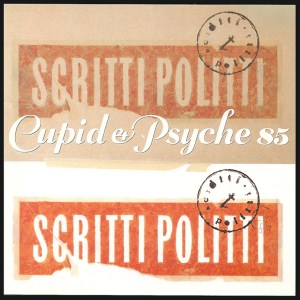
But, to these ears, Provision is an almost-perfect follow-up to the classic Cupid & Psyche ’85. There’s arguably more cohesion – Gartside and keyboard-playing cohort David Gamson co-wrote and co-produced all tracks (no Arif Mardin this time) and the guest spots from Miles Davis, Roger Troutman and Marcus Miller are expertly placed.

‘Sweetness’ is the word that seems to follows Scritti around. And despite containing two classic ballads (‘Overnite’, ‘Oh Patti’), Provision is unashamedly happy music – all the songs are in major keys – and for me it’s one of the ultimate summer albums (’88 was a great year in this regard, Provision sharing disc space with Thomas Dolby’s Aliens Ate My Buick, Prefab’s From Langley Park To Memphis, Prince’s Lovesexy and Joni’s Chalk Mark In A Rainstorm).

But Green’s lyrics are always subtly subversive. ‘Sugar And Spice’ may be about anal sex or drugs (or both!), ‘Boom’ references Immanuel Kant and a ‘pharmacopoeia’ (dictionary of drugs), amusingly lip-syched by Gartside in the video, while his interest in Marxism is never far from the surface of even the most seemingly-straightforward ‘boy/girl’ song.

And is there a Grammy award for arrangement? If so, Provision should have won. Gamson and Green do some intricate things here with backing vocals (check out ‘Bam Salute’), rhythm guitars and synth syncopation. No-one else has really explored similar areas, including the greats of ’80s R’n’B. No wonder Miles was a bit obsessed with Scritti.

Yes, the songs on side two are a bit too long and possibly point to a dearth of material, and the album could also do with a real drummer (Steve Ferrone, Vinnie Colaiuta?). Provision missed the top 100 in the States but made the top 10 in the UK (selling over 100,000 copies) and produced one top 20 hit in ‘Oh Patti’. Writer Nick Coleman gave the album a 9/10 rave in the NME, calling its songs ‘sweeties to rot your teeth and detonate your heart’.

Hear, hear. That ‘sweetness’ again…

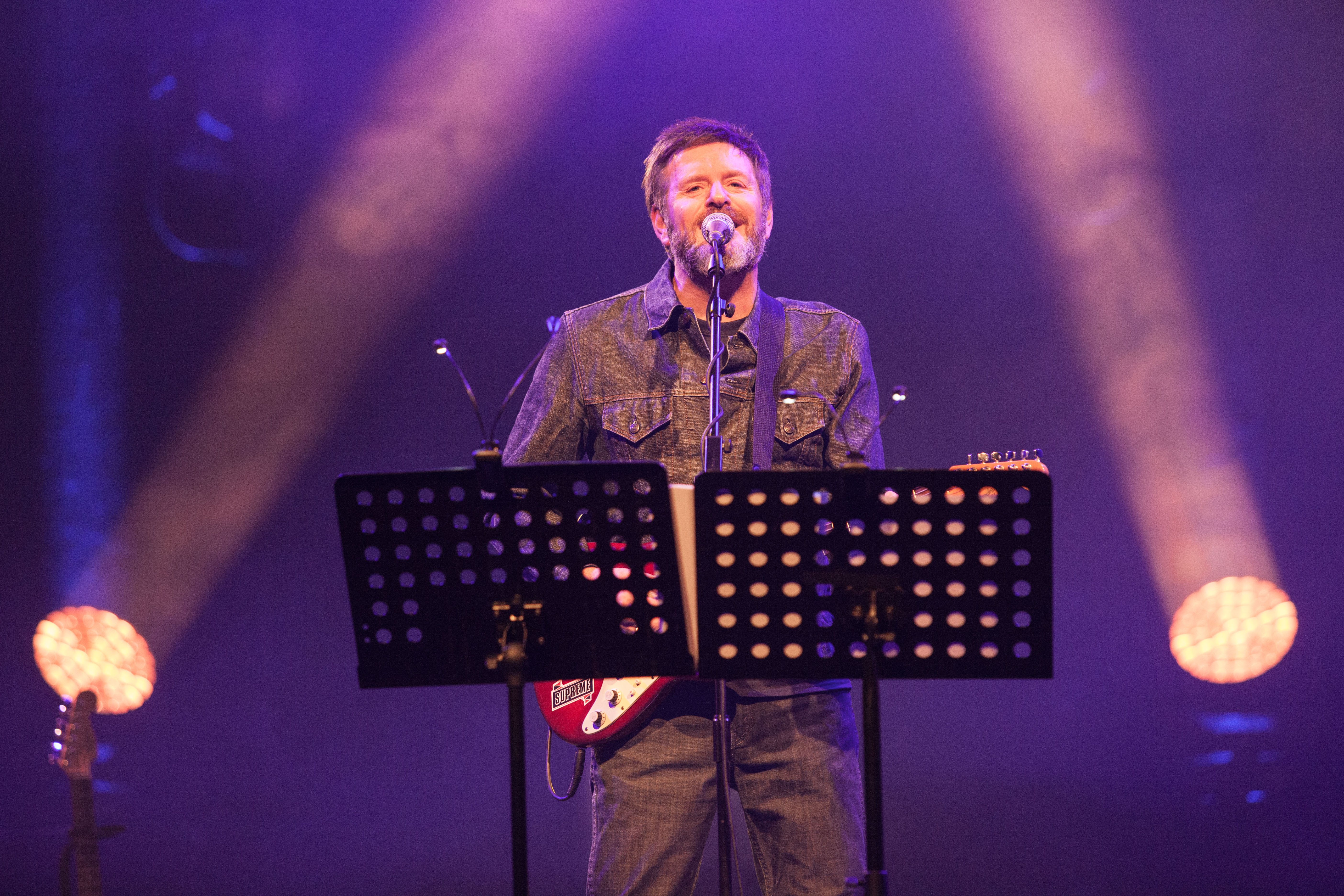
Gig Review: Scritti Politti @ The Roundhouse, 5th February 2016

all photos: John Williams Photography

all photos: John Williams Photography

Stage fright is the elephant in the room for some musicians. For every Jimi Hendrix or Madonna there’s an Andy Partridge or Green Gartside, gifted songwriters for whom live performance never felt like their true calling.

And during the opening moments of this hugely enjoyable – even revelatory – Scritti gig, it all threatened to go a bit Pete Tong before a triumphant turnaround.

Despite his extraordinary, instantly recognisable vocals, Gartside has always been somewhat of a reluctant frontman. He started out almost as the default vocalist in a kind of post-punk collective before an extreme onstage panic attack meant that he didn’t play live at all between 1980 and 2006.

But during that enforced exile, he built up one of the most sophisticated, revered and interesting songbooks in British pop. As with Partridge, the break from live performing brought out the best in him and produced classic albums Songs To Remember, Cupid & Psyche ’85 and Provision.

This relatively rare Scritti gig at the legendary Chalk Farm venue was a celebration of a fascinating career, and Gartside was also committed to explaining (almost) all the whys and wherefores of his craft in often hilariously candid fashion.

Scritti Politti 2

You could forgive a remarkably youthful-looking Green his nerves – The Roundhouse was jam-packed, bathed in subtle lighting and beautifully decked out as an all-seater venue in the round. Just entering the auditorium almost led this writer to give out an audible expletive.

But in a way he should have felt right at home – Scritti’s original late-’70s HQ was just around the corner on Carol Street, and Green also revealed that the Young Communist League and men’s group (‘where we would berate ourselves for being men’!) had also been very near the venue.

But back to the stage fright. Before even a note had been played, Green had major guitar strap issues, finding himself unable to get the damn instrument on as the crowd applauded sympathetically. ‘Oh, sh*t… This is why I didn’t play live for 20 years’, he sighed, looking genuinely troubled.

‘The Sweetest Girl’ finally got things underway, the delicious 1981 single described by Gartside as being his attempt to fuse Kraftwerk and Gregory Isaacs.

He revealed that he had even approached those two to collaborate on the song; when he didn’t hear back from the German techno innovators, he subsequently bumped into their co-founder Florian at a Tito Puente gig (of all things), only to be told by the titular German: ‘I hate reggae’!

Gartside indulged in some spirited rapping during ‘Die Alone’ while ‘The Word Girl’ sounded simply fantastic, causing outbreaks of groovy dancing from the very diverse crowd.

Green revealed that the original vocal may have been influenced by looking out of the studio window and seeing a sheep up to its neck in snow during the song’s recording in 1984.

Scritti Politti 3

A spine-tingling ‘Boom Boom Bap’ was described as an ode to ‘beer and hip-hop’, while the delicious ‘Brushed With Oil, Dusted With Powder’ pushed its claim as the greatest ever Green composition, apparently written on one of Joni Mitchell’s guitars given to him by legendary manager Peter Asher. Green also described how the song was ‘started in an LA hotel and finished in a flat above a dentist in Newport, Gwent’.

The raw, spiky ‘Skank Bloc Bologna’ and ’28/8/78′ (with spoken-word additions from Radio 4’s Harriet Cass) sounded like they could have been recorded yesterday, while the live premiere of ‘Asylums In Jerusalem’ was perfect.

A delicious ‘Oh Patti’ also got its live premiere, and ‘Jacques Derrida’ reiterated how similar Scritti and Prefab Sprout’s soundworlds were in the early ’80s, though Green ended it with a passionate rendition of Jeru The Damaja’s ‘Come Clean’. The closing duo of ‘Wood Beez’ and ‘Absolute’ prompted a further outbreak of dancing in the aisles, perfect slices of digital funk with fine keyboards from Rhodri Marsden.

Minor quibbles: onstage sound issues gave Gartside some serious pitching problems, though typically he was completely candid about this, describing his performance as ‘artfully inept’.

But there was never any doubt about how seriously he took his craft: announcing that the band was about to play a medley of unfinished new songs, a man in the front row let out a giggle, prompting Green to pointedly remark: ‘This is very f***ing serious, sir.’

At times, the band sounded brittle (though they would remain anonymous, there being no onstage introduction from Green), even though roughly 30 percent of the output seemed to be coming from backing tapes. But it really didn’t matter – you couldn’t take your eyes off the stage.

There’s simply no one else like Green Gartside in British music: a 60-year-old man fusing hip-hop, reggae, bubblegum pop, low-fi post-punk and superior synth-funk, and pulling it all together with great aplomb. This superbly shambolic gig very much whets the appetite for an upcoming album on Rough Trade.

Scritti Politti: Cupid & Psyche 85 30 Years Old Today

Listening again to the brilliant Cupid 30 years after its release, I wonder if it sounds very dated to modern ears.

Whilst it unabashedly utilised all manner of mid-’80s technology (Fairlight, drum machines, sequencers), I don’t really ‘hear’ those elements any more. All I hear is top-notch songwriting, intriguing and intelligent lyrics, great grooves and Green’s unique vocals.

Cupid hit me at exactly the right age; it was the soundtrack to endless summer evenings, teenage crushes, adolescent musings.

Though Scritti leader/vocalist/co-songwriter Green Gartside left behind his post-punk roots and the ‘indie’ sound of his Rough Trade debut album Songs To Remember to create this major-label debut, Cupid certainly had antecedents: Green and keyboardist/co-composer David Gamson revered the highly-syncopated R’n’B/electro of The System, Chaka Khan, ZAPP and Michael Jackson, but they added some classic pop songcraft and intricate harmony.

Rough Trade boss Geoff Travis gave Green his blessing and, coupled with manager Bob Last (who also managed Human League and ABC), Green pitched the Americans his fusion of pop and funk. As he told WORD magazine in 2006, ‘The American labels were all tickled pink by these big NME interviews we did and that loosened their wallets. Bob and I were terribly persuasive as to why they should part with vast sums so we could make a record.’

Legendary Aretha/Chaka producer Arif Mardin came on board as did a raft of quality players such as Marcus Miller, Steve Ferrone, David (The System) Frank, Robbie Buchanan, Robert Quine and Paul Jackson Jr. But Green apparently turned out to be more of a perfectionist than any of them: ‘It took us a great deal of time to get our bits right and my anxiety about singing was pretty acute. I would demand to sing things over and over again and I’m not sure I ever got it better than the first time.’

Cupid featured three classic singles – ‘The Word Girl’, ‘Absolute’ and ‘Wood Beez (Pray Like Aretha Franklin)’, though eventually a total of five tracks were released as A-sides.

The John Potoker remix of ‘Perfect Way’ (far superior to the album version) even became a massive hit in the States, reaching 11 on the Billboard Hot 100 and pushing worldwide sales of the album over the million mark.

While ‘Don’t Work That Hard’ and ‘Lover To Fall’ might be deemed ‘filler’, they easily transcend that label by dint of their sprightly grooves and sheer catchiness. The beautiful ‘A Little Knowledge’ showed that Green and Gamson were on the same page as Prefab’s Paddy McAloon when it came to sumptuous, intelligent romantic ballads in the mid-’80s, and the track is a great companion piece to ‘When Love Breaks Down’.

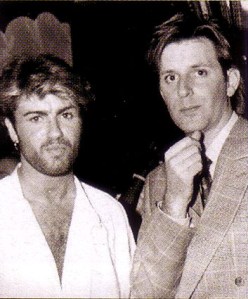
Post-Cupid, Green and Gamson booked and then cancelled a world tour (they were apparently visited in the studio by MTV executives who told them, ‘Just think, you’ll never have to tour again!’), wrote songs for Al Jarreau and Chaka Khan, made friends with Miles (who covered ‘Perfect Way’ on Tutu), hung out with George Michael at various London nightspots, embarked on a year of press in America to cash in on the success of ‘Perfect Way’ and then reluctantly hit the studios of New York and London to record the follow-up Provision.

george michael green gartside

George and Green, London, 1986

A cursory listen to a radio station like Absolute 80s reveals the wide-reaching influence of Cupid on countless late-’80s bands: a-ha, Go West, Climie Fisher, Living In A Box, Pet Shop Boys, Bros and Aztec Camera all tried for those clinical, Swiss-watch-precision arrangements and uplifting pure pop sound, but generally lacked Gamson’s ingenious chord changes and Green’s gift for melody.

Happy birthday to a bona fide ’80s classic.