Essential 1980s Jazz/Rock Albums (Part 2)

Continuing our look at some of the finest jazz/rock albums of the 1980s. You can find part 1 here.

Jaco Pastorius: Twins (1982)
A classic double album (an edited version was released as Invitation) recorded live in Japan just after the bass pioneer left Weather Report. Jaco’s brand of fusion took in jazz, Cuban, soul and R’n’B – no guitars here, but brilliant bass playing and powerful solos from Toots Thielemans, Lew Soloff, Jon Faddis and Bob Mintzer.

Frank Gambale: Live! (1989)
The Australian guitarist’s outrageous live debut was recorded at the Baked Potato in LA, and it finally showed just what he’s capable of – electrifying, original solos. His compositions are memorable too and there’s fantastic Latin/fusion drumming from Joey Heredia.

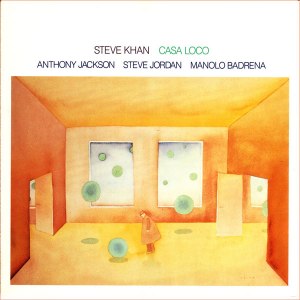
Steve Khan: Casa Loco (1983)
An album which still amazes musicians the world over. Arguably guitarist Khan, bassist Anthony Jackson, drummer Steve Jordan and percussionist Manolo Badrena have never done better work – that’s saying something considering who they’ve all played with.

Bill Bruford’s Earthworks: Dig? (1989)
Both of Bruford’s 1980s Earthworks albums were really good but this gets the nod due to Django Bates being given free reign, contributing superb keyboard solos, a cool reimagining of Petula Clark’s ‘Downtown’ and classic composition ‘Dancing On Frith Street’.

Paquito D’Rivera: Why Not! (1984)
An underrated album from the Cuban alto sax and clarinet star, also featuring Claudio Roditi on trumpet, Michel Camilo on keys and a wonderful performance from drummer Dave Weckl on the opening ‘Gdansk’.

Lyle Mays: Street Dreams (1988)
The Metheny Group keyboard player chucks in everything he knows on this big-budget project – ambient post-jazz, widescreen fuzak, big-band swing and Fagen-style fusion, and it’s all good. Some, like this writer, may also prefer the more red-blooded guitar playing of Bill Frisell to Metheny.

Pat Metheny Group: American Garage (1980)
No one is too sure if this came out in late 1979 or early 1980 but it’s this writer’s favourite Metheny album, though the guitarist himself seems to have almost disowned it. He loosens up and opens himself up to some rock and Steely Dan influences, driven along by Danny Gottlieb’s superb drums.

Level 42: A Physical Presence (1985)
A lot of it’s not strictly ‘fusion’, of course, but any album featuring such brilliant live versions of ‘Mr Pink’, ‘Foundation And Empire’ and ‘88’ has to make this list.

Mark King: Influences (1984)
The Level 42 mainman amazes with his 18-minute fusion classic ‘The Essential’, plus an eerily assured tribute to early Return To Forever called ‘There Is A Dog’. Plus he played almost everything on it.

John Patitucci: On The Corner (1989)
Both of the bassist’s 1980s solo albums were good but this gets the nod courtesy of the sheer variety of grooves from drummers Vinnie Colaiuta, Dave Weckl and Alex Acuna, and the leader’s exciting solos and excellent compositions, all memorable.

John Abercrombie: Getting There (1988)
A rare excursion into jazz/rock for ECM Records, the guitarist’s most dynamic ‘80s album featured Michael Brecker on sax, a hefty ‘rock’ mix courtesy of James Farber and arguably drummer Peter Erskine’s heaviest recorded performance to date.

Joni Mitchell: Wild Things Run Fast (1983)
She littered the album with influences from the Police but the main driver was the brilliant jazz/rock musicianship of bassist Larry Klein, drummers Colaiuta and John Guerin, saxist Wayne Shorter and keys player Russell Ferrante. ‘Moon At The Window’, ‘Be Cool’, ‘Ladies Man’ and ‘You’re So Square’ smuggled fusion into the album charts.

Miles Davis: Star People (1983)
Blues, blazing jazz/rock, chromatic funk and general weirdness combine for arguably Miles’s most exciting album of the decade, featuring all-time great guitar from Mike Stern and John Scofield.

John Martyn: Glorious Fool (1981)
John’s music was now bringing in influences from Weather Report, Latin music and spiritual jazz, and Phil Collins, keyboard player Max Middleton, percussionist Danny Cummings and bassist Alan Thompson made for a fantastic rhythm section.

Bruford: Gradually Going Tornado (1980)
Any album featuring ‘Gothic 17’, ‘Land’s End’, ‘Joe Frazier’ and ‘Palewell Park’ has to be on this list. Epochal work from bassist Jeff Berlin, keys man Dave Stewart and the drummer himself.

Bubbling under:
Terje Rypdal: The Singles Collection (1988)
Power Tools: Strange Meeting (1987)
Stanley Clarke: If This Bass Could Only Talk (1988)
Terri Lyne Carrington: Real Life Story (1989)
Chick Corea Elektric Band: Eye Of The Beholder (1988)
Bill Frisell: Before We Were Born (1989)
Loose Tubes (1984)
Players (Jeff Berlin, Scott Henderson, Steve Smith, T Lavitz) (1986)

(PS. If you like the sound of any of these albums, please consider buying them in physical formats to best support the artists.)

Essential 1980s Jazz/Rock Albums (Part 1)

1980s jazz/rock generally gets the side-eye these days.

But it wasn’t all the Chick Corea Elektric Band prancing around the stage in tracksuits or pitiful WAVE-style smooth jazz.

The 1970s jazz/rock pioneers were mostly going strong and if some were too tempted by synths and drum machines, the best music was made by sticking pretty rigorously to the tried-and-tested real drums/bass/guitar/keys lineup favoured by Miles, Weather Report, Return To Forever et al.

So here’s a selection of 1980s jazz/rock albums that have consistently gripped movingtheriver, most of which he queued up to buy at the HMV or Virgin Megastore, or found in an Our Price bargain bin. (These are not proggy or funky. So no Herbie, Brecker Brothers, David Sanborn or David Torn, but there are elements of R’n’B/Latin/soul/whatever mixed in with the jazz).

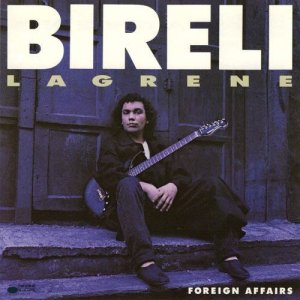
Bireli Lagrene: Foreign Affairs (1988)
Just 21 years old when he recorded it with producer Steve Khan, the French guitarist’s second Blue Note album is a cohesive gem and massive improvement on the debut, with terrific contributions from keyboardist Koono and drummer Dennis Chambers.

Ornette Coleman: Virgin Beauty (1988)
One of the most ‘accessible’ albums of the master’s career, with memorable melodies, a brilliantly expressive bassist (Al McDowell) and some decidedly odd guest appearances from Jerry Garcia.

Tribal Tech (Scott Henderson/Gary Willis): Nomad (1988)
Recorded in April 1988 but not released until early 1990, guitarists were rightly wowed by Henderson’s brilliance, a mixture of Michael Brecker, Allan Holdsworth and Stevie Ray Vaughan, while the rhythm section is groovy and propulsive and both Henderson and Willis’s compositions are excellent. And ‘Tunnel Vision’ may feature the perfect guitar solo…

John McLaughlin: Mahavishnu (1984)
OK there are some question marks in the keyboard and sax departments, and a few mediocre tracks, but Billy Cobham has rarely sounded better and John contributes three or four classic compositions and a few brilliant solos to this reunion album of sorts.

Marc Johnson’s Bass Desires: Second Sight (1987)
Wonderful interplay between guitarists John Scofield and Bill Frisell, plus some classic compositions including Scofield’s surf-rock-meets-jazz ‘Twister’, Frisell’s Monk-like ‘1951’ and Johnson’s moving ‘Hymn For Her’.

Larry Carlton: Last Nite (1987)
Guitarists of all stripes were blown away by Carlton’s playing in the 1980s, and here’s the best evidence, captured live at LA’s Baked Potato club with Alex Acuna, Abe Laboriel and JR Robinson.

Human Chain: Cashin’ In (1988)
This Brit jazz/rock classic, released on EG Records, had elements of the Canterbury sound, West Coast cool jazz, English folk music and 1980s Weather Report, featuring Django Bates’ fantastic keys and French horn and some weirdly impressive guitar and fretless bass from Stuart Hall (who he?). Also injects a healthy dose of much-needed humour to the ’80s jazz world.

Hiram Bullock: Give It What U Got (1988)
All the fun of the fair from this gifted but troubled guitarist: raunchy funk/rock, instrumental Steely Dan, Brecker Brothers horns, classic fusion and an Al Jarreau guest appearance on a Sam Cooke tune, but all shot through with jazz chords and Hiram’s lyrical playing.

Ronald Shannon Jackson: Mandance (1982)
Ornette-style harmolodics and Mingus-like ensemble work meet NYC punk-jazz on the drummer’s intriguing and powerful album, recorded live in the studio, featuring future Living Colour axeman Vernon Reid.

Weather Report: Sportin’ Life (1985)
It was a toss-up between this and Night Passage, both classics, but this gets the nod courtesy of the newly-minted rhythm section of Omar Hakim and Victor Bailey, plus a few classic Wayne Shorter tunes including ‘Face On The Barroom Floor’ which reportedly Joni Mitchell was particularly smitten by.

Wayne Shorter: Atlantis (1985)
Wayne again, fronting this fascinating, complex song-cycle featuring Alex Acuna on drums and Joni’s husband Larry Klein on bass. Takes some time to digest, but like a good wine gets better every year.

Allan Holdsworth: Secrets (1989)
A toss-up between this and Metal Fatigue, this gets in because of his delicious guitar tone and the inspired contributions of drummer Vinnie Colaiuta – ‘City Nights’, ‘Spokes’, ‘Peril Premonition’ and ‘Joshua’ are musical landmarks. Fiery, exciting, unmissable.

Steps Ahead: Modern Times (1984)
Messrs Brecker, Erskine, Mainieri, Gomez and Bernhardt were embracing some new technology but they never let it overshadow the mostly excellent compositions with telling solos, particularly from Brecker.

John Scofield: Still Warm (1985)
Take your pick between this, Blue Matter and Loud Jazz, all fantastic pieces of work, but Still Warm gets the nod courtesy of its dynamite rhythm section (Darryl Jones and Omar Hakim) and arguably John’s best writing of the ’80s.

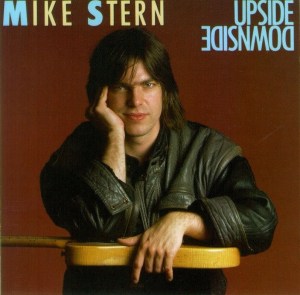
Mike Stern: Upside Downside (1986)
Produced by Hiram Bullock and featuring a crack band including Dave Weckl on drums, it showcases Stern’s finest/fieriest playing on record to date and also one of Jaco Pastorius’s last notable appearances. Still the best Stern solo album and quite extreme in its own way.

(If you’re new to any of these albums and they float your boat, please consider buying physical copies to support the artists.)

John Giblin (1952-2023): Seven Of The Best

Phil Collins and John, circa 1980

The period roughly between 1978 and 1985 was a golden age if you were a British or American session musician.

The mission: to sprinkle your unique brand of fairy dust over a song or album. You lived on your wits and gambled on your talent but your employers were more often than not creative artists at the top of their game.

As far as UK bassists go, Glasgow-born John Giblin, who has died at the age of 72, was always near the top of the list. He was famed for his melodic fretless bass style (though later pretty much disowned it, moving to five-string fretted and stand-up acoustic basses), starting his career with ex-Yes guitarist Pete Banks. He then hooked up with Brand X and Phil Collins and the rest is history.

After prestigious work with Kate Bush, John Martyn and Peter Gabriel, Giblin joined Simple Minds as full-time member in summer 1985 but left three years later after a falling out with producer Trevor Horn during the recording of Street Fighting Years. He also ran a much-loved rehearsal studio called Barwell Court near Chessington, Surrey.

Of course he was influenced by Jaco Pastorius but didn’t really sound like him. (Anyway, he traced that particular line from Eberhard Weber, who apparently claims Jaco ripped HIM off!) Giblin played memorable bass on tens of key tracks but here are seven that particularly registered with your correspondent, in chronological order.

7. John Martyn: ‘Some People Are Crazy’
movingtheriver’s introduction to Giblin’s work, he delivers a brilliant fretless commentary here, though I’m not even sure I realised it was a ‘bass’ circa 1985 – just superb music. It’s funky, flowing and also features those famed sliding harmonics, nicked from Ron Carter and Percy Jones. Giblin is also a talking head in the great Martyn documentary ‘Johnny Too Bad’.

6. Peter Gabriel: ‘Family Snapshot’
The whole of Gabriel III is of course a bass masterclass but Giblin and Gabriel fill in the backstory of the troubled political assassin to great effect in the moving final minute of this.

5. Kate Bush: ‘Breathing’
Just business as usual for Giblin on this classic Bush anti-nuclear ballad, weaving arch, memorable lines around her vocals. Also listen out for his closing, sepulchral E-flat.

4. Phil Collins: ‘Tomorrow Never Knows’
The much-ripped off (hello Pearl Jam) line that propelled one of the better Beatles cover versions.

3. Simple Minds: ‘Let It All Come Down’
Giblin didn’t get many composer credits but this co-write was always your correspondent’s favourite track on Street Fighting Years (Jim Kerr apparently wrote the words).

2. Kate Bush: ‘Love And Anger’
Kate again, and this time Giblin lets fly with some brilliant slap bass in the final few minutes alongside David Gilmour’s tasty guitar solo.

1. Scott Walker: ‘Tilt’
Demonstrating his post-’80s five-string style, Giblin enlivens Walker’s classic title track with some strikingly ‘out’ notes and a great sense of space.

Book Review: Elegant People (A History of the band Weather Report) by Curt Bianchi

‘The baddest shit on the planet’ – that was Weather Report keyboardist/co-founder/chief composer Joe Zawinul’s assessment of his band’s music.

He wasn’t alone – many credit them as the greatest jazz/rock unit in history, pretty impressive considering they developed out of a ‘scene’ that also included The Mahavishnu Orchestra, Return To Forever and Herbie Hancock’s Head Hunters.

Curt Bianchi has run the acclaimed Weather Report Discography website for many years and now expands his study to create the excellent ‘Elegant People’, an elaborate history of the band which features a myriad of exclusive interviews, photographs and information.

It has Brian Glasser’s effective Zawinul biography ‘In A Silent Way’ in the rear-view mirror but emerges as a very different proposition. Bianchi initially looks in detail at the formative years of Zawinul and co-founder/saxophonist Wayne Shorter, with sobering tales of the young Zawinul’s experiences in wartime Vienna and fascinating insights into Shorter’s extended periods in the bands of Maynard Ferguson, Art Blakey and Miles Davis.

The sections on Weather Report’s formation around 1970 are fascinating. Columbia’s marketing of them as a ‘progressive’ – rather than ‘jazz’ – band led to some interesting dichotomies; Shorter and Zawinul were already established superstars in their field but often had to engage in fairly menial/minor promotional work just to get a foot in the door with rock audiences. We also learn about the other potential band names that hit the cutting-room floor before ‘Weather Report’ appeared.

Bianchi then expertly traces the group from those early days as a kind of ‘chamber’ jazz/rock unit to their status as a ‘power band’ around the arrival of bassist Alphonso Johnson and drummer Chester Thompson in 1975, and the subsequent boost with the recruitment of Jaco Pastorius and Peter Erskine.

Bianchi brings the albums to life with great gusto. There’s a rare photo from the Night Passage sessions at The Complex in Los Angeles, and the last-ever photo of the Jaco/Erskine band taken at the Power Station in NYC, with Jaco almost a ghost at the back of the shot (shades of that famous final Syd Barrett photo with Pink Floyd). Elsewhere there are ticket stubs and even session track sheets.

And fans of Weather Report’s 1980s music can rest assured that Bianchi doesn’t give that era short shrift – there’s almost as much about the last few albums Sportin’ Life and This Is This (and many of Zawinul and Shorter’s post-Weather Report projects) as there is about commercial breakthroughs Black Market and Heavy Weather.

So ‘Elegant People’ is surely the ultimate Weather Report book – it’s an absolute must for fans and those wanting a deeper dive into the band’s music.

Who Writes The Songs That Make Those Old Blokes Cry: 1980s Tearjerkers

It’s all radio presenter Nick Abbot’s fault. On a recent podcast, he mentioned finding himself with a tear in the eye when listening to David Gilmour’s second guitar solo on Pink Floyd’s ‘Comfortably Numb’ in his car.

But it’s a subject almost totally ignored in print outside of scientific works: music’s effect on the body and mind. If you love it, surely it’s supposed to create a molecular change. The last few years may also have precipitated a more emotional relationship to music than usual, despite the current industry obsession with data and algorithms.

So, hide the onions and pass the sick bag: here are a few tracks from the 1980s that may have occasionally been known to put a lump in this correspondent’s throat, driven by nostalgia, musical excellence, loss of innocence and who knows what else.

21. Captain Sensible: ‘We’re Glad It’s All Over’

20. Bronski Beat: ‘Smalltown Boy’

19. Tina Turner: ‘Private Dancer’
She wants a husband and some kids but somehow the music tells you that the protagonist is never going to get out from under…

18. Johnny Gill: ‘Half Crazy’

17. Keith Jarrett: ‘Spirits 2’

16. The Kids From Fame: ‘Starmaker’

15. Peter Gabriel: ‘Lead A Normal Life’
Hard to think of a piece of music that better expresses loneliness, but there’s compassion too.

14. Christopher Cross: ‘Sailing’

13. Blondie: ‘Atomic’

12. The Pretenders: ‘Hymn To Her’

11. Art Pepper: ‘Our Song’
Gratuitous sax and violins. Recorded 18 months before his death, inspired by meeting his widow Laurie, Pepper seeks redemption for a largely selfish, itinerant life – does he find it? He tries bloody hard.

10. Jaco Pastorius: ‘John & Mary’

9. Pino Donaggio: ‘Blow Out (closing titles)’
The melody maestro’s beautiful theme from Brian De Plasma’s 1981 film starring John Travolta and the director’s then-wife Nancy Allen. A critic once said that her character’s death in the movie is the first one De Palma seems to care about – Donaggio’s music is the reason.

8. Madonna: ‘Oh Father’

7. David Bowie: ‘Absolute Beginners’
It’s the hope, not the despair. Maybe THIS time it’s all going to work out, ‘just like in the films’…

6. David Sanborn: ‘Imogene’

5. Dexter Gordon/Herbie Hancock: ‘Still Time’ 
The double meaning of Herbie’s title says it all – Dexter’s beautiful soprano playing is fragile yet also somehow ageless.

4. Prefab Sprout: ‘Moving The River’

3. Janet Jackson: ‘Livin’ In A World (They Didn’t Make)’
Just for the sheer beauty of Jam and Lewis’s composition. Janet’s words augment that.

2. Scritti Politti: ‘Oh Patti (Don’t Feel Sorry For Loverboy)’

1. The Police: ‘Driven To Tears’ (only joking – that’s enough tearjerkers… Ed.)

If you’ve got the stomach for it, chime in with your tearjerkers below.

Jaco Pastorius: Truth, Liberty & Soul (Live In NYC, 27 June 1982)

Even as the streaming revolution sweeps all before it, there are a few aspects of physical music that seem to be thriving: vinyl and the ‘historical discovery’.
Bass superstar Jaco is now a worthy recipient of both, courtesy of Truth, Liberty & Soul, a complete gig recorded at the Avery Fisher Hall in New York City on 27 June 1982, part of that summer’s Kool Jazz Festival.

The concert was originally broadcast live on NPR but has lain in the vaults for decades, and it took Resonance Records (via vaultmeister Zev Feldman) six years to prepare these tapes for release.

It features Jaco alongside his regular band (Bob Mintzer – saxes, Randy Brecker – trumpet, Don Alias – percussion, Othello Molineaux – steel drums, Peter Erskine – drums), plus special guest Toots Thielemans on harmonica and a big band full of NYC’s finest horn players.

The album catches Jaco at somewhat of a crossroads; by most accounts, June 1982 was the last time he was truly ‘together’ in terms of his mental wellbeing, the wheels really coming off during the Japanese tour later that autumn. (Fans of a certain age may fondly remember the televised live gig from the Montreal Jazz Festival which took place on 3 July 1982 – see below).

The question is, if you already own Jaco’s 1983 live album Invitation (released in slightly expanded form as Twins in Japan), also featuring the big band, is it worth getting this one? The answer is a resounding yes. It’s thrilling to hear a whole gig in real time by one of the last true jazz titans.

The sound is superb – crisp, deep and rich. The packaging is excellent, with a weighty booklet full of incisive essays and previously unseen photos. Anyone sick of bandleaders’ endless yakking to the audience to run down the clock these days will be pleased to hear that Jaco doesn’t utter a single word until a garbled band announcement during the closer ‘Fannie Mae’ – he’s there to play music.

There are many highlights – a killer ‘Donna Lee’, touching Afro-Cuban take on Toots’s ‘Bluesette’, an epic ‘Liberty City’ and particularly Mintzer’s superb composition ‘Mr Fonebone’, electrifying in big-band format.

There are one or two longeurs – we could probably do without the extended percussion and drum ‘improvisations’. And it has to be said that Jaco doesn’t sound on completely top form during his solos, though that’s possibly due to the size/acoustics of the venue, alluded to by a few contributors in the liner notes. But his accompaniment is typically brilliant throughout.

Frankly, it makes one desperate to attend such a gig in these crazy times. Truth, Liberty & Soul is a valuable release and an absolute must for anyone who owns any Jaco or Jaco-era Joni Mitchell/Weather Report albums.


Bireli Lagrene on Blue Note: Inferno/Foreign Affairs

It’s fair to say that many excellent jazz and jazz/rock guitar players emerged during the 1980s.

But arguably none – with the possible exception of Stanley Jordan – made as much of an impact as Bireli Lagrene.

He’s hardly a household name but Bireli recorded a few fine albums for Blue Note Records and toured extensively with Jaco Pastorius just before the bassist’s tragic death.

The French guitarist was seen in many circles as the natural heir to Django Reinhardt at the outset of the ’80s. The teenage prodigy wowed everyone with a few independent releases (initially in a manouche style) and European tours.

The key to his sound seemed to be absolute freedom. Like Jaco and Django, he has no fear. He tries things, always pushing himself. To paraphrase John McLaughlin, he’s swinging before he even starts playing.

Inferno, his debut Blue Note album, featured some excellent, freewheeling electric playing – more Mike Stern and Van Halen than Reinhardt – but the musical settings were a bit stilted and it suffered from too many changes in personnel.

But Bireli found a great foil in producer and fellow guitarist Steve Khan, and their 1988 follow-up Foreign Affairs was a big improvement.

I was mildly obsessed with this album for about a month during spring 1989 – I remember buying it on the same day as seeing ‘Rain Man’ in the cinema, fact fans…

There was far more of a ‘band’ vibe on this sophomore effort, and what a band: monster drummer Dennis Chambers is in Weather Report mode, with Zawinul-style half-time shuffles (‘Josef’) and fast Latin/fusion grooves (‘Senegal’).

And check out his burning solo at the end of the title track. Keyboardist Koono is a huge find and also obviously a big Zawinul fan, and recently departed bassist Jeff Andrews plays as tastily as ever.

Possibly as a result of his sad death in September 1987, Jaco’s influence is all over this album, particularly on the catchy opener ‘Timothee’ which features a mischievous, brilliant fretless bass solo by Bireli in tribute to his friend and mentor.

Elsewhere, Bireli’s sometimes outrageous guitar playing is typified by the screaming octave leap at the end of ‘St Jean’, and he uses a lot more tonal colours than on the debut album.

Tunes wise, Foreign Affairs‘ formula is not really that much different to the classic Blue Note albums of the ’60s – a few originals, a few sideman compositions and a few covers (Herbie Hancock’s ‘Jack Rabbit’ and Ira Gershwin/Vernon Duke’s ‘I Can’t Get Started’).

The latter in particular exemplifies a great production job by Khan, always getting a warm, ambient sound. Foreign Affairs is almost impossible to find on CD or vinyl these days but it’s just been added to streaming platforms, featuring some extra solo acoustic guitar tracks not on the original album. Bireli stayed with Blue Note for a couple more albums in the early ’90s, but they were far more traditional propositions.

Book Review: Pat Metheny (The ECM Years 1975-1984) by Mervyn Cooke

You know the guy: long, bushy hair, beatific grin, jeans, sneakers, long-sleeved T-shirt, usually rhapsodizing intensely via some kind of guitar gizmo.

Despite his many stylistic detours, Pat Metheny is a brand all right, and his music inspires a devotion and attendant sales profile that has rarely – if ever – been afforded to ‘jazz’ musicians.

If you – like me – aren’t always enamoured by the bulletproof sincerity of his stage presentation (in Gary Giddins’ memorable words, he ‘intones plush melodies with excessive sobriety, as though the notes were transmitted directly from God’ – the main reason why I’ve always preferred his stuff on record rather than live…), it’s beyond doubt that Metheny is one of the great guitar soloists.

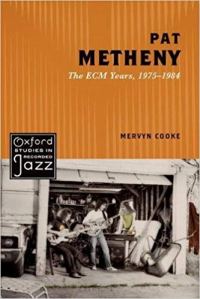
Mervyn Cooke’s superb new book ‘Pat Metheny: The ECM Years, 1975-1984′ sheds light on the first – and, for me, best – decade of the guitarist’s recording career, when he was the famous European jazz label’s top turn.

It’s an academic study, though never boring and certainly never predictable, with close attention played to Pat’s guitar styles, musical history, tunings, key collaborators (loads of new stuff about Jaco, Charlie Haden, Michael Brecker, Gary Burton and Lyle Mays here), equipment, album cover designs and inspirations.

There are fascinating details, like Metheny’s obsession with flat ride cymbals (hence his deliberate placement of drummers onstage, ride cymbals always in close proximity to his left ear) and his singular band-leading philosophies. There are solo transcriptions and quotes from archive interviews.

Cooke also shrewdly compares Metheny’s studio work in this era to that of Weather Report’s, drawing parallels between both acts’ meticulous sculpting of ‘spontaneous’ musical performances and attempts to concoct ‘through-composed’ – rather than vamp-based – material.

Metheny fans will love ‘The ECM Years’, as will anyone who has even the faintest interest in guitar trends of the last 40 years. It also serves as a rich biography of ECM Records in its early years, with numerous revelations about label boss Manfred Eicher.

Reading the book sent me running back to choice cuts from Pat’s early albums that I liked during my teenage years – Bright Size Life, American Garage, 80/81, As Falls Wichita, So Falls Wichita Falls, Travels, Rejoicing, First Circle, Song X.

Revisiting As Falls Wichita in particular has been somewhat of a revelation. (Prog fans: check out side one. It’s a cinematic masterpiece, analysed in great detail by Cooke.)

Mervyn Cooke’s ‘Pat Metheny: The ECM Years, 1975-1984’ is published by Oxford University Press.

Jaco (1951-1987)

Jaco Pastorius died 30 years ago today: 21 September 1987.

He was beaten up outside the Midnight Bottle nightclub in Wilton Manors, Florida.

British Jaco fans had particularly meagre pickings in the late 1980s. You gleaned whatever info you could from Bass Player and The Wire magazine or swapped gossip with muso pals.

I’m not even sure I knew he had passed away when I got my hands on import albums like Stuttgart Aria and Live In Italy, both recorded with the brilliant French guitarist Bireli Lagrene, or heard his guest spot on Mike Stern’s Upside Downside.

Then my dad came home from work one day around 1989, excitedly talking about a Jaco concert movie for which he had secured the rights, eventually broadcast on Channel Four as part of the ‘Sounds Of Surprise’ series of jazz films.

Sure enough, the 1982 Montreal Jazz Festival show was a whole new insight into this master musician, shot at a time when he was firing on all cylinders and one of the biggest ‘jazz’ stars on the planet. He was ostensibly touring his Word Of Mouth album at the time, but didn’t play one tune from it.

Starting with his old ‘sweetener’, Pee Wee Ellis’s ‘The Chicken’, Jaco led his superb band (Peter Erskine on drums, Bob Mintzer on reeds, Randy Brecker on trumpet, Othello Molineaux on steel pans, Don Alias on percussion) through a tasty combo of jazz, R’n’B, blues and Caribbean influences.

Particularly notable are a breezy ‘Donna Lee’ and brilliant version of Mintzer’s ‘Mr Fone Bone’, starting at 27:40. Jaco’s soloing throughout the gig is beautiful – emotional, nuanced, dramatic. On the closer ‘Fannie Mae’, he plays the blues with as much feeling as Alberts King or Collins.

So here it is in all its glory. July 1982, Montreal, Canada. RIP Jaco.

Hiram Bullock’s From All Sides: 30 Years Old Today

hiramIn the mid-’80s, London seemed to be Hiram Bullock’s second home.

The late great New York-based guitarist was in David Sanborn’s band at the Wembley Arena in November ’84 (alongside Marcus Miller, Don Grolnick and Steve Gadd, one of my first ever gigs) and also appeared in town regularly with Carla Bley and Gil Evans during this period.

At a Sanborn Hammersmith Odeon gig in February 1987 (see the comments section below), Hiram embarked on a solo, and, with the aid of a wireless unit, promptly jumped off the stage to serenade the stalls.

He then vacated the auditorium, soloing all the while, and a few minutes later appeared in the front row of the balcony, still blazing away, illuminated by a single spot. Such shenanigans would earn himself column inches in the jazz magazines and a cult following but sometimes overshadow the fact that he was one of the great guitarists of the ’80s or any other decade, effortlessly mixing up the blues, funk, bebop and rock. You might even call him the Jaco of guitar.

By mid-1986, he had enjoyed ten years as a first-call session player (Steely Dan, Chaka Khan, Brecker Brothers et al) as well as being part of the famous ‘Saturday Night Live’ and ‘Late Night With Letterman’ bands.

He had also recently hooked up with his one-time bass student Jaco in the PDB trio (with drummer Kenwood Dennard) and produced Mike Stern’s excellent Upside Downside (guitar-wise, they have a lot in common).

In short, he had paid his dues. It was time for a solo album. Though From All Sides is in many ways a classic ‘journeyman’ record, covering all the bases from funky fusion (‘Window Shoppin’, ‘Cactus’, written by Randy Brecker) through R’n’B (‘Funky Broadway’) to smooth Sinatra-influenced balladry (‘Really Wish I Could Love You’), it’s never boring, helped also by some good guest spots – Kenny Kirkland supplies a classy solo to ‘Window Shoppin’ while Sanborn lights up ‘Say Goodnight, Gracie’.

On the witty ‘state of the world’ blues ‘Mad Dog Daze’, Bullock even comes over a bit like a Johnny Guitar Watson for the ’80s. The album also benefits greatly from mostly sticking to the same excellent rhythm section – Charley Drayton on drums, Will Lee on bass, Clifford Carter on keys – which gives some consistency from tune to tune.

Hiram plays some brilliant solos, even on somewhat cheesy material such as ‘When The Passion Is Played’ and ‘Until I Do’. The production is state-of-the-art for ’86, ie. extremely high on treble and compression but short on low-end.

But From All Sides is still mostly a blast, driven on by Hiram’s irrepressible energy and good vibes, though the followup Give It What U Got was a big improvement – more on that later.