Essential 1980s Jazz/Rock Albums (Part 2)

Continuing our look at some of the finest jazz/rock albums of the 1980s. You can find part 1 here.

Jaco Pastorius: Twins (1982)
A classic double album (an edited version was released as Invitation) recorded live in Japan just after the bass pioneer left Weather Report. Jaco’s brand of fusion took in jazz, Cuban, soul and R’n’B – no guitars here, but brilliant bass playing and powerful solos from Toots Thielemans, Lew Soloff, Jon Faddis and Bob Mintzer.

Frank Gambale: Live! (1989)
The Australian guitarist’s outrageous live debut was recorded at the Baked Potato in LA, and it finally showed just what he’s capable of – electrifying, original solos. His compositions are memorable too and there’s fantastic Latin/fusion drumming from Joey Heredia.

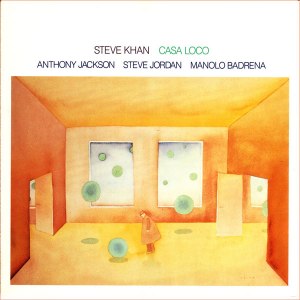
Steve Khan: Casa Loco (1983)
An album which still amazes musicians the world over. Arguably guitarist Khan, bassist Anthony Jackson, drummer Steve Jordan and percussionist Manolo Badrena have never done better work – that’s saying something considering who they’ve all played with.

Bill Bruford’s Earthworks: Dig? (1989)
Both of Bruford’s 1980s Earthworks albums were really good but this gets the nod due to Django Bates being given free reign, contributing superb keyboard solos, a cool reimagining of Petula Clark’s ‘Downtown’ and classic composition ‘Dancing On Frith Street’.

Paquito D’Rivera: Why Not! (1984)
An underrated album from the Cuban alto sax and clarinet star, also featuring Claudio Roditi on trumpet, Michel Camilo on keys and a wonderful performance from drummer Dave Weckl on the opening ‘Gdansk’.

Lyle Mays: Street Dreams (1988)
The Metheny Group keyboard player chucks in everything he knows on this big-budget project – ambient post-jazz, widescreen fuzak, big-band swing and Fagen-style fusion, and it’s all good. Some, like this writer, may also prefer the more red-blooded guitar playing of Bill Frisell to Metheny.

Pat Metheny Group: American Garage (1980)
No one is too sure if this came out in late 1979 or early 1980 but it’s this writer’s favourite Metheny album, though the guitarist himself seems to have almost disowned it. He loosens up and opens himself up to some rock and Steely Dan influences, driven along by Danny Gottlieb’s superb drums.

Level 42: A Physical Presence (1985)
A lot of it’s not strictly ‘fusion’, of course, but any album featuring such brilliant live versions of ‘Mr Pink’, ‘Foundation And Empire’ and ‘88’ has to make this list.

Mark King: Influences (1984)
The Level 42 mainman amazes with his 18-minute fusion classic ‘The Essential’, plus an eerily assured tribute to early Return To Forever called ‘There Is A Dog’. Plus he played almost everything on it.

John Patitucci: On The Corner (1989)
Both of the bassist’s 1980s solo albums were good but this gets the nod courtesy of the sheer variety of grooves from drummers Vinnie Colaiuta, Dave Weckl and Alex Acuna, and the leader’s exciting solos and excellent compositions, all memorable.

John Abercrombie: Getting There (1988)
A rare excursion into jazz/rock for ECM Records, the guitarist’s most dynamic ‘80s album featured Michael Brecker on sax, a hefty ‘rock’ mix courtesy of James Farber and arguably drummer Peter Erskine’s heaviest recorded performance to date.

Joni Mitchell: Wild Things Run Fast (1983)
She littered the album with influences from the Police but the main driver was the brilliant jazz/rock musicianship of bassist Larry Klein, drummers Colaiuta and John Guerin, saxist Wayne Shorter and keys player Russell Ferrante. ‘Moon At The Window’, ‘Be Cool’, ‘Ladies Man’ and ‘You’re So Square’ smuggled fusion into the album charts.

Miles Davis: Star People (1983)
Blues, blazing jazz/rock, chromatic funk and general weirdness combine for arguably Miles’s most exciting album of the decade, featuring all-time great guitar from Mike Stern and John Scofield.

John Martyn: Glorious Fool (1981)
John’s music was now bringing in influences from Weather Report, Latin music and spiritual jazz, and Phil Collins, keyboard player Max Middleton, percussionist Danny Cummings and bassist Alan Thompson made for a fantastic rhythm section.

Bruford: Gradually Going Tornado (1980)
Any album featuring ‘Gothic 17’, ‘Land’s End’, ‘Joe Frazier’ and ‘Palewell Park’ has to be on this list. Epochal work from bassist Jeff Berlin, keys man Dave Stewart and the drummer himself.

Bubbling under:
Power Tools: Strange Meeting (1987)
Stanley Clarke: If This Bass Could Only Talk (1988)
Terri Lyne Carrington: Real Life Story (1989)
Chick Corea Elektric Band: Eye Of The Beholder (1988)
Bill Frisell: Before We Were Born (1989)
Loose Tubes (1984)
Players (Jeff Berlin, Scott Henderson, Steve Smith, T Lavitz) (1986)

(PS. If you like the sound of any of these albums, please consider buying them in physical formats to best support the artists.)

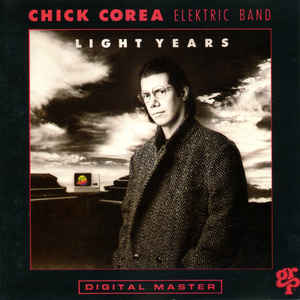
Chick Corea Elektric Band: Light Years (1987)

Jazz/fusion of the late-’80s variety is sure to give any John Peel acolyte nightmares: visions of guys in tracksuit bottoms, trainers and vests, looking like extras from ‘Thirtysomething’, playing absurdly gymnastic jazz/rock based on corny ‘funk’ or Latin vamps, grinning at each other and the audience, using the cheesiest modern gizmos (Simmons electric drums, EWI wind instruments, guitar synths).

The Chick Corea Elektric Band (Corea: keyboards, Frank Gambale: guitar, John Patitucci: bass, Dave Weckl: drums) probably best epitomised this style. But guess what – revisiting their 1987 album Light Years recently, it emerges as one of the best and least ridiculous projects of Chick’s career.

He reins in the chops and gothic longeurs to produce a collection of really good themes and tight, attractive arrangements (though the three ‘extra’ tracks on the CD/streaming versions are disaster areas). The album is also musical catnip for me, bringing back memories of when I was first getting into jazz and fusion.

The thing is that Chick seems to actually relish including some pentatonic/blues-based harmony on Light Years. Some of his playing wouldn’t seem out of place in the music of Will Downing or Lonnie Liston Smith. There are even a few II-V-I chord changes. ‘Starlight’ and the title track are as catchy and immediate as David Sanborn’s ‘Run For Cover’ or ‘Hideaway’, though Marienthal’s alto tone is a bit too close to Dave’s for comfort. Weckl delivers lesson after lesson in Latin-flavoured funk and rock drumming. Gambale and Patitucci barely break sweat, or rather don’t get any room to show off, but still make a few telling contributions.

‘Time Track’ and ‘View From The Outside’ demonstrate everything that’s good about Light Years – catchy melodies, cool grooves and meticulous, gradually-escalating arrangements. The ridiculously technical last four bars of the former demonstrate some of the killer musical chops that are kept pretty much in the locker throughout the album, only to be brought out when strictly necessary.

I saw them live a couple of times around this time and of course the musicianship was incredible, even if the relentlessly ‘up’ stage presentation now looks pretty embarrassing.

Light Years is obviously good. It’s brutally, clinically good. It’s almost critic-proof. The Elektric Band were the Level 42 of high-octane fusion and this album is their World Machine. Of course it’ll always sound a bit like muzak to some, but that’s quite cool too. The CD’s inlay card features a really weird poem by Chick, kind of an ode to Scientology. It’s worth reading. And actually the album cover is pretty strange too…

Wayne Shorter: Phantom Navigator 30 Years Old Today

wayne sh

In the late-’80s, Wayne was seemingly about as far away from ‘jazz’ as it’s possible for a jazz legend to get.

His music hadn’t featured any tinging ride cymbals or walking acoustic basses for decades. Even Miles thought Wayne was getting a bit too ‘far-out’ – he reportedly told the saxophonist as much when they met backstage during Miles’s Paris tribute show in July 1991.

Which must have come as quite a shock to Wayne – after all, his ’80s music featured strong, ‘funky’ grooves and attractive, happy melodies. On the face of it, albums like ’87’s Phantom Navigator (apparently inspired by the ‘Other Worlds’ sci-fi comic series he drew in his teenage years) weren’t that different from Miles’s Tutu and Amandla.

But of course they were completely different, and Phantom Navigator is probably the most ‘far-out’ collection of Wayne’s solo career.


Many critics couldn’t see beyond the drum machines, bass vamps and synths, missing the complexity of the arrangements and incredible care and attention that went into making the album, though maybe Wayne was asking for trouble by recruiting legendary NY beat-maker Jimmy Bralower, who had recently featured on Steve Winwood’s ‘Higher Love’ and Nile Rodgers’ B Movie Matinee.

wayne-shorter_in_amsterdam_1980

But these elements were just ‘sweeteners’ – Phantom Navigator was designed to be lived with, devoured in long stretches as one would a classical piece.

There were so many good melodic ideas packed into every tune but it wasn’t an album for short attention spans – not ideal in the MTV-flavoured, thrill-a-minute late-’80s.

‘Condition Red’ fairly bursts out of the speakers, with Wayne’s hair-raising soprano (I’d posit that Phantom Navigator features the best soprano tone of his career), sublime harmonies and witty scat vocals.

Chick Corea’s crystalline piano features strongly on the intricate, beguiling ‘Mahogany Bird’, while ‘Remote Control’ taps into a go-go groove (though Bralower’s snare is way too big – where was Ricky Wellman when Wayne needed him?) underpinning rich, endlessly-flowing soprano harmonies.

Side two’s triptych of ‘Yamanja’ (named for a sea goddess of Brazilian legend), ‘Forbidden – Plan-It!’ and ‘Flagships’ are nothing less than mini concertos for soprano sax, electric bass and synths. All would work fine with a symphony orchestra with their endlessly intertwining lines and countermelodies.

Wayne toured a lot during this period (I think I saw him three times in London between ’85 and ’88) and to a certain extent the music was a hard sell, both for audiences and the musicians. His sci-fi fusion stuck out like a sore thumb during the late-’80s London jazz/rare-groove revival when he was sometimes put on the same bill as people like The James Taylor Quartet and Gilles Peterson! I remember a really weird such gig at the old Town & Country Club in the late ’80s.

It’s the same old story – the problem of marketing music that goes way beyond category. But, in the final analysis, Wayne doesn’t play jazz, rock, go-go, funk or soul on Phantom Navigator – he plays life.

Story Of A Song: Everything but the Girl’s ‘Driving’ (1990)

drivingThe 1980s are littered with Brit pop bands going ‘across the pond’ to work with US producers and musicians.

It was almost a rite of passage, or – according to some music critics of the slightly more cynical persuasion – a desperate attempt at credibility.

You could hardly level that accusation at Tracey Thorn and Ben Watt, AKA Everything but the Girl. They were headhunted by legendary producer Tommy LiPuma, who had just put the finishing touches to Miles Davis’s Amandla, and their ‘Driving’ single (released in early 1990 but recorded spring 1989) seems a near-perfect marriage of US and UK sensibilities.

I confess I hardly knew anything about EBTG when my brother first played me ‘Driving’. I just heard something extremely classy, with intriguing chord changes, a great singer and strong jazz flavour.

I didn’t know Tracey and Ben had spent much of the ’80s building up a considerable rep as ‘indie jazz/folk’ darlings of the music press and enjoying not inconsiderable commercial success too, but I was possibly vaguely familiar with Tracey’s gorgeous vocals on The Style Council’s ‘Paris Match’.

Taken from The Language Of Life album, the song was recorded in LA at the famous Ocean Way and Sunset Sound studios with pretty much the finest session players money can buy (Omar Hakim on drums, John Patitucci on bass, Larry Williams on keys/arrangements, Michael Brecker on tenor).

But, according to Tracey’s superb memoir ‘Bedsit Disco Queen’, the American musicians were totally ignorant of the fiercely independent English scene from which Tracey and Ben had emerged.

When Larry Williams found out that EBTG had recently recorded at Abbey Road, he blurted out: ‘Wow! Abbey Road! The home of the Beatles!’ Tracey’s reply: ‘God, I HATE the Beatles.’ There was a pregnant pause. Eventually Williams spluttered out: ‘You h-h-hate the Beatles?’

But such musical differences were all in a day’s work for EBTG.

‘Driving’ obviously sounds more like Anita Baker than, say, The Smiths. It’s sophisticated but still has bite, with rich chords and a glorious Brecker solo (inexplicably with a different, inferior take on my 7” vinyl version).


‘Driving’ became somewhat of an airplay hit in the States (though surprisingly only reached #54 in the UK), and led to several high-profile US gigs which unfortunately seemed to precipitate a crisis of confidence for Tracey.

The EBTG live band, which included future smooth jazz star Kirk Whalum on sax, whipped the crowds into a frenzy night after night, but there wasn’t much space for her subtle, low-key vocals any more.

Cue a few years of soul-searching and a distinct change of direction, exemplified by 1994’s Amplified Heart.