Essential 1980s Jazz/Rock Albums (Part 2)

Continuing our look at some of the finest jazz/rock albums of the 1980s. You can find part 1 here.

Jaco Pastorius: Twins (1982)
A classic double album (an edited version was released as Invitation) recorded live in Japan just after the bass pioneer left Weather Report. Jaco’s brand of fusion took in jazz, Cuban, soul and R’n’B – no guitars here, but brilliant bass playing and powerful solos from Toots Thielemans, Lew Soloff, Jon Faddis and Bob Mintzer.

Frank Gambale: Live! (1989)
The Australian guitarist’s outrageous live debut was recorded at the Baked Potato in LA, and it finally showed just what he’s capable of – electrifying, original solos. His compositions are memorable too and there’s fantastic Latin/fusion drumming from Joey Heredia.

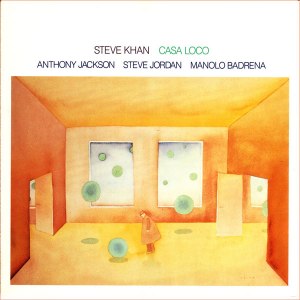
Steve Khan: Casa Loco (1983)
An album which still amazes musicians the world over. Arguably guitarist Khan, bassist Anthony Jackson, drummer Steve Jordan and percussionist Manolo Badrena have never done better work – that’s saying something considering who they’ve all played with.

Bill Bruford’s Earthworks: Dig? (1989)
Both of Bruford’s 1980s Earthworks albums were really good but this gets the nod due to Django Bates being given free reign, contributing superb keyboard solos, a cool reimagining of Petula Clark’s ‘Downtown’ and classic composition ‘Dancing On Frith Street’.

Paquito D’Rivera: Why Not! (1984)
An underrated album from the Cuban alto sax and clarinet star, also featuring Claudio Roditi on trumpet, Michel Camilo on keys and a wonderful performance from drummer Dave Weckl on the opening ‘Gdansk’.

Lyle Mays: Street Dreams (1988)
The Metheny Group keyboard player chucks in everything he knows on this big-budget project – ambient post-jazz, widescreen fuzak, big-band swing and Fagen-style fusion, and it’s all good. Some, like this writer, may also prefer the more red-blooded guitar playing of Bill Frisell to Metheny.

Pat Metheny Group: American Garage (1980)
No one is too sure if this came out in late 1979 or early 1980 but it’s this writer’s favourite Metheny album, though the guitarist himself seems to have almost disowned it. He loosens up and opens himself up to some rock and Steely Dan influences, driven along by Danny Gottlieb’s superb drums.

Level 42: A Physical Presence (1985)
A lot of it’s not strictly ‘fusion’, of course, but any album featuring such brilliant live versions of ‘Mr Pink’, ‘Foundation And Empire’ and ‘88’ has to make this list.

Mark King: Influences (1984)
The Level 42 mainman amazes with his 18-minute fusion classic ‘The Essential’, plus an eerily assured tribute to early Return To Forever called ‘There Is A Dog’. Plus he played almost everything on it.

John Patitucci: On The Corner (1989)
Both of the bassist’s 1980s solo albums were good but this gets the nod courtesy of the sheer variety of grooves from drummers Vinnie Colaiuta, Dave Weckl and Alex Acuna, and the leader’s exciting solos and excellent compositions, all memorable.

John Abercrombie: Getting There (1988)
A rare excursion into jazz/rock for ECM Records, the guitarist’s most dynamic ‘80s album featured Michael Brecker on sax, a hefty ‘rock’ mix courtesy of James Farber and arguably drummer Peter Erskine’s heaviest recorded performance to date.

Joni Mitchell: Wild Things Run Fast (1983)
She littered the album with influences from the Police but the main driver was the brilliant jazz/rock musicianship of bassist Larry Klein, drummers Colaiuta and John Guerin, saxist Wayne Shorter and keys player Russell Ferrante. ‘Moon At The Window’, ‘Be Cool’, ‘Ladies Man’ and ‘You’re So Square’ smuggled fusion into the album charts.

Miles Davis: Star People (1983)
Blues, blazing jazz/rock, chromatic funk and general weirdness combine for arguably Miles’s most exciting album of the decade, featuring all-time great guitar from Mike Stern and John Scofield.

John Martyn: Glorious Fool (1981)
John’s music was now bringing in influences from Weather Report, Latin music and spiritual jazz, and Phil Collins, keyboard player Max Middleton, percussionist Danny Cummings and bassist Alan Thompson made for a fantastic rhythm section.

Bruford: Gradually Going Tornado (1980)
Any album featuring ‘Gothic 17’, ‘Land’s End’, ‘Joe Frazier’ and ‘Palewell Park’ has to be on this list. Epochal work from bassist Jeff Berlin, keys man Dave Stewart and the drummer himself.

Bubbling under:
Power Tools: Strange Meeting (1987)
Stanley Clarke: If This Bass Could Only Talk (1988)
Terri Lyne Carrington: Real Life Story (1989)
Chick Corea Elektric Band: Eye Of The Beholder (1988)
Bill Frisell: Before We Were Born (1989)
Loose Tubes (1984)
Players (Jeff Berlin, Scott Henderson, Steve Smith, T Lavitz) (1986)

(PS. If you like the sound of any of these albums, please consider buying them in physical formats to best support the artists.)

Gig Review: Nik Kershaw @ Shepherds Bush Empire, 16 October 2024

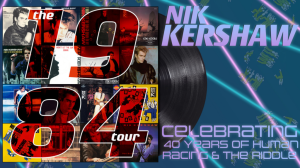
As the male solo artist with the most weeks on the UK singles chart during 1984, it’s not surprising Nik Kershaw is celebrating that year with a lengthy European tour, playing his two top 10 albums Human Racing and The Riddle in their entirety.

He’s still able to command big audiences for his solo gigs, and with good reason – his vocals are if anything much improved since his mid-‘80s heyday and his songs are built to last, with their bold melodies, crafty harmonies and intricate arrangements. But then regular readers already know movingtheriver is a big fan.

So Kershaw’s back catalogue is an embarrassment of riches but also presents some potential problems for a five–piece ‘rock’ band – for a start, how to recreate those dense textures and sequence-heavy arrangements? Thankfully he generally didn’t scrimp on any of that, mostly using the same audio stems and keyboard sounds from the 1980s. There was little or no ‘reimagining’ during this gig, hugely enjoyed by a packed house.

‘Roses’, whose lyrics are still relevant today, was the surprise but effective first song, the band (all middle-aged white guys dressed in black, but then you don’t go to a Kershaw gig expecting bells and whistles) arriving onstage to the opening percussion loop.

‘Know How’ and ‘Wild Horses’ (a favourite of Miles Davis) sounded fantastic, benefitting from bassist Paul Geary’s beefy tone and Kershaw’s fluid guitar lines.

He delivered a great vocal on ‘Wide Boy’, while ‘City Of Angels’ – written about ‘a city I’d never been to’ – featured a lovely laidback performance from drummer Bob Knight, though at times during the gig he lacked the dynamics and smooth grooves of original Human Racing/Riddle sticksman Charlie Morgan.

Geary had his work cut out aping Mark King on ‘Easy’, but he did a pretty good job if somewhat lacking the Level 42 man’s precise percussiveness and syncopated slides. Impressively, keys player Phil Peckett seemed to take care of all the track’s fast sixteenth-notes in real time rather than relying on a sequencer. The whole band did pretty much the same on ‘Don Quixote’.

Self-deprecating to the last (he’s always claimed he’s just a ‘muso’ who was thrust into the limelight), Kershaw played down his Green credentials before ‘Save The Whale’, claiming it had been written as a last-minute ‘rent-an-issue’ song for The Riddle.

The excellent ‘You Might’ featured ‘too many chords’, according to Kershaw, while the first set closed with the album’s perennially popular title track, featuring tasty duel lead guitars though with a rather stiff ‘rock’ feel compared to the slinky sixteenth-note groove of the original.

Set two featured Human Racing in its entirety, and this is where the now rather dated zaniness of Kershaw’s early stuff became apparent, the superbly sung title track and ‘Wouldn’t It Be Good’ aside, though the latter was played surprisingly early in the set.

There was a lengthy tribute to and applause for producer Peter Collins who passed away in June before Kershaw closed up Human Racing with ‘I Won’t Let The Sun Go Down On Me’, rescued by the frontman’s lengthy Holdsworth-like guitar solo.

He seemed genuinely delighted by the ecstatic crowd reaction, signing off with a breezy ‘You’ve made an old man very happy’, before encoring with mass singalongs ‘When A Heart Beats’ (complete with superb note-for-note solo from second guitarist Adam Evans), should-have-been-a-hit ‘The Sky’s The Limit’ and ‘The One And Only’.

A great night of classy music and enjoyable nostalgia. Who knows – maybe Nik will amaze us with Radio Musicola @ 40 in 2026.

Level 42: Rockpalast 40 Years On

It’s not surprising that a lot of Level 42 fans cite 1983 as the peak of the band’s career.
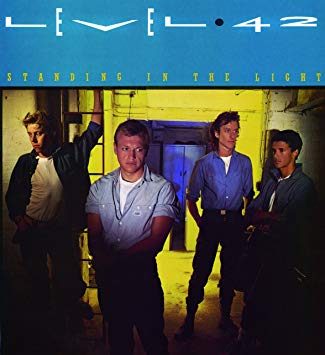
Messrs. King, Lindup, Gould and Gould had just released their first UK top 10 album Standing In The Light (and arguably their greatest single ‘The Sun Goes Down’) but were still very much holding on to their jazz/funk/rock roots, despite Polydor Records wanting more hits and less instrumentals.

The band were also still very much an in-your-face live act in 1983, a year off adding sequencers, drum machines and a much more commercial sheen to their sound. They toured Standing extensively during the autumn, including a dynamite show filmed 40 years ago today in Bochum, Germany, recently released on DVD.

It’s Exhibit A for those who love the early days of the band. And, for Level fans like movingtheriver who only came onboard around 1985, discovering the broadcast was gold dust. Also it’s not every day you see a bass player laying down deliciously funky lines while dancing like Max Wall (at around 4:30 below) and telling the fans to ‘Clap, you sods!’.

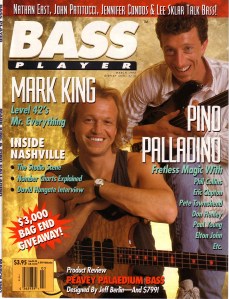
It’s interesting though that Mark King himself to this day strongly questions the live potency of the band during this era. In the March 1992 issue of Bass Player magazine, he came out with all guns blazing, discussing their November 1983 ‘Whistle Test On The Road’ appearance at the Brixton Ace (now the Academy):

‘I dug up an old one of us doing a live BBC programme… I thought, “Oh yeah, they were the good old days”. So I put on the video – and it was crap. The audience were fine, the lights were fine, the sound was fine. The band was crap. It was just so unsure, so uncertain…’

So which Level do you prefer? The choice is yours… In any case, it’s exciting to report that they’re currently in the middle of a UK tour celebrating 40 years of ‘The Sun Goes Down’.

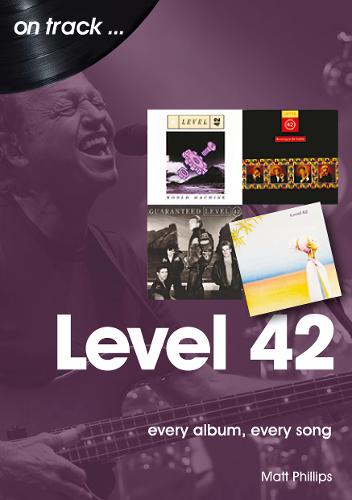
Further reading: ‘Level 42: Every Album, Every Song’.

Book Launch: John McLaughlin (From Miles and Mahavishnu to The 4th Dimension)

Matt’s new book ‘John McLaughlin: From Miles and Mahavishnu to The 4th Dimension’ is available now and can be ordered via the links below.

‘A must-have in every aspiring musician’s personal library.’ Billy Cobham, Mahavishnu Orchestra drummer

‘A wonderful insight into a true innovator and colossus of the guitar.’ Mark King, Level 42 bassist/vocalist

‘Scrupulously researched… A fluent career overview.’ **** MOJO, December 2023

‘The most comprehensive overview of McLaughlin’s career to make it into print thus far.’ **** Shindig!, January 2024

‘Comprehensive and thoroughly researched, Phillips’ book is a revelation. A must-read for guitar aficionados and McLaughlin devotees.’ Bill Milkowski, author of ‘Jaco’ and ‘Michael Brecker’

‘Riveting… Meticulous storytelling… The book is not just a narrative, it’s a visual feast.’ Jazz In Europe

‘Paints the fullest picture yet of the guitarist’s life.’ Jazzed

‘Thorough and impassioned… The first book to fully illuminate the least-appreciated, least-documented periods in the extraordinary career of this wondrously free-spirited, prolific, perpetually questing artist.’ Booklist

UK orders:

UK Bookshops

Rowman & Littlefield (Enter discount code RLFANDF30 to save 30% off the list price)

World Of Books

Hive

Blackwell’s

Waterstones

Foyles

WHSmith

USA orders:

Rowman & Littlefield (Enter discount code RLFANDF30 to save 30% off the list price)

Barnes & Noble

BooksaMillion

It’s an exhaustive look at John’s catalogue, live career and spiritual life, with an introductory note by Robert Fripp, testimonials from Mark King, Billy Cobham and Bill Milkowski, interviews with key collaborators and lots of exclusive photographs. I cover John’s early sessions with David Bowie and Donovan, his remarkable sideman work with Tony Williams and Miles Davis, the fabled solo career fronting The Mahavishnu Orchestra and Shakti and various projects alongside the likes of Sting, Jeff Beck, Herbie Hancock and Carlos Santana.

If you’ve enjoyed this website in any capacity, please consider buying this book and getting it to the toppermost of the poppermost… Thank you!

Conspiracy Theories Of 1980s Music

Bob Carolgees and friend

‘Conspiracy theories’: you can’t move for ’em these days, and things aren’t much different here at movingtheriver.com.

The 1980s: a decade when uncredited ‘guest’ performances were many, Emulators and Fairlights ‘appropriated’ the sounds of acoustic instruments, producers demanded rip-offs of other musicians (a popular drummer joke* of the 1980s, with many variations: how many drummers does it take to change a lightbulb? Ten. One to change the bulb, nine to talk about how Steve Gadd would have done it…), hits came with writs and things were never quite what they seemed.

So it’s not surprising that conspiracy theories flourished during the 1980s. Here are some good ones. Bullsh*t or not? YOU decide. Maybe none are as famous as the ‘Paul Is Dead’ saga, but wtf…

8. Kirsty MacColl sings backup vocals on Dire Straits’ ‘Walk Of Life’
Uncredited of course, but these pre-chorus stacks, first heard at 1:19, sound very much like the much-missed vocalist.

7. Donna Summer performed all of Irene Cara’s vocals
Come on, they are interchangeable. Apologies to anyone in Cara’s family or Cara herself but she sounds freakily like Summer on ‘Fame’ and ‘Flashdance (What A Feeling)’.

6. George Michael wrote ‘Round And Round’ for Jaki Graham
In exchange for what? The classic single is just so in George’s ballpark, of course helped by Derek Bramble’s sparkly state-of-1985 production (he gets the songwriting credit too).

5. Adrian Edmondson of ‘The Young Ones’/The Comic Strip/’Bottom’ fame made the spoof 1984 jazz/funk classic ‘F*cking C*unt/Awkward Bastard’
Rumours abound that it’s Ade, or a few members of The Damned. No one is quite sure and no one has ever owned up, but it’s still brilliant.

4. The Dukes Of Stratosphear’s ‘Brainiac’s Daughter’ is actually a Paul McCartney joint
No one has done ‘Happy Macca’ circa 1968 as well as the Dukes, AKA XTC. But was this ACTUALLY a lost Beatles track?

3. John Bonham stuck around long enough to drum on Survivor’s 1982 hit ‘Eye Of The Tiger’
It’s just sounds so much like the Led Zep sticksman, who died in 1980. It’s the feel, and the sound of his kick and snare drums.

2. Level 42’s Mark King played bass on David Bowie’s ‘Tumble And Twirl’
Actually this one is probably ‘true’. He doesn’t get a credit on the album liners but King himself mentioned (in this podcast) doing a few sessions at the Townhouse Studios in Shepherds Bush around spring 1984 with producer/engineer Hugh Padgham so it’s quite probable. In any case it’s certainly right in his ‘Lopsy Lu’/’Heathrow’ comfort zone, and brilliant slap playing.

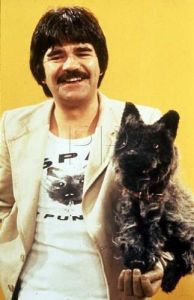
1. Bob Carolgees played the famous sax melody on George Michael’s ‘Careless Whisper’(That’s enough ‘conspiracy theories’, Ed…)

*Here’s a bonus drummer joke, because I’ve just read and loved it: What does a drummer use for contraception? His/her personality.

1980s Podcasts Ya Know, 1980s Podcasts Ya Don’t

One of the legacies of the wretched last few years is that everyone and their little brother has started a podcast.
Of course there’s a lot of flim-flam but the good news for fans of 1980s music and movies is that many of the decade’s big names are getting involved. They are in bullish, talkative mood, still full of ideas and enthusiasm.

Elsewhere podcasters of all stripes are revisiting key (and not-so-key) works of the 1980s and beyond, offering fresh perspectives. Here’s a selection of podcasts that have held movingtheriver’s attention over the last few years.

Electronically Yours is helmed by Human League/Heaven 17 co-founder and producer/synth pioneer Martyn Ware. He opens his formidable address book to speak to some big names as well as influential but less well-known figures who helped shape 1980s music. Ware seems an amiable fellow and he extracts some intriguing revelations from his guests, sometimes even getting closure on issues that affected his career 40 years ago (see the Bob Last and Simon Draper interviews).

Though he occasionally sounds a bit like Gareth Keenan of ‘The Office’ during one of his Health & Safety seminars, Edward Russell’s podcast Inside the Groove takes an indepth, entertaining look at Madonna’s music and career. There are intriguing bits of studio gossip and great chances to hear exposed multi-tracks of the hits – ‘Borderline’ and ‘Open Your Heart’ are doozies.

Smersh Pod is a look at the Bond films and their connections, expanding out to discuss notoriously cruddy cult movies such as ‘Bullseye’ and ‘Death Wish II’. John Brain presents with vigour and chats with a lot of amusing guests mainly from the comedy world.

Breakfast With Vinnie is the unique podcast of drum hero Vinnie Colaiuta. He generally eschews celeb interviews (though John McLaughlin makes a lovely appearance) in favour of philosophical musings about music, society and culture.

Rockonteurs, co-helmed by Spandau man Gary Kemp and Floyd/Bryan Ferry bassist Guy Pratt, is a series of informal chats with friends and colleagues. Their repartee is sometimes a little grating but interviews with Level 42’s Mark King, Boy George, Trevor Horn and key Madonna/Ferry collaborator Patrick Leonard are particularly memorable.

Word in Your Ear is the brainchild of ‘Whistle Test’ presenters and founders of Q/The Word magazines Mark Ellen and David Hepworth. It won’t surprise anyone that it’s witty, entertaining, opinionated and always worth a listen.

Bass Culture UK is a valuable portrait of the movers and shakers of British reggae and soundsystem culture, featuring excellent interviews with key figures like Don Letts and Dennis Bovell.

For you jazzheads out there, Guitarwank, Jazz United and Jazz Bastard have been consistently entertaining.

But – drum roll – the movingtheriver.com Podcast of the Year is… 80sography. It’s mostly a series of extended interviews with key producers of the decade and a must for anyone who wants to know what went on in studios during the 1980s. It also serves as a good ‘making of’ many classic albums. The Stephen Hague, Langer/Winstanley, Hugh Padgham and Stephen Lipson interviews are all entertaining and comprehensive.

Any other cool related podcasts? Leave a comment below.

‘Level 42: Every Album, Every Song’ US Release & The Reviews Are In

‘Level 42: Every Album, Every Song’ has been available in the UK since April and just been published in the USA, Europe, Australia and Japan.

The book has just been reprinted and is onto its second edition, so if you can’t find it in your favourite local bookstore, demand it! (Or check out the links below.)


Praise for ‘Level 42: Every Album, Every Song’:

“Phillips’ concise, forensic analyses opened my eyes and ears to new facets of the band’s music.”

George Cole, Jazzwise magazine


“Bloody brilliant!”

Jem Godfrey, *Frost/Joe Satriani keyboardist, songwriter and podcaster


“It’s excellent, it really is.”

Paul Waller, Level 42 expert and author of ‘Level 42: The Worldwide Visual Discography’


“Brilliant.”

John Hannam, Isle Of Wight County Press


“To me, Level 42 are not the answer to the ultimate questions of life, yet Phillips’ engaging narrative certainly makes a strong case for it. It’s filled with knowledgeable wisdom, and he speaks his affection for the band brilliantly.”

Jan Buddenburg, DPRP


“This book is enhanced by contributions from both Mark King and Lindup whilst Phillips also provides a musician’s insight to the track by track breakdown.  A worthy and welcome re-assessment.  ****

David Randall, getreadytorock.uk


Thanks to Bass Player Magazine who ran an excerpt in their June 2021 edition:

Thanks to Level 42 mega-fan and friend of the band Julian Hall for his endorsement.

And I was interviewed by Giles Brown on Talk Radio Europe – listen here.


Get ‘Level 42: Every Album, Every Song’ here:

UK:

UK Bookshops

Burning Shed

Hive

Amazon

Book Depository

Waterstones

Foyles

Wordery


USA: 

Amazon

Barnes & Noble

Indigo


EUROPE:

Amazon Netherlands

Amazon Germany

Amazon Sweden

Amazon Spain


AUSTRALIA:

Booktopia


JAPAN:

Amazon


Matt Phillips will return in 2022 with the complete guide to the music of John McLaughlin.

Level 42 (Every Album, Every Song): the book

‘Level 42 – Every Album, Every Song (on track)’ is my first book and the first in-depth study of the band’s illustrious catalogue.

It features recording information, musical analysis, studio gossip, full credits, stories from the road and contributions from head honcho Mark King and previous members Gary Husband and Phil Gould. The book also places their output within the wider musical landscape of the 1980s and 1990s.

‘Level 42 – Every Album, Every Song’ is available via the links below:

UK:

UK Bookshops

Burning Shed

Hive

Amazon

Book Depository

Waterstones

Foyles

Wordery

USA: 

Amazon

Barnes & Noble

Indigo

EUROPE:

Amazon Germany

Amazon Netherlands

Amazon Sweden

Amazon Spain

AUSTRALIA:

Booktopia

(and soon to be available elsewhere – watch this space…)

Boon Gould (1955-2019)

Boon Gould (second from right)

Every group needs a Boon Gould.

The George Harrison of Level 42, intelligent, erudite but naturally shy, he came up with consistently memorable guitar parts and the occasional exciting solo, whilst never overshadowing his more naturally exuberant bandmates.

His guitar playing probably peaked in the original band’s middle years, and he also wrote the words to many of their biggest hits including ‘Lessons In Love’, ‘It’s Over’, ‘To Be With You Again’ and ‘Heaven In My Hands’.

So Boon contributed much to one of the great bands of the ’80s. When I heard of his sad death this week, I first thought of his raunchy Jeff Beck-meets-Bill Connors solos on their jazz/funk opuses ‘Foundation And Empire’ and ‘Return Of The Handsome Rugged Man’, but then remembered how much his rhythm guitar parts added to the band’s key mid-’80s tracks such as ‘Micro Kid’, ‘Out Of Sight, Out Of Mind’ and ‘The Chinese Way’.

Guitar-wise, his peak was probably the 1984 Level 42 album True Colours, playing some fantastic stuff on ‘A Floating Life’, ‘True Believers’, ‘Hot Water’ and ‘Chant Has Begun’. The former features his heaviest riffs in a Level shirt. He also contributed lyrics to Mark King’s solo album Influences around this time.

Boon was the most reluctant live performer in the band, often afflicted with stage fright and frequently laid low by the bad food and bad sleep that are part and parcel of regular touring.

He jumped ship in 1987, his drummer brother Phil following soon after, and also who knows what kinds of pressures were involved with their elder sibling John managing the band too.

After officially leaving Level 42, Boon kept in touch and provided lyrics for 1988’s Staring At The Sun. He recorded a solo album, 1995’s Tin Man, which showed off his decent singing voice, and also came out of live retirement to guest with the reformed band during a Bristol gig in 2012.

By all accounts, Boon was a great guy, a gentle, self-effacing soul who just happened to be an excellent guitarist and intelligent lyricist.

RIP to one of 1980s pop’s unsung heroes. There’s part of my childhood gone.

Rowland Charles ‘Boon’ Gould (4 March 1955 – 30th April 2019)