Essential 1980s Jazz/Rock Albums (Part 2)

Continuing our look at some of the finest jazz/rock albums of the 1980s. You can find part 1 here.

Jaco Pastorius: Twins (1982)
A classic double album (an edited version was released as Invitation) recorded live in Japan just after the bass pioneer left Weather Report. Jaco’s brand of fusion took in jazz, Cuban, soul and R’n’B – no guitars here, but brilliant bass playing and powerful solos from Toots Thielemans, Lew Soloff, Jon Faddis and Bob Mintzer.

Frank Gambale: Live! (1989)
The Australian guitarist’s outrageous live debut was recorded at the Baked Potato in LA, and it finally showed just what he’s capable of – electrifying, original solos. His compositions are memorable too and there’s fantastic Latin/fusion drumming from Joey Heredia.

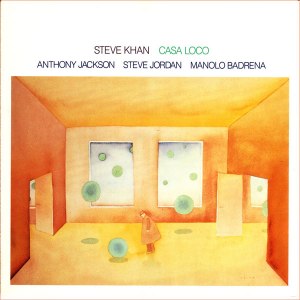
Steve Khan: Casa Loco (1983)
An album which still amazes musicians the world over. Arguably guitarist Khan, bassist Anthony Jackson, drummer Steve Jordan and percussionist Manolo Badrena have never done better work – that’s saying something considering who they’ve all played with.

Bill Bruford’s Earthworks: Dig? (1989)
Both of Bruford’s 1980s Earthworks albums were really good but this gets the nod due to Django Bates being given free reign, contributing superb keyboard solos, a cool reimagining of Petula Clark’s ‘Downtown’ and classic composition ‘Dancing On Frith Street’.

Paquito D’Rivera: Why Not! (1984)
An underrated album from the Cuban alto sax and clarinet star, also featuring Claudio Roditi on trumpet, Michel Camilo on keys and a wonderful performance from drummer Dave Weckl on the opening ‘Gdansk’.

Lyle Mays: Street Dreams (1988)
The Metheny Group keyboard player chucks in everything he knows on this big-budget project – ambient post-jazz, widescreen fuzak, big-band swing and Fagen-style fusion, and it’s all good. Some, like this writer, may also prefer the more red-blooded guitar playing of Bill Frisell to Metheny.

Pat Metheny Group: American Garage (1980)
No one is too sure if this came out in late 1979 or early 1980 but it’s this writer’s favourite Metheny album, though the guitarist himself seems to have almost disowned it. He loosens up and opens himself up to some rock and Steely Dan influences, driven along by Danny Gottlieb’s superb drums.

Level 42: A Physical Presence (1985)
A lot of it’s not strictly ‘fusion’, of course, but any album featuring such brilliant live versions of ‘Mr Pink’, ‘Foundation And Empire’ and ‘88’ has to make this list.

Mark King: Influences (1984)
The Level 42 mainman amazes with his 18-minute fusion classic ‘The Essential’, plus an eerily assured tribute to early Return To Forever called ‘There Is A Dog’. Plus he played almost everything on it.

John Patitucci: On The Corner (1989)
Both of the bassist’s 1980s solo albums were good but this gets the nod courtesy of the sheer variety of grooves from drummers Vinnie Colaiuta, Dave Weckl and Alex Acuna, and the leader’s exciting solos and excellent compositions, all memorable.

John Abercrombie: Getting There (1988)
A rare excursion into jazz/rock for ECM Records, the guitarist’s most dynamic ‘80s album featured Michael Brecker on sax, a hefty ‘rock’ mix courtesy of James Farber and arguably drummer Peter Erskine’s heaviest recorded performance to date.

Joni Mitchell: Wild Things Run Fast (1983)
She littered the album with influences from the Police but the main driver was the brilliant jazz/rock musicianship of bassist Larry Klein, drummers Colaiuta and John Guerin, saxist Wayne Shorter and keys player Russell Ferrante. ‘Moon At The Window’, ‘Be Cool’, ‘Ladies Man’ and ‘You’re So Square’ smuggled fusion into the album charts.

Miles Davis: Star People (1983)
Blues, blazing jazz/rock, chromatic funk and general weirdness combine for arguably Miles’s most exciting album of the decade, featuring all-time great guitar from Mike Stern and John Scofield.

John Martyn: Glorious Fool (1981)
John’s music was now bringing in influences from Weather Report, Latin music and spiritual jazz, and Phil Collins, keyboard player Max Middleton, percussionist Danny Cummings and bassist Alan Thompson made for a fantastic rhythm section.

Bruford: Gradually Going Tornado (1980)
Any album featuring ‘Gothic 17’, ‘Land’s End’, ‘Joe Frazier’ and ‘Palewell Park’ has to be on this list. Epochal work from bassist Jeff Berlin, keys man Dave Stewart and the drummer himself.

Bubbling under:
Terje Rypdal: The Singles Collection (1988)
Power Tools: Strange Meeting (1987)
Stanley Clarke: If This Bass Could Only Talk (1988)
Terri Lyne Carrington: Real Life Story (1989)
Chick Corea Elektric Band: Eye Of The Beholder (1988)
Bill Frisell: Before We Were Born (1989)
Loose Tubes (1984)
Players (Jeff Berlin, Scott Henderson, Steve Smith, T Lavitz) (1986)

(PS. If you like the sound of any of these albums, please consider buying them in physical formats to best support the artists.)

Essential 1980s Jazz/Rock Albums (Part 1)

1980s jazz/rock generally gets the side-eye these days.

But it wasn’t all the Chick Corea Elektric Band prancing around the stage in tracksuits or pitiful WAVE-style smooth jazz.

The 1970s jazz/rock pioneers were mostly going strong and if some were too tempted by synths and drum machines, the best music was made by sticking pretty rigorously to the tried-and-tested real drums/bass/guitar/keys lineup favoured by Miles, Weather Report, Return To Forever et al.

So here’s a selection of 1980s jazz/rock albums that have consistently gripped movingtheriver, most of which he queued up to buy at the HMV or Virgin Megastore, or found in an Our Price bargain bin. (These are not proggy or funky. So no Herbie, Brecker Brothers, David Sanborn or David Torn, but there are elements of R’n’B/Latin/soul/whatever mixed in with the jazz).

Bireli Lagrene: Foreign Affairs (1988)
Just 21 years old when he recorded it with producer Steve Khan, the French guitarist’s second Blue Note album is a cohesive gem and massive improvement on the debut, with terrific contributions from keyboardist Koono and drummer Dennis Chambers.

Ornette Coleman: Virgin Beauty (1988)
One of the most ‘accessible’ albums of the master’s career, with memorable melodies, a brilliantly expressive bassist (Al McDowell) and some decidedly odd guest appearances from Jerry Garcia.

Tribal Tech (Scott Henderson/Gary Willis): Nomad (1988)
Recorded in April 1988 but not released until early 1990, guitarists were rightly wowed by Henderson’s brilliance, a mixture of Michael Brecker, Allan Holdsworth and Stevie Ray Vaughan, while the rhythm section is groovy and propulsive and both Henderson and Willis’s compositions are excellent. And ‘Tunnel Vision’ may feature the perfect guitar solo…

John McLaughlin: Mahavishnu (1984)
OK there are some question marks in the keyboard and sax departments, and a few mediocre tracks, but Billy Cobham has rarely sounded better and John contributes three or four classic compositions and a few brilliant solos to this reunion album of sorts.

Marc Johnson’s Bass Desires: Second Sight (1987)
Wonderful interplay between guitarists John Scofield and Bill Frisell, plus some classic compositions including Scofield’s surf-rock-meets-jazz ‘Twister’, Frisell’s Monk-like ‘1951’ and Johnson’s moving ‘Hymn For Her’.

Larry Carlton: Last Nite (1987)
Guitarists of all stripes were blown away by Carlton’s playing in the 1980s, and here’s the best evidence, captured live at LA’s Baked Potato club with Alex Acuna, Abe Laboriel and JR Robinson.

Human Chain: Cashin’ In (1988)
This Brit jazz/rock classic, released on EG Records, had elements of the Canterbury sound, West Coast cool jazz, English folk music and 1980s Weather Report, featuring Django Bates’ fantastic keys and French horn and some weirdly impressive guitar and fretless bass from Stuart Hall (who he?). Also injects a healthy dose of much-needed humour to the ’80s jazz world.

Hiram Bullock: Give It What U Got (1988)
All the fun of the fair from this gifted but troubled guitarist: raunchy funk/rock, instrumental Steely Dan, Brecker Brothers horns, classic fusion and an Al Jarreau guest appearance on a Sam Cooke tune, but all shot through with jazz chords and Hiram’s lyrical playing.

Ronald Shannon Jackson: Mandance (1982)
Ornette-style harmolodics and Mingus-like ensemble work meet NYC punk-jazz on the drummer’s intriguing and powerful album, recorded live in the studio, featuring future Living Colour axeman Vernon Reid.

Weather Report: Sportin’ Life (1985)
It was a toss-up between this and Night Passage, both classics, but this gets the nod courtesy of the newly-minted rhythm section of Omar Hakim and Victor Bailey, plus a few classic Wayne Shorter tunes including ‘Face On The Barroom Floor’ which reportedly Joni Mitchell was particularly smitten by.

Wayne Shorter: Atlantis (1985)
Wayne again, fronting this fascinating, complex song-cycle featuring Alex Acuna on drums and Joni’s husband Larry Klein on bass. Takes some time to digest, but like a good wine gets better every year.

Allan Holdsworth: Secrets (1989)
A toss-up between this and Metal Fatigue, this gets in because of his delicious guitar tone and the inspired contributions of drummer Vinnie Colaiuta – ‘City Nights’, ‘Spokes’, ‘Peril Premonition’ and ‘Joshua’ are musical landmarks. Fiery, exciting, unmissable.

Steps Ahead: Modern Times (1984)
Messrs Brecker, Erskine, Mainieri, Gomez and Bernhardt were embracing some new technology but they never let it overshadow the mostly excellent compositions with telling solos, particularly from Brecker.

John Scofield: Still Warm (1985)
Take your pick between this, Blue Matter and Loud Jazz, all fantastic pieces of work, but Still Warm gets the nod courtesy of its dynamite rhythm section (Darryl Jones and Omar Hakim) and arguably John’s best writing of the ’80s.

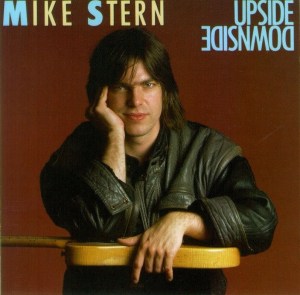
Mike Stern: Upside Downside (1986)
Produced by Hiram Bullock and featuring a crack band including Dave Weckl on drums, it showcases Stern’s finest/fieriest playing on record to date and also one of Jaco Pastorius’s last notable appearances. Still the best Stern solo album and quite extreme in its own way.

(If you’re new to any of these albums and they float your boat, please consider buying physical copies to support the artists.)

Eddie Gomez: Mezgo/Power Play 35 Years On

Even amidst this digital revolution, there are still classic jazz and fusion albums which just resolutely refuse to appear on streaming platforms, due to copyright problems, label problems or whatever.

Eddie Gomez’s excellent late-1980s albums Mezgo (later rereleased as Discovery) and Power Play are cases in point, recorded for the Japanese arm of the Epic label and currently residing in the ‘where are they now’ file (glad I held onto my cassette copies).

(August 2024 update: Spotify have just added Discovery – listen here!)

Bassist/composer Gomez is probably best known for his stellar sideman work with pianists Bill Evans and Chick Corea, as well as being a co-founder of jazz/fusion supergroup Steps Ahead, but his solo work sometimes goes unheralded.

Perhaps most relevantly, given Bill Milkowski’s major new biography, both albums feature some of saxophonist Michael Brecker’s best-ever recorded work. And they are crucial items in drummer Steve Gadd’s discography too.

1986’s Mezgo is mainly a trio album, Gomez on bass and keys, Gadd on drums/percussion and Brecker on saxes and EWI. It’s a stunning potpourri of styles, starting with the Weather Report vibe of ‘Me Too’, calling in at the fast bebop number ‘Puccini’s Walk’ (poorly covered by Corea not once but twice!) with some superb Gadd, and ending with a very moving version of Henry Purcell’s ‘Cello Sonata In G Minor (1st Movement)’.

Power Play, released the following year, had more concessions to commercialism, with some romantic ballads featuring syrupy alto sax from Dick Oatts and a few Latin-style groovers featuring Jeremy Steig on flute.

But the title track was a stunner, featuring double drums from Gadd and Al Foster. There was also a superb duet with guitarist Jim Hall, ‘Amethyst’, and an excellent fast bop track ‘West 110 St.’ featuring Foster and Brecker.

Shame you can’t hear Power Play (I can’t even find half-decent streams on YouTube). Beg, borrow or steal it if it ever appears in those proverbial ‘bargain bins’…

The Brecker Brothers: Live And Unreleased

Horn sections – they sure divide opinion, especially in the ‘pop’ realm.

Some people just cannot stand all of that pomp and circumstance, while others get turned on by a hot, punchy chart.

But like ’em or hate ’em, some great records just wouldn’t be the same without the horns: The Teardrop Explodes’ ‘Reward’ for example.

But who are the most-recorded sections of all time? You’d get very short odds on The Brecker Brothers, comprising Michael on tenor and Randy on trumpet, occasionally augmented by David Sanborn on alto too.

They graced hundreds of recordings before Michael’s death in 2007, including Parliament’s ‘Chocolate City’, Todd Rundgren’s ‘Hello It’s Me’ and Dire Straits’ ‘Your Latest Trick’. Under their own name, seven studio albums showcased a really cool sound with funky grooves and intricate harmony, somewhere between Stevie Wonder and Steely Dan.

And now they’ve been given the full-on archive treatment, a new Live And Unreleased album featuring a complete two-hours-plus gig with no edits or overdubs, recorded in Hamburg on 2nd July 1980.

This is a really impressive package, a beautifully-recorded double with extended liner notes by Bill Milkowski and additional, amusing memories from Randy Brecker.

The sh*t-hot band includes Neil Jason on bass (familiar to fans of Roxy Music’s Flesh & Blood and Avalon), Barry Finnerty on guitar (most famous for a short stint with Miles Davis), Mark Gray on keys and Richie Morales on drums.

The material is a mix of BB favourites like ‘Squids’, ‘Sponge’, ‘Some Skunk Funk’, ‘Straphanging’, ‘I Don’t Know Either’ and ‘East River’. Pleasingly, these are pretty faithful to the original studio versions tempo-and-arrangement-wise, but there’s also a big emphasis on extended solos and one-chord vamps.

It’s also clear that, by 1980, Michael was giving Randy a serious run for his money on the composing front – his tunes and sometimes extraordinary solos dominate proceedings, particularly on the sprightly ‘I Don’t Know Either’ and ‘Tee’d Off’.

Finnerty gets a hell of a lot of solo time but is generally pretty characterless compared to other Brecker-approved studio guitarists (Hiram Bullock, Steve Khan), while Gray is excellent but too low in the mix.

Morales is rock-solid but, again, fairly anonymous compared to other Brecker favourites Steve Jordan, Terry Bozzio, Steve Gadd and Harvey Mason (hardly surprising, since they are three of the all-time greats…). Jason, with his big, buoyant, funky sound, is the star of the rhythm section.

As usual, ‘Some Skunk Funk’ makes for fascinating listening – the funk/fusion standard has become a kind of test piece for drummers (Harvey Mason, Billy Cobham and Terry Bozzio all had memorable cracks at it, offering subtly different readings). Morales has a good go here but again lacks the invention and drive of the aforementioned.

So: three-and-a-half stars for the music, five for the package. It’s definitely worth immersing oneself in it on vinyl or CD, helped by Randy’s witty between-song comments.

It’s a really strong live album with some great performances, and exemplifies an interesting period for jazz/rock when good grooves and extended solos took precedence over technical chops. Even if you can’t stand horn sections…

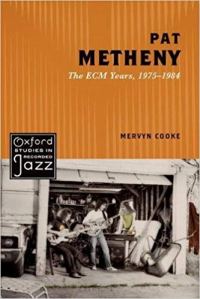
Book Review: Pat Metheny (The ECM Years 1975-1984) by Mervyn Cooke

You know the guy: long, bushy hair, beatific grin, jeans, sneakers, long-sleeved T-shirt, usually rhapsodizing intensely via some kind of guitar gizmo.

Despite his many stylistic detours, Pat Metheny is a brand all right, and his music inspires a devotion and attendant sales profile that has rarely – if ever – been afforded to ‘jazz’ musicians.

If you – like me – aren’t always enamoured by the bulletproof sincerity of his stage presentation (in Gary Giddins’ memorable words, he ‘intones plush melodies with excessive sobriety, as though the notes were transmitted directly from God’ – the main reason why I’ve always preferred his stuff on record rather than live…), it’s beyond doubt that Metheny is one of the great guitar soloists.

Mervyn Cooke’s superb new book ‘Pat Metheny: The ECM Years, 1975-1984′ sheds light on the first – and, for me, best – decade of the guitarist’s recording career, when he was the famous European jazz label’s top turn.

It’s an academic study, though never boring and certainly never predictable, with close attention played to Pat’s guitar styles, musical history, tunings, key collaborators (loads of new stuff about Jaco, Charlie Haden, Michael Brecker, Gary Burton and Lyle Mays here), equipment, album cover designs and inspirations.

There are fascinating details, like Metheny’s obsession with flat ride cymbals (hence his deliberate placement of drummers onstage, ride cymbals always in close proximity to his left ear) and his singular band-leading philosophies. There are solo transcriptions and quotes from archive interviews.

Cooke also shrewdly compares Metheny’s studio work in this era to that of Weather Report’s, drawing parallels between both acts’ meticulous sculpting of ‘spontaneous’ musical performances and attempts to concoct ‘through-composed’ – rather than vamp-based – material.

Metheny fans will love ‘The ECM Years’, as will anyone who has even the faintest interest in guitar trends of the last 40 years. It also serves as a rich biography of ECM Records in its early years, with numerous revelations about label boss Manfred Eicher.

Reading the book sent me running back to choice cuts from Pat’s early albums that I liked during my teenage years – Bright Size Life, American Garage, 80/81, As Falls Wichita, So Falls Wichita Falls, Travels, Rejoicing, First Circle, Song X.

Revisiting As Falls Wichita in particular has been somewhat of a revelation. (Prog fans: check out side one. It’s a cinematic masterpiece, analysed in great detail by Cooke.)

Mervyn Cooke’s ‘Pat Metheny: The ECM Years, 1975-1984’ is published by Oxford University Press.

Donald Fagen: Century’s End 30 Years On

Almost 30 years ago to the day, my brother arrived home from a Richmond shopping spree bearing strange cargo – a new Donald Fagen 12” single.

To say that this was a surprise would be an understatement. After all, it was six years since The Nightfly and the late ’80s were generally a Steely Dan wasteland apart from occasional guest spots (China Crisis, Rosie Vela, Love And Money, Yellowjackets).

‘I think we felt that a lot of the energy was missing so we kind of sat out the ’80s,’ Fagen once said.

But, in his book ‘Eminent Hipsters’, he went further, talking about ‘falling apart like a cheap suit’ towards the end of the decade, with panic attacks, antidepressants and shrinks abundant.

But at least he didn’t need the money – ‘What supported me was that when CDs came out at the beginning of the ’80s, people had to buy the albums again.’

Fagen’s movie-producing cousin Mark Rosenberg headhunted him to come up with some music for the film version of Jay McInerney’s celebrated yuppie-in-peril book ‘Bright Lights Big City’. Fagen was typically reluctant but apparently swayed by the quality of McInerney’s writing.

There was also something distinctly Steely-esque about this tale of a disillusioned twentysomething’s descent into a drug-addled, paranoid New York hell. So Fagen fashioned his version of the movie, co-writing the lyric with Timothy Meher.

There are touches of ‘Bonfire Of The Vanities’ and ‘Wall Street’ in there. AIDS too, and ‘American Psycho’ was of course just around the corner.

The opening scene finds our hungover hero lamenting the roar of the Monday-morning garbage trucks. Cut to the floor of the NY Stock Exchange, where our yuppie daydreams about a conquest of the female variety: ‘We cut to this blonde/Dancing on a mirror/There’s no disbelief to suspend….

The image brilliantly conjures up Marilyn Monroe on the subway grate. Madonna should also probably come to mind. ‘She’s the concept, more or less, of love in the city at century’s end…

Nothing and nobody is real – it’s all pose and high-concept. There’s no hope for redemption either: ‘Nobody’s holding out for heaven‘. Greed is good. But then the mystery blonde is using her ‘pirate radar’ to find a likely escort or – even better – a minor celebrity to latch onto.

But no-one materialises, so you’ll do, although you know you’re only the second choice. But still: ‘Let’s get to the love scene, my friend‘…

Musically, ‘Century’s End’ is yet another brilliant Fagen concoction, initially based around a typical minor vamp and groovy half-time shuffle groove shepherded by Yellowjackets’ ‘Jim’ Haslip on bass and drummer Leroy Clouden (submerged in one or two different bits of rhythm programming).

Michael Brecker and Lew Soloff lead the horn section, and the raft of uncredited backing vocalists sounds like it might include Patti Austin. Gary Katz co-produced the song at Chelsea Sound.

Fagen’s vocals have rarely been better – check out his phrasing in the chorus. The 12” and CD also came with ‘Shanghai Confidential’, a neat little fuzak instrumental starring Marcus Miller on bass and Steve Khan on guitar.

The movie, starring Michael J Fox, stiffed. The casting didn’t help. But ‘Century’s End’ seems to be a bit of a guilty secret in Fagen’s discography, ripe for rediscovery…

John Abercrombie: Getting There 30 Years On

Maybe John Abercrombie was the Andy Murray of jazz guitarists.

People say Murray was ‘unlucky’ to be playing tennis at the same time as Federer, Djokovic and Nadal; Abercrombie was arguably ‘unfortunate’ to have been forging a career at the same time as Pat Metheny, Mike Stern, John Scofield and Bill Frisell.

But a superb career he forged all the same. Starting out as somewhat of a John McLaughlin imitator playing unhinged jazz/rock with Billy Cobham and Dreams on ‘some of the worst fusion albums ever made’ (his words), by 1974 Abercrombie had settled into a long, intriguing career on ECM Records, where he could pursue all his interests, from acoustic guitar duos with Ralph Towner to organ trios with Jan Hammer and Jack DeJohnette.

But one of his best bands was this mid-1980s outfit with ex-Bill Evans/Lyle Mays sideman Marc Johnson on bass and legendary Peter Erskine on drums, often augmented by Michael Brecker on sax too.

Abercrombie was getting heavily into the guitar synth around this time, while also using loops and ethereal keyboard patches to beef up the studio sound.

’86’s Current Events was a fine ‘blowing’ record but followup Getting There – released 30 years ago this month – was arguably Abercrombie’s most commercial album. It’s big and bold but definitely no ‘fusion’ sell-out, and it distills its ideas into relatively short, concise statements.

It’s also somewhat of a rarity for the ECM label in that it’s not produced by Manfred Eicher – Lee Townsend is in charge here, assisted by James Farber.

The epic title track is loud and proud, almost approaching avant-rock with Erskine absolutely lamping his drums and a hysterical, exciting set of screaming guitar-synth solos. It gets near the approach of David Torn’s sometimes raucous Cloud About Mercury album.

Ethereal, gentle and gorgeous ‘Thalia’ (composed by Vince Mendoza) and ‘Chance’ are ambient/jazz masterpieces with shades of Mark Isham’s work.

Classic ballad ‘Remember Hymn’ initially sounds like a re-harmonisation of Sibelius’s ‘Valse Triste’ but slowly becomes a vehicle for Brecker’s haunting tenor. The latter also cleans up on the raucous two-chord blowout ‘Furs On Ice’, reminiscent of Johnson’s Bass Desires band, with Erskine at his most Elvin Jones-like.

Getting There predictably received a somewhat muted critical reaction (but did get a three-star review in Q Magazine). I wasn’t bothered about that – having been recommended Abercrombie by a guitar player friend, I bought it sight unseen from HMV Oxford Street on vinyl a few weeks after it came out. It’s still my favourite album by the guitarist.

But it would be the last time Abercrombie dipped his toe into ‘rockist’ waters – he quickly regrouped to continue his ever-eclectic, increasingly gentle career, and, to the best of my knowledge, never picked up the guitar synth again…

Steve Khan’s Backlog: Interview & Album Review

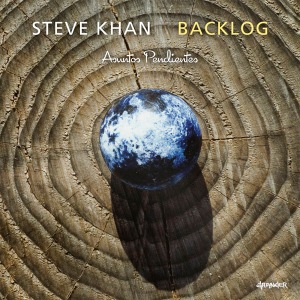
backlog_esccov_hires600Steve Khan, one of jazz’s most underrated and distinctive guitarists, made two fine fusion albums during the 1980s: Eyewitness and Casa Loco.

His unique chord voicings, intriguing melodic sense and subtle use of effects have also illuminated work by The Brecker Brothers, Steely Dan, Billy Cobham and Joe Zawinul.

Khan’s other solo albums across a 40-year career showcase his enormous versatility, from overdubbed guitar tributes to Thelonious Monk (Evidence) and jazz trios (Headline, Let’s Call This) to large fusion ensembles featuring the likes of Steve Gadd, Don Grolnick, Michael Brecker and David Sanborn (The Blue Man, Arrows).

Khan has also become well known as a master-interpreter and reharmoniser of non-guitar jazz compositions by the likes of Andrew Hill, Herbie Hancock, Wayne Shorter, Ornette Coleman, Lee Morgan and Randy Brecker. His new collection Backlogthe third in a Latin Jazz triptych following Parting Shot (2011) and Subtext (2014), continues to plunder the songbooks of his favourite composers.

steve_khan

The album kicks off with the killer one-two of Monk’s ‘Criss Cross’ and Greg Osby’s ‘Concepticus In C’. The former is inspired by the late great pianist Kenny Kirkland’s Latin version which first appeared on his fine 1991 debut album.

Says Khan, ‘It’s a wonderful arrangement and so good that it’s hard to escape its influence. It took me years to find a way to do the tune in a way where I could put my own stamp on it. As everyone already knows, I love Monk’s compositions and have recorded many of them. I happen to feel that Monk’s tunes have a way of fitting into a Latin context, as if they were made to be interpreted in that style.’

The Osby tune was played by Khan during their tenure together in the New Sound Collective band; the guitarist clearly relishes arranging his version of ‘Concepticus’ on Backlog, adding a funky Joe Zawinul flavour to the tasty harmonies and quirky rhythmic concept.

‘Latin Genetics’, composed by Ornette Coleman and first appearing on his In All Languages album, features a fine guest spot from Randy Brecker on trumpet.

On first listening, it seems a light, almost joyous piece of music, but Khan has a different take on it: ‘It’s funny to me that people see this tune as being so happy – I actually see it as a rather dark piece of music, one with many sinister and even humorous qualities.’

Backlog‘s other Coleman cover version is ‘Invisible’, featuring Bob Mintzer on sax, originally recorded in 1958: ‘It comes from one of his earliest albums, Something Else!!!!, featuring an acoustic piano,’ says Khan. ‘Every time I hear this tune, I feel that Ornette’s playing and improvisational concepts are a bit constricted by having the chord changes applied so literally. There seems to be an absence of space. So, in my interpretation, though there are chord changes, both Bob and I play pretty much unaccompanied, and that’s really how I like it.’

Elsewhere on Backlog, Khan reimagines the music of Stevie Wonder, his father Sammy Cahn, Johnny Mandel, Bobby Hutcherson and Andrew Hill.

Clearly a labour of love, Khan wonders whether it will be his final album: ‘When I recorded Parting Shot, for reasons of the health and condition of my left hand, I thought that was going to be the final album. Then when I decided that I felt well enough to record Subtext, I was even more certain that that would be the final album. But, as 2015 unfolded, I came to the simple conclusion that I just do not feel alive unless I am creatively involved in the formation of new music. So, while I can still do it, I had to do everything possible to record. Can I foresee ever being able to self-finance another recording of my own again? I don’t want to utter the word “never” in conjunction with such a thought, but honestly, I really don’t know. With the release of any new piece of work, there is always hope for better days and better times, but this remains to be seen…’

Backlog is out now on ESC/Tone Center.

Read the full interview with Steve at his website.

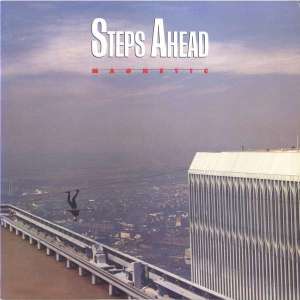
Steps Ahead: Magnetic 30 Years On

steps

Some improvised music hits you at just the right age, to the extent that 30 years later you can still hum along to all the solos.

Baby boomers were lucky enough to have Kind Of Blue, Time Out or Mingus Ah Um but jazz fans brought up on Weather Report and 1980s Miles had albums like Magnetic.

In 1986, recording and instrument technology was moving quickly, maybe too quickly. This development influenced all kinds of music, from rock to fusion, and, in the wrong hands, led to a lot of grossly-overproduced, unmemorable stuff that barely holds up today. As a few people have said, 1986 may be the worst music year of the decade.

But that year also somehow produced some memorable fusion music. Smooth Jazz (AKA The Wave) was just a twinkle in some bored record exec’s eye and the ever-reliable Japanese market was keeping quality electric jazz alive; Lyle Mays, Mike Stern, Wayne Shorter, John Abercrombie, Miles, Bireli Lagrene, John Scofield, Bill Frisell and John McLaughlin were going strong.

Though Steps Ahead’s Magnetic album embraces technology to a full extent, even more so than on ’84’s Modern Times, given the writing and playing talent (Michael Brecker, Peter Erskine, Mike Mainieri) it’s no great surprise that they pull it off with so much aplomb, aided by formidable ex-Weather Report bassist Victor Bailey.

A timeless classic it ain’t, but Magnetic isn’t any old ‘what does this button do?’ mid-’80s studio creation. Though the sound and mastering are superb, emphasised by the presence of Brothers In Arms producer Neil Dorfsman on engineering duties alongside future back-room stars James Farber and Tom Lord-Alge (fresh from Steve Winwood’s Back In The High Life), the compositions very definitely come first and the audio ‘experiments’ second.

Despite all this, Magnetic is definitely the least-heralded Steps Ahead album amongst jazz critics, probably because it’s a real onslaught of styles and sounds, closer to a ‘pop’ album in concept. The melodic themes are strong without ever getting too sugary and each track has a unique flavour.

It’s hard to believe the same band can come up with ‘Something I Said’ (featuring one of Brecker’s great ballad performances) and also the coruscating avant-fusion of ‘Beirut’ (developed from a band jam session).

Hiram Bullock plays one of his many classic solos on ‘Trains’, adding some much-needed grit, while George Duke co-produces the weird but exciting contemporary R’n’B of ‘Magnetic Love’ featuring some outrageous sampled Brecker tenor lines and killer Dianne Reeves lead vocals (and great backups from Jocelyn Brown, Janice Pendarvis and Diva Gray).

A synthesized cover of Ellington’s ‘In A Sentimental Mood’ proves Steps’ link to the past masters and features some astonishing EWI (an electronic instrument with the same fingering as a sax that looks like an elongated metal lollipop) from Brecker. There’s even time for some banjo-playing on ‘Cajun’, powered along by Erskine’s superb ride cymbal work. Yellowjackets were definitely listening to that. Oh, and is that Philippe Petit on the sneakily-doctored album cover?

It’s weird seeing Steps Ahead playing this material live. They had obviously worked a bit on their stage ‘presentation’ between 1984 and 1986, maybe influenced by Chick Corea’s shenanigans. Peter Erskine and Victor Bailey had left to join Joe Zawinul’s Weather Update tour, so ex-Journey drummer Steve Smith, Sting/Miles bassman Darryl Jones and Stern came in, adding some big-name clout and a much tougher sound.

Magnetic was the last major-label action for Steps Ahead. Brecker and Erskine jumped ship but Mike Mainieri would continue with the name over the next few decades fronting a multitude of line-ups. He even fronted a ‘reunion’ tour in 2016 with a formidable band including pianist Eliane Elias and sax player Donny McCaslin.

Story Of A Song: Everything but the Girl’s ‘Driving’ (1990)

drivingThe 1980s are littered with Brit pop bands going ‘across the pond’ to work with US producers and musicians.

It was almost a rite of passage, or – according to some music critics of the slightly more cynical persuasion – a desperate attempt at credibility.

You could hardly level that accusation at Tracey Thorn and Ben Watt, AKA Everything but the Girl. They were headhunted by legendary producer Tommy LiPuma, who had just put the finishing touches to Miles Davis’s Amandla, and their ‘Driving’ single (released in early 1990 but recorded spring 1989) seems a near-perfect marriage of US and UK sensibilities.

I confess I hardly knew anything about EBTG when my brother first played me ‘Driving’. I just heard something extremely classy, with intriguing chord changes, a great singer and strong jazz flavour.

I didn’t know Tracey and Ben had spent much of the ’80s building up a considerable rep as ‘indie jazz/folk’ darlings of the music press and enjoying not inconsiderable commercial success too, but I was possibly vaguely familiar with Tracey’s gorgeous vocals on The Style Council’s ‘Paris Match’.

Taken from The Language Of Life album, the song was recorded in LA at the famous Ocean Way and Sunset Sound studios with pretty much the finest session players money can buy (Omar Hakim on drums, John Patitucci on bass, Larry Williams on keys/arrangements, Michael Brecker on tenor).

But, according to Tracey’s superb memoir ‘Bedsit Disco Queen’, the American musicians were totally ignorant of the fiercely independent English scene from which Tracey and Ben had emerged.

When Larry Williams found out that EBTG had recently recorded at Abbey Road, he blurted out: ‘Wow! Abbey Road! The home of the Beatles!’ Tracey’s reply: ‘God, I HATE the Beatles.’ There was a pregnant pause. Eventually Williams spluttered out: ‘You h-h-hate the Beatles?’

But such musical differences were all in a day’s work for EBTG.

‘Driving’ obviously sounds more like Anita Baker than, say, The Smiths. It’s sophisticated but still has bite, with rich chords and a glorious Brecker solo (inexplicably with a different, inferior take on my 7” vinyl version).


‘Driving’ became somewhat of an airplay hit in the States (though surprisingly only reached #54 in the UK), and led to several high-profile US gigs which unfortunately seemed to precipitate a crisis of confidence for Tracey.

The EBTG live band, which included future smooth jazz star Kirk Whalum on sax, whipped the crowds into a frenzy night after night, but there wasn’t much space for her subtle, low-key vocals any more.

Cue a few years of soul-searching and a distinct change of direction, exemplified by 1994’s Amplified Heart.