1980s Pop: The Best Bits

Earworms: 1980s pop was chock-a-block with ’em.

Studio technology was blossoming fast and there was constant temptation (and pressure?) to come up with new sounds. Fairlights, Emulators, Synclaviers, gated snare drums: there had never been more ways to skin a cat.

But woe betide the ’80s popster who neglected the basic tenets of songcraft; the trick was coming up with memorable bits that fitted seamlessly into a track and bore repeated listening.

Thankfully, for every what-does-this-button-do novelty, there was a genuinely innovative, memorable pop moment, and some great instrumental solos to boot. So here’s a compendium of good bits from the 1980s, details that mark the decade out as a unique musical era. The rules: one artist per slot and every song has to have made the UK or US top 40 singles chart, or both…

41. Ian Dury’s ‘…and!’ during his monologue/introduction at the start of ‘I Wanna Be Straight’

40. Helen Terry’s backing vocals on Culture Club’s 1984 hit ‘It’s A Miracle’.

39. The spoken word bit in SOS Band’s ‘Weekend Girl’.

38. Nigel Kennedy’s violin solo on Paul McCartney’s ‘Once Upon A Long Ago’.

37. Greg Phillinganes’ synth bass on Donna Summer’s ‘Love Is In Control (Finger On The Trigger)’, especially the ‘squelch’ at 2:53 below:

36. Lee Thompson’s sax in the second verse of Madness’s ‘My Girl’

35. Marc Almond’s spoken-word line in Soft Cell’s ‘Say Hello Wave Goodbye’

34. Mel Gaynor’s volcanic snare-drum fill after the breakdown in Simple Minds’ ‘Alive And Kicking’
There’s a similar eruption in ‘Don’t You Forget About Me’, but this one wins out for sheer audacity. I wonder what ‘anti-muso’ co-producer Jimmy Iovine had to say about it…

33. The fade of The Police’s ‘Every Little Thing She Does Is Magic’

32. The Middle Eastern synth riff in Blancmange’s ‘Living On The Ceiling’

31. Steve Jansen’s marimba solo on Japan’s ‘Ghosts’

30. Mark Knopfler’s lead guitar at the tail end of Dire Straits’ ‘Romeo And Juliet’

29. Martin Drover’s trumpet riff on Adam Ant’s ‘Goody Two Shoes’

28. The bassline enters at 0:20 of The Cure’s ‘Love Cats’
Phil Thornalley is a veritable Zelig figure in ’80s pop, but even he couldn’t have imagined that his superbly simple-yet-complex bassline (try playing along) could have had such an impact on this stand-alone UK top 5 single.

27. Martin Fry’s hysterical ‘You think you’re smart/That’s stupid/Right from the start/When you knew we would part!‘ at the tail end of ABC’s ‘Poison Ivy’ 
Pointing the way forward for similar outbursts from Jarvis Cocker et al.

26. The weird coda of Stephen Tin Tin Duffy’s ‘Kiss Me’
Just when you thought this slightly-annoying-but-effective UK top 10 single was all done and dusted, there’s that menacing little DX7 kiss-off…

25. Melle Mel’s laugh-rap on Grandmaster Flash’s ‘The Message’

24. The guitar riff on The Pretenders’ ‘Back On The Chain Gang’
The jury seems to be out on whether Billy Bremner or Robbie McIntosh played this (answers on a postcard please).

23. Pino Palladino’s opening bass salvo at 0:04 of Paul Young’s ‘I’m Gonna Tear Your Playhouse Down’ 

22. David Williams’ guitar break on Michael Jackson’s ‘Wanna Be Startin’ Somethin”

21. The jangling piano motif of Associates’ ‘Party Fears Two’
Who came up with this weird brilliance? For a generation of listeners, it’ll always be the theme to BBC radio’s ‘Week Ending’.

20. The post-chorus drum fills on It Bites’ ‘Calling All The Heroes’
Deceptively simple (leading with the left hand is not easy for a right-handed drummer), tasty fills from Bob Dalton, the Cumbrian four-piece’s sticksman.

19. The backing vocals at 1:45 of Quincy Jones’ ‘Razzamatazz’
Patti Austin’s kaleidoscopic overdubs on the Rod Temperton-penned single which reached #11 in the UK chart.

18. ‘Heeeere’s Grace!‘ on ‘Slave To The Rhythm’

17. ‘Science!’
Dr Magnus Pyke’s outburst on Thomas Dolby’s ‘She Blinded Me With Science’ still raises a titter, but apparently he quickly came to regret his contribution to this US #5 single.

16. The Emulator string stabs which close Paul Hardcastle’s ’19’

15. The spoken-word bits in Frankie Goes To Hollywood’s songs
Take your pick from: ‘Well ‘ard!’, ‘Are you flipping me off?’, ‘In Xanadu did Kublai Khan/Pleasuredome erect!’ or my favourite: ‘In the common age of automation, where people might eventually work ten or twenty hours a week, man for the first time will be forced to confront himself with the true spiritual problems of livin”!

14. Neneh Cherry’s cockney accent on ‘Buffalo Stance’

13. The Sweetbreaths’ backing vocals at 1:36 on Tom Tom Club’s ‘Wordy Rappinghood’
Tina Weymouth’s sisters Lani and Laura bring the silliness, interpreted by Google thus: ‘Ram sam sam, a ram sam sam/Guli guli guli guli guli ram sam sam/Haykayay yipi yaykayé/Ahou ahou a nikichi’.

12. Bill Wyman’s French accent in the chorus of ‘(Si Si) Je Suis Un Rock Star’

11. Stevie Wonder’s harmonica solo on Eurythmics’ ‘There Must Be An Angel’
Is there any musician in pop music history who has better communicated pure joy?

10. The ‘Hey!’ sample on Art Of Noise’s ‘Close (To The Edit)’
Not the Noise’s Anne Dudley apparently, but Camilla Pilkington-Smyth (Who she? Ed.). A song of good bits.

9. The ‘Oh yeah!’ sample in Yello’s…’Oh Yeah’

8. Eric B’s ‘Pump up the volume!’ on ‘Paid In Full’

7. That Phil Collins drum fill on ‘In The Air Tonight’
It’s always a bit louder than you think it’s going to be…

6. Roy Bittan’s flanged piano on David Bowie’s ‘Ashes To Ashes’

5. The banshee-wailing on The Specials’ ‘Ghost Town’
It’s a close call between that and the haunting air-raid sirens at the end.

4. The whistling on XTC’s ‘Generals And Majors’
Real whistling or a synth? Who cares? Colin Moulding’s song has more great pop hooks than you can shake a stick at.

3. Abby Kimber’s cod nursery rhyme at the end of Bucks Fizz’s ‘Land Of Make Believe’

2. The synth riff of Human League’s ‘Love Action (I Believe In Love)’

1. Ryuichi Sakamoto’s funky piano on David Sylvian’s ‘Red Guitar’

Book Review: The Invisible Man (The Story Of Rod Temperton) by Jed Pitman

You could count on one one hand the British songwriters who have made their living exclusively in soul/funk/R’n’B.

It shows just how singular and important Rod Temperton’s career was (he died in 2016). Though never ‘flavour of the month’ (i.e. not ‘rock’), he has to be in the pantheon of great songwriters, Brit or otherwise.

Jed Pitman is first out of the traps with a biography of the Cleethorpes-born melody maestro who came out of the somewhat unprepossessing mid-’70s Midlands soul scene to somehow write (or co-write) ‘Thriller’, ‘Rock With You’, ‘Sweet Freedom’, ‘Give Me The Night’, ‘The Dude’, ‘Love Is In Control (Finger On The Trigger)’, ‘Ya Mo Be There’, ‘Love X Love’, ‘Always And Forever’, ‘The Lady In My Life’, ‘Razzamatazz’ and ‘Boogie Nights’.

Pitman’s book evolved from a BBC radio programme and as such does at times feel somewhat like a transcription, with lots of verbatim interview material but fairly limited authorial insight. But that’s nitpicking when one considers his interviewees: Quincy Jones, Siedah Garrett, Michael McDonald, Herbie Hancock, Bob James, Bruce Swedien, Greg Phillinganes etc. etc. The only major absentee seems to be Michael Jackson.

Pitman builds up a more vivid picture of this rather geeky guy writing his funky, hook-laden tunes on a cheap keyboard in the weird town of Worms, Germany. The groundbreaking disco/funk band Heatwave were of course the first recipients of his signature tunes, but the book’s great success is forging a line through all of Temperton’s work, identifying common traits and signposts. All those little synth and vocal motifs were clearly planned well in advance – it’s also clear that he worked from the bassline up.

The other really pleasing aspect of ‘The Invisible Man’ is discovering some of the more obscure avenues of Temperton’s career – collaborations with Herbie Hancock and Bob James, ‘The Color Purple’ soundtrack, ‘The Oprah Winfrey Show’. The book also places a lot more emphasis on his arranging work than is commonly known.

But we never quite work out what makes Temperton tick musically. Who were his main influences? The anecdotes seldom go beyond: ‘He was the real deal’. And Pitman rather glosses over the leaner last 20 years of his career – it would have been interesting to find out more about his view on the more technology-led/minimalist R’n’B of recent years, and the streaming revolution.

But on the whole this is a readable, valuable book. It certainly had me scurrying to various streaming services to check out everything in Rod’s illustrious songbook. (Incidentally, the cover of ‘The Invisible Man’ is pretty ghastly but apparently a very accurate portrayal – almost every interviewee speaks of his obsession with the cigs…)

‘The Invisible Man’ is published now by The History Press.

The 12 Worst Music Videos Of The 1980s

Billy Squier doing his ‘thing’

When MTV launched on 1 August 1981, it was estimated that only 150 music videos were in circulation.

So if the round-the-clock station was going to succeed, it needed new content, and fast. But, mired in the middle of a recession, record companies were initially sceptical about the commercial clout of videos.

That period was short-lived; as record exec Mick Kleber put it in the hilarious book ‘I Want My MTV’, ‘Once Duran Duran started selling records in Oklahoma, it opened everyone’s eyes.’

Suddenly the video department of the major labels was the ONLY department that was expanding. In the rush to fill MTV schedules, production went into overdrive. The likes of Toto, Christopher Cross, Journey, Stevie Nicks, Van Halen, Steve Miller and Chicago – still-big-selling acts from a different generation – were forced to ham it up in front of the camera.

And thank goodness that some of their lamest, most ill-advised attempts are preserved for posterity, and for our delectation. We are pleased to present 11 of the worst clinkers. Here you will find a strange parade of transvestites, mullets, models, douchebags, disco line-dancers and little people. What were the directors thinking? Who knows. And interesting that Andy Summers features in two of these…

12. Robert Fripp/Andy Summers: ‘I Advance Masked’ (1982)

Just a snippet, but a snippet’s more than enough. Fripp reportedly came up with the concept on the spur of the moment for a joke, but was then astonished to turn up for the shoot and find that his idea had been taken seriously. His expression says it all.

11. Chick Corea Elektric Band: ‘Elektric City’ (1985)

From that weird sub-genre of ’80s music video: the jazz-fusion artist looks for a hit. One has to feel particularly sorry for sh*t-hot guitarist Scott Henderson (who didn’t even play on the track!), looking like Screech from ‘Saved By The Bell’, hamming it up against his better judgement, and brilliant jazz dance troupe IDJ.

10. Hall & Oates: ‘Private Eyes’ (1981)

After an unforgivable snare-drum-in-the-wrong-place opening, one of the most unimaginative visual documents in pop history, fronted by an anaemic, manic, clearly uncomfortable Hall. It didn’t stop the single from getting to #1 in the States, though.

9. Billy Joel: ‘Allentown’ (1982)

Actually, Russell Mulcahy’s homoerotic curio would make a pretty good musical. Just putting it out there… (Billy’s appalling ‘The Longest Time’ clip also almost made the cut.).

8. The Police: ‘Wrapped Around The Finger’ (1983)

Directors Godley and Creme’s instructions to the lads seem to have been: look as much of a pr*ck as possible…

7. Billy Squier: ‘Rock Me Tonite’ (1984)

Apparently our Billy was aiming for a homage to ‘American Gigolo’ but ended up with this slightly deranged, camp classic. ‘Directed’ by Kenny Ortega, later famed for ‘High School: The Musical’ and Michael Jackson’s ‘This Is It’.

6. Steve Miller Band: ‘Abracadabra’ (1983)

Boring, boring, boring, boring, boring…

5. Toto: ‘Waiting For Your Love’ (1982)

We’ll leave aside that this is a very ill-advised choice of single off the back of ‘Rosanna’ and ‘Africa’. According to guitarist Steve Lukather, the video was so bad that even MTV wouldn’t play it.

4. Journey: ‘Separate Ways’ (1982)

Could it have been any more unflattering to poor singer Steve Perry? And whose ideas was it to have the guy playing air keyboards? Not to mention that the preyed-upon, obligatory ‘sexy woman’ is obviously a drag queen, when seen in long shot…

3. The Jacksons: ‘Torture’ (1984)

The clue is in the title. Michael obviously got wind of the impending disaster – he didn’t even turn up for the shoot. They used a Madame Tussauds dummy in his place.

2. Chicago: ‘Hard Habit To Break’ (1984)

Great piece of music, horrible video. Lots of ‘sensitive’ men of a certain age longing for a succession of scantily-clad model/actresses.

1. Van Halen: ‘(Oh!) Pretty Woman’ (1982)

Short people? Tick. Transvestite? Tick. Questionable antics? Tick. Ridiculously cheap production values? Tick. Definitely a case of too much bourbon and not enough brains. Roy Orbison’s views on this monstrosity are not recorded…

Are there other stinkers from the 1980s? Of course. Let us know below.

Michael Jackson’s Thriller: The Sonic Secrets

14 April 1982, Westlake Studios, Los Angeles: the recording sessions for Thriller commence.

Producer Quincy Jones gathers his ‘crew’ – including mixing engineer Bruce Swedien, MJ and chief songwriter/arranger Rod Temperton – for a pep-talk. ‘We’re here to save the music business’…

It might sound a bit dramatic but the global recession of the 1980s was very much impacting a post-disco, pre-Madonna/Prince recording industry too.

The team-talk worked: Thriller – released 35 years old today – is by far the biggest-selling non-greatest-hits album of all time.

For some, it’s bland, over-familiar and inferior to Jackson’s previous album Off The Wall. For this writer it’s the last truly great example of song-led, musician-crafted, post-disco R’n’B, beautifully produced, arranged and mastered. And Jackson was absolutely at the top of his game and still relatively ‘normal’.

Thriller was the soundtrack to 1983 and 1984 in my corner of London, loved by geeks, sporty kids, BMX riders and B-Boys alike. But sometimes it feels so familiar that it defies analysis. Here are a few aspects that jumped out during a recent reappraisal:

13. Michael’s lyrics. These are disturbing, ominous visions. ‘You’re a vegetable!’ he sneers on opener ‘Wanna Be Startin’ Something’. ‘Billie Jean’ is about a deranged stalker, though Jackson claims she is a ‘composite’ of many obsessive fans. Is it any wonder he struggled with fame?

12. The African chant in ‘Wanna Be Startin’ Something’, stolen from Manu Dibango’s superb ‘Soul Mokassa’.

11. Paulinho Da Costa’s African percussion and cuica on ‘Wanna Be Startin’ Something’.

10. Jerry Hey’s string arrangements on ‘The Girl Is Mine’ and ‘Billie Jean’. He supplies superb horn parts throughout Thriller but his strings are often neglected.

9. Tom Scott’s Lyricon interjections during the chorus of ‘Billie Jean’, a contribution that has sadly been left off the credits of many subsequent reissues.

8. The brilliant rhythm guitar playing throughout from David Williams, Paul Jackson Jr. and Steve Lukather.

7. For me, ‘Beat It’ is the weakest song on the album by some stretch (despite the great guitar riff and brilliant solo), but intriguingly it was apparently Jackson’s response to a Quincy remark that Thriller needed a ‘black version of “My Sharona”’!

6. Rod Temperton’s compositions throughout, and also his superb vocal arrangements – check out how he uses Michael’s stacked background vocals.

5. Greg Phillinganes’ superb Rhodes and synth bass work, particularly on the title track.

4. Ndugu Chancler’s drums, enhanced by Bruce Swedien’s sonic mastery. Have there ever been better-recorded drums than on ‘Billie Jean’ and ‘PYT’? According to Swedien: ‘I ended up building a drum platform and designing some special little things, like a bass drum cover and a flat piece of wood that goes between the snare and the hi-hat’.

3. Steve Lukather’s gorgeous guitar counterpoint throughout ‘Human Nature’, particularly in the closing 20 seconds.

2. Michael’s vocals. On ‘Wanna Be Startin’ Something’, he sounds like three or four different singers. His backups throughout are also pretty special, and he takes ‘The Lady In My Life’ out.

1. Quincy knew that every song would have to be a killer, covering all styles. Around 30 compositions were considered. Among the many demo’d but scrapped included ‘She’s Trouble’, ‘Niteline’, ‘Carousel’ (only binned at the eleventh hour), ‘Got The Hots’ and ‘Hot Street AKA Slapstick’.

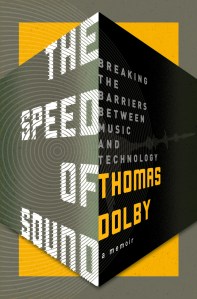
Book Review: The Speed Of Sound by Thomas Dolby

A cursory survey of Dolby’s musical career reveals that he’s a pivotal figure by any standards, collaborating with Prefab Sprout, Stevie Wonder, Eddie Van Halen, Jerry Garcia, George Clinton, Herbie Hancock, Trevor Horn, David Bowie, Def Leppard, Joni Mitchell…

And that’s not even factoring in the excellent solo albums and technological innovations (he created the software for the first popular mobile ringtones).

So if it’s pithy, musicianly anecdotes and the bittersweet memories of an Englishman (mostly) abroad you’re after, his enjoyable autobiography ‘The Speed Of Sound’ certainly does the business. But, as we’ll see, it’s very much a book of two halves.

A music-and-technology-mad teenager, Thomas Morgan Robertson first builds up his performing chops during a lengthy period of busking in Paris, finding out quickly that playing ‘Stairway To Heaven’ is the only way to make any money.

Returning to London, he’s in the right place at exactly the right time and on the verge of launching his solo career when summoned across the pond to work on Foreigner 4.

Christened ‘Booker T Boofin’ by the AOR legends for his considerable efforts, it nonetheless turns out to be a not entirely edifying entrée into the world of mega-bucks recording.

Then there’s solo-artist fame in the US, tempered by difficult video shoots, stage fright and the occasional debilitating panic attack. He’s summoned by Michael Jackson to come up with a few new post-Thriller tunes. It doesn’t end well.

His tours are well-attended but lose money and his second major single release ‘Hyperactive’ and attendant solo album The Flat Earth flatline partly due to dodgy record company ‘accounting’.

It’s a chastening experience; he focuses more on production work in the mid-’80s and any fans of Prefab’s Steve McQueen and Joni Mitchell’s Dog Eat Dog will find loads to enjoy here.

But Dolby inadvertently locks horns with Joni and finds himself sending in keyboard parts and arrangement ideas from Jenny Agutter’s spare room. Only in LA…

We get the inside story of his appearance with David Bowie’s at Live Aid (with only three short rehearsals), hear about a hilarious fishing trip with George Clinton and a memorable serenading by Stevie Wonder in a studio broom cupboard.

Then there’s an enjoyable detour into the world of movie soundtracks, ‘hanging out’ with George Lucas and meeting the love of his life in LA. By the early ’90s, we’re deep in ‘Spinal Tap’ territory when Dolby has amusingly mystifying dealings Eddie Van Halen and Jerry Garcia.

So far so good. But the second half of ‘Speed Of Sound’ focuses on Dolby’s lengthy sojourn in Silicon Valley. Depending on your taste, this will either be a trial or treat. I skipped large chunks of it.

I wanted a lot more music and a lot less tech, and you sometimes get the feeling Dolby did too throughout that period (he frequently laments the fact that his more ‘personal’ music on Aliens Ate My Buick and Astronauts & Heretics failed to find an audience).

The other issue – hardly Dolby’s fault of course – is that everyone seems to be writing a memoir these days and it only emphasises the dearth of decent recent music. And slightly lessens the mystique of the best ’80s material. I’d trade one more decent Dolby solo album for any number of ‘Speed Of Sound’s… But it’s still a very enjoyable read.

‘The Speed Of Sound’ is published now by Icon Books.

Dolby discusses the book here.

Introducing The Hardline According To Terence Trent D’Arby: 30 Years Old Today

Yeau! The headline of Q Magazine’s September 1987 cover feature said it all.

Perrier-quaffing Terence was correctly predicting a phenomenal critical and commercial reaction to his debut album and ready to dish the dirt.

He had done it all on his terms; wrongfooted his record company (who had wanted a slick, current, ‘upwardly-mobile’ soul album) and played the press at their own game. But at what cost?

D’Arby had lived quite a life before becoming a ‘pop star’: he was born in the States, the son of a preacher father and gospel-singing mother, studied journalism in New York, became a half-decent boxer in his late teens, joined the army and was based in Germany throughout most of the ’80s during which time he worked on his music and acquired a manager (a strategy not dissimilar to another ex-army musical maverick, Jimi Hendrix).

Decamping to London in 1985, D’Arby worked on demos with Heaven 17’s Martyn Ware and, after being turned down by several major labels, finally got the nod from CBS.

They pulled off a pre-release masterstroke when D’Arby was block-booked for four weeks running on ‘The Tube’ after a knockout debut live TV performance. To say that there was a buzz about him would be an understatement. The general consensus was: ‘Who the hell is this guy?!’

Hardline still sounds like one of the better debut album of the ’80s or any other decade. From the opening bars of ‘If You All Get To Heaven’, it’s clear that something pretty special and pretty different is going on, though the album inadvertently tapped into the ‘retro-soul’ revival that had built up in the UK over 1986 and 1987 – Ben E King and Percy Sledge had both had number ones in the months before Hardline‘s release, and The Pasadenas, The Christians and various others would bring forth similar grooves in the months to come.

Hardline also reminded critics and audiences alike of some of the great soul vocalists of the ’60s, ’70s and early ’80s – Al Green, Otis Redding, Stevie, Prince, Michael Jackson, James Brown and especially Sam Cooke. All went into the mix but finally D’Arby sounded just like himself.

He peppered ‘Dance Little Sister’ – a track that Prince would have killed for – with some outrageously over-the-top vocals. But, refreshingly, his singing throughout the album ain’t perfect – he’s much more into getting the emotion across and bringing a party vibe to the studio.

‘Sign Your Name’, ‘If You Let Me Stay’ and ‘Wishing Well’ are funky yet accessible (if the latter doesn’t make you move, you’re probably dead), but the a cappella, African-themed ‘As Yet Untitled’ is totally original.

He even takes on Smokey Robinson and emerges unscathed on the closing ‘Who’s Loving You’. He plays a lot of instruments himself and only gets in occasional help when absolutely necessary (including future Skunk Anansie bassist Cass Lewis and Pop Group/PiL drummer Bruce Smith). As such it’s a remarkably cohesive album.

Hardline was a big hit, reaching #1 in the UK, #4 in the US and selling over eight million copies worldwide. D’Arby got the rep of being a ‘difficult’ artist when his follow-up album Neither Fish Nor Flesh missed deadlines and went over budget. Things would probably never be the same again. But we’d always have Hardline.

Larry Carlton: Last Nite 30 Years On

In a previous piece about Robert Cray, I talked about ‘touch’ guitarists, those whose sounds are almost entirely in their fingers and not dependent on pedals or amps.

Larry Carlton is certainly one of them. He played some of the great guitar of the 1970s with Steely Dan, The Crusaders, Michael Jackson and Joni Mitchell, his sound characterised by a deceptively ‘sweet’ take on the blues, alongside elements of jazz and rock. In the early ’80s, he put out some fine studio albums including Sleepwalk and Friends, but ’87’s Last Nite was his first official live release.


And what an album. In 1987, I was a big fan of his playing with Steely Dan but had never heard any of his solo stuff. A glowing review of Last Nite in Q Magazine sent me scuttling off to my local Our Price. Recorded on 17th February 1986 at the Baked Potato club in North Hollywood, the album is Larry uncut, blowing on a mixture of originals and jazz standards, with no thought of commercial or airplay potential.

It’s hard to think of another guitarist who could cover such a stylistic range so effortlessly. He kills on the slow blues, tears up the fast Texas-style shuffle, delivers deliciously ‘out’ fusion on the title track and swings his ass off on ‘All Blues and ‘So What’, though with a pleasingly piercing tone as opposed to the warm sound favoured by most ‘jazz’ players.

He’s also endlessly melodic, producing memorable phrase after memorable phrase. But don’t be fooled by the beatific expression and cream jacket – he isn’t afraid of throwing in some pretty wacky modal curveballs too.

Another key aspect of Last Nite is Carlton’s band. He uses the cream of the LA studio scene – John ‘JR’ Robinson on drums, Abe Laboriel on bass, Alex Acuna on percussion – and brings them right out of their comfort zone. Apparently they didn’t know ‘So What’ and ‘All Blues’ were on the setlist until Larry called them.

JR in particular is a revelation, sounding like he’s been cooped up in the studio for far too long. And who knew he could swing like he does on the jazz cuts. Keyboard player Terry Trotter also impresses with his rich voicings and empathetic accompaniment.

Sadly, Last Nite turns out to be a bit of an anomaly in Larry’s discography, marking the beginning of an era when he was veering more and more towards a much smoother studio sound. But he’s always ripped it up in the live arena and has spent a lot more time on the road in his later years.

Happy birthday to a true guitar classic.

The Wackiest Guitar Solos Of The 1980s

eddie_van_halen_at_the_new_haven_coliseum_2Pop music has always featured its fair share of brilliantly ‘inappropriate’ instrumental solos, from the (uncredited) honking tenor break on Frankie Lymon & The Teenagers’ ‘Why Do Fools Fall In Love’ and Tony Peluso’s brilliant fuzz-guitar feature on The Carpenters’ ‘Goodbye To Love’ to Jeff ‘Skunk’ Baxter’s unreconstructed rampage through Donna Summer’s ‘Hot Stuff’.

And then of course there are the jazz solos that occasionally enhance ‘pop’ material – Sonny Rollins lighting up the Stones’ ‘Waiting On A Friend’, Ronnie Ross’s memorable break on Lou Reed’s ‘Walk On The Wild Side’ and Phil Woods/Wayne Shorter/Pete Christlieb’s tasty leads on some of Steely Dan’s best work.

In the ’80s, there was a lot of demand for the wacky solo, often thrown in to pep up some pretty light/fairly inconsequential material. One in particular really set the benchmark for the decade, and it’s naturally where we start our rundown…

6. Michael Jackson – ‘Beat It’ (Solo by Eddie Van Halen)
Eddie’s shock-and-awe break was a perfect distillation of all his trademark techniques: lightning-fast picking, close-interval tapping routines, whammy-bar divebombs and even a cheeky Jimi Hendrix ‘All Along The Watchtower’ homage.

5. Michael Sembello – ‘Maniac’ (1983)
Sembello, hitherto best known as a very able jazz/R’n’B session player for the likes of Stevie Wonder, David Sanborn and George Duke, unleashed this overblown post-‘Beat It’ solo (starting at 2:50) which sounds like it belongs to a completely different song. Maybe he should have stuck to the jazz and R’n’B…

4. Bros – ‘Chocolate Box’ (Solo by Paul Gendler)
Gendler was a respected UK-based session player (and member of Modern Romance!) before getting the call from the Goss boys. He tosses off a Francis Dunnery-esque, way-too-good-for-the-charts solo at 2:40 on this wafer-thin but very catchy single.

3. Europe – ‘The Final Countdown’ (Solo by John Norum)
This song is obviously crying out for a widdly guitar solo, but Norum’s brilliant Malmsteen-esque playing goes beyond the call of duty even by the standards of a mid-’80s hair-metal band.

2. Al Jarreau – ‘Telepathy’ (Solo by Nile Rodgers)
Nicely set up by Steve Ferrone’s wrongfooting half-bar drum fill, Nile plays all the notes he knows and a few more too in this seriously weird but rather brilliant harmonized/double-tracked break (starting at 2:05) from the L Is For Lover album.

1. Allan Holdsworth – ‘In The Mystery’ (1985)
Jazz/rock guitar genius Holdsworth inexplicably saved some of his wackiest solos for vocal-based, ‘commercial’ material. This one is fairly astonishing and, arguably, totally wasted on the song… (Bassist Jimmy Johnson also deserves a mention for his frenetic, Red-Bull-sponsored performance.)

Rod Temperton (1949-2016)

When MJ and Quincy are requesting your songs, you know you’ve made it.

Rod Temperton’s compositions are timeless, uplifting, full of detail and subtleties, with lots of vamp-busting major-7th/9th chords and joyful melody lines. It’s also important to note that he arranged all his own tunes for Jackson and Quincy too, outlining the rhythm, vocal and keyboard parts.

Like many kids of my age, I was kind of obsessed with Rod’s ‘Thriller’ during the mid-’80s. It was a perfect musical storm. Jackson’s red-hot vocal performance, the killer groove, brilliant horn arrangements, silly but spooky horror-movie lyrics, intriguing sound effects and Vincent Price’s rap/monologue all left an indelible mark.

But there was much more to Rod Temperton’s career than that obvious highlight. He was born in Cleethorpes, Lincolnshire, beginning his public life playing keyboards and writing songs for Heatwave, writing every song on their 1977 debut album Too Hot To Handle including ‘Boogie Nights’ and classic ballads ‘All You Do Is Dial’ and ‘Always & Forever’.

This led to his work on Michael Jackson’s Off The Wall album for which he wrote the title track, ‘Rock With You’ and ‘Burn This Disco Out’.

Temperton started the 1980s contributing to George Benson’s Quincy-produced Give Me The Night, composing the title track, ‘Love X Love’, killer disco/jazz instrumental ‘Off Broadway’ and the extraordinary ‘Star Of The Story’.

There were other classic Rod compositions and arrangements around this time for Patti Austin, The Brothers Johnson, Rufus, Herbie Hancock, Karen Carpenter and Bob James, as well as the classic Donna Summer floorfiller ‘Love Is In Control’.

He contributed to Quincy’s fine 1981 solo album The Dude, supplying the title track, ‘Somethin’ Special’, ‘Turn On The Action’ and of course the stunning ‘Razzamatazz’:

Then came the epochal Thriller. Temperton was all over the record, composing and arranging ‘Baby Be Mine’, soul standard ‘The Lady In My Life’ and of course the title track.

He famously wrote most of Vincent Price’s rap/monologue in a car whilst being rushed over to Ocean Way Studios to join Price’s vocal session. In fact, he was so prolific that he found time to write a third verse for the monologue, edited from the album version but available in outtake form here:

In the mid-’80s, Rod supplied three more classic compositions: Michael McDonald’s ‘Sweet Freedom’, McDonald’s duet with James Ingram ‘Yah Mo B There’ (co-composed by Ingram, McDonald and Quincy) and also the underrated ‘Spice Of Life’ by Manhattan Transfer featuring Stevie Wonder on harmonica.

Rod enjoyed somewhat of a songwriting/arranging/producing renaissance in the early ’90s, including some great work for Mica Paris’s Whisper A Prayer album and also Q’s Jook Joint. His contributions to music won’t be forgotten, and he was by all accounts a lovely fellow too.

Rodney Lynn Temperton, 9th October 1949 – October 2016