The 5 Creepiest Music Videos Of The 1980s

Peter_gabriel_31081978_02_400In the 1980s, big-name directors generally had no qualms about helming pop videos: Landis, Scorsese, De Palma, Fincher, Peckinpah, Demme, Friedkin and Sayles all brought their visual sense to bear on the medium.
But if you weren’t tying the song in with a movie, you had to interpret the sometimes fairly nonsensical lyrics somehow (begging the question: were ’80s lyricists ever inspired by how their words would be interpreted in a song’s video?).

Given an almost blank slate, it’s fair to say that some directors’ imaginations ran riot; sometimes the storyboards got – how shall we put it kindly – a bit out of hand, riddled with disturbing symbols, disconcerting imagery and creepy concepts.

Here are five of the strangest clips of the decade:

5. David Bowie: ‘Underground’ (1986)
Legendary director Steve Barron (‘Beat It’, ‘Take On Me’) helmed this curio which accompanied David’s appearance in the movie ‘Labyrinth’. The song (which clearly influenced Madonna’s ‘Like A Prayer’ a few years later) seems to be about a young girl’s alienation and initiation into the adult world (‘No one can blame you for walking away… Daddy, daddy, get me out of here!’), echoing the movie’s plot. But the video goes off into very odd tangents: David dissolves into the floor, has a flashback to all his previous personas and then moves into a murky underworld where he becomes an animated character. The disembodied ‘helping hands’ from the movie mime to the gospel backing vocals and David dances with muppets before he rips off his ‘real’ face and becomes a cartoon character forever. Albert Collins’ earthy, raunchy blues licks seem a bit out of place alongside this surreal stew…

4. Laura Branigan: ‘Self Control’ (1984)
‘Exorcist’ director William Friedkin was in charge of this expensive curio. Words are hard to come by. This excellent analysis says it all really. Was the video an influence on Kubrick’s ‘Eyes Wide Shut’?

3. Bonnie Tyler: ‘Total Eclipse Of The Heart’ (1983)
Directed by another future Hollywood helmer Russell Mulcahy, this expensive weirdorama was filmed at the Holloway Sanatorium, a large, unused Victorian mental hospital in Surrey. It was a very apt choice of location: virginal boarding-school teacher Bonnie seems to be either dreaming or fantasizing about her students participating in various activities including swimming, karate, gymnastics, football, fencing, singing and dancing. As you do. Apparently there’s an urban legend that the boy who shakes Bonnie’s hand at the end is Italian footballer Gianfranco Zola. Let’s hope it’s true.

2. Peter Gabriel: ‘I Don’t Remember’ (1983)
This forbidding track, remixed from Peter Gabriel Plays Live, was never going to get a happy-clappy ‘Sound Of Music’-style vid, but it’s still pretty out-there. There are echoes of Bowie’s ‘Blackstar’ in its conflation of poverty, physical threat, trance-like states and religious reverence. ‘I Don’t Remember’ is certainly one of the most distinctive vids of the mid-’80s but seems way too menacing for wide appeal.

1. The Jacksons: ‘Torture’ (1984)
The track seems to be about the ‘torture’ of relationship breakdown but director Jeff Stein and designer Bryce Walmsley (hi, Bryce!) over-egg the concept something rotten here. It pretty much comes on like a manual for trauma-based mind control. Both Michael and Jermaine refused to appear in the video, which ran over time and over budget, driving its production company into bankruptcy. Almost unbelievably, a wax dummy of Jacko was rented from a Madame Tussaud’s in Nashville and appears in three sequences including the tragic and really quite sad final salute. Stein recalls the shoot as ‘an experience that lived up to the song title’ and says it was so stressful that one of his crew members lost control of her bodily functions. Vigilant Citizen has put together an excellent analysis of the video.

Any more for any more? Let me know below.

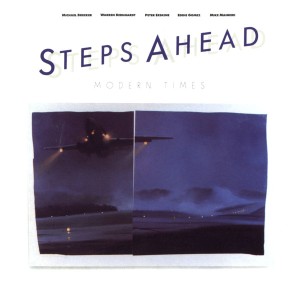
Steps Ahead: Modern Times

Steps-Ahead-Modern-Times

Any budding sax player of the ’80s had to have been checking out Michael Brecker, devouring his post-Coltrane superchops and forensic exploration of every chord.

Funk and pop fans loved him because he could play absurdly-tight horn arrangements with his trumpet-playing brother Randy and also solo superbly over vamps, finding endless melodic ideas in the simplest two-chord changes.

He was surely the only sax player who could play comfortably with Kenny Wheeler, Parliament and Everything But The Girl. It has to be said that most hardcore jazz purists were intrinsically suspicious of this, but who cares what they think…

Brecker formed Steps Ahead (originally Steps) with fellow New York masters vibraphonist Mike Mainieri and bassist Eddie Gomez, put together initially for the Japanese market. Steve Gadd was their original drummer, replaced in the early ’80s by Weather Report man Peter Erskine.

Steps Ahead’s self-titled debut album showcased a mostly-acoustic fusion sound, but the 1984 follow-up Modern Times embraced all sorts of ’80s technology to intriguing effect.

Of course such tinkering opens it up to sounding somewhat dated these days, but at least the album has ambition, quality compositions and the kind of attention to detail that makes it an interesting companion piece to key mid-’80s works like The Flat Earth, Hounds Of Love, Boys And Girls and So.

Opener ‘Safari’ kicks off with a vaguely Caribbean/reggae groove featuring a multitude of synths and sequencers and a tribal, almost Zawinulesque melody. With repeated listens there are many pleasures to be found; Brecker’s typically incisive tenor solo, Erskine’s subtly-building groove work, the slinky bass line which rumbles on throughout.

Equally arresting is pianist Warren Bernhardt’s title track, a modal piece built over another serpentine, sequenced line, developing into a series of lovely vignettes featuring Brecker’s solos and some very Steely Dan-ish chord progressions.

Mainieri’s composition ‘Old Town’ features King Crimson/Peter Gabriel sideman Tony Levin playing some menacing Stick over the sort of exotic, ambient groove Bryan Ferry would utilise on Boys And Girls a year later. And ‘Radio-Active’ taps into some of the World vibes Peter Gabriel investigated throughout the ’80s.

Unfortunately a few tunes let the side down, drifting uncomfortably into smooth jazz territory. Mainieri’s composition ‘Self Portrait’ is almost saved by a lyrical Brecker solo but far too saccharine for my tastes, while Erskine’s ‘Now You Know’ features a melody line (Brecker on soprano) which, though memorable, veers scarily towards Kenny G.

And it has to be said that Eddie Gomez’s role in the band was diminishing very fast, so anonymous is his contribution. He would be gone by the next album Magnetic, replaced by ex-Weather Report man Victor Bailey.

In Modern Times‘ liner notes, Peter Erskine thanks someone for their help with click tracks, and that concept in itself would probably turn off a big section of the ‘jazz’ audience.

But some arresting compositions, tribal grooves and typically tasty Brecker solos ensure that one’s attention never strays for long. Modern Times is a key jazz album of the ’80s, albeit one that would probably have given most of the Young Lions nightmares…

Dreams By The Sea: Peter Gabriel & Kate Bush

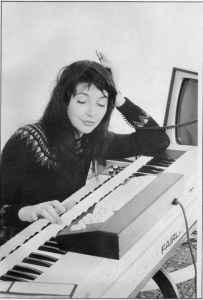
kate bushI’m certainly not alone in finding the seaside very evocative of childhood memories and, in turn, musical revelations gone by.
Walking on Devon’s Slapton Sands recently, I was taken back to family holidays at St Margaret’s Bay, a little village atop the famous White Cliffs of Dover on the English Channel.

Armed with my Walkman, I’d take off towards the creepy, deserted air-raid shelters, then scramble up the steep chalk track to enjoy the huge expanse of sea in all directions and the French coast in the distance.

The two tracks most redolent of that time – and two which somehow seem to capture something about the English fascination with all things nautical – are Kate Bush’s ‘And Dream Of Sheep’ and Peter Gabriel/Robert Fripp’s ‘Here Comes The Flood’. They are almost indistinguishable to me and will forever be connected to that coastline and the seaside in general.

Gabriel’s sea song was originally recorded for his 1976 debut album in a bombastic style. But in 1978, he laid down a much gentler, far superior piano/vocal version, to which Fripp later added Frippertronics and a spoken-word segment from his spiritual guide/Gurdjieff-protegee JG Bennett (who also turned up on David Sylvian’s Gone To Earth).

kate bush peter gabriel

Gabriel’s lyric seems to point towards the inhabitants of an island (England?) joining forces (telepathically?) to save themselves from a pending (apocalyptic?) tsunami. In doing so, the islanders taken on mystical, extra-sensory powers.

There are shades of the Genesis track ‘Supper’s Ready’, with its epic tale of good versus evil, and also elements of the research into ESP that Gabriel was apparently doing at the time.

Bush’s sea song kicks off the extraordinary Ninth Wave suite (and uses very similar chords to ‘Here Comes The Flood’: C#min, A and B) taking up the entire second side of her classic 1985 album Hounds Of Love. We are thrust unceremoniously into a psychic association with a female protagonist who finds herself in the middle of the sea after a shipwreck. Echoes of past/present obsessions, loves and losses float to the surface of her mind (including the Radio 4 Shipping Forecast), ostensibly to keep her awake so that she doesn’t drown.

The conclusion of the song cycle suggests that she’s now at peace and in a far more positive state of mind, either in death or safe at shore.

Six Great ’80s Album Openers

vinyl-goldSequencing an album can be a real headache but it’s surely one of the dark arts of the music business.

One thing’s for sure: the lead-off track is key. You know the old A&R cliché – ‘You gotta grab ’em from the first bar!’ But sometimes quiet and enigmatic can be just as effective as loud and arresting.

Repeated listening and nostalgic reverie possibly cloud the issue but it’s almost impossible to imagine some albums with different opening tracks. Revolver kicking off without ‘Taxman’? Rubber Soul without ‘Drive My Car’? Pretzel Logic without ‘Rikki Don’t Lose That Number’? Unthinkable.

So here are six of my favourite album-openers from the ’80s:

6. Phil Collins: ‘In The Air Tonight’ from Face Value (1981)
Love or hate Phil, no one can deny this is one of the killer intros. He programmes his own ‘Intruder’ beat on a Roland CR-78 drum machine, adds some slabs of heavy guitar, some moody chords (in D minor, the saddest of all keys…) and chills all and sundry.

5. Yes: ‘Owner Of A Lonely Heart’ from 90125 (1983)
A blast of sampled Alan White drums (later co-opted for Art Of Noise’s ‘Close To The Edit’) and we’re away! Trevor Rabin’s gargantuan power-chord intro became an MTV mainstay and gave the prog-rock survivors their only US number one single. But, arguably, they shot their load too early – the rest of the album never comes close to this lavish opener.

4. Simple Minds: ‘Up On The Catwalk’ from Sparkle In The Rain (1984)
I’m a sucker for drummer count-ins and this is one of the best. There’s a lovely contrast between the unproduced timbre of Mel Gaynor’s yelp and stick-clicks and the subsequent blizzard of gated drums and Yamaha CP-70 piano in the classic Gabriel/Lillywhite/Padgham style.

3. Tears For Fears: ‘Woman In Chains’ from The Seeds Of Love (1989)
A less-than-great song from a less-than-great album, but messrs Olazabal and Smith weave a rather delicious, Blue Nile-influenced intro that promises great things, before Phil Collins’s stodgy drums and some chronic over-production buries it in bombast.

2. PiL: ‘FFF’ from Album (1986)
‘Farewell my fairweather friend!’ bawls Johnny over a cacophony of gated drums (played by jazz legend Tony Williams, fact fans) and angry guitars.

1. The Blue Nile: ‘A Walk Across The Rooftops’ from A Walk Across The Rooftops (1984)
Another one that asks, ‘Hang on, is there something wrong with this CD?’ Subtle synths ruminate in near-silence before some found sounds (coins being inserted into a slot machine?) and a lonesome trumpet gently prod a classic album into life.

Simple Minds: Empires And Dance

Simple minds

Before their mid-‘80s commercial peak, Simple Minds were an art-rock band par excellence.

They fitted perfectly into the post-punk landscape and on Empires And Dance, their third album, they certainly wore their influences boldly on their sleeve – Kraftwerk, Can, Roxy, Joy Division, Eno, Magazine, Velvet Underground, ‘Lodger’-era Bowie – but combined them exceptionally well.

Musically very strong, with Derek Forbes’ memorable basslines very much to the fore, this uncompromising album combines motorik beats with doomy vocals, Eno-style ambience, jagged post-punk guitar and deliciously sludgy synths.

Jim Kerr’s travelogue lyrics compliment the music perfectly, snapshots of bleak European passport controls, attempted assassinations and wintery landscapes. Producer John Leckie brings his usual spirit of experimentation and lays on the brittle, creeping sense of paranoia.

Simple_Minds

While the one-chord grooves tire a bit on ‘Today I Died Again’, ‘Celebrate’ and ‘Capital City’, the Euro-funk of ‘I Travel’ and ‘This Fear of Gods’ chills the blood. ‘Twist/Run/Repulsion’ is almost an early example of sampling with its random speech, out-of-phase horn blasts and queasy, looped drums. Kerr channels Bowie’s ‘African Night Flight’ with his high-speed rap (though on the demo he took a different approach).

‘Thirty Frames a Second’ and ‘Constantinople Line’ almost approach the work of Throbbing Gristle and Gary Numan with their garish synth tones and forbidding atmospheres. ‘Kant Kino’, named after a Berlin art-house cinema, pits a slight but very catchy Charlie Burchill guitar melody against amplifier hiss, tape echo and synth drone; Eno would surely approve and the track was possibly an influence on U2’s ‘4th Of July’.

The closer ‘Room’ could almost have come from the first Velvet Underground album (though they could have done with playing to a click track; the song almost doubles in speed by the end…).


Empires And Dance peaked at #41 in the UK album charts. It might have gone higher had Arista Records pressed more than just 7,500 copies at a time. The band couldn’t get off that label fast enough (like Iggy Pop).

But Peter Gabriel became a major fan and took them on tour with him throughout October and November 1980, allegedly paying most of their expenses.

Empires And Dance is very interesting album indeed and a great companion piece to Bowie’s Berlin trilogy, Peter Gabriel III and Talking Heads’ Remain In Light.

It Bites: The Big Lad In The Windmill

It+Bites+The+Big+Lad+In+The+Windmill+452664

In the slipstream of Live Aid, when Stock, Aitken and Waterman ruled the charts, house and techno were warming up and ‘indie’ (Housemartins, Smiths, Cure) was thriving, this gifted pop/prog four-piece from Cumbria crept under the radar and even managed to secure a big hit with their second single ‘Calling All The Heroes’.

It Bites blended their influences – Gabriel-era Genesis, Weather Report, Yes, Japan, Level 42, Steve Arrington, George Benson – superbly, creating an excellent debut and minor hit album.

My mate Nige and I loved The Big Lad. The soundtrack to our after-school games of pool would either be Sting’s Bring On The Night or this, and I quickly grew to love its pristine production, challenging song structures, brilliant guitar playing and cool chord sequences.

As a teenager, I’d listen to it on my Walkman very loudly while studying David O’Connor’s superb, enigmatic cover art or reading Stephen King’s Christine… What larks.

it-bites-the-big-lad-in-the-windmill-1986

Singer/guitarist Francis Dunnery once labelled The Big Lad ‘nutter’s music’, an apt description when you listen to songs like ‘Turn Me Loose’ and ‘I Got You’ which are almost pop but then pull the carpet from under your feet with bizarre, brilliant, extravagant middle sections and Dunnery’s off-mic vocal histrionics.

Producer Alan Shacklock – once the guitarist in Babe Ruth and future helmer of Chesney Hawkes’ ‘The One And Only’ – delivers a vibrant, state-of-the-’80s sound, with huge, gated drums and punchy bass.

It Bites’ early career as a souped-up pop covers band served them well – melody and groove are their priorities, and of course they were always a superb live act too.

Dunnery was (and is) also a very underrated Brit guitar hero whose playing could consistently deliver the sound of surprise with fluid legato, furious speed picking, dissonant intervals and whammy-bar abandon.

His solo on ‘You’ll Never Go To Heaven’ is a thrilling marriage of Allan Holdsworth and John McLaughlin and one of the great bits of over-the-top playing in Brit Rock.

He also delivered marvellously insane breaks on the Michael Jackson-meets-Duran Duran ‘Wanna Shout’ and barmy soft-rock ballad ‘Cold, Tired and Hungry’. Also worth checking out is B-side ‘Strange But True’ which, in its full version, becomes a vehicle for Dunnery’s increasingly demented solos.

‘Calling All The Heroes’ is actually a pretty good distillation of It Bites’ sound with Bob Dalton’s ingenious ‘reverse’ tom fills, Dunnery’s excellent melodies, John Beck’s intricate keyboards and Dick Nolan’s super-tight bass playing.

It was their only big hit though; other singles ‘All In Red’ and ‘Whole New World’ were catchy pop tunes with interesting instrumental flourishes and inventive vocal harmonies but neither troubled the charts.

itbites

The music magazines of the time generally ignored It Bites. If they did get a mention, it was generally to mock their unfashionably-superb musicianship or lack of London street-cred.

I remember Dunnery making an emotional pre-song announcement onstage at a London Astoria gig in 1988 lambasting the ‘trendy’ music press.

The Big Lad wasn’t a huge hit but did just well enough, peaking at #35 in the UK. It Bites were up and running and their best was yet to come.

Hardcore fans alert: a very nice person has posted all the Big Lad demos on YouTube.

English Snapshot: Peter Gabriel III

peter gabrielSo was my gateway Gabriel album, as it probably was for many teenagers in the 1980s.

But, in 1986, I don’t think I had a clue about his Genesis past or earlier self-titled records. So I went back and checked them out.

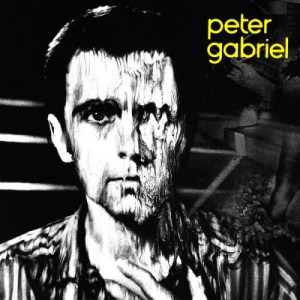
The cover artwork snagged me but initially I really struggled with Melt. The deceptively dry, claustrophobic mix, extensive use of processing, Gabriel’s animalistic yelps and the barmy Fairlight sound effects seemed very forbidding compared to So (elements drastically souped-up and ‘normalised’ by the superb 2002 CD remaster).

The opening ‘Intruder’, with its liberal use of flatted-fifth chords and Gabriel’s schizophrenic vocal, was exceptionally unsettling to a teenage lad in leafy south-west London. Forget Black Sabbath, this sounded genuinely dangerous, in a particularly English way.

The question is, of course, what an ostensibly happy, settled, middle-class young man such as Gabriel was doing digging around in the dirt in such spectacular fashion. But thank goodness he did. He extended ‘character’ songwriting – also used to memorable effect by the likes of Randy Newman, Sting, Steely Dan and The Beatles – far beyond the range of Genesis, conjuring up a memorable parade of the bungled and botched operating on the edges of society.

Musically, Gabriel apparently instructed producer Steve Lillywhite and engineer Hugh Padgham that nothing ‘normal’ was acceptable. Hence the famous cymbal ban, the layering of Kate Bush’s ethereal backing vocals and seemingly out-of-control processing and phasing.

kate bush peter gabriel

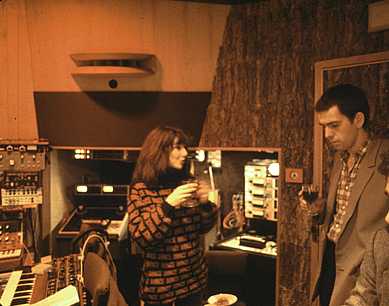
Kate Bush and PG recording at The Townhouse, London

The album’s themes seem to be the moral trapdoors of late-20th century urban life (mental illness, sexual violence, political assassinations, terrorism, the dehumanisation of war, social isolation).

You could argue that at the time of the Yorkshire Ripper, Bristol riots and IRA bombings, this was the perfect soundtrack.

‘Intruder’ subtly probes the sexual connotations of ‘breaking and entering’, equating a petty criminal’s intrusion with other kinds of violation, suggesting – controversially – some kind of tacit consent or ‘understanding’ by the victim.

On the epic, affecting ‘Family Snapshot’, Gabriel somehow manages to make us feel empathy for a fame-obsessed political assassin, especially in the closing ‘All turned quiet, I’ve been here before…’ section (which It Bites ‘paid homage to’ on fine 1988 B-side ‘Staring At The Whitewash’).

I used to think the protagonist of ‘Lead a Normal Life’ (‘eating with a spoon, they don’t give you knives’) was stuck in a borstal, but now I’m sure it’s far worse than that. And is the narrator of ‘I Don’t Remember’ an imprisoned political dissident or someone in an abusive relationship? It’s certainly not going to end well judging from Gabriel’s indecipherable whispers over the mechanized hum of the Fairlight in the outro, suggesting meek (drugged?) capitulation or even death.

It took me ten years or so to fully appreciate the album. But now it’s by far my favourite work by PG. Some fantastic UK session players play as if their lives depended on it, especially Dick Morrissey on sax and bassist John Giblin. Tony Levin delivers one of the greatest and most influential basslines in rock on ‘I Don’t Remember’ and single-handedly invigorates interest in the Chapman stick.

And, in my opinion, Padgham and Lillywhite have never done better work. Check out their stunning sound design on ‘And Through The Wire’; the mix subtly develops the drums with a little more room reverb in each successive chorus until the explosive last one when Marotta’s snare and Paul Weller’s brutal guitar threaten to destroy your speakers.

And the gradual building of ‘Biko’ and ‘No Self Control’, the latter with some distinctly Steve Reich-inspired marimbas played by Morris Pert, remains an aural treat. This fantastic album still challenges and surprises after all these years. 10/10.