In Memoriam: movingtheriver salutes the fallen of 2023

Tony Oxley (drummer for John McLaughlin, Cecil Taylor, Derek Bailey, Gavin Bryars etc.)

William Friedkin

Les McCann

Trugoy the Dove (De La Soul rapper/co-founder)

Kevin ‘Geordie’ Walker (Killing Joke guitarist)

Trevor Francis

John Pilger

Jean Boht

Fred White (drummer with Earth, Wind & Fire)

Dick Fontaine (pioneering documentary director)

Paul Watson (documentary pioneer and director of ‘The Family’, ‘The Fishing Party’, ‘Rain In My Heart’ etc.)

Shane MacGowan

Mark Stewart

Brian Tufano (‘Quadrophenia’/’Blade Runner’/’Shallow Grave’ cinematographer)

Burt Bacharach

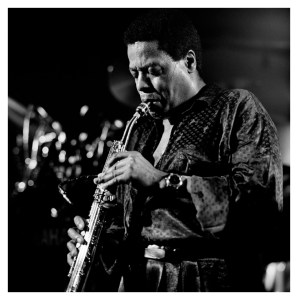
Wayne Shorter

Jerry Moss (co-founder of A&M Records)

Alan Rankine

Barrett Strong (co-composer of ‘Money’, ‘I Heard It Through The Grapevine’, ‘Papa Was A Rolling Stone’, ‘Wherever I Lay My Hat That’s My Home’)

Bruce Gowers (video and documentary director)

Carlos Garnett (saxophonist with Miles Davis, Art Blakey etc.)

Jim Gordon (drummer with Steely Dan, Frank Zappa, Derek And The Dominoes etc.)

Sinéad O’Connor

Tom Verlaine

Jeff Beck

Hugh Hudson

Sylvia Syms

Shirley Anne Field

Tony Coe (saxophonist)

Fuzzy Haskins (Parliament/Funkadelic vocalist/drummer)

Ryuichi Sakamoto

Fay Weldon

Ahmad Jamal

Carl Davis

Dickie Davies

Piper Laurie

Barry Humphries

Francis Monkman (keyboardist for Sky/Kate Bush, ‘The Long Good Friday’ soundtrack composer)

Tina Turner

John Giblin

Terry Venables

Pete Brown (poet, musician and lyricist of Cream’s ‘Sunshine Of Your Love’/’I Feel Free’/’White Room’)

John Motson

Astrud Gilberto

Baroness Betty Boothroyd

Benjamin Zephaniah

Ray Shulman (Gentle Giant bassist, producer of The Sundays, Sugarcubes and Ian McCulloch)

Ryan O’Neal

Seymour Stein

Mo Foster (bassist with Jeff Beck, Phil Collins, Ringo, Gerry Rafferty etc.)

Glenda Jackson

Martin Amis

Bishan Singh Bedi (cricketer)

George Winston (Windham Hill pianist)

Robbie Robertson

Michael Lerner

Raquel Welch

Frances Sternhagen

Joseph ‘Amp’ Fiddler (keyboardist with George Clinton, Prince, Seal, Maxwell, Charles & Eddie)

Peter Brötzmann

Richard Roundtree

Richard Davis (jazz bassist)

David McCallum

Sir Michael Gambon
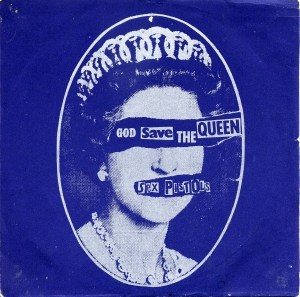
Jamie Reid (punk pioneer and designer of The Sex Pistols’ iconic covers)

John Marshall (drummer for Soft Machine, Nucleus, Eberhard Weber etc.)

Carla Bley

Alan Arkin

Michael Baker (drummer/vocalist for Whitney Houston, Joe Zawinul, Billy Childs)

Wishing all of my readers a healthy 2024, with loads of cash.

Movie Review: Killers Of The Flower Moon (2023)

Based on David Grann’s non-fiction book about series of mysterious deaths among the Osage Native American tribe in 1920s Oklahoma, Martin Scorsese’s new three-and-a-half hour movie is currently in the middle of a brief cinema run before showing on Paramount + (who also co-financed alongside Apple TV).

A new Scorsese movie is always an event. Co-starring Leonard DiCaprio, Robert De Niro and Lily Gladstone, ‘Killers Of The Flower Moon’ is another epic ‘creation of modern America’ movie, the flipside of ‘Goodfellas’, ‘Casino’, ‘The Irishman’, ‘Once Upon A Time In America’ and ‘The Godfather’, whilst also nodding to the oil boom of the 1920s and development of the FBI (‘Killers’ was reportedly reformatted during the Covid era to focus less on the FBI and more on the Osage).

The first thing to address is the giant running time. It’s quite extraordinary – and sometimes quite a challenge – watching a three-and-a-half-hour movie in 2023. And if, at times, it feels very much like an elongated TV show, its huge budget is all up there on the screen, with peerless attention to detail, meticulous mise en scene and truly hefty star performances.

You’re in the hands of a master, though Scorsese fans wanting elaborate camera movements and zippy set pieces will be disappointed – this is a sober, slow film, gaining its power from an accumulation of moods and images.

But ‘Killers’ is a true story of such simple, unremitting horror that you may also question why you are sitting so passively watching an exceptionally unpleasant, shameful episode in American history – all very apt in a long, non-fiction book or article, less so in a feature film of such extreme length.

One generally wants to look away from the casual, regular violence, unpleasantly forensic detail and focus on sometimes passive, unwell women. There’s exposure of intense anxiety and physical threat to child actors. There are also many longeurs, often undercut by Robbie Robertson’s pretty much wall-to-wall music (influenced by Kubrick’s ‘Barry Lyndon’ and ‘The Shining’?) with occasional Daniel Lanois-esque ‘funky’ breakdowns and slightly disconcerting inserts of blues and bluegrass.

But it’s the performances that linger longest in the mind after viewing. It’s thrilling watching intimate ‘behaviour’, as per Scorsese’s assessment of Marlon Brando in ‘On The Waterfront’, played out in the midst of such an epic, sprawling movie.

There are two key De Niro/DiCaprio stand-offs – it’s an absolute treat to see these two actors sparring on the big screen at such close quarters (and remember De Niro gave Leo his first big break in ‘This Boy’s Life’).

For his part, DiCaprio channels Brando, jutting out his bottom jaw, desperate to dial down the joie de vivre, excellently portraying a weak man who just wants to be left alone to enjoy money and gambling but is drawn into evil deeds. De Niro, in the meantime, seems to channel Trump. Gladstone burns very brightly during the first hour of the picture but fades fast, through no fault of her own, despite regrouping for a powerful final scene with DiCaprio.

There are shades of ‘Goodfellas’ and ‘The King Of Comedy’ in the film’s finale which summarises the hideous plot via a trite, ‘comic’ supper-theatre show, enjoyed by a middle-class audience and featuring a weird, uncharacteristically emotional cameo from the director.

So ‘Killers’ is not exactly Marty’s ‘Heaven’s Gate’ but a disappointment after ‘The Irishman’. Movingtheriver would put it alongside ‘Gangs Of New York’, ‘The Aviator’ and a few others in the ‘heroic failures’ camp. But is it worth seeing on the big screen? Of course. And Scorsese turns 81 on 17 November.

12 Angry Men: The 1980s Midlife Crisis Collection (Part One)

Here they come, these days about as welcome as turds in a jacuzzi, a collection of white, male, middle-aged ‘rockers’.
Then again, by the time of Live Aid, anyone over 30 was deemed a ‘veteran’, one of the funnier legacies of punk and New Pop.

Let’s survey the ages of some of the ‘ancient’ rock legends who appeared at Wembley Stadium and in Philadelphia on 13 July 1985: Pete Townshend (40), Paul McCartney (43), Freddie Mercury (39), David Bowie (38), Bob Dylan (44), Keith Richards (41), Bryan Ferry (39), Mick Jagger (41), Elton John (37), Brian Wilson (43).

Looking at the output of rock’s ageing alpha males during the ‘80s, angst, anger and lust were apparently the main drivers, alongside an interest in psychoanalysis and politics. Let’s take a look at some of their most coruscating work. For our purposes, we’ll define ‘mid life’ as 30 and above…

Peter Gabriel: ‘And Through The Wire’ (1980)
Upon hearing the early mixes of Peter Gabriel III, the US arm of his record company reportedly wondered if 30-year-old Pete had recently spent time in a mental asylum. But no, he was just letting off some steam, inviting Paul Weller along to supply raucous guitar, and unleashing a newfound, barely-concealed sexual energy: ‘Prowling the water hole/I wait for the kill/Pressure’s building/Overspill/I want you’. Ding-dong!

Richard Thompson: ‘Don’t Tempt Me’ (1988)
The folk/rock guitar/songwriting hero (38 at the time of recording) employed a killer US drums and bass team (Mickey Curry/Tony Levin) to carry off this pile-driving, piss-taking portrait of male jealousy and ‘little man’ syndrome. Note that he’s only ‘halfway’ out of his seat… Superb.

The Police: ‘Mother’ (1983)
Andy Summers (40 at the time of recording) takes some inspiration from Hitchcock’s ‘Psycho’ for this monstrosity, a hysterical, Oedipal blues in 7/4 time, very much inspired by his pal/guitar partner Robert Fripp. It’s quite funny to think that it was a contractually-obliged inclusion on the enormous-selling Synchronicity album, listened to by millions of unsuspecting teenagers before the emergence of the ‘skip’ button.

The Police: ‘Synchronicity II’ (1983)
Sting (31 at the time of recording) filters a Carl Jung concept through the story of family discord, a father’s paranoia and disquiet literally spawning a monster (in a Scottish loch!). Along the way, there’s also a barely concealed hatred for the common sprawl, ‘packed like lemmings into shiny metal boxes’ during the morning commute, and the protagonist’s secretaries who ‘pout and preen like cheap tarts in a red-light street’, while Sting, Summers and Stewart Copeland lay down one of the most aggressive grooves in the band’s history. Scary, strange, midlife stuff.

David Bowie: ‘It’s No Game (Part One)’ (1980)
33-year-old Bowie is jolly well peed off about…everything. There was certainly a lot to be angry about in 1980, and accordingly his Scary Monsters album dealt with some of the fears he felt for his son, from the increasingly bold tabloid press to the ever-present right-wing bully boys. In surely the most histrionic vocal performance of his career, he sounds terrified of the ‘fascists’ and violent revolutions on his TV screen.

Robbie Robertson: ‘Hell’s Half Acre’ (1987)
From the classic self-titled album, Robertson (43) sounds seriously teed off about the legacy of the Vietnam War, and more specifically, The Battle For Cu Chi of 1965/1966 (‘Down on Hell’s half acre/Shakin’ with fever/Rumble in the jungle’). Tony Levin and Manu Katche make for an appropriately barnstorming rhythm section and Robbie’s guitar is almost Clash-like in its viciousness.

28 Great One-Hit Wonders Of The 1980s

Nobody knows anything: that was the late screenwriter William Goldman’s famous maxim for determining the likely commercial viability of a movie.

But it could also apply to the pop landscape of the 1980s. While the essential ingredients for a chart smash – great melodies, interesting sounds, emotional material – were intact, there were also novelty hits by the dozen. Soap-opera actors, kids and comedians were all over the shop.

But then there were the really striking, original one-time deals. Indeed the question hanging over most of the following is: why only the one hit?

Yet maybe there is something singular about these songs. Even this writer, a big It Bites fan, can – almost grudgingly – hear only too well why ‘Calling All The Heroes’ was a hit when all of their other perfectly-worthy singles stalled just outside the top 40. But if one hit doesn’t make for a lasting career, with a bit of luck it can still be a cash cow.

So here’s a trawl through some of the best one-hit wonders (all made the UK top 40) of the 1980s…

28. Wendy & Lisa: ‘Satisfaction’ (1989)

27. PHD: ‘I Won’t Let You Down’ (1982)

26. Anita Baker: ‘Sweet Love’ (1986)

25. Joan Jett & The Blackhearts: ‘I Love Rock And Roll’ (1982)

24. The Pinkees: ‘Danger Games’ (1982)

23. Robbie Robertson: ‘Somewhere Down The Crazy River’ (1987)

22. Ollie & Jerry: ‘Breakin’ (There’s No Stopping Us)’ (1984)

21. Champaign: ‘How ‘Bout Us’ (1981)

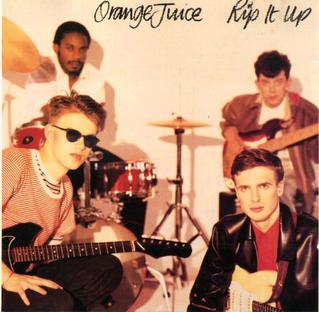
20. Orange Juice: ‘Rip It Up’ (1983)
It’s mystifying why Edwyn Collins and the gang only managed one hit, but they did. And what a beauty. Reached #8 in February 1983.

19. Joe Dolce Music Theatre: ‘Shaddap You Face’ (1981)
It’s just the audacity of it, I guess – an American/Australian comes over ‘ere and makes a random, totally un-PC, comedy record. Kept Ultravox’s ‘Vienna’ off #1 in February 1981.

18. The Passions: ‘I’m In Love With A German Film Star’ (1981)
Clive Temperley’s gorgeous Echoplex-laden guitar, a great blanked-out vocal from Barbara Gogan and the early-’80s penchant for all things European ushered this into the top 30.

17. Re-Flex: ‘The Politics Of Dancing’ (1984)
Included mainly for a great vocal by lead singer John Baxter.

16. Yarbrough & Peoples: ‘Don’t Stop The Music’ (1981)

15. Fern Kinney: ‘Together We Are Beautiful’ (1980)

14. Breathe: ‘Hands To Heaven’ (1988)
A love or hate song depending on your proclivity for soppy tearjerkers, but a pretty damn committed piece of work either way.

13. Fiction Factory: ‘(Feels Like) Heaven’ (1984)
Produced by Police-helmer Nigel Gray, this Perth (in Scotland) band produced a memorable piece of sophisti-pop with a great vocal by Kevin Patterson.

12. Ashford & Simpson: ‘Solid’ (1984)
They had of course written dozens of hits for others, and Valerie Simpson had sung back-up with everyone from Steely Dan to Quincy Jones, but this was the couple’s only UK hit.

11. Furniture: ‘Brilliant Mind’ (1986)
Fronted by future MOJO music writer Jim Irvin, this was a smart, intriguing single. Will also be familiar to fans of ‘Trigger Happy TV’. And Pulp may have checked it out too…

10. It Bites: ‘Calling All The Heroes’ (1986)

9. Kim Carnes: ‘Bette Davis Eyes’ (1981)
Apparently originally written as a loping country and western tune, it was given an icy synth-rock makeover and great John Bettis lyric, and eventually reached #10 (#1 in the USA) and earned Carnes a Grammy.

8. Martha And The Muffins: ‘Echo Beach’ (1980)

7. Rosie Vela: ‘Magic Smile’ (1986)

6. The Icicle Works: ‘Love Is A Wonderful Colour’ (1984)
How did this end up being the only top 40 hit for Ian McNabb’s talented Merseysiders? When the likes of contemporaries Pete Wylie and Pete Burns were raking in the hits?

5. Will Powers: ‘Kissing With Confidence’ (1983)
Co-written by Steve Winwood, Todd Rundgren, Nile Rodgers and Jacob Brackman and featuring an uncredited Carly Simon on vocals and some brilliant stacked backups by…who? Of course Will Powers was a pseudonym for star-snapper Lynn Goldsmith.

4. Hipsway: ‘The Honeythief’ (1986)
The Glaswegians’ funky pop gem showed the way forward for Curiosity and Love & Money, but sadly they failed to follow it up.

3. Nena: ’99 Red Balloons’ (1984)
A rather excellent lyric and musically rich #1 single. The closing 30 seconds can still send a shiver down the spine.

2. Boy Meets Girl: ‘Waiting For A Star To Fall’ (1989)
Yes yes yes, it’s shiny and toothless, but anyone who loves ’80s pop surely has to like this.

1. The Lotus Eaters: ‘The First Picture Of You’ (1983)
Another Merseyside pop gem, this slow-building classic can immediately send one into the reverie of a sun-kissed, first-love British summer.

Robbie Robertson (1987): 30 Years Old Today

robbie robertson

Robbie had a strange old ’80s.

He began the decade acting alongside Jodie Foster in weirdo circus movie ‘Carny‘ before becoming Martin Scorsese’s best buddy and music consultant on ‘The King Of Comedy’ and ‘The Colour Of Money’.

He ended it by making one of the best debut albums of the era – at 44 years old.

I didn’t have a clue about Robertson’s ‘mythical’ past as a founder member of counterculture heroes The Band when I first heard his superb ‘Somewhere Down The Crazy River’ single (which made #15 in the UK singles chart) in autumn 1987.

But I was sold immediately. I think it was Robbie’s beguiling film-noir vocal, the delicious Manu Katche/Tony Levin rhythm section (check out Levin’s little countermelody in the song’s opening minute) and swirling Daniel Lanois ‘gaseous effect’ (as Q magazine memorably dubbed the Canadian’s production style). Certainly there were echoes of Peter Gabriel’s So.

Everywhere you look on Robbie Robertson there are modern classics. Gabriel himself supplies synth and vocals to the majestic opener ‘Fallen Angel’ (dedicated to Robertson’s former Band-mate Richard Manuel) and trademark Yamaha CP-300 piano to the anthemic ‘Broken Arrow’ (later covered – rather disastrously – by Rod Stewart).

The superb ‘Sonny Got Caught In The Moonlight’ features yearning backing vocals from Band-mate Rick Danko. ‘American Roulette’ is a coruscating portrait of US celebrity culture; the first verse concerns James Dean, the second Elvis and the third Marilyn. There’s some top-class rhythm section work from Levin and drummer Terry Bozzio and intriguing keyboard playing from another ex-Bandmate Garth Hudson.

‘Showdown at Big Sky’ and harrowing, Vietnam-themed, almost Clash-like ‘Hell’s Half Acre’ rock hard but with enormous finesse, mainly thanks to Katche.

Robertson’s voice has power and presence. In the main, synths are eschewed in favour of Lanois’s ambient textures and Bill Dillon’s ethereal guitars. Robbie himself supplies some biting, Roy Buchanan-ish Tele leads here and there. Bob Clearmountain works his magic on the mix. We’ll pass swiftly over the two U2 collaborations.

But Robbie Robertson is a corking debut and fascinating companion piece to Joni Mitchell’s Chalk Mark In a Rainstorm, Steve Winwood’s Back In The High Life, Neil Young’s Freedom and Bob Dylan’s Oh Mercy (and possibly trumps all of ’em). 

This was a really interesting era for the heroes of the ’60s and ’70s. Live Aid – featuring such strong showings by Jagger, The Who, Queen and Bowie – had given the older guys a new lease of life and reason to get back out there.

However, Robbie Robertson was surprisingly somewhat of a disappointment sales-wise, only reaching #38 in the US and #23 in the UK.