
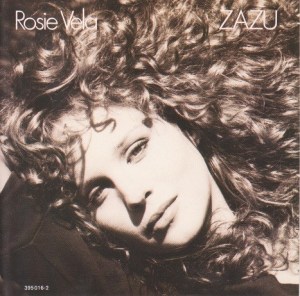
 ‘Models who make records usually should not but I’ll make an exception for Rosie Vela’, began Max Bell’s four-star review of Zazu in the January 1987 edition of Q magazine.
In general, us Brits liked Zazu (peaking at #20 and going silver), the album released 40 years ago this month which reunited the Steely Dan troika of Donald Fagen, Walter Becker and Gary Katz for the first time in nearly six years.
It was weird being a Steely Dan fan during the 1980s. Your correspondent got in around 1984, obsessed with his dad’s Steely Dan Greatest Hits cassette and Aja vinyl, and by 1986 was a megafan who’d only just twigged that Gaucho had been released a full six years earlier.
We were excited when Becker produced China Crisis, but apart from The Nightfly, Fagen seemed to have gone AWOL (he later admitted that he ‘came apart like a cheap suit’ during the decade).
But imagine our surprise when Zazu was advertised in the first issue of Q magazine, and then Rosie was interviewed in issue four.
I probably bought Zazu on the strength of the ‘Magic Smile’ single around January 1987 (but have just checked and no longer own it on any format…).
Texas-born Roseanne Vela had been a first-call model in the late ‘70s and briefly appeared in Michael Cimino’s ‘Heaven’s Gate’, all the while working on her own demos. Jerry Moss at A&M loved them and enlisted Joe Jackson to produce her debut album (he subsequently pulled out).
You can read more about Vela and the background to Zazu in Anthony Robustelli’s book ‘Steely Dan FAQ’, but for our purposes: is it easy to hear why Fagen, Katz and Becker was so drawn to the project?
Not really. But the positive things first:
With her husky voice and sometimes through-composed songs with odd chord movement, she offered something completely different to other mid-‘80s female singer/songwriters.
‘Magic Smile’ still sounds great (#27 in the UK) and ‘Boxs’ is good too. It’s very surprising that ‘Fool’s Paradise’ wasn’t a single though. It sounds like the nearest thing to a hit with its synth lick reminiscent of ‘A Hazy Shade of Winter’.
Fagen plays a nice little intro to ‘Interlude’, and Becker doubles his solo on guitar, a cool touch (Becker also plays the weird little synth additions to ‘Tonto’).
But there’s lots of bad too.
Katz helms a surprisingly cold album which leads a little too heavily on Rick Derringer’s lead guitar, some non-more-‘80s snare drum sounds and way too much DX7 from Fagen. With hindsight, maybe Jackson’s more organic approach would have worked better (Becker’s better still).
‘Sunday’, ‘Taxi’, ‘2nd Emotion’ and ‘Tonto’ are totally unmemorable songs. The closing, almost-gothic title track could have been good though with some more real instruments.
In general Katz renders some superb musicians – Tony Levin, Jimmy Haslip, Jim Keltner – pretty anonymous. In some ways Zazu is the ultimate 1986 album (Robustelli compares it to Gaucho and Aja in ‘Steely Dan FAQ’ – it’s impossible to hear that).
The cover art and photo are poor too – whose idea was it to portray this gorgeous woman in black and white?
Vela did ‘Magic Smile’ on Letterman – a brave performance that didn’t quite work. The album and single completely flopped in the USA.
But of course the main thing about Zazu is that it got Becker and Fagen back together again. Next up for Fagen was the ‘Century’s End’ single and The New York Rock and Soul Revue, both interesting. Kamikiriad was just around the corner.
 Nobody knows anything: that was the late screenwriter William Goldman’s famous maxim for determining the likely commercial viability of a movie.
 The critical consensus: 1986 was the worst music year of the decade, perhaps of any decade. But is that true?
 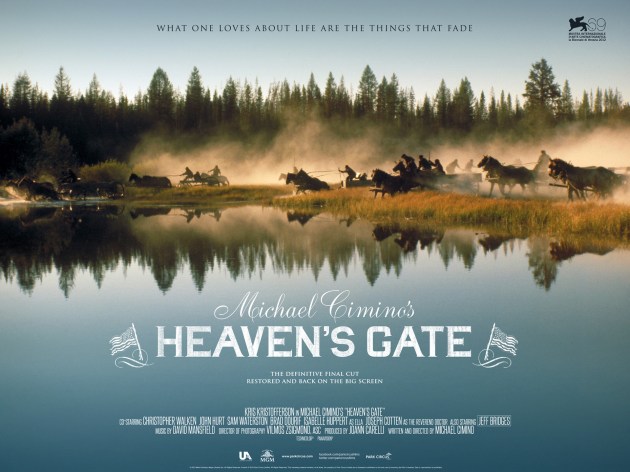 It’s difficult to view a film like ‘Heaven’s Gate’ these days shorn of all the hoo-ha that accompanied its troubled production and disastrous cinematic release (outlined in the definitive book and documentary ‘

