Summer 1980. Jack Nicholson was in the middle of his busiest period. ‘The Shining’ had just wrapped and he had inked contracts to appear in both ‘Reds’ and ‘The Postman Always Rings Twice’.
But first up was ‘The Border’, one of his least known films but a fascinating watch these days and still relevant. It’s also one of his most serious, intense screen performances, rivalling ‘Five Easy Pieces’, ‘The Pledge’ and ‘The Passenger’.
Nicholson plays a downtrodden Texas border patrolman who, after years of viewing corruption and trapped in an unhappy marriage, decides to do something completely altruistic. When the baby of an underage Mexican girl is kidnapped with threats of being sold/adopted, Jack takes a stand against his spiritually-bankrupt superiors.
It’s possible that Nicholson was attracted to the project due to the involvement of director Tony Richardson, the Brit who helmed John Osborne’s legendary ‘Look Back In Anger’ on both stage and screen, and also the presence of co-stars Warren Oates and Harvey Keitel, with whom Jack does some great sparring.
Shot in El Paso, ‘The Border’ is a terse, angsty, mature movie with moments of dark humour and an interesting companion piece to both John Sayles’ ‘Lone Star’ and Tony Garnett’s ‘Handgun’.
But its third act moves uneasily into action territory – Richardson seems out of his depth here, searching in vain for his inner Peckinpah (and why the 18 certificate? My DVD warns of ‘strong sex, violence and language’, but none of the above feature, outside of one particularly poorly staged gore effect).
Still, apparently it was an interesting shoot, with a blitzed Dennis Hopper arriving to set up a huge prank for Jack involving the president of Mexico, a cadre of cheerleaders and some Hells Angels (see Robert Sellers’ book below for more). Sadly though, Ry Cooder’s soundtrack is rather phoned-in, despite featuring an early version of the classic ‘Across The Borderline’.
‘The Border’ was delayed for a year and crept out in February 1982 to minimal fanfare (though Siskel and Ebert both liked it) and rotten box office. In truth, it feels much more like a movie of the 1970s than the 1980s. But it features yet another gripping performance from Jack during arguably his peak period and it’s well worth a look – if you can find it…
Further reading: ‘Hollywood Hellraisers (Bad Boy Drive)’ by Robert Sellers
We’ve looked at some of the worst album titles of the 1980s – now it’s time for the best.
But what made a memorable/interesting title? Certainly a few themes emerge from the list below.
Some issue instructions to the listener, some pose questions. Most feature common words uncommonly used. A pun can help. A couple are named after books. And a concept doesn’t hurt, especially if accompanied by good album artwork/design. Release the bats…
Adventures In the Land Of The Good Groove (Nile Rodgers)
What’s Bootsy Doin’? (Bootsy Collins)
No Sleep ‘Til Hammersmith (Motorhead)
Climate Of Hunter (Scott Walker)
Rum, Sodomy & The Lash (The Pogues)
Bostin’ Steve Austin (We’ve Got A Fuzzbox And We’re Gonna Use It)
From Langley Park To Memphis (Prefab Sprout)
Are You Glad To Be In America? (James Blood Ulmer)
America – Do You Remember The Love? (James Blood Ulmer)
Metal Fatigue (Allan Holdsworth)
Shockadelica (Jesse Johnson)
Back In The DHSS (Half Man Half Biscuit)
The Slide Area (Ry Cooder)
As The Veneer Of Democracy Starts To Fade (Mark Stewart)
Be Yourself Tonight (Eurythmics)
Sulk (Associates)
Love Stinks (J Geils Band)
Jazz From Hell (Frank Zappa)
Shut Up And Play Yer Guitar (Frank Zappa)
Broadway The Hard Way (Frank Zappa)
Aliens Ate My Buick (Thomas Dolby)
The Golden Age Of Wireless (Thomas Dolby)
Exit Stage Left (Rush)
Some Of My Best Jokes Are Friends (George Clinton)
R’n’B Skeletons In The Closet (George Clinton)
There Goes The Neighbourhood (Joe Walsh)
You Bought It – You Name It (Joe Walsh)
Friendly As A Hand Grenade (Tackhead)
Stop Making Sense (Talking Heads)
Non-Stop Erotic Cabaret (Soft Cell)
Frankenchrist (Dead Kennedys)
This Is What You Want…This Is What You Get (PiL)
Album (PiL)
Twang Bar King (Adrian Belew)
Big Science (Laurie Anderson)
Building The Perfect Beast (Don Henley)
Freaky Styley (Red Hot Chili Peppers)
The Pursuit Of Accidents (Level 42)
The Big Lad In The Windmill (It Bites)
Searching For The Young Soul Rebels (Dexys Midnight Runners)
The Affectionate Punch (Associates)
Empires And Dance (Simple Minds)
For How Much Longer Will We Tolerate Mass Murder (The Pop Group)
Return Of The Giant Slits (Slits)
Your Cassette Pet (Bow Wow Wow)
See Jungle! See Jungle! Go Join Your Gang Yeah, City All Over! Go Ape Crazy! (Bow Wow Wow)
Cupid & Psyche ‘85 (Scritti Politti)
My Life In The Bush Of Ghosts (David Byrne/Brian Eno)
In this day and age, it’s weirdly reassuring to recommend an album which resolutely refuses to appear on streaming platforms or even CD.
So, at the time of writing, it has always ever been just a 1982 vinyl release for Rockin’ Jimmy & The Brothers Of The Night (widely available on Discogs).
Fronted by bespectacled Rockin’ Jimmy Byfield, they were a Tulsa-based bar band with country, blues and R’n’B influences, prowling similar territory as late Little Feat, JJ Cale, mid-‘70s Eric Clapton (who covered Byfield’s ‘Little Rachel’ on There’s One In Every Crowd), early Dire Straits, late-‘70s Ry Cooder and even ZZ Top at their most laidback.
Championed by Alexis Korner on his fabled Radio 1 show, Rockin’ Jimmy’s second and final album was one of the first ‘rock’ albums your correspondent remembers enjoying. It appeared on the small but influential, Notting Hill-based Sonet Records. Based around Byfield’s pleasant voice and Chuck DeWalt’s fat beats, the band eschewed distorted guitars and blues/rock cliches in favour of catchy, melodic songs and neat ensemble work.
The album’s beautifully recorded, with no concessions to early 1980s production (thanks to Brit helmer Peter Nicholls, best known for his work with Joe Cocker and Leon Russell). ‘Rockin’ All Nite’, ‘Angel Eyes’ and ‘It’s A Mystery’ have staying power. The rest of the album hasn’t dated much either.
Sadly the band split after this second record, but they did apparently tour a little until the end of 1982, as this clip attests, and may still occasionally play around Tulsa (correct?). The cover’s quite cool too – which meeting of which ‘brotherhood’ is Byfield about to attend? The shadow knows…
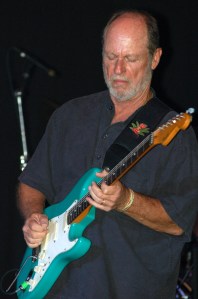
Little Feat provided some of my happiest musical memories of the late ’80s.
Paul Barrere, who has died at the age of 71, was a big part of that. His stinging leads, tasty rhythms, decent vocals and excellent songwriting were a massive part of Little Feat’s middle and later periods – the eras that really grabbed me – and he toured with the band right up until near his death.
Barrere joined Little Feat in time for the release of ’73’s classic Dixie Chicken. As Lowell George’s influence waned in the band’s middle years (and critics mainly derided the band’s embracing of prog, jazz and fusion alongside the blues, country and rock’n’roll), he contributed more and more.
As a teenager, Little Feat’s music fascinated me. There’s an oft-quoted maxim, attributed to Joe Zawinul, about Weather Report’s modus operandi: ‘We always solo and we never solo’. It could also be applied to Little Feat. Nothing was quite as it seemed. Barrere and George’s ensemble guitars meshed with Bill Payne’s keys to make a beguiling brew, sitting atop the brilliant rhythm section of Kenny Gradney (bass), Richie Hayward (drums) and Sam Clayton (congas).
Barrere was born on 3 July, 1948, in Burbank, California, the son of Hollywood actors Paul and Claudia Bryar. He wrote or co-wrote many Feat classics, including ‘Skin It Back’ from Feats Don’t Fail Me Now, ‘All That You Dream’ from The Last Record Album, ‘High Roller’, ‘Keepin’ Up With The Joneses’, ‘Old Folks Boogie’ and ‘Time Loves A Hero’.
Sadly it’s often a great musician’s death that leads one to explore the nooks and crannies of their recorded legacy, and Barrere is no different: he worked with Bob Dylan and unbeknownst to me also recorded three solo albums in the early ’80s.
We’ve briefly looked at crap cover versions before (though doubtless there’ll be more to come), but how about good ones from the 1980s?
It was quite easy coming up with a fairly long list. I guess the ultimate test is that at the time most people (including me) didn’t know – or didn’t care – that they were cover versions.
There wasn’t a great deal of looking back in this golden period for pop.
But it did seem as if a lot of ’80s acts had the magic touch, or at least a total lack of fear, making almost everything sound like their own. Punk probably had quite a lot to do with that.
Some of the following choices get in for sheer weirdness but most are genuine artistic achievements. Recurring themes? The Beatles, Motown, Otis Redding. Probably not too much of a surprise there. And 1981 seems a particularly good year for covers.
Anyway, enough of my yakkin’. Let the countdown commence…
33. Bow Wow Wow: ‘I Want Candy’ (1982)
32. David Bowie: ‘Criminal World’ (1983)
31. Ry Cooder: ’13 Question Method’ (1987)
Ry’s brilliant solo take on Chuck Berry from the Get Rhythm album.
30. Propaganda: ‘Sorry For Laughing’ (1985)
The Dusseldorf pop mavericks take on Josef K’s post-punk curio (apparently at Paul Morley’s urging) to produce a sweeping, majestic synth-pop classic.
29. Joan Jett & The Blackhearts: ‘Little Drummer Boy’ (1981)
28. Living Colour: ‘Memories Can’t Wait’ (1988)
27. Sting: ‘Little Wing’ (1987)
26. Randy Crawford/Yellowjackets: ‘Imagine’ (1981)
Who knew this would work? Sensitive and imaginative reading of the Lennon classic, with a classic Robben Ford guitar solo.
25. Lee Ritenour: ‘(You Caught Me) Smilin” (1981)
Gorgeous West-Coast version of Sly Stone’s pop/funk opus. Surely one of the most unlikely covers of the decade, but it works a treat.
24. Luther Vandross: ‘A House Is Not A Home’ (1982)
23. John Martyn: ‘Johnny Too Bad’ (1980)
Originally a reggae track by The Slickers and first released on ‘The Harder They Come’ soundtrack in 1972, Martyn and drummer Phil Collins rearranged it and added some lyrics. It featured on John’s fantastic Grace And Danger album.
22. Soft Cell: ‘Tainted Love’ (1981)
Cracking version of Gloria Jones’ ’60s Northern Soul classic (written by Ed Cobb). A hit all over the world, with pleasingly remedial synth arrangement, instantly recognisable soundworld and classic intro.
21. Grace Jones: ‘Use Me’ (1981)
The Nightclubbing album featured a veritable smorgasbord of good cover versions, but this take on Bill Withers scores particularly highly for originality.
20. The Flying Lizards: ‘Sex Machine’ (1981)
19. The Replacements: ‘Cruela De Vil’ (1988)
From the brilliant Hal Willner-helmed Disney tribute album Stay Awake, you’d have been a brave punter to bet a dime on this one working, but work it does.
18. Quincy Jones: ‘Ai No Corrida’ (1981)
17. Donald Fagen: ‘Ruby Baby’ (1982)
16. Stanley Clarke: ‘Born In The USA’ (1985)
Who knows, maybe this could have provided Stanley with a novelty hit if CBS had been quicker off the mark. He references John Coltrane’s ‘A Love Supreme’ in the intro while Rayford Griffin lays down seismic grooves and a funny old-school rap.
15. The Power Station: ‘Get It On’ (1985)
‘If cocaine was a sound…’, as a YouTube wag described it. This near-hysterical rave-up is mainly the sound of a fun late-night jam (Tony Thompson’s drumming being particularly notable). Also check out guitarist Andy Taylor’s little ode to Talking Heads’ ‘Burning Down The House’ throughout.
14. Deborah And The Puerto Ricans: ‘Respect’ (1981)
A one-off solo single from The Flying Lizards’ singer, this Dennis Bovell-produced curio missed the charts but remains a fascinating post-punk artefact.
13. Roxy Music: ‘In The Midnight Hour’ (1980)
Roxy’s first cover version presumably raised some eyebrows but the lads pull it off with some aplomb, aided by Allan Schwartzberg’s tough NYC drum groove – and the fact that Bryan Ferry can’t resist adding some typical weirdness in the first 20 seconds.
12. Ringo Starr & Herb Alpert: ‘When You Wish Upon A Star’ (1988)
Another once-heard-never-forgotten cracker from the aforementioned Stay Awake collection, the album version is preceded by a very menacing Ken Nordine spoken-word intro.
11. Japan: ‘Ain’t That Peculiar’ (1980)
David Sylvian probably hates this but no matter. It’s hard to think of another band pulling it off. Ominous synthscapes from Richard Barbieri, a nice recorder solo by Mick Karn and brilliant ‘where’s-one?’ beat from Steve Jansen.
10. Everything But The Girl: ‘I Don’t Want To Talk About It’ (1988)
It definitely divides opinion, but certainly fits the ‘sounds like they wrote it’ criterion.
9. Bananarama & Fun Boy Three: ‘Really Saying Something’ (1982)
Penned by Motown songsmiths Norman Whitfield, Micky Stevenson and Edward Holland Jr and first performed by The Velvelettes in 1964, it’s hard not to smile when this comes on the radio. I love the way the ladies pronounce ‘strutting’.
8. David Bowie: ‘Kingdom Come’ (1980)
The Dame’s magnificent take on a little-known track from Tom Verlaine’s 1978 debut album.
7. UB40: ‘Red Red Wine’ (1983)
No apologies for including this Neil Diamond-penned perennial. Great bassline, nice groove, lovely Ali Campbell vocal performance.
6. Phil Collins: ‘Tomorrow Never Knows’ (1981)
Phil closed his Face Value album with this oft-forgotten corker, featuring a classic John Giblin bassline (later cribbed by Pearl Jam for the opening of their ‘Once’) and cool Shankar violin.
5. Robert Palmer: ‘Not A Second Time’ (1980)
Robert adds some New Wave grit to this Lennon-penned rocker, and his singing has rarely been better.
4. Siouxsie And The Banshees: ‘Dear Prudence’ (1983)
3. Joan Jett & The Blackhearts: ‘I Love Rock And Roll’ (1982)
First recorded by The Arrows in 1975, this is simply one of the great singles of the 1980s and a huge hit to boot.
2. Hue & Cry: ‘The Man With The Child In His Eyes’ (1988)
It shouldn’t work but it does, courtesy of singer Pat Kane’s excellent tone and phrasing. His trademark ‘na-na-na-na’s help too. I wonder what Kate thought of it.
1. Blondie: ‘The Tide Is High’ (1980)
Written by reggae legend John Holt and first performed by The Paragons in 1966, this was an inspired – if somewhat cheesy – choice for the band. It’s mainly included here for Debbie Harry’s delightfully off-the-cuff vocal, sounding like her first crack at the song.
After the extended prologue, when Ry Cooder’s swampy blues riff slides in over a glorious widescreen shot of the Louisiana bayou, you know you’re watching a classic of its kind.
To this day, co-writer/director Walter Hill claims that the superb ‘Southern Comfort’ doesn’t directly allude to the Vietnam War, but it’s hard to conclude otherwise.
Set in 1973, his film concerns a motley group of weekend National Guardsmen whose sojourn into Cajun country (with the promise of prostitutes at the end of the road) turns into a desperate fight for survival when a foolish prank leaves them at the mercy of some particularly vengeful locals.
Hill prefers to call it a ‘displaced Western’, a film about escalating moral dilemmas in unfamiliar surroundings. That rings true too, but watching it again after ten years or so, it’s hard not to compare it to John Carpenter’s ‘The Thing’, another all-male classic about creeping, self-defeating paranoia, fudged leadership and dodgy group-think.
‘Southern Comfort’ might also be described as ‘The Warriors’ meets ‘Deliverance’. It’s that good. This is a pre-irony, pre-CGI action movie, where men are men, decisions have consequences and vengeance is swift and fairly brutal.
The action sequences are gripping, though never tawdry, and look extremely punishing for the cast – there’s a particularly realistic dog attack and a memorable quicksand incident. Apparently the shoot was long, cold and difficult, with camera tripods frequently sinking into the bayou.
The dialogue is fast and loose – the brain has to be in gear to pick up all the political/ethical nuances that fly by – and the acting styles deceptively ‘naturalistic’.
Keith Carradine and Powers Boothe are superb as the reluctant heroes who must overcome their basically apolitical stances to become men of action and moral choice.
Carradine in particular makes for a fascinating action-man (according to Hill, his character is a ‘Southern aristocrat’). The secondary cast of mainly unknowns (the ever-excellent Peter Coyote aside) is also superb.
But ‘Southern Comfort’ was a commercial dud on its 1981 release. Maybe, like ‘The Thing’, it’s far too stark a vision. But it certainly it spawned some new movie clichés and looks like an influence on many ’80s movies from ‘Aliens’ to ‘Predator’.
It’s also a fascinating watch these days considering the state of the US – the film’s message seems to be that peace is impossible while there remain so many internal divisions and prejudices.
Gavin Lambert’s 1959 book ‘The Slide Area’ was a collection of inter-related stories about a group of Hollywood’s lonely losers.
His theme was that California’s natural phenomena made ‘normal’ behaviour virtually impossible.
‘The Slide Area’ obviously rang a bell with Ry. His 1982 album of the same name also featured an array of characters not exactly thriving in the Dream Factory.
But it also turned out to be almost the complete opposite of Cooder’s commercial breakthrough, 1979’s slick, sparkling, digitally-recorded Bop Til You Drop.
The Slide Area sounds like what it is – a rough-and-ready band, often audibly cued by Cooder, playing songs of varying quality live in the studio with minimal, if any, overdubs.
‘Which Come First’, ‘Yes It’s Me And I’m Drinking Again’ and ‘Mama Don’t You Treat Your Daughter Mean’ are incredibly loose, with some bum notes and tentative moments left in. Ry’s vocals are similarly raw but full of passion. On ‘Mama…’ he sounds a bit like Bobby ‘Blue’ Bland.
Drummer Jim Keltner is uncharacteristically hyperactive, speeding up drastically on almost every song (definitely no click tracks involved with this album), but full of creativity on what sounds like a homemade kit with timbale, double kick drums, a trash can and a few different snares.
Cooder composes a lot more than on recent albums and even co-writes an ’80s classic with Keltner, ‘UFO Has Landed In The Ghetto’, which finds time to gently lampoon disco, rap and funk with references to the Bee Gees and George Benson.
But perhaps predictably the three cover tunes are the standouts: a Tex-Mex version of Curtis Mayfield’s ‘Gypsy Woman’, funky take on Dylan’s ‘I Need A Woman’ and a gloriously arse-over-tit ‘Blue Suede Shoes’.
But The Slide Area also marked the end of an era. Americana, roots music and blues were out, synths and drum machines were in.
It was the end of the sort of albums Little Feat, Van Dyke Parks, the Doobie Brothers, Bonnie Raitt, Randy Newman and Ry made with Warner Bros and the beginning of the sort of albums Madonna, Pat Benatar and Laura Branigan were making.
Live, it was a different matter – Ry was still a big draw in 1982, playing legendary gigs at the Hammersmith Odeon (my dad took me to one night, maybe my first ever major gig) and big shows all over Europe. But that too proved a false economy.
‘Someone yelled “Think of the money!” from the audience (during a 1977 Hammersmith Odeon gig). I’d like to show him my bank balance. I could never make a dime doing anything. I came back to California in debt. I’d make a record and I’m broke cos they’re not making any money, they don’t sell. I said, to hell with it,’ Ry told Q Magazine in 1987.
It was back to the movie soundtracks. For a while…

 Summer 1980. Jack Nicholson was in the middle of his busiest period. ‘The Shining’ had just wrapped and he had inked contracts to appear in both ‘Reds’ and ‘The Postman Always Rings Twice’.
 We’ve looked at some of the worst album titles of the 1980s – now it’s time for the best.
 In this day and age, it’s weirdly reassuring to recommend an album which resolutely refuses to appear on streaming platforms or even CD.
 Little Feat provided some of my happiest musical memories of the late ’80s.
  We’ve briefly looked at crap cover versions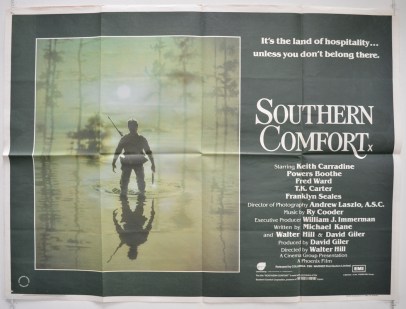

 movingtheriver.com