
 Over his 45-year career, Chad Wackerman has become the Mr Consistency of jazz/rock drums.
Since making his name in Frank Zappa’s 1980s bands, he has contributed to the music of Allan Holdsworth, Steve Vai, Andy Summers, Francis Dunnery and many more, showcasing a flowing, highly melodic, instantly recognisable approach to the kit. You might even call him the Elvin Jones of fusion.
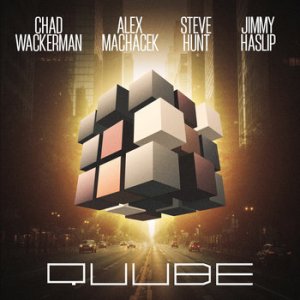
But it was Wackerman’s original compositions – honed over six solo albums, the latest being Quube – which took the spotlight during this hugely enjoyable sold-out gig alongside a starry lineup of bassist Jimmy Haslip, keyboard player Steve Hunt and guitarist Alex Machacek.
And yes, this was all-original music with not a standard in sight, a pretty rare occurrence for Ronnie’s (Haslip and Hunt seemed to be reading charts). Not even Tribal Tech do that when they come to town.
Holdsworth fans will twig that three of these players are closely associated with the late master guitarist who also appeared on Wackerman’s superb 1991 debut album Forty Reasons. Though Allan wasn’t mentioned by name, his influence towered over this music (Wackerman also contributed memorable compositions to a few Holdsworth solo albums).
‘The Fifth’ thrust us into the band’s soundworld, a subtle, elegiac half-time shuffle with dark, meaty, close-interval chords and vertical harmony. Wackerman’s feel is subtly different to those of past half-time masters Omar Hakim, Kirk Covington and Peter Erskine.
Haslip embarked on a telling mid-range solo while Machacek’s whammified chords and phrasing couldn’t help but bring Holdsworth to mind, though later in the evening he revealed more distinctive aspects.
‘Holiday Insane’ and ‘Electric City’ perfectly demonstrated Wackerman’s ‘conversational’ approach to groove playing, heavy on the ride cymbal and open hi-hats, the latter also featuring a classic Hunt Rhodes solo.
Haslip excelled on the ethereal ‘Quiet Life’, his approach subtly different to fellow LA bass monster Jimmy Johnson’s from the recorded version.
Wackerman kicked off his NYC tribute ‘The City’ with a melodic solo, a mini composition in itself (Zappa’s influence?), while Hunt added vocoder to the mix and Machacek nodded to Wayne Shorter’s ‘Witch Hunt’ during his fine solo. ‘Tell Me’ stayed close to the recorded version, Machacek even at times dialling in a harmonizer.
Meanwhile ‘I Like Your Old Stuff’ – inspired by a fan’s post-concert comment – showed the heavier side of this quartet, a flowing, fast 4/4 which occasionally foregrounded a vicious bass/guitar riff. ‘All Sevens’ rounded things off with another superb Hunt feature and engaging group improvisation.
The affectionate reception given to this music seemed to thrill the ever-modest Wackerman. His brand of jazz/rock may be unfashionable – no political comment or social protest here – but he’s building a subtle and original body of work which benefits from close attention.
Francis Dunnery talks about his work with Chad here.


