There’s a secret history of bands/artists disowning their own albums before they’ve even been released.
Lee Mavers’ La’s, Prince and Chrissie Hynde’s Pretenders come to mind, and the brilliant Cumbrian four-piece It Bites can also be added to that list. They even sent out a ‘please don’t buy our new album’ letter to their fan club. I still have it. Quote: ‘They feel Thankyou And Goodnight to be a complete rip-off on the part of Virgin Records…’ It didn’t work, of course. I bought it during its first week of release.
By summer 1991, a year after guitarist/lead vocalist Francis Dunnery had done a runner from the band (this interview gives intriguing hints as to his state of mind during spring 1990) while they were recording their never-to-be-released fourth studio album in Los Angeles, remaining members John Beck (keyboards), Dick Nolan (bass) and drummer Bob Dalton (then trying to make a go of it as Navajo Kiss, and later Sister Sarah) were less than thrilled to hear that Virgin intended to release an It Bites live album.
But it was out of their hands. They reluctantly helped with track selection/sequencing, approved the artwork and title and Thankyou And Goodnight became the official au revoir to one of the finest British bands of the 1980s. One top 40 single (‘Calling All The Heroes’) was a pretty dire return for one of the most melodic acts of the era.
Virgin should get some blame for that (they were generally better cheerleaders for their solo acts, apart from Genesis, Simple Minds and Culture Club). But these days you hear ‘Still Too Young To Remember’, ‘Underneath Your Pillow’, ‘Kiss Like Judas’ and ‘Midnight’ and it’s inexplicable that they didn’t crack the charts.
In particular, their singular lack of mainstream success throughout 1988 seems to have been a huge shock for the band, especially off the back of an extraordinary sophomore album Once Around The World, sold-out UK tour and well-received Robert Plant support slot. But back to Thank You And Goodnight. Visually, it’s a pretty shoddy package.
The cover looks like it was knocked off by a reluctant Virgin designer after a long liquid lunch. There are no recording dates or technical personnel, save for mixing engineer Nick Davis (XTC, Marillion, Genesis, Phil Collins), whose surname is misspelt.
Then there are some cursory ‘history of the band’ liner notes, with an annoying addendum by a Virgin staffer: ‘We owe you a drink, Ian!’. Yeah, right… And then there’s the track choice – it’s basically the audio from the televised June 1989 gig at London’s Town & Country Club, plus a few ringers: ‘Yellow Christian’ (recording date/venue unknown) and ‘You’ll Never Go To Heaven’ from London’s Marquee in 1987, previously the B-side of ‘Midnight’.
But it’s no surprise to report that most of the music on Thankyou And Goodnight is fantastic. Under Davis’s jurisdiction, Nolan’s bass and Dalton’s drums sound like a million dollars, at least on the T&C tracks. ‘Underneath Your Pillow’ is the standout, emerging as a superb pop song augmented by the extended, proggy ending, with Dunnery quoting from Holst’s Planet Suite (Venus, the Bringer of Peace).
‘The Ice Melts Into The Water’ and ‘Still Too Young To Remember’ (with its clever ‘Old Man & The Angel’ tag) are also superb, fitting reversions. From memory, I saw It Bites live five times (Brunel University/Astoria 1988, T&C/Hammersmith 1989, Hammersmith 1990) and they were never less than sensational. Thankyou And Goodnight is not a great package but a decent-enough document of their late-career pomp.
What a shame they couldn’t have recorded one more studio album after 1989’s Eat Me In St Louis though and basked in some long-overdue success. One further mystery – Dunnery has obviously added some post-production vocals to ‘Ice Melts Into The Water’ – when and where did he do them? Maybe he was secretly in on the project after all…
The genre ‘sophisti-pop’ is bandied about quite a lot these days – mainly ’80s music of an ‘aspirational’, elegantly-appointed variety, jazzy in hue with slinky grooves and dense harmony.
Dundee band Danny Wilson were one of its key practitioners and their second and final album Bebop Moptop, released 30 years ago this week, is a key exhibit.
And yet, despite featuring hit single ‘The Second Summer Of Love’ and a host of other superb compositions, Bebop has somehow fallen off the ’80s pop radar – it has never received the deluxe re-release treatment. (Nor, for that matter, has Danny’s superb debut Meet Danny Wilson...)
But it’s definitely due a critical reappraisal. So we caught up with singer/principal songwriter Gary Clark to discuss the ‘lost’ Danny Wilson album and loads of other stuff.
MP: Preparing for album number two, were there record company expectations? Presumably ‘Mary’s Prayer’ opened the door and Virgin wanted ‘the big hit’? You give (Virgin MD) Simon Draper credit in the liner notes for staying out of the way…
GC: That pressure is there in some form but doesn’t necessarily come from the record label. It comes from your own desire to be competitive, from management, from peers. The trick is trying to stay true to your artistic vision, and I think we always managed to fall on the artistic side of that seesaw.
There were rumours that a few big American producers almost came onboard for Bebop – is there any truth in that?
Our plan was always to record every song in Dundee with our friend Allan McGlone who had a studio in town, and at some point to bring in an outside influence to tie up the loose ends and add some perspective. We did that and throughout the process were keeping an open mind about that third party. We did meet Don Was. He came to the studio in Dundee. We played him a few tunes and went out on the town. A lovely, talented and very cool gentleman. Schedules didn’t pan out though and no more came of it. Ged suggested Fred DeFaye as he’d been listening to Eurythmics’ Savage album. We met and hit it off and pretty quickly decided to work together.
Were there any more contemporary influences going into Bebop? I hear some Prince and Pogues here and there and you play a lot more lead guitar on this than you did on Meet Danny. A conscious decision or just doing what’s right for the songs?
On the guitar, definitely the latter. I probably play just as much guitar on Meet Danny but it’s maybe more upfront on Bebop. On our influences, I guess what people are listening to has a constantly fluctuating and evolving influence, and you had three individuals all with very eclectic taste contributing. We were very open in the creative process so nothing was off limits.
‘The Second Summer Of Love’ was incredibly prescient and the hit single from the album – where did it come from? Was it a late addition?
It was definitely written in the fourth quarter of songs for that record. It was a day where we were all huddled round a phone at my girlfriend’s flat doing phone interview after phone interview. I needed to take a break so walked to the local store to buy snacks for everyone and it came to me in one piece. I had to grab a guitar when I got back, to work out and lay down on a Dictaphone what was in my head. It was originally a-minute-and-a-half long and the US label bosses heard it and asked us to extend it because they believed it was a potential radio hit. We went back into the studio and added a bridge and a harmonica solo. Ironically, it was never released as US single…
Talking of singles, I count ‘I Was Wrong’ as a missed opportunity…
After hearing a demo, the label thought so too and they encouraged us to record an early version with producer Phil Thornally. As often happens with early versions, it was never released and by the time it came to pick singles, everyone had lived with that song for around a year and it fell by the wayside when being held against newer songs that were fresher in peoples’ psyches.
The fantastic ‘Loneliness’ seems to be beamed in from a totally different world. Can you remember the genesis of that song?
Another song that I wrote mainly in my head, and indeed, in my bed. I remember sitting up with a note pad writing out the lyric like a poem at 2 or 3 in the morning. I had a melody in mind, and hashed out the musical elements on the piano over the following days and weeks.
The ‘Imaginary Girl/Shirley MacLaine’ prologue/epilogue is such a neat touch – did you ever think of Bebop as a ‘concept’ album?
Not the album as a whole, but I was aware in the writing of pockets of songs that were designed, almost like musical theatre, to live together.
Bebop got some great reviews including a rave in Q magazine, but I also remember a snarky interview in the Melody Maker… Did you care about reviews?
The music press was very powerful at that period of time and, of course, bad reviews sting. And very occasionally, when they have the ring of truth, they actually influence your thought process. But generally I would say that by the time of the second album, we had become more hardened to reviews good and bad.
You toured Bebop (I was there at London’s Town & Country Club). Did you enjoy playing this stuff live? There was a rumour that the drummer (whose name escapes me) cost more than the rest of the band put together…
Drummer Bobby Clarke and percussionist Karlos Edwards were cousins, and came as a team. They auditioned for us in London and we knew immediately that we needed them in the band, and they were such wonderful guys and wonderful musicians who brought so much to the DW party. All of the band were paid equally, but by album two we were playing bigger venues and so that would have meant higher wages than on the first album, just by the nature of economics of playing to more people.
Did you know during its recording that Bebop would be the band’s final album? Were there ever plans for record number three?
We started the songwriting process for number three and even recorded demos for a few songs that became part of my later solo album Ten Short Songs About Love but it became clear that everyone involved wanted a larger part of the writing and that would’ve meant me diminishing my input, which wasn’t going to happen, so I would say that – certainly for me – it was the underlying source of unhappiness that ultimately came to a head and ended the band.
What do you think of the Danny legacy now? Any regrets? Any temptation to do the ’80s nostalgia thing and reform, even just as a one-off?
I’m proud of what we achieved in a short period of time and I miss the creative process of working with Ged and Kit, who were and are exceptionally talented and creative people. Nostalgia is not something that any of us feed off but I would never say no to doing something if it was forward-thinking and creative. On regrets, I don’t really think about it, but if we had been able to take a break from living in each other’s pockets and faces, and stepped back a bit, we might’ve been able to keep the band going in some capacity. We are still great friends – Ged and Kit still occasionally play on music I’m involved in. They also both have amazing and separate careers in music, with a billion things going on (Ged is currently the bass player with Simple Minds – Ed.) so getting us all available at the same time would require a miracle of logistical organisation.
When we last spoke, you had just finished co-writing a lot of excellent songs for the movie ‘Sing Street’. What are you up to at the moment?
I’m executive music producer on John Carney’s new Amazon TV series ‘Modern Love’ and have played a large role in curating, producing, co-writing songs and and doing the score for that series. I even sing a little! ‘Sing Street’ is in production as a stage musical too, and is scheduled to open at the New York Theatre Workshop in their 2019/2020 season. The whole team and cast are incredible and I’m very excited about that. I’ve also been writing the musical ‘Nanny McPhee’ with Emma Thompson, which has been a thrill, and between Emma and John Carney I get to work with the most creative, talented, smart and funny collaborators that anyone could wish for. I feel very blessed and am, quite possibly, having the time of my life.
Sylvo is not particularly known for his sense of humour, but there was surely an element of black comedy about the release of the ‘Pop Song’ 12-inch single.
It’s hard to read it as anything other than his ironic response to being asked by Virgin Records to come up with something a little more ‘commercial’ to promote the Weatherbox limited-edition box set (a collection that, in the event, didn’t even contain ‘Pop Song’!).
Imagine the ashen faces of the management at Virgin HQ when the needle hit the vinyl. ‘OK, there’ssome kind of groove, but hang on – the synth bass is out of tune, the drums sound like Tupperware boxes and the piano has been flown in from a different song altogether…’
Yes, this was David’s ‘Jugband Blues’. And it was brilliant (the B-sides are well worth tracking down too). Cooked up alongside regular co-producer Steve Nye at Marcus Studios, Fulham, West London, during late summer 1989, ‘Pop Song’ was Sylvian’s bitter farewell to the decade, a vision of late-’80s Britain as a nation of clock-watching factory workers numbed by banal pop music and Sunday supplements. It’s fair to say that it wasn’t your typical feelgood summer single…
Musically, it was Sylvian’s version of ‘pop’ and pretty amusing at that, with some gorgeous ‘found sounds’, deliciously tangential piano work from ECM regular John Taylor and underwater drums/queasy synth bass courtesy of Steve Jansen. Sylvian delivers a great vocal too, full of cool, jazzy phrasing (check out the ‘But the money goes/And the time goes too’ line).
I bought ‘Pop Song’ on the day it came out (30th October 1989), and my memory is that it created quite a stir amongst Sylvian fans. It registered briefly at #83 in the UK singles chart and then promptly disappeared. Was it ever actually played on the radio? One doubts it.
But if ‘Pop Song’ proved a strange detour for Sylvian, life was about to get even stranger – next stop was the Japan ‘reunion’ Rain Tree Crow, of which much more soon.
‘File under: Victims Of A Cruel Medical Experiment’.
That was Q magazine’s memorable verdict on What Price Paradise, CC’s 1986 studio album. They had a point – it was producer team Langer & Winstanley’s unfathomable attempt to turn the Liverpudlians into Madness.
But when Steely Dan co-founder/co-songwriter Walter Becker came back onboard for ’89’s Diary Of A Hollow Horse, released 30 years ago today, normal service was resumed. It now sounds like a perfect follow-up to the 1985 classic Flaunt The Imperfection.
Becker was reluctant to record in England so persuaded the band to convene at George Benson’s Lahaina studio in Maui, Hawaii. He brought engineer Roger Nichols along for the sessions too, famous for his painstaking work on Steely Dan’s Aja and Gaucho. Nichols apparently taught all of the band how to scuba dive during their time off.
It’s hard to know what sort of expectations Virgin Records had for this album. What they ended up with is a kind of chamber pop, mainly the sound of a great, super-tight band playing live in the studio. The best tracks frequently evoke Steely Dan’s Katy Lied. The only concessions to ’80s music are the teeniest bit of reverb on the drums and the occasional synth overdub, adding colour in lieu of a horn section.
Becker’s real contribution seems to be on the arrangement side (typified by the tasty modulation for the guitar solo and flute arrangements on the vaguely ‘Deacon Blue’-esque ‘Sweet Charity In Adoration’), and he also brings in great backing singers Maxine Waters, Myrna Matthews and Linda Harmon, saxist Jim Horn, guitarist (and Countdown To Ecstasy engineer) Tim Weston and percussionist Paulinho Da Costa, who presumably used up most of the recording budget but is almost inaudible.
Virgin obviously computed the ‘hits’ as ‘Red Letter Day’ and ‘St Saviour Square’, summarily canning Becker’s versions of the songs and bringing in Mike Thorne to ‘re-produce’ them – the ploy didn’t work – the singles stiffed at #84 and #81 respectively, and they stick out like a sore thumb on the album. You can listen to all of the versions on YouTube.
Hollow Horse also didn’t work commercially, only reaching #58 in the UK album charts. But this was a period when some great pop/rock by the likes of Danny Wilson, It Bites, Love & Money and David Sylvian (all Virgin acts except for one…) also failed to find a big audience.
CC’s album sales diminished as the quality of their work increased – the game was up in terms of major-label support, but amongst fans of quality ’80s pop Hollow Horse has only gained status over the years.
The lads reproduced the album perfectly at London’s Dominion Theatre in spring 1989, a gig whose details elude me apart from the late Kevin Wilkinson’s superb drumming (and ahead-of-its-time, side-on kit placement) and vocalist Gary Daly proudly saying ‘That’s a good one, tha’!’ after ‘Day After Day’.
He had good reason to feel chuffed – Diary Of A Hollow Horse still sounds like a minor classic 30 years on.
Which ‘rock’ artists are the most likely to be subjects of not one but a series of biographies? The Beatles, The Stones, Dylan?
Japan are possibly unlikely recipients of such a legacy, but Anthony Reynolds’ superb new ‘Cries And Whispers’ – carrying on from where ‘A Foreign Place’ left off – holds the attention with ease.
His luxuriously-appointed new book takes an indepth look at all the protagonists’ (Sylvian, Steve Jansen, Mick Karn, Richard Barbieri) careers between 1983 and 1991, a mouth-watering prospect when you realise how scant the serious coverage of these groundbreaking musicians really is, Martin Power’s half-decent 1998 biography of Sylvian aside.
Here you get rigorous research, rare photos and unexpectedly candid interviews from producers, engineers, designers, record company execs, hangers-on and of course the musicians themselves.
There are fascinating glimpses under the ’80s pop bonnet, with details of record company correspondence, press releases, tour itineraries/diaries and testimonies from session players. There’s the odd unqualified muso revelation (did Mark King really get asked to play bass on ‘Pulling Punches’?!) and tasty gossip a-plenty, hardly surprising when you consider that the book covers the troubled Rain Tree Crow project.
In the main, Reynolds wisely keeps musical analysis to a minimum, letting the facts and musicians speak for themselves, and he also – admirably – is as interested in the murkier corners of Sylvian’s ’80s work (the one-off ‘Pop Song’ single, his involvement with Propaganda’s A Secret Wish album) as he is with the better-known stuff. Indeed, all the chapters on Sylvian’s solo work are terrific, particularly the lengthy portrait of his punishing ‘In Praise Of Shamans’ 1988 world tour. The Rain Tree Crow section is also gripping.
There are minor gripes here and there: some quotes from relatively peripheral figures – clearly cut and pasted from email correspondence – could do with trimming, and does anyone really want such a lengthy analysis of Dalis Car or The Dolphin Brothers? But even these longeurs have their fascinating moments.
This writer almost read ‘Cries And Whispers’ in one sitting, passing it from desk to sofa to dinner table to bath to bed, and you may well do the same. It’s another fine achievement by Reynolds and another classic music book to boot. We eagerly await the next instalment.
September’s here again. The leaves brown, the nights draw in; thoughts and ears turn towards Sylvian’s music.
The exquisite Brilliant Trees, released in July 1984, is one of those collections that I must have owned on almost every format over the years, and probably bought a few times on each.
A period of extreme introspection and even depression descended upon Sylvian following the split of Japan in late 1982.
Although his relationship with Mick Karn’s ex Yuka Fujii (who took the photos in the stylish Brilliant Trees album package) was largely thought to be the main catalyst, it still represented for Sylvian a distressing rupture of childhood friendships.
He later claimed that he could barely stay awake during this period, so degraded were his immune system and emotional reserves.
Sylvian gathered co-producer Steve Nye and some of his favourite musicians at Berlin’s Hansa Studios and RAK in London. Influences came from ambient music, NYC avant-funk, John Martyn, Nick Drake and ECM jazz.
His friend/ frequent collaborator Ryuichi Sakamoto and brother Steve Jansen were the main musical cohorts, though ex-Japan keyboard texturalist Richard Barbieri also appeared to great effect.
Brilliant Trees is very much an album of two sides. The opener ‘Pulling Punches’ is a sweetener, an effective but unrepresentative slice of white funk featuring NYC sessioneers Wayne Braithwaite and Ronnie Drayton on bass and guitar. The nearest thing to the Tin Drum sound, there’s nothing remotely like it on the rest of the album.
What a treat to hear Kenny Wheeler and Mark Isham’s flugelhorn/trumpet breaks on the classic singles ‘Ink In The Well’ (UK #36) and ‘Red Guitar’ (UK #17). Side two is a different matter altogether – it’s dark, foreboding, autumnal.
Sylvian and Nye mostly eschew ‘conventional’ solos in favour of ‘found’ sounds courtesy of Holger Czukay’s Dictaphone (see below) or Jon Hassell’s extraordinary conch-like trumpet, both used to especially brilliant effect on ‘Wailing Wall’.
‘Backwater’ begins with a powerful build up of (sampled?) strings (and check out Jansen’s inspired groove, a queasy 6/4 over a very strange programmed shaker pattern), while the almost hymnal title track is beautifully performed by Sylvian and adorned with a gorgeous ethno-jam outro.
Listening 30 years on, what strikes one is the minimalist nature of the whole album. It has dated remarkably well. Many tracks are built around a cyclical Jansen groove, sparse bass, strong Sylvian melody and then tasteful, painterly touches from clean guitar, piano, Dictaphone or synth.
This stunning collection set in motion a superb four-album run of form for Sylvian. Brilliant Trees is an almost-perfect blend of songcraft and the avant-garde at a time when pop was drawing on jazz, ambient and world music to occasionally spectacular – and commercial – effect (the album reached #4 in the UK charts and sold over 100,000 copies). You might say things were never quite the same again.
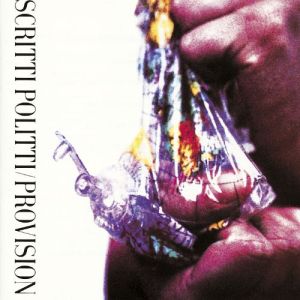
A pop formula can be a dangerous thing. In Scritti mainman Green Gartside’s case, it was literally dangerous – dangerous to his physical and mental health.
He speaks of their 1988 album Provision with something akin to dread these days, lamenting the three-year recording process (no less than 10 studios are listed in the credits) and then ‘a year of hell’ – his words – promoting it (epitomised by the fairly dire ‘Boom! There She Was’ video).
A full-blown breakdown followed, and he now says he wished he’d had the guts to explore the hip-hop sounds that had begun to enthrall him around ’86/’87.
But, to these ears, Provision is an almost-perfect follow-up to the classic Cupid & Psyche ’85. There’s arguably more cohesion – Gartside and keyboard-playing cohort David Gamson co-wrote and co-produced all tracks (no Arif Mardin this time) and the guest spots from Miles Davis, Roger Troutman and Marcus Miller are expertly placed.
‘Sweetness’ is the word that seems to follows Scritti around. And despite containing two classic ballads (‘Overnite’, ‘Oh Patti’), Provision is unashamedly happy music – all the songs are in major keys – and for me it’s one of the ultimate summer albums (’88 was a great year in this regard, Provision sharing disc space with Thomas Dolby’s Aliens Ate My Buick, Prefab’s From Langley Park To Memphis, Prince’s Lovesexy and Joni’s Chalk Mark In A Rainstorm).
But Green’s lyrics are always subtly subversive. ‘Sugar And Spice’ may be about anal sex or drugs (or both!), ‘Boom’ references Immanuel Kant and a ‘pharmacopoeia’ (dictionary of drugs), amusingly lip-syched by Gartside in the video, while his interest in Marxism is never far from the surface of even the most seemingly-straightforward ‘boy/girl’ song.
And is there a Grammy award for arrangement? If so, Provision should have won. Gamson and Green do some intricate things here with backing vocals (check out ‘Bam Salute’), rhythm guitars and synth syncopation. No-one else has really explored similar areas, including the greats of ’80s R’n’B. No wonder Miles was a bit obsessed with Scritti.
Yes, the songs on side two are a bit too long and possibly point to a dearth of material, and the album could also do with a real drummer (Steve Ferrone, Vinnie Colaiuta?). Provision missed the top 100 in the States but made the top 10 in the UK (selling over 100,000 copies) and produced one top 20 hit in ‘Oh Patti’. Writer Nick Coleman gave the album a 9/10 rave in the NME, calling its songs ‘sweeties to rot your teeth and detonate your heart’.
And so we come to the ultimate autumn album and the closing chapter of an incredible run of form for the ex-Japan singer, songwriter and multi-instrumentalist.
For my money, Sylvian’s 1984-1987 output (Brilliant Trees, Gone To Earth, Secrets) is the equal of any ‘pop’ triptych.
Each song is memorable, with its own specific mood and soundworld. Space and melody are the key commodoties. Arrangements are kept as simple as possible. If Sylvian can accompany his voice with just double bass and occasional piano, acoustic guitar or percussion – as on ‘Mother And Child’ – he does so.
Some may find this minimalism disconcerting; I certainly did back in 1987, at least compared to the rich musical stew of Gone To Earth. But the sparseness also makes it timeless. Secrets is an album to live with.
Quality guest musicians – David Torn, Mark Isham, Phil Palmer, Steve Jansen, Danny Cummings, Danny Thompson – are brought in only when absolutely necessary.
But Ryuichi Sakamato is a mainstay of the album and man of the match, contributing piano, organ and beguiling string/woodwind arrangements.
Sylvian’s detractors may label him ‘poet laureate of depressives’ but lyrically he goes way beyond ‘depression’ here. This is an unashamedly serious, ‘pre-irony’ album; many probably recoil from that too.
‘The Boy With The Gun’ is a controversial and eerily relevant character study. ‘Maria’ and ‘The Devil’s Own’ are genuinely spooky and quintessentially gothic.
‘When Poets Dreamed Of Angels’ compares modern-day domestic abuse with medieval abuses of power, ‘bishops and knights well placed to attack’.
‘Let The Happiness In’ initially comes across as a two-chord dirge – it took me about 15 years to really appreciate it – but becomes an affecting song about hope against all the odds. A brave choice of lead-off single, it crawled to #66 in the UK chart.
Second single ‘Orpheus’ didn’t chart at all but is no less than a late-’80s masterpiece featuring a gorgeous string arrangement from Brian Gascoigne. ‘September’ and ‘Waterfront’ are milestones in orchestral pop.
Secrets scraped into the UK top 40 at #37 – where it stayed for one week. It marked the end of Sylvian’s pop career. He would wait 12 years to release another solo album.
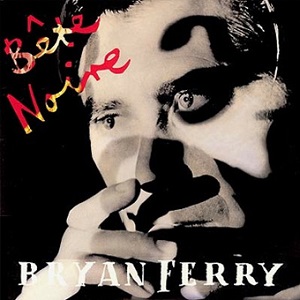
‘Only’ two years in the making, Ferry was on a bit of a roll when he released Bête Noire on Virgin Records 30 years ago this week.
He was fresh from a UK #1 album Boys And Girls and had pretty much cornered the market in upmarket, shag-pad sophistication.
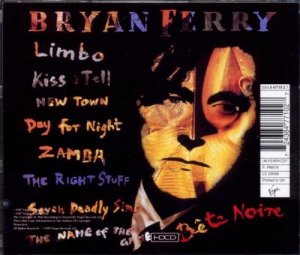
But a formula can be a dangerous thing. Bête Noire hasn’t aged too well. Or rather its songs generally underwhelm. You can scan the titles and draw a blank, with the exception of obvious standouts ‘Limbo’ and ‘New Town’.
Co-produced and occasionally co-written by key ’80s Madonna collaborator Patrick Leonard, it’s generally ‘multi-layered low energy’, as Q magazine memorably described it.
So why do I return to Bête Noire time after time again? Good lyrics help. Bowie rated Ferry, Lennon and Morrissey as the best British pop wordsmiths.
And its musical features are generally beguiling. Ferry is a bit of a sonic innovator in terms of human/machine interface.
His synths and piano shimmer on the surface of the mix, lead guitars are stacked up, drum machines accompany drummers on all grooves.
The bass playing is exemplary (Neil Jason, Marcus Miller, Guy Pratt, Abraham Laboriel). Bryan’s vocals are strong too, and he uses his favourite session singer Fonzi Thornton to great effect again.
The best tracks blend eerie synths, intriguing chord changes and striking lyrics. ‘Limbo’ features a gorgeous ambient intro, an irresistible post-Cupid & Psyche groove and cool rhythm guitar from David Williams.
‘New Town’ is a witty, late-’80s take on Roxy’s ‘In Every Dream Home A Heartache’. The juxtaposition of scary chord changes and ironic lyrics point to a seldom-revealed Ferry humour.
‘Zamba’ is a winner too, a minimalist piece in an unusual 6/4 time, weirdly reminiscent of Weather Report’s ‘The Elders’.
But the title track exemplifies the rest of Bête Noire – it’s an initially gorgeous fusion of tango, classical and ambient funk, but the song just doesn’t fire.
‘The Right Stuff’, adapted from Smiths B-side ‘Money Changes Everything’, is also a non-starter, but became the only UK top 40 single from the album.
‘Vive la Résistance‘, Bryan writes in the liner notes, introducing the list of session musicians on the album. So does he see them and himself as not part of the ‘system’? Who knows?
The problem is, with the exception of the occasional David Gilmour lead break, it’s very hard to identify any of the players (David Sanborn is sorely missed). Maybe that’s how Ferry likes it.
Bête Noire wasn’t as big as Boys And Girls but still reached #9 in the UK and spent 31 weeks on the US album chart. Ferry would wait another seven years to release any new original material, suggesting that maybe he was getting tired of the formula too.
Recorded at The Manor, Oxfordshire, October/November 1981
Working titles: Rogue Soup, Motorcyle Landscape, World Colour Banner, Explosion Of Flowers, Knights On Fire
Album Chart position: #5 (UK), #48 (US)
Singles released: ‘Senses Working Overtime’ (UK #10)
‘Ball And Chain’ (UK #58)
‘No Thugs In Our House’ (did not chart)
Andy Partridge (vocals, guitar, keyboards, percussion, co-composer): ‘We spent the summer of 1981 rehearsing at Terry “Fatty” Alderton’s Tudor Rehearsal Studio and it was very sweaty. All the Swindon heavy rock bands would rehearse there, drink cider and piss in the corner. Terry (Chambers) had forgotten how to drum. He had spent the early summer working on a building site and when he set up his drum kit it was more like scaffolding. He was just useless (but apparently improved pretty quickly… Ed.). I forced him to buy a new snare drum and timbale. I bought a Yamaha acoustic. It opened up possibilities for new sounds where the live arrangements mattered less. I’d become unhinged a couple of times on tour and wanted a break. The album cover (by Ken Ansell)? I think it was just that we were fascinated with the Uffington Horse. The Americans thought it was a duck…’
Dave Gregory (guitar, keyboards, backing vocals): ‘I’d always dreamed about owning a 12-string Rickenbacker but it had seemed like a frivolous folly until now. I fell totally in love with the sound. English Settlement was a watershed record for us. We’d made a couple of guitar records and then the acoustic side came out. It was definitely a progression. There weren’t too many songs, just not enough time…’
Colin Moulding: (vocals, bass, keyboards, percussion, co-composer): ‘I bought a fretless bass. I thought it would fit in with the acoustic stuff we were doing but it was impossible on tour. You have to have a flair for playing something without frets and I haven’t. As soon as the lights went out…the rest is history…’
For much more info on English Settlement, check out Neville Farmer’s book ‘XTC Song Stories’.


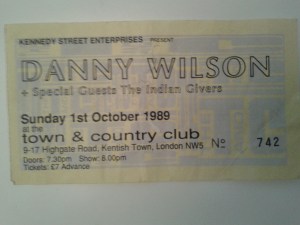 You toured Bebop (I was there at London’s Town & Country Club). Did you enjoy playing this stuff live? There was a rumour that the drummer (whose name escapes me) cost more than the rest of the band put together…
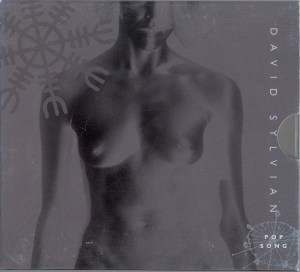 Sylvo is not particularly known for his sense of humour, but there was surely an element of black comedy about the release of the ‘Pop Song’ 12-inch single.
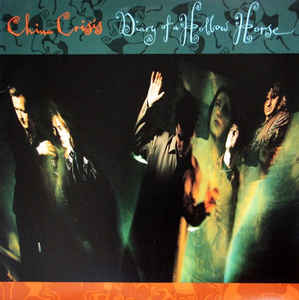
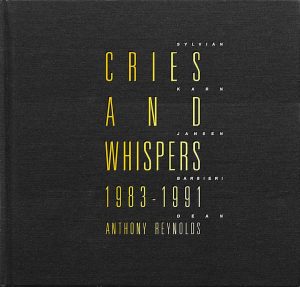 Which ‘rock’ artists are the most likely to be subjects of not one but a series of biographies? The Beatles, The Stones, Dylan?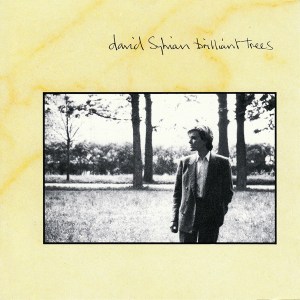


 Virgin Records, released 12 February 1982
 movingtheriver.com