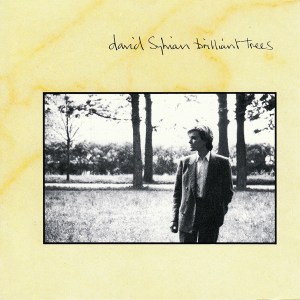
September Songs: David Sylvian’s Brilliant Trees

September’s here again. The leaves brown, the nights draw in; thoughts and ears turn towards Sylvian’s music.

The exquisite Brilliant Trees, released in July 1984, is one of those collections that I must have owned on almost every format over the years, and probably bought a few times on each.

A period of extreme introspection and even depression descended upon Sylvian following the split of Japan in late 1982.

Although his relationship with Mick Karn’s ex Yuka Fujii (who took the photos in the stylish Brilliant Trees album package) was largely thought to be the main catalyst, it still represented for Sylvian a distressing rupture of childhood friendships.

He later claimed that he could barely stay awake during this period, so degraded were his immune system and emotional reserves.

Sylvian gathered co-producer Steve Nye and some of his favourite musicians at Berlin’s Hansa Studios and RAK in London. Influences came from ambient music, NYC avant-funk, John Martyn, Nick Drake and ECM jazz.

His friend/ frequent collaborator Ryuichi Sakamoto and brother Steve Jansen were the main musical cohorts, though ex-Japan keyboard texturalist Richard Barbieri also appeared to great effect.

Brilliant Trees is very much an album of two sides. The opener ‘Pulling Punches’ is a sweetener, an effective but unrepresentative slice of white funk featuring NYC sessioneers Wayne Braithwaite and Ronnie Drayton on bass and guitar. The nearest thing to the Tin Drum sound, there’s nothing remotely like it on the rest of the album.

What a treat to hear Kenny Wheeler and Mark Isham’s flugelhorn/trumpet breaks on the classic singles ‘Ink In The Well’ (UK #36) and ‘Red Guitar’ (UK #17). Side two is a different matter altogether – it’s dark, foreboding, autumnal.

Sylvian and Nye mostly eschew ‘conventional’ solos in favour of ‘found’ sounds courtesy of Holger Czukay’s Dictaphone (see below) or Jon Hassell’s extraordinary conch-like trumpet, both used to especially brilliant effect on ‘Wailing Wall’.

‘Backwater’ begins with a powerful build up of (sampled?) strings (and check out Jansen’s inspired groove, a queasy 6/4 over a very strange programmed shaker pattern), while the almost hymnal title track is beautifully performed by Sylvian and adorned with a gorgeous ethno-jam outro.

Listening 30 years on, what strikes one is the minimalist nature of the whole album. It has dated remarkably well. Many tracks are built around a cyclical Jansen groove, sparse bass, strong Sylvian melody and then tasteful, painterly touches from clean guitar, piano, Dictaphone or synth.

This stunning collection set in motion a superb four-album run of form for Sylvian. Brilliant Trees is an almost-perfect blend of songcraft and the avant-garde at a time when pop was drawing on jazz, ambient and world music to occasionally spectacular – and commercial – effect (the album reached #4 in the UK charts and sold over 100,000 copies). You might say things were never quite the same again.

Scritti Politti: Provision @ 30

A formula can be a dangerous thing. In Scritti mainman Green Gartside’s case, it was literally dangerous – dangerous to his physical and mental health.

He speaks of their 1988 album Provision with something akin to dread these days, lamenting the three-year recording process (no less than 10 studios are listed in the credits) and then ‘a year of hell’ – his words – promoting it (epitomised by the fairly dire ‘Boom! There She Was’ video).

A full-blown breakdown followed, and he now says he wished he’d had the guts to explore the hip-hop sounds that had begun to enthrall him around ’86/’87.

But, to these ears, Provision is an almost-perfect follow-up to the classic Cupid & Psyche ’85. There’s arguably more cohesion – Gartside and keyboard-playing cohort David Gamson co-wrote and co-produced all tracks (no Arif Mardin this time) and the guest spots from Miles Davis, Roger Troutman and Marcus Miller are expertly placed.

‘Sweetness’ is the word that seems to follows Scritti around. And despite containing two classic ballads (‘Overnite’, ‘Oh Patti’), Provision is unashamedly happy music – all the songs are in major keys – and for me it’s one of the ultimate summer albums (’88 was a great year in this regard, Provision sharing disc space with Thomas Dolby’s Aliens Ate My Buick, Prefab’s From Langley Park To Memphis, Prince’s Lovesexy and Joni’s Chalk Mark In A Rainstorm).

But Green’s lyrics are always subtly subversive. ‘Sugar And Spice’ may be about anal sex or drugs (or both!), ‘Boom’ references Immanuel Kant and a ‘pharmacopoeia’ (dictionary of drugs), amusingly lip-syched by Gartside in the video, while his interest in Marxism is never far from the surface of even the most seemingly-straightforward ‘boy/girl’ song.

And is there a Grammy award for arrangement? If so, Provision should have won. Gamson and Green do some intricate things here with backing vocals (check out ‘Bam Salute’), rhythm guitars and synth syncopation. No-one else has really explored similar areas, including the greats of ’80s R’n’B. No wonder Miles was a bit obsessed with Scritti.

Yes, the songs on side two are a bit too long and possibly point to a dearth of material, and the album could also do with a real drummer (Steve Ferrone, Vinnie Colaiuta?).

Provision missed the top 100 in the States but made the top 10 in the UK (selling over 100,000 copies) and produced one top 20 hit in ‘Oh Patti’. Writer Nick Coleman gave the album a 9/10 rave in the NME, calling its songs ‘sweeties to rot your teeth and detonate your heart’.

Hear, hear. That ‘sweetness’ again…

David Sylvian: Secrets Of The Beehive 30 Years Old Today

And so we come to the ultimate autumn album and the closing chapter of an incredible run of form for the ex-Japan singer, songwriter and multi-instrumentalist.

For my money, Sylvian’s 1984-1987 output (Brilliant Trees, Gone To Earth, Secrets) is the equal of any ‘pop’ triptych.

Each song is memorable, with its own specific mood and soundworld. Space and melody are the key commodoties. Arrangements are kept as simple as possible. If Sylvian can accompany his voice with just double bass and occasional piano, acoustic guitar or percussion – as on ‘Mother And Child’ – he does so.

Some may find this minimalism disconcerting; I certainly did back in 1987, at least compared to the rich musical stew of Gone To Earth. But the sparseness also makes it timeless. Secrets is an album to live with.

Quality guest musicians – David Torn, Mark Isham, Phil Palmer, Steve Jansen, Danny Cummings, Danny Thompson – are brought in only when absolutely necessary.

But Ryuichi Sakamato is a mainstay of the album and man of the match, contributing piano, organ and beguiling string/woodwind arrangements.

Sylvian’s detractors may label him ‘poet laureate of depressives’ but lyrically he goes way beyond ‘depression’ here. This is an unashamedly serious, ‘pre-irony’ album; many probably recoil from that too.

‘The Boy With The Gun’ is a controversial and eerily relevant character study. ‘Maria’ and ‘The Devil’s Own’ are genuinely spooky and quintessentially gothic.

‘When Poets Dreamed Of Angels’ compares modern-day domestic abuse with medieval abuses of power, ‘bishops and knights well placed to attack’.

‘Let The Happiness In’ initially comes across as a two-chord dirge – it took me about 15 years to really appreciate it – but becomes an affecting song about hope against all the odds. A brave choice of lead-off single, it crawled to #66 in the UK chart.

Second single ‘Orpheus’ didn’t chart at all but is no less than a late-’80s masterpiece featuring a gorgeous string arrangement from Brian Gascoigne. ‘September’ and ‘Waterfront’ are milestones in orchestral pop.

Secrets scraped into the UK top 40 at #37 – where it stayed for one week. It marked the end of Sylvian’s pop career. He would wait 12 years to release another solo album.

Bryan Ferry: Bête Noire 30 Years On

‘Only’ two years in the making, Ferry was on a bit of a roll when he released Bête Noire on Virgin Records 30 years ago this week.

He was fresh from a UK #1 album Boys And Girls and had pretty much cornered the market in upmarket, shag-pad sophistication.

But a formula can be a dangerous thing. Bête Noire hasn’t aged too well. Or rather its songs generally underwhelm. You can scan the titles and draw a blank, with the exception of obvious standouts ‘Limbo’ and ‘New Town’.

Co-produced and occasionally co-written by key ’80s Madonna collaborator Patrick Leonard, it’s generally ‘multi-layered low energy’, as Q magazine memorably described it.

So why do I return to Bête Noire time after time again? Good lyrics help. Bowie rated Ferry, Lennon and Morrissey as the best British pop wordsmiths.

And its musical features are generally beguiling. Ferry is a bit of a sonic innovator in terms of human/machine interface.

His synths and piano shimmer on the surface of the mix, lead guitars are stacked up, drum machines accompany drummers on all grooves.

The bass playing is exemplary (Neil Jason, Marcus Miller, Guy Pratt, Abraham Laboriel). Bryan’s vocals are strong too, and he uses his favourite session singer Fonzi Thornton to great effect again.

The best tracks blend eerie synths, intriguing chord changes and striking lyrics. ‘Limbo’ features a gorgeous ambient intro, an irresistible post-Cupid & Psyche groove and cool rhythm guitar from David Williams.

‘New Town’ is a witty, late-’80s take on Roxy’s ‘In Every Dream Home A Heartache’. The juxtaposition of scary chord changes and ironic lyrics point to a seldom-revealed Ferry humour.

‘Zamba’ is a winner too, a minimalist piece in an unusual 6/4 time, weirdly reminiscent of Weather Report’s ‘The Elders’.

But the title track exemplifies the rest of Bête Noire – it’s an initially gorgeous fusion of tango, classical and ambient funk, but the song just doesn’t fire.

‘The Right Stuff’, adapted from Smiths B-side ‘Money Changes Everything’, is also a non-starter, but became the only UK top 40 single from the album.

‘Vive la Résistance‘, Bryan writes in the liner notes, introducing the list of session musicians on the album. So does he see them and himself as not part of the ‘system’? Who knows?

The problem is, with the exception of the occasional David Gilmour lead break, it’s very hard to identify any of the players (David Sanborn is sorely missed). Maybe that’s how Ferry likes it.

Bête Noire wasn’t as big as Boys And Girls but still reached #9 in the UK and spent 31 weeks on the US album chart. Ferry would wait another seven years to release any new original material, suggesting that maybe he was getting tired of the formula too.

XTC: English Settlement 35 Years Old Today

r-1455277-1313625163-jpegVirgin Records, released 12 February 1982

Produced by Hugh Padgham and XTC

Recorded at The Manor, Oxfordshire, October/November 1981

Working titles: Rogue Soup, Motorcyle Landscape, World Colour Banner, Explosion Of Flowers, Knights On Fire

Album Chart position: #5 (UK), #48 (US)

Singles released: ‘Senses Working Overtime’ (UK #10)
‘Ball And Chain’ (UK #58)
‘No Thugs In Our House’ (did not chart)

Andy Partridge (vocals, guitar, keyboards, percussion, co-composer): ‘We spent the summer of 1981 rehearsing at Terry “Fatty” Alderton’s Tudor Rehearsal Studio and it was very sweaty. All the Swindon heavy rock bands would rehearse there, drink cider and piss in the corner. Terry (Chambers) had forgotten how to drum. He had spent the early summer working on a building site and when he set up his drum kit it was more like scaffolding. He was just useless (but apparently improved pretty quickly… Ed.). I forced him to buy a new snare drum and timbale. I bought a Yamaha acoustic. It opened up possibilities for new sounds where the live arrangements mattered less. I’d become unhinged a couple of times on tour and wanted a break. The album cover (by Ken Ansell)? I think it was just that we were fascinated with the Uffington Horse. The Americans thought it was a duck…’

Dave Gregory (guitar, keyboards, backing vocals): ‘I’d always dreamed about owning a 12-string Rickenbacker but it had seemed like a frivolous folly until now. I fell totally in love with the sound. English Settlement was a watershed record for us. We’d made a couple of guitar records and then the acoustic side came out. It was definitely a progression. There weren’t too many songs, just not enough time…’

Colin Moulding: (vocals, bass, keyboards, percussion, co-composer): ‘I bought a fretless bass. I thought it would fit in with the acoustic stuff we were doing but it was impossible on tour. You have to have a flair for playing something without frets and I haven’t. As soon as the lights went out…the rest is history…’

For much more info on English Settlement, check out Neville Farmer’s book ‘XTC Song Stories’.

XTC: Skylarking 30 Years Old Today

xtcVirgin Records, released 27 October 1986

Produced by Todd Rundgren

Recorded at Utopia Studios, Woodstock, upstate New York

UK album chart position: #90 (!)
US album chart position: #70 (!)

terry-thomas

Terry-Thomas in ‘School For Scoundrels’

Side One:

1. ‘Summer’s Cauldron’

Andy Partridge (composer): ‘Something about the words reminded me of Dylan Thomas. Not that I’m saying I’m a Dylan Thomas. More of a Terry-Thomas, really…’

2. ‘Grass’

Colin Moulding (composer): ‘A lot of people think the song’s about marijuana – it isn’t. Todd said: “Don’t sing so deep. You sound like a bit of a molester.” So I just did the Bowie thing and added an octave above it…’

3. ‘The Meeting Place’

Moulding: ‘Because the riff was a bit like “Postman Pat”, we were just figures on a Toytown landscape viewed from above. It was me meeting her (future wife Carol) at the gates for a sandwich in The Beehive pub, embroidered with the suggestion of a lunchtime quickie…’

4. ‘That’s Really Super, Supergirl’

Partridge: ‘I’d go into his (guitarist Dave Gregory) little room, smelling of aftershave and guitar wax and dead mice, and he’d be rehearsing this solo over and over again. I can still see him playing it. I remember when we were recording the song that Todd was trying to master it on keyboard, and Dave whispered to me, “He’s got the chords wrong!” He thought the chords were major, and they’re not. I was hearing it a lot more clangorous…’

5. ‘Ballet For A Rainy Day’ (Partridge)

6. ‘1000 Umbrellas’

Partridge: ‘There was very little time to do the strings. They had one run-through and then recorded it. Their balls were on the line but they turned in a pretty fine performance…’

7. ‘Season Cycle’

Partridge: ‘I felt that I had maybe laid the ghost of Ray Davies ‘fore me and written a song that could stand up against “Shangri-La” or even, dare I suggest, “Autumn Almanac”.’

Side Two:

8. ‘Earn Enough For Us’ (Partridge)

9. ‘Big Day’

Moulding: ‘I’d been messing around with the chords of Labi Siffre’s “It Must Be Love” and, with a little moving around, it became this sort of fanfare to a big event, a ticker-tape parade for a big day.’

10. ‘Another Satellite’

Partridge: ‘I regret writing it because things turned out so marvellously with the person (Erica Wexler) it’s all about. The story had a happy ending because Erica and I finally got to express the emotional bond that was always there.’

11. ‘Mermaid Smiled’ (Partridge)

12. ‘The Man Who Sailed Around His Soul’

Partridge: ‘It just says you’re born, you live and you die. Why look for the meaning of life when all there is is death and decay? Todd said, “Let’s do a John Barry thing” and, literally overnight, came up with his arrangement with brass and flutes. It’s bang on. Cod spy music.’

13. ‘Dying’ (Moulding)

It frightens me when you come to mind
The day you dropped in the shopping line
And my heart beats faster when I think of all the signs, all the signs
When they carried you out your mouth was open wide
The cat went astray and the dog did pine for days and days
And I felt so guilty when we played you up
When you were ill, so ill
What sticks in my mind is the sweet jar on the sideboard
And your multicoulored tea cozy

What sticks in my mind is the dew drop hanging off your nose
Shrivelled up and blue
And I’m getting older, too
But I don’t want to die like you

14. ‘Sacrificial Bonfire’

Moulding: ‘There was a touch of “The Sorcerer’s Apprentice” and a bit of Arthur Brown’s “Fire” in it, I suppose. But I wasn’t moralising. It was just that this was an evil piece of music and good would triumph over it. (The strings) were a bit too Vivaldi for me, but it had to go somewhere, I suppose…’

Further reading: ‘XTC Song Stories‘ by Neville Farmer

‘Complicated Game’ by Todd Bernhardt/Andy Partridge

It Bites: Eat Me In St Louis

eat-me-in-st-louis-527b870be5b7f

It Bites go Metal? Nearly. A brave attempt to break the US? Possibly.

Even Kerrang! magazine took notice of this one. Riff-heavy, blues-based rock was making a big comeback on the late-‘80s UK music scene, typified by the success of Thunder, The Quireboys, Gun and Little Angels.

The gifted Cumbrian four-piece came up with a neat twist and produced their heaviest album yet in Eat Me. But they could never completely jettison their penchant for brilliant pop hooks, colourful instrumentation and intricate arrangements.


Francis Dunnery’s guitar playing was leaner, meaner and more direct than before, with a stronger blues flavour; Hendrix and Clapton were touchstones now rather than Holdsworth and Gambale.

The song and performance were paramount. He talked glowingly of David Sylvian and The Blue Nile in interviews. Producer Mack brought the big drum sound and ban on reverb. Dick Nolan expanded the grooves with his new six-string bass.

There were three near-hits (‘Still Too Young To Remember’, ‘Underneath Your Pillow’, ‘Sister Sarah’). Roger Dean provided the album cover concept/graphics/masks, possibly a weird move for a band trying to escape the Prog tag. It was red rag to a bull for the NME who ran a sarcastic mini-interview with Dunnery at the time which barely mentioned the band’s music.

First single ‘Still Too Young To Remember’ was Classic Rock of an early-‘70s vintage, sounding more like Family, Cat Stevens or Free than Genesis or Marillion. Virgin flogged it mercilessly with not one but two re-releases but there was still no sign of a hit.

I remember excitedly rushing out to the buy the 12” version one beautiful spring day in 1989. Its superb B-side ‘Vampires’ features one of Dunnery’s most outrageous guitar solos. Other fine B-sides of the time include ‘Bullet In The Barrell’ and ‘Woman Is An Addict’ which features a killer whole-tone Nolan/Dunnery riff.

As the ’80s turned into the ’90s, It Bites were shaping up to be one of the bigger live draws in British rock – they embarked on three tours in the space of a year, selling out the Hammersmith Odeon and impressing everyone. A glorious night at the old Town And Country Club featured on the ‘Meltdown’ TV show.

They played extensively in Japan and toured the States with Jethro Tull. The feeling in the Virgin camp was that the fourth album would deliver the big hit they were striving for. Too heavy for pop but too pop for metal? Too good for the charts? Suddenly, despite the lack of singles action, it didn’t seem to matter too much.

But the cracks were starting to show – Dunnery was reportedly a barely-functioning alcoholic whose self-loathing tendencies led to sublimely pissed-off guitar solos but more often than not wound up the rest of the band – especially the equally gifted yet far more docile John Beck (Dunnery recently said in a Classic Prog interview that they had very different ‘energy levels’), often leading to some thrillingly edgy onstage duels but also some resentment.

Decamping to Los Angeles to write songs for the fourth album proved a career move too far – Beck, Dalton and Nolan refused to work with Dunnery who was AWOL periodically throughout the sessions. The band splintered and that was that, despite a brief reunion of the original line-up the early noughties.

It’s fascinating to imagine what might have been if they’d been able to hold on a bit longer and harness the creative tension between Beck and Dunnery. The breakup was a sad end to one of the most prodigious groups of musicians in the ‘80s pop pantheon.

China Crisis: Flaunt The Imperfection 30 Years Old Today

china crisis

In the UK, despite decent chart success (six top 40 singles), China Crisis have always had what you might call an image problem – they’ve never quite been able to shake off an almost imperceptible naffness.

Is it because of their name? Because their first hit was the extremely wimpy ‘Christian’? Because they were neither doomy enough for the post-punk crowd nor cosmopolitan enough for the New Romantics?

Or maybe because they had the dubious honour of being playlisted by Alan Partridge? (Actually, they were played by Partridge’s nemesis Dave Clifton, Ed.)

Steely Dan co-conspirator Walter Becker didn’t think they were too shabby though, apparently requesting a meeting with the Liverpudlians after he heard the nuclear-themed ‘Papua’ from their second album, 1983’s Working With Fire And Steel. He was intrigued by their obtuse lyrics, they liked the cut of his jib and apparently got on like a house on fire.

Becker signed on as producer and was summoned to Parkgate Studios near Battle, Sussex, to begin work on Flaunt The Imperfection which would turn out to be CC’s biggest success to date. Flaunt reached 9 in the album chart and stayed in the UK top 100 for 22 weeks.

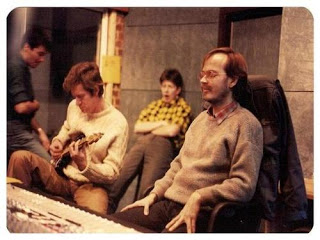
China Crisis and Walter Becker, Parkgate Studios, 1985

China Crisis and Walter Becker, Parkgate Studios, 1985

With the steady hand of legendary Stones/Sly/Hendrix engineer Phill Brown onboard too, the album featured two infectious top 20 UK hits, ‘Black Man Ray’ and ‘Wake Up (King In A Catholic Style)’.

Well worth checking out too is the ‘Black Man Ray’ B-side ‘Animalistic’ which shows that the lads were also flirting with a variation on Britfunk in their spare time.

Apart from the singles, there are a host of other treats on this album, not least the drumming of the late Kevin Wilkinson. He was a big drumming hero in my teenage years. He’s very close to a British Jeff Porcaro or Carlos Vega, a tasteful groovemaster with a few chops too.

Gazza Johnson’s basslines are catchy and memorable and the songwriting is solid throughout, only ‘Wall Of God’ and ‘Blue Sea’ lacking strong choruses. Then there’s Becker’s top-draw production. He ‘Fagenizes’ Gary Daly’s excellent vocals (usually double-tracked with a touch of delay) and shows off his arranging skills with subtle synth/guitar layering and brooding horns.

In particular, ‘Strength Of Character’, ‘You Did Cut Me’, ‘Bigger The Punch I’m Feeling’ and ‘Gift Of Freedom’ bear his fingerprints, the latter featuring some Gil Evans-esque woodwinds.

China Crisis followed up Flaunt with 1986’s What Price Paradise, a massive misfire wherein producers Clive Langer and Alan Winstanley inexplicably tried to turn them into Madness (If I remember rightly, the Q review of the album ended with the phrase ‘File under: Victim Of A Cruel Medical Experiment’!). But the band reunited with Walter Becker on the excellent Diary Of A Hollow Horse four years later.

Classic Prog’s Last Hurrah: It Bites’ Once Around The World

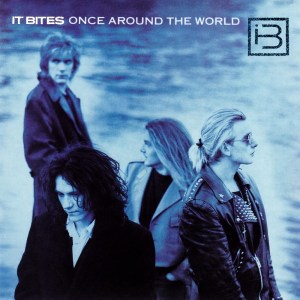
it bitesEveryone has their favourite summer music and the brilliant Once Around The World is an album I always turn to at this time of year.

It’s a feast of resplendent chord changes, audacious song structures, good grooves, blistering lead guitar lines and uplifting, unusual melodies.

As a music-mad 15-year-old, this was the album I was really waiting for. I had recently become slightly obsessed by their debut The Big Lad In The Windmill and couldn’t wait to hear what the talented Cumbrian four-piece would come up with next.

For some reason, I didn’t buy OATW on its first week of release, but my schoolmate Jem Godfrey did. I would badger him for details in the playground. Me: ‘Are there any instrumentals on it?’ Jem: ‘No.’ Me: ‘What’s it like then?’ Jem: ‘It’s bloody brilliant, just get it!’

In 1988, the world didn’t need a dose of beautifully-recorded, full-on prog lunacy, but they got it anyway and the UK music scene was all the better for it. There were murmurs of a ‘prog revival’ at the time but It Bites (and to a certain extent Marillion) were streets ahead of the pack because they blended superb musicianship with great hooks and catchy songs.

Hats off to Richard Branson and Virgin for throwing some money at this album because it turned out to be classic prog’s last hurrah. Mainly recorded at The Manor in Oxfordshire (where rumour has it singer/guitarist Francis Dunnery gained access to Richard Branson’s bountiful wine cellar on the band’s first night of recording with disastrous consequences…), OATW is essentially one side of beautifully-produced pop/rock songs (mainly helmed by Virgin prog survivor Steve Hillage), and another of completely brilliant, barmy prog/pop pieces.

The Manor

‘Midnight’ and ‘Kiss Like Judas’ are lean, mean, well-crafted pop/rock songs with good hooks and meaty grooves, but both just missed the UK Top 40.

‘Plastic Dreamer’ fits an unbelievable amount of material into its four minutes, including a vocal harmony section that would make Roy Thomas Baker drool, a stunning guitar solo from Dunnery, some spooky Alice In Wonderland atmospherics and preposterous lyrics (very much inspired by Peter Gabriel’s Genesis output).

They repeat the trick on ‘Hunting The Whale’ and make good use of the Manor swimming pool in the process. The 14-minute title track, whilst owing a few licks and lyric ideas to Genesis’s ‘Supper’s Ready’, is nevertheless astoundingly ambitious and brilliantly realised considering it was recorded in the same year as Kylie’s ‘I Should Be So Lucky’.

(There are other nods to early Genesis throughout the album: the last few minutes of ‘Old Man And The Angel’ brilliantly revisits the rhythm games of ‘The Battle Of Epping Forest’; the main hook of ‘Hunting The Whale’ is very similar to Steve Hackett’s ‘Dancing With The Moonlit Knight’ central riff; the middle-eight of ‘Midnight’ uses Tony Banks’ opening chords to ‘Watcher Of The Skies’.)

They could play all this stuff live too, and with great elan (they played the whole of OATW at the much-missed London Astoria circa May 1988, and I also caught them a few months before that at Brunel University). Their range and ability was simply stunning.

John Beck’s keyboard textures have possibly dated a bit in comparison with what, say, Trevor Horn and David Sylvian were doing with synths at the time (though his voicings and arrangement ideas are always inventive), but people often forget what an amazing rhythm section (Dick Nolan on bass, Bob Dalton on drums) It Bites had.

There’s a ‘swing’ there that suggests that they were always influenced by much more than just progressive rock, and Dunnery’s guitar playing and vocals have incredible bite. Here’s some great footage of them recording the title track:

Though It Bites were turning into a very popular live draw throughout Europe, the album stalled at #43 in the UK – a big surprise and disappointment to the band. And it didn’t even get reviewed in Q magazine.

The lads’ music subsequently took a heavier direction, but OATW is the standout in their short but excellent career, showing off a brilliant band at its peak.

Gratifyingly, the album is gaining fans as the years go by. And check out this great interview with Francis Dunnery and John Beck about the making of Once Around The World. 

Francis Dunnery also did this interview after their first support gig with Robert Plant in April 1988.


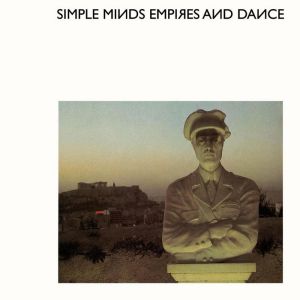
Simple Minds: Empires And Dance

Simple minds

Before their mid-‘80s commercial peak, Simple Minds were an art-rock band par excellence.

They fitted perfectly into the post-punk landscape and on Empires And Dance, their third album, they certainly wore their influences boldly on their sleeve – Kraftwerk, Can, Roxy, Joy Division, Eno, Magazine, Velvet Underground, ‘Lodger’-era Bowie – but combined them exceptionally well.

Musically very strong, with Derek Forbes’ memorable basslines very much to the fore, this uncompromising album combines motorik beats with doomy vocals, Eno-style ambience, jagged post-punk guitar and deliciously sludgy synths.

Jim Kerr’s travelogue lyrics compliment the music perfectly, snapshots of bleak European passport controls, attempted assassinations and wintery landscapes. Producer John Leckie brings his usual spirit of experimentation and lays on the brittle, creeping sense of paranoia.

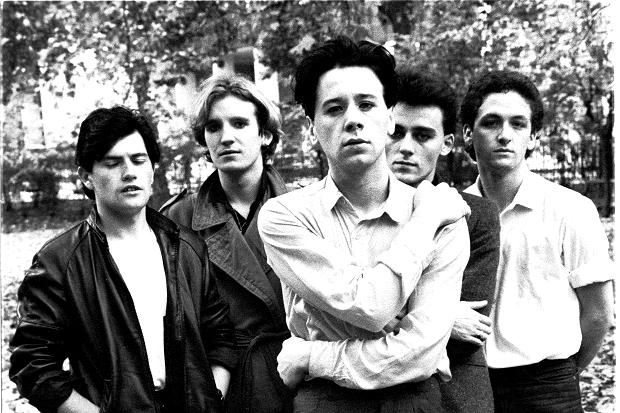
Simple_Minds

While the one-chord grooves tire a bit on ‘Today I Died Again’, ‘Celebrate’ and ‘Capital City’, the Euro-funk of ‘I Travel’ and ‘This Fear of Gods’ chills the blood. ‘Twist/Run/Repulsion’ is almost an early example of sampling with its random speech, out-of-phase horn blasts and queasy, looped drums. Kerr channels Bowie’s ‘African Night Flight’ with his high-speed rap (though on the demo he took a different approach).

‘Thirty Frames a Second’ and ‘Constantinople Line’ almost approach the work of Throbbing Gristle and Gary Numan with their garish synth tones and forbidding atmospheres. ‘Kant Kino’, named after a Berlin art-house cinema, pits a slight but very catchy Charlie Burchill guitar melody against amplifier hiss, tape echo and synth drone; Eno would surely approve and the track was possibly an influence on U2’s ‘4th Of July’.

The closer ‘Room’ could almost have come from the first Velvet Underground album (though they could have done with playing to a click track; the song almost doubles in speed by the end…).


Empires And Dance peaked at #41 in the UK album charts. It might have gone higher had Arista Records pressed more than just 7,500 copies at a time. The band couldn’t get off that label fast enough (like Iggy Pop).

But Peter Gabriel became a major fan and took them on tour with him throughout October and November 1980, allegedly paying most of their expenses.

Empires And Dance is very interesting album indeed and a great companion piece to Bowie’s Berlin trilogy, Peter Gabriel III and Talking Heads’ Remain In Light.