Recorded at Utopia Studios, Woodstock, upstate New York
UK album chart position: #90 (!)
US album chart position: #70 (!)
Terry-Thomas in ‘School For Scoundrels’
Side One:
1. ‘Summer’s Cauldron’
Andy Partridge (composer): ‘Something about the words reminded me of Dylan Thomas. Not that I’m saying I’m a Dylan Thomas. More of a Terry-Thomas, really…’
2. ‘Grass’
Colin Moulding (composer): ‘A lot of people think the song’s about marijuana – it isn’t. Todd said: “Don’t sing so deep. You sound like a bit of a molester.” So I just did the Bowie thing and added an octave above it…’
3. ‘The Meeting Place’
Moulding: ‘Because the riff was a bit like “Postman Pat”, we were just figures on a Toytown landscape viewed from above. It was me meeting her (future wife Carol) at the gates for a sandwich in The Beehive pub, embroidered with the suggestion of a lunchtime quickie…’
4. ‘That’s Really Super, Supergirl’
Partridge: ‘I’d go into his (guitarist Dave Gregory) little room, smelling of aftershave and guitar wax and dead mice, and he’d be rehearsing this solo over and over again. I can still see him playing it. I remember when we were recording the song that Todd was trying to master it on keyboard, and Dave whispered to me, “He’s got the chords wrong!” He thought the chords were major, and they’re not. I was hearing it a lot more clangorous…’
5. ‘Ballet For A Rainy Day’ (Partridge)
6. ‘1000 Umbrellas’
Partridge: ‘There was very little time to do the strings. They had one run-through and then recorded it. Their balls were on the line but they turned in a pretty fine performance…’
7. ‘Season Cycle’
Partridge: ‘I felt that I had maybe laid the ghost of Ray Davies ‘fore me and written a song that could stand up against “Shangri-La” or even, dare I suggest, “Autumn Almanac”.’
Side Two:
8. ‘Earn Enough For Us’ (Partridge)
9. ‘Big Day’
Moulding: ‘I’d been messing around with the chords of Labi Siffre’s “It Must Be Love” and, with a little moving around, it became this sort of fanfare to a big event, a ticker-tape parade for a big day.’
10. ‘Another Satellite’
Partridge: ‘I regret writing it because things turned out so marvellously with the person (Erica Wexler) it’s all about. The story had a happy ending because Erica and I finally got to express the emotional bond that was always there.’
11. ‘Mermaid Smiled’ (Partridge)
12. ‘The Man Who Sailed Around His Soul’
Partridge: ‘It just says you’re born, you live and you die. Why look for the meaning of life when all there is is death and decay? Todd said, “Let’s do a John Barry thing” and, literally overnight, came up with his arrangement with brass and flutes. It’s bang on. Cod spy music.’
13. ‘Dying’ (Moulding)
It frightens me when you come to mind The day you dropped in the shopping line And my heart beats faster when I think of all the signs, all the signs When they carried you out your mouth was open wide The cat went astray and the dog did pine for days and days And I felt so guilty when we played you up When you were ill, so ill What sticks in my mind is the sweet jar on the sideboard
And your multicoulored tea cozy What sticks in my mind is the dew drop hanging off your nose Shrivelled up and blue And I’m getting older, too But I don’t want to die like you
14. ‘Sacrificial Bonfire’
Moulding: ‘There was a touch of “The Sorcerer’s Apprentice” and a bit of Arthur Brown’s “Fire” in it, I suppose. But I wasn’t moralising. It was just that this was an evil piece of music and good would triumph over it. (The strings) were a bit too Vivaldi for me, but it had to go somewhere, I suppose…’
It Bites go Metal? Nearly. A brave attempt to break the US? Possibly.
Even Kerrang! magazine took notice of this one. Riff-heavy, blues-based rock was making a big comeback on the late-‘80s UK music scene, typified by the success of Thunder, The Quireboys, Gun and Little Angels.
The gifted Cumbrian four-piece came up with a neat twist and produced their heaviest album yet in Eat Me. But they could never completely jettison their penchant for brilliant pop hooks, colourful instrumentation and intricate arrangements.
Francis Dunnery’s guitar playing was leaner, meaner and more direct than before, with a stronger blues flavour; Hendrix and Clapton were touchstones now rather than Holdsworth and Gambale.
The song and performance were paramount. He talked glowingly of David Sylvian and The Blue Nile in interviews. Producer Mack brought the big drum sound and ban on reverb. Dick Nolan expanded the grooves with his new six-string bass.
There were three near-hits (‘Still Too Young To Remember’, ‘Underneath Your Pillow’, ‘Sister Sarah’). Roger Dean provided the album cover concept/graphics/masks, possibly a weird move for a band trying to escape the Prog tag. It was red rag to a bull for the NME who ran a sarcastic mini-interview with Dunnery at the time which barely mentioned the band’s music.
First single ‘Still Too Young To Remember’ was Classic Rock of an early-‘70s vintage, sounding more like Family, Cat Stevens or Free than Genesis or Marillion. Virgin flogged it mercilessly with not one but two re-releases but there was still no sign of a hit.
I remember excitedly rushing out to the buy the 12” version one beautiful spring day in 1989. Its superb B-side ‘Vampires’ features one of Dunnery’s most outrageous guitar solos. Other fine B-sides of the time include ‘Bullet In The Barrell’ and ‘Woman Is An Addict’ which features a killer whole-tone Nolan/Dunnery riff.
As the ’80s turned into the ’90s, It Bites were shaping up to be one of the bigger live draws in British rock – they embarked on three tours in the space of a year, selling out the Hammersmith Odeon and impressing everyone. A glorious night at the old Town And Country Club featured on the ‘Meltdown’ TV show.
They played extensively in Japan and toured the States with Jethro Tull. The feeling in the Virgin camp was that the fourth album would deliver the big hit they were striving for. Too heavy for pop but too pop for metal? Too good for the charts? Suddenly, despite the lack of singles action, it didn’t seem to matter too much.
But the cracks were starting to show – Dunnery was reportedly a barely-functioning alcoholic whose self-loathing tendencies led to sublimely pissed-off guitar solos but more often than not wound up the rest of the band – especially the equally gifted yet far more docile John Beck (Dunnery recently said in a Classic Prog interview that they had very different ‘energy levels’), often leading to some thrillingly edgy onstage duels but also some resentment.
Decamping to Los Angeles to write songs for the fourth album proved a career move too far – Beck, Dalton and Nolan refused to work with Dunnery who was AWOL periodically throughout the sessions. The band splintered and that was that, despite a brief reunion of the original line-up the early noughties.
It’s fascinating to imagine what might have been if they’d been able to hold on a bit longer and harness the creative tension between Beck and Dunnery. The breakup was a sad end to one of the most prodigious groups of musicians in the ‘80s pop pantheon.
In the UK, despite decent chart success (six top 40 singles), China Crisis have always had what you might call an image problem – they’ve never quite been able to shake off an almost imperceptible naffness.
Is it because of their name? Because their first hit was the extremely wimpy ‘Christian’? Because they were neither doomy enough for the post-punk crowd nor cosmopolitan enough for the New Romantics?
Or maybe because they had the dubious honour of being playlisted by Alan Partridge? (Actually, they were played by Partridge’s nemesis Dave Clifton, Ed.)
Steely Dan co-conspirator Walter Becker didn’t think they were too shabby though, apparently requesting a meeting with the Liverpudlians after he heard the nuclear-themed ‘Papua’ from their second album, 1983’s Working With Fire And Steel. He was intrigued by their obtuse lyrics, they liked the cut of his jib and apparently got on like a house on fire.
Becker signed on as producer and was summoned to Parkgate Studios near Battle, Sussex, to begin work on Flaunt The Imperfectionwhich would turn out to be CC’s biggest success to date. Flaunt reached 9 in the album chart and stayed in the UK top 100 for 22 weeks.
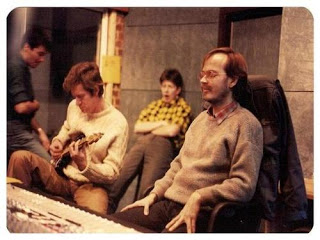
China Crisis and Walter Becker, Parkgate Studios, 1985
With the steady hand of legendary Stones/Sly/Hendrix engineer Phill Brown onboard too, the album featured two infectious top 20 UK hits, ‘Black Man Ray’ and ‘Wake Up (King In A Catholic Style)’.
Well worth checking out too is the ‘Black Man Ray’ B-side ‘Animalistic’ which shows that the lads were also flirting with a variation on Britfunk in their spare time.
Apart from the singles, there are a host of other treats on this album, not least the drumming of the late Kevin Wilkinson. He was a big drumming hero in my teenage years. He’s very close to a British Jeff Porcaro or Carlos Vega, a tasteful groovemaster with a few chops too.
Gazza Johnson’s basslines are catchy and memorable and the songwriting is solid throughout, only ‘Wall Of God’ and ‘Blue Sea’ lacking strong choruses. Then there’s Becker’s top-draw production. He ‘Fagenizes’ Gary Daly’s excellent vocals (usually double-tracked with a touch of delay) and shows off his arranging skills with subtle synth/guitar layering and brooding horns.
In particular, ‘Strength Of Character’, ‘You Did Cut Me’, ‘Bigger The Punch I’m Feeling’ and ‘Gift Of Freedom’ bear his fingerprints, the latter featuring some Gil Evans-esque woodwinds.
China Crisis followed up Flaunt with 1986’s What Price Paradise, a massive misfire wherein producers Clive Langer and Alan Winstanley inexplicably tried to turn them into Madness (If I remember rightly, the Q review of the album ended with the phrase ‘File under: Victim Of A Cruel Medical Experiment’!). But the band reunited with Walter Becker on the excellent Diary Of A Hollow Horse four years later.
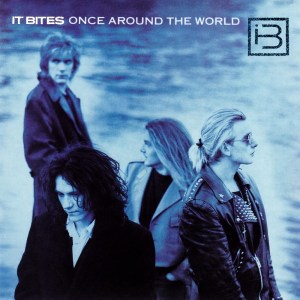
Everyone has their favourite summer music and the brilliant Once Around The World is an album I always turn to at this time of year.
It’s a feast of resplendent chord changes, audacious song structures, good grooves, blistering lead guitar lines and uplifting, unusual melodies.
As a music-mad 15-year-old, this was the album I was really waiting for. I had recently become slightly obsessed by their debut The Big Lad In The Windmill and couldn’t wait to hear what the talented Cumbrian four-piece would come up with next.
For some reason, I didn’t buy OATW on its first week of release, but my schoolmate Jem Godfrey did. I would badger him for details in the playground. Me: ‘Are there any instrumentals on it?’ Jem: ‘No.’ Me: ‘What’s it like then?’ Jem: ‘It’s bloody brilliant, just get it!’
In 1988, the world didn’t need a dose of beautifully-recorded, full-on prog lunacy, but they got it anyway and the UK music scene was all the better for it. There were murmurs of a ‘prog revival’ at the time but It Bites (and to a certain extent Marillion) were streets ahead of the pack because they blended superb musicianship with great hooks and catchy songs.
Hats off to Richard Branson and Virgin for throwing some money at this album because it turned out to be classic prog’s last hurrah. Mainly recorded at The Manor in Oxfordshire (where rumour has it singer/guitarist Francis Dunnery gained access to Richard Branson’s bountiful wine cellar on the band’s first night of recording with disastrous consequences…), OATW is essentially one side of beautifully-produced pop/rock songs (mainly helmed by Virgin prog survivor Steve Hillage), and another of completely brilliant, barmy prog/pop pieces.
The Manor
‘Midnight’ and ‘Kiss Like Judas’ are lean, mean, well-crafted pop/rock songs with good hooks and meaty grooves, but both just missed the UK Top 40.
‘Plastic Dreamer’ fits an unbelievable amount of material into its four minutes, including a vocal harmony section that would make Roy Thomas Baker drool, a stunning guitar solo from Dunnery, some spooky Alice In Wonderland atmospherics and preposterous lyrics (very much inspired by Peter Gabriel’s Genesis output).
They repeat the trick on ‘Hunting The Whale’ and make good use of the Manor swimming pool in the process. The 14-minute title track, whilst owing a few licks and lyric ideas to Genesis’s ‘Supper’s Ready’, is nevertheless astoundingly ambitious and brilliantly realised considering it was recorded in the same year as Kylie’s ‘I Should Be So Lucky’.
(There are other nods to early Genesis throughout the album: the last few minutes of ‘Old Man And The Angel’ brilliantly revisits the rhythm games of ‘The Battle Of Epping Forest’; the main hook of ‘Hunting The Whale’ is very similar to Steve Hackett’s ‘Dancing With The Moonlit Knight’ central riff; the middle-eight of ‘Midnight’ uses Tony Banks’ opening chords to ‘Watcher Of The Skies’.)
They could play all this stuff live too, and with great elan (they played the whole of OATW at the much-missed London Astoria circa May 1988, and I also caught them a few months before that at Brunel University). Their range and ability was simply stunning.
John Beck’s keyboard textures have possibly dated a bit in comparison with what, say, Trevor Horn and David Sylvian were doing with synths at the time (though his voicings and arrangement ideas are always inventive), but people often forget what an amazing rhythm section (Dick Nolan on bass, Bob Dalton on drums) It Bites had.
There’s a ‘swing’ there that suggests that they were always influenced by much more than just progressive rock, and Dunnery’s guitar playing and vocals have incredible bite. Here’s some great footage of them recording the title track:
Though It Bites were turning into a very popular live draw throughout Europe, the album stalled at #43 in the UK – a big surprise and disappointment to the band. The lads’ music subsequently took a heavier direction, but OATW is the standout in their short but excellent career, showing off a brilliant band at its peak.
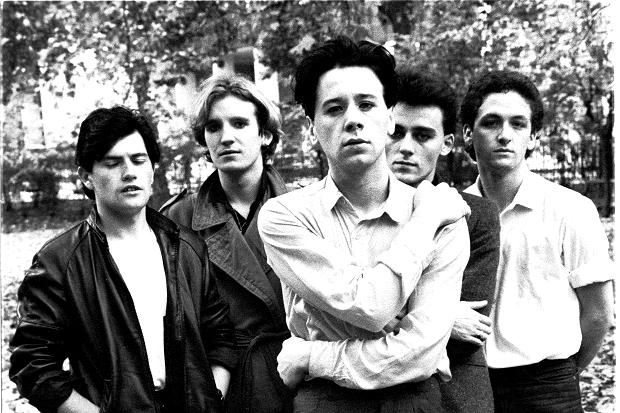
Before their mid-‘80s commercial peak, Simple Minds were an art-rock band par excellence.
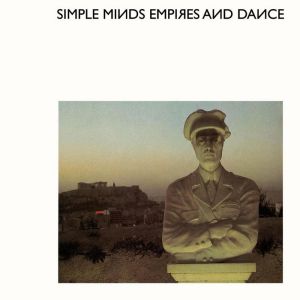
They fitted perfectly into the post-punk landscape and on Empires And Dance, their third album, they certainly wore their influences boldly on their sleeve – Kraftwerk, Can, Roxy, Joy Division, Eno, Magazine, Velvet Underground, ‘Lodger’-era Bowie – but combined them exceptionally well.
Musically very strong, with Derek Forbes’ memorable basslines very much to the fore, this uncompromising album combines motorik beats with doomy vocals, Eno-style ambience, jagged post-punk guitar and deliciously sludgy synths.
Jim Kerr’s travelogue lyrics compliment the music perfectly, snapshots of bleak European passport controls, attempted assassinations and wintery landscapes. Producer John Leckie brings his usual spirit of experimentation and lays on the brittle, creeping sense of paranoia.
While the one-chord grooves tire a bit on ‘Today I Died Again’, ‘Celebrate’ and ‘Capital City’, the Euro-funk of ‘I Travel’ and ‘This Fear of Gods’ chills the blood. ‘Twist/Run/Repulsion’ is almost an early example of sampling with its random speech, out-of-phase horn blasts and queasy, looped drums. Kerr channels Bowie’s ‘African Night Flight’ with his high-speed rap (though on the demo he took a different approach).
‘Thirty Frames a Second’ and ‘Constantinople Line’ almost approach the work of Throbbing Gristle and Gary Numan with their garish synth tones and forbidding atmospheres. ‘Kant Kino’, named after a Berlin art-house cinema, pits a slight but very catchy Charlie Burchill guitar melody against amplifier hiss, tape echo and synth drone; Eno would surely approve and the track was possibly an influence on U2’s ‘4th Of July’.
The closer ‘Room’ could almost have come from the first Velvet Underground album (though they could have done with playing to a click track; the song almost doubles in speed by the end…).
Empires And Dance peaked at #41 in the UK album charts. It might have gone higher had Arista Records pressed more than just 7,500 copies at a time. The band couldn’t get off that label fast enough (like Iggy Pop).
But Peter Gabriel became a major fan and took them on tour with him throughout October and November 1980, allegedly paying most of their expenses.
Empires And Dance is very interesting album indeed and a great companion piece to Bowie’s Berlin trilogy, Peter Gabriel III and Talking Heads’ Remain In Light.
In the slipstream of Live Aid, when Stock, Aitken and Waterman ruled the charts, house and techno were warming up and ‘indie’ (Housemartins, Smiths, Cure) was thriving, this gifted pop/prog four-piece from Cumbria crept under the radar and even managed to secure a big hit with their second single ‘Calling All The Heroes’.
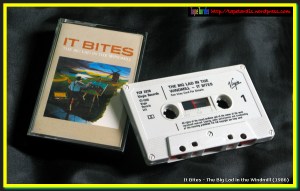
It Bites blended their influences – Gabriel-era Genesis, Weather Report, Yes, Japan, Level 42, Steve Arrington, George Benson – superbly, creating an excellent debut and minor hit album.
My mate Nige and I loved The Big Lad. The soundtrack to our after-school games of pool would either be Sting’s Bring On The Night or this, and I quickly grew to love its pristine production, challenging song structures, brilliant guitar playing and cool chord sequences.
As a teenager, I’d listen to it on my Walkman very loudly while studying David O’Connor’s superb, enigmatic cover art or reading Stephen King’s Christine… What larks.
Singer/guitarist Francis Dunnery once labelled The Big Lad ‘nutter’s music’, an apt description when you listen to songs like ‘Turn Me Loose’ and ‘I Got You’ which are almost pop but then pull the carpet from under your feet with bizarre, brilliant, extravagant middle sections and Dunnery’s off-mic vocal histrionics.
Producer Alan Shacklock – once the guitarist in Babe Ruth and future helmer of Chesney Hawkes’ ‘The One And Only’ – delivers a vibrant, state-of-the-’80s sound, with huge, gated drums and punchy bass.
It Bites’ early career as a souped-up pop covers band served them well – melody and groove are their priorities, and of course they were always a superb live act too.
Dunnery was (and is) also a very underrated Brit guitar hero whose playing could consistently deliver the sound of surprise with fluid legato, furious speed picking, dissonant intervals and whammy-bar abandon.
His solo on ‘You’ll Never Go To Heaven’ is a thrilling marriage of Allan Holdsworth and John McLaughlin and one of the great bits of over-the-top playing in Brit Rock.
He also delivered marvellously insane breaks on the Michael Jackson-meets-Duran Duran ‘Wanna Shout’ and barmy soft-rock ballad ‘Cold, Tired and Hungry’. Also worth checking out is B-side ‘Strange But True’ which, in its full version, becomes a vehicle for Dunnery’s increasingly demented solos.
‘Calling All The Heroes’ is actually a pretty good distillation of It Bites’ sound with Bob Dalton’s ingenious ‘reverse’ tom fills, Dunnery’s excellent melodies, John Beck’s intricate keyboards and Dick Nolan’s super-tight bass playing.
It was their only big hit though; other singles ‘All In Red’ and ‘Whole New World’ were catchy pop tunes with interesting instrumental flourishes and inventive vocal harmonies but neither troubled the charts.
The music magazines of the time generally ignored It Bites. If they did get a mention, it was generally to mock their unfashionably-superb musicianship or lack of London street-cred.
I remember Dunnery making an emotional pre-song announcement onstage at a London Astoria gig in 1988 lambasting the ‘trendy’ music press.
The Big Lad wasn’t a huge hit but did just well enough, peaking at #35 in the UK. It Bites were up and running and their best was yet to come.
Hardcore fans alert: a very nice person has posted all the Big Lad demos on YouTube.
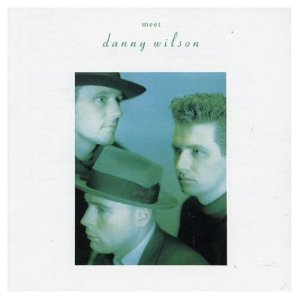
I came across a review of Meet Danny Wilson in Q magazine which drew comparisons between Gary Clark’s voice and Donald Fagen of Steely Dan’s (spot-on).
That was enough incentive for a massive Steely fan like me to check it out. I wasn’t disappointed. Meet Danny is one of the most arresting, original debut albums of the ’80s, and it stands up extremely well today.
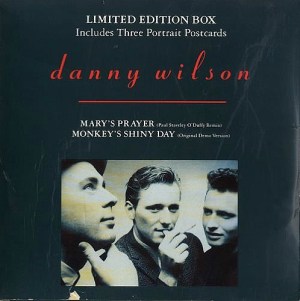
I would annoy my school friends bigging up the album and trying to get it played during art lessons – to no avail. U2, Simple Minds, The The, Fleetwood Mac and INXS couldn’t be usurped. But my enthusiasm was slightly justified when the gorgeous ‘Mary’s Prayer’ was finally a big hit at the third attempt (UK number 3, US number 23).
Danny Wilson shared a love of jazz, the Great American Songbook and Steely Dan with contemporaries Hue and Cry, Swing Out Sister, Sade and various other late-’80s acts, but (fortunately?) Meet Danny Wilson doesn’t sound remotely like any of them.
Gary graciously answered my questions in the middle of a very busy period of travelling, writing and recording. We talked about the inspiration behind the timeless ‘Mary’s Prayer’ single, hanging out with Billy Mackenzie, the golden age of Virgin Records and busking on transatlantic flights…
MP: Could you give a quick summary of how you started making music as Danny Wilson with your brother Kit (keyboards) and Ged Grimes (bass)?
GC: Ged was at school with me and clearly one of the most talented kids so we naturally gravitated towards each other and stayed together from the school band stage all the way through to Danny Wilson. Kit is my younger brother. When Ged and I returned from London we wanted to re-think the band and Kit, in our absence, had grown into a formidable musician, writer and singer so he was a natural choice to bring onboard.
What were the musical influences that went into the pot for Meet Danny Wilson? Any contemporary mid-’80s artists?
Well, I really found my voice as a writer when I stopped trying to sound contemporary. Ged and I spent three years in London living in a squat, gigging and trying to get a record deal and it seemed like the labels wanted us to sound like what was already on the radio at that time. If you can remember radio in 1984/85, everything was super- polished, super-quantised and very synthesised. Even guitars all tended to be layered in multi-effects. I very consciously decided to go in the opposite direction and return to my musical roots; all the music I loved was devastatingly unfashionable at the time. Off the top of my head, the main influences for that album were not contemporary at all: Sinatra, Bacharach and David, Jimmy Webb, Becker and Fagen, Tom Waits, a little bit of Hall and Oates, heavy dollops of the Great American Songbook and a ton of soundtrack records.
How did Danny write songs? Were all the tracks co-written or did you provide the blueprints?
I wrote all of the songs on that album and they were all written and mostly demoed prior to recording. The only exception I recall is finishing ‘Five Friendly Aliens’ at the piano in Puk studios after we’d started recording the rest of the album.
How did you come to be signed to Virgin? Were you fans of the label beforehand?
We played a gig in a bar in Edinburgh and a music journalist called Bob Flynn was there. He wrote a review in NME that literally changed our lives. The review was so good and the band were so unknown that the record labels who had systematically rejected us only months before were calling Bob asking how they could get in touch with the band. We had really served our time in the trenches live and in the studio so we were really ready for it when it came. The next gig we did in Edinburgh was packed and half of the audience were A&R and publishers from London. We literally had the choice of every major label and almost signed to Warners. In the end, a mixture of Virgin’s reputation as an artistic label, their sheer passion for the music and their willingness to give us complete artistic control won the day.
Can you remember your inspiration for ‘Mary’s Prayer’ and where you wrote it?
Yes, I wrote it in the squat in London quite a few years before it was released. My friend, the songwriter Ali Thomson, loaned me a Roland Juno 60 synth and I just switched on the first preset and immediately played the verse chords without thinking (they’re all white notes!). The melody and a large chunk of the first verse lyric came to me instantly. I liked it but couldn’t get a chorus that did the verse justice and it took about another year of me coming back to it until I finally hit on the chorus.
How did you come to include Lester Bowie’s Brass Fantasy on the album? Definitely not an obvious choice of special guests! Weren’t they signed to Virgin at the time?
They were signed to ECM. The Virgin connection came later through us. Howard Gray (later of Apollo 440) was producing the first half of our album at Puk. They had an incredible system in there and we liked to blast records on the big speakers at the start of the day and at the end of the night with some fine Elephant beers for refreshment. Digital was in its infancy and ECM were making some of the first records that could be legally labelled ‘DDD’ which meant ‘recorded, mixed and mastered without leaving the digital domain’. Howard played us Lester’s ‘I Only Have Eyes For You’ one of those nights as an example of how great this process could sound and we all fell instantly head over heels in love. By sheer mind-bending coincidence, we saw that Lester Bowie’s Brass Fantasy were playing Copenhagen when we were still in Denmark. We went to the gig, one of the greatest live shows I have ever seen, and accosted Lester afterwards. It’s a little-known fact that because of budget restrictions, Ged, Kit and I busked our fare on a very early Virgin Atlantic flight to New York so we could be there for the sessions! Pre-9/11, of course… But we actually got free flights for entertaining the passengers in mid-air.
Your amazing vocal on ‘You Remain An Angel’ always reminded me of The Associates’ Billy Mackenzie – were you a fan and did you know him at all?
Well, thank you. I’m a huge fan of Billy’s work but I can honestly say that The Associates were nowhere near my mind when we did that song. There is a B-side called ‘Living To Learn‘ that has a huge Associates influence. Billy and I are from the same home town, Dundee in Scotland, and I got to know him a little. We would all hang out at a place called Fat Sam’s cocktail bar where they played great music and had great live acts passing through. We saw some amazing bands in their infancy back then. Billy was always so wonderful, charming and encouraging to me.
Meet Danny Wilson has a really pleasing mix of acoustic instrumentation and late-’80s technology – was there any pressure to be ‘produced’ and make a very modern-sounding record? I have a B-side version of ‘Aberdeen’ that was subtitled something like ‘The Way It Should Have Been‘…
No. Virgin were great like that. I think they understood that we had just as much chance commercially by being true to ourselves as we would have had conforming to some blueprint of what radio sounds like. I wish that vision was more prevalent in the music business today. I will say that although we used the most up-to-date technology available at the time, we didn’t use it to sound modern but to get what was in our heads onto the recording. On ‘Aberdeen’, for instance, we used a Fairlight to get the trumpet and string sounds but the production is probably more ’60s in tone than ’80s. That B-side was an interesting one; we had made a very early stripped back Portastudio demo of that song before the album and it had a certain beatboxy charm that we all kind of harked back to. The tape was lost so that B-side was our attempt to recreate that vibe. Never a great idea!
How do you feel about Meet Danny Wilson and its place in the 1980s musical landscape now?
I feel pretty much the same as at the time. It’s very me, very honest, very heartfelt and, just like me, doesn’t fit in anywhere. Exactly what we were going for, I suppose.
What are you working on at the moment?
I’m always writing and recording with other artists. That’s what I do these days and have a whole heap of stuff in the pipeline but aside from that I’ve just written the music with John Carney (Once, Begin Again) for his next movie (‘Sing Street’) which I’m very, very excited about. As it happens, he got in touch with me because Meet Danny Wilson was a record his brother had turned him onto as a young kid growing up in Dublin in the ’80s. That neatly brings this interview to a lovely, rounded conclusion so I’d better shut up now!

 Virgin Records, released 27 October 1986





 movingtheriver.com