10 More Great Album Covers Of The 1980s

Check out the first instalment here in case you missed it.


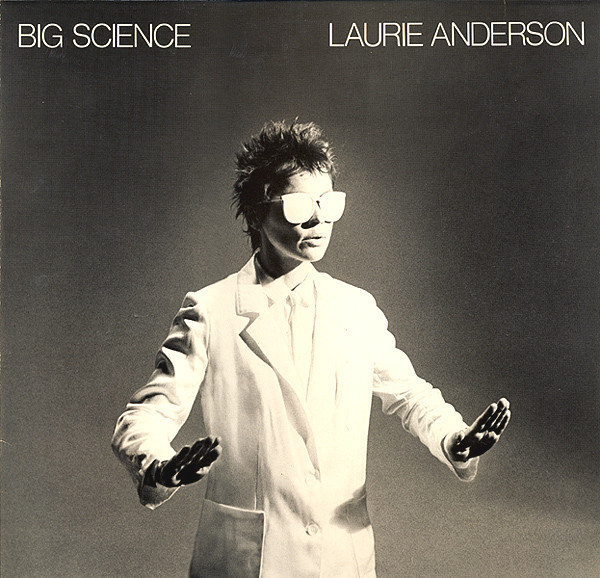
10. Laurie Anderson: Big Science (1981)

Cover concept by Laurie Anderson, design by Cindy Brown, art direction by Perry Oberman

9. XTC: Oranges & Lemons (1989)

Artwork and Design by Andy Partridge, Dave Dragon and Ken Ansell

orangeslemons

8. David Sylvian/Holger Czukay: Plight And Premonition (1988)

Photography and Design by Yuka Fujii

david_sylvian_holger_czukay_plight_premonition

7. Anderson Bruford Wakeman Howe (1989)

Artwork by Roger Dean

anderson-bruford-wakeman-howe-52a0c65177b8a

6. Grace Jones: Nightclubbing (1981)

Photography and Design by Jean-Paul Goude

grace-jones240214-jpg

5. Debbie Harry: KooKoo (1981)

Photography by Brian Aris, Design by HR Giger

debbie

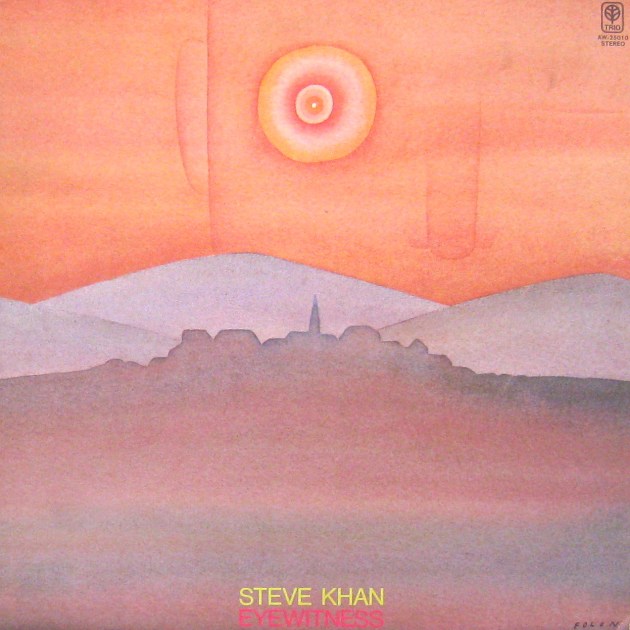
4. Steve Khan: Eyewitness (1981)

Artwork by Jean-Michel Folon

khan

3. King Crimson: Three Of A Perfect Pair (1984)

Artwork by Peter Willis

mi0000023563

2. Donald Fagen: The Nightfly (1982)

Photography by James Hamilton

fagen

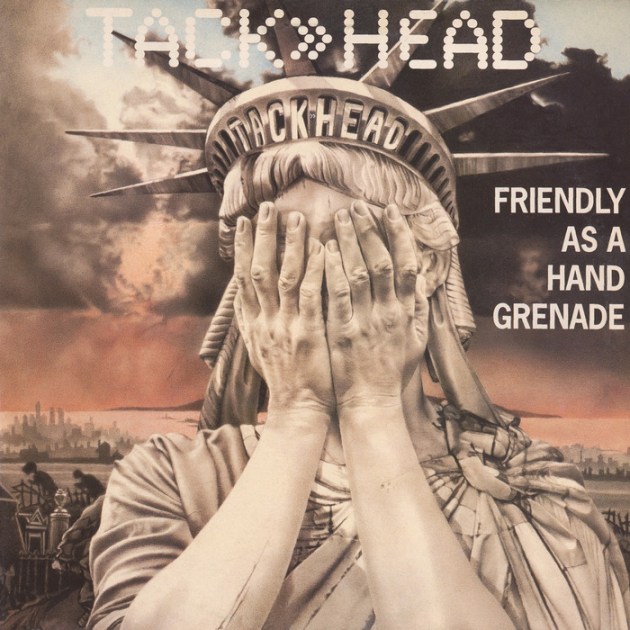
1. Tackhead: Friendly As A Hand Grenade (1989)

Artwork by Gee Vaucher.

tackhead

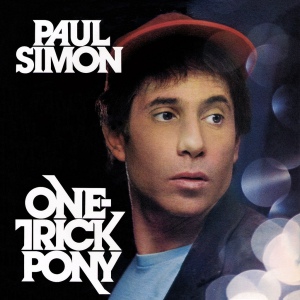
The Crap Movie Club: One-Trick Pony (1980)

paul simonBy his own admission, Paul Simon had some very lean years between his 1975 classic Still Crazy After All These Years and 1986’s multi-million selling, multi-Grammy-winning Graceland.

His 1983 album Hearts And Bones was a major flop despite featuring some fine songs and great musicianship.

But the real nadir was ‘One-Trick Pony’. I stumbled across it very late at night on British TV in the late ’90s and was instantly gripped. It’s that special kind of crap movie – the ‘rock star’ vanity project with a gallon of overreaching ambition.

To say it hasn’t aged well would be a huge understatement, though, as with most genuinely bad films, it features a myriad of guilty pleasures too…

In 1980, Simon clearly wanted to celebrate his new Warner Bros record contract with a bang (he’d just jumped ship from CBS) but who persuaded him that a self-written, autobiographical movie was the answer? His screen persona was hitherto based pretty much on one (admittedly superb) cameo in Woody Allen’s ‘Annie Hall’.

But in ‘One-Trick Pony’ he tried to carry an entire movie with just two default settings: he’s either bopping around the stage, sweaty and somewhat bug-eyed, trying desperately to ‘rock’ (in Joe Queenan’s memorably cruel words, Simon is ‘too short to rock’n’roll, too young to die’), or he’s sulky and morose, peering doe-eyed into the middle distance, desperately trying to be adorable.

Simon plays Jonah Levin, a once-popular folk-rock artist who has fallen on hard times (see what he did there?) and now reduced to hawking his band (Steve Gadd, Tony Levin, Richard Tee and Eric Gale) around the Midwest, supporting bands like the B-52’s (who are held up as an example of the ‘hideous’ way the recording industry is going, but whose schtick is so much more vital and life-affirming than Simon’s supposedly ‘raw’ music…).

Jonah’s relationship with his estranged wife – Blair Brown in a completely thankless role – is terminally dull, with undramatic longueurs and clunking one-liners. There’s also some excruciating stuff with Jonah’s ‘cute’ son. You know the kind of thing – lots of ‘whatever happens, Daddy loves you, OK?’, cloying shenanigans with baseball mitts and copying Daddy shaving at the mirror.

From a muso perspective, you might well ask how a movie so heavily featuring superstar players such as Gadd, Gale, Tee and Levin can be outright crap. Well, the novelty effect lasts a few minutes but after that you can only feel for these gents – they’re given pretty thankless roles, playing a fairly tasteless ‘dead pop stars’ quiz in the car, reading out gig reviews and endlessly checking into dodgy hotels. Poor Richard Tee and Eric Gale look the most uncomfortable.

Jonah’s dealings with the record-biz ‘suits’ in ‘One-Trick Pony’ are presumably based on Simon’s disagreements with his previous employers CBS Records, and they produce the only enjoyable sections of the film.

Rip Torn is reliably gruff though resolutely uncomical in his impersonation of legendary CBS hatchet man Walter Yetnikoff, but Lou Reed clearly relishes his cameo as a jobsworth producer; he’s desperate to add strings, horns and backing vocals to Jonah’s stripped-down tracks. Cue a lingering close-up of David Sanborn letting rip on alto, though we’re never sure if this is meant to be a Bad Thing or even a joke – to this viewer, it seemed like the first bit of decent music in the movie.

Oh yeah, the music. The soundtrack of course did a hell of a lot better than the movie – great single ‘Late In The Evening’ featured a Steve Gadd groove almost as influential as ’50 Ways To Leave Your Lover’ and even made the top 10 in the States.

To be fair to Simon, he had sorted out his screen persona by the time of the ‘You Can Call Me Al’ video in 1986, settling on a kind of faux-naif ‘everyman’ figure with some aplomb. He was also pretty funny in Steve Martin’s ‘Homage To Steve’ short from the same year. But let’s just rejoice that he hasn’t returned to the world of feature films since…

Julian Cope: Full-On

julian_cope

What I knew of Julian Cope pre-2016:

1. He was the singer in early-’80s pop band The Teardrop Explodes.
2. He was a solo artist later in the decade and had some decent hits like ‘World Shut Your Mouth’, ‘Trampolene’ and ‘Charlotte Anne’.
3. He is interested in paganism and various esoterica.
4. He has published a few well-regarded memoirs.

Well, that’s a start. But suddenly everything’s going Cope-crazy round my gaff. For starters, I recently read one of said memoirs ‘Head-On/Repossessed’ after coming across it in my local library, a hilarious, unhinged, Withnailesque account of a singer’s journey through the 1980s pop firmament.

Here’s a slightly-edited excerpt, an account of Cope’s first acid-assisted appearance on ‘Top Of The Pops’ alongside the other Explodes including arch nemesis/keyboardist Dave Balfe.

By the time we reached the BBC TV Centre in London, everyone was f***ed up. We seethed out of the car and moved as one gibbering person towards the dressing room. Tony Hadley (of Spandau Ballet) walked elegantly down the corridor.

‘Hey, there’s Spandoo!’, cried Balfe, and I danced around the singer, psychotically friendly and encouraging.

We piled into the dressing room. Waiting around was not a drag. We got to see Toyah lisp her way through some piece of kack and we got to dance on the stage during our rehearsals. The acid made us happy and nice. We gushed around the place like inbreds at a New England dinner party.

Then we were on. Suddenly the song (‘Reward’) sounded like a massive hit. ‘Top Of The Pops’, man. It’s total bullshit. But it’s brilliant. I loved it. Let’s be huge.

Afterwards, we partied at some club, as you do. Women were nice to me. Men complimented me. I just sat there drooling all night…

A few months later, Cope finds himself invited back to the ‘TOTP’ studios to perform ‘Passionate Friend’ for the 1981 Christmas special. He comes across another of his pop contemporaries:

A group called Bucks Fizz were doing their thing on the other side of the studio. I watched, fascinated. I felt sucked into their scene. God, they were brilliant. I wanted to be in Bucks Fizz…

‘Head-On’ continues very much in this vein, and it’s superb. ‘Repossessed’ concerns Cope’s life and solo career later in the ’80s. It begins with him surveying the wreckage of The Teardrop Explodes:

Here was I, struck down with shamanistic depression, while Balfe had immediately gone off and set up a new label called Food Records, with the cynical, f***-you-up-the-ass ’80s motto: LET US PREY!

F***, man, you invented the ’80s. Learn from your mistakes, you gormless, bug-eyed bushbaby! You’ve preyed on everyone these past years – d’ you have to make such a Thatcherite celebration of it, you unmystical f***er?

If there’s a better put-down in music-biography history, I’ve yet to read it. And then I had a vague recollection of Cope making a memorable appearance on a great programme from the late ’80s called ‘Star Test’ (though, perhaps tellingly, it’s not mentioned in ‘Repossessed’).

Finally, one last recent Cope discovery, fascinating and entertaining, creating lots of food for thought and travel tips. You certainly couldn’t call him an unmystical f***er.

(PS: Julian and Spinal Tap’s David St Hubbins: separated at birth?)

Terje Rypdal: The Singles Collection

terje

It can’t hurt a record label to have a USP, a recognisable visual concept and/or sound. It has certainly stood Blue Note, Impulse and 4AD in good stead.

When one thinks of ECM, images of fjords, mountains or trees probably come to mind, alongside a certain sonic quality, a kind of rarefied ambience (producer/owner Manfred Eicher and his house engineers’ choice of reverb units are apparently almost as ‘secret’ as Colonel Sanders’ chicken recipe…).

The ECM formula worked for two decades. But then along came Terje Rypdal’s The Singles Collection in 1989 to throw a spanner in the works. Though the title is a joke – there are no ‘singles’ on the album – you wish more pop music was as bold as this collection which explores hard rock, early-’60s-style balladry, techno-fusion and even Prince-influenced funk to exciting and sometimes amusing effect.

The shorter tracks start out sounding a bit like Living In A Box jamming with Jeff Beck, before completely changing gear a minute in and turning into dark, introspective mood pieces with Messiaen chords and ethereal fretless bass.

Rypdal chucks in the whole kitchen sink, as if desperate to avoid a boring listening experience. The ploy works. Yes, this is the ECM album whose first track is titled ‘There Is A Hot Lady In My Bedroom And I Need A Drink’… It’s Lovesexy meets Ligeti.

The Singles Collection was the third album in a row where Rypdal hooked up with The Chasers, a cracking bass and drums team comprising of Bjorn Kjellemyr and Audun Kleive. The latter is thinking more Manu Katche and Stewart Copeland than Jon Christensen on this album, and the music is much better for it (no disrespect to the excellent Jon).

But a vital ingredient is the addition of keyboardist Allan Dangerfield who contributes three compositions and all manner of weird textures, Synclavier drum/sequencer patterns and unhinged, hysterical Hammond organ solos very much in the Prince style.

‘Sprøtt’ (Norwegian for ‘crazy’) sounds like an outtake from Jeff Beck’s Guitar Shop album with its chugging rockabilly rhythms and blistering lead guitar. Luscious noir ballad ‘Mystery Man’ will be familiar to fans of the Michael Mann movie ‘Heat’. If Mann hadn’t bagged it, you can bet David Lynch wouldn’t have been far behind. Maybe Dave can still put the gorgeous, glacial ‘Somehow, Somewhere’ to good use.

Elsewhere, ‘U’n’I’ fuses rockabilly and free-jazz beats with fusion bass, Ligeti chords and Van Halen guitar styles to thrilling effect. ‘Steady’ features some serious funk/rock riffing and another nutty Dangerfield solo. All in all, a striking, fascinating album.

David Sylvian: Gone To Earth 30 Years Old Today

David sylvian

cover artwork by Russell Mills

Recently, I was honoured to be asked by photographer William Ellis to contribute to his One LP project where he asks musicians, writers and music business figures to speak about the album that has been most important to them.

Here’s what I said about Gone To Earth (with a few edits):

I was given the album by my parents on my 14th birthday. I had heard the single ‘Taking The Veil’ a few weeks before and it had struck me immediately as something I needed to check out. Concurrently, I was getting into Japan, Sylvian’s band from the early ’80s.

But Gone To Earth had a whole new influence: ECM-style jazz. Kenny Wheeler plays some beautiful solos, John Taylor features strongly on piano, and Harry Beckett blows all over ‘Wave’. Back in the mid-’80s, pop music embraced jazz with ease, but now it seems like the two worlds have completely diverged. Sylvian combines both elements really nicely.

When I delved deeper into Sylvian’s lyrics, I realised that they could be related to romantic affairs – there was a ‘pop’ element to them – but they could also be spiritual in nature, about ‘the other’ in general, touching on religious ideas, metaphysical ideas. That concept has fascinated me as I’ve got older.

Side two of Gone To Earth is completely instrumental. Sylvian loathed the term ‘new age’ and instead produced ambient music which was more environmental, geared towards self-reflection and an appreciation of nature. He once said, ‘If I didn’t live in a city, I wouldn’t need to make this music.’

On ‘The Healing Place’, German artist Joseph Beuys speaks about his vision of art. Another track features Robert Graves reciting his poem ‘The Foreboding’. The voice of JG Bennett makes a few appearances, familiar from Fripp’s Exposure.

And then, of course, there’s Sylvian’s voice. I think of it as an instrument. Some people find him a bit doomy, depressing, po-faced, but I’m always inspired by his melodies. He’s also a great, natural musician, very underrated/understated on keyboards and guitar.

The story goes that Virgin didn’t want to fund the second instrumental side. You can imagine, can’t you? They said, ‘This pop singer’s trying to an album of instrumentals? What’s going on?’, even though Bowie had done it ten years before. In this fascinating interview from 1986, Sylvian explains that he had to work on side two in his ‘spare’ time, away from Virgin’s watchful eye. I’m glad he did.

Musically, the album is also a guitarists’ dream: Robert Fripp, Phil Palmer, Bill Nelson and Sylvian himself contribute memorable, considered work. Nelson in particular is a revelation. Sylvian gives him space to sculpt and layer his parts, and he delivers some brilliant solos. BJ Cole adds some dreamy pedal steel.

David Sylvian

In 1988, I saw Sylvian at the Hammersmith Odeon with a great band featuring Mark Isham on trumpet, David Torn on guitar and Steve Jansen on drums. It was tremendously exciting; there was a kind of ‘goth’ element at the gig which surprised me and lots of young women screaming for Sylvian!

He was still holding onto his ‘pop’ status – it’s no mean feat for an 80-minute, half-instrumental album to reach 24 in the charts. It was a time when pop music had a lot more mystique; you had to scan The Face, Wire, NME or Melody Maker to glean any snippets of information about artists of Sylvian’s calibre.

Every time I listen to Gone To Earth, I notice something new. It’s such a layered, beautiful piece of music, almost always to be enjoyed in one sitting, and it came out during an incredibly fertile period for Sylvian – the 1984-1987 run of Brilliant Trees, Gone To Earth and Secrets Of The Beehive surely matches any other artist in ’80s music…

Miles Davis: Tutu 30 Years Old Today

miles tutu1985 was a year of upheaval for Miles Davis.

Though he had recorded the very successful You’re Under Arrest and was in some of his best trumpet lip of the ’80s, his relationship with Columbia Records was at an all-time low.

For one, the label’s other star trumpeter Wynton Marsalis was at his peak of popularity, and, as far as Miles was concerned, Columbia boss Dr George Butler only had eyes for Wynton.

Then Miles felt that Columbia had procrastinated over releasing his cover of the Cyndi Lauper song ‘Time After Time‘ as a single. At the time, with typical mordant humour, Miles said, ‘He (George Butler) ignored it because he’s so busy with Wynton Marsalis. He heard us do it at the Montreux Jazz Festival last year and said “We gotta do it! We gotta do it!” I said, “George, I told you man. We already did it!” And he still didn’t release it…’

And the final nail in the coffin seemed to be Columbia’s unwillingness to put any financial clout behind Miles’s stunning collaboration with Danish trumpeter/composer Palle Mikkelborg, Aura, recorded at the beginning of 1985. For unknown reasons, the music didn’t see the light of day until 1989.

Again, in contemporary interviews, Miles rounded up the usual suspects: ‘I wanted $1400 for a digital remix and Columbia wouldn’t pay it. And then George Butler calls me up. He says to me, “Why don’t you call Wynton?” I say, “Why?” He says, “Cos it’s his birthday!” That’s why I left Columbia.’

Later reports had Miles carrying out Butler’s request, barking ‘Happy Birthday!’ to Marsalis and then slamming down the phone.

Miles officially became a Warner Bros. artist in autumn 1985. House producer Tommy LiPuma was delighted to get him – but what to do with him? Miles first took his touring band into the studio and embarked on a kind of You’re Under Arrest part two, covering tunes by Mr Mister, Nik Kershaw and Maze.

But this project was quickly abandoned, and Miles contacted various musicians including Prince (who supplied the rather humdrum ‘Can I Play With U’, later replaced by Marcus Miller’s ‘Full Nelson’), George Duke, Bill Laswell, Paul Buckmaster and Toto’s Steve Porcaro. He was desperate for new music and a new direction.

But he finally settled on an old contact, Randy Hall, the young Chicago multi-instrumentalist who had worked on his comeback album The Man With The Horn back in 1981.

Around a dozen tracks were completed between October and December 1985 in what was now known as the Rubber Band project. However, again for unknown reasons, the project was shelved, LiPuma quoted as saying, ‘I didn’t hear anything. To me, it didn’t sound like nothing was going on.’

Other collaborators were quickly suggested and then discarded including keyboardists Lyle Mays and Thomas Dolby. So Miles went back to George Duke. Their paths had crossed many times over the years, particularly when Duke was playing keyboards with Cannonball Adderley in the early ’70s.

As Duke remembers, ‘When Miles called, I initially thought it was a prank, one of my friends impersonating him. So I didn’t do anything, and a week later he called again. I said, “Who is this?” and he started swearing at me, “Mother****er, write me a song!”‘

It seems finally that George Duke’s demo of ‘Backyard Ritual‘ was deemed a direction worth pursuing by Miles and LiPuma. A strong, drum-heavy track put together by Duke using a Synclavier digital sampler with a simple but memorable main motif, he never intended it to be used as a final version, highlighted by the rather cheesy sampled alto sax solo.

But Miles eventually used almost the whole demo for Tutu, embellishing it only with some slithering percussion by Steve Reid and Paulinho Da Costa and of course his own pristine trumpet playing.

Miles’s take on it was that he respected a quality arrangement, demo or not: ‘A guy like George Duke, he writes a composition, it’s all there. All you have to do is play on it and respect that man’s composition’, he told writer and musician Ben Sidran.

And Duke revealed that he had even played a ‘sampled’ trumpet solo on the original demo, which tickled Miles. Duke: ‘He said to me, “You think that’s the way I play trumpet?” And I said, “That’s the way it sounds to me!”‘

At the beginning of 1986, Marcus Miller phoned Tommy LiPuma out of the blue. The bassist and composer had of course played in Miles’s comeback band from 1981 to 1983.

He had since made two solo albums and worked with a huge variety of artists, from Luther Vandross and Aretha Franklin to Bryan Ferry and Carly Simon, and was aware that Miles had migrated to Warner Bros and wondered if he was looking for new songs.

LiPuma sent him the ‘Backyard Ritual’ demo; Miller was instantly inspired: ‘I thought, “Wow, if Miles is willing to use drum machines and stuff, let me show my take on that.” I wasn’t directly musically influenced by George’s track but it gave me a direction.’

Miller wrote and recorded demos for ‘Tutu‘, ‘Portia‘ and ‘Splatch‘ back-to-back, playing all the instruments himself. Previewing the tracks with Miles and LiPuma in LA in March 1986, he got an immediate green light to turn this into an album project – this was the direction they had been looking for.

Miller began recording the final versions of the three tunes immediately with the help of keyboardist and programmer Adam Holzman.

There’s been a lot of speculation as to why none of Miles’s touring band were invited to play on the Tutu sessions, with opinions differing as to who made the decision. Miller insists, ‘I wasn’t party to the decision not to use the live band but Tommy didn’t push me in any direction. He let me do my thing.’

Miles seemed to resign himself to the convenience of the situation, saying, ‘Rather than get myself, the working band and Tommy into all kinds of hassles by trying to bring my band in the studio to record music I might like, but Tommy doesn’t, we do it this way.’

Consequently, although some choice session players appear on the album, such as drummer Omar Hakim and the aforementioned Paulinho Da Costa, as well as some of Miller’s trusted friends and collaborators like keyboardist Bernard Wright, synth programmer Jason Miles and electric violinist Michal Urbaniak, there’s a unified sound to Tutu that comes directly from Miller’s contributions on fretted and fretless basses, keyboards, drum programming and occasional live drums.

His soprano sax acts as Miles’s main instrumental foil on the album, particularly evident on the call-and-response phrases in ‘Tomaas’.

Once the backing tracks had been laid down, LiPuma and Miller documented Miles’s trumpet playing as spontaneously as possible without resorting to too many ‘comp’d’ takes (final versions made up of several performances).

Apart from this being a necessity as Miles didn’t like to do more than two takes, it was also an intelligent arrangement idea serving as a contrast to the painstaking and meticulous piecing together of the backing tracks.

According to legend, Miles’s solos on the title track and ‘Portia’ are complete takes from beginning to end. Miller found himself performing on soprano sax at the same mic as Miles during the recording of ‘Portia’. He called it ‘one of the most tense experiences I’d ever had’.

But, by most accounts, Miles was a receptive and willing participant in the creative process, once telling Miller, ‘Come on, man, I don’t mind a little bit of direction! You wrote the tunes. Tell me where you want me to play.’ Again, Miles demonstrates his total respect for the composer.

Miles was also reportedly responsible for the inclusion of one of the more controversial cuts on the album, the Scritti Politti cover tune ‘Perfect Way‘. Miles apparently cajoled Miller into recording the song, believing it had the potential to be the new ‘Time After Time’, and even wanted to call the album ‘Perfect Way’ until just before release.

But Miller expressed reservations about replicating Scritti’s legendary ‘Swiss watch’ arrangements, and with good reason – the Tutu version does sound rather laboured and weedy compared to the original. But Miles remained a big Scritti fan and two years later made a memorable guest appearance on their ‘Oh Patti’ single.

So has Tutu stood the test of time? The title track, ‘Portia’ and ‘Tomaas’ would surely be right at home on any Miles best-of, with their majestic themes, engaging harmonies, slinky grooves and strong trumpet playing.

‘Full Nelson‘ remains a great tribute to Prince’s sound circa Parade and Sign Of The Times, while ‘Don’t Lose Your Mind‘ is a classy approximation of Sly and Robbie‘s mid-’80s collaborations. But ‘Perfect Way’, ‘Backyard Ritual’ and ‘Splatch’ unfortunately now sound suspiciously like beautifully-produced filler.

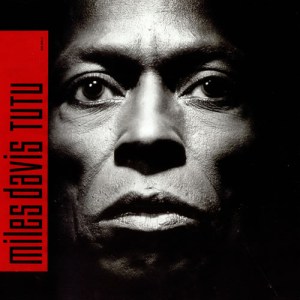
But, taken as a whole, Tutu is a very important album whose success was helped immeasurably by Irving Penn‘s striking cover portrait. It crystallised Miles’s interest in funk, soul and R’n’B more successfully than Decoy or You’re Under Arrest, whilst retaining a crucial ‘jazz’ flavour.

It was also a statement of political intent and black pride, significantly referencing both Archbishop Desmond Tutu and Nelson Mandela in its song titles. And – perhaps most crucially – it was a hit, introducing a whole new generation to Miles’ unique trumpet sound.

For much more on Tutu and Miles’s ’80s work, check out George Cole’s great book ‘The Last Miles’ and also Paul Tingen’s ‘Miles Beyond’.

Aces Of Bass in Early-’80s Britpop

mark_king_1988_tel_aviv_israelWatching the superb reruns of ‘Top Of The Pops’ recently, it’s apparent how many great bass players stormed the UK charts during the early/mid-’80s.

Everywhere you looked, there were hip, young four-stringers with good haircuts and some nifty licks (or ‘kids with a riff’, as Robert Palmer called them).

Though very much under the twin influences of Chic’s Bernard Edwards and Jaco Pastorius, a whole host of ’80s players managed to forge some truly original sounds while clearly utilising the feels and techniques of both American bassists.

Here’s a smattering of great British players of the period (more from across the pond soon) with a few of their enduring performances. Make sure your subwoofer is turned on…

9. Mick Karn
By Japan’s 1979 Quiet Life album, the man born Andonis Michaelides had become one of the most original fretless players of all time, effortlessly bypassing the Jaco template. His lines were also absolutely integral to the band’s formula and eventual success. ‘Visions Of China’ demonstrates his melodic approach perfectly (though somehow he was denied a songwriter credit) and his playing on the track reveals new discoveries even 35 years on.

8. Tony Butler
Shepherds Bush-born Butler brought something very unique to ’80s rock and pop with his band Big Country. He also formed a key rhythm section alongside drummer Mark Brzezicki.

7. Derek Forbes
The hyperactive Glaswegian just couldn’t stop coming up with classic early-’80s basslines. After his departure from Simple Minds in 1984, he also added some quality low-end work to Propaganda’s touring band.

6. Guy Pratt
The Artful Dodger of the early ’80s bass scene, Guy cut his teeth with Icehouse before breaking out to play with everyone from Madonna to Pink Floyd.

5. Graham Edwards
According to Pratt’s great ‘My Bass And Other Animals’ book, Edwards was always going up for the same gigs as him back in the mid-’80s. Now an almost forgotten name, he played some excellent stuff in Go West’s live band and also shone on this underrated gem:

4. Pino Palladino
Pino’s highly melodic fretless style had already graced hits by Gary Numan and Paul Young by the mid-’80s. His playing on the latter’s ‘I’m Gonna Tear Your Playhouse Down’ even had more than a hint of Bernie Worrell/Parliament’s ‘Flashlight’ about it.

3. Mark King
Mr King has to be in this list. Though best known now for his formidable slap technique, his crisp, fluid fingerstyle lines were just as distinctive, not least this Eastern-tinged salvo which really sums up the spirit of 1982.

2. Colin Moulding
The XTC man’s flowing, melodic style showed that he was a worthy heir to Paul McCartney. No matter how ‘standard’ the chord changes, you could rely on Moulding to come up with something memorable.

1. John Taylor
Like or loathe Duran Duran (I have to say I was usually of the latter persuasion), Taylor certainly came up with some memorable if somewhat samey grooves (as gleefully parodied by Mr Pratt).

Bigmouth Strikes Twice: More Classic 1980s Music Quotes

Art_Blakey_1973

Art Blakey

Here’s another selection of choice quotes taken from various 1980s magazines, TV shows, biographies and anthologies that have drifted through my transom in the last few months.

Check out the first instalment here if you missed it.


‘Morrissey’s a precious, miserable bastard. He sings the same song every time he opens his mouth. At least I’ve got two songs: “Love Cats” and “Faith”.’

Robert Smith of The Cure, 1985


‘George Clinton told me how much he liked Around The World In A Day. You know how much more his words mean than those from some mamma-jamma wearing glasses and an alligator shirt behind a typewriter?’

Prince, 1985


‘It would be nice to meet Madonna and squeeze her bum.’

Level 42’s Mark King looks forward to his first US tour, 1986


‘I hope nobody bought houses.’

Slash/Warners executive Bob Biggs upon hearing a preview of Faith No More’s Angel Dust album (OK, this quote is from the early 1990s, but wtf…). The band had bought houses…


‘The musician is like a house, and the music is like a friend that’s always out there knocking on the door, wanting nothing more than to come in. But you’ve got to get your house in order for music to come in. That’s where discipline comes in.’

Robert Fripp, 1984


‘Like the first side. The second side is rubbish. Miles don’t play jazz no more but feels kind of funny about it, so instead of just admitting that his chops aren’t what they used to be, he puts jazz down.’

Branford Marsalis on Miles Davis’s Tutu, 1986


‘Remember the hits? “Labour Of Love” was inspired by Antonio Gramsci, a love song called “Violently” and a tale of kitchen-sink realism about wife battery called “Looking For Linda”. We heard those songs on Radio 1 back to back with Yazz and we’d piss ourselves laughing. We pulled off the trick three times and I always think that lyrically I can pull it off again.’

Hue & Cry’s Pat Kane remembers the good old days, 1995


‘I have to be myself, and if being in rock music forces me to pretend I am an idiot or that I have to wear tight trousers or a wig, then I have to get another job.’

Sting, 1988


‘I heard the title song (‘Storms’) on the radio and the drum sound still makes me want to cry. I love Glyn (Johns, producer) but there were times during that album when I went back to the hotel to cry.’

Nancy Griffith on her 1989 album Storms, 1991


‘I would say that my entire life has been one massive failure. Because I don’t have the tools or wherewithal to accomplish what I want to accomplish.’

Frank Zappa, 1986
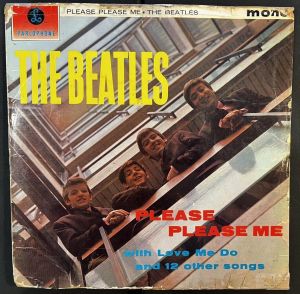
 

‘I went into the old EMI offices many times in the late ’80s and it never occurred to me to look up in reception and see exactly where that iconic photo had been taken. In the ’80s it seemed we had been looking forward.’

David Hepworth on the famous Beatles photo from the cover of Please Please Me


‘I tried the Jesus and Mary Chain but I just couldn’t believe it. It’s awful! It was so sophomoric – like the Velvets without Lou. I just know that they’re kids from Croydon! I just can’t buy it.’

David Bowie, 1987


‘I was surprised how hip it is. There’s a strange thing I don’t understand of people in Boy George outfits dancing to Jimmy McGriff and old Jackie McLean Blue Note records in discos.’

Guitarist John Scofield on the latest English ‘jazz revival’, 1988


‘Songwriting’s a craft, that’s all. I always knew my lyrics were better than anyone else’s anyway. I just edit more than other people, that’s my f***in’ secret. Also I never sleep and that helps too. You’ve got more time that way.’

Shane MacGowan, 1989


‘I hate having my picture taken, I always look like such a dog.’

Kirsty MacColl, 1989


‘I was a patsy. I never made more than $200 a week at the Five Spot.’

Ornette Coleman looks back on his legendary six-month residency during 1959 and 1960, 1985


‘All of us were naive, not just Ornette. We couldn’t even pay our rents. And they were making lots of money off us. That club was jammed every single night we were there.’

Charlie Haden on the same residency, 1985


‘You walk into the record label and they just weren’t as friendly as they used to be. When the record’s not a success, it’s your fault, and so you take on all those feelings. The label doesn’t sit down and talk to you. And they don’t drop you either, because they don’t want to lose you to the competition – just in case you do come up with something good next. And so they just remain sort of not as friendly, no more: “Hey Kevin, how are you?” It’s a head-f*ck, and you just have to work it out yourself.’

Kevin Rowland on the commercial failure of his 1988 solo album The Wanderer


‘Pop stars live the life of Caesar. And we know where the life of Caesar leads: it leads to blankness, it leads to despair. That’s the real message of these rock stars’ lives. To the public, they represent vitality, youth, innocence, joy. But in private life they represent despair and an infatuation with death.’

Albert Goldman, author of ‘The Lives Of John Lennon’ and ‘Elvis’, 1988


‘I remember sitting next to the stage and seeing all those little red lights glowing on the amps while we waited for the guys to come out and give us a real pasting.’

Allan Holdsworth reminisces about early gig-going, 1985


‘I have the best legs in the business. And they’ve got dancing feet at the bottom.’

David Lee Roth, 1982


‘There’s only one woman I have deep respect for in this industry and that’s Chrissie Hynde.’

Annie Lennox, 1986


‘I would have thought that people would be pleased to have a band that could play half decently.’

Francis Dunnery bemoans It Bites’ poor standing with the British music press, 1989


‘Sometimes he would call for Monk out of the clear blue sky. “Thelonious! Come save me from these dumb young motherf*ckers!”‘

Wynton Marsalis on playing with Art Blakey in the early 1980s


‘Prince really wants to be white. I know what that’s like. I tried hard to be white too.’

Daryl Hall, 1985


‘What we do is an alternative to Elton John and Chris Rea and all those old bastards who were there and still are. It’s embarrassing to see these old people like Dire Straits doddering about, they’re hideous.’

Robert Smith, 1989


‘I’ll tell you what I dig. In the Sting movie “Bring On The Night”, Omar Hakim taking off on that tune. Like Tony Williams, Jack DeJohnette. That’s being real free and comfortable. I don’t take my drums seriously, and they do.’

Drummer for the stars Jeff Porcaro, 1989


‘I believe that Bill (Bruford) and Adrian (Belew) thought that Beat was a better album than Discipline. I have no idea how anyone could come to that conclusion.’

Robert Fripp of King Crimson, 2022


‘Thanks for letting me drop by, guys. Hope I didn’t ruin your album.’

Herbie Hancock bids farewell to Simple Minds after playing a synth solo on their 1982 song ‘Hunter And The Hunted’


‘You should have seen us trying to sound like Windham Hill. We’d fall on our butts, man. I learned that you can’t fake it.’

’70s jazz/rock pioneer Larry Coryell on his mid-’80s collaboration with violinist Michal Urbaniak, 1985


‘We weren’t asked but we wouldn’t have done it anyway.’

Robert Smith on Live Aid, 1985


‘The band is getting back together and playing, maybe every six months or every year. If I can do so without it being public knowledge, that would be great. But I can’t do it, obviously. It would be nice to play together just as friends.’

Jimmy Page on Led Zeppelin reunions, 1986


‘I really, really would like to be in Led Zeppelin again. Whether or not time allows that to happen, I don’t know.’

Robert Plant on Led Zeppelin reunions, 1988


‘I’m a Catholic, and I would just ask God to to please help me find my own style. It’s not going to be like Tony or Elvin, so that when you hear me on a record, you know it’s Al Foster on the drums.’

Al Foster on his ‘stomping’ hi-hat technique, 1989


‘I feel I’ve created a field in which other people can discover themselves. I’m disappointed that they don’t create the room for me to discover myself.’

Robert Fripp on his King Crimson bandmates, 1984


‘I find therapy enormously valuable. It’s like car maintenance, send yourself in to be serviced every few thousand miles and, with any luck, it stops major problems developing.’

Peter Gabriel, 1989


‘I went to see this band INXS from Australia. They were on OK band, very much like a version of the Rolling Stones, but not as good. The singer is good and he looks great, but he doesn’t really move. He can’t be expending much energy.’

Mick Jagger, 1988


‘The band was like a fake democracy. Henley and I were making the decisions while at the same time trying to pacify and cajole the others.’

Glenn Frey looks back on The Eagles, 1988


‘(Jeff) Beck’s was a miserable f***ing band, horrible. Beck is a miserable old sod, but I do love him as a guitar player.’

Rod Stewart, 1988


‘I’ve always found it easier to write for other people. I feel terrible inhibited about writing for me. It’s only in the last few years that I’ve resigned myself into believing that I’m a moderately good singer.’

David Bowie, 1988


‘Of my writing partners since John (Lennon), Denny Laine was obviously nowhere near as good. Stevie Wonder is very good, but he’s not a lyricist. Michael Jackson is not as good of a writer as he is a performer. And Eric Stewart was good, but again, not as good as John.’

Paul McCartney, 1988


‘This new Clash compilation, which is meant to have sold a million copies, should be making me a rich man, but someone told me you only get quarter royalties for compilations. The CD wasn’t invented then so that wasn’t in the contract either. So I think I don’t get them royalties either. To tell the truth, I think we’re all a bit skint really.’

Joe Strummer on the legacy of The Clash, 1988


‘Those weird people on the street – every hundreth weirdest one has a Steely Dan record at home. That guy who hijacked a bus today probably has 47 copies of The Royal Scam.’

Walter Becker on Steely Dan’s audience, 1981


‘In 1981, something happened which changed my way of working with music. I woke up on a friend’s sofa in New York and simply understood something I’d known for a while: music was always present, completely with a life of its own, as a friend.’

Robert Fripp, 1984


‘The price of a ticket goes from two dollars to 20 dollars, the act doesn’t do an encore, someone has to stand in a long line, and it’s all my fault.’

Bill Graham on stadium rock, 1988


‘There are a lot of people who didn’t make a commitment and now they’re no longer with us. We lost Otis Redding, Sam Cooke, Jackie Wilson, Jimi Hendrix. I think maybe some of them didn’t know where or when to get off. The important thing is to be here.’

Al Green, 1988


‘Hell, we steal. We’re the robber barons of rock’n’roll.’

Donald Fagen of Steely Dan, 1981


‘After recording it, I flew off to see my manager and I said to him, “You’d better watch who you’re talking to. I’m the guy who wrote “Addicted To Love!”‘

Robert Palmer, 1988


‘I get the fans who write poetry. I have a slight David Sylvian audience, whereas Chris (Lowe) gets the sex audience, the ones who write obscene letters! It’s quite thrilling, actually!’

Neil Tennant of The Pet Shop Boys, 1988


‘It was the Enniskillen bombing that did it. The man whose daughter died beside him under the rubble; he was burning inside but he was so forgiving, so gracious. I thought, Christ, this is what courage is all about – Elton, just shut up and get back to work. After all, once you’ve been exposed naked on the cover of The Sun you ought to be able to face anything…’

Elton John on his 1988 comeback


‘It’s a better product than some others I could mention.’

David Bowie defends the Glass Spider Tour, 1987


‘Back then I thought I’d lost it and I did a bunch of things I was really unhappy with – all in public and on record. But it turned out not to be true. My ability hadn’t deserted me. And it won’t go away. Ever.’

Lou Reed, 1988


‘Michael Jackson’s just trying to cop my sh*t. I was insane years ago…’

Neil Young, 1988


‘I’ve said a lot of things in my time and 90 percent of them are bollocks.’

Paul Weller, 1988


‘We were excellent. Some of the best records of the ’80s are there. For the last six months of Wham!, it was OK to like us, we got a little hip. I cannot think of another band who got it together so much between the first and second albums. On Fantastic, you can tell I don’t think I’m a singer but some vocals on Make It Big are the best I’ve done. Even if we were wankers, you still had to listen.’

George Michael reassesses Wham!, 1998


‘The gig I have as the drummer in King Crimson is one of the few gigs in rock’n’roll where it’s even remotely possible to play anything in 17/16 and stay in a decent hotel.’

Bill Bruford, 1983


‘When I toured with The Rolling Stones, the audience would come up to me after the show and say, “Man, you’re really good, you ought to record.” How do you think that makes me feel after 25 years in the business?’

Bobby Womack, 1984


‘I find politics ruins everything. Music, films, it gets into everything and f*cks it all up. People need more sense of humour. If I ran for President, I’d give everybody Ecstasy.’

Grace Jones, 1985


‘I’m not the most gifted person in the world. When God handed out throats, I got locked out of the room.’

Joe Elliott of Def Leppard, 1988


‘I’m lazy and I don’t practice guitar and piano because I’ve gotten involved with so many other things in my life and I just had to make a sacrifice. Stephen Sondheim encourages me to start playing the piano again. Maybe I will.’

Madonna, 1989


‘Nile (Rodgers) couldn’t afford to spend much time with me. I was slotted in between two Madonna singles! She kept coming in, saying “How’s it going with Nile? When’s he gonna be free?” I said, “He ain’t gonna be free until I’m finished! Piss off!”’

Jeff Beck, 1989


‘I’ve never really understood Madonna’s popularity. But I’ve talked to my brothers and they all want to sleep with her, so she must have something.’

Nick Kamen, 1987


‘They ask you about being a Woman In Rock. The more you think about, the more you have to prove that you’re a Woman In Rock. But if you’re honest, it doesn’t matter whether you’re male or female. That’s the way we work.’

Wendy Melvoin, 1989


‘In Japan, someone told me I was playing punk saxophone. I said, “Call me what you want, just pay me”.’

George Adams, 1985


‘In the past, we’d bump into other musicians and it would be, “Oh, yes, haven’t I heard of you lot? Aren’t you the bass player that does that stuff with your thumb?” But once you’ve knocked them off the number 1 spot in Germany, they’re ringing you up in your hotel and saying, “Hey, howyadoin’? We must get together…”‘

Mark King of Level 42, 1987


‘We played London, we played Ronnie Scott’s, and I noticed that there were a lot punk-rock kids in the audience. After we finished playing, we had to go to the disco and sign autographs, because “Ping Pong”, the thing we made about 30 years ago, is a big hit over there.’

Art Blakey, 1985


‘I believe music – just about everything – sounds better these days. Even a car crash sounds better!’

Miles Davis, 1986


‘It’s a dangerous time for songwriters in that a monkey can make a thing sound good now.’

Randy Newman, 1988
Yoko+Ono+Season+Of+Glass+522787


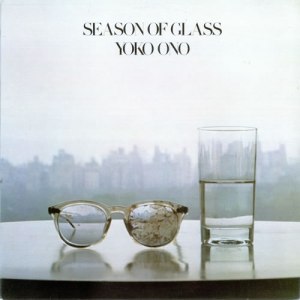
‘To have those glasses on the cover was important because it was a statement and you have to understand that it was like John wanted you guys to see those glasses.’

Yoko Ono, 1989


‘I’ll f*cking… I’ll go and take on anyone, any white singer who wants to give me a go.’

Matt Goss of Bros, 1989


‘I’ve never said this before but my drums is so professional, man, know what I mean?’

Luke Goss of Bros, 1989


‘I hate parts of my own albums because I know I’m hearing something that doesn’t translate to piano. In fact, I’m being dishonest by playing piano at all.’

Keith Jarrett, 1987


‘When I began to see how Elvis lived, I got such a strong take off of it. It was all so revolting!’

Albert Goldman, 1988


‘The best way to make great art is to have it trivialised by other people as much as possible. That way, you fight and fight and fight.’

Julian Cope, 1989


‘Whatever you’re tops in, people is trying to bring you down, and that’s my philosophy.’

Samantha Fox, 1987


‘Call me fat and I’ll rip your spine out.’

Ian Gillan, 1983


‘Sure I care about my fans. Because fans is money, hahaha. Muh-neee! And who does not care about money? Me, I like muh-neee, haha.’

Chuck Berry, 1988


‘I have this long chain with a ball of middle-classness at the end of it which keeps holding me back and that I keep sort of trying to fight through. I keep trying to find the Duchamp in me.’

David Bowie, 1980


‘People who say, Oh, I don’t know anything about music – they’re the people who really do know about music because it’s only really what it does to you.’

Steve Winwood, 1988


‘I notice that critics and others don’t credit black people with the ability to write ingenious, creative lyrics.’

Nile Rodgers, 1981


‘I’m below the poverty line – I’m on £16 a week. We needed some clothes and our manager said, “I don’t know what you do with your money. I mean, 16 quid!”’

Gary Daly of China Crisis, 1984


‘You take four or five of those rattlesnakes, dry ’em out and put them inside your hollow-box guitar. Lightnin’ Hopkins taught me that trick.’

Albert Collins on his guitar tone, 1988


‘People are bored with Lionel Richie going “I love everybody, peace on earth, we are the world…” F*ck that! People love bastards.’

Terence Trent D’Arby, 1987


‘Epstein dressed The Beatles up as much as he could but you couldn’t take away the fact that they were working-class guys. And they were smart-arses. You took one look at Lennon and you knew he thought the whole thing was a joke.’

Billy Joel, 1987


‘I remember when the guy from Echo & The Bunnymen said I should be given National Service. F*** him...’

Boy George, 1987


‘No-one should care if the Rolling Stones have broken up, should they? People seem to demand that I keep their youthful memories intact in a glass case specifically for them and damn the sacrifices I have to make. Why should I live in the past just for their petty satisfaction?’

Mick Jagger, 1987


‘The industry is just rife with with jealousy and hatred. Everybody in it is a failed bassist.’

Morrissey, 1985


‘I couldn’t stand it – all that exploitation and posturing, the gasping at the mention of your name, the pursuit by photographers and phenomenon-seekers. You get that shot of adrenalin and it’s fight or flight. I chose flight many a time.’

Joni Mitchell, 1988


‘I’m strongly anti-war but defence of hearth and home? Sure, I’ll stick up for that… I’m not a total pacifist, you know? I’ve shot at people. I missed, but I shot at them. I’m sort of glad I missed…’

David Crosby, 1989