Robert Altman, director of ‘Gosford Park’, ‘The Player’, ‘Nashville’ and ‘The Long Goodbye’, ‘doing’ Nobel Prize-winning playwright Harold Pinter?
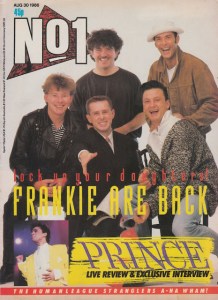
It could have worked. Two shrewder observers of human nature there have seldom been. But Altman’s 1987 take on Pinter’s 1957 debut play ‘The Room’ was a bona fide stinker. A car crash. It doesn’t even warrant a single mention in Michael Billington’s rigorous Pinter biography.
Though a couple of Altman’s ‘80s films are well-regarded now (‘Fool For Love’, ‘Come Back To The Five And Dime, Jimmy Dean, Jimmy Dean’), the great director was mainly forced to scrabble around for one-off deals during this period, probably cursed by the critical mauling handed out to his 1980 version of ‘Popeye’.
‘The Room’ certainly continued Altman’s reputation as a provocateur par excellence. In ‘Altman On Altman’, he claimed it came about when the TV network ABC offered him carte blanche to film any stage play he wanted. His choice of ‘The Room’ amazed, annoyed and confused them, as did his casting of Annie Lennox, Julian Sands and Linda Hunt.
The suits had a point. Hunt, best known for her Oscar-winning role in ‘The Year Of Living Dangerously’, is nothing less than a disaster in the film. Her London accent is appalling and she fudges the key line: ‘That’s this room.’ The emphasis should be on ‘this’, not ‘room’. You wonder why co-star Donald Pleasence didn’t raise any objection.
Lennox’s beauty beguiles but the Eurythmics star doesn’t deliver a classic performance. As for Sands, you only ever expect over-the-top weirdness from him and he doesn’t surprise here, suffice it to say that his Cockney accent is also a travesty.
Pleasence – predictably – is the only actor who emerges with any credibility, his turn a fidgety comic masterpiece. You wonder what he said privately about this mess to Pinter (they were good friends).
Altman shot ‘The Room’ back-to-back with another Pinter play (and equally appalling/must-see) ‘The Dumb Waiter’, starring John Travolta during his career doldrums. They were shown separately during the 1987 holiday season and then released as a double bill under the banner of ‘Basements’.
The lack of critical or commercial success didn’t surprise anyone. But Altman seemed to like it that way. He didn’t get out from under until 1992’s ‘The Player’. It was a long, cold 1980s for the great director.
35 years ago today, on 12 January 1987, Frankie played the first of two nights at Wembley Arena on their final European Tour.
It’s oft forgotten that, even at their commercial peak, they played live. A lot. In fact they were on the road pretty much non-stop between autumn 1984 and summer 1985. And, make no mistake, they were decent musicians.
It’s not surprising they were so eager to show that they could cut it live. ‘Relax’ and ‘Two Tribes’ were mainly made in the control room by Trevor Horn and associates (Steve Lipson, JJ Jeczalik, Anne Dudley, Gary Langan, Andy Richards et al).
And vocalist Holly Johnson was getting most of the publishing royalties (fair enough, his Reagan-baiting lyric for ‘Two Tribes’ is brilliant: ‘Cowboy number one/A born-again, poor man’s son/On the air America/I model shirts by Van Heusen/Working for the black gas…’).
As Holly told NME in November 1983: ‘We were wary of being Trevor’s puppets at first but as soon as we met him that all went out of the window. He’s just a human being. He’s that little guy that used to be in The Buggles’!
So, initially at least, there wasn’t much bad feeling – they occasionally even let Uncle Trevor play live with them, as in this excellent performance on ‘The Tube’ from June 1984, augmented by Luis Jardim on percussion, a couple of keyboard players (wearing interesting shorts) and an extra guitarist (names please?):
According to (ZTT strategist/sleevenote-writer/A&R man) Paul Morley, Horn and his label boss/ manager/wife Jill Sinclair were convinced Frankie could break America, becoming something like The Village People! After all, ‘Relax’ made #10 in the US pop charts.
But surely the Sex Pistols is a better comparison (Frankie as punk’s last gasp? There’s a whole book there…). After all, Horn had just worked with – and hugely admired – Malcolm McLaren. For his part, Horn allegedly hoped the band would split up after ‘The Power Of Love’, their third UK number one in December 1984.
But Frankie didn’t split up. Instead, on their US tour of 1985, they would often open their set with Springsteen’s ‘Born To Run’. In the new Bruce-obsessed/Reagan-blessed America, this didn’t go down too well…
By 1986/1987, the thrills and spills had gone but Frankie had drastically improved as musicians and became a very slick live unit. They toured second album Liverpool extensively, using a lot of pre-recorded backing tracks and retaining an extra keyboard player and guitarist.
The very good quality tape of the first Wembley gig is well worth listening to. The crowd seems made up of screaming teenage girls and there are excellent versions of ‘The Power Of Love’ and ‘Two Tribes’.
‘Maximum Joy’ becomes a whole new thing even if the rest of the Liverpool material doesn’t deviate much from the album. And it’s always a laugh hearing Holly’s laconic between-song banter.
Rumour has it that backstage after this first Wembley gig the band had the mother of all fall-outs. But somehow they got through their 1987 European tour, and found time to play again on ‘The Tube’ for the last time (Faith No More were definitely watching, at least from a sartorial point of view).
Maybe they could they have carried on but it didn’t seem enough to be a ‘good band’ any more – people wanted events, sensations. Also Holly was itching for a solo career, still smarting at the terrible deal the band had signed with ZTT.
Janice Long (pictured left – the first woman to have a daytime show on Radio 1, the first female presenter of ‘Top Of The Pops’ and a great supporter of upcoming artists)
Nick Kamen
Dave Greenfield (Stranglers keyboardist)
Charlie Watts
Henry Woolf (teacher, poet, actor and member of Harold Pinter’s ‘Hackney Gang’)
Terence ‘Astro’ Wilson (co-founder of UB40)
Mick Rock
Ian Kewley (keyboard player/songwriter with Paul Young/Q-Tips)
Baron Browne (bassist with Billy Cobham, Steve Smith’s Vital Information, Jean-Luc Ponty)
Joan Didion
Dean Stockwell
Stephen Russell (Barefoot Doctor)
Jimmy Heath
John Sessions
Eddie Van Halen
Lyle Mays
Betsy Byars
Jon Christensen (drummer for Keith Jarrett, Jan Garbarek etc.)
McCoy Tyner
Ian St. John & Jimmy Greaves (Saint & Greavsie)
Wallace Roney (jazz trumpeter)
Onaje Allan Gumbs (keyboardist with Will Downing, Phyllis Hyman, Billy Cobham etc.)
Hal Willner
Lee Konitz
Little Richard
Jimmy Cobb (drummer on Miles Davis’s Kind Of Blue)
Gary Peacock (bassist with Keith Jarrett, Miles Davis etc.)
Lee ‘Scratch’ Perry
Deon Estus (bass player with Wham!, George Michael and Marvin Gaye in Ostend, solo artist and producer)
Nanci Griffith
Dusty Hill (ZZ Top bassist)
George Wein (pianist, impresario and founder of the Newport Jazz Festival)
Phil Schaap (jazz historian and key contributor to Ken Burns’ ‘Jazz’ documentaries)
Pee Wee Ellis
Stephen Sondheim
Matthew Seligman (Thomas Dolby/Thompson Twins/Soft Boys bassist)
Genesis P-Orridge (co-founder of Throbbing Gristle)
Cristina (post-punk singer of ‘Drive My Car’ fame)
Michael Apted (director of ‘The Coal Miner’s Daughter’, ‘Ptang Yang Kipperbang’, ‘Gorillas In The Mist’, ‘Bring On The Night’, ‘The World Is Not Enough’, ‘Gorky Park’ and co-creator/director of the ‘Seven Up’ TV series)
Ed ‘Duke Bootee’ Fletcher (teacher, hip-hip pioneer and co-writer of Grandmaster Flash/Furious Five’s ‘The Message’)
Phil Chen (bassist on Jeff Beck’s Wired and Blow By Blow)
Phil Spector
Cicely Tyson (Academy Award/Emmy-winning actress and wife of Miles Davis)
Larry McMurtry
Lawrence Ferlinghetti (Beat poet)
Charles Grodin
Pauline Ann Strom (synth pioneer)
Bill Withers
Al Schmitt (recording engineer for Steely Dan, Toto, Diana Krall etc.)
George Segal
Jackie Mason
Robbie Shakespeare (Sly & Robbie bassist)
Una Stubbs
Ed Asner
Jean-Paul Belmondo
Yaphet Kotto
Chick Corea
Malcolm Cecil (jazz bassist and co-producer/synth programmer on Stevie Wonder’s Innversions, Talking Book and Music Of My Mind)
Greg Tate (jazz and soul writer)
Barry Harris (bebop pianist)
Charlie Watts
Lennie Niehaus
Steve Bronski (c0-founder of Bronski Beat)
Pat Martino
Rick Laird (Mahavishnu Orchestra bassist)
Milford Graves
Jon Hassell
Alan Hawkshaw (composer of many great TV and film themes including ‘Channel 4 News’, ‘Countdown’, John Carpenter’s ‘The Fog’ and this cracker which soundtracked much of my 1980s:)
One of the legacies of the wretched last few years is that everyone and their little brother has started a podcast.
Of course there’s a lot of flim-flam but the good news for fans of 1980s music and movies is that many of the decade’s big names are getting involved. They are in bullish, talkative mood, still full of ideas and enthusiasm.
Elsewhere podcasters of all stripes are revisiting key (and not-so-key) works of the 1980s and beyond, offering fresh perspectives. Here’s a selection of podcasts that have held movingtheriver’s attention over the last few years.
Electronically Yours is helmed by Human League/Heaven 17 co-founder and producer/synth pioneer Martyn Ware. He opens his formidable address book to speak to some big names as well as influential but less well-known figures who helped shape 1980s music. Ware seems an amiable fellow and he extracts some intriguing revelations from his guests, sometimes even getting closure on issues that affected his career 40 years ago (see the Bob Last and Simon Draper interviews).
Though he occasionally sounds a bit like Gareth Keenan of ‘The Office’ during one of his Health & Safety seminars, Edward Russell’s podcast Inside the Groove takes an indepth, entertaining look at Madonna’s music and career. There are intriguing bits of studio gossip and great chances to hear exposed multi-tracks of the hits – ‘Borderline’ and ‘Open Your Heart’ are doozies.
Smersh Pod is a look at the Bond films and their connections, expanding out to discuss notoriously cruddy cult movies such as ‘Bullseye’ and ‘Death Wish II’. John Brain presents with vigour and chats with a lot of amusing guests mainly from the comedy world.
Breakfast With Vinnie is the unique podcast of drum hero Vinnie Colaiuta. He generally eschews celeb interviews (though John McLaughlin makes a lovely appearance) in favour of philosophical musings about music, society and culture.
Rockonteurs, co-helmed by Spandau man Gary Kemp and Floyd/Bryan Ferry bassist Guy Pratt, is a series of informal chats with friends and colleagues. Their repartee is sometimes a little grating but interviews with Level 42’s Mark King, Boy George, Trevor Horn and key Madonna/Ferry collaborator Patrick Leonard are particularly memorable.
Word in Your Ear is the brainchild of ‘Whistle Test’ presenters and founders of Q/The Word magazines Mark Ellen and David Hepworth. It won’t surprise anyone that it’s witty, entertaining, opinionated and always worth a listen.
Bass Culture UK is a valuable portrait of the movers and shakers of British reggae and soundsystem culture, featuring excellent interviews with key figures like Don Letts and Dennis Bovell.
But – drum roll – the movingtheriver.com Podcast of the Year is… 80sography. It’s mostly a series of extended interviews with key producers of the decade and a must for anyone who wants to know what went on in studios during the 1980s. It also serves as a good ‘making of’ many classic albums. The Stephen Hague, Langer/Winstanley, Hugh Padgham and Stephen Lipson interviews are all entertaining and comprehensive.
Any other cool related podcasts? Leave a comment below.
Gil Scott-Heron’s work could hardly be more relevant as we move into 2022.
The singer, songwriter, musician, novelist, poet and activist, who died in 2011, was arguably one of the most influential recording artists to emerge since the 1960s.
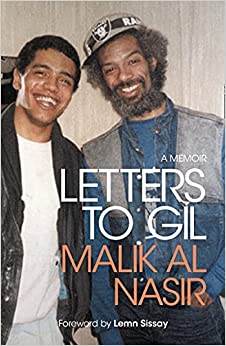
Malik Al Nasir, the poet, musician and activist formerly known as Mark Watson, has quite a story to tell in his memoir ‘Letters To Gil’. Essentially it’s an extended riff on a great obituary that originally appeared in The Guardian.
At the age of nine, Al Nasir was taken into care when his father became paralysed after a stroke. The early part of the book is a moving, grim portrait of Liverpool care homes in the late 1970s and 1980s, a system which turns out to be mostly abusive, racist, neglectful and exploitative (some lawsuits roll on to this day). This is the situation that lead up to the Toxteth riots of summer 1981 writ large.
But then Al Nasir’s life completely changes in 1984 at 18 years old when he gets into Scott-Heron’s performance at the Liverpool Royal Court and manages to meet his hero.
From then on, the two become firm friends, and Scott-Heron becomes his mentor, educating him on the music business and Black history, reading and critiquing his poetry (despite Al Nasir being virtually illiterate when they first meet).
Al Nasir also joins Scott-Heron on several tours, becoming his trusted confidante and PA, and the most gripping sections of the book deal with the machinations of travelling alongside a world-class musician. Later there’s a moving section when Al Nasir visits Scott-Heron in prison during a very dark time in the latter’s life, and we hear a lot of detail about Gil’s sad death and the various heartfelt tributes that emerged in its wake.
‘Letters To Gil’ is a must for anyone with even the slightest interest in Scott-Heron’s work and its relation to other key proto-rap act The Last Poets (whom Al Nasir also befriended and worked with).
But there are issues with the book: there’s a lack of self-awareness/reflection at times, which seems a stylistic device rather than deliberate evasion. It could also have benefitted from more rigorous editing/proofing – there’s lots of repetition. It’s a shame that several lovely photos included in The Guardian article are missing here. It also has to be said that Al Nasir’s poetry, sprinkled throughout the book, leaves quite a lot to be desired, despite its powerful message.
Perhaps it’s telling that the most moving words in the book come not from Al Nasir but from Scott-Heron himself. He talked about the mantra his grandma had taught him, and then went on to sum up his experience of mentoring Al Nasir:
‘If you could help someone, why wouldn’t you? Take the opportunity, take the chance that you’re offering them and run with it, and become a fully-fledged adult and an artist and a gentleman and a father and husband and a brother of peace and generosity. You feel as though the spirits have touched you in a special way, because they have seen one of your dreams fulfilled.’
It’s probably not much of a surprise that Frank didn’t exactly thrive in the 1980s, but it’s funny thinking of She Shot Me Down, released 40 years ago this month, touching down in a landscape of AOR, yacht rock and new wave.
It was his penultimate solo studio album (the last was 1984’s Quincy Jones-produced LA Is My Lady) and the last he made for his own Reprise label (still extant and still a subsidiary of Warners).
It has its fans (esteemed jazz writer Gary Giddins called it ‘his last great album’) but is generally considered only a partial success.
Sinatra’s majestic voice falters throughout, and is subject to an uncharacteristically poor recording/mixing job: he’s generally mixed much too high with a ‘room’ reverb that quickly grates. The grim album cover design doesn’t help either.
But She Shot Me Down does feature four absolute classics that easily compare with his greatest work of the 1950s, regretful portraits of lost love that suit his world-weary voice perfectly. ‘Going Going Gone’, penned by the recently departed Stephen Sondheim from the musical ‘Merrily We Roll Along’, features a sumptuous melody and witty lyric, easily transcending its wafer-thin ‘rock’ arrangement.
‘Thanks For The Memory’, originally written in 1938 and famously Bob Hope’s signature tune, features some nice updated lyrics by Leo Robin that perfectly suit the occasion (‘Thanks for the memory/Of letters I destroyed/Books that we enjoyed/Tonight the way things look I need a book by Sigmund Freud’ etc.).
‘Monday Morning Quarterback’ is a superb co-write by producer Don Costa. But Gordon Jenkins’ ‘I Loved Her’ may be the album’s standout. He was of course a frequent Sinatra arranger of note and occasional composer (‘Good-Bye’), but this is his best song, a tragic tale of a mismatched couple that we can all relate to. The faltering piano solo (played by Sinatra?) perfectly conjures up the feeling of bar-room regret, and Sinatra’s pronunciations of ‘pie’, ‘movies’, ‘Dodgers’, ‘noon’ and ‘saloon’ linger long in the memory.
Steven Spielberg’s ‘Duel’ was one of the first movies that really got to movingtheriver.
I was already a confirmed car and truck fan when it was shown on British terrestrial TV almost exactly 40 years ago, so was glued to the screen from the first minute.
The faceless truck driver scared me, the chases thrilled me, but it was the ending that had the most impact. I just couldn’t get my head around leaving David Mann (Dennis Weaver) literally staring into the abyss after vanquishing his nemesis.
‘Duel’, adapted by the great Richard Matheson from his own short story, premiered on American TV as an ABC Movie Of The Week 50 years ago this month, and was later released as a feature with a few added scenes. It did for trucks what ‘Jaws’ did for sharks and ‘Psycho’ did for showers.
It’s arguably the ultimate road-rage movie – lest we forget, it was inspired by a real duel when Matheson and a friend were harrassed by a truck whilst driving home soon after hearing of JFK’s assassination.
‘Duel’ was filmed in just 13 days mainly around Santa Clarita, north of Los Angeles. Spielberg meticulously mapped/storyboarded every shot, many of which were achieved with the low-angle ‘camera car’ specially built for Peter Yates’ classic 1968 thriller ‘Bullitt’.
Spielberg had earned his big break after working on TV shows such as ‘Columbo’ and ‘Marcus Welby MD’, but had to fight his corner with the ABC executives who wanted him to shoot ‘Duel’ mostly in a studio, using ‘poor man’s process’ (shades of ‘Jaws’, which the suits mostly wanted him to shoot in a tank).
Gregory Peck was the first choice for the role of David Mann – Spielberg heartily approved as it would have meant the movie would get a theatrical release. But when Peck declined the part, the director loved the idea of casting Weaver, mainly based on his manic performance in Orson Welles’ ‘Touch Of Evil’.
The truck is a brilliant baddie, and accordingly it was put into make-up every day, a team of assistants applying oil, muck and dead bugs. It was driven by the great Hollywood stuntman Cary Loftin, while another, Dale Van Sickel, mostly drove the car, though Weaver did some of his own stunts. Like this one:
Comedian Dick Whittington’s initial crank-call sets up the main theme of the film, a theme that both Matheson and Spielberg ratchet up throughout. Is Mann one of Nixon’s ‘silent majority’, a lower-middle-class, hen-pecked schlub who ‘wouldn’t take it any more’?
He is certainly the ultimate everyman, with a fairly snobbish attitude towards the ‘locals’, but we still like him, mainly due to Weaver’s classic performance.
Of course Mann could give up the duel at any minute, turn around and drive home. But he doesn’t. His decision to nail the truck driver is possibly the most terrifying moment in the film (with echoes of Sam Peckinpah’s movie ‘Straw Dogs’).
The school bus scene (one of several added for the feature-length version) is possibly the standout. It’s the coverage and editing – the kids’ mocking faces, the bus driver’s naivety, Weaver’s humourless striving, the contrast between the kids’ innocence and the adult duel operating in a twilight world of petty grudges and micro-aggressions.
(Interestingly, ‘Duel’ is arguably Spielberg’s most ‘adult’ film and thus, for me, avoids the sentimentality and ‘childhood perils’ that plague some of the later films. This excellent – if controversial – article is a potent and worthwhile contribution to the theme.)
The truck, a Peterbilt 281, shot from the ‘Bullitt’ camera car
For such a simple story, Matheson’s plotting is exemplary. We should be able to second-guess Mann’s actions and motives at every step, but we don’t. Weaver/Mann’s voiceover takes us through all potential courses of action.
And then there’s Billy Goldenberg’s brilliant soundtrack. Of course it occasionally hints at Bernard Herrmann but also stakes out its own soundworld with a delicious cocktail of zither, bells, piano, strings, ethnic percussion and harp.
Thankfully there has never been a remake of ‘Duel’ but its influence is everywhere. Spielberg himself continues to view it with great affection and has referenced it in many films, from ‘Jaws’ to ‘1941’.
Finally, back to the ending on the cliff edge. What’s left for Mann? Will he ever recover? What will his punishment be, if any? Will he return to his wife and kids, or ‘drop out’ and join a hippie commune?
Then there are the rumours that the stricken truck is still visible at the bottom of Soledad Canyon. Approach it if you dare. Just don’t end up like David Mann, or the psychopathic trucker for that matter…
Further reading: ‘Steven Spielberg & Duel: The Making Of A Film Career’ by Stephen Awalt
At this late stage of the game, it’s very rare to hear a piece of music that has you gripped from bar one.
But that happened recently when Jennifer Holliday’s ‘And I’m Telling You I’m Not Going’ turned up on Forgotten 80s.
The song was vaguely familiar. Then the penny dropped – I was a big fan of ‘The Larry Sanders Show’ and always loved Jim Carrey’s performance on the final episode (see below) in 1998, but didn’t have a clue at the time that it was a cover version.
But back to Jennifer Holliday. She first performed ’And I’m Telling You I’m Not Going’ at the age of just 20 when she took on the role of Effie Wright in the musical ‘Dreamgirls’, which opened on 21 December 1981 at the Imperial Theatre on Broadway. Written by Tom Eyen and Henry Krieger, the song ends Act One with a dramatic flourish.
Released as a David Foster-produced single in 1982, it got to #22 on the Billboard Hot 100 and won a Best Female R’n’B Vocal Performance Grammy for Holliday. It’s an electrifying vocal performance, fusing soul and gospel and injecting a touch of humour to boot.
Holliday was subsequently one of the first signings to the Geffen label, her first solo album Feel My Soul produced and co-written by Earth, Wind & Fire mainman Maurice White – it reached #31 on the Billboard pop chart and was Grammy-nominated. She also got a Grammy nomination for Best New Artist.
Holliday was then featured vocalist and arranger of The New Jersey Mass Choir on Foreigner’s #1 single ‘I Want To Know What Love Is’, a performance which reportedly reduced the song’s co-writer/guitarist Mick Jones to tears when recorded at New York’s Right Track Studios during summer 1984
Less successful was a second album for Geffen, 1987’s Get Close To My Love, but Holliday has continued to perform to this day in both secular and non-secular formats. More power to her elbow, and bravo for an absolutely spellbinding vocal performance (Jim’s not bad either, sounding occasionally a bit like Mike Patton).
In the immediate aftermath of Bowie’s fabled appearance in the Broadway production of ‘The Elephant Man’, and despite the commercial success of the Scary Monsters album, at least in the UK, his thoughts were far from music in early 1981.
The sorts of modern nightmares he had sung about on ‘It’s No Game’ were becoming all too real. He was particularly shaken by the death of his friend John Lennon in December 1980.
It was time for a reassessment and reboot. First to go was a proposed world tour, originally pencilled in for summer 1981. Instead, Switzerland seemed as good a place as any to hide out, at least initially.
In July, Bowie was at Montreux’s Mountain Studios, recording his vocals for the ‘Cat People’ movie theme song with co-producer/co-writer Giorgio Moroder.
Queen were in an adjacent room recording the Hot Space album, and, when Bowie popped in to say hello to their drummer Roger Taylor, a long-overdue collaboration was on the cards (Bowie was also keen to bend Freddie Mercury’s ear about Queen’s label EMI, as he was pretty desperate to get off RCA).
It was apparently no walk in the park for either party though: guitarist Brian May recalled that ‘to have his ego mixed with ours made for a very volatile mixture’ while Taylor also confirmed that ‘certain egos were slightly bruised along the way’.
But the blend of personalities and approaches paid off; in a feverish, booze-fuelled few hours, described by engineer/co-producer David Richards as ‘a complete jam session and madness in the studio’, something started happening.
With Bowie running between piano and 12-string guitar (his D-based chordal concept is not dissimilar to David Gilmour’s work on Pink Floyd’s contemporaneous ‘Run Like Hell’), a groove, melody and basic song structure emerged.
Bowie encouraged Mercury to improvise on the microphone – apparently the latter’s wordless ad-libs were only meant as placeholders, to be replaced with real lyrics, but they were left in when no-one could think of anything better.
Bowie reportedly then ‘comped’ both vocal improvisations to give them something to build upon, and then lyrics were considered. The nascent song was initially titled ‘People On Streets’, but Bowie’s push to call it ‘Under Pressure’ led to the emergence of a more focused composition.
It’s a fascinating snapshot of Bowie and Mercury’s vocal styles. Bowie struggles with Queen’s natural tendency to break out the pomp-rock but he reins it back in with the moving, double-tracked ‘This is our last dance’ section.
It’s also instructive to hear his vocal mastery during the section; close listening reveals that he takes short, deep breaths at exactly the same points throughout, demonstrating that the part was meticulously worked out in advance.
It’s also impressive that neither Mercury nor Bowie ever ‘pop’ the microphone in their delivery of the word ‘Pressure’ – no mean feat.
Still, it’s quite a bold song lyrically. There aren’t many #1 singles with lines like ‘It’s the terror of knowing what this world is about/Watching some good friends scream let me out’.
It’s not surprising Bowie’s mind was on the healing nature of love in 1981. It’s possible the song was a reaction to the street uprisings going on throughout the UK during spring and summer. The result is a kind of ‘Heroes’ for the early 1980s. Also it’s possibly a prelude to his involvement with Band Aid/Live Aid later in the decade.
It’s also worth noting that Bowie’s infamous Lord’s Prayer at the 1992 Freddie tribute concert at Wembley Stadium took place soon after his performance of ‘Under Pressure’ in duet with Annie Lennox.
The track was mixed in New York by Queen alone without any input from Bowie, a decision that apparently divided opinion; Taylor considered it ‘one of the best things Queen have ever done’ while Bowie surmised that ‘it was done so quickly that some of it makes me cringe a bit.’ It’s certainly far from a hi-fidelity recording.
EMI were understandably convinced ‘Under Pressure’ was a hit, Bowie and Queen less so. But it entered the UK charts at #8 40 years ago this week, and then summarily knocked The Police’s ‘Every Little Thing She Does Is Magic’ off the top spot on 15 November, staying at #1 for two weeks.
In the US, it reached #29, not particularly impressive but nonetheless Bowie’s best chart placing since ‘Golden Years’ almost six years before.
David Mallet’s clever video used stock/public domain footage to interesting effect, though it was banned by the BBC (though I definitely remember seeing it on telly at the time) for including a few seconds of footage from an IRA bomb in Belfast.
As for Bowie, he quickly moved on to the filming of Alan Clarke’s excellent TV play ‘Baal’ in August 1981, rounding off an interesting year for him.
On a personal level, I recall that November 1981 was exactly the time when the pop music bug really got me. I can remember where I was when I first heard ‘Under Pressure’, and many tracks from that month’s chart hold a special place in my heart to this day.
A babysitting uncle (later reprimanded by my mum!) showed my brother and I John Carpenter’s classic 1978 film ‘Halloween’, recorded from TV after its first (edited) UK showing, sometime in 1982 or early 1983.
I loved it but it scared the bejesus out of me. Well, I guess everyone’s entitled to one good scare on Halloween. But Rick Rosenthal’s 1981 sequel, released 40 years ago this weekend, was a definite no-no. My parents wouldn’t let my brother and I watch it, though I distinctly remember us creeping along the upstairs corridor and spying on them watching the rented video with friends.
‘Halloween’ has of course been through numerous/confusing sequels and reboots. The new ‘Halloween Kills’ is supposedly a ‘proper’ sequel to the rebooted ‘original’ of 2018 (which I tried to watch recently, but didn’t last beyond the first five minutes…).
But back to John Carpenter’s original 1978 classic. It was a huge hit. Once the money started rolling in, a sequel was on the cards, one that Carpenter was unable to veto due to his original contract (he also allegedly missed out on a huge amount of royalties too).
So he reluctantly hooked up again with Debra Hill to write the screenplay and co-produce. The result was one of the last big ‘slasher’ hits, outside of the endless ‘Friday The 13th’ sequels, earning around $25 million worldwide against a $2.5 million budget. And this was in the days when sequels were not commonplace.
But how does ‘Halloween II’ stand up today? First, the good stuff:
The camerawork
Director of photography Dean Cundey was lured back from the original, passing up the opportunity to work on Spielberg’s ‘Poltergeist’, and his original angles and Panaglide compositions elevate the film way beyond the standard slasher fare.
The hospital setting
It’s a great idea to set the film in a suburban hospital, and gives a claustrophobic sense of isolation, of course a descendant of Carpenter’s ‘Assault On Precinct 13′ (via, originally, Howard Hawks’ ‘Rio Bravo’ and George Romero’s ‘Night Of The Living Dead’).
Continuity
It’s a neat concept to start the film right where the original ‘Halloween’ ended.
Donald Pleasence
Once again he fully embraces the role of Dr Sam Loomis. He takes it seriously and does a stand-up job, complete with a few memorable line readings.
The Chordettes’ ‘Mr Sandman’ intro and end credits
A very creepy choice, possibly influenced by the use of music in ‘The Shining’.
But then there’s the bad stuff:
Lack of Jamie Lee Curtis
She spends most of the movie either in a hospital bed or limping/crawling around (wearing a very odd wig). As good a performance as she gives, the film suffers from her inertia.
Too much dialogue/exposition
There are way too many slow, boring plot/dialogue longeurs.
Lack of engaging/likable characters
As workmanlike as the mostly young cast are, they can’t replicate the natural rapport that existed between Jamie Lee, Nancy Loomis, PJ Soles etc. in the original film.
Dick Warlock as The Shape
The original film mostly used Nick Castle as The Shape, but experienced Hollywood stuntman Warlock got the role here, and he moves way too slowly and stiffly (and the William Shatner mask doesn’t quite fit…). And the closing fire stunt may have won him some brownie points in the industry but looks absurd now.
Gratuitous gore
Carpenter took a look at the first assembly of ‘Halloween II’ and decided it was too long and not scary enough. He shot a few additional scenes, adding some gore and spikes. Sadly this resulted in too many nods to standard slasher movies, and resulted in a lot of dodgy reviews. Carpenter was also fairly disgusted with himself for ‘messing’ with another director’s work – ‘I did something I don’t believe in. I did something I would hate for anybody to do with me. It was an evil thing to do and I didn’t enjoy any of it,’ he told biographer Gilles Boulenger.
Music
Alan Howarth overdubbed onto Carpenter’s original 16-track tapes, adding copious synths and and drum machines – there’s a lot of bluster but unfortunately Howarth adds little to the original soundtrack.
In conclusion: I’d argue it’s a decent-enough sequel, despite the obvious problems. The last 15 minutes offer creeps, shocks and thrills, and the hospital setting works excellently.