I don’t know if it was sparked by reading MOJO’s recent article about the 40th anniversary of the Sex Pistols’ Never Mind The Bollocks, but everything’s going punk round movingtheriver’s way.
I’ve been enjoying Steve Jones’s hilarious autobiography, revisiting Jon Savage’s essential ‘England’s Dreaming’ and the superb BBC doc ‘Punk And The Pistols’. Then I was pleased to find myself near the site of Malcolm McLaren and Vivienne Westwood’s Sex shop during a King’s Road sojourn last week.
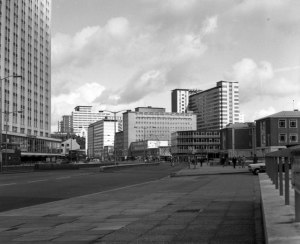
There’s a unifying factor joining all these aspects that I’d never noticed before: Croydon. For those readers outside the London area, it’s a large town just to the south-east of the capital (and these days officially a London borough) with a pretty bad rep as far as popular culture is concerned.
David Bowie possibly spoke for many in 1999 when he told Q magazine:
‘I’ve got this thing about Croydon. It was my nemesis. It represented everything I didn’t want in life, everything I wanted to get away from. I think it’s the most derogatory thing I can say about somebody or something: “God, it’s so f***ing Croydon!” I haven’t been back in a few years but I guess things take on a certain beauty if there’s distance…’
But maybe Bowie got it totally wrong. Maybe Croydon has various claims to hipness. After all, the opening chapters of ‘England’s Dreaming’ outline what an influential place the Croydon School Of Art was in the late ’60s: key Sex Pistols agitators Malcolm McLaren and Jamie Reid studied there, as did future ‘Pop Muzik’ star Robin Scott who described it as ‘like nowhere else’, adding that ‘the Saturday morning market in Surrey Street was full of intrigue and corruption, very lurid.’
All three were involved in various anarchist/Situationist hijinks during their time there, laying the foundations for the Pistols. But it’s ex-Damned bassist Captain Sensible who perhaps best evokes l’essence de Croydon. This song, performed hilariously in the aformentioned ‘Punk And The Pistols’, kickstarted his ’80s solo career.
I have nothing but good memories of his music around this period and I’ll be revisiting it. It’ll be hard to top this affecting little number though – about all our hometowns.
Marvin Gaye: ‘I wasn’t going to peddle myself like I was some new kid on the block. I didn’t want to hear about any rejections, so I went about it differently. I decided what I wanted – to be with the biggest and best record company in the world – and I made it happen. No matter what, I couldn’t come up with another art album. After all, CBS was digging me out of a hole, paying off the IRS, Anna (Gordy, his ex-wife), the feds, the whole works. I felt like an old vet, a seasoned ballplayer who’d been traded to another team that still had faith in him. I owed CBS something – at least a couple of grand slams…’
Jaco Pastorius died 30 years ago today: 21 September 1987.
He was beaten up outside the Midnight Bottle nightclub in Wilton Manors, Florida.
British Jaco fans had particularly meagre pickings in the late 1980s. You gleaned whatever info you could from Bass Player and The Wire magazine or swapped gossip with muso pals.
I’m not even sure I knew he had passed away when I got my hands on import albums like Stuttgart Aria and Live In Italy, both recorded with the brilliant French guitarist Bireli Lagrene, or heard his guest spot on Mike Stern’s Upside Downside.
Then my dad came home from work one day around 1989, excitedly talking about a Jaco concert movie for which he had secured the rights, eventually broadcast on Channel Four as part of the ‘Sounds Of Surprise’ series of jazz films.
Sure enough, the 1982 Montreal Jazz Festival show was a whole new insight into this master musician, shot at a time when he was firing on all cylinders and one of the biggest ‘jazz’ stars on the planet. He was ostensibly touring his Word Of Mouth album at the time, but didn’t play one tune from it.
Starting with his old ‘sweetener’, Pee Wee Ellis’s ‘The Chicken’, Jaco led his superb band (Peter Erskine on drums, Bob Mintzer on reeds, Randy Brecker on trumpet, Othello Molineaux on steel pans, Don Alias on percussion) through a tasty combo of jazz, R’n’B, blues and Caribbean influences.
Particularly notable are a breezy ‘Donna Lee’ and brilliant version of Mintzer’s ‘Mr Fone Bone’, starting at 27:40. Jaco’s soloing throughout the gig is beautiful – emotional, nuanced, dramatic. On the closer ‘Fannie Mae’, he plays the blues with as much feeling as Alberts King or Collins.
So here it is in all its glory. July 1982, Montreal, Canada. RIP Jaco.
Whatever happened to the psychologically-complex, ‘difficult’ male solo artist?
In the ’70s and ’80s, you couldn’t move for them – Peter Gabriel, Peter Hammill, Lou Reed, David Bowie, John Cale et al.
Reed and Cale particularly seemed to dwell in the murky corners of the male psyche, chronicling alcoholism, jealousy, sexual deviance, anger, loneliness, death.
The latter’s Music For A New Society, released 35 years ago this month, was a case in point. An interesting companion piece to Reed’s own 1982 The Blue Mask, it sometimes seems too personal for public consumption. Cale was clearly in a pretty bad emotional state during recording.
The album’s certainly not for everyone – a lot of it’s not for me – but a few tracks still sound like modern classics. Recorded at New York’s Skyline Studios, it features a novel production style; Cale apparently tracked most of the songs with a full band (including Chris Spedding on guitar), then strategically stripped back the instrumentation, ‘playing’ the faders a bit like a dub producer. The result is a sparse, claustrophobic listen.
‘Thoughtless Kind’ and the superb ‘I Keep A Close Watch’ benefit greatly from this approach. The latter of course featured a very ornate production on Cale’s album Helen Of Troy, but this time sticks to grand piano, Hammond organ, fake harpsichord, snare drum, bagpipes and a few found sounds.
On ‘If You Were Still Around’ (featuring lyrics by Sam Shepard), ‘Damn Life’ and various other tracks, Cale sounds almost beyond help. But the standout for me is the poignant tearjerker ‘Taking Your Life In Your Hands’.
Online theories abound as to the song’s subject matter, but it’s hard to shake the feeling that it concerns a school massacre and the sacrifices made by the teachers and ‘gentlemen in blue’ who saved lives. A dark masterpiece by a sometimes superb chronicler of human nature’s murkier aspects.
All great artists with any kind of career longevity have very distinct periods, and John McLaughlin is no exception.
Apart from his mid-’60s output, the early 1980s (let’s face it – the whole of the 1980s… Ed.) is probably his least understood/appreciated era.
McLaughlin had moved to France and formed a new band occasionally known as The Translators featuring a top-class American drummer (Tommy Campbell) and otherwise French unit including his new paramour, the outrageously talented keyboardist Katia Labèque.
His music too had turned away from electric jazz/rock and moved towards a gentler fusion of jazz, classical, blues, flamenco and Latin music, centred around the acoustic nylon-string guitar.
I was a major John completist in the late ’80s/early ’90s but didn’t have a clue Music Spoken Here even existed until chancing upon a vinyl copy in the Shepherds Bush Music & Video Exchange. You’d be hard pushed to find it in any jazz reference book these days; it’s virtually been written out of his discography. Some would say with good reason, but to these ears it’s one of the nuttiest, most piquant albums of John’s career.
At times you can feel him edging again towards the Mahavishnu reunion which happened a few years later in ’84, reaching for the Les Paul on a few cuts and pushing the drums and synths higher in the mix. But in its own way, and considering what else was going on in the jazz world at the time (Wynton, Branford and the Young Lions traditionalists) Music Spoken Here is as shocking an album as TheInner Mounting Flame.
‘Blues For LW’ is the album’s centrepiece, a thrilling, richly-chorded tribute to the Polish activist Lech Welesa with a neat quote from Miles Ahead and completely insane Chick Corea-meets-Rachmaninoff synth solo. ‘Honky Tonk Haven’ is brilliant too, a cacophony of early hip-hop beats, modal keyboards and a killer guitar/synth melody line borrowed from the Shakti track ‘Get Down And Shruti’. You’ve gotta think that Miles would have dug it.
The cover of Egberto Gismonti’s ‘Loro’ may be taken a tad too fast but the arrangement kicks ass. Elsewhere, the album is full of sunny, fresh, cosmopolitan grooves, with frequently outrageous guitar and keyboard playing – the latter way too high in the mix though.
Music Spoken Here was another two fingers up to the purists of the music world, and another artistic success. It reached #24 on the US jazz album chart, a reasonable return but not exactly a big hit for an artist of his magnitude. It’s crying out for a remaster though, one of the muddiest-sounding records of McLaughlin’s career.
Next stop for John was a tour with The Translators, an excellent studio album with Al Di Meola and Paco De Lucia, and then the aforementioned return to Mahavishnu, reuniting with Billy Cobham. Needless to say, that would be another hard sell for the critics…
Geffen/Warner Bros. Records, released 19 July 1982
6/10
It’s understandable that Summer was reluctant to take on Billy Strayhorn’s song ‘Lush Life’.
A morning-after portrait of a failed romance, it’s a remarkable composition for a 16-year-old to write, with elliptical lyrics, few repeat sections and a challenging, endlessly-modulating melody line.
Nat ‘King’ Cole, Sarah Vaughan, John Coltrane/Johnny Hartman and Billy Eckstine all performed notable versions (Strayhorn himself apparently loved the latter).
But, coached through by producer Quincy Jones and keyboardists Greg Phillinganes, Herbie Hancock and Dave Grusin, Summer’s vocals are a knockout. Though the track sounds a bit rushed (Phillinganes would surely like another pass at his synth bass part), her work certainly paid off.
‘Lush Life’ closes Donna Summer, released 35 years old today. Classic singles begin the album and end side one: Grammy-nominated ‘Love Is In Control (Finger On The Trigger)’ and an inspired cover of Jon & Vangelis’s ‘State Of Independence’, the latter featuring an amazing array of guest vocalists.
The problem with Donna Summer is that it’s three classics and a lot of filler. Formula-wise, Quincy seems to be preparing for Thriller – there are many songwriters and a variety of styles.
Springsteen contributes the slightly underwhelming ‘Protection’ and elsewhere there’s a bit too much LM-1 drum machine and a few less-than-memorable choruses.
The album didn’t quite deliver the big hit to propel Summer into the ’80s but reached #20 in the US album charts and #13 in the UK.
If you were to ask fans of 1980s King Crimson why they love the band, lyrics probably wouldn’t be a priority.
But, pushed hard by Robert Fripp and possibly influenced by the 25th anniversary of Jack Kerouac’s ‘On The Road’, Adrian Belew came up with some choice words on Beat, the excellent second album from this remarkable quartet.
References to the Beat writers abound; ‘Neal and Jack and Me’ concerns Kerouac and his best friend Neal Cassady and mentions several significant Kerouac works; ‘Heartbeat’ is the name of a book written by Cassady’s wife Carolyn about her experiences with the Beats; ‘Sartori In Tangier’ references the Moroccan city where a number of Beats resided; ‘Neurotica’ shares its title with a very influential Beat-era magazine, and presumably ‘The Howler’ refers to Allen Ginsberg’s ‘Howl’.
As the saying goes, you take inspiration where you find it, and Belew had come up with a very handy concept on which to hang the new band improvisations. Musically, Beat is a brilliant development of the Discipline sound. ‘Neurotica’ and ‘The Howler’ feature some remarkable, unhinged ensemble playing, teetering on total chaos.
On the latter, Bill Bruford delivers intricate patterns on his acoustic/electric kit (with shades of Steve Reich, acknowledged with Bruford’s credit for ‘Drumming’) while Belew’s white-noise guitar outburst is a killer (he repeats the trick on ‘Waiting Man’ and ‘Neal’, extending his palette of sounds from Discipline and sometimes tuning his high E string down to a C).
‘Sartori’ is a superb vehicle for Fripp while ‘Waiting Man’ demonstrates the amazing rhythm dexterity of the band, a development of the ‘Village Music’ concept with Bruford and Tony Levin sharing a tricky 3/4 figure (joined by Belew on drums when they played it live) underneath an expressive vocal performance.
There’s even a noble, painless attempt at a pop hit with ‘Heartbeat’. The only track that outstays its welcome is ‘Requiem’, a fairly dreary investigation of A-minor.
In short, the musical intelligence of this unit was pretty damn scary. But they never neglected a crucial factor: melody. Lesser bands might have built their entire careers on any Beat song.
Not surprisingly, tensions were high during the London recording sessions. Echoing the situation with The Police around the same time, they sought out a producer who might act as peacemaker.
Fripp told writer Anthony DeCurtis in 1984: ‘We tried to get someone from the outside to organise it: Rhett Davies. I think if failed. I would rather have the wrong judgement of a member of the band than the right judgement of someone outside the band.’
Also, Belew was now very much the centre of attention and under pressure to produce melodies and lyrics to order. According to Bruford’s autobiography, Belew told Fripp to leave the studio after one too many barbs from the bespectacled Wimbornian, who ‘went straight back to Dorset and was silent for three days’. Only some desperate calls from Bruford and manager Paddy Spinks rescued the situation.
In the same 1984 interview as above, Fripp said of ’80s Crimson: ‘I feel I’ve created a field in which other people can discover themselves’. On the evidence of Beat, he did a fine job.
How do you like your classic album: consistent in tone/texture or mercurial and unpredictable like Sgt. Pepper’s (released on this day 50 years ago)?
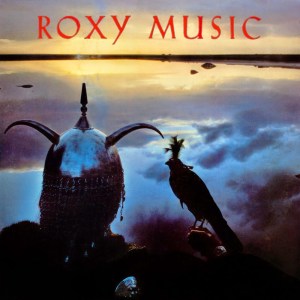
Avalon definitely belongs in the former camp. Beautifully performed, recorded, mixed and mastered, it maintains its mood throughout.
Through a variety of working methods – some originated on previous albums Manifesto and Flesh & Blood – Messrs Ferry, Manzanera and Mackay arrived at Roxy’s perfect studio swansong and, for many, the peak of ’80s sophisti-pop.
Today, Avalon sounds completely different to almost anything else released in 1982. It’s always a shock seeing reruns of Ferry on ‘Top Of The Pops’ miming something from the album – the whole package seems way too refined and luxurious for the worldly environs of a TV studio.
Crucial to Avalon‘s success was the reinstatement of the crack Flesh & Blood ‘backroom’ team: producer Rhett Davies and legendary mix engineer Bob Clearmountain. Also key was the choice of studios: Compass Point in Nassau and Power Station in New York, whose staircase was put to good use, as Davies told ‘Sound On Sound’ magazine: ‘The main thing at the Power Station was the stairwell. It had an unbelievable sound. You’d put anything through it and you’d just go “Yeah, we’ve got to have that.”’
Davies also brought with him another recording technique developed from working with Brian Eno on Taking Tiger Mountain and Another Green World. ‘Eno had opened me up to the way of working where you walk in with a blank sheet, stick some white noise down, count one to 100 and then fill in the spaces, and it was great working that way. When I started working with Roxy, Bryan had only known the “Let’s cut the track with the band in the studio” approach. I said, “Well, there is another way of working. We can put down our groove exactly as you want it synthetically, using a rhythm box, and the musicians can then play to that groove.” The musicians came in and responded to the atmosphere that was already on tape.’ (Eno of course also utilised a similar approach on Bowie’s Low and Heroes.)
Accordingly, drummer Andy Newmark was very often the last musician to overdub – most tracks were first laid down with a Linn drum machine backing. ‘The Main Thing’, ‘India’ (which sounds like Ferry was checking out Miles Davis’s On The Corner) and ‘The Space Between’ are the most obvious results of this approach, essentially jam sessions built on one-chord vamps. This painterly, piecemeal style of recording was also meat and drink to Ferry who was struggling with writer’s block at the time.
The title track was apparently a delightful accident, rescued at the eleventh hour after the song had almost been shelved: Davies: ‘We were mixing the album, and the version of the song that we’d done just wasn’t working out, so as we were mixing we recut the entire song with a completely different groove. We finished it off the last weekend we were mixing. In the quiet studio time they used to let local bands come in to do demos, Bryan and I popped out for a coffee and we heard a girl singing in the studio next door. It was a Haitian band that had come in to do some demos, and Bryan and I just looked at each other and went “What a fantastic voice!” That turned out to be Yanick Etienne who sang all the high stuff on ‘Avalon’. She didn’t speak a word of English. Her boyfriend, who was the band’s manager, came in and translated.’
Some have claimed that Avalon‘s beautiful closing track ‘Tara’ demonstrates a rare example of Ferry’s humour, ‘ta-ra’ of course being Northern English slang for ‘goodbye’ (the track was co-written with Mackay).
Lyrically, Avalon shows Ferry becoming a superb, somewhat surrealist chronicler of intense love affairs, often painting himself as the windswept loner weighed down by desire. Musically, the album is a marvel of ensemble playing – solid but expressive bass (Neil Jason and Alan Spenner) and drums (Newmark – superb), Ferry’s impressionistic piano and synths, colourful percussion from Jimmy Maelen, and spare, tasteful guitar licks placed around the stereo spectrum from Phil Manzanera and Neil Hubbard (who also plays a great solo on ‘To Turn You On’).
And finally there’s extra spice from Andy Mackay on various saxes and Fonzi Thornton on vocals, whose uncanny alto compliments Ferry so well.
Avalon was a hit, reaching #1 in the UK (though, surprisingly, only #53 in the US) and producing three UK hit singles. Sonically and lyrically, it also set the template for all of Ferry’s subsequent solo projects. Happy birthday to a true ’80s classic, oft imitated but never surpassed.
It was a cheapo Fame Records/EMI cassette edition. Before Ship, I had only heard choice cuts courtesy of a friend’s career-spanning compilation.
I was going to say that Ship was not the ideal album to start with, but actually with hindsight it probably was; it’s maddening, brilliant, tawdry, overblown – basically a microcosm of Zappa’s ’80s output.
Ship ditched the lush, multi-tracked sound of 1981’s You Are What You Is in favour of a no-reverb, claustrophobic mix featuring Chad Wackerman’s busy drums, blaring synths, in-your-face bass and loads of wacky guitar processing.
Opening track ‘No Not Now’, concerning the sexual dilemmas of a long-distance truck driver, is a six-minute disaster area that would surely test the patience of even the most diehard Zappa fan.
‘Valley Girl’ placed killer new-wave rock around daughter Moon’s hilarious vocal exclamations. It was a typically bold, spontaneous and very successful career move by FZ resulting in a timely hit single (peaking at #32 in the US).
But we then unfortunately segue into ‘I Come From Nowhere’, a fairly unlistenable track about the inanity of TV personalities with a ghastly vocal performance by Roy Estrada over an uninvolving, sub-Men At Work riff.
But side two of Ship demonstrates all that’s essential about ’80s Zappa. It should really be heard in its totality. The title track is surely one of his career highlights, a unique, surrealistic 12-minute salvo featuring spoken-word, ‘scatting’, a great rock guitar solo over a grinding 9/8 vamp, a blizzard of avant-garde piano/percussion and even a quote from Stravinsky’s ‘Rite Of Spring’ (of course also a piece about ritual sacrifice).
‘Envelopes’ is a brief but brilliant through-composed tribute to Conlon Nancarrow featuring close-interval, player-piano perversions, while ‘Teenage Prostitute’ is the R-rated version of ‘Valley Girl’, a hellish vision of Hollywood’s underbelly complete with ‘Peter Gunn’ riffs, intricate marimba and operatic vocals by Lisa Popeil.
I was in. I would immediately go back/forward and investigate FZ’s career in more detail. Next up was Sheik Yerbouti, the first CD I ever bought and probably my favourite Zappa album.
Gavin Lambert’s 1959 book ‘The Slide Area’ was a collection of inter-related stories about a group of Hollywood’s lonely losers.
His theme was that California’s natural phenomena made ‘normal’ behaviour virtually impossible.
‘The Slide Area’ obviously rang a bell with Ry. His 1982 album of the same name also featured an array of characters not exactly thriving in the Dream Factory.
But it also turned out to be almost the complete opposite of Cooder’s commercial breakthrough, 1979’s slick, sparkling, digitally-recorded Bop Til You Drop.
The Slide Area sounds like what it is – a rough-and-ready band, often audibly cued by Cooder, playing songs of varying quality live in the studio with minimal, if any, overdubs.
‘Which Come First’, ‘Yes It’s Me And I’m Drinking Again’ and ‘Mama Don’t You Treat Your Daughter Mean’ are incredibly loose, with some bum notes and tentative moments left in. Ry’s vocals are similarly raw but full of passion. On ‘Mama…’ he sounds a bit like Bobby ‘Blue’ Bland.
Drummer Jim Keltner is uncharacteristically hyperactive, speeding up drastically on almost every song (definitely no click tracks involved with this album), but full of creativity on what sounds like a homemade kit with timbale, double kick drums, a trash can and a few different snares.
Cooder composes a lot more than on recent albums and even co-writes an ’80s classic with Keltner, ‘UFO Has Landed In The Ghetto’, which finds time to gently lampoon disco, rap and funk with references to the Bee Gees and George Benson.
But perhaps predictably the three cover tunes are the standouts: a Tex-Mex version of Curtis Mayfield’s ‘Gypsy Woman’, funky take on Dylan’s ‘I Need A Woman’ and a gloriously arse-over-tit ‘Blue Suede Shoes’.
But The Slide Area also marked the end of an era. Americana, roots music and blues were out, synths and drum machines were in.
It was the end of the sort of albums Little Feat, Van Dyke Parks, the Doobie Brothers, Bonnie Raitt, Randy Newman and Ry made with Warner Bros and the beginning of the sort of albums Madonna, Pat Benatar and Laura Branigan were making.
Live, it was a different matter – Ry was still a big draw in 1982, playing legendary gigs at the Hammersmith Odeon (my dad took me to one night, maybe my first ever major gig) and big shows all over Europe. But that too proved a false economy.
‘Someone yelled “Think of the money!” from the audience (during a 1977 Hammersmith Odeon gig). I’d like to show him my bank balance. I could never make a dime doing anything. I came back to California in debt. I’d make a record and I’m broke cos they’re not making any money, they don’t sell. I said, to hell with it,’ Ry told Q Magazine in 1987.
It was back to the movie soundtracks. For a while…



 Jaco Pastorius died 30 years ago today: 21 September 1987.




 movingtheriver.com