Narada Michael Walden: Looking At You, Looking At Me/The Nature Of Things/Divine Emotion

Singing drummers: the ’80s were chock-a-block with ’em.

But Narada seems a somewhat forgotten example, at least compared to the far more popular Phil C, Don H, Stevie W and Sheila E.

Yet he started the decade as the one you’d probably have put your money on, ending the ’70s as he did with an impressive run of R’n’B hits.

Narada had of course started his music career as a jazz/rock drumming tornado in the second incarnation of John McLaughlin’s mighty Mahavishnu Orchestra, going on to record famous fusion sides with Jeff Beck, Weather Report, Tommy Bolin, Alphonso Johnson and Jaco Pastorius.

During the ’80s, he was one of the most in-demand producers on the planet, helming Whitney Houston’s ‘I Wanna Dance With Somebody’, Aretha Franklin/George Michael’s ‘I Knew You Were Waiting For Me’ and Starship’s ‘Nothing’s Gonna Stop Us Now’. But his solo career was somewhat in limbo during this period, so it’s fascinating to check out a new, nicely-appointed three-album survey of his 1983-1988 output.

Looking At You, Looking At Me (1983) is the best of the three albums, but a frustratingly inconsistent record. Listening to the superb title track, you’d think he might have found hit his true metier, a languid, luxurious, West Coast pop/jazz, similar to the kind of music Al Jarreau or Manhattan Transfer were making at the time.

But an OK duet with Angela Bofill, passable cover of ‘Reach Out (I’ll Be There)’ and sick drum-machine/horn workout ‘Shake It Off’ aside, the rest of the album is fairly unmemorable R’n’B with occasional virtuosity from guitarist Corrado Rustici and bassist Randy Jackson.

The followup, 1985’s Nature Of Things, is even more problematic, sounding mainly like a kind of soft R’n’B version of the ‘Top Gun’ soundtrack, with way too many synth-based ballads. But Divine Emotion (1988) was a partial return to form, led by the effervescent title track (with one of the great ’80s basslines) which gave him a timely UK hit. Narada had obviously been prompted into action by his highly successful production work – his vocals and arrangements have never been better.

But while Divine Emotion sounds like a million dollars, there are still issues on the songwriting front. Put simply, only the title track, ‘But What Up Doh’ and closer ‘We Still Have A Dream’ have memorable hooks (the latter also features some brilliant jazz/rock kit work from Narada).

One wonders what might have happened if he had hooked up with some great ‘pop’ songwriters like Kenny Loggins, Rod Temperton, Michael McDonald, Carole Bayer Sager or even Burt Bacharach at the outset of the decade rather than relentlessly ploughing his own furrow; ‘Looking At Me, Looking At You’ offers tantalising possibilities.

But looking at his career as a whole, it’s all turned out fine – Narada’s always been one of the coolest, most talented musician/producers around, and apparently he’s a joy to work with.

The Redskins: Bring It Down

I first heard The Redskins’ ‘Bring It Down (This Insane Thing)’ circa 1985 on ‘The Max Headroom Show’ and was seriously impressed.
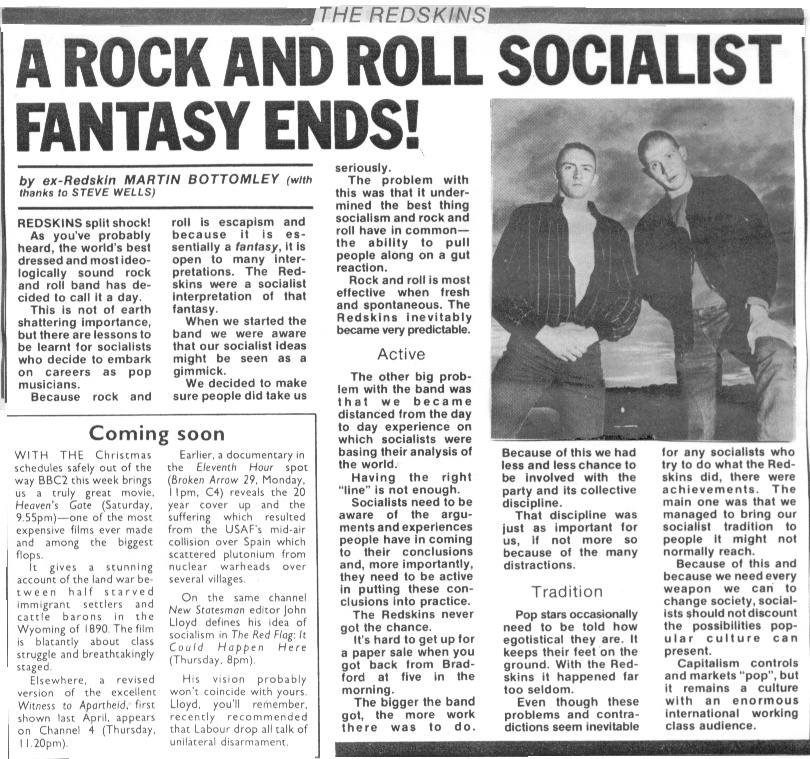
Listening back more than 35 years on, there are shades of early ’80s punk/funk: Gang Of Four, 23 Skidoo, A Certain Ratio, plus a bit of Dexys/Jo Boxers, courtesy of the spicey horn arrangements.

The lyrics seem fairly revelant in a post-Grenfell world and feature somewhat of a classic opening line, parodying Prime Minister Harold Macmillan’s famous 1957 speech: ‘You’ve never had it so good/The favourite phrase of those who’ve always had it better…’

The band’s break-up as announced in the NME – click to enlarge

The band are a solid, funky little unit and I like singer Chris Dean’s chuckling Melle Mel homage and general swagger – it’s a classic ’80s vocal performance. His Afro-beat-flavoured rhythm guitar playing is pretty good too.

Their Wikipedia entry claims that The Style Council’s Steve White plays drums on this but it doesn’t particularly sound like him. The Redskins burned fairly brightly for four years, starting out as an NME-approved indie act and then graduating to a major-label deal in the classic ’80s style.

They split up after their Anti-Apartheid tour of 1986. ‘Bring It Down’ was their one and only UK top 40 single – a fairly poor return when such blue-eyed-soul inanities like The Blow Monkeys’ ‘It Doesn’t Have To Be This Way’ were just around the corner.

Where are they now? Who knows? No reunion. No sell-out. One near-hit.

Re: Eurythmics

At the peak of their pop success in November 1986, Eurythmics’ Annie Lennox told Melody Maker magazine: ‘I’m an angry person. I’m angry generally. The world is not a place to be passive in. I didn’t ask to be born…’

Lennox played at Sadler’s Wells the other night to rave reviews, her first London gig for over 10 years. I’d like to have been there; her music makes much more sense to me live than on record.

And her solo work appeals more than Eurythmics – they’re so much part of the UK pop furniture that maybe I can’t really judge anymore, though ‘Love Is A Stranger’ always seems genuinely beguiling.

But then I saw some footage that made me re-assess their whole career. The penny dropped. A fascinating documentary has appeared online capturing Annie and Dave demoing their enormo-selling 1985 album Be Yourself Tonight in a fairly cheap Paris studio complex.

The songs are stripped down to just drum machine, a few keyboards, guitar and vocals, and what comes across is the sheer joy of creating this music. Lennox brings the songs to life with skill and courage and Stewart’s guitar playing is wittier and flashier than I’d ever heard it before (and he gives good interview too).

I’ve since compared these early run-throughs to the album versions and they’re so much better; wish they’d had the guts to release them as they were.

Story Of A Song: David Bowie’s ‘Loving The Alien’ (1984)

The lead-off track and third single (UK #19 in May 1985, not released in the US) from 1984’s Tonight album, ‘Loving The Alien’ was arguably Bowie’s most committed piece of writing since Scary Monsters‘ ‘Teenage Wildlife’ four years earlier.

Recorded at Quebec’s Le Studio in May 1984, the song was musically rich with a striking set of lyrics and a superb, soaring vocal performance. Like a good Kubrick movie, it distills down weeks of research to just the crucial components.

Bowie was apparently doing a lot of reading about Christianity and the Catholic Church, influenced particularly by Donovan Joyce’s notorious book ‘The Jesus Scroll’ which posited that Jesus died in Masada at the age of 80 and wrote a scroll currently in Russian hands. The wider implications of this led Bowie into further thoughts on organised religion in general and Christianity in particular. He told writer Charles Shaar Murray:

‘It was always more of a power tool than anything else, which was not very apparent to the majority of us. My father encouraged me to become interested in other religions. It’s extraordinary considering all the mistranslations in the Bible that our lives are being navigated by this misinformation, and that so many people have died because of it. That’s how the song started out: for some reason, I was very angry…’

Using the bloodshed of The Crusades as its central image, the lyric uses various effective ploys, one of which is an almost Pinteresque juxtaposition of the banal and portentous. While Bowie blithely stated ‘It’s just a song of images’ in the above interview, each line is ripe for analysis.

Watching them come and go
The Templars and the Saracens
They’re travelling the holy land
Opening telegrams

Torture comes and torture goes
Knights who’d give you anything
They bear the cross of Coeur de Leon
Salvation for the mirror-blind

But if you pray
All your sins are hooked upon the sky
Pray and the heathen lie will disappear

Prayers, they hide the saddest view
(Believing the strangest things, loving the alien)

And your prayers they break the sky in two

And you’ll believe you’re loving the alien

Thinking of a different time
Palestine a modern problem
Bounty and your wealth in land
Terror in a best-laid plan

Watching them come and go
Tomorrows and the yesterdays
Christians and the unbelievers
Hanging by the cross and nail

Bananarama it ain’t. Both lyrically and musically, the song stands out a mile on Tonight. But despite Bowie’s fantastic vocal, it’s let down by an immense production with huge, gated drums (Omar Hakim’s entrée into rock drumming that arguably got him the gigs with Dire Straits and Sting), muddy bass, overwrought Arif Mardin string arrangement and a ponderous Carlos Alomar guitar solo.

More successful are Guy St Onge’s marimba and the sampled Bowie vocals at the top (apparently more influenced by Philip Glass’s ‘Einstein On The Beach’ than Laurie Anderson’s ‘O Superman’ – the kind of detail that was very important to Bowie!). Regular collaborator David Mallet directed the video, storyboarded – as usual – by Bowie. Though seemingly a fairly disparate series of arresting images, the clip was fairly successful as a surreal assault on religion’s materialistic symbols and commodification of women.

It also makes a fascinating companion piece to his ‘Blackstar’ video. Bowie’s cheery grin that accompanies the ‘Opening telegrams/Whoa-oh’ line is a thrillingly weird moment. Bowie performed ‘Loving The Alien’ throughout the ‘Glass Spider’ tour. Then, in 2002, DJ Scumfrog remixed the track to create a single called ‘The Scumfrog vs Bowie’, a top 10 hit in the UK Dance Chart.

A year later Bowie himself resurrected the song, cooking up a stripped-down version in duet with guitarist Gerry Leonard. They dropped the key from E-minor down to C-minor and dispensed with many of the original’s passing chords, arguably dissolving some of its power, but it’s certainly a unique reading.

According to Bowie, the best version of ‘Loving The Alien’ is his original home demo of the song, yet to see the light of day. Let’s hope we get to hear it sometime.

Ronald Shannon Jackson: Behind Plastic Faces

ronald_shannon_jackson_06n5970

Shannon Jackson in 2012

Musicians and writers have long puzzled over a definition of Harmolodics, the musical system invented by Ornette Coleman.

The man himself was famously coy on the subject, his brief liner note on the back of the Dancing In Your Head LP possibly the nearest he ever got to an outright definition: ‘Rhythms, harmonics and tempos are all equal in relationship’.

Of all the Ornette collaborators who developed their own take on Harmolodics, Ronald Shannon Jackson, who died in October 2013, probably came up with the most accessible version.

He had played with avant-garde pioneers Albert Ayler, Ornette, James Blood Ulmer and Cecil Taylor in the 1970s, but developed into a fine bandleader/composer in the ’80s, fronting a red-hot band featuring guitarist Vernon Reid (Living Colour), bassist Melvin Gibbs (Rollins Band), trombonist Robin Eubanks and saxophonist Zane Massey. (Shannon’s version of Harmolodics was so successful it possibly even influenced Ornette’s Virgin Beauty.)

r-1084782-1190894488-jpeg

My dad used to get sent a lot of music in his capacity as a programme consultant for Channel 4 TV’s music arm back in the mid-1980s. A surprising amount of it would come in home-compiled cassette format. One such tape was simply called ‘Dance Music’ – I’ve still got it somewhere.

Most of it was fairly standard Brazilian and Blue Note stuff but one track stood out a mile and became somewhat of an obsession for my brother and I: Shannon’s ‘Behind Plastic Faces’, from the 1985 album Decode YourselfIt was the beginning of my love affair with his music and drumming.

He lays down one of his patented military grooves on Simmons drums underneath slithering fretless bass, chattering Reid guitar and Onaje Allan Gumbs’ summery keyboards. But then the track suddenly changes gear halfway through and turns into a Afro-Funk/No-Wave rave-up, with Shannon moving over to the acoustic drums and Eric Person rhapsodising on alto sax.

The track and attendant album were recorded at Electric Lady Studios in New York and produced by Bill Laswell. Decode Yourself seems very difficult to find on physical formats these days, like many of Shannon’s numerous other ’80s albums, but thankfully it is on streaming platforms.

Shannon Jackson was born and brought up in Forth Worth, Texas, just like Ornette. His father’s jukebox introduced him to BB King, Howlin’ Wolf, Charlie Parker and Dave Brubeck, but there were many other influences in the mix too, as he told writer Gary Giddins in 1985:

‘You’d wake up and hear hillbilly music on the radio. In school, we’d play (Wagner’s) “Lohengin”, at night we’d hear Bo Diddley or Bobby “Blue” Bland. On Sunday, we’d hear gospel. It was a total black community, and music wasn’t categorised as jazz or pop – nobody told you you weren’t supposed to like something.’

Sadao Watanabe: Maisha

sadaoAh, the joy of tape-to-tape machines.

One day, when I was about 16, my parents’ cool music-biz friend Steve brought me round a pile of cassettes, all tape-to-tape recordings, two albums per tape.

That was an important little selection right there: Little Feat’s Last Record Album, Steely Dan’s Katy Lied, Talking Heads ’77 and a few others that have skipped my mind.

Sadao Watanabe’s Maisha was also amongst them, an album/artist I’d never heard of. He’s a highly-regarded Japanese sax player who has performed in many different idioms from straight ahead to bossa nova.

He’s probably best known for his late-’70s jazz/funk material when he borrowed Grover Washington Jr’s band (Steve Gadd, Richard Tee, Eric Gale, Ralph McDonald and Anthony Jackson) for some huge home-country gigs and a few fairly popular albums on CBS.

Maisha is a fairly light jazz-funk album of a mid-’80s vintage, but on reflection it’s got more in common with MJ’s Thriller than anything by Spyro Gyra or Shakatak. This is due to a really phenomenal rhythm section and very subdued production with no blaring synths, drum machines or digital reverb. Instead, it’s a lesson in groove construction. Drummers John Robinson/Harvey Mason and bassists Nathan East and Jimmy Johnson have seldom played better.

Yellowjacket Russell Ferrante’s keys are typically tasteful, sticking to Rhodes and acoustic piano rather than synths, while Jerry Hey adds brilliant horn arrangements to various tracks. Paulinho Da Costa is his usual effervescent self on all manner of percussion. And finally, guitarists Carlos Rios and David Williams play beautifully, the latter of course a mainstay of Thriller.


In general, the musicianship is loose and spontaneous, a world away from the studied session-head sounds usually associated with the ’80s LA studio scene. Mason marshals the band through ‘Paysages’ with a fantastically loose interpretation of the famous Bernard Purdie shuffle.

Herbie Hancock pops in to contribute a ridiculously great synth solo to ‘What’s Now’ (which is surely due a big-band cover version) while Brenda Russell’s refreshingly artless vocals feature on the Calypso-tinged ‘Tip Away’ and infectious ‘Men And Women’. And not even Stanley Clarke could have bettered Nathan East’s bass-and-scat solo on ‘Good News’.

Unfortunately Sadao’s sax chops get a bit swamped by all this classy playing, but he does have a lovely tone, almost like an alto-playing Stan Getz, and writes several memorable themes on the album.


Joni Mitchell: Dog Eat Dog 30 Years Old Today

joni_mitchell-dog_eat_dog(2)Most music fans of a certain age probably had their favourite ‘Walkman albums’, those cassettes that worked perfectly on headphones, revealing intricacies (weird panning effects, funky little motifs, stereo drum kits) rarely noticed when played on normal speakers.
As much as I had loved Joni Mitchell’s music ever since my dad played me ‘Chinese Cafe (Unchained Melody)’ in 1983, I’d never have predicted that the superb Dog Eat Dog – released on 30 October 1985 – would turn into one of my top headphone albums. A clue, of course, was the presence of Thomas Dolby as co-producer and keyboard player, master of quirky soundscapes and synth textures.

joni

Though initially he might seem a weird choice of collaborator, with hindsight it’s not that much of a surprise that Joni and co-producer/bassist/hubbie Larry Klein should enlist his services. Joni admitted in contemporary interviews that she ‘could use a hit’. But they didn’t get along particularly well in the studio, Dolby not enamouring himself to her by blithely calling her ‘Joan’ between takes.

But the Englishman contributes a lot to Dog Eat Dog – interesting audio effects like Wayne Shorter’s sampled soprano throughout ‘Lucky Girl’, beats, dub textures here and there (‘Shiny Toys’) and of course the odd spoken word intrusion (maybe it was his idea to use Rod Steiger on ‘Tax Free’?).

One of the key aspects of Dog Eat Dog is Joni’s anger at the state of the world, both lyrically and vocally. Her cover pose says it all – throwing her hands up in the air with indignation and/or helplessness. As she puts it, the album is a portrait of ‘a culture in decline’. She takes aim at TV evangelists, consumerism, lawyers, yuppies and Reaganites with equal candour, letting fly with an F-bomb on the superb ‘Tax Free’.

The album also features some of Joni’s strongest singing on record. Her melodies are sometimes resplendent too, particularly on the title track and ‘Lucky Girl’. It’s also interesting to hear her trying out a slightly more minimalist lyric-writing approach on ‘Fiction’ and ‘Tax Free’, marrying her short, sharp lines to Klein’s music.

‘Good Friends’, initially a brooding piano ballad in demo form, kicks the album off in fine style, an AOR classic with more interesting chord changes than the usual and a typically distinctive guest spot from Michael McDonald. It was a bold though unsuccessful attempt at a hit, far too good for the charts. Joni even sung it live on ‘Wogan’ with a McDonald impersonator!

The elegant, stately ‘Impossible Dreamer’ is described by Joni as ‘a tribute to Martin Luther King, John Lennon, and Robert Kennedy – all those who gave us hope and were killed for it.’ It also features some sparkling soprano sax from Wayne Shorter. Master drummer Vinnie Colaiuta is mainly reduced to providing drum samples for Dolby, though plays some lovely stuff on ‘Shiny Toys’, the second single from the album and subject to a great 12″ mix by Francis Kevorkian

The ’80s weren’t particularly easy on Joni and her contemporaries Don Henley, Neil Young, Bob Dylan, Linda Ronstadt and Robbie Robertson. As she put it, ‘I made four albums for Geffen. For one reason or another, they were viewed as being out of sync with the ’80s. But I was out of sync with the ’80s. Thank God! To be in sync with these times, in my opinion, was to be degenerating both morally and artistically. Materialism became a virtue; greed was hip.’

A lot of people would probably have liked her to carry on making Blue for the rest of the ’70s and ’80s, but she was moving on. Every album was different and this may be the one most in need of critical reassessment. Some tracks would possibly benefit from acoustic reinvention, but hey… It’s Joni.

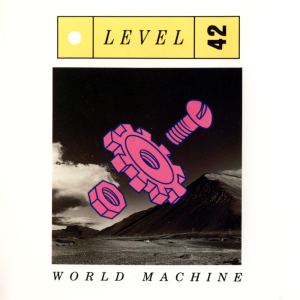
Level 42: World Machine 30 Years Old Today

level-42-world-machineAs a young band starting out in the ’80s, your ideal career trajectory would probably go something like this: Get together with a few mates, start rehearsing, get the gear in a van, tour the nation’s toilets, slowly build your audience, get a manager, get the record deal, release your debut, get on ‘Top Of The Pops’ and then hope you’ve got a career.

But it’s one of the rules of pop that some folks can’t handle fame when it hits. To paraphrase Bill Bruford: first you cope with failure, then you cope with success.

From Syd Barrett through Ian Curtis to Billy Mackenzie (is it mainly a British thing?), there are always artists who have bailed out when the constant routine of promotion and miming to the hit single becomes too much like a regular job.

The syndrome even affected pop/jazz/funk heroes Level 42, who in 1985 produced arguably their finest album in World Machine, though lost half their original line-up in the process including one of the finest-ever British drummers.

The band’s popularity had been steadily building throughout the ’80s. Though their live following had always been strong and they always had hits, the singles usually seemed like happy accidents – ‘Sun Goes Down (Living It Up)’, ‘Chinese Way’ and ‘Hot Water’ were all last-minute album additions based on studio jams.

Now their record label Polydor wanted a more concerted assault on the singles charts and a more current sound, and to that end outstanding bassist/vocalist Mark King took much more of a lead than before.

Alongside co-producer/keys man Wally Badarou, the band laid down the most cohesive, streamlined collection of songs in their career thus far with two or three obvious singles at demo stage (though not a view apparently shared by then manager John Gould whose negative reaction to the new songs contributed to him being given the push in a heated band meeting).

Not everyone in the band was happy with this brave new musical direction either. Main lyricist and drummer Phil Gould (brother of ex-manager John and guitarist Boon) had always peppered Level 42’s songs with allusions to psychology, science fiction and esoteric spirituality, drawing on writers like Arthur Koestler, Hermann Hesse and EM Forster, but by early 1985 the pressure was on to deliver boy/girl songs with universal themes.

In an excellent recent interview, Phil has talked about Polydor wanting the band to do party anthems like ‘Let’s Groove’ and suggesting they do a cover version of ‘Nature Boy’. He struggled against this direction, rightly surmising that they would quickly become typecast as a clichéd Brit-funk band.

Though he did eventually tone down the lyrical imagery a bit on World Machine, he still smuggled in some depth and despair to songs such as the title track, ‘Physical Presence’, ‘Leaving Me Now’ and ‘Coup D’Etat’.

Oh yes – the music. One of the great pleasures of World Machine is its consistency of tone; you can drop the needle anywhere and hear the quality. Engineer Julian Mendelsohn is a big contributor to that.

The band had mastered the kind of half-time funk groove which had frequently littered their earlier work, and the style reached its apogee here with bassists and drummers rushing off to play along to ‘Good Man In A Storm’ (why has it never been played live?), ‘A Physical Presence’, ‘Leaving Me Now’, ‘Dream Crazy’ and ‘It’s Not The Same For Us’ (which was initially going to be a Mark King lead vocal as revealed on this amusing demo).

But the sequence-heavy nature of some other tracks (particularly the title track, ‘Something About You’ and ‘I Sleep On My Heart’) also aroused some musical differences in the band. It’s intriguing to imagine what these songs would have sounded like shorn of their ‘hi-tech’ elements.

Level 42 had secured several hits before, but ‘Something About You’ was the real breakthrough. Incredibly, it reached #7 in the US singles chart, perhaps inspired by a really good accompanying video.

World Machine delivered, both commercially and artistically. It reached #3 in the UK album chart, staying in the top 100 for 72 weeks. I saw the band at the Hammersmith Odeon on the – as usual – completely sold-out UK tour. They later went off to the US to tour with Madonna and Steve Winwood. The brothers Phil and Boon Gould left the band soon after recording the follow-up Running In The Family and the classic line-up was no more.

Great memories, great sounds, great band.

Miles Davis: You’re Under Arrest 30 Years Old Today

miles

As a teenage jazz/fusion fan and burgeoning muso, 1983’s Star People caught my ear but it was You’re Under Arrest that really captured my imagination and made me a Miles fan for life.

Everything about the package was designed to be provocative, from the garish cover design to the in-your-face but always funky music. It’s a far more colourful and multi-layered listen than the previous year’s Decoy, partly because Miles was going public with his views on police intimidation, racism and the nuclear threat for the first time (and also getting involved with the anti-apartheid movement on the Sun City project).

In the era of ‘We Are The World’, even Miles was demonstrating that he had a social conscience, but he used gallows humour and an uncanny ear for a gorgeous melody to make his points.

Between 1981 and 1984, the primary musical style of Miles’s comeback had been so-called ‘chromatic funk’, a hard-driving, minimalist style consisting mainly of one-chord vamps, heavy bass lines, frantic Latin percussion and fleet-fingered melodic heads, usually played by sax and guitar in unison (and more often than not based on transcribed John Scofield guitar solos).

But in early 1984, Miles took his band into New York’s Record Plant studios to record a whole host of pop and AOR tunes, including ‘Wild Horses’ by Nik Kershaw, Tina Turner’s ‘What’s Love Got To Do With It’, Dionne Warwick’s’ ‘Deja Vu’, Michael Jackson’s ‘Human Nature’ and Cyndi Lauper’s ‘Time After Time’.

Though of course Miles was by no means new to recording pop songs, it’s doubtful whether any of these were anywhere near the calibre of ‘My Funny Valentine’ or ‘It’s Only A Paper Moon’. Various 1985 band members have since expressed their dissatisfaction Miles’s ‘pop’ direction and it’s telling that only ‘Time After Time’ and ‘Human Nature’ made the cut for You’re Under Arrest (and, to be fair, became centrepieces of his live gigs until the end of his life). The other covers are yet to see the light of day.

By all accounts, the album eventually came together very quickly and just under the wire; Miles took his band into the studio and re-recorded much of the 1984 material over a very short period in January 1985, later saying that the tempos had been wrong on the original takes and that they didn’t have enough punch.

The opening ‘One Phone Call/Street Scenes’, with its sound effects, darkly-comic spoken-word shenanigans (‘Smokin’ that marijaroney’!) and fleet funk, is the kind of thing you might expect from Prince or George Clinton, but not the most famous jazz artist in the world. The track was surely a big influence on Prince’s Madhouse project and also B-sides such as ‘Movie Star’.

John McLaughlin delivers an exciting modal guitar blowout on ‘Katia’ (named after his then wife the pianist Katia Lebeque) finding endless lines to play over the one-chord vamp. Despite the dated Simmons drums and synthesized horn blasts, the track is still gripping and dramatic after all these years.

Ditto the title track, the ultimate take on ‘chromatic funk’. The ‘Jean Pierre/And Then There Were None’ medley is also arresting with its eerie sound effects and childlike celeste. Listen out for Miles’ mordant closing remark too, intended either for Reagan or recording engineer Ron Lorman (or both?).

The only tracks I really can’t take are the two ballads, ‘Time After Time’ and ‘Human Nature’. Although the latter became a really powerful live number, Miles’s playing is fairly underwhelming and the arrangements don’t add anything to the originals. But, in general, You’re Under Arrest is a really strong album and quite a stunning statement from a 59-year-old ‘jazz’ musician.

Watching footage of Miles playing live in 1985 shows what an extraordinary presence he still was – stalking the stage, sometimes whispering into his bandmates’ ears, sometimes throwing mock-right-hooks towards the camera lens – coupled with possibly his best trumpet chops during the last decade of his life.

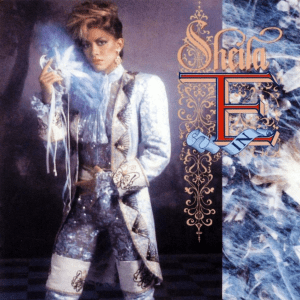
Sheila E In Romance 1600: 30 Years Old Today

sheila e

The music biz is littered with successful solo artists who were tempted out from behind the drums.

Marvin Gaye, Teddy Pendergrass, Phil Collins, Karen Carpenter, Dave Grohl, Frank Zappa and Iggy Pop all graduated from the engine room to centre stage.

But while Sheila has never been on that level in terms of record sales or cultural impact (though trumps all of them in terms of drumming chops), her transition from sidewoman to frontwoman led to a couple of really infectious, interesting albums in the mid-’80s.

She had an enviable CV long before going solo, including percussion work with Billy Cobham, Herbie Hancock, Marvin, George Duke and Diana Ross. Prince and Sheila were a similar age and had followed each other’s careers since the late-’70s. When he tasted his first mainstream success and was looking to mentor new artists, she was top of the list.

Their first collaboration was the superb B-side ‘Erotic City’, swiftly followed by Sheila’s debut album The Glamorous Life, a hit. But its follow-up, Sheila E In Romance 1600, was a far more expansive and experimental piece, even though recording sessions were squeezed in on days off during the Purple Rain Tour between December 1984 and January 1985.

Despite Sheila’s obvious musical pedigree, Romance 1600‘s liner notes and song credits are misleading – this is a Prince album in all but name. According to biographer Per Nilsen (and as listed at the ASCAP offices), he wrote all the tracks here bar one (kicking Latin/fusion instrumental ‘Merci For The Speed Of A Clown In Summer’) and played all instruments except drums, percussion and sax.

But lucky for us, Romance 1600 was recorded smack-bang in the middle of his golden period and features some of Prince’s finest performances as a musician. His guitar solos on ‘Dear Michelangelo’ and ‘A Love Bizarre’ are simply tremendous, the latter throwing in some ridiculous bass too.

But Sheila also brings out the best in him. There’s much more humour here than on his own albums of the period. She turns in some hilariously hammy vocal performances on ‘Sister Fate’, ‘Toy Box’ and dramatic ballad ‘Bedtime Story’. Sheila and Prince were having a lot of fun and you can hear the results. Sometimes the rushed nature of the recording shows, though – the mix is very murky and the album is short of a few memorable pop hooks.

Prince’s ‘movie’ concept was in full effect here. He was leaving behind the ‘street’ style of Vanity 6/Purple Rain/The Time and embracing a romantic, ‘Amadeus’-influenced image which also crossed over into The Family project and his Parade album.

Thinking of Romance 1600 as a movie also opened up the album musically, allowing Sheila and Prince to embrace jazz (‘Yellow’), fusion, wacky synth-pop (the title track), Latin and even Third Stream. This eclectic outlook was no doubt also influenced by his Revolution bandmates Wendy and Lisa.

Sheila E In Romance 1600 was a reasonable hit, going gold in the US and reaching #50 on the Billboard chart, no doubt helped by the success of the ‘Love Bizarre’ single (US #11). Sheila toured the US for the second time in two years.

She followed up Romance 1600 with a disappointingly bland self-titled album in 1987, which featured far less contribution from Prince. More successfully, she played some fantastic drums on the Sign ‘O’ The Times and Lovesexy tours.