
 Quentin Tarantino recently drew an interesting comparison between the 1980s careers of Chevy Chase and Bill Murray.
Both had reputations for being difficult but it was Murray who sought ‘positive’/’learning’ scripts through the decade and early 1990s. Chase didn’t: his characters generally started out as wise-cracking assholes, and ended the films the same way.
And the always amusing ‘Fletch’ – a movingtheriver favourite which premiered 40 years ago this weekend – is exhibit A. Based on the 1974 novel by Gregory McDonald (who subsequently wrote ten other Fletch books), it came into existence when Michael Douglas got on board as producer (later to be replaced by his brother Peter) and Universal finally took it on after many false starts.
McDonald had star approval though, and Burt Reynolds, Mick Jagger, Richard Dreyfuss and Jeff Bridges nearly played Irwin R Fletcher, before Chevy got the nod. After a few lean years, he was hot in 1984 after the success of ‘National Lampoon’s Vacation’. In the meantime Andrew ‘Blazing Saddles’ Bergman had written a screenplay with uncredited help from Phil ‘All Of Me’ Alden Robinson too.
Director Michael Ritchie must take a lot of credit for the success of ‘Fletch’. Helmer of bittersweet classics ‘Smile’, ‘The Candidate’, ‘Downhill Racer’ and ‘Prime Cut’ (and, after ‘Fletch’, ‘The Golden Child’ and ‘Cool Runnings’), he keeps things moving fast and reportedly encouraged Chase’s surreal ad-libs. ‘Nugent. Ted Nugent’, was the first, apparently uttered totally spontaneously by Chevy.
His stoned delivery and anti-establishment wisecracks hit the spot time and time again. This writer always giggles when someone shoots out Fletch’s back windscreen and Chevy shouts ‘Thanks a lot!’, ditto the entire ‘airplane investigation’ scene. Chase is always one step ahead of the material, sharing a joke with the audience, assuming it’s intelligent and on his side.
But watching it again, ‘Fletch’ certainly seems more suitable for adults than teenagers (borne out by the fact that when I first saw it at the Putney Odeon during school summer holidays in 1985, the teens around me mainly threw popcorn and talked amongst themselves). The plot is hard to follow and the stakes never seem very high, despite the film’s noir leanings (one key character is named Stanwyk).
The film benefits from some excellent supporting turns – female co-star Dana Wheeler-Nicholson is delightfully natural (though weirdly didn’t make another movie for five years after ‘Fletch’) and Joe Don Baker, M Emmet Walsh, Geena Davis, Richard Libertini and George Wendt (RIP) do solid, enjoyable work.
Harold Faltermeyer’s memorable synth soundtrack still raises a smile. And though ‘Fletch’ would seem to be influenced by ‘Beverly Hills Cop’, it was actually shot around the same time as that Eddie Murphy vehicle, summer 1984, in and around Los Angeles during the Olympics.
‘Fletch’ was a surprisingly big hit, grossing around $60 million against an $8 million budget. Roger Ebert and Pauline Kael quite liked it, Gene Siskel loved it. Kevin ‘Clerks’ Smith tried and failed to reinvigorate the Fletch brand in the 1990s. But Jon Hamm has just played him in 2022’s ‘Confess, Fletch’ – any good? Doubt it… Peak Chevy is a hard act to follow.
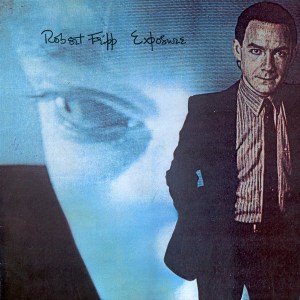 Fripp’s debut solo album, originally recorded at New York’s Hit Factory between January 1978 and January 1979, has endured endless tinkering from the artist including various remixes/reversions.
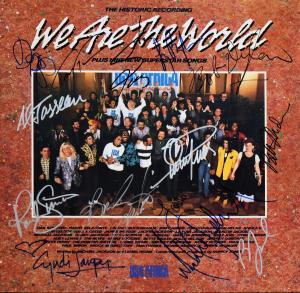 Released 40 years ago this month and officially the fastest-selling single in American music history, USA For Africa’s ‘We Are The World’ shifted over 20 million copies and raised a huge amount of money for African famine relief.
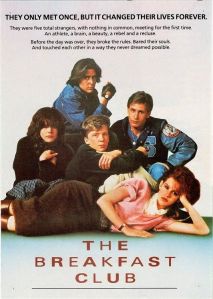 Despite a few bum notes, ‘The Breakfast Club’ – which premiered 40 years ago this month – remains one of the essential 1980s movies, a must-see for generation after generation of teenagers.
 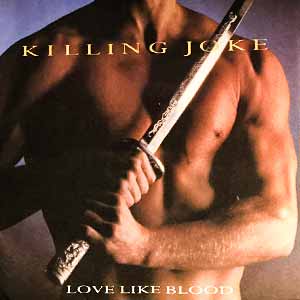 Look up ‘intense’ in the dictionary and you might just see a photo of Jaz Coleman.
 There’s a good case that 1984 was Last Call for classic jazz/funk (soon to morph into the dreaded smooth jazz) just before the machines took over and albums like David Sanborn’s A Change Of Heart became de rigeur (but only for a few years – there was an ‘acoustic’ revival in the late 1980s…).
 What a treat to see that Freeview channel London Live seems to be re-running Keith Floyd’s classic BBC films of the 1980s.
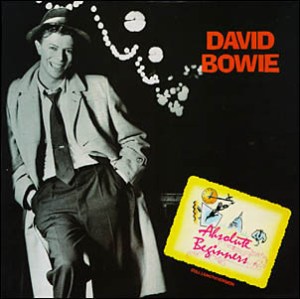 1985 was a mixed year for DB.
