
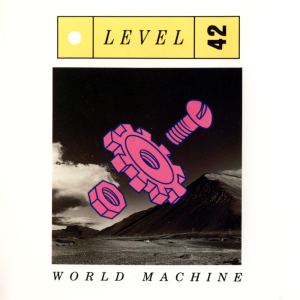
 As a young band starting out in the ’80s, your ideal career trajectory would probably go something like this: Get together with a few mates, start rehearsing, get the gear in a van, tour the nation’s toilets, slowly build your audience, get a manager, get the record deal, release your debut, get on ‘Top Of The Pops’ and then hope you’ve got a career.
But it’s one of the rules of pop that some folks can’t handle fame when it hits. To paraphrase Bill Bruford: first you cope with failure, then you cope with success.
From Syd Barrett through Ian Curtis to Billy Mackenzie (is it mainly a British thing?), there are always artists who have bailed out when the constant routine of promotion and miming to the hit single becomes too much like a regular job.
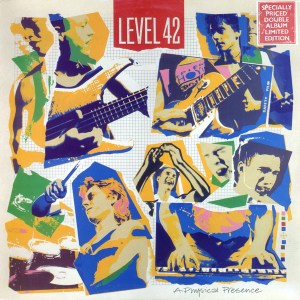
The syndrome even affected pop/jazz/funk heroes Level 42, who in 1985 produced arguably their finest album in World Machine, though lost half their original line-up in the process including one of the finest-ever British drummers.
The band’s popularity had been steadily building throughout the ’80s. Though their live following had always been strong and they always had hits, the singles usually seemed like happy accidents – ‘Sun Goes Down (Living It Up)’, ‘Chinese Way’ and ‘Hot Water’ were all last-minute album additions based on studio jams.
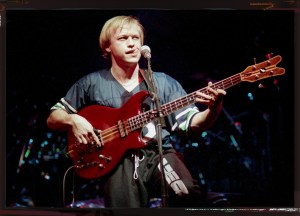
Now their record label Polydor wanted a more concerted assault on the singles charts and a more current sound, and to that end outstanding bassist/vocalist Mark King took much more of a lead than before.
Alongside co-producer/keys man Wally Badarou, the band laid down the most cohesive, streamlined collection of songs in their career thus far with two or three obvious singles at demo stage (though not a view apparently shared by then manager John Gould whose negative reaction to the new songs contributed to him being given the push in a heated band meeting).
Not everyone in the band was happy with this brave new musical direction either. Main lyricist and drummer Phil Gould (brother of ex-manager John and guitarist Boon) had always peppered Level 42’s songs with allusions to psychology, science fiction and esoteric spirituality, drawing on writers like Arthur Koestler, Hermann Hesse and EM Forster, but by early 1985 the pressure was on to deliver boy/girl songs with universal themes.
In an excellent recent interview, Phil has talked about Polydor wanting the band to do party anthems like ‘Let’s Groove’ and suggesting they do a cover version of ‘Nature Boy’. He struggled against this direction, rightly surmising that they would quickly become typecast as a clichéd Brit-funk band.
Though he did eventually tone down the lyrical imagery a bit on World Machine, he still smuggled in some depth and despair to songs such as the title track, ‘Physical Presence’, ‘Leaving Me Now’ and ‘Coup D’Etat’.
Oh yes – the music. One of the great pleasures of World Machine is its consistency of tone; you can drop the needle anywhere and hear the quality. Engineer Julian Mendelsohn is a big contributor to that.
The band had mastered the kind of half-time funk groove which had frequently littered their earlier work, and the style reached its apogee here with bassists and drummers rushing off to play along to ‘Good Man In A Storm’ (why has it never been played live?), ‘A Physical Presence’, ‘Leaving Me Now’, ‘Dream Crazy’ and ‘It’s Not The Same For Us’ (which was initially going to be a Mark King lead vocal as revealed on this amusing demo).
But the sequence-heavy nature of some other tracks (particularly the title track, ‘Something About You’ and ‘I Sleep On My Heart’) also aroused some musical differences in the band. It’s intriguing to imagine what these songs would have sounded like shorn of their ‘hi-tech’ elements.
Level 42 had secured several hits before, but ‘Something About You’ was the real breakthrough. Incredibly, it reached #7 in the US singles chart, perhaps inspired by a really good accompanying video.
World Machine delivered, both commercially and artistically. It reached #3 in the UK album chart, staying in the top 100 for 72 weeks. I saw the band at the Hammersmith Odeon on the – as usual – completely sold-out UK tour. They later went off to the US to tour with Madonna and Steve Winwood. The brothers Phil and Boon Gould left the band soon after recording the follow-up Running In The Family and the classic line-up was no more.
Great memories, great sounds, great band.

 I’m certainly not alone in finding the seaside very evocative of childhood memories and, in turn, musical revelations gone by.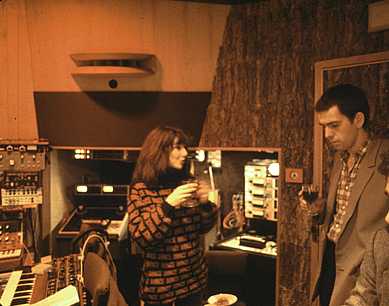
 Years before his huge hit ‘Ghostbusters’, Ray had played guitar on some great albums of the ’70s (Stevie’s Talking Book and Innervisions, Rufus/Chaka Khan’s Rags To Rufus, Harvey Mason’s Funk In A Mason Jar, Marvin’s I Want You, Leon Ware’s Musical Massage), not to mention sessions with the likes of Boz Scaggs, Barry White, Tina Turner, Herbie Hancock and Bill Withers.
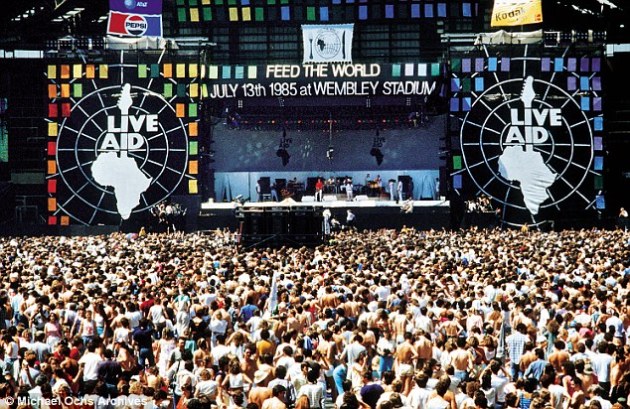 With barely a mention in the media or press, Live Aid turns 30 today.

 Ornette Coleman’s sad recent passing reminded me of a superb, almost totally forgotten ‘documentary’ that is begging for a DVD re-release (though it may be available in the US).
