Protest Songs @ 40: Prefab Sprout’s Best Album?

Speedily recorded 40 years ago this autumn at Newcastle’s Lynx Studios, Protest Songs was intended to be the no-frills, lo-fi, rush-released, ‘answer’ album to Prefab’s Steve McQueen.

Fans who attended the Two Wheels Good UK tour of October and November 1985 were given leaflets advertising its release on 2 December for one week only.

But then ‘When Love Breaks Down’ reached #25 at the third attempt, earning the band spots on ‘Top Of The Pops’ and ‘Wogan’, and the album was shelved (though apparently a few hundred white labels ‘escaped’ from CBS and are out there somewhere…)

Protest Songs was eventually held back until June 1989, but proved well worth the wait and reached a respectable #18 on the UK chart. This writer would put it right up there with Steve, From Langley Park To Memphis and Jordan, maybe even above them…

The album was produced by the band and – apart from the last-minute addition ‘Life Of Surprises’ – mixed by Richard Digby Smith, once a staff engineer at Island Records who served his apprenticeship under the likes of Arif Mardin, Phil Spector, Muff Winwood and Chris Blackwell.

Protest also showed that Patrick Joseph McAloon was turning into a really decent keyboard player (he later claimed that every song on Langley Park was written on keyboards) and that – massively helped by drummer Neil Conti – Prefab were becoming a really good live band.

But most importantly Protest is a moving, razor-sharp suite of songs. Paddy was operating at the absolute top of his game, with some of the anger which had initially been so attractive to Thomas Dolby (also detectable in this recently discovered interview).

The only thing tongue-in-cheek about it is its title. These were not protests against nuclear power or war, but rather against deprivation and, just six months on from the miners’ strike, the general media condescension about provincial English life (particularly in the McAloon brothers’ native North East) under Thatcher.

‘Til The Cows Come Home’ may be the killer track. If you’re in the mood, it can be a real heartbreaker. The superb lyrics deftly change perspective mid-thought and allude to how unemployment affects generations:

Aren’t you a skinny kid?
Just like his poppa
Where’s he workin’?
He’s not workin’…

Why’re you laughin’?
You call that laughin’?
Wearing your death head grin
Even the fishes are thin…

He can’t have his coffee with cream

Meanwhile ‘Diana’ was revamped from the ‘When Love Breaks Down’ B-side (Deacon Blue definitely listened to THAT), slowed down and with a few new chords added. Conti expertly marshals proceedings with his tasty Richie Hayward-style half-time groove.

‘Dublin’ showcases Paddy’s lovely sense of chord movement, with a little influence from bossa nova (here’s Paddy playing a different studio take). ‘Life Of Surprises’ and ‘The World Awake’ are shiny, synth-laden, mid-period 4/4 Prefab but with stings in their tails:

Never say you’re bitter, Jack
Bitter makes the worst things come back

You don’t have to pretend you’re not cryin’
When it’s even in the way that you’re walkin’…

The hilarious ‘Horsechimes’ investigates school-day piss-taking, with a large dollop of Salingeresque satire. Meanwhile it’s hard to think of a more perfect marriage of words and melody than ‘Talking Scarlet’ (also drastically slowed down from the early demo), while ‘Pearly Gates’ closes out the album in moving style, like a dimly-remembered hymn from school days, a rare 1980s ‘death disc’.

The only partial misfire is the jaunty ‘Tiffany’s’, with its comically poor guitar solos, but its inclusion was totally understandable. Happy birthday to a classic.

The Samantha Fox/Mick Fleetwood BRIT Awards Fiasco: 35 Years On

Memorable for all the wrong reasons, the 1989 BRIT awards, broadcast live 35 years ago this month, has long gone down as one of the most shambolic, embarrassing  TV shows ever.

It took place at the Royal Albert Hall during the Jason/Kylie/Rick Astley/Brother Beyond/Bros-inspired pop peak of the late 1980s, less than six months after the first Smash Hits Poll Winners Party at the same venue. Madchester was just around the corner but it seemed like another world.

Cool Britannia this wasn’t. Firstly, there was the the two presenters (wasn’t Phillip Schofield available?). Apart from anything else, Fox is 5’1” and Mick 6’6”. Then there was their extremely unnatural, awkward presentation styles, though, to this day, Fox swears that the autocue was broken.

Various bad-tempered Stones came and went, Boy George was introduced as The Four Tops, Tina Turner and Annie Lennox looked desperately awkward, other ‘dignitaries’ were wheeled out and MPs were booed.

Rounding things off perfectly, Cliff Richard was then given a Lifetime Achievement Award and delivered a brilliantly sniffy speech for the plebs. All in all, it’s no surprise that this was the last time the BRITS went out live on TV for 18 years…


Greg Osby: Season Of Renewal

Of all the musical scenes that emerged during the 1980s, M-BASE – a Brooklyn-originated fusion of jazz and funk with many other influences thrown in – may be the least understood/remembered.

The term was co-authored by saxophonists Greg Osby and Steve Coleman. The M stands for ‘Macro’, BASE is an acronym for ‘Basic Array of Structured Extemporizations’.

The music’s other key practitioners were saxophonists Gary Thomas, vocalist Cassandra Wilson, keyboard player Geri Allen, guitarists Kevin Eubanks, David Gilmore and Kelvyn Bell, bassist Lonnie Plaxico and many more.

M-BASE was an attempt to draw attention away from ‘jazz’ as a catch-all term, and also showcase original material over standards and show tunes. But it certainly has its own sound once you hear a few key albums, totally different to ‘fusion’ or ‘jazz/funk’, relying on tightly structured drum patterns (often in odd-time signatures), funk bass, ‘modal’ keyboards, chattering rhythm guitars and Charlie Parker-influenced horn improvisations.

A key artefact was Osby’s arresting album Season Of Renewal, released 35 years ago on now-defunkt German-based label JMT (which also released many other key M-BASE recordings). Checking it out again now for the first time in a few years, it makes for fascinating, rewarding listening.

Themes are mainly outlined by the bass (Plaxico) and/or keyboards (Renee Rosnes and Edward Simon). Osby’s alto or soprano saxes generally only enter during solo sections. The guitarists (Eubanks and Kevin McNeal) are superb. The synths may bring to mind the 1980s music of Mark Isham. Drummer Paul Samuels produces solid grooves and seems to have been issued with a ‘no tom-toms’ decree by Osby.

‘Dialogue X’, featuring just synths and Osby, hints at the political animus always underlying the M-BASE movement. The closing ‘Spirit Hour’ is absolutely spellbinding, like a waking dream, its haunting melody expertly outlined by Cassandra Wilson.

Osby has gone on to a varied, impressive career, including a well-regarded period on Blue Note Records. But none of his JMT albums are currently on streaming platforms (except for a fairly good quality burn on YouTube, see below) – in fact M-BASE is poorly served there, though a so-so compilation has recently surfaced. Best to search for Osby’s 1980s music via CD marketplaces – a fruitful voyage for the uninitiated.

Then Jerico: Now That’s What I Call…Not Bad

Of course it was just teenage aggro/jealousy, but my schoolmates and I were always a bit suspicious of those late-‘80s pop acts who were much fancied by our female friends: Morten Harket, Richard Marx, Jason Donovan, the Goss brothers, Marti Pellow, Nathan out of Brother Beyond, those blokes from Big Fun.

But Mark Shaw of Then Jerico was probably their favourite, instantly putting his band’s music into the dumper, even though we probably all had a soft spot for their 1987 hit ‘The Motive’.

Listening back now on a good system, it’s a superb-sounding single – impactful, clean and shiny, with great instrument separation. It typified late-1980s British pop/rock helmed by excellent producers who had learnt their trade in the golden age of commercial recording studios, people like Tim Palmer, Rhett Davies, Peter Henderson, Andy Richards, Jon Kelly, Rick Nowels, Mike Shipley, Bruce Lampcov, Peter Collins, Julian Mendelsohn, Gary Langan et al.

Of course Trevor Horn was an overarching influence, representing the gold standard. It Bites’ Francis Dunnery mocked ‘Big Area’ (see below) producer Langan (collaborator with Horn on Yes’s 90215, Malcolm McLaren’s Duck Rock and FGTH) in a 2021 interview for PROG magazine: ‘Everyone who had ever walked past Horn was given a record to produce. I think Trevor’s milkman produced Then Jerico and had a hit!’

Yes, there was a fair amount of turd-polishing but these producers inspired the late-1980s rock comeback, generating hits for Breathe, Fuzzbox, Cutting Crew, Paul Young, Love & Money, Deacon Blue, Killing Joke, All About Eve, The Mission.

And Then Jerico. Maybe they were actually pretty good. Their best songs – ‘Sugar Box’, ‘The Motive’, ‘Big Area’ – marry a sort of U2/Simple Minds/Tears For Fears ‘thing’ with Shaw’s tremulous vocals to strirring effect, something akin to the sound of falling in love. When any of them come onto ‘Forgotten 80s’, it’s impossible to turn off. Though one is still slightly reticent about checking out a whole album in one sitting.

And guess what – Shaw has reformed the band, and they’re touring extensively this year. And he has rather a juicy/chequered recent past to tell of too.


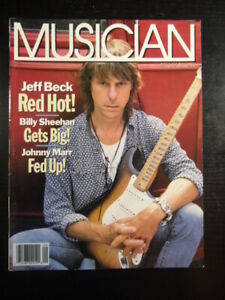
Jeff Beck’s Guitar Shop With Tony Hymas & Terry Bozzio

Keyboard player Tony Hymas had one of the weirder music careers of the 1980s.

He began the decade helping to make There And Back one of Jeff Beck’s best albums, then popped up in a supergroup called PHD with singer Jim Diamond and drummer Simon Phillips, getting a classic UK one-hit wonder ‘I Won’t Let You Down’ (#2 in 1982!), then played on/wrote arguably the best track from Beck’s pretty poor 1985 album Flash, and then…not a lot for a while (read this excellent rare interview for more on Tony’s career).

But he was an absolutely vital part of Beck’s career comeback courtesy of Guitar Shop, released in October 1989. You might even call it Beck’s last great album, and arguably Bozzio’s too.

They recorded at Jimmy Page’s residential Sol Studios in leafy Cookham, Surrey (Beck later reported: ‘When we finished the album, I left me bike in his shed, so he got a bicycle out of it too…’!). The album ended up taking eight months to write and record because Hymas brought a chess board with him.

Beck took genres that he’d touched upon throughout his career – blues, reggae, rockabilly, metal, funk, fusion – and used them as a jumping-off points, working up material with Hymas and Bozzio in the studio.

And it’s very memorable material. On the title track Beck fondly mocks the gear obsession of guitar magazines, and goes through a range of tones and effects in the process, but…it all just sounds like Jeff. A Strat or Telecaster, distortion/delay pedals, and that’s it. It’s all in his fingers.

On the masterpiece that is ‘Where Were You’, he plays the lion’s share of the melody (reportedly very influenced by the Bulgarian State Radio & Television Female Vocal Choir AKA Les Voix Bulgares) with harmonics and very judicious use of the whammy bar, bending in and out of notes with just the right amount of wrist tension.

Bozzio plays a blinder – mostly reining in his formidable technique at the expense of groove and presence – but unleashes some seriously quick double-bass playing on ‘Sling Shot’. Thrash-metal drummers beware. And there’s THAT amazing fill at the end.

Hymas is a great accompanist – you hardly miss real bass and only very occasionally yearn for another instrumental foil for Beck. A couple of tracks on the album became live staples too, played in concert to this day – ‘Big Block’, ‘Where Were You’ and ‘Behind The Veil’.

Guitar Shop did OK in the States, making #49, but weirdly didn’t chart in the UK. But it did win a Best Rock Instrumental Grammy award in 1990. Their Hammersmith gig of 29 July that year was one of the loudest ever heard at the venue.

Beck talked up the possibility of a second album and tour but it never happened. They did reform for Jeff’s birthday party at the Royal Festival Hall in 2002 though. And El Becko even got on the BBC’s ‘Rapido’:


The Cult Movie Club: Lenny Henry Live And Unleashed (1989)

In her book ‘Hooked’, legendary movie critic Pauline Kael said that the only fresh element in American films of the 1980s may have been what comedians (Robin Williams, Steve Martin, Bill Murray et al) brought to them.
Could we say the same about British films of the 1980s? Looking at ‘Supergrass’, ‘Eat The Rich’, ‘Morons From Outer Space’ and, er, Cannon & Ball’s ‘The Boys In Blue’, it would seem not. A shame, and strange in a way that the ‘Comic Strip’ generation couldn’t quite make the transition to the big screen.

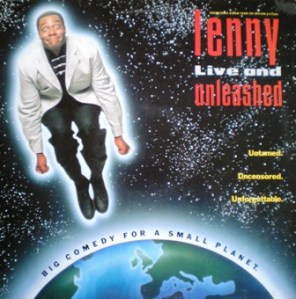
But Lenny Henry – best known as a British TV star in the 1980s – made a damn good fist at the stand-up concert movie with ‘Lenny: Live And Unleashed’, mostly shot at London’s Hackney Empire, taking on the Americans (Eddie Murphy’s ‘Raw’, Richard Pryor’s ‘Live On The Sunset Strip’ etc.) at their own game, complete with a posh credit sequence featuring brilliant impressions of Martin, Murphy and Pryor plus a not-very-funny skit with Robbie Coltrane as the most annoying taxi driver in the world (Why didn’t Lenny fit in another impression there? Couldn’t he have dusted off a De Niro?).

His flashes of surrealism evoke Alexei Sayle and Martin and also it’s clear that by 1989 Lenny had developed into a superb physical actor. He addresses political and racial topics head-on, beginning one skit with the simple statement: ‘We need to see more Black faces on British TV.’

There’s a great celebration of Black music (evidenced also in his appearance on the BBC’s Desert Island Discs just before this was filmed) with homages to Prince and Bobby McFerrin, a good bit on Michael Jackson’s ‘Bad’ tour, and the striking ‘Fred Dread’ section featuring Dennis Bovell’s natty dub soundtrack.

Other character favourites Delbert Wilkins, Deakus and the Teddy Pendergrass-lampooning Theophilus P Wildebeeste (you couldn’t do that sketch these days…) get a lot of stage time – superb portraits, with heart and soul. A new character, ageing blues singer Hound Dog Smith, gets a workout too, featuring an amusing guest spot from Jeff Beck (who also turned up in a few Comic Strip films around this time).

The box-office performance of ‘Lenny: Live And Unleashed’ is hard to uncover but does it have enough appeal to a non-British audience? Judge for yourself (and I must check out Henry’s next foray into the movie world, 1991’s ‘True Identity’, at some point…)…

It Bites: Thankyou And Goodnight 30 Years Old Today

There’s a secret history of bands/artists disowning their own albums before they’ve even been released.

Lee Mavers’ La’s, Prince and Chrissie Hynde’s Pretenders come to mind, and the brilliant Cumbrian four-piece It Bites can also be added to that list. They even sent out a ‘please don’t buy our new album’ letter to their fan club. I still have it. Quote: ‘They feel Thankyou And Goodnight to be a complete rip-off on the part of Virgin Records…’ It didn’t work, of course. I bought it during its first week of release.

By summer 1991, a year after guitarist/lead vocalist Francis Dunnery had done a runner from the band (this interview gives intriguing hints as to his state of mind during spring 1990) while they were recording their never-to-be-released fourth studio album in Los Angeles, remaining members John Beck (keyboards), Dick Nolan (bass) and drummer Bob Dalton (then trying to make a go of it as Navajo Kiss, and later Sister Sarah) were less than thrilled to hear that Virgin intended to release an It Bites live album.

But it was out of their hands. They reluctantly helped with track selection/sequencing, approved the artwork and title and Thankyou And Goodnight became the official au revoir to one of the finest British bands of the 1980s. One top 40 single (‘Calling All The Heroes’) was a pretty dire return for one of the most melodic acts of the era.

Virgin should get some blame for that (they were generally better cheerleaders for their solo acts, apart from Genesis, Simple Minds and Culture Club). But these days you hear ‘Still Too Young To Remember’, ‘Underneath Your Pillow’, ‘Kiss Like Judas’ and ‘Midnight’ and it’s inexplicable that they didn’t crack the charts.

In particular, their singular lack of mainstream success throughout 1988 seems to have been a huge shock for the band, especially off the back of an extraordinary sophomore album Once Around The World, sold-out UK tour and well-received Robert Plant support slot. But back to Thank You And Goodnight. Visually, it’s a pretty shoddy package.

The cover looks like it was knocked off by a reluctant Virgin designer after a long liquid lunch. There are no recording dates or technical personnel, save for mixing engineer Nick Davis (XTC, Marillion, Genesis, Phil Collins), whose surname is misspelt.

Then there are some cursory ‘history of the band’ liner notes, with an annoying addendum by a Virgin staffer: ‘We owe you a drink, Ian!’. Yeah, right… And then there’s the track choice – it’s basically the audio from the televised June 1989 gig at London’s Town & Country Club, plus a few ringers: ‘Yellow Christian’ (recording date/venue unknown) and ‘You’ll Never Go To Heaven’ from London’s Marquee in 1987, previously the B-side of ‘Midnight’.

But it’s no surprise to report that most of the music on Thankyou And Goodnight is fantastic. Under Davis’s jurisdiction, Nolan’s bass and Dalton’s drums sound like a million dollars, at least on the T&C tracks. ‘Underneath Your Pillow’ is the standout, emerging as a superb pop song augmented by the extended, proggy ending, with Dunnery quoting from Holst’s Planet Suite (Venus, the Bringer of Peace).

‘The Ice Melts Into The Water’ and ‘Still Too Young To Remember’ (with its clever ‘Old Man & The Angel’ tag) are also superb, fitting reversions. From memory, I saw It Bites live five times (Brunel University/Astoria 1988, T&C/Hammersmith 1989, Hammersmith 1990) and they were never less than sensational. Thankyou And Goodnight is not a great package but a decent-enough document of their late-career pomp.

What a shame they couldn’t have recorded one more studio album after 1989’s Eat Me In St Louis though and basked in some long-overdue success. One further mystery – Dunnery has obviously added some post-production vocals to ‘Ice Melts Into The Water’ – when and where did he do them? Maybe he was secretly in on the project after all…


Harold Pinter @ 90, The Caretaker @ 60

Playwright, actor, activist and poet Harold Pinter, who died on Christmas Eve 2008, would have been 90 years old today.
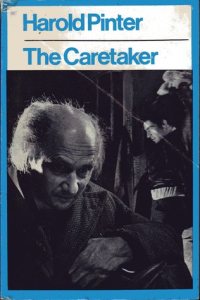
I couldn’t let 2020 pass without marking that fact and celebrating the 60th anniversary of ‘The Caretaker’.

When I started my English Literature ‘A’ Level at the end of the 1980s, theatre had barely appeared on my radar. I’d seen some Shakespeare, Webster, Sheridan, maybe a bit of Alan Ayckbourn, Willy Russell and John Godber, mostly on school trips. Nothing really hit home.

But then my excellent teacher Hugh Epstein introduced us to ‘The Caretaker’. Needless to say, it was like no other play I’d read before. This was the language of the West London streets that I knew. The play’s themes covered familiar territory too.

Pinter’s legendary, hilarious piss-taking was evident from early on – mainly courtesy of the Mick character – but there was something else coming through loud and clear, something heroic, empathetic, charitable, even noble. I was gripped and it began a love affair with Pinter’s work that has lasted almost 30 years.

‘The Caretaker’ premiered on 27 April 1960 at The Arts Theatre in London, and starred Donald Pleasence, Alan Bates and Peter Woodthorpe. It was a big hit, Pinter’s breakthrough play after a difficult experience with ‘The Birthday Party’. An excellent movie, starring Pleasence, Bates and Robert Shaw, was made in 1963, shot in Hackney and adapted by Pinter himself:

There are so many other great London Pinter memories, many involving his acting performances in his own plays: ‘No Man’s Land’ at The Almeida, ‘The Collection’ and ‘The Hothouse’ at the Richmond Theatre. Also Ian Holm in ‘Moonlight’ at The Comedy Theatre and Michael Gambon’s turn as Davies in ‘The Caretaker’ at the same venue.

Of course he wasn’t only a playwright, actor and poet. A cursory look at his public appearances now – especially those in the last 20 years of his life, when he received the Nobel Prize In Literature and spoke passionately at various rallies – suggests that there are very few public figures around these days with his kind of gravitas. He was known to be prickly – aren’t we all – but also exceptionally generous, as he was to this writer.

He’s much missed. Happy birthday Harold. And enormous thanks to Hugh Epstein who brought ‘The Caretaker’ to life.

Further reading: George Cole’s Betrayed: The Story Of Harold Pinter’s Betrayal

Mark Batty’s About Pinter

Michael Billington’s The Life And Work Of Harold Pinter

Gonna Party Like It’s 1989

So farewell then, 1989.

I mean 2019, of course… But enough about 2019.

Here’s Nick Hornby’s diary entry for 22 August 1989, taken from his classic book ‘Fever Pitch’:

‘I have stopped buying NME and the Face, and, inexplicably, have started keeping copies of Q magazine under a shelf in my living room; I have bought a CD player; I have registered with an accountant; I have noticed that certain types of music – hip-hop, indie guitar pop, thrash, metal – all sound the same and have no tune; I have come to prefer restaurants to clubs; and dinners with friends to parties…’

Stump bassist Kev Hopper also had an interesting take on the era:

Organised raves were happening up and down the country and and the UK was awash with mockney DJs. You were made to feel like some sort of soulless, asexual blob if you didn’t like/want to move to their incredibly unfunky, over-quantised, four-to-the-floor marching music. Most of it had about as much rhythmic interest as a dripping tap. Remix DJs and “keyboard wizards” were calling all the shots, idolized by huge crowds of spazzed-out zombie youth. One thing was for sure: rock bands were out…’

And yet 1989 was one of the best music years of the ’80s, and one of the most contradictory. Happy Mondays and Stone Roses had famously gatecrashed a November edition of ‘Top Of The Pops’, but hadn’t upset the status quo quite yet (and guitars wouldn’t properly make a comeback until the Blur/Oasis era of the mid-’90s, at least in the UK).

The ‘yuppie’ consumer still had a stronghold on the charts, driven by the CD boom and a renewed focus on the home and car (which of course became convulsive).

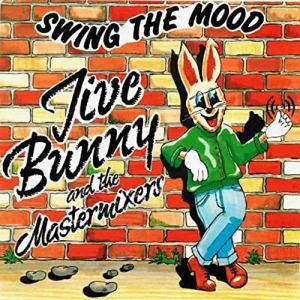
But there was also the sinking feeling that pop music was no longer ruling mainstream culture. Stock, Aitken & Waterman (via Brother Beyond, Big Fun, Sonia, Sinitta, Jason Donovan and Kylie) and the bizarre Jive Bunny were ever-present in the charts, with TV tie-ins and ’40s/’50s nostalgia particularly prevalent, evidenced by this list of UK number one singles during 1989:

Kylie/Jason: ‘Especially For You’

Marc Almond/Gene Pitney: ‘Something’s Gotten Hold Of My Heart’

Simple Minds: ‘Belfast Child’

Jason Donovan: ‘Too Many Broken Hearts’

Madonna: ‘Like A Prayer’

The Bangles: ‘Eternal Flame’

Kylie Minogue: ‘Hand On Your Heart’

Gerry Marsden/Paul McCartney/Holly Johnson/The Christians: ‘Ferry Across The Mersey’

Jason Donovan: ‘Sealed With A Kiss’

Soul II Soul ft. Caron Wheeler: ‘Back To Life’

Sonia: ‘You’ll Never Stop Me Loving You’

Jive Bunny: ‘Swing The Mood’

Black Box: ‘Ride On Time’

Jive Bunny: ‘That’s What I Like’

Lisa Stansfield: ‘All Around The World’

New Kids On The Block: ‘You’ve Got The Right Stuff’

Jive Bunny: ‘Let’s Party’

Band Aid II: ‘Do They Know It’s Christmas’

And the fact is that era-defining albums by De La Soul, Pixies, Beastie Boys, Soul II Soul, Neneh Cherry and NWA were crushed in sales terms by the Bunny, Tina Turner, Gloria Estefan, Kylie, Jason, Sonia, Simply Red, Bros, Phil Collins and Chris Rea.

And though Tiffany and Debbie Gibson had pretty much been snuffed out, crap teen pop was making a comeback in the shape of New Kids On The Block.

But there was still much to celebrate.  The second ’80s pop boom was well underway. ‘Smash Hits’ mag was selling a million copies a week. Prog-pop was alive and well courtesy of Marillion, It Bites, Anderson Bruford Wakeman Howe and Trevor Rabin.

There was a serious CD ‘sophisti-pop’ thing going on via Tanita Tikaram, Blue Nile, Black, Julia Fordham, Prefab, Deacon Blue, Toni Childs etc. ‘Going Live’ was a must-watch on Saturday mornings.

Hip-hop was commercial and vital, highlighted by great albums from De La Soul, Young MC, Schoolly D, Tone Loc, NWA and Beastie Boys. The ’60s generation were in fine fettle, evidenced by era-defining rock albums from Bob Dylan, Neil Young, Jeff Beck and Lou Reed. Jazz and fusion were in good nick.

And don’t forget the post-aceeeed dance scene via Bomb The Bass, S’Express, Yazz, Beatmasters, Betty Boo, Neneh Cherry, Soul II Soul, the Mondays and Roses.

Here’s just a smattering of 1989 album releases. Looks like a pretty damn good year, whether you were into pop, dance, hip-hop, indie, goth, soul, metal or jazz.

Neneh Cherry: Raw Like Sushi

Danny Wilson: Bebop Moptop

China Crisis: Diary Of A Hollow Horse

Lil Louis: From The Mind Of Lil Louis

XTC: Oranges & Lemons

Tone Loc: Loc’ed After Dark

Joe Satriani: Flying In A Blue Dream

Nik Kershaw: The Works

Fine Young Cannibals: The Raw & The Cooked

Madonna: Like A Prayer

Red Hot Chili Peppers: Mother’s Milk

Allan Holdsworth: Secrets

John Lee Hooker: The Healer

Anderson Bruford Wakeman Howe

Lou Reed: New York

Tin Machine

Lenny Kravitz: Let Love Rule

Pixies: Doolittle

Beastie Boys: Paul’s Boutique

Soul II Soul: Club Classics Vol 1

Young MC: Stone Cold Rhymin’

Mike Stern: Jigsaw

John Patitucci: On The Corner

Miles Davis: Aura

All About Eve: Scarlet And Other Stories

Marillion: Seasons End

Kate Bush: The Sensual World

Janet Jackson: Rhythm Nation 1814

Julia Fordham: Porcelain

Neville Brothers: Yellow Moon

Bob Dylan: Oh Mercy

Miles Davis: Amandla

Schoolly D: Am I Black Enough For You

Neil Young: Freedom

Blue Nile: Hats

Curiosity Killed The Cat: Getahead

The Beautiful South: Welcome To The Beautiful South

Trevor Rabin: Can’t Look Away

24-7 Spyz: Harder Than You

Jane Siberry: Bound By The Beauty

Rickie Lee Jones: Flying Cowboys

The Stone Roses

It Bites: Eat Me In St Louis

David Murray: I Want To Talk About You

Jeff Beck’s Guitar Shop

NWA: Straight Outta Compton

Young MC: Stone Cold Rhymin’

De La Soul: Three Feet High & Rising

The Sugarcubes: Here Today, Tomorrow, Next Week

Regina Belle: Stay With Me

Kirsty MacColl: Kite

David Byrne: Rei Momo 

Belinda Carlisle: Runaway Horses

Terry Hall: Ultra Modern Nursery Rhymes

Prefab Sprout: Protest Songs

Neville Brothers: Yellow Moon

Prince: Batman

Wendy & Lisa: Fruit At The Bottom

Paul McCartney: Flowers In The Dirt

John McLaughlin Trio: Live At The Royal Festival Hall 30 Years On

Recorded 30 years ago, Live At The Royal Festival was the beginning of John’s live career in concert halls rather than ‘rock’ venues, at least as far as the UK goes.

I’m not sure why I wasn’t at this gig, but, in those days, even major shows could easily go under the radar. If it wasn’t listed in Time Out or The Wire, you could easily miss it. Or maybe I was just turned off by the lack of ‘stars’ appearing with John.

Which was a big mistake, because this album introduced two monster players, both hitherto unknown to UK audiences. Bassist Kai Eckhardt was yet another miraculous bass find for McLaughlin, apparently fresh out of the Berklee School of Music.

Trilok Gurtu brought the best aspects of American jazz and fusion playing but also rhythmic concepts and sounds from his native Mumbai (including a water bucket and tablas). In short, he was a perfect fit for McLaughlin.

It had been a weird few years for the guitarist, closing down Mahavishnu for good, duetting with bassist Jonas Hellborg and guitarist Paco De Lucia but also recording the fabulous Mediterranean Concerto which was finally released in 1990.

So his return to the acoustic guitar had thus far been a partial success, but Live At The Royal Festival Hall was the beginning of an acclaimed trio that lasted nearly three years (though weirdly it doesn’t appear to have made it to streaming platforms yet).

The album starts slowly but gets better and better; a gentle take on Miles/Bill Evans’ ‘Blue In Green’ is nothing special but demonstrates John’s rich, Gil Evans-inspired chord concept.

Adventures In Radioland tracks ‘Florianapolis’ and ‘Jozy’ are quite superb, beautifully rearranged for the trio. When Gurtu lays into the half-time shuffle on the latter, it’s one of the great bits of modern fusion drumming.

His ‘Pasha’s Love’ is an intricately-arranged version of a track on an impossible-to-find Nana Vasconcelos live album. But the album’s centrepiece is ‘Mother Tongues’, the debut of a tune which is a mainstay of John’s live sets to this day. The only disappointment is the over-extended ‘Blues For LW’, almost derailed by some dodgy group vocals, Gurtu beatboxing and throwaway references to ‘Are You The One?’ and ‘Miles Beyond’.

Eckhardt didn’t stick around for long after this gig, for undisclosed reasons – Dominique Di Piazza came in, yet another Jaco-influenced chops monster. But Trilok stayed on for the decent 1992 studio album Que Alegria. Then it was time for another change – John’s forte.