One can get caught up revisiting the ‘lost’ periods of the truly great artists of the last 50 years – Miles, Neil Young, Bowie, Dylan, Zappa, whoever.
At the moment, it’s Bowie’s late-’80s and early-’90s that particularly intrigue, roughly the period from ‘Intruders At The Palace’ to Tin Machine II.
There was a lot more to the era than Tin Machine. ‘Pretty Pink Rose’, a song Bowie had originally demo’d in early 1988 with members of Bryan Adams’ band (and one later rejected by TM, though one can hear echoes of it in their cover of Roxy Music’s ‘If There Is Something’), generally gets a bum rap but features some classic Bowie moves, like the descending, superbly-sung bridge and ‘secret’ chord also heard in ‘Absolute Beginners’ and ‘Loving The Alien’.
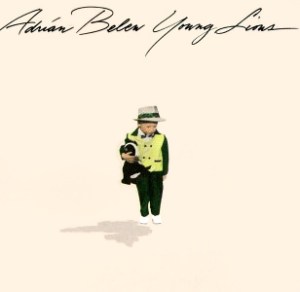
Bowie rang Belew on 4 August 1989 asking him to play guitar and take the role of musical director on the ‘Sound + Vision’ greatest hits tour. But Belew owed Atlantic Records a solo album, the one that eventually became 1990’s Young Lions. Bowie offered to pitch in with ‘Pretty Pink Rose’. Apparently Belew was initially less than enamoured, but grew to love it.
Belew recorded the backing tracks on 11th November 1989 at Royal Recorders near Lake Geneva in Wisconsin, playing all instruments. He achieves a great garage-rock sound with sprightly bass, Leslie-toned rhythm guitars and some mad lead playing courtesy of a Fender Strat wired with a Kahler tremolo arm that he found could be ‘tapped’ on the neck instead of using his finger tips.
Bowie and Belew recorded their duet vocals (at the same mic – apparently Belew was unexpectedly starstruck) on 15 January 1990 at Right Track in NYC (Bowie recorded his spontaneous vocals for ‘Gunman’ on the same day). Apparently a spoken-word intro was later excised, which featured Bowie intoning: ‘She had tits like melons… It was love in the rain’!
‘Pretty Pink Rose’ was released a single in May 1990 but inexplicably missed the top 40 in both the US and UK, despite regular MTV screenings of the Tim Pope-directed video featuring Bowie and Belew hamming it up with ‘Life And Loves Of A She-Devil’ star Julie T Wallace.
Bowie and Belew also played it every night on the ‘Sound + Vision’ tour, augmented by some great chord additions by keyboardist Rick Fox. It’s a cracking song and a lost Bowie classic.
This week marks 30 years since Tin Machine wrapped up their first year of activity with a low-key gig at Moby Dick’s in Sydney, Australia on 4 November 1989.
In the previous 12 months, they’d recorded and released their first album, written and recorded most of the second album, and toured extensively.
Any true Bowie fan must surely like elements of Tin Machine, or at least appreciate the career-reviving value of the band. After all, he was reportedly seriously considering giving up music at the beginning of 1988.
My muso college mates and I had an instant kinship with Tin Machine, particularly picking up on the Jeff Beck and Hendrix influences. Never Let Me Down had completely passed me by, but this felt instinctively like the natural followup to Scary Monsters.
Bowie first hooked up with guitarist Reeves Gabrels, whose wife Sarah had been a press officer on the US leg of his ‘Glass Spider’ tour. But who should join them on bass and drums?
There were mentions of Percy Jones and Terry Bozzio, but they settled on the street-tough Sales brothers, of course previously known to Bowie as the rhythm section on Iggy’s Lust For Life.
Bowie realised what he had signed up for when drummer Hunt apparently strode into the first rehearsal wearing a ‘F*ck You I’m From Texas’ T-shirt.
One of the first things the assembled unit apparently did was make a list of the artists that would inform and influence the band’s sound: Neil Young, The Pixies, Cream, John Coltrane, Sonic Youth, Glenn Branca, Bo Diddley, Sex Pistols, John Lee Hooker, John Lennon.
The debut album was recorded quickly (producer Tim Palmer was apparently barely able to get a decent sound before he realised they were in the middle of a take) and released on 22 May 1989.
How does it sound these days? Pretty damn good. Bowie’s singing is as committed as at any time in his career, and the material is sometimes electrifying.
The Mission/Cult helmer Palmer brings cavernous drums and great guitar layering, finding a most willing participant in Gabrels; ‘Pretty Thing’ in particular delivers a huge wall of sound. Palmer discusses the making of the album in this excellent interview.
Hunt Sales: a rock drummer who swings. He goes double-time if he feels like it. He slows down, he speeds up. You can’t teach this stuff. The music breathes. Gabrels plays brilliantly, consistently coming on like a cross between Adrian Belew and Robert Fripp, but with more of a blues attitude.
Back in 1989, it was also absolutely fascinating watching Bowie sublimate himself into a band situation, albeit very ‘artfully’ (one of Gabrels’ proposals for a band name was The Emperor’s New Clothes).
He was instructed by the Sales brothers not to over-think his lyrics, but rather to lean on his first instincts. Consequently a few tracks aren’t going to win any #MeToo awards but they’re an honest, unfettered portrayal of middle-aged male lust. And why not?
But those tracks are balanced by the tender ‘Amazing’ and politically-charged ‘Crack City’, ‘Video Crimes’ and ‘Under The God’. It’s invigorating hearing David eschewing irony and nihilism in favour of passionate commitment, though he dusts off the old ennui for the brilliant ‘I Can’t Read’.
The album is 20 minutes too long. If it had been shorn of the dire ‘Working Class Hero’, deafening ‘Baby Can Dance’, dreary ‘Bus Stop’, turgid ‘Run’ and silly ‘Sacrifice Yourself’, I’d put Tin Machine up there with Scary Monsters as Bowie’s last great rock album.
It’s also largely forgotten that it was a critical and commercial success, reaching #3 in the UK, selling a million copies and making many writers’ albums of the year. Hilariously, it also made the Melody Maker’s Worst Ever Albums top 20 list in 1998.
Weirdly, Bowie bounced straight into announcing his own solo ‘greatest hits’ tour in December 1989, ostensibly to promote the excellent series of Rykodisc CD reissues which had kicked off with the Sound + Vision box set.
Quite what his TM bandmates thought of this state of affairs isn’t documented, though Gabrels declined to play guitar on the ‘Sound + Vision’ tour (Belew accepted). Gabrels went off to guest on The Mission’s Carved In Sand instead.
The ‘Knight Rider’ star really did precipitate the demolition of the Berlin Wall on 9 November 1989 by singing his #1 hit ‘Looking For Freedom’, wearing a piano scarf/twinkling jacket, clapping on the ‘one’ and ‘three’ and looking/sounding like he may have ‘artificially enhanced’ his performance somewhat…
Don’t believe me? Here’s the evidence! Everybody sing: ‘I been looking for freedom...’
It’s probably fair to say that Neil had a dodgy old 1980s; at least that’s the critical consensus.
In 1983, he was sued by Geffen for delivering ‘unrepresentative’ albums.
But by 1988, he was back on his original label Reprise (Sinatra’s invention, natch) and had delivered This Note’s For You, ironically just the sort of record that had got him into such trouble at Geffen.
But it was the follow-up Freedom, released 30 years ago this week, that really got Neil back on track.
He retained This Note’s fine rhythm section (drummer Chad Cromwell and bassist Rick Rojas) and co-producer (Niko Bolas) and delivered a dizzyingly diverse selection, by turns sweet and savage, mostly recorded live in the studio.
I don’t particularly dig country, but love ‘Hangin’ On A Limb’ and ‘The Ways Of Love’, simple heartfelt love songs (Linda Ronstadt’s contributions sure help). I don’t dig grunge, but I love ‘Don’t Cry’, ‘Rockin’ In The Free World and the raucous cover of Lieber and Stoller’s ‘On Broadway’.
So how does he do it? I’d cite four major differences between Young and the also-rans – intelligent lyrics, a great drummer, Neil’s sense of space and his lead guitar playing (‘Don’t Cry’ features a few of his most unhinged solos).
Of the former, the album’s title seems to refer to a few tracks’ investigation of freedom in Reagan’s America, especially the scarily prescient ‘Rockin’ (‘There’s a lot of people sayin’ we’d be better off dead/Don’t feel like Satan/But I am to them‘), epic ‘Crime In The City’ and Peckinpahesque ‘Eldorado’. ‘Rockin’ could almost be Young’s ‘Born In The USA’.
The gentler tracks arguably take one back to the feeling of freedom long before Reagan was around. This Note’s For You outtake ‘Someday’ – complete with chain-gang chanting and tubular bells – and the gorgeous ‘Wrecking Ball’ still sound like timeless classics, both romantic and anthemic.
Conversely, ‘Don’t Cry’ gives Lou Reed and Bret Easton Ellis a run for their money, a chilling, blanked-out vision of a love affair gone wrong (with closing gunshot?).
Freedom was a gamechanger for Young, a near-perfect distillation of styles that would see him through the ’90s and beyond. It’s still an absolutely essential work and rightly seen as one of his greatest albums.
Prog fans – perhaps understandably – are not generally known for their benevolence when a favourite band undergoes a personnel change.
Steve Howe has talked publicly about the poor reception Trevor Horn received when the latter made his debut as Yes’s new vocalist during their North American tour of 1980.
Phil Collins still believes some Genesis fans were convinced he was scheming to take Peter Gabriel’s place as the band’s singer.
But Marillion fans seem a far more amiable bunch. When Steve Hogarth was installed as their new frontman in 1989, he seems to have been welcomed pretty much with open arms (if this superb televised gig from only his second UK tour is anything to go by).
Seasons End, (no apostrophe?), released 30 years ago this week, was a weirdly assured debut from Hogarth and easily this writer’s favourite Marillion album (1989 was a bit of a Year Zero for me in terms of the band, the Fish era barely appearing on my radar).
Hogarth’s melodies are fresh and exciting and his vocals always strong. It helped of course that he was a triple threat, a proven singer/songwriter with mid-’80s bands The Europeans and How We Live (though he was apparently eyeing a job as a milkman when the latter wound down in early 1988) and possessing some decent keyboard chops.
His natural magnetism as a frontman didn’t hurt too, and he even brought a few gimmicks to the party, like the magic gloves and musical cricket bat (a tribute to Ian Faith? Ed.).
So how does Seasons End stack up these days? Pretty well. The singles ‘Easter’ (UK #34), ‘The Uninvited Guest’ (UK #53) and ‘Hooks In You’ (UK #30) were distinctive, well-arranged and featured soaring guitar playing from Steve Rothery.
Ian Mosley is that rare rock drummer, solid but expressive, and capable of great subtlety. Keyboardist Mark Kelly had become a superb texturalist too, as demonstrated on the Steve Reich-esque second half of the title track, plus ‘Holloway Girl’ and ‘The Space’.
Marillion, Genesis and It Bites were flying the UK prog/pop flag at this point, and their late-’80s careers make for interesting comparison. As for Seasons End, it did very nicely, touching down at #7 in the UK album chart and ensuring a long, fruitful career for the band’s new line-up.
The genre ‘sophisti-pop’ is bandied about quite a lot these days – mainly ’80s music of an ‘aspirational’, elegantly-appointed variety, jazzy in hue with slinky grooves and dense harmony.
Dundee band Danny Wilson were one of its key practitioners and their second and final album Bebop Moptop, released 30 years ago this week, is a key exhibit.
And yet, despite featuring hit single ‘The Second Summer Of Love’ and a host of other superb compositions, Bebop has somehow fallen off the ’80s pop radar – it has never received the deluxe re-release treatment. (Nor, for that matter, has Danny’s superb debut Meet Danny Wilson...)
But it’s definitely due a critical reappraisal. So we caught up with singer/principal songwriter Gary Clark to discuss the ‘lost’ Danny Wilson album and loads of other stuff.
MP: Preparing for album number two, were there record company expectations? Presumably ‘Mary’s Prayer’ opened the door and Virgin wanted ‘the big hit’? You give (Virgin MD) Simon Draper credit in the liner notes for staying out of the way…
GC: That pressure is there in some form but doesn’t necessarily come from the record label. It comes from your own desire to be competitive, from management, from peers. The trick is trying to stay true to your artistic vision, and I think we always managed to fall on the artistic side of that seesaw.
There were rumours that a few big American producers almost came onboard for Bebop – is there any truth in that?
Our plan was always to record every song in Dundee with our friend Allan McGlone who had a studio in town, and at some point to bring in an outside influence to tie up the loose ends and add some perspective. We did that and throughout the process were keeping an open mind about that third party. We did meet Don Was. He came to the studio in Dundee. We played him a few tunes and went out on the town. A lovely, talented and very cool gentleman. Schedules didn’t pan out though and no more came of it. Ged suggested Fred DeFaye as he’d been listening to Eurythmics’ Savage album. We met and hit it off and pretty quickly decided to work together.
Were there any more contemporary influences going into Bebop? I hear some Prince and Pogues here and there and you play a lot more lead guitar on this than you did on Meet Danny. A conscious decision or just doing what’s right for the songs?
On the guitar, definitely the latter. I probably play just as much guitar on Meet Danny but it’s maybe more upfront on Bebop. On our influences, I guess what people are listening to has a constantly fluctuating and evolving influence, and you had three individuals all with very eclectic taste contributing. We were very open in the creative process so nothing was off limits.
‘The Second Summer Of Love’ was incredibly prescient and the hit single from the album – where did it come from? Was it a late addition?
It was definitely written in the fourth quarter of songs for that record. It was a day where we were all huddled round a phone at my girlfriend’s flat doing phone interview after phone interview. I needed to take a break so walked to the local store to buy snacks for everyone and it came to me in one piece. I had to grab a guitar when I got back, to work out and lay down on a Dictaphone what was in my head. It was originally a-minute-and-a-half long and the US label bosses heard it and asked us to extend it because they believed it was a potential radio hit. We went back into the studio and added a bridge and a harmonica solo. Ironically, it was never released as US single…
Talking of singles, I count ‘I Was Wrong’ as a missed opportunity…
After hearing a demo, the label thought so too and they encouraged us to record an early version with producer Phil Thornally. As often happens with early versions, it was never released and by the time it came to pick singles, everyone had lived with that song for around a year and it fell by the wayside when being held against newer songs that were fresher in peoples’ psyches.
The fantastic ‘Loneliness’ seems to be beamed in from a totally different world. Can you remember the genesis of that song?
Another song that I wrote mainly in my head, and indeed, in my bed. I remember sitting up with a note pad writing out the lyric like a poem at 2 or 3 in the morning. I had a melody in mind, and hashed out the musical elements on the piano over the following days and weeks.
The ‘Imaginary Girl/Shirley MacLaine’ prologue/epilogue is such a neat touch – did you ever think of Bebop as a ‘concept’ album?
Not the album as a whole, but I was aware in the writing of pockets of songs that were designed, almost like musical theatre, to live together.
Bebop got some great reviews including a rave in Q magazine, but I also remember a snarky interview in the Melody Maker… Did you care about reviews?
The music press was very powerful at that period of time and, of course, bad reviews sting. And very occasionally, when they have the ring of truth, they actually influence your thought process. But generally I would say that by the time of the second album, we had become more hardened to reviews good and bad.
You toured Bebop (I was there at London’s Town & Country Club). Did you enjoy playing this stuff live? There was a rumour that the drummer (whose name escapes me) cost more than the rest of the band put together…
Drummer Bobby Clarke and percussionist Karlos Edwards were cousins, and came as a team. They auditioned for us in London and we knew immediately that we needed them in the band, and they were such wonderful guys and wonderful musicians who brought so much to the DW party. All of the band were paid equally, but by album two we were playing bigger venues and so that would have meant higher wages than on the first album, just by the nature of economics of playing to more people.
Did you know during its recording that Bebop would be the band’s final album? Were there ever plans for record number three?
We started the songwriting process for number three and even recorded demos for a few songs that became part of my later solo album Ten Short Songs About Love but it became clear that everyone involved wanted a larger part of the writing and that would’ve meant me diminishing my input, which wasn’t going to happen, so I would say that – certainly for me – it was the underlying source of unhappiness that ultimately came to a head and ended the band.
What do you think of the Danny legacy now? Any regrets? Any temptation to do the ’80s nostalgia thing and reform, even just as a one-off?
I’m proud of what we achieved in a short period of time and I miss the creative process of working with Ged and Kit, who were and are exceptionally talented and creative people. Nostalgia is not something that any of us feed off but I would never say no to doing something if it was forward-thinking and creative. On regrets, I don’t really think about it, but if we had been able to take a break from living in each other’s pockets and faces, and stepped back a bit, we might’ve been able to keep the band going in some capacity. We are still great friends – Ged and Kit still occasionally play on music I’m involved in. They also both have amazing and separate careers in music, with a billion things going on (Ged is currently the bass player with Simple Minds – Ed.) so getting us all available at the same time would require a miracle of logistical organisation.
When we last spoke, you had just finished co-writing a lot of excellent songs for the movie ‘Sing Street’. What are you up to at the moment?
I’m executive music producer on John Carney’s new Amazon TV series ‘Modern Love’ and have played a large role in curating, producing, co-writing songs and and doing the score for that series. I even sing a little! ‘Sing Street’ is in production as a stage musical too, and is scheduled to open at the New York Theatre Workshop in their 2019/2020 season. The whole team and cast are incredible and I’m very excited about that. I’ve also been writing the musical ‘Nanny McPhee’ with Emma Thompson, which has been a thrill, and between Emma and John Carney I get to work with the most creative, talented, smart and funny collaborators that anyone could wish for. I feel very blessed and am, quite possibly, having the time of my life.
Tackhead have always been ahead of their time, but no one could have predicted quite how prescient their 1989 album Friendly As A Hand Grenadewould prove.
When Trump became president in 2016, Gee Vaucher’s brilliant cover artwork went viral, though one wonders how many people knew the image’s origins.
In a way that’s a good metaphor for the band’s career. A supergroup of session players, and arguably the ultimate post-punk band in their effortless fusion of hip-hop, P-funk, agit-prop, dub, house, gospel, blues and industrial, Tackhead have never quite hit the mainstream, even while their respective careers flourished with other artists.
And that’s probably exactly how they like it. Tackhead has always been a kind of musical petri dish for each member’s explorations, kind of a funk version of 1980s King Crimson.
Bassist Doug Wimbish, drummer Keith LeBlanc and guitarist Skip McDonald had of course hooked up during their legendary sessions for Sugarhill Records, and vocalist Bernard Fowler was one of the great singers on the ’80s New York scene.
Add London-based mixologist/dub innovator Adrian Sherwood and it was a whole new thang, mixing the latest sampling technology with classic funk-rhythm-section smarts.
And if their second album Friendly, released 30 years ago this weekend, hasn’t dated as well as hoped, that’s more down to its mastering limitations (not enough bottom end) and occasional dearth of quality original material.
But when it works it really works, a thrilling mix of heavy guitar, funk basslines, tasty grooves, soulful vocals and scary samples, usually with a political element.
‘Mind And Movement’ steals a march on Heaven 17’s ‘We Don’t Need This Fascist Groove Thang’, a funky missive against Margaret Thatcher’s late-’80s policing policies. ‘Stealing’ is a grinding, gospel-tinged rail against TV evangelists.
The two ska cameos are pure filler, but side two is much better, kicking off with the classic Tackhead theme tune ‘Airborne Ranger’, and gradually adding in elements of old-school hip-hop and early house.
Friendly was a hit, reaching #3 on the UK Indie album chart and reportedly selling over 100,000 worldwide. The majors smelt a hit; EMI subsidiary SBK came calling with a big advance and huge recording budget (LeBlanc puts it at around £250,000), resulting in the 1990 major-label debut Strange Things, which had some brilliant moments but has been been described by a few band members since as ‘crap’.
Arguably the better follow-up to Friendly was the 1994 Strange Parcels album Disconnection, credited as a ‘A Tackhead Re-Duction’.
Elsewhere, Wimbish went on to great things with Living Colour, McDonald formed the potent Little Axe and Fowler became a key member of the Rolling Stones touring entourage. And they all continued to work with fascinating On-U Sound outliers Mark Stewart and Gary Clail.
But the ‘real’ Tackhead sound has probably never adequately been captured on record – the gigs were (and are) where it’s at (and highly recommended is their live anthology Power Inc. Volume Three).
There was a memorable March 1989 show at London’s Town & Country Club, and I went to many great gigs in the capital during the early 1990s and beyond. The band’s fans were (and are) an incredibly disparate bunch, from Whirl-Y-Gig crusties to B-boys and musos.
And they’re still with us. Don’t miss them if they come to your town – they’re still doing some of the best stuff out there.
At the beginning of 1989, the tabloids were full of rumours that Prince was in dire financial straits.
While that seems unlikely, with hindsight it does seem a curious decision for him to take on a soundtrack gig for such a huge mainstream movie, stepping right into the belly of the Warner Bros. beast.
But then it’s also not much of a surprise that he smashed Batman out of the park. On many levels, it was the perfect project for the time – the movie’s themes appealed to his post-Lovesexy spiritual concerns and also tapped into his own feelings about fatherhood. He explored those themes poignantly on ‘The Future’ and ‘Vicki Waiting’.
Musically, in the main he retreated from Lovesexy‘s album’s dense, complex, band-inspired sounds and went back to a minimalist approach, pushing his guitar right to the fore and making liberal use of samplers and a Fairlight.
But even though ‘The Future’, ‘Electric Chair’, ‘Partyman’, ‘Batdance’ and ‘Lemon Crush’ are essentially one-chord jams, Prince knows exactly how to hold the attention with false endings, escalating riffs, hysterical guitar solos and quirky chord voicings. The net result is a somewhat forbidding but still undeniably funky album.
Also he doesn’t scrimp on the dancefloor classics – put on ‘Partyman’, ‘Trust’ or ‘Batdance’ (a UK #2 and US #1) and to this day you’ll get any party started. Elsewhere, ‘Scandalous’ is a brilliantly-sung, sometimes funny seduction ballad in the tradition of ‘Do Me Baby’ and ‘International Lover’, while ‘The Arms Of Orion’ is a pretty – if somewhat trite – ballad.
The album was a smash hit, selling over a million copies in its first week of release and becoming his first US #1 album since Around The World In A Day. Prince was almost returning to his Purple Rain popularity, no doubt helped by the huge success of the movie.
But this kind of mainstream success was short-lived. Something was eating him up inside – in typical form, he regrouped immediately and took on a deeply personal project, the doomed Graffiti Bridge movie/album. Probably his least-remembered album of the ’80s – and arguably his last classic – Batman is ripe for rediscovery as we reach more end-of-the-decade, spiritual/political uncertainty.
Sylvo is not particularly known for his sense of humour, but there was surely an element of black comedy about the release of the ‘Pop Song’ 12-inch single.
It’s hard to read it as anything other than his ironic response to being asked by Virgin Records to come up with something a little more ‘commercial’ to promote the Weatherbox limited-edition box set (a collection that, in the event, didn’t even contain ‘Pop Song’!).
Imagine the ashen faces of the management at Virgin HQ when the needle hit the vinyl. ‘OK, there’ssome kind of groove, but hang on – the synth bass is out of tune, the drums sound like Tupperware boxes and the piano has been flown in from a different song altogether…’
Yes, this was David’s ‘Jugband Blues’. And it was brilliant (the B-sides are well worth tracking down too). Cooked up alongside regular co-producer Steve Nye at Marcus Studios, Fulham, West London, during late summer 1989, ‘Pop Song’ was Sylvian’s bitter farewell to the decade, a vision of late-’80s Britain as a nation of clock-watching factory workers numbed by banal pop music and Sunday supplements. It’s fair to say that it wasn’t your typical feelgood summer single…
Musically, it was Sylvian’s version of ‘pop’ and pretty amusing at that, with some gorgeous ‘found sounds’, deliciously tangential piano work from ECM regular John Taylor and underwater drums/queasy synth bass courtesy of Steve Jansen. Sylvian delivers a great vocal too, full of cool, jazzy phrasing (check out the ‘But the money goes/And the time goes too’ line).
I bought ‘Pop Song’ on the day it came out (30th October 1989), and my memory is that it created quite a stir amongst Sylvian fans. It registered briefly at #83 in the UK singles chart and then promptly disappeared. Was it ever actually played on the radio? One doubts it.
But if ‘Pop Song’ proved a strange detour for Sylvian, life was about to get even stranger – next stop was the Japan ‘reunion’ Rain Tree Crow, of which much more soon.
It was goodbye to Basildon and Braintree, hello to Bel Air and Beverly Hills.
Kershaw had always threatened the big-budget, US-recorded album, and in 1989 he delivered it. And, to no-one’s great surprise, it was an excellent collection, one of the best ‘Brit-Goes-Stateside’ pop records of the decade.
Recorded over four months in LA, The Works – released 30 years ago this week – saw Kershaw put together some of his best material to date with two top-notch drummers (Vinnie Colaiuta and Jeff Porcaro) in tow, the great Jerry Hey on horn arrangements, Paulinho Da Costa on percussion, ex-Zappa keyboardist Peter Wolf producing and backing vocals from Michael McDonald and Siedah Garrett.
And yet it was also the straw that broke the camel’s back, underselling drastically, cutting ties with MCA Records and leading Kershaw into decades of back-room writing and producing. But maybe he was happier that way (and he did write the enormo-hit ‘The One And Only’ for Chesney Hawkes a few years later).
But from August to December 1987, Kershaw was hob-nobbing with Rod Temperton, Quincy Jones and Toto, flirting with the kinds of scenes that he had mocked on ‘Radio Musicola’ and ‘City Of Angels’. Reportedly he didn’t get on very well with Wolf, virtually re-recording the entire album back in London alongside Australian producer Julian Mendelsohn (Level 42’s World Machine).
But hey, the hard work paid off. There’s nothing else in the ’80s pop canon quite like the techno/pop/fusion flash of ‘Don’t Ask Me’, ‘Wounded Knee’ and ‘Cowboys and Indians’, and Colaiuta’s extraordinary drum performances had players rushing to their practice rooms. In particular, the former track has that fill… If only Vinnie had played on a few of the other machine-driven tracks. And Kershaw coaxes Porcaro to play a classic half-time shuffle on the superb ‘Walkabout’.
It’s still hard to believe that ‘One Step Ahead’ and ‘Elisabeth’s Eyes’ (very influenced by Scritti) completely flopped as singles (though I would have gone with ‘Lady On The Phone’). They still sound great today, with brilliant choruses and nice grooves. ‘Burning At Both Ends’ may be the standout of the album, with its Middle-Eastern-flavoured hook and superb Siedah Garrett backup vox. Slightly less impressive are ‘Take My Place’ and ‘One World’; both could be Climie Fisher or Robbie Nevil.
The album disappeared without trace both in the UK and US. As far as solo pop success was concerned, the game was up. But it’s a shame that the kind of intelligent, superbly-played pop heard on The Works was unsustainable by the end of the ‘80s. As Nik so succinctly puts it on his website:
“Los Angeles for four months with producer Peter Wolf. Get to record with some legends: Jerry Hey, Larry Williams, Paulinho Da Costa, Jeff Porcaro, Vinnie Colaiuta. House in Nichols Canyon; Rented Mustang; Earthquake. Constantly bumping heads with Peter. End up finishing album myself in London. More record company upheaval; another MD; another A&R person. Not looking good. European tour with Elton John. Goodbye MCA. Time for a break...”

 One can get caught up revisiting the ‘lost’ periods of the truly great artists of the last 50 years – Miles, Neil Young, Bowie, Dylan, Zappa, whoever.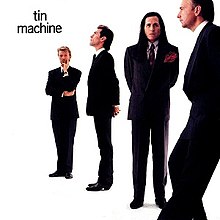

 Prog fans – perhaps understandably – are not generally known for their benevolence when a favourite band undergoes a personnel change.
 You toured Bebop (I was there at London’s Town & Country Club). Did you enjoy playing this stuff live? There was a rumour that the drummer (whose name escapes me) cost more than the rest of the band put together…

 Sylvo is not particularly known for his sense of humour, but there was surely an element of black comedy about the release of the ‘Pop Song’ 12-inch single.

 movingtheriver.com