Tony LeMans (1989)

download

This is an intriguing, very promising, almost completely forgotten (currently not on any streaming platforms) debut album by a young American singer and songwriter who sadly died in a motorcycle crash only three years after its release (and reportedly the day before he was due to marry Vanity’s sister).

I came across Tony LeMans completely by chance at Mr CD on Berwick Street, Soho. It had piles and piles of CDs at five quid a pop, quite a steal by 1990s standards.

You just never knew what you would find, in the days when you would take a chance on an album just on the strength of the label, cover, musicians and/or producer. I saw the words ‘Sylvester Stewart’, ‘David Gamson’ and ‘Paisley Park’ on the back and had to have it.

Tony-LeMans-Tony-LeMans-1989-Back-Cover-79406

Gamson plays keyboards and produces beautifully, fresh from Scritti Politti’s Provision. Tony LeMans was released on Prince’s Paisley Park Records – rumours were abound of the Purple One’s involvement, but he doesn’t appear.

But other ’80s funk masters do: Bernard Wright supplies some cracking wah-wah clavinet to a few tunes, though bassist Marcus Miller and guitarist Paul Jackson Jr. are fairly nondescript. Prince cohort Boni Boyer adds occasional back-up vocals alongside Michael Jackson collaborator Siedah Garrett (phenomenal on the opening ‘Higher Than High’).

The sonic clarity and mastering of Tony LeMans are outstanding; it’s a brilliant CD for auditioning a hi-fi. It’s also a real relief from the over-loud, over-compressed music of today. Musically and lyrically, it initially comes on like a ‘standard’ late-’80s pop/soul/funk album, but closer inspection reveals a strong psychedelic flavour. Mainly though, due to Gamson’s total involvement, the album sounds like Provision-era Scritti fronted by Sly Stone.

The opener ‘Highest High’ fuses the synth hook from Prince’s ‘Lovesexy’ with Sly’s ‘The Same Thing’ (though neither get a songwriting credit) to great effect. The single ‘Forever More’ is a winning ballad with a fine falsetto vocal from LeMans and some classic Gamson chord changes, while ‘Good For You’ is an infectious, catchy slice of doo-wop-influenced pop.

There’s a bit too much filler on side two, but the closing ‘Different Kind Of Thing’ is possibly the stand-out and the nearest thing to a Prince song (very much influenced by ‘Erotic City’), though it was only an extra track on the original CD release.

LeMans toured the album in the States, sometimes supporting MC Hammer (!), and was recording his second Paisley Park album at the time of his death. It was due to feature a Prince composition called ‘Fuschia Light’. Sadly, it’s likely that it’ll never get an official release.

Story Of A Song: Everything but the Girl’s ‘Driving’ (1990)

drivingThe 1980s are littered with Brit pop bands going ‘across the pond’ to work with US producers and musicians.

It was almost a rite of passage, or – according to some music critics of the slightly more cynical persuasion – a desperate attempt at credibility.

You could hardly level that accusation at Tracey Thorn and Ben Watt, AKA Everything but the Girl. They were headhunted by legendary producer Tommy LiPuma, who had just put the finishing touches to Miles Davis’s Amandla, and their ‘Driving’ single (released in early 1990 but recorded spring 1989) seems a near-perfect marriage of US and UK sensibilities.

I confess I hardly knew anything about EBTG when my brother first played me ‘Driving’. I just heard something extremely classy, with intriguing chord changes, a great singer and strong jazz flavour.

I didn’t know Tracey and Ben had spent much of the ’80s building up a considerable rep as ‘indie jazz/folk’ darlings of the music press and enjoying not inconsiderable commercial success too, but I was possibly vaguely familiar with Tracey’s gorgeous vocals on The Style Council’s ‘Paris Match’.

Taken from The Language Of Life album, the song was recorded in LA at the famous Ocean Way and Sunset Sound studios with pretty much the finest session players money can buy (Omar Hakim on drums, John Patitucci on bass, Larry Williams on keys/arrangements, Michael Brecker on tenor).

But, according to Tracey’s superb memoir ‘Bedsit Disco Queen’, the American musicians were totally ignorant of the fiercely independent English scene from which Tracey and Ben had emerged.

When Larry Williams found out that EBTG had recently recorded at Abbey Road, he blurted out: ‘Wow! Abbey Road! The home of the Beatles!’ Tracey’s reply: ‘God, I HATE the Beatles.’ There was a pregnant pause. Eventually Williams spluttered out: ‘You h-h-hate the Beatles?’

But such musical differences were all in a day’s work for EBTG.

‘Driving’ obviously sounds more like Anita Baker than, say, The Smiths. It’s sophisticated but still has bite, with rich chords and a glorious Brecker solo (inexplicably with a different, inferior take on my 7” vinyl version).


‘Driving’ became somewhat of an airplay hit in the States (though surprisingly only reached #54 in the UK), and led to several high-profile US gigs which unfortunately seemed to precipitate a crisis of confidence for Tracey.

The EBTG live band, which included future smooth jazz star Kirk Whalum on sax, whipped the crowds into a frenzy night after night, but there wasn’t much space for her subtle, low-key vocals any more.

Cue a few years of soul-searching and a distinct change of direction, exemplified by 1994’s Amplified Heart.

Mr Big: Addicted To That Rush

Mr_Big_Self-TitledIn the world of late-1980s US rock, guitar virtuosity was the order of the day.

Eddie Van Halen’s massive popularity had ushered in a huge raft of poodle-haired, fleet-fingered plank-spankers such as Zakk Wylde, Marty Friedman and George Lynch.

Though I was very definitely a Van Halen man, and also had a real penchant for Steve Vai and Yngwie Malmsteen, I was always much more into people like Scott Henderson, Jeff Beck and John Scofield than the thousand-notes-per-second boys, brilliant musicians though they undoubtedly were.

But then my friend James Broad played me ‘Addicted To That Rush’ by Mr Big. It had the unmistakable whiff of early Van Halen about it, not least with its double-time groove, similar to ‘Hot For Teacher’ and ‘Satch Boogie’. Guitarist Paul Gilbert was clearly a veritable fire-breather with an incredible facility for high-speed, heavily-chromatic solos, but also had quite an original tone and refreshing sense of humour.

But basically ‘Addicted’ was a flagrant display of muso shock and awe, not just from Gilbert but also ex-Dave Lee Roth bassist Billy Sheehan (how many other HM tracks have had the balls to start with a bass solo?) and drummer Pat Torpey (check out his intricate hi-hat work in the opening section).

The rest of side one from their 1989 debut album was also great. Side two was not so hot though, and I hated their pop breakthrough (‘To Be With You’). But there’ll always be ‘Addicted To That Rush’. We’re rollin’…

It Bites: Eat Me In St Louis

eat-me-in-st-louis-527b870be5b7f

It Bites go Metal? Nearly. A brave attempt to break the US? Possibly.

Even Kerrang! magazine took notice of this one. Riff-heavy, blues-based rock was making a big comeback on the late-‘80s UK music scene, typified by the success of Thunder, The Quireboys, Gun and Little Angels.

The gifted Cumbrian four-piece came up with a neat twist and produced their heaviest album yet in Eat Me. But they could never completely jettison their penchant for brilliant pop hooks, colourful instrumentation and intricate arrangements.


Francis Dunnery’s guitar playing was leaner, meaner and more direct than before, with a stronger blues flavour; Hendrix and Clapton were touchstones now rather than Holdsworth and Gambale.

The song and performance were paramount. He talked glowingly of David Sylvian and The Blue Nile in interviews. Producer Mack brought the big drum sound and ban on reverb. Dick Nolan expanded the grooves with his new six-string bass.

There were three near-hits (‘Still Too Young To Remember’, ‘Underneath Your Pillow’, ‘Sister Sarah’). Roger Dean provided the album cover concept/graphics/masks, possibly a weird move for a band trying to escape the Prog tag. It was red rag to a bull for the NME who ran a sarcastic mini-interview with Dunnery at the time which barely mentioned the band’s music.

First single ‘Still Too Young To Remember’ was Classic Rock of an early-‘70s vintage, sounding more like Family, Cat Stevens or Free than Genesis or Marillion. Virgin flogged it mercilessly with not one but two re-releases but there was still no sign of a hit.

I remember excitedly rushing out to the buy the 12” version one beautiful spring day in 1989. Its superb B-side ‘Vampires’ features one of Dunnery’s most outrageous guitar solos. Other fine B-sides of the time include ‘Bullet In The Barrell’ and ‘Woman Is An Addict’ which features a killer whole-tone Nolan/Dunnery riff.

As the ’80s turned into the ’90s, It Bites were shaping up to be one of the bigger live draws in British rock – they embarked on three tours in the space of a year, selling out the Hammersmith Odeon and impressing everyone. A glorious night at the old Town And Country Club featured on the ‘Meltdown’ TV show.

They played extensively in Japan and toured the States with Jethro Tull. The feeling in the Virgin camp was that the fourth album would deliver the big hit they were striving for. Too heavy for pop but too pop for metal? Too good for the charts? Suddenly, despite the lack of singles action, it didn’t seem to matter too much.

But the cracks were starting to show – Dunnery was reportedly a barely-functioning alcoholic whose self-loathing tendencies led to sublimely pissed-off guitar solos but more often than not wound up the rest of the band – especially the equally gifted yet far more docile John Beck (Dunnery recently said in a Classic Prog interview that they had very different ‘energy levels’), often leading to some thrillingly edgy onstage duels but also some resentment.

Decamping to Los Angeles to write songs for the fourth album proved a career move too far – Beck, Dalton and Nolan refused to work with Dunnery who was AWOL periodically throughout the sessions. The band splintered and that was that, despite a brief reunion of the original line-up the early noughties.

It’s fascinating to imagine what might have been if they’d been able to hold on a bit longer and harness the creative tension between Beck and Dunnery. The breakup was a sad end to one of the most prodigious groups of musicians in the ‘80s pop pantheon.

The Sundays: Can’t Be Sure

the sundays

I don’t recall seeing this excellent band on TV or hearing them on the radio back in 1989/1990.

To this day, I don’t really know what they look like and don’t want to know. Though their debut single ‘Can’t Be Sure’ was released in January 1989 and reached just #45 in the singles charts, it ended the year as number one in John Peel’s Festive Fifty. The track also has a weird prog connection – it was (excellently) co-produced by Ray Shulman, a founding member of Gentle Giant.

‘Can’t Be Sure’ and its attendant classic album Reading, Writing And Arithmetic now seem redolent of a far gentler time, an era of hope and innocence, pre-Grunge and Britpop. For that reason, along with the Cocteaus’ Heaven Or Las Vegas, they’re quite hard to listen to now but no less powerful. The Sundays were also arguably a very influential band on many inferior acts (The Cranberries, The Corrs etc etc).

sundays

Allan Holdsworth: Secrets

Allan_Holdsworth_-_1989_-_Secrets

Some time around the late ’80s, I became a bit disillusioned with the major UK music mags (but continued to love Q).

Their infinite search for ‘coolness’ coincided with my increasing interest in playing bass and guitar, so I started checking out American mags such as Musician, Guitar World and Guitar Player, as well as Guitarist here in the UK.

Their focus seemed to be on the mechanics of/intentions behind making music rather than puking in hotels or haircuts.

I think I first heard guitarist Allan Holdsworth’s name via a Guitar Player cover interview to promote his Secrets album. I hadn’t yet heard a note of his music but his intelligent, exceptionally modest (some would say mordant) approach to playing drew me in, as did his endorsement of sax players (Brecker, Coltrane, Parker) rather than the usual guitar influences.

Also he mentioned that he had been working with drummer Vinnie Colaiuta, another name that I had heard with relation to Frank Zappa but had never really properly investigated. By chance, I came upon Secrets a few months later in a bargain bucket. From the first bar of the opener ‘City Nights’ (a typically nimble salvo around the kit by Vinnie) I was blown away.

Holdsworth’s solo is burning, with loads of notes spraying out everywhere, but it’s also totally devoid of clichés. He repeats the trick all over Secrets, with Vinnie and bassist Jimmy Johnson cajoling him every step of the way.

It’s also refreshing to hear Allan blowing over lots of major chords in ‘Joshua’, the sort of tune which might be a bit soppy in the hands of Metheny or Abercrombie but is transformed into a stunningly fluent series of solos alongside Colaiuta’s brilliantly unhinged accompaniment.

‘Spokes’ is a nicely arranged vehicle for Allan’s nutty synthaxe playing (and some more Vinnie/Jimmy genius) and, on ‘Endomorph’, Holdsworth even comes up with a very moving song inspired by the death of his father with some excellent vocals from Craig Copeland.

Secrets is the one where technology really caught up with his ingenious concepts. All lead guitarists are on an endless search for tone and Allan seems to have found his ideal here. It’s smooth yet fiery and he genuinely achieves the ‘sheets-of-sound’ style of improvising that he so admires in his favourite sax players by utilising incredibly wide intervals (for a guitarist) and legato phrasing.

His playing is as instantly recognisable as Wes, Van Halen or Scofield’s. It’s not easy music, though. But, as he lamented in the interview mentioned above, it’s not that difficult and he always wished it was more popular.

Secrets was the first in a trio of superb solo albums (and some sterling sideman work with Chad Wackerman) which continued with Wardenclyffe Tower in ’92 and Hard Hat Area in ’94, all of which are pretty essential listening if you like his vibe.

Within a year of Secrets coming out, I’d seen Allan live at the Bloomsbury Theatre in London and also checked out his month-long guest spot with Level 42 at Hammersmith Odeon throughout December 1990 (and some brilliant solos on their Guaranteed album). I was becoming a major fan…

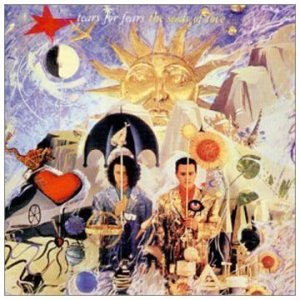
How Not To Follow Up A Hit Album #2: Tears For Fears’ The Seeds Of Love

courtney pine

Tears For Fears’ second album Songs From The Big Chair did the business.

A relatively cheap record to make, it sold millions and elevated the Bath boys into the big league. Early ‘80s technology, boy-band looks and some great hooks had carried TFF through the first two albums but now they felt they had to deliver a polished, ‘musicians’ album’ to match their heroes. Big mistake…

The Seeds Of Love was the result, and with it they tragically o’erreached themselves in the search to emulate their heroes Gabriel, Ferry and Sylvian. Four producers. Nine studios. Over a million pounds in studio costs. Broken marriages. Dozens of session musicians.

A famous Q article outlined the painful, sometimes embarrassing lengths the two protagonists Roland Orzabal and Curt Smith went to to complete Seeds.

Orzabal has said he wanted to make something musicians would love, something ‘world-class’. This over-egged curio shows what happened when pop stars tried to buy credibility in the late-‘80s, undeniably under a fair amount of record company pressure to follow up a monster.

The intro of ‘Woman In Chains’ still retains some Blue Nile-ish power before being obliterated by Phil Collins’ sledgehammer drums and overblown AOR guitars; Gabriel/Joni/Sting drummer Manu Katche plays a blinder on ‘Badman’s Song’ but the melodies barely register.

‘Sowing The Seeds Of Love’ still stands up though as a decent Beatles tribute complete with some lovely woozy drums from Big Chair producer and ex-Ant Chris Hughes and a very cool chord sequence.

‘Standing On The Corner Of The Third World’ is initially very attractive complete with Jon Hassell’s ethno-trumpet and some typically slinky fretless playing from Pino Palladino, but its grand atmosphere and ambience can’t obscure the lack of structure and good ideas.

Swords And Knives’ starts with an interesting piano/voice melody but quickly gets mired in a succession of annoying guitar solos and grandiloquent key changes.

‘Year Of The Knife’ (these boys are really interested in knives…) is a pretty ugly collision of gospel vocals and a sub-‘Broken Wings’ groove. Again, the song runs out of stream after two minutes and tries to cover it up with a fiddly string arrangement and weird avant-metal guitars. Even uber-drummer Simon Phillips sounds uninspired.

The Q article, September 1989

The Q article, September 1989

Orzabal almost achieves a Sylvian-ish level of sophistication on the closing ‘Famous Last Words’ but once again blows it, neglecting to supply a B section or cogent lyrics. Quiet/loud dynamics alone do not a good song make.

The album was a hit, going straight to number one in the UK and selling well in Europe and the States, but was it worth all the effort? Orzabal and Smith were barely on speaking terms and didn’t record together for over a decade after Seeds‘ completion. It was certainly a big and bold farewell to the ’80s from one of the decade’s success stories.