In the slipstream of Live Aid, when Stock, Aitken and Waterman ruled the charts, house and techno were warming up and ‘indie’ (Housemartins, Smiths, Cure) was thriving, this gifted pop/prog four-piece from Cumbria crept under the radar and even managed to secure a big hit with their second single ‘Calling All The Heroes’.
It Bites blended their influences – Gabriel-era Genesis, Weather Report, Yes, Japan, Level 42, Steve Arrington, George Benson – superbly, creating an excellent debut and minor hit album.
My mate Nige and I loved The Big Lad. The soundtrack to our after-school games of pool would either be Sting’s Bring On The Night or this, and I quickly grew to love its pristine production, challenging song structures, brilliant guitar playing and cool chord sequences.
As a teenager, I’d listen to it on my Walkman very loudly while studying David O’Connor’s superb, enigmatic cover art or reading Stephen King’s Christine… What larks.
Singer/guitarist Francis Dunnery once labelled The Big Lad ‘nutter’s music’, an apt description when you listen to songs like ‘Turn Me Loose’ and ‘I Got You’ which are almost pop but then pull the carpet from under your feet with bizarre, brilliant, extravagant middle sections and Dunnery’s off-mic vocal histrionics.
Producer Alan Shacklock – once the guitarist in Babe Ruth and future helmer of Chesney Hawkes’ ‘The One And Only’ – delivers a vibrant, state-of-the-’80s sound, with huge, gated drums and punchy bass.
It Bites’ early career as a souped-up pop covers band served them well – melody and groove are their priorities, and of course they were always a superb live act too.
Dunnery was (and is) also a very underrated Brit guitar hero whose playing could consistently deliver the sound of surprise with fluid legato, furious speed picking, dissonant intervals and whammy-bar abandon.
His solo on ‘You’ll Never Go To Heaven’ is a thrilling marriage of Allan Holdsworth and John McLaughlin and one of the great bits of over-the-top playing in Brit Rock.
He also delivered marvellously insane breaks on the Michael Jackson-meets-Duran Duran ‘Wanna Shout’ and barmy soft-rock ballad ‘Cold, Tired and Hungry’. Also worth checking out is B-side ‘Strange But True’ which, in its full version, becomes a vehicle for Dunnery’s increasingly demented solos.
‘Calling All The Heroes’ is actually a pretty good distillation of It Bites’ sound with Bob Dalton’s ingenious ‘reverse’ tom fills, Dunnery’s excellent melodies, John Beck’s intricate keyboards and Dick Nolan’s super-tight bass playing.
It was their only big hit though; other singles ‘All In Red’ and ‘Whole New World’ were catchy pop tunes with interesting instrumental flourishes and inventive vocal harmonies but neither troubled the charts.
The music magazines of the time generally ignored It Bites. If they did get a mention, it was generally to mock their unfashionably-superb musicianship or lack of London street-cred.
I remember Dunnery making an emotional pre-song announcement onstage at a London Astoria gig in 1988 lambasting the ‘trendy’ music press.
The Big Lad wasn’t a huge hit but did just well enough, peaking at #35 in the UK. It Bites were up and running and their best was yet to come.
Hardcore fans alert: a very nice person has posted all the Big Lad demos on YouTube.
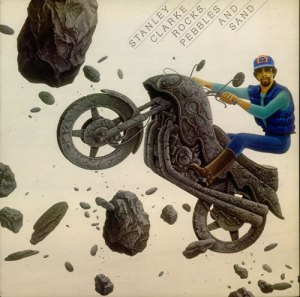
In 1979, Stanley recordedthe sprawling double I Wanna Play For You which had some brilliant moments but also veered uncomfortably towards disco.
It also featured some outrageous live recordings which suggested he was going in a more ‘rock’ direction, mainly thanks to the sonic possibilities opened up by putting his Piccolo bass (tuned a fifth higher than a standard bass, A to C rather than E to G) through various effects pedals (see correction in the comments section below).
But how would Stanley start off the ’80s? On Rocks, Pebbles and Sand, he thankfully pushed the rock and prog-fusion rather than disco.It also really helps that it sounds very much like a ‘band’ project, apart from funk curio ‘We Supply’ which belongs on a different album altogether.
And what a band it is – Simon Phillips on drums, Charles Icarus Johnson on guitars and Steve Bach on keys. Phillips in particular is a perfect foil for Clarke with his meaty grooves and superchops. Though he was obviously coming from Billy Cobham with his prodigious double-bass playing, expansive tom fills and open-handed style (see below), his grooving on ‘Story of a Man and a Woman Part 2’ is just perfect.
Rocks, Pebbles and Sand‘s opener ‘Danger Street’ sounds like Stanley has been listening to The Who and Van Halen with its big drums, raucous guitar and gargantuan riff. Subtle it ain’t (and one can take or leave Stanley’s vocals), but it really works, mainly due to the mastering and mix – Rocks is one of the best-sounding albums of the era alongside Steely’s Gaucho, Lee Ritenour’s Rit and Zappa’s Sheik Yerbouti.
The duet vocals on ‘Underestimation’, ‘You/Me Together’ and ‘A Story of a Man and a Woman’ might put some people off, but isn’t that female voice familiar? A glance at the liner notes reveals a credit for one ‘Marcy Levy’ on vocals. It turns out to be none other than Marcella Detroit of Shakespeare’s Sister fame, an LA session singer in another life who had recorded and toured extensively with Eric Clapton (co-writing ‘Lay Down Sally’) before working with Stanley.
The funk/disco track ‘We Supply’ sticks out like a sore thumb but features a superb bassline from Louis Johnson and a hilarious spoken word intro from album engineer Dennis MacKay, proclaiming, ‘We supply all your funky needs!’ in the poshest voice you’ve ever heard. Git down and boogie with Dennis…
Stanley had a mixed ’80s to say the least, with a fair few misses but some big hits as well. Rocks is definitely one.
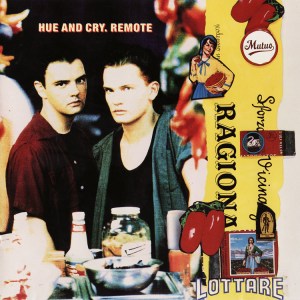
Just for a few years at the end of the ‘80s, Hue and Cry bothered the charts with a classy fusion of pop, jazz and Latin.
Singer/co-composer Pat Kane said at the time that they wanted to create a musical mix of Scritti and Sinatra; they almost pulled it off with the excellent Remote, released in December 1988.
They also pulled off the Steely Dan-ish trick of singing about subjects which might seem unsuitable in a pop context (domestic violence on ‘Looking For Linda’, corporate sexism on ‘Dollar William’, Latin-American poverty on ‘Three Foot Blasts Of Fire’, the dawning of the Web on ‘The Only Thing More Powerful Than The Boss’).
And yet something about Hue and Cry seriously wound people up. When they emerged on the scene in 1987, they rode a wave of goodwill thanks to their clean-cut looks, anti-Thatcher politics and dynamic ‘Labour of Love’ single.
But by the time of Remote, the tide was turning. Hue and Cry’s relatively soft, ‘aspirational’ sound was anathema in the bombastic late-’80s. It was too jazz for the yuppies and too pop for the jazz revivalists.
Maybe the fact that they’re brothers never helped too – The Proclaimers were the more acceptable face of Celtic brotherhood, more meat-and-potatoes, more reliably blue-collar.
In 1995, Q Magazine wrote a cruel but witty hatchet piece about them entitled Britain’s Most Hated Band, offering them ‘a crisp tenner’ to split up (it didn’t do the trick…). Whatever. I love this album. Recording Remote in New York gave the Kanes access to some amazing guest musicians – Ron Carter and Michael Brecker play beautifully on the very pretty ‘Where We Wish To Remain’, and Pat’s excellent vocals demonstrate a big Mel Torme influence.
The prime NYC rhythm section of Wayne Braithwate and Dennis Chambers supplies a 24-carat groove on ‘Three Foot Blasts’. ‘Sweet Invisibility’ puts a fantastically exciting Latin horn arrangement right upfront in the mix, beating David Byrne at his own game.
‘Guy On The Wall’ is a witty portrait of a perpetual party wallflower set against a ‘Word Up’ groove and brilliant Salsa horn arrangement. Bassist Will Lee delivers beautifully measured performances on ‘Ordinary Angel’, ‘Dollar William’ and ‘Looking For Linda’, offering a subtle commentary on the songs back in the days when a musical performance was supposed to have some narrative development and couldn’t just be ‘cut and pasted’ together.
It’s quite funny to hear legendary jazz trumpeter Jon Faddis play a stratospheric solo on the otherwise very soppy ‘Violently’ (though Michael Brecker very controversially ‘fixed’ his solo – see below…) Pat Kane sings well throughout the album, with great phrasing, inventive ad-libs and excellent melodies.
But YouTube live footage from the Remote era hasn’t aged well and demonstrates why they were such a Marmite band, all cheap suits and wacky horn sections. I saw them at the Hammersmith Odeon in 1989 and struggle to remember anything about the gig.
Even they seemed to sense which way the wind was blowing; they disappeared for far too long after Remote, issuing the stripped-down Bitter Suite live EP and disappointingly brittle Stars Crash Down in 1991. The momentum and recording budget had gone.
But because in the main they lent towards jazz and Latin rather than funk and soul, they avoided the all-too-audible mistakes of contemporaries like The Blow Monkeys, Style Council, Climie Fisher and Johnny Hates Jazz. A great video has emerged of the boys discussing the making of the album:
EXCLUSIVE! Level 42’s Mark King speaks to movingtheriver.com about his classic solo album Influences, released by Polydor in July 1984.
MP: Can you just briefly summarise the story behind Influences? Was it your idea or did Polydor come to you?
MK: I was signed to Polydor Records via Level 42 and had a young, heavily-pregnant wife and needed to buy somewhere to live. This was back in 1981 I hasten to add, so Influences showing up in 1984 was really down to my tardiness in addressing the fact that I had taken the advance (£5,000) and, apart from delivering a single ‘Freedom‘, had somehow neglected to fulfil my contractual obligations! Polydor were actually very sweet about it and just before the agreement was due to expire gently reminded me that I needed to deliver an album.
You’ve talked about having loads of ideas in the tank for the album but how did you piece them all together on ‘The Essential’? Did you have to demo all the different sections before recording?
I may have exaggerated the ‘loads of ideas in the tank’ bit, but when push came to shove I booked a few days at Chipping Norton Studio and dived in. The opening piece ‘The Essential’ began on the studio Hammond B3 which Mike Vernon informed me had been used on the Focus album Moving Waves. I’m no keyboard player, but I fired her up and just hit the notes. Next I programmed the drum machine with a pattern so I could lay down some bass and guitar, and the riff and melodies just wrote themselves really. I was jamming with myself I guess, ha! Anyway, that’s how all the sections came to be, and in the twinkling of an eye I was 20 minutes into the album.
What was it like getting back into drumming again for the album? ‘There Is A Dog’ is an amazing tour-de-force.
Ta. I never stopped drumming, that’s what I love to do!
Did you put your bass and guitar parts down with a drum machine first and then overdub your drums? Or did you record your drums first?
I laid the bass and drum box down first. I had an Oberheim DMX drum machine that sounded awful but was a great writing tool because you could programme some pretty accurate drum parts that were in time! You have to remember that these were early days in digital technology, so ears weren’t so tuned in to accurate tempo, but I loved the idea of being able to f*ck about all over the groove and lean on the drum box because it had the time nailed. I laid the drums down next, Gretsch incidentally. Speaking of time, the guy with the greatest meter I know is Gary Husband. He IS a human machine… The guy is a phenomenon with tempo. Never shifts. The Level 42 track ‘Take Care Of Yourself’ was a first take at The Summerhouse Studio played on some Ddrums. That is AWESOME! The great Bill Cobham quote sings to mind: ‘You are either in time or you are out of time.’ I’m usually out.
How did you come to work with producer Jerry Boys? ‘The Essential’ features some really effective edits and cross-fades between the different sections.
Jerry was a good friend and had engineered some Level 42 stuff, which is how we had met of course, and Polydor were keen for me to involve a third party to keep an eye on me as I was three years overdue already, so Jerry was the perfect choice. A really good engineer, plus I respected his opinions. I probably did a lot of the edits myself. I certainly did for the Level 42 stuff.
How did Drummie from Aswad come to play on ‘Clocks Go Forward’? That track has a lovely feel.
Aswad were working in the studio next door and I bumped into Drummie in the corridor. I had just been running over the parts for ‘Clock Go Forward’ with Mike Lindup so I had no hesitation in inviting Drummie in to play with us. The Gretsch kit I had hired had only just shown up in the studio, and there was no stool…aaaargh! But this didn’t faze Drummie at all; he just pulled up a plastic studio chair and got stuck in. The studio floor was highly-polished parquet and it was quite funny watching him sliding around as he played, hahaha! The song is called ‘Clocks Go Forward’ because that was the day we recorded it on.
You play some great lead guitar on Influences – who are your favourite players apart from John McLaughlin?
Cheers. I love JM of course, but Clapton, Hendrix, Gary Moore and Bill Connors are all in there somewhere. So many, really. I love Al Holdsworth too and working with him on Guaranteed was a real privilege.
You played a lot of Influences at an amazing Ronnie Scott’s gig a few years ago – what was it like playing it live?
A lot of fun actually. I was so chuffed at how the guys were able to recreate the sounds for me. Nathan (King) in particular was fantastic on all the guitar parts. It didn’t feel like we were playing music from nearly 30 years before, and having not listened to any of it since then I was quite proud of what I had created way back when.
Thanks, Mark!
Find out much more about Mark and Level 42 at level42.com
More about my history with Influences below.
Some of these basses and guitars were used during the making of ‘Influences’…
Even though I’d been a huge Level 42 fan from the day I bought A Physical Presence in 1985, I didn’t even know Influences existed until two or three years after its initial release. I came upon a cassette copy in a ramshackle shop near the Swanage seafront while on a family summer holiday. It would be an understatement to say I couldn’t get it onto the hi-fi quickly enough.
And it didn’t disappoint. The sharp crack of the snare drum on opener ‘The Essential’ led me to believe that Level’s Phil Gould was behind the kit. But a quick look at the album credits blew my mind: Mark was playing all the drums, guitars and bass? Yep. Influences takes the ‘one-man-band’ ethos and runs with it. Not for a second does one rue the lack of a conventional band; this music swings, snaps, crackles and pops.
With a few decades’ more listening experience, I now hear some of the ingredients that went into the Influences brew – Chick Corea’s Latin excursions, Spectrum-era Billy Cobham, Mahavishnu and also Stanley Clarke’s mind-bending prog/fusion – but Mark’s musical voice also comes through loud and clear. ‘There Is A Dog’ could almost have graced Return to Forever’s Light As a Feather album. ‘Clocks Go Forward’ and ‘Picture On The Wall’ are in a Level style and wouldn’t have sounded out of place on True Colours or Standing In The Light.
To date, Mark has not returned to such unhinged jazz/rock outside of the Level 42 ‘day job’ (apart from a fabulous gig at Ronnie Scott’s in 2012), but this is one of the great British fusion albums, or fusion albums period. Influences also deserves a place alongside Innervisions, Lewis Taylor’s self-titled debut and Prince’s Sign O’ The Times in the pantheon of great one-man-band albums.
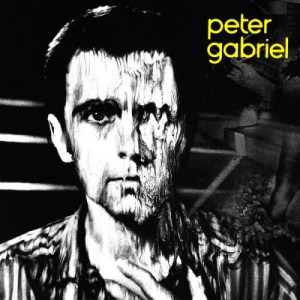
So was my gateway Gabriel album, as it probably was for many teenagers in the 1980s.
But, in 1986, I don’t think I had a clue about his Genesis past or earlier self-titled records. So I went back and checked them out.
The cover artwork snagged me but initially I really struggled with Melt. The deceptively dry, claustrophobic mix, extensive use of processing, Gabriel’s animalistic yelps and the barmy Fairlight sound effects seemed very forbidding compared to So (elements drastically souped-up and ‘normalised’ by the superb 2002 CD remaster).
The opening ‘Intruder’, with its liberal use of flatted-fifth chords and Gabriel’s schizophrenic vocal, was exceptionally unsettling to a teenage lad in leafy south-west London. Forget Black Sabbath, this sounded genuinely dangerous, in a particularly English way.
The question is, of course, what an ostensibly happy, settled, middle-class young man such as Gabriel was doing digging around in the dirt in such spectacular fashion. But thank goodness he did. He extended ‘character’ songwriting – also used to memorable effect by the likes of Randy Newman, Sting, Steely Dan and The Beatles – far beyond the range of Genesis, conjuring up a memorable parade of the bungled and botched operating on the edges of society.
Musically, Gabriel apparently instructed producer Steve Lillywhite and engineer Hugh Padgham that nothing ‘normal’ was acceptable. Hence the famous cymbal ban, the layering of Kate Bush’s ethereal backing vocals and seemingly out-of-control processing and phasing.
Kate Bush and PG recording at The Townhouse, London
The album’s themes seem to be the moral trapdoors of late-20th century urban life (mental illness, sexual violence, political assassinations, terrorism, the dehumanisation of war, social isolation).
You could argue that at the time of the Yorkshire Ripper, Bristol riots and IRA bombings, this was the perfect soundtrack.
‘Intruder’ subtly probes the sexual connotations of ‘breaking and entering’, equating a petty criminal’s intrusion with other kinds of violation, suggesting – controversially – some kind of tacit consent or ‘understanding’ by the victim.
On the epic, affecting ‘Family Snapshot’, Gabriel somehow manages to make us feel empathy for a fame-obsessed political assassin, especially in the closing ‘All turned quiet, I’ve been here before…’ section (which It Bites ‘paid homage to’ on fine 1988 B-side ‘Staring At The Whitewash’).
I used to think the protagonist of ‘Lead a Normal Life’ (‘eating with a spoon, they don’t give you knives’) was stuck in a borstal, but now I’m sure it’s far worse than that. And is the narrator of ‘I Don’t Remember’ an imprisoned political dissident or someone in an abusive relationship? It’s certainly not going to end well judging from Gabriel’s indecipherable whispers over the mechanized hum of the Fairlight in the outro, suggesting meek (drugged?) capitulation or even death.
It took me ten years or so to fully appreciate the album. But now it’s by far my favourite work by PG. Some fantastic UK session players play as if their lives depended on it, especially Dick Morrissey on sax and bassist John Giblin. Tony Levin delivers one of the greatest and most influential basslines in rock on ‘I Don’t Remember’ and single-handedly invigorates interest in the Chapman stick.
And, in my opinion, Padgham and Lillywhite have never done better work. Check out their stunning sound design on ‘And Through The Wire’; the mix subtly develops the drums with a little more room reverb in each successive chorus until the explosive last one when Marotta’s snare and Paul Weller’s brutal guitar threaten to destroy your speakers.
And the gradual building of ‘Biko’ and ‘No Self Control’, the latter with some distinctly Steve Reich-inspired marimbas played by Morris Pert, remains an aural treat. This fantastic album still challenges and surprises after all these years. 10/10.
I came across this gem in a big crate of reduced cassettes in the old Our Price shop in Richmond town centre.
I was a huge fan of Miles and Marcus’s ’80s work but Siesta had somehow passed me by. It was hardly reviewed anywhere despite the fact that it was the official follow-up to Tutu, possibly because it was ‘just’ a movie soundtrack and – even worse – the soundtrack to a really terrible movie.
But it quickly became the soundtrack to my summer of 1988 along with Prefab Sprout’s From Langley Park to Memphis, Prince’s Lovesexy, Thomas Dolby’s Aliens Ate My Buick and Scritti Politti’s Provision. Its Spanish-tinged melancholia, beautiful playing by Miles and stunning bass/keyboard work and production by Miller drew me in immediately.
Miles’s stock was rising high at the beginning of 1987. He was healthy, enjoying critical and commercial success with Tutu and playing to packed concert halls. The question was, how would he follow Tutu? A film soundtrack was definitely not the predictable option.
Of course, Davis was no stranger to the world of movie scoring, even though his famous Ascenseur Pour L’échafaud (Lift to the Scaffold) soundtrack was mostly improvised in just two days, and his music for Jack Johnson was similarly spontaneous though subject to detailed post-production work by Teo Macero.
But when Davis got a call from the producers of Siesta after their request to use Sketches Of Spain on the film’s soundtrack was turned down, he turned to the trusted Miller for help. Miller was also on a roll at the beginning of ’87. Fresh from co-producing and co-composing Tutu, his career was branching out in all directions.
He hadn’t done any soundtrack work before and embraced the project, thrilled to work with Miles again and rightly sensing that the movie’s Spanish elements might open up some dramatic musical possibilities. But the clock was ticking, the budget was tight and time was of the essence.
Siesta is a fascinating companion piece to Tutu and it features some of the most arresting and spontaneous Miles trumpet playing from the last decade of his life. Indeed, some Davis-watchers such as critic Paul Tingen reckon it’s the pinnacle of Miller and Miles’s ’80s collaborations.
Miles sounds fit and strong, investing the material with both power and pathos, consistently providing a sound that someone once described as ‘a little boy looking for his mummy’. Apparently when Miller played the elegiac ‘Los Feliz‘ to an assembled cast and crew, several people broke down in tears.
Miles solos at length with glorious open horn on several tracks. The dramatic, flamenco-tinged ‘Conchita‘ was used by American ice skater Nancy Kerrigan for her 1992 Olympic routine – she got a bronze medal.
The ghost of Sketches of Spain/Miles Ahead arranger Gil Evans looms large and the album is dedicated to him, ‘The Master’. One can only imagine how ‘Los Feliz’, ‘Siesta’ or ‘Lost In Madrid‘ might have sounded with Evans’ full orchestral backing and arranging, but Miller and main collaborator Jason Miles consistently find just the right musical ingredients with gorgeous piano voicings, subtle synths and fretless bass.
As George Cole pointed out in his great book ‘The Last Miles‘, only Michel Legrand, Gil Evans and Miller’s names have shared a Miles Davis album cover, and that really proves how highly Miles rated Miller’s efforts. According to Miller, there is much more Siesta music residing in the Warner Bros vaults – here’s hoping the album gets the ‘Special Edition’ treatment soon.
I’ve bought this album (still unavailable on streaming platforms at the time of writing) on almost every format since I found a cassette copy in the early ’90s, back when it was a pretty rare groove.
The Family came out during my favourite Prince period. He was embracing jazz, fusion, psychedelia, classic rock and even modern classical, mainly prompted by his collaboration with the very excellent Wendy and Lisa but also other associates Sheila E, saxists Eric Leeds and Eddie M and string arranger Clare Fischer.
The author with The Family in background, summer 1991
This was my soundtrack to summer ’91. I instantly loved the retro Hollywood glamour of the cover artwork and the way it chimed with the whole Parade/Under The Cherry Moon concept.
The Family slipped out on Paisley Park Records in summer ’85 (just three months after Prince’s Around The World In A Day) to a very low-key critical and commercial reception. These days, the album is known mainly for including an early version of ‘Nothing Compares 2 U’.
But it’s full of far superior fare to that such as the killer opening funk medley, classic near-hit ‘The Screams of Passion’, charming pop of ‘Desire’ and especially instrumentals ‘Yes’ and ‘Susannah’s Pyjamas’ where Prince indulges in some fantastic Sly Stone-meets-Miles bass, guitar and drum grooves. This is the album that led Tutu producer Tommy LiPuma to recommend Prince to Miles as a possible collaborator and it’s easy to hear why.
The Family was put together by Prince when the first incarnation of his massively successful offshoot project The Time split up in the summer of 1984. The band’s keyboardist/vocalist Paul Peterson (renamed St Paul by Prince), drummer Jellybean Johnson and vocalist/dancer Jerome Benton were summoned to Prince’s house along with his then-fiancee (and sister of Wendy) Susannah Melvoin and Leeds.
A band concept was quickly ad-libbed by Prince, who, according to engineer David Rivkin (reported by Per Nilsen in his superb Prince: The First Decade book), issued them with the directive: ‘We gotta go after some of that Duran Duran money!’
But what they ended up with was far from Duran Duran music. Prince wrote all the songs (except ‘River Run Dry’), played all instruments on the basic tracks and sang all the guide vocals.
Peterson and Melvoin painstakingly replaced Prince’s scratch vocals (and apparently took dance and acting lessons!), Leeds added his trademark baritone, tenor and flute and Fischer provided deliciously non-linear string arrangements.
Prince’s ‘no bass’ philosophy (as famously heard on ‘When Doves Cry’ and ‘Kiss’) seems well to the fore on The Family. I still have in my possession a cassette of demos from the album featuring Prince’s phenomenal bass playing on ‘High Fashion’ and ‘Mutiny’, presumably deleted at the last minute.
The Family was released without much fanfare or marketing. After just one gig at First Avenue in Minneapolis (rare footage of which was recently removed from Youtube), the project was put on hold when Prince recruited Melvoin, Benton and Leeds for his Under The Cherry Moon movie.
Peterson was put on a retainer, but, tired of waiting around for Prince to get back from filming in the south of France, served his notice by phone call. According to Per Nilsen, Prince was flabbergasted, believing that The Family’s time wasn’t far away and that St Paul was jumping ship too soon.
And, in a way, he was right – The Family album just won’t go away. At the request of Roots/D’Angelo/Erykah Badu drummer Amir ?uestlove Thomson, a long-time fan, the four-piece minus Prince delivered a mesmerising comeback performance at a pre-Grammys bash in 2007.
And then in 2012 a full-length album Gaslight was released under the new name fDeluxe (with considerable contributions from Wendy and Lisa) and a successful world tour followed (including a great Jazz Cafe gig in London). It proves that this band was much more than a Prince side project and are a pretty formidable funk/soul act in their own right.
Perhaps like a lot of Prefab fans, I came to Swoon some time after I’d bought and fallen in love with the later albums Steve McQueen, Protest Songs, From Langley Park to Memphis and Jordan The Comeback.
The dry, Thomas Dolby-less production came as a bit of a shock at the time but Swoon stands up pretty well today. Though some critics have compared it to Steely Dan, my contemporary reference points would be Lloyd Cole, The Smiths, Aztec Camera and Songs To Remember-era Scritti, though it’s basically impossible to locate Prefab’s influences.
It’s tempting to say that Swoon – released in March 1984 – sounds like the epitome of an ‘indie’ record, 1980s style, with its stripped-back production values and jagged edges. Prefab singer/songwriter Paddy McAloon recently told The Guardian that he thinks of it as more akin to Captain Beefheart, nicknaming the album ‘Sprout Mask Replica’!
Swoon definitely still sounds very much like a debut album; it’s perky, eager to please, naive, studenty. McAloon’s vocals occasionally resemble the ramblings of a slightly squiffy, randy teenager. But the album’s adolescent in a really good way with its literary flights of fancy, indulgent ruminations on romantic love and lots of audacious melodic flourishes.
It sounds almost like rock, with solid 4/4 drums, always-inventive bass from Paddy’s brother Martin and ‘girlie’ backing vocals from Wendy Smith, and yet it resolutely refuses to ‘rock out’ with not a single power chord or jangly electric guitar in the mix.
Instead, the intrepid layering of synths and acoustic guitars (utilised to far greater effect on Steve McQueen and Jordan) probes the songs’ pressure points. And Smith’s pristine vocals give the music an enigmatic, otherworldly flavour.
Lyrically, Swoon reminds me of Joyce’s ‘Ulysses’; a survey of a young man’s hopes, dreams and romantic/professional disappointments. From a songwriting perspective, the words presumably came before the music, resembling stream-of-consciousness prose rather than traditional verse/chorus songcraft. Novelist/essayist Dave Eggers wrote a great piece about how much he was influenced by this golden generation of literate British songwriters.
As befitting a band from the North East, work (and the lack of it) is a recurring theme, particularly on ‘I Never Play Basketball Now’ and the extraordinary ‘Technique’. ‘Couldn’t Bear To Be Special’ is a classic Prefab ballad (though surely never the right choice for second single) and seems to offer a truly original take on the doomed love affair – the narrator simply doesn’t feel worthy to deserve the attentions of another. Very Nick Hornby-esque.
Future producer Thomas Dolby has talked about the shock of hearing ‘Don’t Sing’ when he was a guest reviewer on the Radio 1 ‘Round Table’ show.
‘Cruel’ is still a delicious piece of pop/bossa nova, more than a decade before the likes of Belle and Sebastian mined similar ground. Some of Paddy’s chords are gorgeous on this. Lyrically it’s original too, an expression of lust and affection from someone who is desperately afraid of offending his ‘enlightened’ paramour. A very modern love song. It was once covered by Elvis Costello.
Oh – and don’t forget to read the funny mock liner notes penned by McAloon in the guise of an over-exuberant music scribe.




 So was my gateway Gabriel album, as it probably was for many teenagers in the 1980s.