Propaganda: Wishful Thinking

ZTT Records – under the auspices of Trevor Horn – really used the remix format.

No throwaway, rush-released projects for them. Their remixes were petri dishes for sonic experiments and situationist pranks, many worthwhile and innovative.

And of course several remix albums were released on ZTT – Grace Jones’ Slave To The Rhythm was essentially one song done eight different ways, and there was also a whole Frankie Goes To Hollywood LP dedicated to ‘Two Tribes’ remixes.

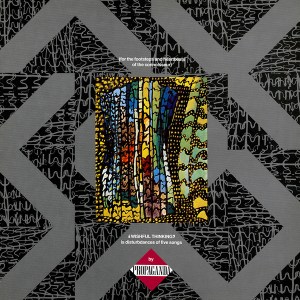
But maybe a lesser-known example is Propaganda’s Wishful Thinking, a reworking of the Düsseldorf unit’s seminal 1985 album A Secret Wish, originally produced by Stephen Lipson (with one track – ‘Dr Mabuse’ –  helmed by Horn). A Secret Wish’s stock seems to keep rising year after year, gaining more fans and sounding better than ever. But Wishful Thinking is a weird project, to say the least.

Co-remixer (alongside former tape op Bob Kraushaar) Paul Morley’s absurd liner notes quote Goethe and boast that the album is the result of ’39 studio hours’, which, by ZTT’s painstaking standards, doesn’t actually sound like much.

But it’s a thrilling, epic collection just the same, regurgitating many of the original album’s sonic motifs but in a different order and a different place on the stereo spectrum. ‘Machined’ reimagines ‘P-Machinery’ as a mid-tempo minimalist piece, featuring mainly Claudia Brucken’s vocals and gentle drums.

‘Jewelled’ fuses the two versions of ‘Duel’ from the original album, mixing her ‘angry’ vocals with the backing from the ‘pop’ version. It’s pretty funny and genuinely surreal. Hidden elements embedded in the original mix are subtly revealed, like Lipson’s chiming guitars on ‘Laughing’. ‘Loving’ exposes and amplifies Andy Richards’ gorgeous piano and synth from ‘The Murder Of Love’, finally revealing it as the fantastic pop song it is.

The two versions of ‘Dr Mabuse’ bring out Horn’s genius and natural flair for the dynamic, showcasing not one but two brilliant bass vamps and a whole host of other sonic delights (thrillingly, one version is used in the absurd opening credits of John Hughes’s 1987 movie ‘Some Kind Of Wonderful’).

But possibly the best track on Wishful Thinking is the closing ‘Thought’, an excerpt of the band’s version of Throbbing Gristle’s ‘Discipline’. All in all, it’s an epic, exciting hour of music, and a real one-off. For anyone still fascinated by A Secret Wish, as this writer is, it’s required listening. The band probably hated it, though Brucken did donate one of her paintings for use on the cover (but then she was married to Morley at the time…).

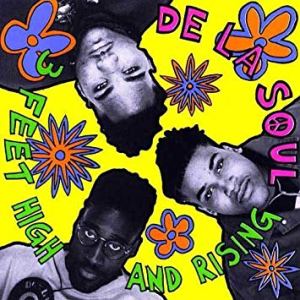
De La Soul: 3 Feet High And Rising 30 Years Old Today

The citizens of Punxsutawney have the groundhog to tell them whether there’ll be an early spring (much to Phil Connors’ disgust).

But my yardstick is generally: is it time to listen to 3 Feet High And Rising yet? Perhaps prompted by the recent freakishly-warm weather in London, the answer is a resounding yes.

Because De La Soul’s debut album, released 30 years ago today, can refresh the most jaded of pop palettes and may be the ultimate summer record.

At my school, it was all the rage and a relief from the incessant INXS, Simple Minds and U2. Probably because De La Soul were from the suburbs of Long Island rather than the inner city, they brought a playful spirit and much-needed humour to hip-hop.

It also reminded older music fans (or – let’s be honest – music critics) of that other ‘summer of love’ anthem, Sgt Pepper, even if the band denied any knowledge of that album.

To my ears, it was the first time sampling was used to bring about a truly surreal vision of music. This was a carefree world where it was perfectly normal for a ‘how to speak French’ lesson to accompany The Turtles’ ‘You Showed Me’, or for Sly Stone’s ‘Poet’ to back up some nursery-rhyme rapping.

Liberace, The Headhunters, Fats Domino; they were all fair game (though controversial – see below). If it sounded good, it was good.

There’s a silly-but-funny fake quiz show schtick running through the album and it’s not often you hear a whispered rap. Almost every track is under three minutes.

There are rhymes about school, haircuts and soap, and if you don’t like one song, there’ll be another one along very shortly.

3 Feet High And Rising was the gateway to some brilliant retro music too, especially for my generation who were too young or not even born the first time around.

A theory: it single-handedly led to a resurgence of interest in Hall & Oates, Steely Dan, early Michael Jackson and Funkadelic.

At the time of writing, the album is unavailable on streaming platforms, pending a stand-off between the band and Tommy Boy Records. Is it karmic payback for the boys being so trigger-happy with the samples? Who knows.

But it doesn’t stop 3 Feet High And Rising being a classic of the ’80s or any other decade.

Frank Gambale Live! 30 Years On

I’ll never forget it. Circa 1990, I was on holiday with my parents in Kent, near the Cliffs of Dover.

A summer storm was chucking it down. Holed up inside, I flicked through some French music stations on my longwave radio.

Suddenly I heard this absolutely ridiculous guitar playing – deafeningly loud, hysterical, but totally precise, with great phrasing and notes that spluttered out in absurdly wide intervals.

The tone was heavily distorted but the feel was closer to jazz/rock than metal. And the rhythm section didn’t sound too shabby either.

By this time, I had heard Allan Holdsworth, Paul Gilbert, Yngwie Malmsteen, John McLaughlin, some pretty outrageous guitarists, but this was different. Who the hell was it? I strained my ears and just about heard the French DJ utter the words ‘Frank Gambale’.

Yes, it was the Italian-Australian wunderkind, the man who introduced so-called ‘sweep picking’ to a wider audience than before. And the album was revealed to be Live!, released 30 years ago this week and recorded at LA’s jazz/rock haven The Baked Potato on 21st August 1988.

What was really weird was that I had heard Gambale with the Chick Corea Elektric band before this, and even seen them live a few times, but he seemed pretty anonymous in that band.

Not here. To this day, ‘Credit Reference Blues’, ‘Fe Fi Fo Funk’, ‘Touch Of Brasil’ and ‘The Natives Are Restless’ sound like guitar landmarks.

But he was way more than a chops phenomenon – he’s an excellent composer too, clearly influenced by Chick Corea and Larry Carlton but with some moves all of his own.

The album also introduced me to the fantastic Joey Heredia on drums, a completely original player who can do fiery jazz/rock, spicy Latin and Police-style rock, sometimes all in the space of one tune. And the excellent keyboard player Kei Akagi was moonlighting with Miles Davis while playing some sh*t-hot stuff on this album.

Frank Gambale Live! was a key artefact in the golden age of shred guitar, and it gained him some crossover success with metal fans and lots of coverage in guitar magazines.

Sadly his solo career refused to fire after this release, with only moments of 1990’s Thunder From Down Under subsequently holding much interest for me, but this was a sporadically brilliant live jazz/rock album – and one of the best. (It has to be said, there’s not much competition – Larry Carlton’s Last Nite, Weather Report’s 8:30, Jeff Beck With The Jan Hammer Group Live!, Mahavishnu’s Between Nothingness And Eternity, and…er…)

Narada Michael Walden: Looking At You, Looking At Me/The Nature Of Things/Divine Emotion

Singing drummers: the ’80s were chock-a-block with ’em.

But Narada seems a somewhat forgotten example, at least compared to the far more popular Phil C, Don H, Stevie W and Sheila E.

Yet he started the decade as the one you’d probably have put your money on, ending the ’70s as he did with an impressive run of R’n’B hits.

Narada had of course started his music career as a jazz/rock drumming tornado in the second incarnation of John McLaughlin’s mighty Mahavishnu Orchestra, going on to record famous fusion sides with Jeff Beck, Weather Report, Tommy Bolin, Alphonso Johnson and Jaco Pastorius.

During the ’80s, he was one of the most in-demand producers on the planet, helming Whitney Houston’s ‘I Wanna Dance With Somebody’, Aretha Franklin/George Michael’s ‘I Knew You Were Waiting For Me’ and Starship’s ‘Nothing’s Gonna Stop Us Now’. But his solo career was somewhat in limbo during this period, so it’s fascinating to check out a new, nicely-appointed three-album survey of his 1983-1988 output.

Looking At You, Looking At Me (1983) is the best of the three albums, but a frustratingly inconsistent record. Listening to the superb title track, you’d think he might have found hit his true metier, a languid, luxurious, West Coast pop/jazz, similar to the kind of music Al Jarreau or Manhattan Transfer were making at the time.

But an OK duet with Angela Bofill, passable cover of ‘Reach Out (I’ll Be There)’ and sick drum-machine/horn workout ‘Shake It Off’ aside, the rest of the album is fairly unmemorable R’n’B with occasional virtuosity from guitarist Corrado Rustici and bassist Randy Jackson.

The followup, 1985’s Nature Of Things, is even more problematic, sounding mainly like a kind of soft R’n’B version of the ‘Top Gun’ soundtrack, with way too many synth-based ballads. But Divine Emotion (1988) was a partial return to form, led by the effervescent title track (with one of the great ’80s basslines) which gave him a timely UK hit. Narada had obviously been prompted into action by his highly successful production work – his vocals and arrangements have never been better.

But while Divine Emotion sounds like a million dollars, there are still issues on the songwriting front. Put simply, only the title track, ‘But What Up Doh’ and closer ‘We Still Have A Dream’ have memorable hooks (the latter also features some brilliant jazz/rock kit work from Narada).

One wonders what might have happened if he had hooked up with some great ‘pop’ songwriters like Kenny Loggins, Rod Temperton, Michael McDonald, Carole Bayer Sager or even Burt Bacharach at the outset of the decade rather than relentlessly ploughing his own furrow; ‘Looking At Me, Looking At You’ offers tantalising possibilities.

But looking at his career as a whole, it’s all turned out fine – Narada’s always been one of the coolest, most talented musician/producers around, and apparently he’s a joy to work with.

Mark Isham: Vapor Drawings 35 Years On

Did any music of lasting worth come out of the early ’80s ‘New Age’ boom?

Mark Isham’s brief but inspired Windham Hill catalogue still cuts the mustard.

The trumpeter/keyboardist/composer’s Vapor Drawings, released 35 years ago this weekend, was a remarkably assured, fully-formed debut album, recorded when he was part of Van Morrison’s band and also enjoying a varied session career.

I distinctly remember hearing a track from it in the mid-1980s on a short-lived ‘new age’ BBC radio show whose name escapes me. And weirdly, Isham mixed the album 100 yards from my childhood home during spring 1983 at John Kongos’s Tapestry Studios.

Synths are Vapor Drawings’ main ingredient but Isham uses them in subtly original ways, using sequencers to build Steve Reich-inspired ‘systems’ or – one of his trademarks – getting them to hang in the air like sky lanterns.

The music defies categorisation, mostly hovering in the hinterland between ambient, minimalism, electronica and jazz (he even throws in a quote from Sonny Rollins’ ‘Oleo’ on ‘Raffles In Rio’).

But there’s always the human element courtesy of his superb trumpet and piano playing. Erik Satie is also an apparent inspiration, and possibly what David Sylvian picked up on when he invited Isham into the studio to record Brilliant Trees later in 1983.

It’s no surprise Isham has become one of the most in-demand soundtrack composers of the last 30 years – ‘On The Threshold Of Liberty’ (named after a Magritte painting), ‘Men Before The Mirror’ and ‘Sympathy And Acknowledgement’ are epic and rousing.

’83 proved to be a bit of an annus mirabilis for Isham, hooking up with Sylvian and also working with Gil Evans at the Montreux Jazz Festival. Vapor Drawings is the first and best of his solo albums. Happy birthday to an unsung classic.

Stanley Clarke: The Message

Stanley’s music first grabbed me sometime in the mid-’80s.
It was the bassist/composer’s incredible 1974 self-titled album featuring Tony Williams on drums, Jan Hammer on keyboards and Bill Connors on guitar.

Clarke remains a hero – I still greet his new albums with some enthusiasm and his career seems to have enjoyed a new lease of life over the last 10 years or so.

2006’s Toys Of Men was a huge return to form, and releases since then have been prolific if less impressive.

Which brings us to Stanley’s new album, The Message. It continues his tried-and-tested formula: some sh*t-kickin’, symphonic jazz/rock, vocal-based R’n’B, acoustic interludes with a classical bent and brief novelty curios featuring some guest star or other (this time Doug E Fresh on rapping and human beatbox).

On previous classics like School Days and If This Bass Could Only Talk, the formula worked a treat. But this time, besides the typically great playing, there are a few issues – with Stanley’s production, compositions and ‘message’.

The opener ‘And Ya Know We’re Missing You’ is a tribute to all of the following: Al Jarreau, Ndugu Chancler, Tom Petty, Chuck Berry and Larry Coryell. It sounds suspiciously like a demo, complete with distortion and rudimentary ‘slap in E’ groove. Sure, he can pay tribute to whoever he likes in whichever way he deems suitable, but this seems a really uncommitted two minutes of music.

A re-tread of the Return To Forever classic ‘After The Cosmic Rain’ also emphasises the problem with contemporary production. The new one sounds hemmed in, dried out, panicky. Drummer Mike Mitchell must take some of the blame too – he has perfected the lightning-fast single-stroke rolls but they get boring very quickly. It doesn’t help that he tunes his drums to choking point.

There are substantial pieces of music here: the title track, ‘The Rugged Truth’ and ‘The Legend Of The Abbas And The Sacred Talisman’ are great compositions which bear comparison with Stanley classics like ‘Light As A Feather’, ‘Life Is Just A Game’ and ‘Song To John’.

The acoustic-bass take on Bach’s Cello Suite is gorgeous too, but a few other tracks are beyond help – the treacly ‘Lost In A World’ and ‘To Be Alive’ irritate, while only Stanley knows what’s behind ‘Combat Continuum’, a nutty futuristic spoken-word/fusion piece about impending war.

What a shame. It could have been a classic, but The Message has 5/10 written all over it. It’s definitely one for filleting on streaming services though, and I’m sure the music will come alive in concert.

The Message is out now on Mack Avenue.

September Songs: David Sylvian’s Brilliant Trees

September’s here again. The leaves brown, the nights draw in; thoughts and ears turn towards Sylvian’s music.

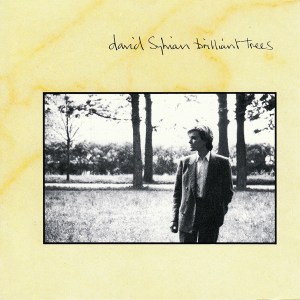
The exquisite Brilliant Trees, released in July 1984is one of those collections that I must have owned on almost every format over the years, and probably bought a few times on each.

A period of extreme introspection and even depression descended upon Sylvian following the split of Japan in late 1982.

Although his relationship with Mick Karn’s ex Yuka Fujii (who took the photos in the stylish Brilliant Trees album package) was largely thought to be the main catalyst, it still represented for Sylvian a distressing rupture of childhood friendships.

He later claimed that he could barely stay awake during this period, so degraded were his immune system and emotional reserves.

Sylvian gathered co-producer Steve Nye and some of his favourite musicians at Berlin’s Hansa Studios and RAK in London. Influences came from ambient music, NYC avant-funk, John Martyn, Nick Drake and ECM jazz.

His friend/ frequent collaborator Ryuichi Sakamoto and brother Steve Jansen were the main musical cohorts, though ex-Japan keyboard texturalist Richard Barbieri also appeared to great effect.

Brilliant Trees is very much an album of two sides. The opener ‘Pulling Punches’ is a sweetener, an effective but unrepresentative slice of white funk featuring NYC sessioneers Wayne Braithwaite and Ronnie Drayton on bass and guitar. The nearest thing to the Tin Drum sound, there’s nothing remotely like it on the rest of the album.

What a treat to hear Kenny Wheeler and Mark Isham’s flugelhorn/trumpet breaks on the classic singles ‘Ink In The Well’ (UK #36) and ‘Red Guitar’ (UK #17). Side two is a different matter altogether – it’s dark, foreboding, autumnal.

Sylvian and Nye mostly eschew ‘conventional’ solos in favour of ‘found’ sounds courtesy of Holger Czukay’s Dictaphone (see below) or Jon Hassell’s extraordinary conch-like trumpet, both used to especially brilliant effect on ‘Wailing Wall’.

‘Backwater’ begins with a powerful build up of (sampled?) strings (and check out Jansen’s inspired groove, a queasy 6/4 over a very strange programmed shaker pattern), while the almost hymnal title track is beautifully performed by Sylvian and adorned with a gorgeous ethno-jam outro.

Listening 30 years on, what strikes one is the minimalist nature of the whole album. It has dated remarkably well. Many tracks are built around a cyclical Jansen groove, sparse bass, strong Sylvian melody and then tasteful, painterly touches from clean guitar, piano, Dictaphone or synth.

This stunning collection set in motion a superb four-album run of form for Sylvian. Brilliant Trees is an almost-perfect blend of songcraft and the avant-garde at a time when pop was drawing on jazz, ambient and world music to occasionally spectacular – and commercial – effect (the album reached #4 in the UK charts and sold over 100,000 copies). You might say things were never quite the same again.

Ornette Coleman & Prime Time: Virgin Beauty 30 Years On

Who are the great pop and jazz melodicists?

Paul McCartney, Brian Wilson, Paddy McAloon, George Gershwin, Cole Porter, Stephen Sondheim, Burt Bacharach, Becker & Fagen, Miles, Paul Desmond, Charlie Parker?

Ornette has to make that list too. He’s virtually incapable of playing a fatuous phrase, even when his accompanists seem to be scrambling eggs.

Virgin Beauty, released 30 years ago, was and will now always remain a bit of an anomaly in his discography, a one-off album on CBS subsidiary Portrait Records (which also released Stanley Clarke’s If This Bass Could Only Talk) and marketed as ‘Ornette does fusion’.

Which is a bit like asking Miles to do ‘pop’: i.e. you can market it any way you want, but it’s gonna be a totally personal vision.

Ornette’s version of fusion contains elements of country and western, space-invader electro, early hip-hop and, of course, pure harmolodic hijinks.

I hadn’t heard Virgin Beauty for years but loved revisiting it this week. It’s on an old cassette sandwiched between Brian Eno’s Nerve Net and George Clinton’s Computer Games – perfect bedfellows.

First of all, it’s worth noting that this writer’s main reaction to hearing it again was pure amusement. It actually inspired a full-on giggling fit. Everything sounds a bit wonky; the Chick Corea Elektric Band it ain’t.

Ornette’s beautiful alto is always just out of tune (though his trumpet playing is surprisingly in tune) and Chris Walker’s fretless-bass intonation is far from perfect.

Two rhythm guitarists (Bern Nix and Charles Ellerbee) chatter away in different keys and Ornette’s son Denardo programs some drum machines, hits some acoustic drums, some electric drums and a slightly incongruous jazz ride cymbal. The Grateful Dead’s Jerry Garcia drops in for a few enjoyably ramshackle guitar solos.

The mix is also distinctly lacking in bass. It’s one of the first albums I’ve listened to in the past few years when I’ve had to turn the bass UP. Which is a good thing, because Al MacDowell’s playing is sometimes fairly astonishing. He even throws in a few quotes from ‘Yakety Sax’.

Virgin Beauty was the natural peak for Ornette’s Prime Time band but a bit of a cul-de-sac career-wise. It would be seven long years before his next solo studio album Tone Dialling. The record companies never got their ‘fusion’ record – thankfully.

Scritti Politti’s Provision: 30 Years Old Today

A pop formula can be a dangerous thing. In Scritti mainman Green Gartside’s case, it was literally dangerous – dangerous to his physical and mental health.

He speaks of their 1988 album Provision with something akin to dread these days, lamenting the three-year recording process (no less than 10 studios are listed in the credits) and then ‘a year of hell’ – his words – promoting it (epitomised by the fairly dire ‘Boom! There She Was’ video).

A full-blown breakdown followed, and he now says he wished he’d had the guts to explore the hip-hop sounds that had begun to enthrall him around ’86/’87.

But, to these ears, Provision is an almost-perfect follow-up to the classic Cupid & Psyche ’85. There’s arguably more cohesion – Gartside and keyboard-playing cohort David Gamson co-wrote and co-produced all tracks (no Arif Mardin this time) and the guest spots from Miles Davis, Roger Troutman and Marcus Miller are expertly placed.

‘Sweetness’ is the word that seems to follows Scritti around. And despite containing two classic ballads (‘Overnite’, ‘Oh Patti’), Provision is unashamedly happy music – all the songs are in major keys – and for me it’s one of the ultimate summer albums (’88 was a great year in this regard, Provision sharing disc space with Thomas Dolby’s Aliens Ate My Buick, Prefab’s From Langley Park To Memphis, Prince’s Lovesexy and Joni’s Chalk Mark In A Rainstorm).

But Green’s lyrics are always subtly subversive. ‘Sugar And Spice’ may be about anal sex or drugs (or both!), ‘Boom’ references Immanuel Kant and a ‘pharmacopoeia’ (dictionary of drugs), amusingly lip-syched by Gartside in the video, while his interest in Marxism is never far from the surface of even the most seemingly-straightforward ‘boy/girl’ song.

And is there a Grammy award for arrangement? If so, Provision should have won. Gamson and Green do some intricate things here with backing vocals (check out ‘Bam Salute’), rhythm guitars and synth syncopation. No-one else has really explored similar areas, including the greats of ’80s R’n’B. No wonder Miles was a bit obsessed with Scritti.

Yes, the songs on side two are a bit too long and possibly point to a dearth of material, and the album could also do with a real drummer (Steve Ferrone, Vinnie Colaiuta?). Provision missed the top 100 in the States but made the top 10 in the UK (selling over 100,000 copies) and produced one top 20 hit in ‘Oh Patti’. Writer Nick Coleman gave the album a 9/10 rave in the NME, calling its songs ‘sweeties to rot your teeth and detonate your heart’.

Hear, hear. That ‘sweetness’ again…

Prince’s Lovesexy: 30 Years Old Today

Why is Lovesexy probably Prince’s least-heralded, least-mentioned album of the 1980s? Even Dirty Mind, Controversy and Batman seem to get a better rap these days.

The cover photo said it all – this was Prince’s ‘spiritual rebirth’ album, and you were either in or out.

Lovesexy was also a response to his alleged dabbling with psychedelic drugs (apparently taking place on 1 December 1987) that shook him to his core, and also a response to the highly sexualised, uncharacteristically angry Black Album. He once said, ‘I realised that if I released that album and died, that’s what people would remember me for. I could feel this wind and I knew I was doing the wrong thing…’

So Prince shelved The Black AlbumLovesexy was the speedily-recorded, musically-rich antidote. It’s one of the most challenging albums of Prince’s career but also one of the most rewarding. From the opening synth chords and Ingrid Chavez’s brief ‘poetry’, it’s clear that this is something pretty special. And different.

The horn arrangements are downright loopy throughout. Discordant, dissonant. Instruments are layered to sometimes disconcerting effect. Comparisons to Zappa are not inappropriate. Prince also dials in a lot of his spiritual concerns, with God competing against the Devil (or ‘Spooky Electric’), the purity of the spiritual life competing against the sins of the flesh. With a few jokes.

For many, including saxophonist Eric Leeds, the result was a bit of a mess: ‘I thought it was going to be a great album, but when I heard the final mixes, I was very disappointed. I thought he had completely over-produced the music…’

But the savvy so-and-so that Prince was, he was also careful to throw in three of his most irresistible, ‘throwaway’ pop tunes – ‘Alphabet Street’, ‘Dance On’ and ‘I Wish U Heaven’ – and one of the finest ballads of his career, ‘When 2 R In Love’.

At once scary, profound, silly, funny, romantic and outrageous, Lovesexy still sounds fantastic 30 years on. It was Prince’s first UK #1 album and spawned probably the best tour of his career.