Six 1980s Christmas Songs Not Just For Christmas

3175516482_2745396c60_bCrimbo, eh, readers?

The ’80s certainly has its fair share of duff Christmas tracks, maybe more than most decades, but at least there was a lot of variety.

The Christmas number one suddenly had prestige. Consequently a huge variety of artists tried their luck from Sting, The Eurythmics and U2 to Siouxsie And The Banshees, Jethro Tull and Depeche Mode.

Here are six Christmas singles from the 1980s that I could just about tolerate hearing any time of the year.

6. The Waitresses: Christmas Wrapping (1981)
The New York new-wavers’ charmingly-ramshackle little number has only grown in stature as a seasonal favourite despite not even making the UK top 100 on its December 1981 release.

5. The Three Wise Men: Thanks For Christmas (1983)
XTC in disguise. Andy Partridge came up with this very pleasant but almost totally ignored singalong, unfortunately released smack-bang in the middle of a period when the Swindon three-piece couldn’t get arrested. But what’s really cool about ‘Thanks For Christmas’ is THAT chord change…

4. David Bowie/Bing Crosby: Peace On Earth/Little Drummer Boy (1982)
Just two days on from taping a superb performance of ‘Heroes’ and a duet with Marc Bolan on the ‘Marc’ TV show, Bowie was invited onto Bing’s ‘Merrie Olde Christmas’ to film this great and genuinely surreal clip on 11th September 1977. Apparently the ‘Peace On Earth’ segment of the song was composed on the day of filming (by the show’s music consultants Ian Fraser and Larry Grossman) and rehearsed for only an hour before the cameras rolled – pretty impressive. When finally released as a single in 1982, ‘Peace On Earth/Little Drummer Boy’ peaked at number three in the chart. Was it a subconscious influence on the wistful ‘Fantastic Voyage’ released just over a year later?

3. Jona Lewie: Stop The Cavalry (1980)
Nothing says 1980 to me like this strange little Christmas song (though, according to Lewie, it wasn’t intended as such) which peaked at UK number three, only kept off the top spot by two posthumous John Lennon singles.

2. Band Aid: Do They Know It’s Christmas (1984)
Yes, it’s as over-familiar as an uncle’s Boxing Day bear hug, but it retains some power due to its musical-chairs approach, great Boy George vocals and the lack of a proper chorus. I think it was the first 7” single I actually went out and bought.

1. The Pogues Featuring Kirsty MacColl: Fairytale Of New York (1987)
Only the hardest heart could deny the poignancy of this all-time classic. Written, arranged, played and sung with consummate care, this tale of doomed love in the Big Apple reached number two in December 1987.

Happy Christmas to one and all.

The Sundays: Can’t Be Sure

the sundays

I don’t recall seeing this excellent band on TV or hearing them on the radio back in 1989/1990.

To this day, I don’t really know what they look like and don’t want to know. Though their debut single ‘Can’t Be Sure’ was released in January 1989 and reached just #45 in the singles charts, it ended the year as number one in John Peel’s Festive Fifty. The track also has a weird prog connection – it was (excellently) co-produced by Ray Shulman, a founding member of Gentle Giant.

‘Can’t Be Sure’ and its attendant classic album Reading, Writing And Arithmetic now seem redolent of a far gentler time, an era of hope and innocence, pre-Grunge and Britpop. For that reason, along with the Cocteaus’ Heaven Or Las Vegas, they’re quite hard to listen to now but no less powerful. The Sundays were also arguably a very influential band on many inferior acts (The Cranberries, The Corrs etc etc).

sundays

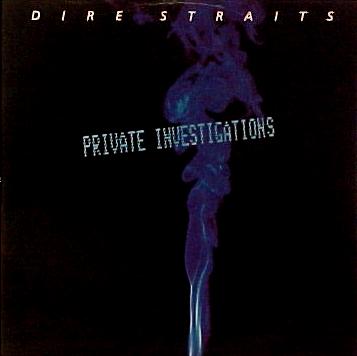
Story Of A Song: Dire Straits’ ‘Private Investigations’ (1981)

Andy Beckett’s excellent new book ‘Promised You A Miracle UK80-82’ has got me thinking about the early ’80s a lot.

It was in many ways a bleak time in the UK (temporarily lightened by the Royal Wedding and Ian Botham’s cricket heroics against the Aussies), mainly defined by Thatcher’s deeply unpopular government, the Yorkshire Ripper murders, various terrorist attacks and fears of a nuclear war that were hardly appeased by the terrifying ‘Protect And Survive’ public information films.

dire straits

Contemporary pop generally railed against this attitude, wresting some much-needed fun and glamour from the gloom.

Although ‘Private Investigations’ shares almost nothing with prevailing musical trends of the period (and Mark Knopfler saved his reaction to the Falklands War for Brothers In Arms‘ title track), it continues to hold my fascination.

These days it’s hard to read the song as anything other than a portrait of a love affair gone wrong, emphasised by the slightly dodgy video.

The song’s protagonist is fixated on looking for clues of his paramour’s infidelities, so he goes ‘checking out the reports’ and ‘digging up the dirt’, finding some ‘confidential information in the diary’.

We never found out exactly what he finds but it definitely ain’t good; in this song, to discover the truth of a relationship is a fate worse than death, leaving one ‘scarred for life’ with ‘no compensation’.

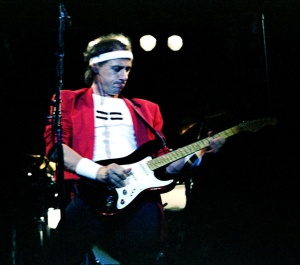
Love Over Gold Tour, Zagreb, 1983

Love Over Gold Tour, Zagreb, 1983

I love the track’s sonic detail. The sense of drama and use of dynamics leaves other contemporary pop for dust.

The stereo spectrum is used as a kind of panaromic field across which various sonic events are ‘placed’ to fit the narrative, including Mike Mainieri’s intricate marimba and subtle bits of percussion.

The result is a kind of mini-movie set to music, best listened to with headphones. Ennio Morricone couldn’t have done it better. You could argue that ‘Private Investigations’ was the catalyst for all Knopfler’s film soundtrack work.

He also demonstrates a mastery of many guitar styles on the track, from the nylon-string acoustic main theme/mini-solos through to the power-chorded interjections towards the end, the latter frequently inspiring some of my uncle’s most spirited air guitar-playing back in the ’80s.

Then Knopfler’s volume-pedal swell perfectly imitates a cat’s nocturnal howl. The last section, with its picked-bass/kick-drum heartbeat and Alan Clark’s chiming piano chords, seems very influenced by the title track of Steely Dan’s ‘Royal Scam‘.

I love that glass (window?) breaking and the click of a suitcase opening, or is it the latch of a door being tampered with? The space in the track forces you to focus on these details. It all adds up to something akin to Knopfler’s version of Peter Gabriel’s ‘Intruder’.

Astonishingly, in a slightly edited form, ‘Private Investigations’ reached UK number 2 in September 1982 (sitting incongruously in the top 10 alongside ABC, Duran Duran, Dexys, Shalamar and The Kids From Fame!), a sure signifier as to just how much better the charts were back then.

The track’s accompanying album, Love Over Gold, is seen as somewhat of a disappointment in Dire Straits’ discography, and I can’t say that any of its other tracks have had much effect on me.

But now that the nights are drawing in and the blinds are being shut, it’s always fun to dim the lights and give ‘Private Investigations’ a spin. The game commences…

The Tube: The Best ’80s Music Show?

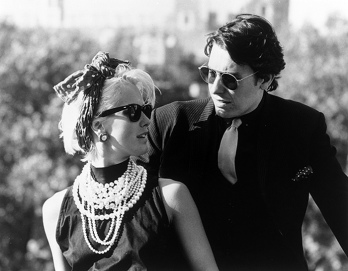
Paula and Jools

Paula and Jools

My favourite music show still is and probably always will be ‘The Tube’, which ran on Friday nights between 1982 and 1987 and was presented mainly by Jools Holland and Paula Yates.

Though Jools has found his niche presenting the very successful ‘Later…’ series for BBC1, I preferred the more youthful, risky, ‘uncut’ Holland (who was given a hefty slap on the wrist when he famously trailed the show one week by saying people who watched it were ‘groovy f***ers’!) and he had a great chemistry with the intelligent, funny and sexy Paula.

From week to week, you could never guess what you were going to see. There were live bands, star interviews, specially-filmed videos, on-location featurettes and weird bits of alternative comedy usually involving Rik Mayall in various degrees of drunkenness.

Some of it was great, some of it was OK and some of it was crap, but you couldn’t take your eyes off it. It helped launch some careers (Twisted Sister, Fine Young Cannibals, Frankie Goes To Hollywood, Terence Trent D’Arby) and relaunch others, and you could see every type of music on the show – Metal, Goth, Funk, Fusion, Indie, Pop, Soul – all in the spirit of discovery without any pandering reverence or bourgeois pretension.

And though the show featured many huge names, it also embraced up-and-comers: if your band was any good, had some fans and a decent plugger, you were on. And there was a bar on the set too. Here are a few clips from ‘The Tube’ that have stuck in the memory:

5. The Bangles – ‘Manic Monday’

Check out the creepy guy at the front staring straight at Susanna Hoffs throughout, almost blocking the camera. Full marks to the girls for giving the (Prince-penned) song their all despite a dumbstruck Newcastle crowd. Tight harmonies.

4. Billy Mackenzie interview, 1985

One of those great, weird, un-PR’d interviews that popped up now and again. A post-‘Party Fears Two’ Billy is clearly taking the piss throughout, in the nicest possible way, and it also shows how The Tube wasn’t scared of going out into the ‘provinces’ (Dundee in this case).

3. Cocteau Twins – ‘Pink Orange And Red’

Great haircuts, great voice, great guitar sound and underwater bass. The golden age of goth/pop.

2. Blancmange – ‘Living On The Ceiling’

Good hair again, and someone or something is making singer Neil Arthur struggle to keep a straight face throughout.

1. Prefab Sprout – ‘Cruel’

This little Bacharach-influenced bossa nova was my first glimpse of the marvellous Prefab.

From Diva To De Palma: Seven Soundtrack Moments

withnail

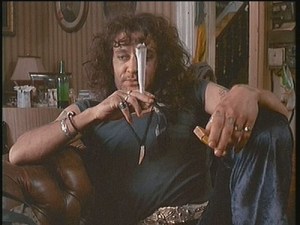
Ralph Brown as Danny in ‘Withnail & I’

When it comes to the marriage of sound and vision, there’s a particular kind of ’80s cliché probably originating from the work of directors like Ridley/Tony Scott, Adrian Lyne, Hugh Hudson and Alan Parker (interestingly, all Brits who ended up in Hollywood).

It’s basically a slick, beautifully-shot montage of images usually accompanied by vaguely ‘New Age’ kind of music which probably features some Satie-esque piano, possibly some strings (synthesized or real) and/or a bit of acoustic guitar or sax.

Well, I’m here to tell you that this combo is pure comfort food for me in these troubled times. It must be another of those ‘blokes of a certain age’ things. And it turns out that some of those directors also produced some of my favourite movie soundtrack moments of the ’80s:

7. Diva (1981)
Composer Vladimir Cosma channels Erik Satie, Peter Gabriel and Tangerine Dream to create a beguiling mix of solo piano, bleak new-wave rock and classic minimalism. I don’t ‘do’ opera but the two versions of Catalani’s ‘La Wally’ which bookend this superb album get me every time.

6. Angel Heart (1987)
A bleak synth swells in the distance, De Niro (?) whispers ‘Johnny… Johnny…’ and we’re off. Courtney Pine blows impressively over Trevor Jones’ ambient backing and the rest of the album features some excellent crooner tunes and R’n’B too.

5. Blow Out (1981)
Melody-maestro Pino Donaggio pulls out all the stops for this rather beautiful theme which accompanies director Brian De Palma’s most ’emotional’ movie slaying…

4. Betty Blue (1986)
Gabriel Yared’s haunting soundtrack for this famously-overrated art-house melodrama gives me an instant nostalgia rush. Very influential too, particularly on the next choice.

3. Withnail & I (1987)
David Dundas and Rick Wentworth’s music perfectly evokes some of the film’s themes darker themes, though the blues guitar licks were perhaps best left out of the final mix.

2. 9 1/2 Weeks (1986)
The bizarre, chameleon-like career of pianist/composer Jack Nitzsche is one for another time, but his ‘love theme’ from Adrian Lyne’s guilty pleasure is sentimental, hokey and clichéd, and gets me every time. There are other crackers by Jean-Michel Jarre, Brian Eno and The Eurythmics on the quite-hard-to-find soundtrack album.

1. Mrs Soffel (1984)
A confession – I’ve never seen this movie. And I’m really not sure I ever will. But Mark Isham’s majestic theme never fails to beguile, originally heard on a mid-’80s Windham Hill Records taster cassette.

Working Week: Does Jazz Go Into Pop?

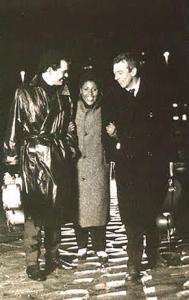
Simon Booth, Juliet Roberts and Larry Stabbins of Working Week

Simon Booth, Juliet Roberts and Larry Stabbins of Working Week

I’ve just had the pleasure of writing the liner notes to a really good new live album by Working Week, possibly the premier jazz/pop band of the 1980s.

It got me thinking about why jazz has totally disappeared from the charts and why the first half of the ’80s seemed the perfect time for jazz and pop to co-exist, especially in the UK.

Here an excerpt from the notes:

‘Does jazz go into pop? Judging by the current music scene, the answer would appear to be an unequivocal ‘no’, but, for a golden period in the early-to-mid ’80s, it seemed as if the two styles could happily co-exist.

Artists like David Sylvian, John Martyn, Hue and Cry, Elvis Costello, Kate Bush, The Rolling Stones, Sting, Danny Wilson, Swing Out Sister, Joe Jackson and Everything But The Girl smuggled some cool chords into the charts introduced the pop audience to players of the calibre of Kenny Wheeler, Harry Beckett, Lester Bowie, Michael Brecker, Ronnie Scott, Eberhard Weber, Sonny Rollins, Guy Barker, Kenny Kirkland and Branford Marsalis.

Sade, Carmel, The Style Council and Matt Bianco’s fusion of jazz and pop wasn’t everyone’s cup of tea but all of them had big hits. The Stranglers’ ‘Golden Brown’ was a jazz waltz (with a few bars of 4/4 thrown in) which got to number one!

The advertising and TV industries played ball and a full-scale jazz ‘revival’ was underway, documented in classic 1986 documentary ’10 Days That Shook Soho’. Courtney Pine and Miles Davis shared space on the UK album chart, Wynton Marsalis made the cover of Time and you could even catch Loose Tubes, Tommy Chase and Andy Sheppard on primetime terrestrial TV.

DJs Paul Murphy, Baz Fe Jazz, Patrick Forge and Gilles Peterson packed out Camden’s Dingwalls and the Electric Ballroom and young hepcats were dancing to Cannonball Adderley, Roy Ayers, Donald Byrd, Art Blakey and Lee Morgan.

Dancers at Dingwalls, London, 1988

Dancers at Dingwalls, London, 1988

Though older British jazzers such as Stan Tracey, Keith Tippett and Mike Westbrook (and some younger ones too) naturally viewed this latest revival with some suspicion, at least it was a relief from the extremely precarious ’70s when rock, funk and fusion almost subsumed jazz.

The old guard hung on, gigging in the back rooms of pubs, picking up occasional free improve shows in Europe or moonlighting in West End pit orchestras. But then punk came along, and it affected more than just disenfranchised young rock fans – its DIY ethos breathed new life into jazz too. Bands like Rip Rig + Panic and Pigbag made huge strides in engaging a youthful, receptive audience. Pigbag even made it onto ‘Top Of The Pops’…twice!

But it was Working Week, co-founded in 1983 by saxophonist Larry Stabbins and guitarist Simon Booth, who really typified the successful fusion of jazz and pop in mid-‘80s. Formed in 1983 from the ashes of jazz/post-punk outfit Weekend (whose ‘The View From Her Room‘ was a confirmed early-’80s club classic), initially Working Week was almost the de facto house band for the emerging scene, with the infectiously exuberant IDJ dancers often joining them onstage.

Robert Wyatt and Tracey Thorn duetted on classic single ‘Venceremos – We Will Win’ which briefly made an appearance on the UK singles chart in late 1984. The accompanying album Working Nights, featuring other Brit jazz legends Guy Barker, Harry Beckett and Annie Whitehead and produced by Sade’s regular helmer Robin Millar, reached a sprightly number 23 in the UK album chart soon after…’

Read more in the Working Week live album.

Six Dodgy Vocal Performances Of The 1980s

Vocal-BoothIt’s fair to say that the 1980s spawned more than a few overproduced records.

Certainly in the second half of the decade, itchy-fingered knob-twiddlers were very quick to swamp a track with all the latest technical gizmos.

But it’s also a producer’s job to get the best out of the musicians and singers he/she is working with, and to that extent the 1980s produced a surprising amount of suspect vocal performances.

Of course, there’s such a thing as good out-of-tune (Dylan, Chrissie Hynde, Neil Young, Randy Newman, Lou Reed, Boy George, Wayne Coyne) but there’s also just…out-of-tune.

Producers often claim that a ‘pitchy’ vocal is acceptable if the emotional force is there, but sometimes you just have to say: ‘Let’s try that one again’ (apparently rarely a problem for one-take masters David Bowie, Aretha Franklin and Billy Mackenzie, though the latter would insist on endless retakes, driving many collaborators to distraction). And there was a lot of money floating about in the ’80s so we can’t really blame time or budget pressures.

Here are seven takes that were probably best left on the cutting room floor. More suggestions please.

6. Yazz: The Only Way Is Up
Maybe it’s the timbre, maybe it’s the pitching, but there’s just something so wrong about the vocals on this huge hit that drove many to distraction in 1988.

5. Wah!: Story Of The Blues
Where to begin? The whole song sounds pretty out-of-tune to me…

4. The Eurythmics: There Must Be An Angel (Playing With My Heart)
This is a weird one. Of course Annie is a fantastic singer, but virtually the whole middle eight sounds just ‘out’ to my ears. The fact that her voice is so high in the mix doesn’t help.

3. The Smiths: Shakespeare’s Sister
Morrissey was always on the verge of a bum note, often in a good way, but this pushes it way too far.

2. Bette Midler: Wind Beneath My Wings
A toe-curling vocal, particularly the ‘ad-libs’ towards the end.

1. The Communards: Don’t Leave Me This Way
Jimmy Somerville’s inimitable soprano is usually pretty damn foolproof but something goes seriously awry in the intro to this kitsch uber-hit. I blame guest singer Sarah Jane Morris.

My 15 Favourite Albums (Today)

vinyl-goldLike a lot of music fans, I can’t resist a list, so here are my top 15 albums as of today.

I set myself a few guidelines: only one artist per slot, no dud tracks, no compilations, and some kind of stylistic variety on offer across the selection; in other words, I thought of the 15 albums as a kind of extended desert-island playlist.

In no particular order…

Lewis Taylor: Lewis Taylor (1996)

taylor-lewis-lewis-taylor

The Beatles: Sergeant Pepper’s Lonely Hearts Club Band (1967)

original_460

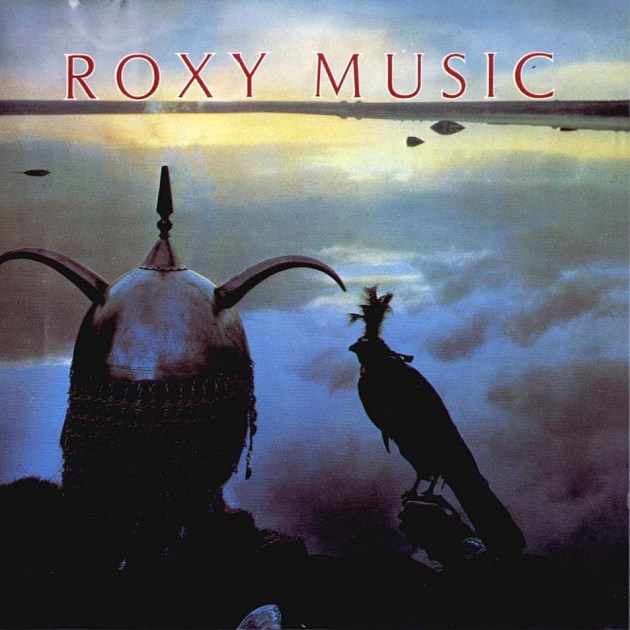
Roxy Music: Avalon (1982)

roxy

Steely Dan: Gaucho (1980)

steely

Peter Gabriel: III (1980)

peter gabriel

Weather Report: Mr Gone (1978)

weather report

XTC: Skylarking (1985)

xtc

Cocteau Twins: Heaven Or Las Vegas (1990)

cocteau_twins-heaven_or_las_vegas

David Sylvian: Gone To Earth (1986)

David sylvian

Sly And The Family Stone: There’s A Riot Goin’ On (1971)

sly

Tribal Tech: Illicit (1992)

Tribal_Tech_Illicit_album_cover

Stanley Clarke: Stanley Clarke (1974)

Stanley_Clarke_-_Stanley_Clarke

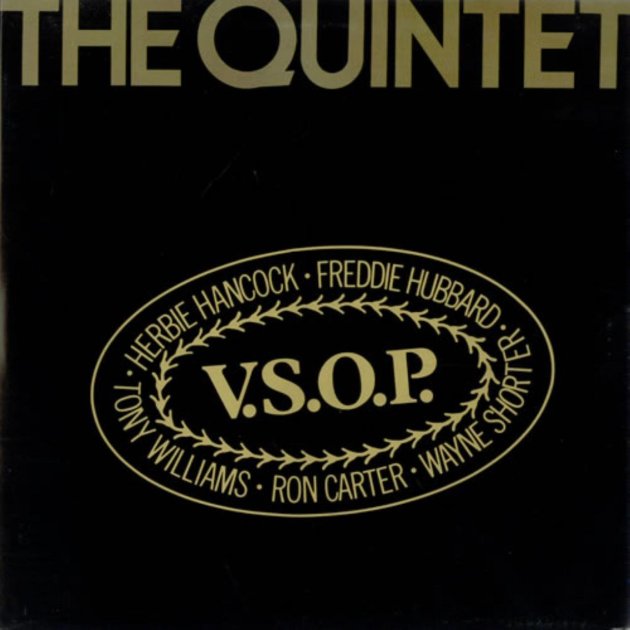
Herbie Hancock/Freddie Hubbard/Wayne Shorter/Ron Carter/Tony Williams: VSOP The Quintet (1979)

vsop

John Martyn: Glorious Fool (1981)

john-martyn-glorious-fool

Scritti Politti: Cupid And Psyche ’85 (1985)

scritti

Just missed the cut:

Grace Jones: Nightclubbing (1981)

Prince: Around The World In A Day (1985)

Mr Bungle: California (1999)

It Bites: Once Around The World (1988)

Mark Isham: Vapour Drawings (1983)

Prefab Sprout: Jordan The Comeback (1990)

Michael Jackson: Thriller (1982)

Level 42: World Machine (1985)

Television (1992)

Thomas Dolby: The Flat Earth (1984)

John McLaughlin/One Truth Band: Electric Dreams (1979)

Miles Davis: Nefertiti (1967)

Love And Money: Strange Kind Of Love (1988)

David Bowie: Scary Monsters (And Super Creeps) (1980)

Thelonious Monk: Genius Of Modern Music Vol. 2 (1951)

Aztec Camera: Four Golden Greats

Aztec-camera-roddy-frameIt all came back to me recently when I heard some church bells in Totnes ringing out the opening bass melody from ‘We Could Send Letters’.
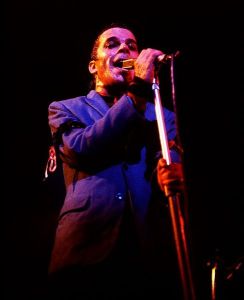
Although always one of my AC favourites, I hadn’t heard the song in years. Cue a period of rediscovery and a realisation that Roddy Frame penned four or five stand-out songs of the ’80s.

The guy had it all – intelligent lyrics, guitar chops, classic songcraft, good looks. Arguably the only thing missing was the classic album that his talent warranted.

But no matter: there were plenty of treats anyway. Here are a few:

4. We Could Send Letters (1983)
The low-key beginning builds into an epic, love-lorn pop gem, oddly never released as a single. Though dated by its Syndrum fills and airy production, the song however is water-tight with that lovely hike up into the chorus. An ’80s break-up classic.

3. Oblivious (1983)
Summery, Flamenco-tinged pop gem that reached #18 in the UK singles chart. Frame works the minor/major thing beautifully (minor-key verse, major chorus), nails a very tricky acoustic guitar part and also pulls off the seldom-achieved trick of writing something catchy but not annoying.

2. Deep And Wide And Tall (1987)
Openly states the pressing question perhaps underlying all great pop music: are we going to live together? Roddy and producer Russ Titleman achieve the Scritti groove sought throughout the Love album. A mixture of spine-tingling backing vocals and major-seventh chords fuse to gorgeous effect. Inexplicably reached a lowly #87 in the UK.

1. Working In A Goldmine (1987)
Roddy’s ‘blue-eyed-soul’ period wasn’t an outright success but this shimmering ballad with its fine Rob Mounsey arrangement is a standout. Seemingly about the unknowability of a lover (‘We love/What shines/Before our eyes/Why can’t we learn/What hides?’), it features one of the most sublime middle-eights (or, more accurately, middle-sixes) of late-’80s pop.

Great Brit Swearing: Ian Dury, Culture Club, Prefab Sprout, David Bowie & Up Yaws

487px-Ian_Dury_1I’ve always had a penchant for good swearing in music. And long before those Parental Advisory stickers, there were some real humdingers.

Ian Dury’s oeuvre was of course an early landmark – his ‘Plaistow Patricia’ became a kind of forbidden, blasphemous classic as did Marianne Faithful’s coruscating ‘Why D’Ya Do It’. They both sounded like they really meant it.

David Bowie’s ‘It’s No Game (Part 2)’ would also have us in stitches. His rather random four-letter word, sung in Iggyish baritone, enlivened many a dull afternoon.

Even Prefab Sprout’s ‘Horsechimes’ somehow shocked with Paddy McAloon’s rather pristine vocals uttering the word ‘piss’.

But then my uncle (it’s always uncles) passed me the following curio (the Up Yaws video currently deleted/age-restricted by YouTube…) and the world of muso swearing was never quite the same again. Initially coming on like a first-rate pastiche of early-’80s UK jazz/funk as played by the likes of Shakatak, its gradual insertion of four-letter words and random insults never fails to provoke a titter.

It’s puerile, silly and childish, and I absolutely defend it as a piece of music. Rumours abound as to who’s responsible, some mentioning Adrian Edmondson, some The Damned… (If anyone knows for sure, please leave a message at the bottom of this post.)

Then there’s the whole subgenre of bands getting it wrong in the studio and swearing-alot. The Troggs Tapes is of course the industry standard, but a Culture Club outtake from 1983 recently came to light on a career-spanning box set (also recently removed from YouTube, sadly…).

It features our four heroes (plus poor pianist Phil Pickett) trying to record ‘Victims’ with the underlying pressures of expensive studio costs, an out-of-tune fretless bass and Boy George/Jon Moss’s corrosive love affair.

Suffice it to say, things don’t go too well. But imagine trying to ‘produce’ this lot. Come to think of it, producer Steve Levine is possibly the one voice we don’t hear. Had he given up the ghost or was he all-too-aware of not getting involved and spoiling an audio-verite ‘classic’?