In this day and age, it’s weirdly reassuring to recommend an album which resolutely refuses to appear on streaming platforms or even CD.
So, at the time of writing, it has always ever been just a 1982 vinyl release for Rockin’ Jimmy & The Brothers Of The Night (widely available on Discogs).
Fronted by bespectacled Rockin’ Jimmy Byfield, they were a Tulsa-based bar band with country, blues and R’n’B influences, prowling similar territory as late Little Feat, JJ Cale, mid-‘70s Eric Clapton (who covered Byfield’s ‘Little Rachel’ on There’s One In Every Crowd), early Dire Straits, late-‘70s Ry Cooder and even ZZ Top at their most laidback.
Championed by Alexis Korner on his fabled Radio 1 show, Rockin’ Jimmy’s second and final album was one of the first ‘rock’ albums your correspondent remembers enjoying. It appeared on the small but influential, Notting Hill-based Sonet Records. Based around Byfield’s pleasant voice and Chuck DeWalt’s fat beats, the band eschewed distorted guitars and blues/rock cliches in favour of catchy, melodic songs and neat ensemble work.
The album’s beautifully recorded, with no concessions to early 1980s production (thanks to Brit helmer Peter Nicholls, best known for his work with Joe Cocker and Leon Russell). ‘Rockin’ All Nite’, ‘Angel Eyes’ and ‘It’s A Mystery’ have staying power. The rest of the album hasn’t dated much either.
Sadly the band split after this second record, but they did apparently tour a little until the end of 1982, as this clip attests, and may still occasionally play around Tulsa (correct?). The cover’s quite cool too – which meeting of which ‘brotherhood’ is Byfield about to attend? The shadow knows…
Which 1980s movies have soundtracks that are better than the film? ‘Diva’? ‘Betty Blue’? ‘Risky Business’? ‘Blade Runner’? ‘The Hitcher’? ‘Blow Out’? ‘Friday 13th Part III’? ‘Absolute Beginners’?
You could probably raise an argument for Alan Parker’s 1987 neo-noir/horror ‘Angel Heart’ too. The baffling but intermittently excellent – mainly due to Mickey Rourke’s star turn – movie was scored by South African keyboardist Trevor Jones who had worked on ‘Excalibur’, ‘Runaway Train’ and ‘Labyrinth’ before getting the nod from Parker.
He puts together a jazzy, menacing, enticing original soundtrack featuring brooding synths, sampled vibraphone, acoustic bass and horns, plus some muscular blowing from tenor saxophonist Courtney Pine. Jones’s original music for ‘Angel Heart’ was also very influential, reverberating through the erotic thriller and neo-noir genres of the late 1980s and 1990s.
But it’s the official soundtrack album, released on Antilles/New Directions via Island, that really pulls out all the stops. It’s beautifully compiled, a hallucinatory, engaging 40 minutes of music with ingenious cross-fades and key dialogue lines sprinkled in, many of which still raise a smile (‘I got a thing about chickens…’).
The album is fleshed out with some great deep blues and gospel from LaVern Baker, Bessie Smith and Brownie McGhee, while Glen Gray’s chillingly effective crooner classic ‘Girl Of My Dreams’ (alluded to many times by Pine during his solos) nods to the use of similar in Stanley Kubrick’s ‘The Shining’.
Jones reunited with Parker for the following year’s ‘Mississippi Burning’, then worked on the Al Pacino vehicle ‘Sea Of Love’, and his last notable major film seems to have been Michael Mann’s ‘Last Of The Mohicans’. But what a shame this superb soundtrack album is not in full on streaming platforms (but is available from Discogs). Glad I kept hold of my cassette…
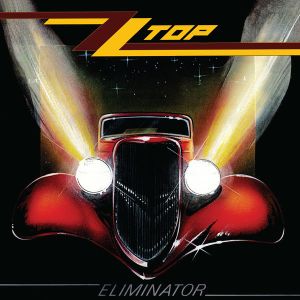
So here we are. ZZ Top’s breakthrough album, 20 million sales and counting. Not bad for a lil’ ole blues’n’boogie trio from Texas.
But Eliminator, released 40 years ago this week, also carries some controversy around with it. As they say: where there’s a hit, there’s a writ.
Along with Sgt. Pepper’s, Roxy’s Flesh & Blood and a few others, it was one of the first albums your correspondent remembers enjoying all the way through. And, if you were a burgeoning drummer, ‘Gimme All Your Lovin’’ was the one all your schoolmates wanted you to play.
It’s a lesser known bit of 1980s muso gossip that ZZ guitarist/chief vocalist Billy Gibbons was one of the first major figures to get hold of a Fairlight synth/sampler. He experimented with it on the band’s 1981 album El Loco, but that was a stiff, selling half as many copies as 1979’s Deguello.
It was time for a rethink. First port of call – the beats. It wasn’t easy to dance to ZZ. Gibbons asked chief engineer Terry Manning to research new grooves, so he hit the discos. Inspired by OMD, Devo, Human League, Depeche Mode et al, Manning bought an Oberheim DMX drum machine and the band started working up new material in their Memphis bolthole.
Moving to drummer Frank Beard’s home studio in Houston, a chap called Lindon Hudson helped a lot with the new technology and songwriting (uncredited on Eliminator, he later won substantial damages after a lawsuit). He also claimed 124 beats-per-minute was the sweetspot.
A move to Memphis’s Ardent Studios saw Gibbons hit the city’s after-hours joints. ‘TV Dinners’ was apparently inspired when a woman entered a club wearing a white jumpsuit with those words emblazoned on the back. He also claimed that ‘I Got The Six’ was inspired by a visit to peak-punk London in 1977.
All in all, Eliminator took about a year to make. It still has many pleasures, Gibbons’ blues soloing and frequent surreal vocal interjections/lyrics chief amongst them. Gibbons and Dusty Hill also play in some strange, unguitar-friendly keys, possibly because some of the material was written on keyboards. Try playing along.
Gibbons’ 1933 Ford coupe on the cover was a tax write-off and helped to make Tim Newman’s vids for ‘Legs’, ‘Sharp Dressed Man’ and ‘Gimme’ bona fide 1980s classics. The band’s nine-month world tour kicked off in May 1983, aided by Manning’s beefy sound mix courtesy of the album’s four-track masters.
It’s fair to say that Eliminator massively influenced Prince, the Stones, Van Halen and Def Leppard, and arguably changed the way rock artists used technology forever.
Happy 40th birthday to a 1980s classic. But hey, don’t forget to credit Manning and Hudson…
You’d be hard pressed to find a musician less likely to thrive in the 1980s, but hey – it’s a great pleasure to feature Mose Allison on this site.
A big influence on artists as varied as The Who, Bonnie Raitt, Randy Newman and Frank Black, the Tennessee-born pianist and songsmith, who died in 2016, wrote witty, brilliant standards such as ‘Parchman Farm’, ‘Your Mind’s On Vacation’, ‘Feel So Good’ and ‘Everybody’s Cryin’ Mercy’.
His speciality was the medium-fast blues/jazz groove, with an extra bar or two thrown in and/or an unexpected modulation. He found endless interesting variations on this theme and his self-mocking, occasionally profound lyrics made one chuckle or think – sometimes both.
Mose toured relentlessly, mostly eschewing festivals in favour of nightclubs (the first time I saw him was during a long run at Pizza On The Park in Knightsbridge – don’t look for it, it’s not there any more…), and had a cadre of pick-up bassists and drummers all over the world who had to adhere to some pretty exacting rules – no egos, backbeats, cymbal crashes or excessive use of the kick drum.
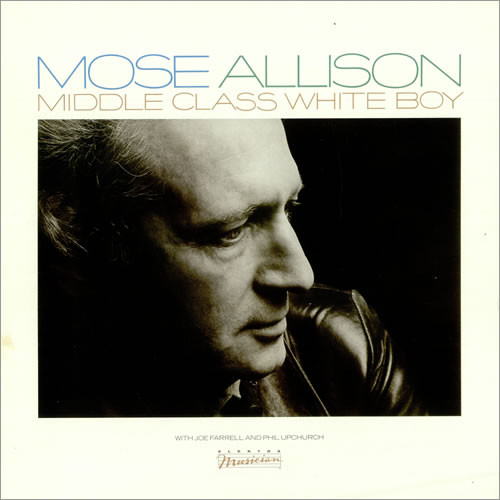
1982’s Middle Class White Boy was Mose’s comeback album, his first for six years and debut for legendary jazz impresario Bruce Lundvall’s burgeoning Elektra Musician jazz label.
But it’s probably fair to say that neither Mose nor Lundvall got an album they were happy with. The terrible cover doesn’t bode well. It was recorded in just two days and sounds like it. Then there’s the fact that for some reason Mose mainly opted to use a tinny, badly-recorded electric piano on the date.
Also he arguably didn’t have enough decent original material – there are five cover versions, only Muddy Waters’ ‘Rolling Stone’ emerging with much distinction.
But on the plus side he’s helped by two formidable sidemen – Chess/George Benson legend Phil Upchurch on guitar and ex-Return To Forever man Joe Farrell on saxes and flute, both of whom get a lot of solo space and play excellently.
And the album benefits from not one but two absolute Mose classics: the title track and a new version of ‘Hello There Universe’. But otherwise it’s not a comfortable listen. It’s a big relief when he breaks out the acoustic piano on ‘When My Dreamboat Comes Home’, even if the song isn’t anything to write home about.
The Middle Class White Boy experience didn’t exactly make Mose rush back into a studio; he released one further album for Elektra, a live record from the 1982 Montreux Jazz Festival featuring none other than Billy Cobham on drums (they had occasionally recorded together on Mose’s Atlantic sides).
Then there was another five-year hiatus before his 1987 Blue Note Records (where he rejoined Lundvall) debutEver Since The World Ended (with its remarkably prescient title track, given these current times), a return to form.
Perhaps predictably, the 1980s were not particularly kind to Mose but there are still some gems to seek out.
But there was a lot of it about in the 1980s, and Huey Lewis And The News were hugely successful purveyors of the uplifting single, particularly during their mid-decade peak when ‘The Power Of Love’, ‘Hip To Be Square’ and ‘Stuck With You’ were seldom off the airwaves.
Does anybody in the world actually dislike this band (Patrick Bateman is a particular fan, of course… Ed.)?
Huey has a great set of pipes and they always deliver a reliable fusion of roots music: blues, R’n’B, rock’n’roll, doo-wop and country, with some pop and soul hooks thrown in too.
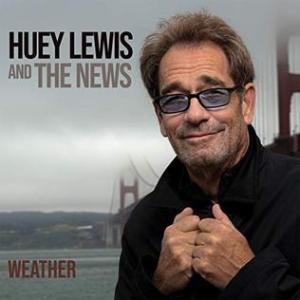
New album Weather is their first for ten years. Huey has had hearing problems due to a recent onset of Meniere’s Disease, about which he’s reliably sanguine, recently telling Classic Pop magazine: ‘Things could always be worse. After all, I’m deaf, not dead…’
Weather is only 26 minutes long. It’s intended as a followup of sorts to their most popular album Sports. Geddit? Sports and weather… These are simple songs, well played and well written, with decent melodies, bridges, middle-eights and nice guitar or sax solos.
And this time ’80s mixmaster general Bob Clearmountain (Simple Minds, Bryan Adams, Hall & Oates) is on hand to deliver a rich, punchy sound, with everything in exactly its right place.
‘While We’re Young’ is a witty R’n’B song about ageing. You can almost imagine Donald Fagen doing it. ‘Her Love Is Killing Me’ is out of the Robert Cray school. The Blues Brothers would have done a great version.
‘Hurry Back’ features a classic Texas shuffle and some decidedly Stevie Ray-style lead guitar. It won’t win any #woke points for its one-night-stand theme – but who cares.
The funky ‘Remind Me Why I Love You Again’ also scores highly on the un-PC scale to amusing effect, Huey complaining that his resolutely modern squeeze refuses to cook or clean.
There’s even a cover of Eugene Church’s 1958 doo-wop standard ‘Pretty Girls Everywhere’, complete with ‘boogalee-woogalee’ backing vox. And gentle C’n’W closer ‘One Of The Boys’ is touchingly faux-naive about Huey’s place in the world: ‘Yes I’m playing with my friends/Until the music ends‘.
Weather is not cool, certainly not hip, but effortlessly enjoyable. Somehow Huey Lewis And The News still sound like the best bar band you’ve ever heard in your life.
The 1980s featured a smorgasbord of great guitarists and Skip McDonald was right in the thick of it.
He started the decade playing on many classic Sugar Hill Records sides and ended it as a member of futuristic funk/rock titans Tackhead.
Since then blues-dub solo project Little Axe has been his chief musical outlet, a collaboration with legendary mixologist Adrian Sherwood and Sugar Hill cohorts Doug Wimbish on bass and Keith Leblanc on drums.
1994 debut The Wolf That House Built was a big critical success, but, after a run of middling albums through the noughties, Little Axe’s time somehow seemed to have come and gone.
Until now. It’s unclear whether the state of the world (and the White House) has given him a new lease of life but McDonald’s bittersweet missives seem tailor-made for these times. T
his packed one-off London gig – promoting impressive, surprisingly upbeat new album London Blues – saw McDonald joined onstage by Wimbish, Sherwood and drummer Andy Gangadeen.
Observing Sherwood was like watching a master cocktail-maker at work, adding his trademark delays and feedback loops with deft sleights of hand. The ageless Wimbish was in typically fine form too, creating mind-bending dub tones with some very nifty footwork – not for nothing has he occasionally referred to himself as the ‘Bruce Lee of bass’.
But McDonald’s impressive vocals were the star of the show, and he also seems to have found his electric guitar mojo again. Old favourite ‘If I Had My Way’ has never sounded so apt (‘These are demon days/It’s a time of chaos, rage and anxiety/Where you gonna be when two worlds collide?’) while new songs ‘Snake Oil’, ‘Factory Girl’ and ‘London Blues’ were instant earworms.
The latter could even make for a leftfield choice of single. Best of all though was chilling closer ‘Deep River’, an eerie death-dub with a central image of ‘a flower blooming in hell’, sounding a bit like an unlikely collaboration between Gregory Isaacs and Sarah Kane.
There was a slightly valedictory feeling to the end of the gig; Wimbish, Sherwood and McDonald’s farewells were possibly more heartfelt than usual.
It would be a great shame if this was the last we see of Skip’s Axe – the state of the world and a fine new album demand that he continue.
In a previous piece about Robert Cray, I talked about ‘touch’ guitarists, those whose sounds are almost entirely in their fingers and not dependent on pedals or amps.
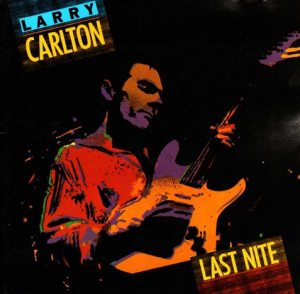
Larry Carlton is certainly one of them. He played some of the great guitar of the 1970s with Steely Dan, The Crusaders, Michael Jackson and Joni Mitchell, his sound characterised by a deceptively ‘sweet’ take on the blues, alongside elements of jazz and rock. In the early ’80s, he put out some fine studio albums including Sleepwalk and Friends, but ’87’s Last Nite was his first official live release.
And what an album. In 1987, I was a big fan of his playing with Steely Dan but had never heard any of his solo stuff. A glowing review of Last Nite in Q Magazine sent me scuttling off to my local Our Price. Recorded on 17th February 1986 at the Baked Potato club in North Hollywood, the album is Larry uncut, blowing on a mixture of originals and jazz standards, with no thought of commercial or airplay potential.
It’s hard to think of another guitarist who could cover such a stylistic range so effortlessly. He kills on the slow blues, tears up the fast Texas-style shuffle, delivers deliciously ‘out’ fusion on the title track and swings his ass off on ‘All Blues and ‘So What’, though with a pleasingly piercing tone as opposed to the warm sound favoured by most ‘jazz’ players.
He’s also endlessly melodic, producing memorable phrase after memorable phrase. But don’t be fooled by the beatific expression and cream jacket – he isn’t afraid of throwing in some pretty wacky modal curveballs too.
Another key aspect of Last Nite is Carlton’s band. He uses the cream of the LA studio scene – John ‘JR’ Robinson on drums, Abe Laboriel on bass, Alex Acuna on percussion – and brings them right out of their comfort zone. Apparently they didn’t know ‘So What’ and ‘All Blues’ were on the setlist until Larry called them.
JR in particular is a revelation, sounding like he’s been cooped up in the studio for far too long. And who knew he could swing like he does on the jazz cuts. Keyboard player Terry Trotter also impresses with his rich voicings and empathetic accompaniment.
Sadly, Last Nite turns out to be a bit of an anomaly in Larry’s discography, marking the beginning of an era when he was veering more and more towards a much smoother studio sound. But he’s always ripped it up in the live arena and has spent a lot more time on the road in his later years.
Gavin Lambert’s 1959 book ‘The Slide Area’ was a collection of inter-related stories about a group of Hollywood’s lonely losers.
His theme was that California’s natural phenomena made ‘normal’ behaviour virtually impossible.
‘The Slide Area’ obviously rang a bell with Ry. His 1982 album of the same name also featured an array of characters not exactly thriving in the Dream Factory.
But it also turned out to be almost the complete opposite of Cooder’s commercial breakthrough, 1979’s slick, sparkling, digitally-recorded Bop Til You Drop.
The Slide Area sounds like what it is – a rough-and-ready band, often audibly cued by Cooder, playing songs of varying quality live in the studio with minimal, if any, overdubs.
‘Which Come First’, ‘Yes It’s Me And I’m Drinking Again’ and ‘Mama Don’t You Treat Your Daughter Mean’ are incredibly loose, with some bum notes and tentative moments left in. Ry’s vocals are similarly raw but full of passion. On ‘Mama…’ he sounds a bit like Bobby ‘Blue’ Bland.
Drummer Jim Keltner is uncharacteristically hyperactive, speeding up drastically on almost every song (definitely no click tracks involved with this album), but full of creativity on what sounds like a homemade kit with timbale, double kick drums, a trash can and a few different snares.
Cooder composes a lot more than on recent albums and even co-writes an ’80s classic with Keltner, ‘UFO Has Landed In The Ghetto’, which finds time to gently lampoon disco, rap and funk with references to the Bee Gees and George Benson.
But perhaps predictably the three cover tunes are the standouts: a Tex-Mex version of Curtis Mayfield’s ‘Gypsy Woman’, funky take on Dylan’s ‘I Need A Woman’ and a gloriously arse-over-tit ‘Blue Suede Shoes’.
But The Slide Area also marked the end of an era. Americana, roots music and blues were out, synths and drum machines were in.
It was the end of the sort of albums Little Feat, Van Dyke Parks, the Doobie Brothers, Bonnie Raitt, Randy Newman and Ry made with Warner Bros and the beginning of the sort of albums Madonna, Pat Benatar and Laura Branigan were making.
Live, it was a different matter – Ry was still a big draw in 1982, playing legendary gigs at the Hammersmith Odeon (my dad took me to one night, maybe my first ever major gig) and big shows all over Europe. But that too proved a false economy.
‘Someone yelled “Think of the money!” from the audience (during a 1977 Hammersmith Odeon gig). I’d like to show him my bank balance. I could never make a dime doing anything. I came back to California in debt. I’d make a record and I’m broke cos they’re not making any money, they don’t sell. I said, to hell with it,’ Ry told Q Magazine in 1987.
It was back to the movie soundtracks. For a while…
The general critical consensus maintains that Neil had a rotten ’80s.
He made folk albums, rockabilly albums, synth-rock albums, undercooked Crazy Horse albums and country albums.
But you can’t say he wasn’t prolific, and hey, he’s Neil Young – there’s always something good going on somewhere.
But none of these projects came anywhere near the commercial jackpot, to the extent that his label boss David Geffen sued him for ‘unrepresentative’ product!
But, with the release of 1988’s This Note’s For You, Young was getting back on track. He had returned to the Reprise label of his peak years and was gigging with a hard-hitting ten-piece band The Bluenotes (later changing its name to Ten Men Workin’ after a legal challenge from Harold Melvin) which featured a hot horn section and cracking new drummer Chad Cromwell.
Neil had ten new songs in the can too, veering between two-chord R’n’B stompers and love ballads in the ballpark of his teenage hero Roy Orbison. He was also playing as much if not more lead guitar than he ever had in his solo career, this time in the biting, incisive style of Alberts King and Collins.
Lyrically, the songs were basically about workin’ hard, lookin’ for love, not sellin’ out and havin’ a good time, but with more humour than Bruce or Billy Joel. ‘I’m a married man – respect my happy home!’ he barks on ‘Married Man’.
Neil gave writer Paul Zollo some cool insights into the writing of the song in the book ‘Songwriters On Songwriting’:
‘Oh, I like that song. I think I wrote that in my car. I have a ’54 Caddy limo. I was on my way down from Northern California to play with the Bluenotes. I was on Highway 5. Our driver was listening to tapes and I was playing my guitar…’
Neil’s tremulous voice croons ‘You have changed my life in so many ways’ on ‘Can’t Believe Your Lyin’, and it’s both touching and amusing. ‘Ten Men Workin” and ‘Life In The City’ are driving old-school R’n’B gems while ‘Sunny Inside’ is almost Brian Wilsonesque in its charming naivety.
Then there’s the title track, the standout cut on the album (though it inexplicably fades way too soon). A rum, anti-product-placement protest song which nevertheless manages to mention four big brands (and of course mocks Budweiser’s ‘This Bud’s For You’ campaign), it defiantly has its cake and eats it. It’s also a total blast.
In a delicious irony, the old hippie who had spent most of the ’80s in purgatory made one of the great vids of the decade (winning Video Of The Year at the 1989 Video Music Awards), with notable help from writer Charlie Coffey and legendary director Julien Temple. Temple talked about his motivations for making the video:
‘Beer companies and the like were beginning to take over music. A lot of beer ads were using rock musicians. The line between videos and commercials was blurring. We managed to get banned from MTV and win the Video Of The Year award. That was the peak of my video-making career…’
The clip mostly mocks the series of Michelob beer ads which featured the likes of Genesis, Eric Clapton and Steve Winwood. And it didn’t scrimp on Michael Jackson and Whitney Houston lookalikes.
What’s also notable and totally unprecedented is that Neil decided to use a live take of the song for this video, completely different to the album version. Which major star would have the balls to do that today?
This Note’s For You was not a hit, only reaching #61 in the US album chart. But Neil was laying down a marker for the classic follow-up Freedom. And he had also tapped into something very prescient by focusing on guitar-led soul, blues and R’n’B forms, echoing the resurgence of Clapton, Buddy Guy, John Lee Hooker, Jeff Beck, Albert Collins and Gary Moore, and emergence of hotshots like Jeff Healey and Robert Cray.
He has always pretty much stuck to a tried and tested guitar sound: a Strat plugged straight into the amp, no effects apart from a very occasional tremolo pedal, and very, very hard picking.
But, in the process, on Bad Influence (inexplicably missing from streaming platforms at the time of writing…) he plays three or four of the most electrifying guitar solos of the ’80s, proving himself a worthy heir to Albert King and Albert Collins.
And his tough guitar style is a contrast to a fairly sweet, soulful vocals and songwriting which reflect the influence of Al Green and BB King more than Muddy Waters or John Lee Hooker.
Bad Influence was Cray’s second official release, and it was pretty much the one that alerted the wider world outside of blues aficionados to his potential. The Robert Cray Band had built up a formidable live following in the early ’80s, touring relentlessly on the West Coast and in Europe.
With the help of producers Bruce Bromberg and Dennis Walker, they were ready to take that consistency into the studio. And it certainly helps that there are no trinkets of ’80s production present on the album, no synths or dated drum sounds – Bad Influence mostly just sounds like a great band playing live in the studio, with the occasional addition of horns and Hammond organ.
Bad Influence is mainly known for its superb cover versions: Johnny Guitar Watson’s ‘Don’t Touch Me’ and Eddie Floyd’s ‘Got To Make A Comeback’, both slow 6/8 jams, the former angry and biting, the latter sweet and soulful. ‘The Grinder’ is another slowish 6/8 with a killer Cray solo. The CD version also comes with a great cover of the New Orleans R’n’B classic ‘I Got Loaded’.
Then there are the minor-key blues/funk standard ‘Phone Booth’ (featuring not one but two classic guitar solos), later covered by Albert King, and the title track which was subsequently covered by Eric Clapton on August (the two have collaborated many times since).
Also essential are the super-funky ‘So Many Women So Little Time’ and Bo Diddley-esque ‘No Big Deal’. Lyrically, my personal favourite is probably ‘Waiting For The Tide To Turn’, a kind of ‘ironic’ blues about procrastination.
To date, Bad Influence has reportedly shifted over a million copies. Cray’s two follow-ups False Accusations and Strong Persuader sold even more. And he’s very much still going strong at the time of writing.

 In this day and age, it’s weirdly reassuring to recommend an album which resolutely refuses to appear on streaming platforms or even CD.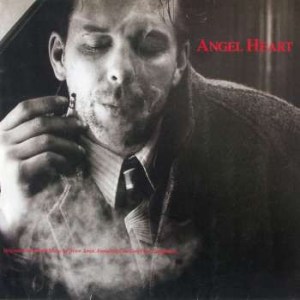



 Just one note, and you know it’s Robert Cray.
 movingtheriver.com