McCoy Tyner/Freddie Hubbard Quartet: Live At Fabrik

These two giants of their instruments – Tyner on piano, Hubbard on trumpet/flugelhorn – crossed paths many times in the 1960s, particularly on three of the latter’s most famous Blue Note albums. (Tyner of course is probably best known for his work with the fabled John Coltrane Quartet.)

So it was only natural that they should co-headline a powerful touring quartet in the mid-1980s. And now we can hear it in all its glory courtesy of this 2-CD/streaming package, a complete radio broadcast from an 18 June 1986 gig in Hamburg, Germany.

And it’s a classic – full of cogent lines, attractive melodies, power and poise, here’s an album to play to people who say they hate jazz. And tell ‘em we sent you.

It may even be the most impactful live ‘jazz’ album this correspondent has heard since 1977’s epochal VSOP The Quintet (which also featured Hubbard, alongside Herbie Hancock, Tony Williams, Wayne Shorter and Ron Carter).

It’s a very ‘hot’ concert recording, with a lot of presence and ‘room’. You can hear everything, including members of the band frequently urging each other on. It helps that the crowd is so respectful – silent when the band take things down, loud when things get intense.

The quartet were apparently unaccountably late onto the stage that night, Hubbard apologising after the first tune – irritatingly not explained in the liner notes. But the tardiness might help explain the players’ agitated impatience which definitely serves the music. ‘Inner Glimpse’ features a remarkable Hubbard tour de force of rhythmic intensity and characteristically wide intervals. The audience, appropriately, go mad.

On Tyner’s majestic ‘Latino Suite’, Avery Sharpe treats his acoustic bass like an electric, slapping it, popping it and even playing power chords, Stanley Clarke-style. ‘Body And Soul’ kicks off with a striking, unaccompanied, two-minute Hubbard flugelhorn statement. Then, after what sounds like an edit, there’s a further eight-minute solo – it’s edge-of-the-seat stuff. He was really cutting loose from the mostly pretty staid studio albums made for Blue Note during this period. Drummer Louis Hayes accompanies with a lot of fire, channelling both Billy Cobham and Tony Williams but with an original soloing style.

Only one minor gripe: a few tracks are too long, an obvious/excusable liability when an entire gig is documented. But what a specimen. And what a shame that these two giants of the music are gone, and also that such intense live jazz albums are so few and far between.

Eddie Gomez: Mezgo/Power Play 35 Years On

Eddie Gomez’s excellent late-1980s albums Mezgo (later rereleased as Discovery) and Power Play were recorded for the Japanese arm of the Epic label.

Bassist/composer Gomez is probably best known for his stellar sideman work with pianists Bill Evans and Chick Corea, as well as being a co-founder of jazz/fusion supergroup Steps Ahead, but his solo work sometimes goes unheralded.

Perhaps most relevantly, both albums feature some of saxophonist Michael Brecker’s best-ever recorded work. And they are crucial items in drummer Steve Gadd’s discography too.

1986’s Mezgo is mainly a trio album, Gomez on bass and keys, Gadd on drums/percussion and Brecker on saxes and EWI. It’s a stunning potpourri of styles, starting with the Weather Report vibe of ‘Me Too’, calling in at the fast bebop number ‘Puccini’s Walk’ (poorly covered by Corea not once but twice!) with some superb Gadd, and ending with a very moving version of Henry Purcell’s ‘Cello Sonata In G Minor (1st Movement)’.

Power Play, released the following year, had more concessions to commercialism, with some romantic ballads featuring syrupy alto sax from Dick Oatts and a few Latin-style groovers featuring Jeremy Steig on flute.

But the title track was a stunner, featuring double drums from Gadd and Al Foster. There was also a superb duet with guitarist Jim Hall, ‘Amethyst’, and an excellent fast bop track ‘West 110 St.’ featuring Foster and Brecker.

Both of these albums are highly recommended, especially on physical formats.

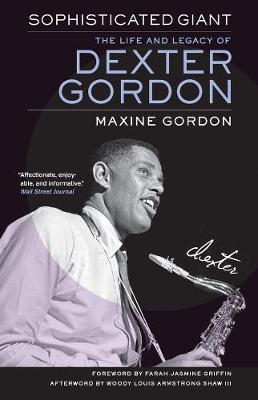
Book Review: Sophisticated Giant (The Life And Legacy Of Dexter Gordon) by Maxine Gordon

Jazz books written by ‘jazz widows’ are pretty rare. Only a few come to mind: Laurie Pepper’s ‘Art: Why I Stuck With A Junkie Jazzman’, Sue Mingus’s ‘Tonight At Noon’ and Jo Gelbart’s ‘Miles And Jo: Love Story In Blue’.

But, as Val Wilmer’s ‘As Serious As Your Life’ demonstrated some 50 years ago, behind a great jazzman is often a great jazzwoman, and usually one equally worthy of a tome.

And so it proves with Maxine Gordon’s excellent ‘Sophisticated Giant’. She was the wife and tour manager of Dexter Gordon – bebop pioneer, Blue Note saxophone great and Oscar-nominated actor – in the years leading up to his death in 1990.

The book serves as a gripping biography and much more besides. It came about as a direct result of Dexter’s unfulfilled ambition to publish his autobiography. He wrote periodically throughout his life, and many illuminating excerpts are included here.

The early pages portray an oft-neglected, Los Angeles-centred survey of how the swing scene developed into the bebop revolution; we get an inside story of Dexter’s work with the Louis Armstrong Orchestra and famous Billy Eckstine Band, hothouse for future stars Art Blakey, Gene Ammons and Sonny Stitt.

We move onto Dexter’s productive spell with fellow bebop pioneer and close friend Dizzy Gillespie, and then his famous Savoy and Dial sessions (though there are sobering details of the contracts he signed throughout his life).

We get the story of Dexter’s dark years from 1955 to 1960, when he had frequent struggles with addiction and crime. He considered them ‘un’ years and planned to leave them out of his autobiography completely.

But things very much look up with his signing for Blue Note Records on 7 November 1960. This is the most gripping section of the book and the one that will hook most jazz fans. We learn about the recording of classic albums Our Man In Jazz and Go, and read many touching letters that Dexter sent label owners Alfred Lion and Francis Wolff while on tour.

We learn about Dexter’s move to Paris and subsequent settlement in Copenhagen, Denmark, where he was resident for 12 years and became a much-loved local face, frequently visible riding his bicycle around the city.

Maxine then explores Dexter’s triumphant return to New York in 1977, when he was welcomed back like a hero with a shiny new Columbia record deal and a host of memorable albums and gigs.

Finally there’s a long, arresting section on the making of classic 1987 jazz film ‘Round Midnight’, which almost gave Dexter a Best Actor Oscar and earned him plaudits from none other than Marlon Brando.

‘Sophisticated Giant’ slots right into the canon of great jazz books, a must for the general fan and anyone who loves Dexter’s Blue Note sides or performance in ‘Round Midnight’. It’s also notable for featuring some previously unseen photos, including a beautiful shot of Dexter, Alfred Lion and Francis Wolff, taken by Rudy Van Gelder.

‘Sophisticated Giant’ by Maxine Gordon is published by the University Of California Press.

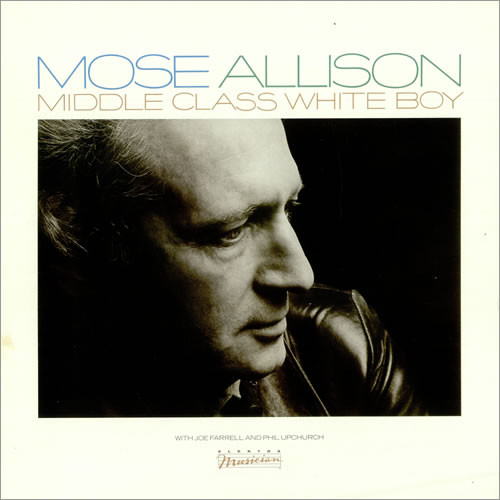
Mose Allison: Middle Class White Boy

You’d be hard pressed to find a musician less likely to thrive in the 1980s, but hey – it’s a great pleasure to feature Mose Allison on this site.

A big influence on artists as varied as The Who, Bonnie Raitt, Randy Newman and Frank Black, the Tennessee-born pianist and songsmith, who died in 2016, wrote witty, brilliant standards such as ‘Parchman Farm’, ‘Your Mind’s On Vacation’, ‘Feel So Good’ and ‘Everybody’s Cryin’ Mercy’.

His speciality was the medium-fast blues/jazz groove, with an extra bar or two thrown in and/or an unexpected modulation. He found endless interesting variations on this theme and his self-mocking, occasionally profound lyrics made one chuckle or think – sometimes both.

Mose toured relentlessly, mostly eschewing festivals in favour of nightclubs (the first time I saw him was during a long run at Pizza On The Park in Knightsbridge – don’t look for it, it’s not there any more…), and had a cadre of pick-up bassists and drummers all over the world who had to adhere to some pretty exacting rules – no egos, backbeats, cymbal crashes or excessive use of the kick drum.

1982’s Middle Class White Boy was Mose’s comeback album, his first for six years and debut for legendary jazz impresario Bruce Lundvall’s burgeoning Elektra Musician jazz label.

But it’s probably fair to say that neither Mose nor Lundvall got an album they were happy with. The terrible cover doesn’t bode well. It was recorded in just two days and sounds like it. Then there’s the fact that for some reason Mose mainly opted to use a tinny, badly-recorded electric piano on the date.

Also he arguably didn’t have enough decent original material – there are five cover versions, only Muddy Waters’ ‘Rolling Stone’ emerging with much distinction.

But on the plus side he’s helped by two formidable sidemen – Chess/George Benson legend Phil Upchurch on guitar and ex-Return To Forever man Joe Farrell on saxes and flute, both of whom get a lot of solo space and play excellently.

And the album benefits from not one but two absolute Mose classics: the title track and a new version of ‘Hello There Universe’. But otherwise it’s not a comfortable listen. It’s a big relief when he breaks out the acoustic piano on ‘When My Dreamboat Comes Home’, even if the song isn’t anything to write home about.

The Middle Class White Boy experience didn’t exactly make Mose rush back into a studio; he released one further album for Elektra, a live record from the 1982 Montreux Jazz Festival featuring none other than Billy Cobham on drums (they had occasionally recorded together on Mose’s Atlantic sides).

Then there was another five-year hiatus before his 1987 Blue Note Records (where he rejoined Lundvall) debut Ever Since The World Ended (with its remarkably prescient title track, given these current times), a return to form.

Perhaps predictably, the 1980s were not particularly kind to Mose but there are still some gems to seek out.

Pat Metheny & Lyle Mays: As Falls Wichita, So Falls Wichita Falls 40 Years On

‘A game of two halves’ is a common expression in football, but it can apply to albums too.

We all know albums which have one good side and one bad one (I’ll throw in The Seeds Of Love, Fulfingness’ First Finale, Music Of My Mind, The Colour Of Spring for your consideration…).

But another humdinger is As Falls Wichita, So Falls Wichita Falls, released 40 years ago today.

The Cult Of Metheny has ensnared many, and puzzled just as many. But As Falls Wichita fell smack bang in my favourite era of Pat’s music (between American Garage and Song X), and represented a real change of scene.

Side one’s 20-minute title track delivered a full-on prog/fusion masterwork, ably assisted by Lyle Mays in classic-synth heaven (Prophet 5, various Oberheims, Roland CR-78 and Linn LM-1 drum machines), always totally recognisable, and at a time when polyphonic playing had just become possible. He was rapidly becoming a Joe Zawinul for the 1980s.

‘As Falls Wichita’ may be the most ‘rock’ music released on the ECM label during the 1980s, with the possible exception of David Torn’s 1987 record Cloud About Mercury. It also seems dangerously ambitious. Then again, the whole album was recorded in just three days! Lesser musicians could have taken a month to record this track alone.

Apparently chiefly written to play over the PA system before Metheny Group concerts, it’s pure headphone music. The enigmatic title (apparently nicked, with permission, from an unreleased Steve Swallow composition) and superb album cover certainly help.

The track plays out like a good movie (its working title was ‘Apocalypse When’). It’s more John Carpenter than Keith Jarrett. You might even describe it as cathartic, dammit.

(Another reason for its success may be the complete lack of instrumental solos. Pat doesn’t get any solo space at all – he just plays some unobtrusive bass, chiming 12-string electric and a little six-string. All sounds are textural and in the service of the whole piece.)

A superb live version was featured on the 1983 Metheny Group album Travels. And those who remember the Christian Dior ‘Fahrenheit’ adverts in the late 1980s may be familiar with a small excerpt of the track:

But back to that ‘album of two halves’ thing. Sadly, side two of As Falls Wichita is New-Age sludge. Ponderous and flabby, it’s fuel to Pat detractors, but probably loved by acolytes.

‘September Fifteenth’, a tribute to Bill Evans (named for the date of the great jazz pianist’s death in 1980) is the chief culprit. A closing, out-of-tune version of ‘Amazing Grace’ doesn’t help. It’s music for tired Apple executives, and sounds like it was recorded in the last afternoon of the three days.

But As Falls Wichita was an unexpected smash by ‘jazz’ standards: the album got to #1 on the Billboard Jazz Charts and quickly became Metheny’s biggest seller to date.

So happy 40th birthday to the classic title track. Pour yourself something tall, tune in, drop out, get the headphones on, lie on the floor and crank it up. It’s a trip, man…

Further reading: ‘Pat Metheny: The ECM Years’ by Mervyn Cooke

Ben Sidran: Talking Jazz (An Oral History)

They say that if you want to understand why an instrumentalist plays the way he or she plays, listen to them speak.

That makes total sense when hearing Wayne Shorter or Ornette Coleman being interviewed. And now, courtesy of Ben Sidran, there’s never been a better chance to hear other examples of this.

Sidran is a renowned pianist/composer and author of three excellent music books: ‘Black Talk’, ‘The Ballad Of Tommy LiPuma’ and ‘Talking Jazz’. The latter was based on a series of interviews broadcast on USA’s National Public Radio between 1984 and 1990. And now we can hear them in their entirety.

What a fascinating collection it is. Many interviewees go against type: those with a reputation for being somewhat ‘taciturn’ (Paul Motian, Donald Fagen, Tony Williams, Miles) are open, light-hearted and often giggly.

Some have their axes with them – we hear modern masters Chick Corea, McCoy Tyner, John Scofield, John Patitucci, David Sanborn and Steve Khan demonstrate their harmonic hallmarks. I asked the latter for his recollections of the ‘Talking Jazz’ interview:

It was done on 23 October 1984 at Roxy Recording, located at 648 Broadway, NYC – which was downtown, near Soho. It was conducted from 1-3pm! How about THAT?!

Elsewhere, Art Blakey talks touchingly about his appeal to a young, eager London crowd, Carla Bley is amusingly honest and Kevin Eubanks sounds 30 years ahead of his time, discussing global warming and environmental disasters.

It’s also fascinating to hear lost masters’ voices on tape, speaking with such candour: Gil Evans, Johnny Griffin, Chick Corea, Dizzy Gillespie, Freddie Hubbard, and many more. Sidran is a great host/interviewer, friendly and hip to the artists’ work but not scared to ask the tough questions.

Don’t miss. Listen to the interviews on Bandcamp.

Art Blakey/The IDJ Dancers @ Shaw Theatre: 35 Years Ago Today

1986 was a watershed year for the so-called ‘Jazz Revival’.

Style magazines like The Face were on board and DJs such as Baz Fe Jazz, Patrick Forge, Gilles Peterson and Paul Murphy were spinning Blue Note sides for a young, energetic dancefloor crowd at The Wag and Dingwalls. Courtney Pine and Miles Davis even got into the pop album charts.

Later in the year, the Soho Jazz Festival (later to morph into the hugely successful London Jazz Festival) took place to great acclaim, spawning a great documentary called ’10 Days That Shook Soho’.

On 21 March 1986, Blue Note legend Art Blakey appeared at the Shaw Theatre as part of the Camden Jazz Week with the London-based dance crew IDJ (I Dance Jazz). It was one of the drummer’s final London gigs. He was amazed to discover that his 1960s music had been adopted by a hip, young crowd, dancing to tracks such as ‘Ping Pong’ and ‘Cubano Chant’.

I was taken along by my dad, and the gig was a mind-blower. During this version of Jackie McLean’s ‘Dr Jekyll’, made famous by Miles Davis, what you don’t see is the audience going crazy, dancing, whooping it up. Things were never quite the same again for the London jazz scene, and sadly Blakey passed away just a few years later.


Milford Graves (1941-2021)

One of the most memorable music documentaries broadcast in Britain during the late 1980s was ‘Speaking In Tongues’, directed by Doug Harris for German TV and originally shown in 1982.

It began with John Coltrane’s funeral on 21 July 1967, featuring music from drummer Milford Graves, trumpeter Donald Ayler and saxophonists Ornette Coleman and Albert Ayler, then mused on the mysterious death of the latter before opening up to focus on Graves’ extraordinary life and some coruscating duets with saxophonist David Murray.

Born 20 August 1941 in South Jamaica, Queens, New York, Milford Graves was a ‘drummer’, but, equally importantly, a truly evolved human being, a strict vegetarian, herbologist, acupuncturist, teacher and trained martial artist. He was famous locally for his backyard dojo and basement laboratory.

He began his career playing bongos and timbales, including a short-lived Latin-jazz band with a very young Chick Corea. At the urging of superstar percussionist Don Alias, he moved over to the drum kit in 1963 and found his true metier.

Alongside Sunny Murray, Andrew Cyrille, Ronald Shannon Jackson and a few others, he freed the drummer from purely a timekeeping role, introducing new melodic and tonal textures for the kit. But this wasn’t a po-faced, technical endeavour – it led to some of the most intense, high-volume work of the last 50 years. He described each of his limbs as playing ‘a different feeling’ (see below).

Legendary jazz writer Nat Hentoff apparently made a prediction in the late 1960s that the greats of the avant-garde jazz movement would eventually get lecturing jobs in universities, such was the importance and rigour of their conceptual flow.

It was true. Since 1973, Graves had been teaching at Bennington College in Vermont, a variety of courses including those touching on the healing aspect of music. He performed regularly across the world, including at a school for autistic children in Japan. From the late 1960s on, he eschewed nightclub and club gigs, restricting his live performances to festivals, community centres and outdoor shows.

He recorded astonishing duets with pianist Don Pullen, Andrew Cyrille (Dialogue Of The Drums) and David Murray on the classic 1991 album The Real Deal. He worked with Albert Ayler on various albums including Love Cry. He toured extensively during the 1980s, producing a sound as heavy as anything Black Flag or Metallica came up with.

Tragically, though he had studied the heartbeat as a source of rhythm since the 1970s, Milford died of congestive heart failure on 12 February. ‘It turns out, I was studying the heart to prepare for treating myself,’ he told The New York Times last year.

Last autumn, his life and work had just been subject to a residency at the ICA in Philadelphia, including a screening of ‘Speaking Of Tongues’ and a wide-ranging interview with Jason Moran.

RIP to a true one-off. To paraphrase Art Blakey, if jazz was about washing away the dust of everyday life, Milford Graves did it.

Milford Graves (20 August 1941 – 12 February 2021)

Further reading: ‘As Serious As Your Life’ by Val Wilmer


Jaco Pastorius: Truth, Liberty & Soul (Live In NYC, 27 June 1982)

Even as the streaming revolution sweeps all before it, there are a few aspects of physical music that seem to be thriving: vinyl and the ‘historical discovery’.

Bass superstar Jaco is now a worthy recipient of both, courtesy of Truth, Liberty & Soul, a complete gig recorded at the Avery Fisher Hall in New York City on 27 June 1982, part of that summer’s Kool Jazz Festival.

The concert was originally broadcast live on NPR but has lain in the vaults for decades, and it took Resonance Records (via vaultmeister Zev Feldman) six years to prepare these tapes for release.

It features Jaco alongside his regular band (Bob Mintzer – saxes, Randy Brecker – trumpet, Don Alias – percussion, Othello Molineaux – steel drums, Peter Erskine – drums), plus special guest Toots Thielemans on harmonica and a big band full of NYC’s finest horn players.

The album catches Jaco at somewhat of a crossroads; by most accounts, June 1982 was the last time he was truly ‘together’ in terms of his mental wellbeing, the wheels really coming off during the Japanese tour later that autumn.

(Fans of a certain age may fondly remember the live gig from the Montreal Jazz Festival which took place on 3 July 1982 and was shown on UK’s Channel Four about five years later).

The question is, if you already own Jaco’s 1983 live album Invitation (released in slightly expanded form as Twins in Japan), also featuring the big band, is it worth getting this one? The answer is a resounding yes. It’s thrilling to hear a whole gig in real time by one of the last true jazz titans.

The sound is superb – crisp, deep and rich. The packaging is excellent, with a weighty booklet full of incisive essays and previously unseen photos. The big band – featuring many NYC hotshots who came in for this one gig – sounds well-rehearsed and punchy.

And anyone sick of bandleaders’ endless yakking to the audience these days will be pleased to hear that Jaco doesn’t utter a single word until a garbled band announcement during the closer ‘Fannie Mae’ – he’s there to play music.

There are many highlights – a killer ‘Donna Lee’, touching Afro-Cuban take on Toots’s ‘Bluesette’, an epic ‘Liberty City’ and particularly Mintzer’s superb composition ‘Mr Fonebone’, electrifying in big-band format.

There are one or two longeurs – we could probably do without the extended percussion and drum improvisations and it has to be said that Jaco doesn’t sound on completely top form during his solos, though that’s possibly due to the size/acoustics of the venue, alluded to by a few contributors in the liner notes. But his accompaniment is typically brilliant throughout.

Frankly, it makes one desperate to attend such a gig in these crazy times. Truth, Liberty & Soul is a valuable release and an absolute must for anyone who owns any Jaco or Jaco-era Joni Mitchell/Weather Report albums.


Bill Evans: Living In The Crest Of A Wave/The Alternative Man

When people say ‘I hate jazz’, I sometimes wonder if they’re really saying they know a crap composition when they hear one.

Legions of talented jazz sidepeople have been given solo record contracts only to deliver music that proves they can’t write decent tunes.

A case in point is saxophonist and William Hurt-lookalike Bill Evans. He’s had a very solid career but his solo work is distinctly underwhelming.

(And then there’s the name. If you play jazz, you probably need a stage name if you have exactly the same moniker as a bona fide legend from decades gone by – the pianist Bill Evans died in 1980.)

But give Sax Bill some credit – he was an absolutely vital figure in Miles Davis’s 1980s comeback, a good friend and carer of the trumpeter and player of several gritty solos on record (Star People is a good place to start). But by 1983 Bill found himself inexplicably frozen out, barely getting any solo space from Miles.

He got the message and jumped ship to join John McLaughlin in the new Mahavishnu Orchestra and also embark on a solo career which kicked off with 1984’s Living In The Crest Of A Wave, a pretty anodyne collection of new-agey fusion. Let’s call it The Metheny Effect. Many tried and failed to ape that guitarist’s mixture of Ornette Coleman-inspired melodicism, Latin flavours and down-home, Midwestern, open-sky simplicity.

With its folky themes, puny production, emphasis on soprano sax, fretless bass, ride cymbals and an ‘environmental’ bent, LITCOAW could almost have come out on Windham Hill. Only the closing title track works up any kind of energy or interest, when Evans finally busts out the tenor and blows up a storm over Adam Nussbaum’s frenetic jazz/rock groove.

Evans’ followup, 1985’s The Alternative Man, was his first record for the illustrious Blue Note Records and as such should have been a celebration. Unfortunately it was an object lesson in how not to use technology, and just the kind of ‘80s ‘jazz’ album that illustrates what a brilliant job Marcus Miller did on Miles’s Tutu.

Evans in the main stumbles around with ugly Linn Drum patterns, electric drums, blaring synth pads and raucous hair-metal guitar solos, all topped off with some fairly insipid soprano playing. A few tracks and you’ll be wanting to break out the Albert Ayler or David Murray albums, and fast.

The only interest predictably comes with two more open, organic offerings, the excellent ‘Miles Away’ which reunites Evans with his Miles colleagues Al Foster on drums and Miller on bass. And ’Let The Juice Loose’ is fun, a cool bebop head featuring some enjoyably un-PC Strat-mangling from the late great Hiram Bullock.

But hey – some of this music brings back good memories, when I was digging around the Record And Tape Exchange and Our Price for bargains and closely monitoring the personnel on the back of my favourite Miles and McLaughlin albums.

These albums also definitely represent a weird time for ’80s jazz, when established labels were signing all and sundry, fishing around for the next Young Lion or Metheny.

And thankfully a few dodgy early solo records didn’t hurt Evans’ career much, as he’s gone on to be one of the most respected players on the scene.