You know you’re doing something right when the boss takes an interest.
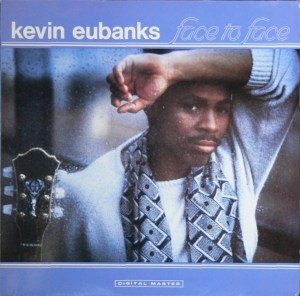
GRP Records was just coming into its own when label co-founder Dave Grusin co-produced, arranged and played keyboards on brilliant guitarist Kevin Eubanks’ fourth solo album Face To Face, released 40 years ago this month.
Part of the so-called Young Lions generation, Eubanks’ first major gig had been with Art Blakey. His playing was a turbo-charged fusion of Wes Montgomery, George Benson and John McLaughlin, and by 1986 he was a seriously hot property.
Face To Face remains probably his best solo album to date and one of GRP’s best too – but it’s still not on Spotify and bloody hard to find on CD… It apes the kinds of albums Verve and CTI were making in the 1960s with Montgomery and Benson, mainly jazz, Latin and pop covers with rich string arrangements and high production values.
But this one also benefits from some fantastic bass playing from Marcus Miller and Ron Carter (but hardly any drums – Buddy Williams is almost inaudible and the rhythmic energy comes from the percussion, guitar and bass).
As the 1980s progressed, mastering engineers were looking for new ways to push the bass front and centre in the mix, and here Miller obliges with one of the hottest slap tones ever committed to vinyl – the version of Stevie Wonder’s ‘Moments Aren’t Moments’ and title track are almost comical examples.
Grusin writes a new middle eight for the Bacharach/Bayer Sager classic ‘That’s What Friends Are For’, inspiring an absolutely brilliant Eubanks solo, while Carter and the guitarist duet beautifully on Charlie Parker’s ‘Relaxin’ At Camarillo’ and Montgomery’s ‘Trick Bag’.
Elsewhere the delicious version of Antonio Carlos Jobim’s ‘Wave’ may be its best cover version bar none. The three Eubanks originals are cool too, marrying his love of bebop, funk and McLaughlin. The mixture of his steel-string acoustic guitar and Miller’s bass is original and exciting.
Sadly Face To Face proved a bit of a false dawn in terms of Eubanks’ tenure on GRP and subsequent solo career, though his brief period on Blue Note in the 1990s has some fans. He also spent a long time on TV in Jay Leno’s ‘Tonight Show’ band, and guested fruitfully with artists like Dave Holland, Greg Osby and Will Downing.
But arguably his solo career has been hampered by a lack of memorable original compositions, not a problem on Face To Face. Happy birthday to one of the great guitar albums of the 1980s.
Anthony during the recording session for Steve Khan’s ‘Eyewitness’ in 1981. Photo by David Tan
The brilliant Anthony Jackson, who has died aged 73, was a vital part of the early-1970s electric bass revolution, but arguably never got the same attention as contemporaries Stanley Clarke, Jaco Pastorius, Bootsy Collins, Louis Johnson and Alphonso Johnson (Chuck Rainey, Steve Swallow and Larry Graham are a bit older).
In a music world beset by fly-by-night chancers and one-trick ponies, he was a player of principle, something like the Allan Holdsworth of bass.
It was Anthony’s playing on Steve Khan’s ‘Guy Lafleur’ that first completely hooked movingtheriver – I remember thinking: who the hell is THAT?!
In two major ways, he changed the instrument as much as Jaco (though, in later years, pointedly called himself a ‘guitarist who plays a variation called the contrabass guitar’).
First there was his stretching of the instrument’s range below the standard low E (inspired by his love of Jimmy Smith’s Hammond organ playing) and above the standard top G, via his pioneering use of six-string basses, which he started playing exclusively in 1982 (Steve Khan thinks his superb ‘Casa Loco’ may have featured the debut of Anthony’s six-string).
Before that, Jackson had regularly detuned the low E string on his trusty Fender Precision, producing strikingly rich, deep timbres on work with Grover Washington Jr., Quincy Jones, Steely Dan, Chaka Khan and Earl Klugh, amongst hundreds of others (he prided himself on playing all kinds of music, working with everyone from Judy Collins and Peter, Paul & Mary to George Benson and Will Downing).
Then there was his use of effects, particularly the trademark flanger, often accompanied by the use of a pick, best heard on The O’Jays’ ‘For The Love Of Money’ and ‘Give The People What They Want’, and on his work with Al Di Meola. Oh, and then there’s a third factor – he ALWAYS sat down whilst playing, claiming that sitting down and wearing no strap was the way to go for bassists.
Jackson started playing music after seeing The Beatles on The Ed Sullivan Show in 1964, then became obsessed with other Brit invasion bands, Motown (via James Jamerson) and Jefferson Airplane’s Jack Casady, plus classical composers Olivier Messiaen and Paul Hindemith.
Regarding the latter two, their influence on Anthony’s playing is particularly noticeable on the live version of Khan’s ‘The Suitcase’, from 1994. Steve described this brilliant performance on his website.
One of Jackson’s first major gigs was in 1973, playing for a year in Buddy Rich’s sextet. He later called the drummer the only bona fide genius with which he had played. But then Anthony loved drummers. He enjoyed brilliant hook-ups with Steve Gadd, Buddy Williams, Steve Jordan, Harvey Mason, Simon Phillips, Steve Ferrone, Yogi Horton, Earl Young and many others.
But he lost work by refusing to ‘slap’ his bass during the disco era, and also very rarely solo’d unless he had something specific to say (to Steve Khan’s great annoyance!). Some of these concepts were laid down in his famously stern columns for Bass Player magazine.
But even Jackson wasn’t immune to some of the ‘proclivities’ of other great artists – for example, his performance was wiped from the title track of Steely Dan’s Gaucho! (Chuck Rainey’s pass got the nod instead.) But he played epochal stuff on ‘Glamour Profession’ and ‘My Rival’ from the same album, and excelled on Donald Fagen’s ‘IGY’ and ‘Ruby Baby’.
He was also fiercely loyal to artists he respected, enjoying long associations with Hiromi, Michel Camilo, Al Di Meola, Sadao Watanabe, Lee Ritenour, Grover Washington, Chick Corea, Khan and Michel Petrucciani.
In one of his rare interviews, he expressed a wish to play with Phil Collins, Ringo and Charlie Watts. Sadly it seems he didn’t achieve those ambitions. Farewell to a true pioneer and personal musical hero. Check out this playlist which brings together movingtheriver’s favourite Anthony performances.
Anthony Claiborne Jackson (23 June 1952 – 19 October 2025)
Mel Gaynor spent almost 30 years playing superb drums with Simple Minds in studios, stadiums and sports halls across the globe.
But it’s also oft-forgotten that he was also one of the key British session drummers of the 1980s, working with Joan Armatrading, Elton John, Heaven 17, Pretenders, Kirsty MacColl and others (and, in a 1992 Sunday Times poll, was named the world’s best rock drummer by Stewart Copeland, no less).
So it’s always interesting seeing such behemoths of the drums in tiny venues, often un-mic’d and playing small kits. And they don’t come much more intimate or friendlier than the 606 – though the club always has excellent acoustics.
Gaynor’s latest live project eschews the heavy rock of last year’s Come With Mealbum and returns him to the fusion and jazz/funk of his youth (he started his career playing with Britfunk legends Central Line), alongside pianist John Watson, who has also worked with Sister Sledge, Imagination and Mica Paris, and impressive young bassist Issy Brown. On this gig, they were also joined by MOBO and Mercury-winning saxophonist Denys Baptiste – a real coup.
A fit, healthy and happy-looking Gaynor settled behind the kit with no fuss and counted off ‘Got The Message’, a Crusaders-style, medium-tempo slow-burner, with Baptiste outlining a pretty melody and Brown digging in with excellent tone and judicious use of his low B string. Gaynor was the epitome of taste and groove here, but still found time for one explosive ‘Alive And Kicking’-style snare fill towards the end.
Denys Baptiste, Issy Brown and Mel Gaynor @ the 606
‘Beyond The Stars’, touchingly dedicated by Gaynor to his late father, started with an African-tinged 6/4 drum loop, before settling into another pretty, gentle tune with a touch of Jason Rebello’s writing about it.
‘Preludio’, written by Watson, chugged along with a nice Morrissey-Mullen-style samba groove, and became a feature for Baptiste’s tenor, wittily quoting Dennis Edwards’ ‘Don’t Look Any Further’, with which it shared a chord sequence.
Baptiste also elevated ‘Zeta’ – apparently Gaynor’s manager’s favourite tune. The saxophonist can do it all, from Grover Washington Jr. soul to sixteenth-note meltdown, Michael Brecker-style. It was nice to hear Watson lay out for a while too, then return to trade spicy fours with Baptiste. Gaynor also raised the volume level by about 25%, suddenly shifting into fifth gear with some terrific Tony Williams-style fills around the toms.
This was not an evening of cutting-edge jazz/rock, with not a broken beat nor drum-and-bass groove in sight, nor was it volatile fusion in the Mahavishnu or Lifetime mold. But if Mel’s music leans more towards the softer style of the late 1970s/early 1980s, from Average White Band to The Crusaders via Incognito and Morrissey-Mullen, it’s no worse for that.
And the set showed Gaynor to be an excellent ‘pocket’ drummer, with much power in reserve. But then you already knew that from his work with Simple Minds.
We’ve looked before at the celebrated 1980s rock and pop acts whose output somehow leaves this writer cold.
But how about the decade’s jazz, soul and fusion artists who always seem to get the props but inexplicably fail to float movingtheriver’s boat?
Rick James
Frequently mentioned in dispatches as a funk pioneer and influence on Prince etc. (and also mentor of Teena Marie?) but for this listener his music is generally coarse and one-dimensional, and his voice nothing to write home about.
Bill Connors
The guitarist made some excellent music for ECM Records in the 1970s both as solo artist and sideman (Jan Garbarek/Stanley Clarke/Return To Forever/Julian Priester etc.) but his 1980s work disappoints. He apparently developed a fixation on Allan Holdsworth’s sound/technique which hampered his progress. Somewhat regrouped in the 1990s and new millennium though.
Kazumi Watanabe
The guitarist employed some fantastic musicians (Jeff Berlin, Steve Jordan, Marcus Miller, Bill Bruford) in the 1980s but, outside of one or two half-decent riffs, seemingly failed to generate much memorable music.
Stanley Jordan
Bassist Anthony Jackson called him a ‘genius’, and he should know, but technical feats notwithstanding (he famously played the guitar exclusively by ‘tapping’ the strings with the fingers of both hands), he seemingly failed to develop his music beyond smoochy smooth jazz during the 1980s.
Chick Corea
Obviously a genius-level musical brain and maker of some memorable material in the 1970s but generally his ‘80s music and stage presentation was a bit embarrassing (though I have a penchant for the Light Years and Eye Of The Beholderalbums). A great mentor though (Dave Weckl, John Patitucci, Frank Gambale, Scott Henderson etc.).
Al Di Meola
See above.
Howard Hewett
Owner of some fantastic pipes and a stellar career co-fronting Shalamar, but for this writer his solo career generally seems like over-produced, underwhelming mush, and he doesn’t seem much of a songwriter. (He did an unforgettable take on Marvin Gaye in the 1990s though.)
Narada Michael Walden
One of the great drummers (Jeff Beck, Weather Report, McLaughlin etc.) and producers (Whitney, Aretha etc.) ended the 1980s with a half-decent album (Divine Emotions) but, to these ears, the rest of the decade’s solo career was unmemorable disco/funk…
Brand X
Often touted as a kind of British Weather Report – fugedaboudit. Their musicianship was competent at best and their compositions somehow didn’t stick in the brain, despite the occasional drumming contributions of a Mr P Collins. Bill Bruford did it much better with a far superior bunch of players (Jeff Berlin, Allan Holdsworth, Jon Clark, Dave Stewart). See also: Pierre Moerlen’s Gong.
Pat Metheny
This writer dug his stereo-chorus sound and musical approach at the dawn of the decade (80/81, American Garage, Travels) but, as the 1980s went on, he seemed to embrace a mushy new-age sensibility and indistinct jazz guitar sound that generally underwhelmed. And his stage presentation is one of the least savoury in music history… (Gary Giddins: ‘intoning plush melodies with excessive sobriety, as though the notes were transmitted directly from God…’). Liked his collaborations with Ornette Coleman and Bowie though.
Jean-Luc Ponty
Valued sideman for ’70s behemoths (Zappa, McLaughlin) but his solo career has generally disappointed this writer (but generally not other jazz/rock fans, who inexplicably seem to love his stuff…), outside of the fact that he doesn’t seem to possess a particularly pleasant violin tone with an annoying penchant for the phaser pedal. He employed some superb players in the ‘80s (Scott Henderson, Rayford Griffin, Baron Browne etc.) but never convinced that he’s much of a composer. Always quite liked this though…
You could put forward a pretty good case that John Scofield was THE guitarist of the 1980s.
Probably best known for his incendiary playing in Miles Davis’s band between 1982 and 1985, he also enjoyed a distinguished solo career.
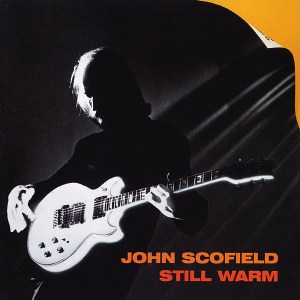
Whilst focusing on straightahead jazz during the early part of the decade, his stellar ‘fusion’ period between 1984 and 1988 – encompassing classic albums Electric Outlet, Still Warm, Blue Matter, Pick Hits Live and Loud Jazz – featured excellent original compositions and formidable players such as David Sanborn, Don Grolnick, Omar Hakim, Darryl Jones, Dennis Chambers, Hiram Bullock and George Duke.
In the meantime Sco was much in demand as a sideman, playing with everyone from Terri Lyne Carrington to Tommy Smith (this playlist gathers some of his greatest music of the 1980s) whilst also teaming up with fellow guitarist Bill Frisell, drummer Peter Erskine and bassist Marc Johnson in the latter’s Bass Desires project that produced two classic albums on ECM Records: Bass Desires and Second Sight.
Immediately recognisable with his chorus/overdrive sound and molten, legato style – always informed by the blues – Scofield’s solo career has since gone from strength, and we now find him ensconced in a highly productive spell on ECM, his latest album being Uncle John’s Band.
movingtheriver caught up with John to talk about his wonderful 1980s as he prepared for a European tour with keyboardist John Medeski – he’s ever the road warrior and seems full of energy and good humour.
MTR: I’d love to know a little about how/when you signed with Gramavision Records, and did you consider other options for your mid-‘80s solo career such as ECM?
JS: I signed with Gramavision shortly before I recorded Electric Outlet. They were very interested and made us a good deal when no one else had contacted me. After I met (ECM founder/producer) Manfred Eicher at the Bass Desires recording session he expressed interest but I had already signed a multi-record contract with Gramavision. After that I stayed with other New York-based companies (Blue Note and Verve) because I met those people here at home and they were major international labels. I’m quite happy now that I’ve found a home at ECM that is aligned with my current musical direction.
Drummer Steve Jordan plays some wonderful stuff on Electric Outlet – was he overdubbed at the end after you’d tracked everything with a drum machine?
Yes, exactly. I had bought a Roland drum machine and used it to make a four-track demo at home with me playing guitars and bass. I recreated that in the studio and had Steve overdub on all the tunes. He was incredible and nailed them so quickly. We’d played together a bit before – he was on my Who’s Who album in 1978.
I’m fascinated by the work you did with saxophonist George Adams during the 1980s, especially More Sightings (1984) – can you tell me how that came about?
I had played with George in New York on gigs with the Gil Evans Orchestra and then did a tour and album as a guest with the George Adams/Don Pullen band. Then George wanted to do the tour with Hannibal Marvin Peterson. They invited me and we ended up recording a live show in Zürich. I loved George’s playing and we were friendly. I even got him to come in to record with Miles for Columbia in 1983, but it seems that that recording session was lost somehow. I believe it was at The Hit Factory on Broadway. When they were putting together some CBS tapes for reissue, I was told by Michael Cuscuna that they didn’t find anything from that session… That’s all I know. It was Miles‘s band but with George on saxophone. (Adams is understood to have guested with Miles’s band in the studio on 16 June 1983 and also in concert at the Avery Fisher Hall in NYC on 26 June 1983, and was also part of the big band which played with Miles at Montreux in 1991 – Ed.)
Is it true that Kenny Kirkland was supposed to play keyboards on Still Warm but didn’t show at the last minute? And please tell me how the fabulous Omar Hakim came to play on the album.
Yes, Kenny was a friend and I was lucky enough to get to play with him a bunch, but somehow he didn’t show up at rehearsal so I asked Don Grolnick. I think Kenny just had his dates mixed up maybe? I’m not sure. It was a real loss that he died so young. Omar and Darryl Jones were playing with Sting at that time and I knew Omar although I had never played with him but I thought that he and Darryl could really lock it in. They sounded fantastic together.
So was Still Warm recorded just after you left Miles?
I think it was before the last tour. The last stuff I did with Miles was later in the summer in Europe and then Japan.
How much rehearsal time did you get with the bands in general for Still/Blue/Loud? Or did you give the band demos to learn in advance? Because a few of these compositions are treacherous, I’m thinking of stuff like ‘Trim’ and ‘Loud Jazz’ – how did Dennis learn them (he famously doesn’t read music – Ed.)?
For Still Warm, I think we probably had one rehearsal, then one in the studio. I think I made demos of the tunes to give everybody, but I can’t remember. By Blue Matter and Loud Jazzwe were a working band. I had been playing some of the Blue Matter songs with a different keyboardist and drummer along with Gary Grainger. Gary recommended Dennis and I guess he learned the songs at rehearsal. Maybe I made demos… I just remember Dennis trying a go-go beat on ‘Blue Matter’ which I hadn’t tried before. I think I wrote that song just before the session and had never played it live. Then we played a week at Fat Tuesday before going into the studio with Dennis and Mitch Forman. For Loud Jazz, we rehearsed but also played the tunes live on tour before the recording.
Regarding producer Steve Swallow’s role, did he select material? The albums have stood the test of time so well because they’re generally free of 1980s production clichés.
Steve has been a friend and mentor to me since the ‘70s. He was interested in production and multi-track recording and I knew he would be great at it. Although he didn’t select the material, he probably helped me with selecting my own tunes. He was really involved in mixing and had suggestions for the arrangements. Because Gramavision had their own studios, we were allowed to mix for many hours and treated mixing more like we would for a pop record. We were really lucky to have the great engineer Joe Ferla, to whom we deferred for many of the mix ideas. Along with Steve, he was responsible for the sound.
Can you tell me a bit more about the tune ‘Gil B643’ – presumably it’s a tribute to Gil Evans? And was the title at all influenced by the movie ‘THX 1138’?
B643 was Gil‘s apartment number! We lived at the same building in Manhattan.
I’d love to know a bit more about ‘Picks And Pans’ and its 6/8 feel, it strikes me that it’s a very influential tune in ‘fusion’ but was it influenced by Joe Zawinul’s ‘The Juggler’ (from Weather Report’s Heavy Weather)?
I liked Joe’s tune but I don’t think I got the beat especially from that…but there were other examples of that kind of beat. Probably lots of them. Maybe it first came from Afro-Cuban music like Mongo Santamaria’s ‘Afro Blue’. Or you can take a jazz waltz and just put a backbeat in there!
Which is your favourite of the two terrific Bass Desires albums and why?
I can’t say that I really have a favourite, but I just remember the chemistry for the first record was really exciting and it was great when we realized we could play together and that the group had a different sound, largely because of Bill Frisell and his unique approach. Also the sound with the two of our styles working together. That’s not to take anything from Marc and Peter, who really contributed so much and brought in material and if it weren’t for Marc having the idea of putting us all together, it would never have happened. I remember we played some gigs together before we went in the studio as well as rehearsing. I think we played a strange cabaret club in New York City. I can’t remember the name of the place and we probably also played a gig in Boston as well before we went into the studio with Manfred Eicher.
How did Dennis Chambers and Gary Grainger come onboard for the Blue Matter band – did you headhunt them, did they audition, or a bit of both?
I was looking for an electric bass player and my friend, the keyboard player Marc Copland, recommended Gary who he had played with in Washington DC. He said Gary could play anything on electric bass and it turned out he was absolutely correct. I then played with Gary in another configuration and he recommended Dennis. Gary and Dennis grew up together in Baltimore and were old friends. I had heard about Dennis with The P-Funk All Stars and was so surprised to learn that he was looking to play more jazz/fusion. Actually, Darryl Jones had played me a great board tape and said, ‘Isn’t this drummer fantastic?’ But we didn’t know who it was. I found out later that it was Dennis so I was a fan already even though I didn’t know it!
Hiram Bullock is an inspired rhythm-guitar choice on Blue Matter – was he a Steve Swallow recommendation?
No, I knew Hiram was great. I knew him from the New York scene and we were friends. I wanted rhythm guitar on that one track and I thought he would do a better job than I did – I think he did.
Was ‘Blue Matter’ influenced by Miles’s ‘Tutu’ (composed by Marcus Miller)?
I just had a generic triplet-ish backbeat in mind. It had no relation to ‘Tutu’ – not at all. ‘Tutu’ sounds a bit like (Burt Bacharach tune) ‘The Look Of Love’, right?!
How did you achieve the final minute of ‘Time Marches On’ where you solo over that ‘drone’ – was it a slowed down tape loop?
No, we just did it in real time.
I’d love to know your favourite guitarists of the 1980s, any genre…
Mainly I liked the jazz guys Wes Montgomery, Jim Hall, George Benson, Pat Martino. But I always loved the blues guys starting with Hendrix and Clapton back in the ’60s, plus Otis Rush, Albert King and BB King. I always admired my contemporaries Metheny, Stern, Frisell, Abercrombie, Mick Goodrick… I went in the fusion direction because of my experience with Miles. If it wasn’t for him, I probably would’ve been just playing bebop and giving guitar lessons!
The only time I saw the Blue Matter band in London was a really weird but brilliant gig in the East End in summer 1987 I think, maybe it was called the Mile End Theatre? Do you remember that? And in general do you have good memories of touring the UK and Europe?
Was that the Half Moon Theatre? I’ll never forget the gig. The late John Cumming brought us to London and I played many gigs subsequently for him. Maybe it was my first one in London as a leader? Not sure? That band was so strong. We really had some success in UK/Europe in those days.
Did Miles ever give you feedback on your 1980s solo career, or did you ever seek it out?!
I know he liked my tunes because I wrote ‘You’re Under Arrest’ for him and gave him a demo of a bunch of other stuff, some of which ended up on my records. He said he was gonna record everything but then when I quit the band in order to go out on tour with Blue Matter, I didn’t get a chance to do any of that with Miles. He had moved on to Tutu. I remember I played him some of Blue Matter for him once and he was really blown away by Dennis’s playing…
Finally, how do you look back on your 1980s career in general? Was it a great era for guitar-based music?
It was an incredible time. It was great because of getting to play with Miles and all the exposure it got me, and then starting my own career, playing funk/jazz with those guys. I was so influenced by Miles and his direction in the ‘80s. But, for me, Weather Report and Herbie’s Head Hunters were the greatest. I think it was a really good era for guitar when you think of Holdsworth, Stern, Metheny, Robben Ford and so many more. And of course the classic rockers like Clapton and Beck were around. Pop music in general had some pretty hot-shot guitar stuff in there, and funk was really everywhere. Thanks to Sly…
Thanks John and good luck on the European tour…
John Scofield at the Cape Town Jazz Festival, 2003. Photo by William Ellis
There’s a good case that 1984 was Last Call for classic jazz/funk (soon to morph into the dreaded smooth jazz) just before the machines took over and albums like David Sanborn’s A Change Of Heart became de rigeur (but only for a few years – there was an ‘acoustic’ revival in the late 1980s…).
Phil Upchurch’s Companions got in just under the wire. The legendary Chess Records/George Benson sideman (he wrote classic ‘Six To Four’ from Breezin’) had recorded over ten solo albums before 1984, all showing off his significant guitar chops and arrangement smarts.
But Companions (currently not on any streaming platforms – c’mon Universal Music) appeared 40 years ago this month on Paladin, the short-lived British jazz/dance label founded by DJ Paul Murphy and distributed by Virgin. Labelmates included Working Week, Robert Wyatt and Annie Whitehead.
It’s a classic West Coast album and a classic guitar album too, in large part due to the appearance of Lenny Breau (who died in mysterious circumstances on 12 August 1984, just a few days after the recording), famous for his fluid lines and cascading false harmonics, who appears on three tracks and to whom the album is dedicated.
Percussion fans – this album’s for you. Every track features a cornucopia of shakers, cowbells, woodblocks and congas played by Michael Fisher and Steve Forman. Gerald Albright blows a storm on the brilliant ‘Mr T (BA’s Song)’, probably heard by yours truly on Robbie Vincent’s BBC London show back in the day, while Russell Ferrante and Rodney Franklin provide tasty Fender Rhodes and Nathan East some excellent bass.
But, as is normal for mid-1980s fusion albums, there are some dodgy tracks on Companions too – two poor ‘pop’ cover versions (‘Rosanna’ sounds out-of-tune throughout) and an undercooked Jimmy Witherspoon cameo on ‘CC Rider’. Elsewhere there are not-so-great vocals on two tracks by Mike Baker (future drummer/vocalist for Zawinul Syndicate/Whitney Houston?).
But in general Companions is pure comfort music and well worth seeking out, rich with interesting harmony, good grooves and superb guitar playing.
Of all the musical scenes that emerged during the 1980s, M-BASE – a Brooklyn-originated fusion of jazz and funk with many other influences thrown in – may be the least understood/remembered.
The term was co-authored by saxophonists Greg Osby and Steve Coleman. The M stands for ‘Macro’, BASE is an acronym for ‘Basic Array of Structured Extemporizations’.
The music’s other key practitioners were saxophonists Gary Thomas, vocalist Cassandra Wilson, keyboard player Geri Allen, guitarists Kevin Eubanks, David Gilmore and Kelvyn Bell, bassist Lonnie Plaxico and many more.
M-BASE was an attempt to draw attention away from ‘jazz’ as a catch-all term, and also showcase original material over standards and show tunes. But it certainly has its own sound once you hear a few key albums, totally different to ‘fusion’ or ‘jazz/funk’, relying on tightly structured drum patterns (often in odd-time signatures), funk bass, ‘modal’ keyboards, chattering rhythm guitars and Charlie Parker-influenced horn improvisations.
A key artefact was Osby’s arresting album Season Of Renewal, released 35 years ago on now-defunkt German-based label JMT (which also released many other key M-BASE recordings). Checking it out again now for the first time in a few years, it makes for fascinating, rewarding listening.
Themes are mainly outlined by the bass (Plaxico) and/or keyboards (Renee Rosnes and Edward Simon). Osby’s alto or soprano saxes generally only enter during solo sections. The guitarists (Eubanks and Kevin McNeal) are superb. The synths may bring to mind the 1980s music of Mark Isham. Drummer Paul Samuels produces solid grooves and seems to have been issued with a ‘no tom-toms’ decree by Osby.
‘Dialogue X’, featuring just synths and Osby, hints at the political animus always underlying the M-BASE movement. The closing ‘Spirit Hour’ is absolutely spellbinding, like a waking dream, its haunting melody expertly outlined by Cassandra Wilson.
Osby has gone on to a varied, impressive career, including a well-regarded period on Blue Note Records. But none of his JMT albums are currently on streaming platforms (except for a fairly good quality burn on YouTube, see below) – in fact M-BASE is poorly served there, though a so-so compilation has recently surfaced. Best to search for Osby’s 1980s music via CD marketplaces – a fruitful voyage for the uninitiated.
It’s not surprising that a lot of Level 42 fans cite 1983 as the peak of the band’s career.
Messrs. King, Lindup, Gould and Gould had just released their first UK top 10 album Standing In The Light (and arguably their greatest single ‘The Sun Goes Down’) but were still very much holding on to their jazz/funk/rock roots, despite Polydor Records wanting more hits and less instrumentals.
The band were also still very much an in-your-face live act in 1983, a year off adding sequencers, drum machines and a much more commercial sheen to their sound. They toured Standing extensively during the autumn, including a dynamite show filmed 40 years ago today in Bochum, Germany, recently released on DVD.
It’s Exhibit A for those who love the early days of the band. And, for Level fans like movingtheriver who only came onboard around 1985, discovering the broadcast was gold dust. Also it’s not every day you see a bass player laying down deliciously funky lines while dancing like Max Wall (at around 4:30 below) and telling the fans to ‘Clap, you sods!’.
It’s interesting though that Mark King himself to this day strongly questions the live potency of the band during this era. In the March 1992 issue of Bass Player magazine, he came out with all guns blazing, discussing their November 1983 ‘Whistle Test On The Road’ appearance at the Brixton Ace (now the Academy):
‘I dug up an old one of us doing a live BBC programme… I thought, “Oh yeah, they were the good old days”. So I put on the video – and it was crap. The audience were fine, the lights were fine, the sound was fine. The band was crap. It was just so unsure, so uncertain…’
So which Level do you prefer? The choice is yours… In any case, it’s exciting to report that they’re currently in the middle of a UK tour celebrating 40 years of ‘The Sun Goes Down’.
The heart always beats a little faster when there’s news of a ‘previously unreleased’ Miles project. And if it’s from the 1980s, even better.
The era is still one the least understood/lauded periods of Miles’s work, despite the stellar efforts of George Cole.
It also has not been served well posthumously, particularly by his final label Warners; in recent years there has been the weirdly undercooked/incomplete Rubberband project, and the appallingly-mastered/incomplete Warners Years box set.
So hopes were high for Sony’s new Bootleg Series 7, which takes in the years 1982 to 1985 and looks at the sessions that made up the (classic) albums Star People, Decoy and You’re Under Arrest. The packaging looks OK:
But what about the music? Before his death, Teo Macero, producer of many epochal Davis albums and also Star People, was very critical of the ‘complete sessions’ boxes that appeared after Miles’s demise. It’s safe to say he would not like this either.
We essentially get a collection of long studio jams, featuring the occasional familiar section – generally the best bit of the jam, expertly filleted by Teo. He really earned his money during this era of Miles music. There are also some alternative versions of You’re Under Arrest material, a few full-length, unedited versions of released tracks and one or two outtakes such as ‘What’s Love Got To Do With It’.
The full, unedited versions of ‘Freaky Deaky’ (Darryl Jones’ first recording with Miles) and ‘Katia’ (before Miles took his razor blade to John McLaughlin’s remarkable solo) are well worth hearing. Marcus Miller plays a brilliant bass solo on ‘Remake Of OBX Ballad’. There’s also a really strange duet featuring trombonist JJ Johnson and Miles on keyboards.
Unlike some of the previous Bootleg Series albums, there’s a lack of interesting studio chatter, which would have enlivened things (though there is the occasional brief Miles interjection). And there are still tracks that refuse to leave the vaults, such as the version of Nik Kershaw’s ‘Wild Horses’.
Disc one just contains too many formless jams, with Mike Stern, Miles and Bill Evans struggling to put together cogent solos (despite Al Foster’s beautiful drumming), and basically the band is crying out for John Scofield’s arrival in autumn 1982. He brings immediate relief, from both a soloing and compositional perspective. The live disc is serviceable and quite well recorded, but certainly not one of the best nights from the 1983 tour.
Essentially, we learn three things from the very uneven Bootleg Series 7: Scofield was a vital addition to Miles’s band and prolonged his career, Miller was Miles’s best bass player of the 1980s and Macero did a great job on Star People. But we probably knew all of that already.
So, basically, it’s another opportunity missed. I’ll stick to the original albums, with one or two exceptions. But you gotta check it out if you’re a fan of Miles’s 1980s music. George Cole covers the box in a lot more detail here.
It’s no coincidence that alto saxist/composer David Sanborn’s purple patch (1980-1982) came about just when genres (yacht rock, soul, funk, jazz, R’n’B) were breaking down to create one of the most egalitarian musical eras.
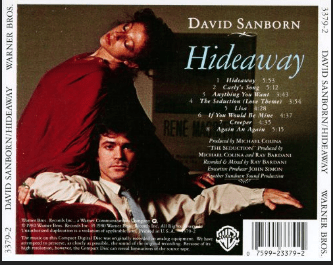
Hideaway, his fifth studio album, was the breakthrough, and I love it. Released in February 1980, it made #2 on the Jazz chart, hung around in the Urban Contemporary charts for over a year and was nominated for a Best R&B Instrumental Performance Grammy.
For some, Sanborn’s solo material will always be ‘smooth jazz’, but I’d point to four aspects of his music that elevate it above similar material, particularly on Hideaway – his tone and his note choices, both born of the ‘50s and ‘60s St. Louis jazz and R’n’B scenes; his writing; and also the playing of top-notch guests. On Hideaway, the stars are drummer Steve Gadd (Gadd fans, this is the album for you), bassist Neil Jason and keyboard player Don Grolnick.
The title track remains a classic. Sanborn lays down rich Fender Rhodes soul chords while Gadd constructs a perfectly judged post-disco drum part heavily involving cross-stick and floor tom, laying just behind the beat, with an unexpected, explosive fill just before the fade. Jason is given free rein and comes up with an outrageous bass performance.
Hideaway also benefits from Steely/Doobies man Michael McDonald co-writing two tracks. Sanborn doesn’t have anything much catchier than ‘Anything You Want’ and ‘Again An Again’ in his repertoire. ‘Carly’s Song’ and ‘Lisa’ are memorable ballads with beguiling harmony, while Gadd provides another brilliant commentary on ‘If You Would Be Mine’.
Rick Marotta appears to expertly marshal ‘Creeper’ through its slow half-time groove – guitarist and frequent Sanborn collaborator Hiram Bullock was so taken with it he later wrote a sequel called ‘Son Of Creeper’.
Hideaway’s packaging helps too – its minimalist cover is a winner, as is the photo featuring Dave reclining in his apartment with a Magritte over his left shoulder and paramour draped over his right. Warner Bros. were just realising he wasn’t the worst looking guy in the world.
The only downside: in a classic bit of Warners penny-pinching, they add the very dull (and certifiably smooth-jazz) ‘The Seduction’ from the ‘American Gigolo’ soundtrack to the streaming and CD versions but in the process edit down ‘Anything You Want’ and the title track to ‘single’ length. Best try to find Hideaway on vinyl.

 You know you’re doing something right when the boss takes an interest.
 Mel Gaynor spent almost 30 years playing superb drums with Simple Minds in studios, stadiums and sports halls across the globe.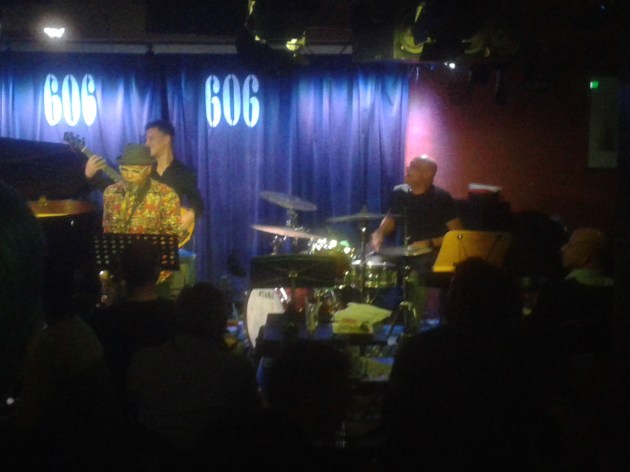


 There’s a good case that 1984 was Last Call for classic jazz/funk (soon to morph into the dreaded smooth jazz) just before the machines took over and albums like David Sanborn’s A Change Of Heart became de rigeur (but only for a few years – there was an ‘acoustic’ revival in the late 1980s…).
 Of all the musical scenes that emerged during the 1980s, M-BASE – a Brooklyn-originated fusion of jazz and funk with many other influences thrown in – may be the least understood/remembered.
 It’s not surprising that a lot of Level 42 fans cite 1983 as the peak of the band’s career.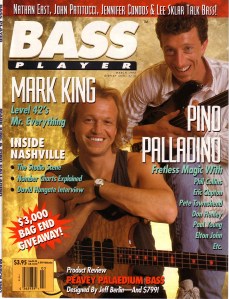


 movingtheriver.com