Anthony Jackson (1952-2025)

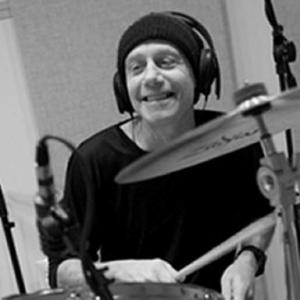
Anthony during the recording session for Steve Khan’s ‘Eyewitness’ in 1981. Photo by David Tan

The brilliant Anthony Jackson, who has died aged 73, was a vital part of the early-1970s electric bass revolution, but arguably never got the same attention as contemporaries Stanley Clarke, Jaco Pastorius, Bootsy Collins, Louis Johnson and Alphonso Johnson (Chuck Rainey, Steve Swallow and Larry Graham are a bit older).

In a music world beset by fly-by-night chancers and one-trick ponies, he was a player of principle, something like the Allan Holdsworth of bass.

It was Anthony’s playing on Steve Khan’s ‘Guy Lafleur’ that first completely hooked movingtheriver – I remember thinking: who the hell is THAT?!

In two major ways, he changed the instrument as much as Jaco (though, in later years, pointedly called himself a ‘guitarist who plays a variation called the contrabass guitar’).

First there was his stretching of the instrument’s range below the standard low E (inspired by his love of Jimmy Smith’s Hammond organ playing) and above the standard top G, via his pioneering use of six-string basses, which he started playing exclusively in 1982 (Steve Khan thinks his superb ‘Casa Loco’ may have featured the debut of Anthony’s six-string).

Before that, Jackson had regularly detuned the low E string on his trusty Fender Precision, producing strikingly rich, deep timbres on work with Grover Washington Jr., Quincy Jones, Steely Dan, Chaka Khan and Earl Klugh, amongst hundreds of others (he prided himself on playing all kinds of music, working with everyone from Judy Collins and Peter, Paul & Mary to George Benson and Will Downing).

Then there was his use of effects, particularly the trademark flanger, often accompanied by the use of a pick, best heard on The O’Jays’ ‘For The Love Of Money’ and ‘Give The People What They Want’, and on his work with Al Di Meola. Oh, and then there’s a third factor – he ALWAYS sat down whilst playing, claiming that sitting down and wearing no strap was the way to go for bassists.

Jackson started playing music after seeing The Beatles on The Ed Sullivan Show in 1964, then became obsessed with other Brit invasion bands, Motown (via James Jamerson) and Jefferson Airplane’s Jack Casady, plus classical composers Olivier Messiaen and Paul Hindemith.

Regarding the latter two, their influence on Anthony’s playing is particularly noticeable on the live version of Khan’s ‘The Suitcase’, from 1994. Steve described this brilliant performance on his website.

One of Jackson’s first major gigs was in 1973, playing for a year in Buddy Rich’s sextet. He later called the drummer the only bona fide genius with which he had played. But then Anthony loved drummers. He enjoyed brilliant hook-ups with Steve Gadd, Buddy Williams, Steve Jordan, Harvey Mason, Simon Phillips, Steve Ferrone, Yogi Horton, Earl Young and many others.

But he lost work by refusing to ‘slap’ his bass during the disco era, and also very rarely solo’d unless he had something specific to say (to Steve Khan’s great annoyance!). Some of these concepts were laid down in his famously stern columns for Bass Player magazine.

But even Jackson wasn’t immune to some of the ‘proclivities’ of other great artists – for example, his performance was wiped from the title track of Steely Dan’s Gaucho! (Chuck Rainey’s pass got the nod instead.) But he played epochal stuff on ‘Glamour Profession’ and ‘My Rival’ from the same album, and excelled on Donald Fagen’s ‘IGY’ and ‘Ruby Baby’.

He was also fiercely loyal to artists he respected, enjoying long associations with Hiromi, Michel Camilo, Al Di Meola, Sadao Watanabe, Lee Ritenour, Grover Washington, Chick Corea, Khan and Michel Petrucciani.

In one of his rare interviews, he expressed a wish to play with Phil Collins, Ringo and Charlie Watts. Sadly it seems he didn’t achieve those ambitions. Farewell to a true pioneer and personal musical hero. Check out this playlist which brings together movingtheriver’s favourite Anthony performances.

Anthony Claiborne Jackson (23 June 1952 – 19 October 2025)

John Sessions (1953-2020)

It’s one of the great mysteries of pop culture, up there with who buys The Wire magazine and who goes to Snow Patrol gigs – why wasn’t comedian/actor John Sessions a bigger star (born John Marshall, he sadly died in 2020)?
Only very occasionally these days do you see something on TV that stops time. It happened to movingtheriver recently watching Sessions performing a monologue in the style of James Joyce on classic late-‘80s improv show ‘Whose Line Is It Anyway’ (RIP the brilliant Tony Slattery, by the way).

He also did a note-perfect impression of theatre director Peter Brook in the programme around the same time. No wonder he was one of David Brent’s comedy heroes.

It was a reminder of that period when comedy could be intelligent, educated, even ‘literary’, dammit. You weren’t terminally terrified of talking down to your audience. Performers like Sessions, Stephen Fry, Hugh Laurie, Steve Martin and Robin Williams raised you up, made you want to learn more about their references, generally punched up rather than punched down.

He was born in 1953 to Scottish parents, and studied English Lit at university, then attended RADA and had early TV successes with ‘Porterhouse Blue’, ‘Spitting Image’ and Simon Gray’s ‘Common Pursuit’ play alongside Fry and Rik Mayall. Then, from my perspective as a casual fan, he seemed (a bit like Slattery) to slightly disappear.

He went to the States to co-star in a few dodgy American rom-coms such as ‘Sweet Revenge’ with Rosanna Arquette and Carrie Fisher, as well as a few movies directed by his RADA schoolmate Kenneth Branagh, but you wonder if he could have broken through to a much bigger audience – could he have played Chaplin in Richard Attenborough’s 1993 biopic? Could he have come to Woody Allen’s attention?

There were also some one-man shows on TV, ‘Stella Street’ in the mid-1990s (surely he does the best-ever impression of Al Pacino), and a whole host of guest appearances including ‘Outnumbered’. It’s always a pleasure to dip into Sessionsland.

In Memoriam: movingtheriver salutes the fallen of 2024

Marlena Shaw

Dean Brown (guitarist with Billy Cobham, David Sanborn, Brecker Bros etc.)

Gena Rowlands

Larry Willis (pianist)

Frank Auerbach (painter)

Martial Solal (jazz pianist)

Annie Nightingale

Keith LeBlanc

Aston ‘Family Man’ Barrett (Wailers bassist)

Jim Beard (keyboard player with Mike Stern, Wayne Shorter, John McLaughlin)

Gary Grant (‘Seawind’ horn section trumpeter)

Palle Danielsson (bassist with Keith Jarrett, Jan Garbarek)

TM Stevens (bassist with James Brown, Pretenders, John McLaughlin, Miles Davis)

Sergio Mendes

Michael Jayston (actor)

Michael Cuscuna (jazz record executive/writer)

Charles Cyphers (‘Assault On Precinct’/’Halloween’/’The Fog’ actor)

Casey Benjamin (Robert Glasper Experiment multi-instrumentalist)

David Sanborn

Teri Garr

Richard Lewis

John Kelman (jazz writer)

Angela Bofill

Albert ‘Tootie’ Heath

Ed Mann (Frank Zappa percussionist)

Tom Fowler (Zappa bassist)

Dame Maggie Smith

Martin Mull

Herbie Flowers (Spiders/Sky/Lou Reed bassist)

Will Jennings (‘Higher Love’/’Street Life’/’One Day I’ll Fly Away’/’Didn’t We Almost Have It All’ lyricist)

M Emmet Walsh

Benny Golson

Kris Kristofferson

Libby Titus (singer/songwriter and wife of Donald Fagen)

Martin France (drummer with Kenny Wheeler, Loose Tubes, Human Chain etc.)

Nadia Cattouse (singer/songwriter and mother of Level 42’s Mike Lindup)

Quincy Jones

Paul Auster

Tyka Nelson (singer/songwriter and sister of Prince)

Cat Glover (‘Cat’ on Prince’s Sign ‘O’ The Times/Lovesexy tours/albums)

Cindy Morgan (‘Caddyshack’/’Tron’ actress)

Susan Backlinie (‘Jaws’ actress/gymnast)

Lou Donaldson

Roy Haynes

Roger Corman

Shelley Duvall

Peter Sinfield (King Crimson lyricist)

Diva Gray (vocalist with Chic, Steely Dan, David Sanborn, George Benson)

Bernard Hill

Zakir Hussain

Dan Morgenstern (jazz writer)

Jim Abrahams (‘Kentucky Fried Movie’/’Airplane’/’Police Squad’/’The Naked Gun’ writer/director)

Graham Thorpe (cricketer)

Robert Towne (‘Chinatown’/’The Last Detail’ screenwriter)

Alfa Anderson (vocalist with Chic, Diana Ross, Odyssey, Bryan Ferry)

Donald Sutherland

Eleanor Coppola (writer of the brilliant ‘Notes: The Making of “Apocalypse Now”’ and ex-wife of Francis)

Derek Underwood (cricketer)

Terry Griffiths (snooker player)

Ray Reardon (snooker player)

Wishing all of my readers a happy, healthy 2025, with loads of cash.

Keith LeBlanc (1954-2024)

‘No crap beats’ – if that wasn’t on Keith Leblanc’s business card, it should have been.
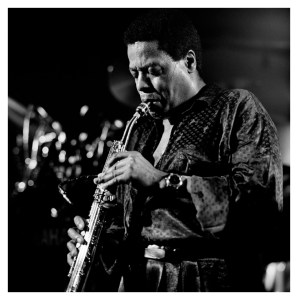
The man could just sit down at any kit – or program any drum machine – and make it sound rich and swinging, whether he was playing with Tackhead, Seal, Tina Turner, Nine Inch Nails, Depeche Mode, Bomb The Bass, ABC, Sugarhill Gang, Annie Lennox, Mark Stewart or Little Axe.

LeBlanc – who died in April – has to go down as a true beat innovator, embracing and developing drum technology and particularly developing a human/machine interface which always grooved beautifully and didn’t distract from the music. Along with other key ’80s/’90s drummers Dennis Chambers, Jonathan Moffett, Ricky Wellman and Lenny White, he also had a killer right foot.

He grew up in Bristol, Connecticut, and was inspired to pick up the drum sticks after seeing The Beatles on TV. He was later influenced by what he called ‘pop’ music – James Brown, Cameo, Muscle Shoals, Gap Band, Parliament/Funkadelic – and became the house drummer for Sugar Hill Records in late 1979 and co-founder of grounbreaking funk/industrial/dub/rock outfit Tackhead alongside Skip McDonald, Doug Wimbish and Adrian Sherwood.

LeBlanc also recorded many solo albums, the best of which is probably Time Traveller, and played excellent live jazz/rock with Nikki Yeoh, Jonas Hellborg and Mano Ventura.

It’s sad to think one will never hear that amazing LeBlanc/Wimbish bass and drums hook-up. Anyone who saw Mark Stewart, Little Axe or Tackhead live will remember how the first few minutes of every gig was usually just the two of them playing together. That lasted right through to the 2021 On-U Records anniversary shindig, though a masked Keith looked very frail.

movingtheriver had the pleasure of interviewing LeBlanc in 2010 for Jazz FM, and revisiting my notebook I found lots of interesting quotes I didn’t use in my original article:

On Sugarhill Records/co-owner Sylvia Robinson:
Sylvia was looking for Skip and Doug but they initially said no because they’d had a bad experience before. I was new to the band but I heard the words ‘recording studio’ and ‘money’ and bugged them until they said yes. The first Sugarhill Gang album was recorded in the Robinsons’ studio (H&L in Englewood Cliffs, New Jersey, down the road from Rudy Van Gelder’s famous studio) which was falling to bits! We’d cut a track on the Friday, drive home to Connecticut and hear it on the radio on the Monday. The whole industry was shaken up when rap started. It took them four years to catch up. But if the Robinsons had done 25% of the right thing, Sugar Hill Records would still be going. They screwed up. It was hard to watch the artists get ripped off and then watch those people flaunt money in front of them. We tried not to write anything because we knew how they were.

On playing live in the studio:
The first rap drummer was a white guy! Back then, playing live in the studio was normal. The arranger Jiggs Chase would get with the rappers, do an arrangement based on what they wanted to use and then give us charts. And then we’d add things. The musical ethic was really good at that time. You had to get it right or there’d be someone else in there recording the next day.

On hip-hop and drum machines:
After ‘Planet Rock’, anyone could make a rap record in their bedroom. When drum machines came out, I saw my job opportunities flying out of the window. They opened the door for everybody to do it. Then it dawned on me what I could program one of those better than any engineer. I did ‘No Sell Out’ just to see what I could do with drum machines.

On George Clinton/P-Funk:
I was offered the gig with Parliament – I asked Bernie Worrell if I should do it and he said, ‘Only if you want to chase the money all night!’

On his imitators:
The Red Hot Chili Peppers ripped us off, especially in the beat department. The drummer was checkin’ me hard!

On Prince:
Prince sabotaged my drum machine at First Avenue in Minneapolis. I was playing along and then the machine stopped and I heard this voice hissing through the monitor: ‘What’s the matter, can’t you keep time?’!

In Memoriam: movingtheriver salutes the fallen of 2023

Tony Oxley (drummer for John McLaughlin, Cecil Taylor, Derek Bailey, Gavin Bryars etc.)

William Friedkin

Les McCann

Trugoy the Dove (De La Soul rapper/co-founder)

Kevin ‘Geordie’ Walker (Killing Joke guitarist)

Trevor Francis

John Pilger

Jean Boht

Fred White (drummer with Earth, Wind & Fire)

Dick Fontaine (pioneering documentary director)

Paul Watson (documentary pioneer and director of ‘The Family’, ‘The Fishing Party’, ‘Rain In My Heart’ etc.)

Shane MacGowan

Mark Stewart

Brian Tufano (‘Quadrophenia’/’Blade Runner’/’Shallow Grave’ cinematographer)

Burt Bacharach

Wayne Shorter

Jerry Moss (co-founder of A&M Records)

Alan Rankine

Barrett Strong (co-composer of ‘Money’, ‘I Heard It Through The Grapevine’, ‘Papa Was A Rolling Stone’, ‘Wherever I Lay My Hat That’s My Home’)

Bruce Gowers (video and documentary director)

Carlos Garnett (saxophonist with Miles Davis, Art Blakey etc.)

Jim Gordon (drummer with Steely Dan, Frank Zappa, Derek And The Dominoes etc.)

Sinéad O’Connor

Tom Verlaine

Jeff Beck

Hugh Hudson

Sylvia Syms

Shirley Anne Field

Tony Coe (saxophonist)

Fuzzy Haskins (Parliament/Funkadelic vocalist/drummer)

Ryuichi Sakamoto

Fay Weldon

Ahmad Jamal

Carl Davis

Dickie Davies

Piper Laurie

Barry Humphries

Francis Monkman (keyboardist for Sky/Kate Bush, ‘The Long Good Friday’ soundtrack composer)

Tina Turner

John Giblin

Terry Venables

Pete Brown (poet, musician and lyricist of Cream’s ‘Sunshine Of Your Love’/’I Feel Free’/’White Room’)

John Motson

Astrud Gilberto

Baroness Betty Boothroyd

Benjamin Zephaniah

Ray Shulman (Gentle Giant bassist, producer of The Sundays, Sugarcubes and Ian McCulloch)

Ryan O’Neal

Seymour Stein

Mo Foster (bassist with Jeff Beck, Phil Collins, Ringo, Gerry Rafferty etc.)

Glenda Jackson

Martin Amis

Bishan Singh Bedi (cricketer)

George Winston (Windham Hill pianist)

Robbie Robertson

Michael Lerner

Raquel Welch

Frances Sternhagen

Joseph ‘Amp’ Fiddler (keyboardist with George Clinton, Prince, Seal, Maxwell, Charles & Eddie)

Peter Brötzmann

Richard Roundtree

Richard Davis (jazz bassist)

David McCallum

Sir Michael Gambon

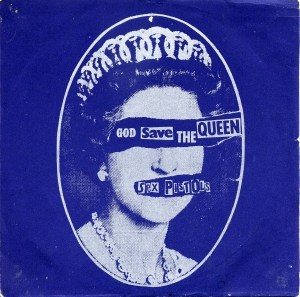
Jamie Reid (punk pioneer and designer of The Sex Pistols’ iconic covers)

John Marshall (drummer for Soft Machine, Nucleus, Eberhard Weber etc.)

Carla Bley

Alan Arkin

Michael Baker (drummer/vocalist for Whitney Houston, Joe Zawinul, Billy Childs)

Wishing all of my readers a healthy 2024, with loads of cash.

Keith Floyd: The Man On The Telly

What a treat to see that Freeview channel London Live seems to be re-running Keith Floyd’s classic BBC films of the 1980s.

There had been others before him but Floyd is generally regarded as the original modern TV chef. He’s certainly the only one I can watch, though probably wouldn’t be let within a mile of a television studio these days.

But who was this charismatic, erudite, passionate, well-spoken, Withnailesque bloke gently joshing the cameraman (the long-suffering Clive – ‘Stay where you are, old bean!’) and director (David Pritchard), all the while quoting poetry and chucking down the red wine?

He had a colourful past. Floyd was born at his family farm near Reading in 1943 into distinctly less-than-well-off circumstances. He developed a passion for picking fruit and vegetables and attended Wellington School (at the same time as Jeffrey Archer) but left at 16 to develop his writing skills alongside Tom Stoppard at the Bristol Evening News.

Then, on a whim, after seeing the Michael Caine movie ‘Zulu’, he joined the Army. He moved into catering work at the BBC before opening his own successful restaurant in Bristol, where he’d mill around amongst the clientele, reciting First World War poetry and Bob Dylan lyrics.

BBC producer David Pritchard observed Floyd there in 1983 and offered him a TV gig. The rest is history. First there was ‘Floyd On Fish’, then ‘Floyd On France’ and a selection of well-regarded films and series, all shot on film and still looking sumptuous today. Don’t watch if you are hungry…

Floyd was married and divorced four times and fleeced by the vicious British tabloid press of the late 1980s. It’s not surprising he fell out of love with the TV game, outlined in hilarious detail in Tom Hibbert’s ‘Who The Hell’ interview for Q magazine:

‘Celebrity? It’s a heap of sh*t! You get frightened to go out. People you’d like to speak to don’t speak to you because they’re too polite. People you don’t want to speak to hound you to death. Everyone thinks you’re incredibly rich when you’re not. No-one believes you if you say you’re lonely or depressed because…you’re The Man On The Telly.’

Floyd even made a single with The Stranglers’ Hugh Cornwell called ‘Give Geese A Chance’ (apparently no-no’d by Yoko Ono…), with Fuzzbox guesting on the B-side. Between 1989 and 1996, he also ran his own gastropub/B&B – The Maltsters Arms in Devon – still going strong today.

Floyd was probably not an easy man to get along with, and Keith Allen’s excellent TV doc – made just before his death in 2009 – shows the effect his drinking had on lovely daughter Poppy. But in terms of the idiot box, he was a breath of fresh air. And in these nannying, oversensitive days, his brutal honesty, erudition and unabashed debauchery are a delight.

Mark Stewart (1960-2023)

‘I think a paranoid is someone who’s in possession of all the facts.’ Mark Stewart, 1996

In another terrible year for musician deaths, one of 2023’s most surprising and least welcome was the passing of post-punk pioneer Mark Stewart in April, of undisclosed causes.

Indeed it is almost uncanny, considering how full of life he seemed onstage last year during On-U Sound Records’ 40th anniversary rave-up at London’s Forum. And the fact that 2022 also saw one of his best ever collaborations, with KK Null.

His music and friendship helped pave the way for his Bristol mates Tricky, Gary Clail and Massive Attack, and his influence is detectable in such acts as Sleaford Mods and LCD Soundsystem.

I saw Mark live five or six times. His presentation was sometimes hilarious, sometimes disturbing, always thrilling. He would shamble onstage, often with a shopping bag of beers in tow, before exploding into action, a man with a lot on his mind. The fact that he was often playing with one of the slickest/funkiest American rhythm sections in history (Skip McDonald/Doug Wimbish/Keith LeBlanc) was a brilliant dichotomy.

He was interested in everything from the Dead Sea Scrolls to CIA Mind Control to the Gemstone Files and Operation Gladio. His thing was information – who controls it and how/why they conceal it.

The teenage, beanpole, 6’6” Mark – resplendent in zoot suit and brothel creepers – was a regular sight at clubs and gigs in mid-1970s Bristol as part of the Funk Army. After his first band The Pop Group split up, he pursued mad mash-ups of sound, sometimes using Walkmans to create his collages, plundering scary ‘50s sci-fi voices and even TV ads.

He gave good album title: Learning To Cope With Cowardice. As The Veneer Of Democracy Starts To Fade. He was never interested in slick, ‘funky’ beats – even his ‘band’ album, 1990’s Metatron, with Wimbish, McDonald and LeBlanc, is distinctly uneasy listening.

By 1996’s Control Data, the music world had finally caught up with him, the album’s mix of techno, dub and house more commercial than usual. But the extraordinary ‘Simulacra’, ‘Red Zone’ and ‘Digital Justice’ to this day sound unlike anything else. This trend continued through his occasional records of the noughties, particularly the excellent Edit (2009).

His vocals were generally low in the mix. You had to strain to hear his lyrics. Why? He claimed it was the influence of dub and funk. ‘So it’s not like making a f**king speech’, he told Simon Reynolds. But his words were often brilliant, as funny and peculiar as Mark E Smith or Morrissey. Check out ‘The Lunatics Have Taken Over The Asylum’, ‘Low Life, High Places’ or The Pop Group’s ‘Citizen Zombie’ (You’ve got that brainwashed look of an alien abductee/Maybe your mind has been wiped clean’).

Mark also made a lot of impact writing for other acts – Tackhead, Gary Clail, Living Colour (‘Sacred Ground’), Audio Active (‘Happy Shopper’). But I’ll always remember him passing the time of day with my brother in the audience immediately after the Forum gig last April. He always said his fans were just as interesting as the musicians onstage – another legacy of punk.

Farewell to a brilliant one-off.

John Giblin (1952-2023): Seven Of The Best

Phil Collins and John, circa 1980

The period roughly between 1978 and 1985 was a golden age if you were a British or American session musician.

The mission: to sprinkle your unique brand of fairy dust over a song or album. You lived on your wits and gambled on your talent but your employers were more often than not creative artists at the top of their game.

As far as UK bassists go, Glasgow-born John Giblin, who has died at the age of 72, was always near the top of the list. He was famed for his melodic fretless bass style (though later pretty much disowned it, moving to five-string fretted and stand-up acoustic basses), starting his career with ex-Yes guitarist Pete Banks. He then hooked up with Brand X and Phil Collins and the rest is history.

After prestigious work with Kate Bush, John Martyn and Peter Gabriel, Giblin joined Simple Minds as full-time member in summer 1985 but left three years later after a falling out with producer Trevor Horn during the recording of Street Fighting Years. He also ran a much-loved rehearsal studio called Barwell Court near Chessington, Surrey.

Of course he was influenced by Jaco Pastorius but didn’t really sound like him. (Anyway, he traced that particular line from Eberhard Weber, who apparently claims Jaco ripped HIM off!) Giblin played memorable bass on tens of key tracks but here are seven that particularly registered with your correspondent, in chronological order.

7. John Martyn: ‘Some People Are Crazy’
movingtheriver’s introduction to Giblin’s work, he delivers a brilliant fretless commentary here, though I’m not even sure I realised it was a ‘bass’ circa 1985 – just superb music. It’s funky, flowing and also features those famed sliding harmonics, nicked from Ron Carter and Percy Jones. Giblin is also a talking head in the great Martyn documentary ‘Johnny Too Bad’.

6. Peter Gabriel: ‘Family Snapshot’
The whole of Gabriel III is of course a bass masterclass but Giblin and Gabriel fill in the backstory of the troubled political assassin to great effect in the moving final minute of this.

5. Kate Bush: ‘Breathing’
Just business as usual for Giblin on this classic Bush anti-nuclear ballad, weaving arch, memorable lines around her vocals. Also listen out for his closing, sepulchral E-flat.

4. Phil Collins: ‘Tomorrow Never Knows’
The much-ripped off (hello Pearl Jam) line that propelled one of the better Beatles cover versions.

3. Simple Minds: ‘Let It All Come Down’
Giblin didn’t get many composer credits but this co-write was always your correspondent’s favourite track on Street Fighting Years (Jim Kerr apparently wrote the words).

2. Kate Bush: ‘Love And Anger’
Kate again, and this time Giblin lets fly with some brilliant slap bass in the final few minutes alongside David Gilmour’s tasty guitar solo.

1. Scott Walker: ‘Tilt’
Demonstrating his post-’80s five-string style, Giblin enlivens Walker’s classic title track with some strikingly ‘out’ notes and a great sense of space.

Wayne Shorter (1933-2023): Don’t Forget The 1980s

The sad death of soprano/tenor sax titan Wayne Shorter has inspired many column inches but, reading most of the obituaries, you might be forgiven for thinking that he was completely dormant during the 1980s.

Nothing could be further from the truth, even if he took more of a backseat in his ‘day job’ co-leading Weather Report (though still contributed brilliant compositions, of which more later).

Your correspondent has to declare a large interest. Wayne’s music was part of my DNA from early doors, probably courtesy of the memorable tunes ‘Harlequin’ and ‘Palladium’ on WR’s Heavy Weather and beguiling ‘The Elders’ and ‘Pinocchio’ on Mr Gone which my dad played throughout my childhood.

By 1985, I was all-in. Wayne was my E.T. and my Monk, Virgo Rising, delivering nuggets of brilliance straight into my burgeoning musical brain. WR’s Sportin’ Life made a huge impression, featuring his majestic composition ‘Face On The Barroom Floor’.

Then Wayne’s contributions to Joni Mitchell’s music started to register – there were many highlights throughout the 1980s, from ‘Be Cool’ and ‘Love’ on Wild Things Run Fast to ‘A Bird That Whistles’ on Chalk Mark In A Rainstorm.

Then Wayne’s solo album Atlantis hit. Strange to report though, apart from the opening ‘sweetener’ ‘Endangered Species’, I failed to really ‘understand’ this dense, intricately arranged record of acoustic chamber fusion for about 20 years. The penny finally dropped and I’m bloody glad I persevered.

Phantom Navigator came hot on its heels. Like his friends and bandmates Miles and Herbie Hancock (and inspired by his commitment to Human Revolution), Wayne was tired of improvising over ‘jazz’ rhythms and standard songforms, branching out into symphonic/through-composed material utilising synthesizer and sampling technology.

But of course it sounded completely unlike anyone else. ‘Condition Red’ was an immediate brain-blower, and again this most misunderstood/underestimated album has proved a sleeper classic.

Ditto 1988’s Joy Ryder, with the extraordinary ‘Someplace Called Where’ featuring Dianne Reeves, brilliant ‘Over Shadow Hill Way’ and some fantastic Hancock/Geri Allen/Darryl Jones/Nathan East/Terri Lyne Carrington interplay throughout.

The 1980s Columbia albums get fairly short shrift in critical circles these days but Wayne played several compositions from that era – ‘Atlantis’, ‘Over Shadow Hill Way’, ‘Joy Ryder’, ‘Endangered Species’, ‘The Three Marias’ – right through to the 2010s.

Then there were the intriguing 1980s guest spots and side projects: he acted memorably in ‘Round Midnight’ and contributed to gorgeous ‘The Peacocks’ and brilliant ‘Une Noche con Francis’ (duelling with Dexter Gordon) on the Oscar-winning soundtrack album.

There was a moving guest performance on Toninho Horta’s ‘Ballad For Zawinul’ from the guitarist’s Diamond Land album (still not available on streaming platforms at time of writing) and the memorable team-up with pianist Michel Petrucciani and guitarist Jim Hall on Power Of Three.

Wayne also contributed a fine solo to Stanley Clarke’s ‘Goodbye Pork Pie Hat’ and played beautifully throughout Buster Williams’ 1988 album Somethin’ Else. (Chime in below if I have missed any other great Wayne 1980s guest performances.)

Wayne ended a fruitful decade recording The Manhattan Project’s excellent self-titled live Blue Note album at Chelsea Studios, NYC, in December 1989 alongside Clarke, Petrucciani and Lenny White (c’mon Universal, get this on streaming platforms). He plays some marvellous stuff throughout, particularly on Jaco Pastorius’s ‘Dania’, new composition ‘Virgo Rising’ and a reversioned ‘Nefertiti’.

Then there was the live work. Wayne toured the UK regularly between 1985 and 1988. I think I saw him four times during the decade, and each concert was fascinating.

There was a Weather Report gig at the Dominion Theatre in summer 1984, a poorly-attended solo gig at the Logan Hall on 25 October 1985 (‘lack of promotion ’, someone said to my dad) and a really weird all-nighter at the Town & Country Club on 4 April 1987 when Wayne’s sci-fi fusion stopped the jazz dancers in their tracks,

Then there was a gig with Carlos Santana at the Royal Festival Hall on 13 July 1988 of which I can’t remember much apart from a few hippies in the front row loudly saluting every note Carlos played, and Ndugu Chancler’s absurdly-high cymbal setup. (There was also apparently a solo Wayne gig at The Astoria in April 1988 which for some reason I missed.)

I would study him and his sidemen (and, notably, sidewomen: his 1980s bands featured no less than five women, Marilyn Mazur, Geri Allen, Tracy Wormworth, Renee Rosnes and Carrington), fascinated and enthralled by the originality of his music and playing.

Farewell to a master, a talisman, an enlightened being. Nam myoho renge kyo.

Further listening: check out my Wayne playlist which outlines some key tracks of his career.