Peter Gabriel: Plays Live 40 Years On

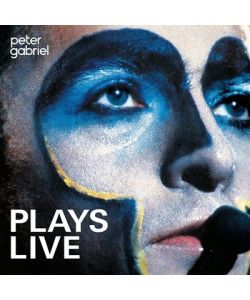
PG’s first live album – released 40 years ago this week – touched down incongruously during 1983’s Summer of Fun, crashing into the UK chart at #9 alongside Let’s Dance and Thriller (but Japan’s posthumous live album Oil On Canvas did even better – it was the week’s highest new entry at #5).

Plays Live was ostensibly recorded during four dates of the American tour in December 1982. Gabriel had taken some choreography lessons and often ventured into the audience for ‘Lay Your Hands On Me’, sometimes ‘falling backwards’ from the stage in the manner of those corporate team-building/trust exercises.

But he was very transparent about there being a lot of ‘cheating’ on this album – many overdubs/vocal corrections were undertaken with the assistance of co-producer Peter Walsh (fresh from Simple Minds’ New Gold Dream) at Gabriel’s Ashcombe House studios near Bath.

Plays Live hangs together very well – it’s immaculately sequenced and you certainly get your money’s worth, clocking in at a shade under 90 minutes. The tracks taken from Peter Gabriel IV AKA Security are a huge improvement on the studio versions. ‘Humdrum’, ‘Not One Of Us’, ‘No Self Control’ and ‘DIY’ are similarly transformed to become radical, vital updates.

There’s even an excellent Melt outtake called ‘I Go Swimming’. And when the band are freed from the sequencers and drum machines, they really sound like a band – check out the ‘floating’ tempos of ‘Humdrum’ and a few other tracks.

Jerry Marotta’s huge drum sound and (quite advanced) used of drum machines were not everyone’s cup of tea – Bill Bruford was still kvetching about it to Modern Drummer magazine during a 1989 interview. Both Marotta and synthesist Larry Fast, a key collaborator, were given the boot by Gabriel at the end of 1983, to much consternation.

My entrée into Plays Live was the (remixed) single release of ‘I Don’t Remember’ courtesy of its video being shown on ‘The Max Headroom Show’ in 1985. Marcello Anciano’s disturbing clip featured nude dancers from the Rational Theatre Company and some figures inspired by the artist/sculptor Malcolm Poynter. It’s hardly surprising that it missed the top 40…

ZZ Top: Eliminator @ 40

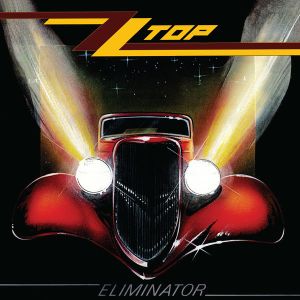
So here we are. ZZ Top’s breakthrough album, 20 million sales and counting. Not bad for a lil’ ole blues’n’boogie trio from Texas.

But Eliminator, released 40 years ago this week, also carries some controversy around with it. As they say: where there’s a hit, there’s a writ.

Along with Sgt. Pepper’s, Roxy’s Flesh & Blood and a few others, it was one of the first albums your correspondent remembers enjoying all the way through. And, if you were a burgeoning drummer, ‘Gimme All Your Lovin’’ was the one all your schoolmates wanted you to play.

It’s a lesser known bit of 1980s muso gossip that ZZ guitarist/chief vocalist Billy Gibbons was one of the first major figures to get hold of a Fairlight synth/sampler. He experimented with it on the band’s 1981 album El Loco, but that was a stiff, selling half as many copies as 1979’s Deguello.

It was time for a rethink. First port of call – the beats. It wasn’t easy to dance to ZZ. Gibbons asked chief engineer Terry Manning to research new grooves, so he hit the discos. Inspired by OMD, Devo, Human League, Depeche Mode et al, Manning bought an Oberheim DMX drum machine and the band started working up new material in their Memphis bolthole.

Moving to drummer Frank Beard’s home studio in Houston, a chap called Lindon Hudson helped a lot with the new technology and songwriting (uncredited on Eliminator, he later won substantial damages after a lawsuit). He also claimed 124 beats-per-minute was the sweetspot.

A move to Memphis’s Ardent Studios saw Gibbons hit the city’s after-hours joints. ‘TV Dinners’ was apparently inspired when a woman entered a club wearing a white jumpsuit with those words emblazoned on the back. He also claimed that ‘I Got The Six’ was inspired by a visit to peak-punk London in 1977.

All in all, Eliminator took about a year to make. It still has many pleasures, Gibbons’ blues soloing and frequent surreal vocal interjections/lyrics chief amongst them. Gibbons and Dusty Hill also play in some strange, unguitar-friendly keys, possibly because some of the material was written on keyboards. Try playing along.

Gibbons’ 1933 Ford coupe on the cover was a tax write-off and helped to make Tim Newman’s vids for ‘Legs’, ‘Sharp Dressed Man’ and ‘Gimme’ bona fide 1980s classics. The band’s nine-month world tour kicked off in May 1983, aided by Manning’s beefy sound mix courtesy of the album’s four-track masters.

It’s fair to say that Eliminator massively influenced Prince, the Stones, Van Halen and Def Leppard, and arguably changed the way rock artists used technology forever.

Happy 40th birthday to a 1980s classic. But hey, don’t forget to credit Manning and Hudson…

Jeff Beck’s Guitar Shop With Tony Hymas & Terry Bozzio

Keyboard player Tony Hymas had one of the weirder music careers of the 1980s.

He began the decade helping to make There And Back one of Jeff Beck’s best albums, then popped up in a supergroup called PHD with singer Jim Diamond and drummer Simon Phillips, getting a classic UK one-hit wonder ‘I Won’t Let You Down’ (#2 in 1982!).

Then Hymas played on/wrote arguably the best track from Beck’s pretty poor 1985 album Flash, and then…not a lot for a while (read this excellent rare interview for more on Tony’s career).

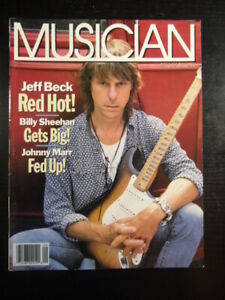
But he was an absolutely vital part of Beck’s career comeback courtesy of Guitar Shop, released in October 1989. You might even call it Beck’s last great album, and arguably Bozzio’s too.

They recorded at Jimmy Page’s residential Sol Studios in leafy Cookham, Surrey (Beck later reported: ‘When we finished the album, I left me bike in his shed, so he got a bicycle out of it too…’!).

The album ended up taking eight months to write and record because Hymas brought a chess board with him.

Beck took genres that he’d touched upon throughout his career – blues, reggae, rockabilly, metal, funk, fusion – and used them as a jumping-off points, working up material with Hymas and Bozzio in the studio.

And it’s very memorable material. On the title track Beck fondly mocks the gear obsession of guitar magazines, and goes through a range of tones and effects in the process, but…it all just sounds like Jeff. A Strat or Telecaster, distortion/delay pedals, and that’s it. It’s all in his fingers.

On the masterpiece that is ‘Where Were You’, he plays the lion’s share of the melody (reportedly very influenced by the Bulgarian State Radio & Television Female Vocal Choir AKA Les Voix Bulgares) with harmonics and very judicious use of the whammy bar, bending in and out of notes with just the right amount of wrist tension.

Bozzio plays a blinder – mostly reining in his formidable technique at the expense of groove and presence – but unleashes some seriously quick double-bass playing on ‘Sling Shot’. Thrash-metal drummers beware. And there’s THAT amazing fill at the end.

Hymas is a great accompanist – you hardly miss real bass and only very occasionally yearn for another instrumental foil for Beck. A couple of tracks on the album became live staples too, played in concert to this day – ‘Big Block’, ‘Where Were You’ and ‘Behind The Veil’.

Guitar Shop did OK in the States, making #49, but weirdly didn’t chart in the UK. But it did win a Best Rock Instrumental Grammy award in 1990. Their Hammersmith gig of 29 July that year was one of the loudest ever heard at the venue.

Beck talked up the possibility of a second album and tour but it never happened. They did reform for Jeff’s birthday party at the Royal Festival Hall in 2002 though. And El Becko even got on the BBC’s ‘Rapido’:


Joni Mitchell: Wild Things Run Fast @ 40

joni_mitchell-wild_things_run_fast(4)Joni entered the ’80s in a despondent state: ‘Everyone realised at the brink of the decade that it was going to be a hideous era…’, she reported to Q magazine.
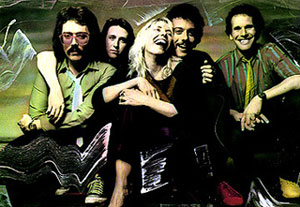
It didn’t help that her beloved ’69 Bluebird had been stolen from outside Tower Records on Sunset Boulevard on New Year’s Eve 1979.

She was also sued by her cleaning lady and then found herself headhunted by old friend David Geffen for his new record label, though their relationship were never easy.

Then there were Thatcher and Reagan and a simmering Cold War. But Joni’s new songs avoided politics completely (she’d make up for that later).

Instead, buoyed by her relationship with new bassist Larry Klein and beguiled by The Police and Talking Heads she was hearing on the radio, she produced possibly her most romantic, upbeat album to date, released 40 years ago this month.

But while there are some concessions to hard rock, new-wave and reggae, Wild Thing‘s best tracks are the ones that most closely resemble the shimmering, jazzy, almost psychedelic tracks of the mid-to-late-’70s.

Larry Klein and Joni, 21st November 1982

Larry Klein and Joni on their wedding day, 21 November 1982

It helped that many of her ’70s ‘repertory company’ were still in place at the dawn of the ’80s – singer James Taylor, percussionist Victor Feldman, drummer John Guerin, saxist Wayne Shorter and guitarist Larry Carlton.

Her new recruits were the new generation of hotshot session players: guitarists Mike Landau and Steve Lukather, keyboardists Larry Williams and Russell Ferrante, formidable ex-Zappa drummer Vinnie Colaiuta.

My point of entry for this album was superb lead-off track ‘Chinese Cafe/Unchained Melody’, the first music I’d ever heard by Joni. I was immediately a fan. It’s a moving meditation on love and loss with a haunting piano/bass motif and intricate Guerin drum part.

‘Be Cool’ and ‘Moon At The Window’ are classic Jazzy Joni. On the former, Klein stakes his claim as a worthy successor to Jaco while Shorter offers a witty, beautifully judged commentary on the latter.

Klein in general gets a lot of space on the album – as much as Jaco got on Mingus – but he’s a totally different player (and doesn’t play fretless). His contributions make Wild Things one of the great bass records of the 1980s.

Larry Carlton plays a sublime accompaniment in the left channel on the elegant ‘Ladies’ Man’ (featuring more than a hint of Steely Dan’s ‘Third World Man’), while Joni surveys her lover’s ‘cocaine head games’ – one of several drug references on the album.

Some tracks are a curious but engaging mixture of hard rock and fusion – the title track, ‘You’re So Square’ and ‘Solid Love’ feature some dynamic, chops-infused interplay between Colaiuta and Klein, and it’s exciting hearing Joni pushing her vocals, singing with a lot of bite.

The closing ‘Love’ – appropriating Corinthians 13 11-13 – encapsulates all that’s good about Wild Things Run Fast: a beautiful vocal, superb and sensitive guitar playing from Steve Lukather and empathetic textures from Shorter and Colaiuta.

TourProgram83RefugeGroup

The 1983 touring band: Vinnie Colaiuta, Mike Landau, Joni, Larry Klein, Russell Ferrante

Joni toured Wild Things extensively with a band consisting of Colaiuta, Landau, Klein and Ferrante, dropping in to London’s Wembley Arena in 1983.

The album was a minor hit, reaching #32 in the UK and #25 in the States, and the single ‘You’re So Square’ reached #47 in the US.

One’s appreciation of it probably depends on when you were born. People who adore Blue and For The Roses probably loathe this. But as my first exposure to Joni’s music, I hold it very dear.

It Bites: Live In London

The classic It Bites lineup (Francis Dunnery, John Beck, Richard Nolan, Bob Dalton) produced three excellent studio albums and of course snared one huge UK hit in the shape of ‘Calling All The Heroes’.

Then, after the band split in 1990, there was the middling best-of live collection Thankyou And Goodnight. But now there’s an excellent new limited-edition 2018 boxed set called Live In London.

It collects three complete, unedited London gigs (I was at two of them) over five CDs, including their very last major show in the capital. Whilst these are essentially desk recordings, the sound quality ranges from good to excellent. The set also features nice, previously unseen photos and some good liner notes including a long interview with Dalton, telling of their London history and details of each gig.

The Marquee concert from 21 July 1986 (at less than 40 minutes, presumably a support?) catches the band in their full-on, zingy, poppy/funky early pomp. Everything sounds a little fast and they haven’t quite settled into their groove yet but it’s still a good listen. There’s a shrill early version of ‘Black December’ and a great, rare outing for ‘Whole New World’ with Dunnery playing the horn lines on lead guitar with some aplomb.

Next is the very tangible peak of the band, a Once Around The World tour gig from 13 May 1988 at the much-missed Astoria. The sound is beefy, the tempos locked in, the backing vocals excellent and this really is the dog’s bollocks. There’s so much evidence of craft, with an extra note here and lick there, always slightly modifying the album versions.

‘Plastic Dreamer’ is a revelation, ‘Black December’ is huge, and ‘Old Man & The Angel’ ambitious and exciting. We finally get to hear what Dunnery sings in ‘Hunting The Whale’. The ‘Midnight/Wanna Shout’ medley is a knockout, complete with ‘Purple Haze’ coda, and Once Around The World’s title track is brilliant, complete with excerpt from ‘New York, New York’ which chimes rather cleverly with Dunnery and Beck’s Lamb Lies Down On Broadway fixation.

The third gig is the band’s final London show, from the Hammersmith Odeon on 7 April 1990. The intro sounds like something from Prince’s Lovesexy. The new songs sound great, ‘Let Us All Go’ is superb but Dunnery’s voice is pretty shot throughout, and some of the backing vocals are also showing signs of strain. In truth you can hear the schisms in the band developing, though there are many, many great moments.

Barely two months later Dunnery had left the group. Not long after that, this correspondent would see him skulking around the King’s Head pub in Fulham (he was rehearsing upstairs with Robert Plant, I was gigging there), not looking a particularly well or happy man. Thankfully he’s on a far more even keel now.

Live In London is a really exciting release, a must-have collection for anyone who owns any of the studio albums, and arguably a much better package than Thankyou And Goodnight.

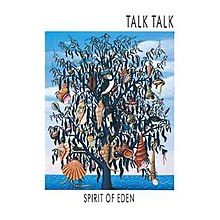
11 May 1987: Talk Talk commence recording Spirit Of Eden

35 years ago today, Mark Hollis (guitar, keyboards, vocals), Tim Friese-Green (keyboards, production), Lee Harris (drums), Paul Webb (bass) and engineer Phill Brown convened at London’s Wessex Studios (don’t look for it – it’s not there any more) to begin work on the Talk Talk album Spirit Of Eden.

During May, June and July 1987, this core unit worked five-day weeks from 11am until midnight, in near darkness apart from an oil projector, a gentle strobe lighting effect and three Anglepoise lamps.

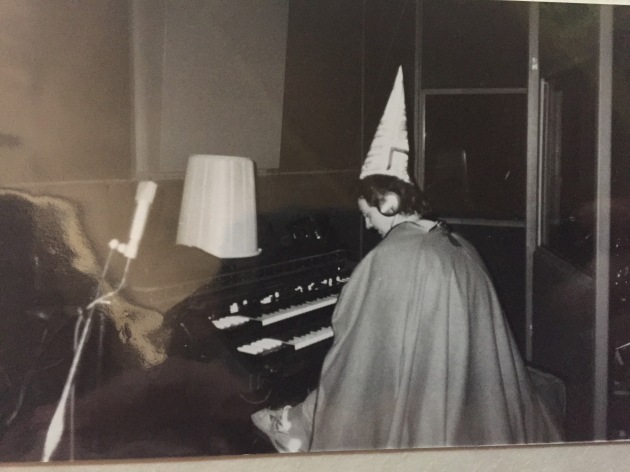
Tim Friese-Green on the Hammond organ, Wessex Studios

Basic tracks laid down, they took a break. On 19 October 1987, work resumed with instrumental overdubs; first woodwinds, then a coterie of world-class musicians including David Rhodes, Bernie Holland and Larry Klein, whose contributions would end up on the cutting-room floor. But those whose performances did make the cut include Nigel Kennedy, Danny Thompson, Robbie McIntosh, Martin Ditcham and Henry Lowther.

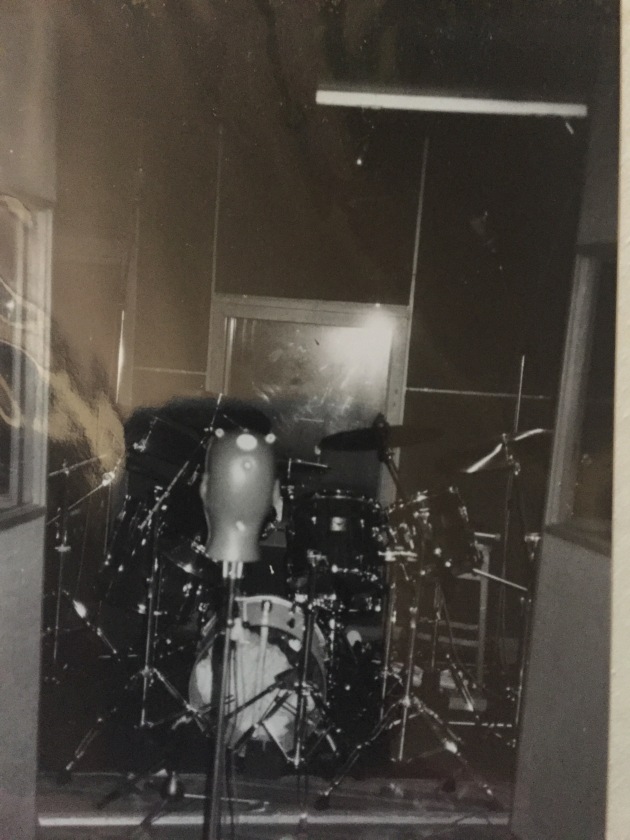
Lee Harris’s drum booth, Wessex Studios

Almost a year in the making, Spirit Of Eden was finally released on 12 September 1988 (after a long delay while EMI panicked – it was actually completed on 11 March 1988) and remains one of the most influential, least-dated ‘rock’ albums of the 1980s.

Thanks to Phill Brown for use of his photos.

‘Mark Hollis: A Perfect Silence’ is published by Ben Wardle.

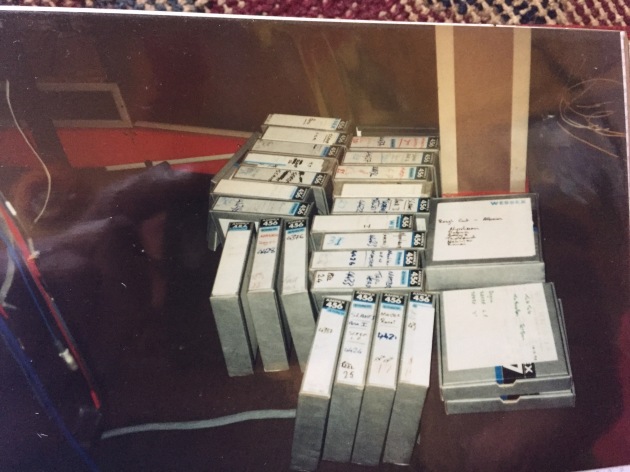
The ‘Spirit Of Eden’ master tapes

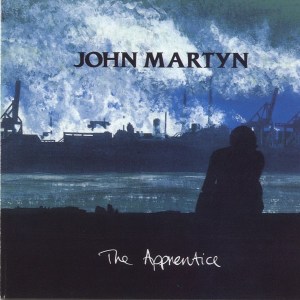
John Martyn: The Apprentice

Island Records undoubtedly did a lot of good for John Martyn but they also royally messed around with arguably his two best post-1970s albums.

First there was the delayed, eventually botched release of 1980’s Grace And Danger, then the complete rejection of The Apprentice when first delivered in 1988.

The album eventually saw the light of day on Permanent Records (owned by Martyn’s then-manager) in early 1990, after John finished it at his own expense at Glasgow’s Ca Va Studios. It immediately sold strongly and got a great review in Q magazine (alongside a memorable interview) amongst other rags.

But co-producer Brian Young reckons it could have done a lot better – the idea apparently had been to tout it around the major labels, but John’s manager decided to steer clear of the suits this time around. We’ll never know if that was wise (and sadly it’s currently on streaming platforms with completely the wrong artwork attached).

Most importantly, The Apprentice is full of memorable songs which easily offset the sometimes fairly flimsy production. He was expanding his harmonic horizons (and vocal range – this is probably his best singing on record) and there’s a strong Latin influence throughout, helped enormously by the return of Danny Cummings on all kinds of percussion.

‘Live On Love’, ‘Deny This Love’ and ‘Send Me One Line’ could have made cracking singles, the latter apparently penned for the movie ’84 Charing Cross Road’ but not used. ‘The Moment’ and ‘Patterns In The Rain’ suggest a hitherto unacknowledged influence from the Great American Songbook.

‘Look At That Girl’ is a gorgeous ballad for his daughter Mhairi, while the title track was a rare insight into Martyn’s political leanings, written from the point of view of a terminally-ill worker at the Sellafield nuclear plant. ‘Income Town’ may just be the standout, another attack on rampant capitalism featuring a meaty guitar solo.

In short, there was something for everyone. Long-term fans just had to accept that he wasn’t going to be playing the acoustic through an Echoplex anymore; but his collaboration with keyboard player Foss Patterson was hitting its peak, after promising beginnings on 1986’s Piece By Piece.

John sold out no less than eleven nights at London’s Shaw Theatre to promote The Apprentice, enlisting Dave Gilmour to guest on guitar (‘Which one’s Pink?’!), and then played at the Glasgow Big Day festival a few months later. 1990 turned out to be a pretty good year (reportedly followed by one of his worst, though I saw him live several times in 1991 and he was always superb) for Big John.

Story Of A Song: Ambrosia’s ‘Poor Rich Boy’ (1981)

Apart from Steely Dan reaction videos on YouTube, my other mini viewing obsession over the last year or so has been ‘Columbo’ repeats.

You expect amusing performances and ingenious plotting from the classic Peter Falk-fronted show; you don’t expect music tips.

But there it was – a great piece kicking off ‘Columbo Goes To College’, the first episode of the show’s tenth season, debuting on 9 December 1990.

A bit of detective work revealed that it was Ambrosia’s ‘Poor Rich Boy’, written for the Oscar-winning ‘Arthur’ soundtrack, the one headed up by Christopher Cross’s US #1 ‘Arthur’s Theme (Best That You Can Do)’. I’d never heard of the band but apparently they had some big hits at the tail end of the 1970s.

Co-written – like the rest of the soundtrack album – by Burt Bacharach (alongside band members David Pack and Joe Puerta) and produced by Val Garay (Kim Carnes’ ‘Bette Davis Eyes’), it taps into that great period at the dawn of the 1980s when yacht rock dovetailed with prog/AOR/new wave/whatever.

It’s mixed refreshingly dry, with barely any reverb, and features a treacherous arrangement that separates the men from the boys. It’s in 2/4 but has some very odd accents (especially in that deliciously long fade). Try playing along. Where’s ‘one’? There’s a nice use of the ‘flatted fifth’ in the verse and also a superb vocal by…who? Pack or Puerta?

The chorus lyric smartly lays out the film’s plot and concerns of Dudley Moore’s Arthur:

Life is more than time and money that’s easy to spend
When you know that she’s out there
Lookin’ for the girl whose eyes out-sparkle all of your gold
And a heart that’s bigger than Times Square

‘Poor Rich Boy’ was released as a single in 1981 but didn’t chart…

Tin Machine: The Final Gig 30 Years On

I wasn’t sure I was going to write about this but Bowie came to me in a dream a few days ago and said I must! I’m under orders…

30 years ago this month, on 17 February 1992, Tin Machine played their last ever gig at the NHK Hall in Tokyo. It was the final date of the ‘It’s My Life’ tour.

It had been a period of ups and downs – ups in late October 1991 when Bowie proposed to Iman Abdulmajid in Paris, downs due to the drug problems of one band member (with the initials HS).

Some people never ‘forgave’ Bowie for TM but for many others the band represented his ’80s rehabilitation. I was fascinated from the get-go and for my money it spawned a fair share of classic David (sometimes co-written with Reeves Gabrels) songs: ‘I Can’t Read’, ‘Under The God’, ‘Amazing’, ‘Baby Universal’, ‘You Belong In Rock’n’Roll’, ‘Amlapura’, ‘Shopping For Girls’, ‘Goodbye Mr Ed’.

And it’s doubtful we would have got that brilliant Buddha Of Suburbia/1. Outside/Earthling triptych without TM.

Bowie agreed: ‘Once I had done Tin Machine, nobody could see me any more which was the best thing that ever happened, because I was back using all the artistic pieces that I needed to survive and imbuing myself with the passion that I had in the late seventies.’

True to his word, the band lasted three albums, though Bowie hinted it may have gone on longer had drug problems not reared their ugly heads. But it’s still hard to get hold of the last two records (Tin Machine II, Oy Vey Baby).

Here’s the second, penultimate night at the NHK on 6 February 1992. The sound quality is superb, though the audio cuts out completely around 45 minutes in and doesn’t return.

Gabrels sounds great, Bowie (sporting a ‘Rock Against Racism’ T-shirt) does too and there are some nice bits of ‘amateurism’ including several fudged song openings (Bowie’s guitar tech has very kindly turned down the volume of his 12-string before the start of the gig!). Some of this material was used for the final album Oy Vey Baby.

The Movers & Shakers Of 1980s Music: Their Real Names Revealed

Captain Sensible, AKA…

During the punk era, musicians often chose stage names so that the dole office wouldn’t identify them from album covers or gigs.

One wonders how much of an issue that was for Gordon Sumner, Paul Hewson and David Evans, AKA Sting, Bono and The Edge, but you never know.

But as the 1980s wore on and the post-punk era became the hip-hop era, a whole new generation of rappers, DJs, producers and musicians felt the need to create pseudonyms.

But what did their mums call them? Here, for your dubious pleasure, are some of the most intriguing real names of 1980s pop, rock, hip-hop, indie and jazz (this page will be updated regularly).

It’s fair to assume that most probably don’t like being reminded of these, for various reasons. YOU go taunting Ice-T with his real name (Tracy Marrow). But, on the other hand, kudos to The Cure’s Robert Smith for not using a pseudonym…

Bobby Z (Prince’s drummer): Robert Rivkin

David Z (Prince engineer/producer): David Rivkin

Atlanta Bliss (Prince’s trumpet player): Matthew Blistan

Dr Fink (Prince’s keyboard player): Matthew Fink

Brownmark (Prince’s bass player): Mark Brown

St Paul (The Family frontman): Paul Peterson

Vanity (Vanity 6 singer/actress): Denise Matthews

Rick Springfield: Richard Springthorpe

Thomas Dolby: Thomas Morgan Robertson

Nik Kershaw: Nicholas Kershaw

John Peel: John Ravenscroft

Jonathan King (impresario and DJ): Kenneth King

Suggs (Madness frontman): Graham McPherson

Cher: Cheryl Sarkisian

Iggy Pop: James Osterburg

Buster Bloodvessel (Bad Manners frontman): Douglas Trendle

Jona Lewie (‘Stop The Cavalry’/’In The Kitchen At Parties’ singer): John Lewis

Chaka Khan: Yvette Stevens

David Essex: David Cook

Elton John: Reginald Dwight

Cliff Richard: Harry Webb

Roxanne Shante (rapper): Lolita Shante Gooden

The Real Roxanne (rapper): Adelaida Martinez

Scott Walker: Noel Scott Engel

Green Gartside (Scritti Politti frontman): Paul Julian Strohmeyer

Terminator X (Public Enemy DJ): Norman Rogers

Jet Black (Stranglers drummer): Brian Duffy

W. Axl Rose: William Bruce Rose Jr.

Divine: Glenn Milstead

Henry Rollins: Henry Garfield

MC Lyte: Lana Moorer

Kate Bush: Catherine Bush

Sun Ra: Herman Blount

Sade: Helen Folasade Adu

Adam Ant: Stuart Goddard

Ozzy Osbourne: John Michael Osbourne

Genesis P-Orridge (Throbbing Gristle/Psychic TV frontperson): Neil Megson

Cosey Fanni Tutti (Throbbing Gristle co-founder): Christine Newby

Jamaaladeen Tacuma (Ornette Coleman bassist): Rudy McDaniel

Howard Devoto (Magazine singer/solo artist): Howard Trafford

Wilko Johnson: John Wilkinson

Jah Wobble: John Wardle (named by a drunken Sid Vicious, whose real name is John Ritchie…)

Prairie Prince (Tubes/XTC drummer): Charles Lempriere Prince

Sydney Youngblood (‘If Only I Could’ singer): Sydney Ford

Yazz (‘The Only Way Is Up’): Yasmin Evans

Belouis Some (‘Imagination’ singer): Neville Keighley

Hollywood Beyond (‘What’s The Colour Of Money’ singer): Mark Rogers

Tommy Vance (legendary DJ): Richard Anthony Crispian Francis Prew Hope-Weston

Melle Mel: Melvin Glover

John Martyn: Iain McGeachy

Tom Verlaine (Television frontman): Thomas Miller

Johnnie Walker (DJ): Peter Dingley

Kim Wilde: Kim Smith

Midge Ure: James Ure

Elvis Costello: Declan MacManus

Adrian Belew: Robert Steven Belew

Princess (London soul singer of ‘Say I’m Your Number One’ fame): Desiree Heslop

Dweezil Zappa: Ian Donald Calvin Euclid Zappa (The LA hospital nurse wouldn’t let Gail and Frank name him ‘Dweezil’ so FZ named him after his early collaborators Ian Underwood, Captain Beefheart, Carl Schenkel and ‘Motorhead’ Sherwood. Dweezil’s name was legally changed when he was five years old.)

Mick Mars (Motley Crue guitarist): Robert Alan Deal

John Foxx: Dennis Leigh

Trugoy (De La Soul rapper): David Jolicoeur

Cheryl Baker (Bucks Fizz vocalist): Rita Crudgington

Grandmaster Flash: Joseph Saddler

Kidd Creole (Furious Five rapper): Nathaniel Glover

KRS-One: Lawrence Parker

Pauline Black (Selecter singer): Belinda Magnus

Siouxsie Sioux: Susan Ballion

Geddy Lee: Gershon Eliezer Weinrib

Sebastian Bach (Skid Row singer): Sebastian Bierk

Marilyn (‘Calling Your Name’ singer): Peter Robinson

Don Was (Was Not Was co-founder/superstar producer): Don Fagenson

Falco (‘Rock Me Amadeus’ one-hit wonder): Johann Holzel

Steve Severin (Siouxsie and the Banshees bassist): John Bailey

Budgie (Siouxsie drummer): Peter Clarke

Dave Vanian (Damned singer): David Lett

Lydia Lunch: Lydia Koch

Flavor Flav: William Drayton

LL Cool J: James Smith

Tone Loc: Anthony Smith

Bonnie Tyler: Gaynor Hopkins

Yngwie Malmsteen: Lars Lannerback

Young MC: Marvin Young

Ice Cube: O’Shea Jackson Sr.

Shakin’ Stevens: Michael Barratt

Donna Summer: LaDonna Gaines

Captain Sensible: Raymond Burns

Rat Scabies (Damned drummer): Christopher Millar

Vanilla Ice: Matthew Van Winkle

MC Hammer: Stanley Burrell

DJ Kool Herc (hip-hop pioneer): Clive Campbell

Duke Bootee (hip-hop pioneer): Edward Fletcher

Afrika Bambaataa: Lance Taylor

Nikki Sixx (Motley Crue bassist): Franklin Ferrana

Skip McDonald (On-U Records/Sugar Hill guitarist): Bernard Alexander

Billy Idol: William Broad

Bill Wyman: William Perks

Fish: Derek Dick

Fee Waybill (Tubes vocalist): John Waldo

Billy Ocean: Leslie Charles

Posdnuous (De La Soul rapper): Kelvin Mercer

Maseo (De La Soul rapper): Vincent Mason Jr.

Chris De Burgh: Christopher Davidson

Kool Moe Dee: Mohandas Dewese

Dee C Lee (Style Council vocalist/’See The Day’ solo artist): Diane Sealey

Steve Strange (Visage frontman/Blitz pioneer): Stephen John Harrington

Youth (Killing Joke bassist/superstar producer): Martin Glover

Geordie (Killing Joke guitarist): Kevin Walker

Doug E Fresh: Douglas Davis